Archive for the ‘Book Reviews’ Category

‘The Pisces’ by Melissa Broder – The Modern Woman’s Lover


‘The Pisces’ by Melissa Broder (2018) – 270 pages
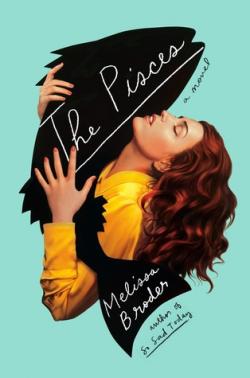
Here is a comic coarse take on modern love. Our heroine Lucy is 38 and has just broken up with her long-time boyfriend. She is staying in her sister’s beach house on Venice Beach dog sitting and supposedly working on her dissertation on Sappho. In her spare time Lucy attends a love addiction therapy group for women who are all boy-crazy like junior high school girls.

‘The Pisces’ is all about Lucy the narrator’s voice of which some will find refreshingly honest and candid while others will find it self-centered and anxiety ridden. Although the novel makes it clear that Lucy is 38 years old, just by her interests and attitudes expressed, I would have guessed her age at about 16.

On the beach she meets Theo the swimmer and she is immediately attracted to him. He seems different, cooler than the other guys she meets. I won’t give away a major plot point of the story, but let’s just say there is something fishy about Theo.

‘The Pisces’ is a hot and steamy romance story told from the woman’s point of view with lascivious, explicit, and nasty sex scenes.

There are many New Age references in ‘The Pisces’ regarding such items as horoscopes, rose quartz crystals, and magic candles. There is talk of Internet memes and texting, and everyone is relentlessly up to date. There is also talk of getting nails and toenails done in a salon. Since my interest in New Age stuff and getting my toenails done is about zero, this probably was not the right novel for me. So perhaps you readers should take my following criticisms of ‘The Pisces’ with a grain of salt.

The other characters, the women in Lucy’s support group and her previous lovers before she meets Theo, are interchangeable ciphers. That these characters are not developed even to the point where we can tell them apart is one of the major problems with this novel. It is not really worth the effort to keep track of the little backstory these peripheral characters have.

As for Theo, he is a guy who is just too good to be true like the hero of an old TV Western or a police drama. This cardboard wonderfulness of Theo subtracted from my interest in him. But perhaps that is the point, that Theo is an unrealistic love interest.

‘The Pisces’ was the wrong novel for me.


Grade :    C
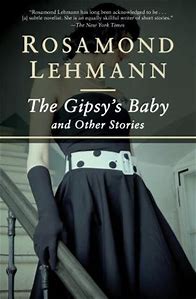
 

Is it Time for Another Rosamond Lehmann Revival?


‘The Gipsy’s Baby’ by Rosamond Lehmann (1946) – 192 pages

When Virago republished all of her novels in 1982, there was a major Rosamond Lehmann revival. Is it time for another revival?

Rosamond Lehmann is sometimes considered a women’s romance novelist. Yes, her novels usually dealt with the close relationships of her characters. However she captured the emotional life of her women and men with such intensity and vivacity that guys would do well to read her too just as some real men read and enjoy Jane Austen. Lehmann used her own happy and unhappy romances and marriages to give her stories and novels more depth and feeling and humor than most writers achieve.

Rosamond was born in 1901 and brought up in well-to-do circumstances. Her first novel ‘Dusty Answer’ was published in 1927 and was a best selling scandalous success. Alfred Noyes lauded it as “quite the most striking first novel of this generation”. ‘Dusty Answer’ was an intense unhappy love story told with sparkle and verve, the type of story Rosamond Lehmann specialized in perhaps based on incidents from her own life.

There is a steady enduring quality to all of Lehmann’s early work. She followed ‘Dusty Answer’ with ‘A Note in Music’ and then she wrote the two novels ‘Invitation to the Waltz’ and ‘The Weather in the Streets’ which center on one heroine Olivia Curtis. If I were starting over to discover Rosamond Lehmann, I probably would begin with ‘Invitation to the Waltz’ which was called “a perfect novel” by her biographer Selina Hastings.

Mel u, editor of The Reading Life wrote the following of ‘Invitation to the Waltz’ and Rosamond Lehmann: “Her narrative methods are a mixture of devices, many of the sentences, even in the lesser novels, are pure gems.  The middle chapter of ‘Invitation to the Waltz’ is just hilarious, a perfect presentation  of the persons at a country dance.  The depiction of the pretentious young poet down from Oxford made me laugh out loud as I marveled at what a wonderful scene I was witnessing.“

And here is a quote taken directly from ‘Invitation to the Waltz’:

Advice to Young Journal Keepers: Be lenient with yourself. Conceal your worst faults, leave out your most shameful thoughts, actions, and temptations. Give yourself all the good and interesting qualities you want and haven’t got. If you should die young, what comfort would it be to your relatives to read the truth and have to say: It is not a pearl we have lost, but a swine?” – Rosamond Lehmann, ‘Invitation to the Waltz’.

Her strong literary career continued with two excellent fine novels in the ’40’s and early ’50’s, ‘The Ballad and the Source’ and ‘The Echoing Grove’. Like Graham Greene, Rosamond Lehmann not only had a strong literary reputation, but also her novels were best sellers. Her novels are straight-forward, accessible, and easy to enjoy.

Around the time of her daughter Sally’s death at 24 in 1957, Rosamond’s profound grief led her to take up psychic spiritualism, and both of her only two later works, the autobiography ‘The Swan in the Evening’ and ‘A Sea-Grape Tree’, were written under this psychic influence. If a reader wants to fully appreciate the fiction of Rosamond Lehmann, he or she should probably avoid these two late works.

I recently read all the stories in ‘The Gipsy’s Baby’. This collection was first published in 1946 and these stories are prime Rosamond Lehmann, but I would still start with the early novels which are quite short anyhow.

Let the second Rosamond Lehmann Revival begin.


Grade:   A


‘Border Districts` by Gerald Murnane – Fiction???


‘Border Districts` by Gerald Murnane (2017) – 132 pages

I believe I gave ‘Border Districts’ a fair chance, but it didn’t work for me.

Usually I can read and appreciate most of the lauded fiction writers. I did not care much for Dario Fo who won the Nobel Prize for Literature in 1997, but giving the prize to him was probably a mistake anyway. Otherwise my major stumbling block has been Samuel Beckett. I’ve read both some of his plays and a few of his novels, but none of his work has reached me in any meaningful way. Not even ‘Waiting for Godot’ affected me that much.

One of the reviews of ‘Border Districts’ by Gerald Murnane that I read mentioned Samuel Beckett.

First of all ‘Border Districts’ reads more like a memoir rather than a fiction. There is even a line in the novel stating that “I am not writing a work of fiction but a report of seemingly fictional matters”. There is no plot. There are no characters. It is mainly the narrator’s memories of what he has read or seen. The language has the verisimilitude of non-fiction. At times ‘Border Districts’ reads like a not very interesting essay on the author’s marble collection among other things.

Despite my lack of appreciation for this book, I did catch its theme. It is about the images which most affect us and which we retain as part of our visual image memory throughout our lives. Hence his fascination with his translucent marble collection. Perhaps some pictures may have helped?

Another image memory the narrator has is of the refracted light through the stained glass church windows of his Catholic youth. He recalls from his reading how during the Reformation, Protestant congregations took over some of the old Catholic churches in Europe, and the first thing the Protestants would do is knock out and break the beautiful stained glass of the Catholic churches they took over. The Protestants got the bare plain un-decorated churches they deserved. This was an image that I could relate to because I can still recall the beautiful stained glass windows of the church of my youth. Ours was a German Lutheran church, but they had the good sense to value and use beautiful stained glass.

I appreciate the stained glass but the images of his marbles and the horse racing colors not so much.

Another positive in ‘Border Districts’ for me was that this attention to one’s visual image memory spurred my own memories. I remembered when after college I got my first white collar job and was bored stiff, so I signed up for an extension Art History course of two semesters which covered art from the Dark Ages until today in two semesters. The guy who taught the course was kind of a shady dark mysterious figure but he made those paintings come alive for me, especially the Renaissance paintings. He became kind of a role model for me. During the Impressionist era, he introduced us to the idea of “the merely pleasant”. Maybe we undervalue “the merely pleasant”. During that time I put up pictures in my room of “La Grande Jatte” by Georges Seurat and “Two Sisters” by Pierre-August Renoir because these represented the merely pleasant for me. I became a crusader for the merely pleasant. As part of the class we went to the Chicago Art Institute, and we actually saw the originals of those two paintings.

The Merely Pleasant?

So ‘Border Districts’ did spur these memories in me, so perhaps I am undervaluing the book also.

However I found the writing in ‘Border Districts’ to be relentlessly flat and the subject matter usually determinedly pedestrian. I considered the sentences rather clumsy and found myself frequently bored by mid-sentence.

In a review in the Washington Post, Jamie Fisher said of ‘Border Districts that “the result is tedious – but fascinating”. For me the bottom line was very tedious and only somewhat fascinating.


Grade : C

.

‘Love’ by Hanne Ørstavik – A Cold Winter Night in a Northern Norwegian Town


‘Love’ by Hanne Ørstavik (1997) – 125 pages               Translated from the Norwegian by Martin Aitken

This is a story about a single night in the lives of single mother Vibeke and her eight year-old son Jon. They have recently moved to this small remote town in the north of Norway. Jon wants to give his mother plenty of space so she can get ready for his birthday tomorrow with a cake and everything, so he goes out of the house without telling her to sell raffle tickets for his sports club

Meanwhile Vibeke is wound up in her own longings and dreams and has totally forgotten about Jon’s birthday, but instead decides to go to the library so she can get more of the romance novels she devours. Even for this short trip, she wants to look nice because, who knows, she might meet someone. She finds out that the library closed early this night, so she decides to stop and visit a carnival which is in town for the weekend. There she meets a young man, Tom, who is a carnival worker, and the two of them hit it off and wind up going to a bar together, and she stays out to bar closing.

Meanwhile Jon is having his own adventures with the strangers he meets selling tickets. The story goes back and forth between Jon and Vibeke usually switching from one to the other without any warning. Several times I thought we were still reading about Jon but the story had moved on to Vibeke or visa versa. There is a sense of eerie foreboding for both Jon and Vibeke as they interact with these strangers and get in and out of strangers’ cars on this cold winter night. One feels that both Jon and Vibeke are too trusting souls among all these strangers, and what is this eight year-old boy doing alone outside late at night?

‘Love’ as a literary novel is Norwegian minimalist realism with a vengeance. The sentences are short with little variety beyond subject, verb, object. The sentences for the mother Vibeke are nearly as simple as those for the boy Jon. Whereas the boy comes across as appropriately child-like, Vibeke comes across as almost childish with her romantic concerns and her almost totally forgetting about Jon. When she meets Tom she works hard to start a romance between them. The short staccato sentences add to the ominous mood.

Its creepy vibe makes this novella an intense read.


Grade :    B


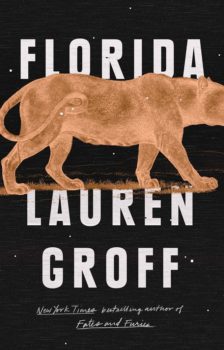
‘Florida’ by Lauren Groff – If It’s not the Alligators and Snakes, It’s the Suffocating Heat


‘Florida’ by Lauren Groff    (2018) – 275 pages

The Florida of this new collection of stories by Lauren Groff is not a very likable place. Groff’s Florida is not the beachfront coastal Florida but the swampy central deep-country Florida of alligators, snakes, and lots of insects. The setting is typical of Gainesville, Florida where Groff currently lives. This is the Florida of makeshift boats in stagnant ponds and “frenzied flora and fauna”. And then there is the oppressive sweltering heat and the quite frequent hurricanes. Even an occasional panther and a lot of bad smells. And the people are nearly as bad as the climate.

Even when the main character somehow escapes Florida to Brazil in ‘Salvador’ and France in ‘Yport’, things don’t get any better in these stories.

In some of the stories the main characters go unnamed. In the story ‘Above and Below’, the main character is referred to always as either ‘she’ or ‘the girl’. In the Guy de Maupassant story ‘Yport’ the main characters are only ever called ‘the mother’ or ‘the older boy’ or ‘the little boy’. This lack of names distanced me from the stories. One of the many problems for me with this collection is its lack of immediacy or charm.

‘Above and Below’ is about a young woman who voluntarily gave up the academic life and descended into the life of the homeless. However it seemed more like she passively sleepwalked into the life of a homeless poor person and it was not a spirited descent. I wearied of this story.

I suspect that Lauren Groff is a writer more suited for the novel rather than the short story. Her stories here are too cluttered and vague for this short form, and we readers lose interest.

In too many of the stories the main character, usually a woman, seems world weary. She is stuck entertaining the kids while any man is off somewhere else. In ‘Yport’ our nameless heroine is in France with her two nameless kids to further study the famous French writer Guy de Maupassant for a potential book about him. She has already discovered that Guy de Maupassant was a total creep, and most of his literary work besides the famous stories is not very good. This could potentially have been a fascinating story about how our literary heroes can turn out to be lousy human beings. Instead the story is mostly about the morose mother listlessly entertaining her children in various French places. Reading about someone who is so dispirited and tired eventually becomes tiresome itself.

I searched the stories in ‘Florida’ in vain for even one spark of the vivacity of Lauren Groff’s ‘Fate and Furies’ which made that novel such a delight. (‘Fates and Furies’ was my favorite fiction read of 2015.)


Grade : C

‘Blue Self-Portrait’ by Noémi Lefebvre – Inspired Chatter


‘Blue Self-Portrait’ by Noémi Lefebvre (2009) – 139 pages Translated from the French by Sophie Lewis

Even though ‘Blue Self-Portrait’ is a relatively short novel, with its exceedingly long sentences and its unbelievably long paragraphs it is probably the most challenging book I have read this year. However at the same time, with its depth and its charm ‘Blue Self-Portrait’ is also one of the most rewarding novels I’ve read this year.

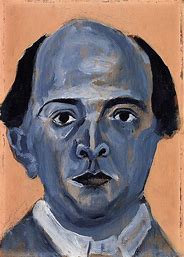
‘Blue Self-Portrait’ is a painting by the music composer Arnold Schoenberg which he did in his spare time.

Two sisters in their late twenties or early thirties are returning by airplane to Paris after a short vacation in Berlin. The one sister, our narrator, looks back on their time in Berlin and especially her romantic interlude with a German pianist composer. Meanwhile she is reading the correspondence between Theodor Adorno and Thomas Mann. This is a stream-of-consciousness novel like no other.

The sisters together on this trip sort of bring things down to earth. Otherwise this novel might have gotten too philosophical and abstract and dry. Here I will quote one of the shorter sentences just to give you the lively flavor of the writing.

I excuse my sister everything and myself nothing, not only do I excuse without calculation but I appreciate more than anything in my sister that which I loathe more than anything in myself, I consider magnificent in my sister whatever horrifies me in myself, am unconditional with my sister and always disappointed in myself.”

The pianist she met criticized our narrator for talking too much. She herself knows she talked too much, “sure that I’d put him off seeing me ever again, even by accident, instilled a lifelong revulsion in him for the kind of girl I am, the kind who talk too much and whose flaws we know well, who go on exasperating those around them down the generations, who ruin the lives of their husbands, children, and lovers, never content with that understanding silence required for happiness”.

But her endless chitting and chatting are some of the most profound and acute yet still charming conversations I have encountered.

Blue Self-Portrait

This is a deep work, yet the two sisters bring it down to Earth. As their plane flies over Wannsee Lake our narrator’s thoughts turn to the terrible Wannsee Conference at which the German Nazi officials planned the implementation of the Final Solution to the Jewish Question, the systematic murder of millions of men, women, and children. The father of Reinhard Heydrich who was the director of the Wannsee Conference was also a composer of German music. January 20, 1942 which is the date of the conference is perhaps the most significant date for whole humanity. January 20 is also her sister’s birthday. This work has the courage to confront pure evil.

I doubt I will read another novel this year as intelligent and filled with ideas as this one. With her incredibly long sentences, Lefebvre manages to be deep yet charming at the same time. If you are up for a challenge, I recommend this one.


Grade :   A


‘Sweet Days of Discipline’ by Fleur Jaeggy – At the Girls’ Boarding School in Switzerland


‘Sweet Days of Discipline’ by Fleur Jaeggy (1989) – 101 pages Translated from the Italian by Tim Parks

‘Sweet Days of Discipline’ starts out eerie and only gets eerier.  Here are the opening sentences:

At fourteen I was a boarder in a school in the Appenzell. This was the area where Robert Walser used to take his many walks when he was in the mental hospital in Herisau, not far from our college. He died in the snow. Photographs show his footprints and the position of his body in the snow.”

This girl’s boarding school is the Bausler Institute, in the Appenzell of Switzerland near Lake Constance. The time is the mid-1950s. Her parents have packed her off to various boarding schools since she was the age of eight so this is normal life for her although nothing approaches normal in this story. We don’t hear much about her father but she writes letters to her mother who is in Brazil and remarried.

This girl is dismissive of her German roommate Marion; instead she is obsessed with the new girl Frédérique and follows her around until Frédérique finally notices her. There is a shortage of males, so regimented school life is all about the girl crushes.

Of course we are experts when it comes to women, we who have spent our best years in boarding schools. And when we get out, since the world is divided in two, male and female, we’ll get to know the male side as well. But will it ever have the same intensity? Will conquering men, I wonder, ever be as difficult as conquering Frédérique?”

By the age of fourteen, most of these girls feel they have been stuck in the authoritarian setting of the boarding school way too long and are hanging out waiting for their actual lives to begin. After fourteen, this feeling of being in suspended animation at the school gets only worse for the girls. But when they finally do get out and experience the vexing freedom of the real world they may long for those sweet days of discipline at the boarding school.

Every sentence is loaded with a grotesque slant in this short novel. We learn little about attending classes or other activities at the school. There is an occasional glimpse of the headmistress Frau Hofstetter who seems nice enough, not at all the wicked headmistress of some boarding school novels. It is most all about the other girls.


Grade:   B


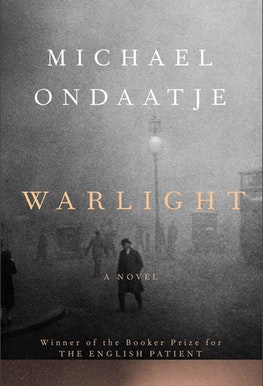
Warlight by Michael Ondaatje – The War That Wasn’t Really Over Yet


Warlight by Michael Ondaatje (2018) – 285 pages

‘Warlight’ takes place in England in the years immediately following World War II. The main protagonists are fourteen year old Nathaniel and his sixteen year old sister Rachel. After the war in Europe was officially declared over, both of their parents leave under mysterious circumstances, and two unfamiliar men whom they call The Moth and The Darter are left in charge of their household, and every night there are colorful strangers crowding into their house.

In 1945 our parents went away and left us in the care of two men who may have been criminals.”

People assume that World War II in Europe ended in the spring of 1945 when Hitler committed suicide, and Germany surrendered. However all the hostilities that had been unleashed did not immediately end. All across Europe, impromptu groups sprung up to carry out vengeance against their fascist neighbors who had brutalized them during the war. Also especially in the Balkan countries guerrilla squads of ex-Nazi soldiers formed to continue the fight. The work of the British intelligence agents continued after the war to bring some semblance of order to the turmoil of post-war Europe, and we find that Nathaniel and Rachel’s mother was involved in that effort.

Michael Ondaatje is very good at capturing the ambiance of London immediately after the war. The term ‘Warlight’ refers to that reduced lighting that was used all over England to somewhat protect itself from German bombers during the war. With the war over, London was like a ghost town but ready to come back alive.

There were parts of the city where you saw no one, only a few children walking solitary, listless as small ghosts. It was a time of war ghosts, the grey buildings unlit, even at night, their shattered windows still covered over with black material where glass had been. The city still felt wounded, uncertain of itself. It allowed one to be rule-less. Everything had already happened. Hadn’t it?”

Later in the 1950s Nathaniel himself pursues a career in British Intelligence partially in order to find out exactly what his mother was doing during the war.

Michael Ondaatje has enough confidence in his literary abilities, he does not have to try real hard to captivate his readers. It comes naturally. The story is not at all direct or straightforward or told in linear fashion, but rather takes many twists and turns. Whereas other writers may have simplified this story to make it more dramatic and palatable to the reader, Ondaatje is sure enough of his own skill to deal with the complexity in meaningful fashion. He succeeded for me. His main achievement is capturing the ambiance and atmosphere of bombed-out England after the war and the mystery and excitement and color of these people waking up and resuming their peacetime lives.


Grade :   A


“I hate writing. I love having written.” – Dorothy Parker

Some Ideas on Fiction and Other Things that I Accumulated More than Thirty Years Ago

Here are some items I accumulated more than thirty years ago in a notebook that I recently found. What is nice is that some of these have disappeared from usage since then. Some you may agree with, some not.

We will start with a bit of humor.

If you can’t annoy somebody, there’s little point in writing.” – Kingsley Amis

“In the ways people are strange, they grow stranger.” – Marilynne Robinson

All literature is gossip.” – Truman Capote

As soon as you can say what you think and not what some other person has thought for you, you are on the way to being a remarkable person.” – James Barrie

Like everybody who is not in love, he imagined that one chose the person whom one loved after endless deliberations and on the strength of various qualities and advantages.” – Marcel Proust

Fiction, even at its best, is remarkably useless in the world of events. The man who has read everything is less subject to action than the man who has read nothing. It would be fine to say fiction maketh a man good, but the evidence is scanty.” – Wright Morris

Everyone has their own eyes to choose the world with.” – John Ciardi

Each day only has enough difference in it to make what you’ve already learned unnecessary.” – Joy Williams

The virtues of some people repel us, yet the vices of others are their greatest charms.” – Francois de La Rochefoucald

You wouldn’t worry so much what people think of you, if you knew how seldom they did.” – Anonymous

Tell it Slant.” – Emily Dickinson

To want to forget something is to think of it.” – French Proverb

You read every sex manual in the house and wonder how on earth anyone could ever do these things with someone they truly loved.” – Lorrie Moore

The less one feels a thing, the more likely one is to express it as it really is.” – Gustav Flaubert

It usually takes me more than three weeks to prepare a good impromptu speech.” – Mark Twain

Anyone who has survived childhood knows enough about life to write for the rest of their days.” – Flannery O’Connor

Say what you like, but such things do happen – not often, but they do happen.” – Nikolai Gogol

Saying nothing sometimes says the most.” – Emily Dickinson

Intensity always prevails. Whoever possesses intensity is bound to conquer other minds, whatever the nature of the intensity, angelic or diabolic, positive or negative, minor or major, human or inhuman.” – Van Wyk Brooks

Children begin by loving their parents. After a time they judge them. Rarely, if ever, do they forgive them.” – Oscar Wilde

If you want to tell people the truth, you better make them laugh…or they will kill you.” – George Bernard Shaw

I have written with a certain success about failure.” – Arturo Vivante

“It serves me right for putting all my eggs in one bastard.” – Dorothy Parker

People are not always tolerant of the tears they themselves have provoked.” – Marcel Proust


That’s enough for now


‘West’ by Carys Davies – Meanwhile Back on the Farm


‘West’ by Carys Davies (2018) – 149 pages

‘West’ is a bright little novel which is packed full of events and quite a lot of subtle humor. Author Carys Davies is from Scotland, but she has chosen to tell a story that takes place in the United States in 1815.

Pennsylvania settler and farmer John Cyrus Bellman has read articles about the giant animal bones that have been found in Kentucky. We now know that these were prehistoric dinosaur bones, but Bellman thinks that these giant creatures must still be roaming the prairies and mountains out west. He decides to leave his motherless ten year-old daughter Bess in the care of his sister Julie and head out west searching for the giant animals. He will follow the same Missouri River route which the explorers Lewis and Clark used.

At a trading post. he equips himself with trinkets to trade with the Indians he will encounter and with a stovepipe hat. Then early on in the trip, he picks up the teenaged Shawnee scout funnily named Looks Like a Woman From Afar to help him. From the scout, we get the Indians’ point of view of being cheated with trinkets and driven out of their own land by ruthless and dishonest white people.

Everyone thinks Bellman is a ridiculous fool for going on his quest, but they don’t tell him that. Bellman writes several letters to his daughter Bess, but they all get lost or waylaid somehow before reaching her.

Meanwhile back on the farm, a neighbor man named Elmer volunteers to help Aunt Julie and Bess to run the farm.

The stories of Bellman on his western adventure and of his small daughter Bess left on the farm are told side by side in separate short chapters.

What impressed me most about ‘West’ is Carys Davies’ economy of style. Davies gets more mileage out of her direct and straightforward sentences than any writer I know. Every word, every sentence has its purpose and drives the story forward. The novel is an adventure story, a domestic drama, and a wickedly ironic tale all rolled into one. ‘West’ is Davies’ first novel, and it definitely is an auspicious debut. I hope it starts a new trend of substantial 150-page novels.

The ending of ‘West’ is quite far-fetched, but Davies’ method of juxtaposing the two stories and finally bringing them together makes it seem almost credible.


Grade:   A


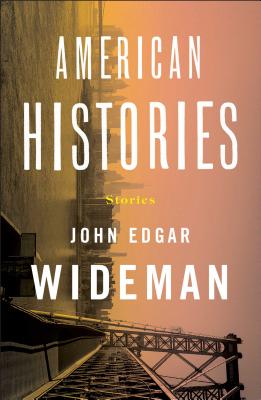
‘American Histories’ by John Edgar Wideman – Odds and Ends


‘American Histories’ by John Edgar Wideman (2018) – 221 pages

Most of the items in the new collection ‘American Histories’ do not reach the level of a story although one of them, ‘Writing Teacher’, did get published in the New Yorker. Most of these are narratives or accounts or vignettes or dialogues. They do not tell fully developed stories with fully developed characters. Some are very short, only a couple pages long.

I first encountered the fiction of John Edgar Wideman in the 1990s, I became hugely impressed with his fictional work, especially his novels ‘Philadelphia Fire’, ‘Reuben’, and ‘Sent For You Yesterday’. His dramatic stories gave me some much-needed insight into black life in the United States. Since the 1990s, Wideman has mostly switched from writing fiction to writing memoirs and other forms of non-fiction, and since I generally only read fiction I have not kept up with his work.

So I returned to John Edgar Wideman with ‘American Histories’ after a twenty-year hiatus. Unfortunately ‘American Histories’ is not a collection for us fiction lovers but rather more for those who like non-fictional forms of writing. I am disappointed that Wideman gave up on fiction as he was such an excellent fiction writer.

The first entry in the collection is ‘JB & FD’ which is a dialogue between the fiery abolitionist John Brown and the statesman and orator Frederick Douglas. Basically this piece is just a dialogue between the two figures with very little historical context. If you are wondering if these two historical figures ever met in real life, you will not find that out from this sketchy dialogue.

I did like the story ‘Writing Teacher’ because it probably was the closest to having the values of fiction. ‘Williamsburg Bridge’ is about a man sitting on the bridge contemplating jumping, and again any context is missing.

I don’t believe this collection is top-shelf Wideman but instead leftovers from a busy writing career. Also the work is more geared to people who like non-fiction. I found the work too didactic with too many generalities, abstractions, and cliched situations throughout the work to contend with. If anything, this collection reinforced my reasons for avoiding non-fiction. There is too much telling and not enough showing.

For those of you who like fiction, I would recommend reading Wideman’s excellent early fictional work such as ‘Philadelphia Fire’ or ‘Sent For You Yesterday’ instead.


Grade: C


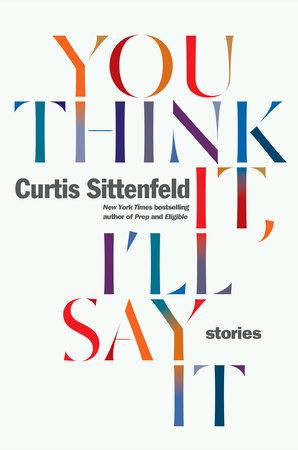
‘You Think It, I’ll Say It’ by Curtis Sittenfeld – In Praise of Subtlety


‘You Think It, I’ll Say It’ by Curtis Sittenfeld (2018) – 223 pages

This collection of ten stories is my first Curtis Sittenfeld fiction. For a long time I thought Curtis Sittenfeld was a guy because back in the olden days ‘Curtis’ was a guy’s name.

Anyhow these stories won me over with their immediacy and their rueful insight. One of many things that Sittenfeld is good at as a writer is showing precisely how we evolve from first impressions of others to something closer to the truth. Our first impression of someone might be mean or nasty or it might be overly positive, but more evidence can cause us to revise our opinion. Nearly every one of these stories depicts our narrators having to make this kind of adjustment in their thinking. Ultimately these changes in our perceptions of others are what shape our own character. Thus these stories are profound without hitting us over our heads with their profundity.

These stories are not dramatic or tragic. They are not about momentous events. They are about the subtle changes in our attitudes and opinions of others as we go through each day. We all misread or make mistakes as we begin to size up another person or situation. New data or developments require us to alter our course. These stories capture these subtle or not-so-subtle revisions that we must necessarily make in regard to others. They are rueful yet light-hearted and pleasant to read. Although these are modern stories in the Here and Now, Curtis Sittenfeld belongs in the same category as classic writers like Jane Austen and Elizabeth Taylor who could make everyday interactions between people interesting and meaningful.

All of these stories take place in recent times but they may reflect on situations that have occurred in the past.

The collection title comes from the second story ‘The World Has Many Butterflies’. ‘You Think It, I’ll Say It’ is a party game for two where Julie says what Graham might be thinking about someone else at the party. It’s a catty game, but Julie misinterprets the signs to believe that she and Graham are on the same wavelength. Later when Graham breaks up with his wife, Julie finds out how wrong she was.

Curtis Sittenfeld has a clever offhand way of cutting to the chase and getting us readers inside these characters and situations quickly. It is very easy to like these stories.


Grade: A


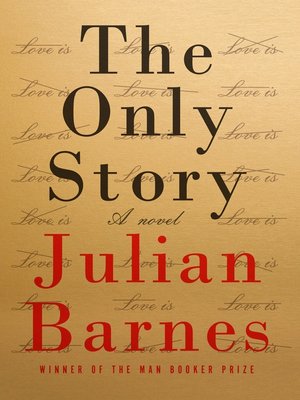
‘The Only Story’ by Julian Barnes – Paul is 19 and Susan is 49


‘The Only Story’ by Julian Barnes (2018) – 253 pages

”The Only Story’ is about a May-December romance, a quite unusual May-December romance. Here nineteen year-old Paul falls in love with forty-nine year-old Susan after they meet at a local tennis club and play tennis as a mixed doubles team. I have never encountered or heard about any romantic relationships where the woman is that much older than the man. This takes place in an upper class English neighborhood. Susan is married to nightmare husband Gordon. For Paul it is first love, and he falls hard. At nineteen, he is proud that his romance flies in the face of social respectability.

It was a matter of some pride to me that I seemed to have landed on exactly the relationship of which my parents would most disapprove.”

Later both Paul and Susan are kicked out of the tennis club.

The story is told from the point of view of Paul when he is many years older and is looking back on his younger days.

Part I is devoted to the early stages of the romance when Susan is still living with her husband. Paul spends most of his time at Susan’s house and inescapably meets her abusive violent husband Gordon. Gordon is the villain of this story. At the end of Part I Gordon slams a door into Susan’s face, breaking six of her teeth and cracking her jaw.

In Part II, after two years Paul and Susan move in together. It is only then that Paul discovers that Susan has an alcohol problem. There is no foreshadowing of this alcohol problem at all. Instead Susan is presented at the beginning of the novel as this wonderful person but about half way through she suddenly turns into an awful drunk whom Paul must take care of and protect her from herself. This does not seem fair to Susan, and I believe it is a mistake on Barnes’ part in not making her descent into alcoholism somewhat more gradual and more from her own point of view.

As usual with Julian Barnes, he waxes philosophical every few sentences in ‘The Only Story’. However since the plot and characters in ‘The Only Story’ are so lame, all this philosophizing seems unearned. After a while all this blathering on about Love and Life grew tiresome.

Part III is valedictory. In this part Barnes gives up on any pretense of plot or characters and thus is wide open for even more heavy-duty philosophizing. After ten years, Paul realizes he is wasting his life keeping track of the hopelessly drunk Susan and makes arrangements with her daughter to take over care of Susan.

‘The Only Story’ has a sad elegiac tone with many generalities about Love, made even sadder by such philosophical insights as the following:

That’s not a very kind thing to say.”

I don’t do kind, Paul, Truth isn’t very kind. You’ll find that out soon enough as life kicks in.”

I just might cry.


Grade: C+


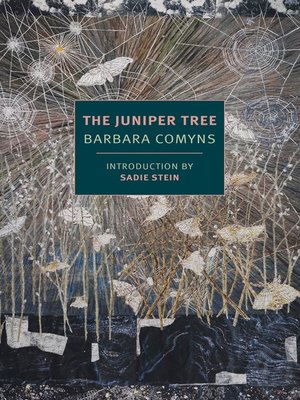
The Juniper Tree’ by Barbara Comyns – The Not-So-Wicked Step-Mother

‘The Juniper Tree’ by Barbara Comyns (1985) – 177 pages

‘The Juniper Tree’ is based on a gruesome fairy tale of the same name by the Brothers Grimm. Here is a short cartoon video of the Brothers Grimm ‘The Juniper Tree’ fairy tale. Lines from the fairy tale serve as the foreword to the novel.


My mother she killed me
My father, he ate me
My sister little Marlinchen
Gathered together my bones
Tied them in a silken handkerchief,
Laid them beneath the juniper tree,
Kywitt, kywitt,                                            what a beautiful bird I am.


Don’t worry, although in some ways the Barbara Comyns version is faithful to the fairy tale, her novel is not at all gruesome. Instead it is subtly disquieting, plausible, and sometimes unsettling. The stepmother Bella Winter in her novel is a quite likeable English woman whose greatest pleasure is dealing in antiques. Bella has a facial scar caused by a car accident her former boyfriend had. Bella also has her own little mixed race daughter Marline resulting from a one-night stand after she broke up with her boyfriend. Through her work for an antique store she meets and befriends the upper class couple Gertrude and Bernard Forbes who live on an estate which has the juniper tree.

That is the opening framework of the novel, and I won’t give away any further plot information so I don’t spoil it for you. I found this odd novel an enjoyable read as I have also found two other novels by Barbara Comyns. In all three novels her heroines keep up a good front and carry on despite troubling circumstances. It is our audacious heroine Bella who makes ‘The Juniper Tree’ a captivating read. Bella’s positive insight into her situation drives the novel.

One thing that seems a constant in her novels is that the men never come off as acting that well in them. They tend to be insufferable in one way or another. That is certainly true of the two main men in ‘The Juniper Tree’.

Comyns’ ‘The Juniper Tree’ was published in 1985 after an eighteen year hiatus in her writing career. Perhaps it was that Virago began to republish her earlier novels that caused this resurgence. She went on to publish two more novels before she died in 1992.

This novel is a strange mixture of fairy tale starkness and modern social realism, but Comyns pulls it off with élan. In all of her work the freshness of her approach and her simplicity in tackling bizarre or horrific events is impressive.


Grade: A

‘The Overstory’ by Richard Powers – The Trees of Life


‘The Overstory’ by Richard Powers   (2018) – 502 pages


Trees play a bigger role in our lives than most people realize.  We take them for granted and allow lumber companies to cut down forests of thousand year old trees just so they can make a nice profit. The original forest in the eastern part of the United States is long gone, and in the west it is being rapidly depleted.

 “A tree is a wondrous thing that shelters, feeds, and protects all living things.  It even offers shade to the axmen who destroy it.”   

Demand for wood products continues to rise and old-growth forests are often the main source of much desired hardwoods.  Since 1600, 90% of the virgin forests that once covered much of the lower 48 states have been cleared away. Most of the remaining old-growth forests in the lower 48 states and Alaska are on public lands. In the Pacific Northwest about 80% of this forestland is slated for logging.  Elsewhere the widespread destruction of the original Amazon rainforest as well as other old forests is causing rapid global warming.

“This is not our world with trees in it.  It’s a world of trees, where humans have just arrived.” 

Of all the modern writers, only Richard Powers could turn this appreciation of trees into a more than readable novel.  Only Richard Powers could make this compendium of stories about trees entirely fascinating.  His prose is always refreshing, fascinating in its intelligence, and exhilarating in its seeming magical ability to make unlikely connections between natural phenomena and our man-made lives.

‘The Overstory’ is mainly about a small group of people who come together in order to save old forests from the loggers.  First we get the early biographies of each of these persons, what caused them to love trees in the first place.

“There’s a Chinese saying: ‘When is the best time to plant a tree?’ ‘Twenty years ago.’”  

They wind up in the Pacific Northwest.  First they attempt to disrupt the loggers’ activity by sitting in trees that are designated to be cut. Thus the protesters will stay in a tree for weeks or months at a time while the loggers, especially the logging company owners, get more and more angry.  Protecting these trees is a hopeless cause for these tree protestors as the police are on the side of the loggers and arrest the tree protesters when they can.  Just because a cause is lost doesn’t make it wrong.  Later the tree protesters resort to more desperate means.

You may have noticed above that this novel is over 500 pages long.  I have no problem with long novels that are fully engaged, but ‘The Overstory’ seemed scattered, diffuse, and unfocused at times to me. We readers could have done without a few of the eight characters or couples that are the main protagonists, especially those who are not directly related to the main plot. There is one couple, Ray Brinkman and Dorothy Cazaly, who could have been entirely omitted, and it would have made the novel better.  There is also the video game designer Neelay Mehta who really didn’t add anything to the story for me.  If the author had concentrated on a few less characters, he could have given those few more depth and thus made them more interesting.  Only one character, Patricia Westerford, was fully developed and therefore fascinating to me. It seemed like Powers was more interested in the trees than the people who populate this story.

As a polemic for the importance of trees for human life and for all life on Earth, ‘The Overstory’ is excellent; as a fiction not quite so much.


Grade:   B   


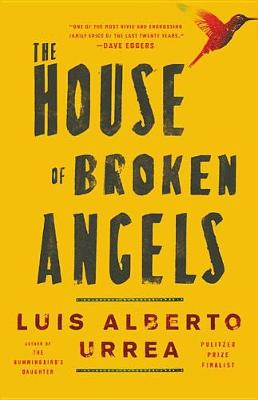
‘The House of Broken Angels’ by Luis Alberto Urrea – The Entire Family One Last Time


‘The House of Broken Angels’ by Luis Alberto Urrea  (2018) – 326 pages

‘The House of Broken Angels’ is an affectionate humorous portrait of an extended Mexican-American family in San Diego. This family narrative is brimming with life. As the family gathers for the last birthday party of old man Big Angel, his nearly hundred year-old mother dies, so first there is a Latino funeral.

“Love and sorrow wafted across the chapel like perfume.  So did the perfume.” 

We get colorful descriptions via Big Angel of all the shoestring relatives that show up for the funeral.  Nearly everyone has a nickname :  Big Angel, Little Angel, Mama America, and El Pato.  Like any occasion when we have not seen many of our relatives for a long time, we think back on these people and what they were like when they and we were young.

Those who became successful are there, and the ne’er-do-wells are there also, trying and usually failing to look solemn and impressive.  Of course each one at the funeral has their own view of who the ne’er-do-wells actually are.  Some of the younger members of the family are there also.

“Lots of the youngsters were in the New American Pose:  heads bowed, hands at mid chest, looking like monks at prayer, texting their asses off on their smartphones.” 

At a funeral, one’s thoughts take a serious turn.

“Death. What a ridiculous practical joke.  Every old person gets the punch line that the kids are too blind to see.  All the striving, lusting, dreaming, suffering, working, hoping, yearning, mourning suddenly revealed itself to be an accelerating countdown to nightfall.” 

We remember those who have already departed. But mostly Big Angel recalls all these family members who he is probably seeing for the last time with gentle loving humor. Even the priest is not exempted from the hilarity.

The priest was revved up like some Elysian dragster, about to pull religious wheelies all the way down the track.  They were in for it now with no way to get out.

“She gave you nearly one hundred years of motherly sacrifice! Good mother, good grandmother, good Catholic, good neighbor! The line of mourners should be out the door! Shame. Shame. Shame.”

Well, he wasn’t wrong. 

After the funeral, the family goes ahead the next day with the birthday celebration for Big Angel who realizes the end is near for him also.  Although the family has lived in the United States for a long time and a lot of water has gone over the dam since they left Mexico, they are still proud of their Mexican background.

“We’re pretty much Americans now, right?  I mean, this is a post-immigration family.  By what, almost fifty years?”

“Yeesus.”

  “I’m still Mexican,” Little Angel said. “Mexican-American?  But let’s face it, I don’t live in, what, Sinaloa.”  

From my experience through the years from childhood on with my own extended family, I can say that Luis Alberto Urrea gets it right in a humorous yet loving way.


Grade:   A     


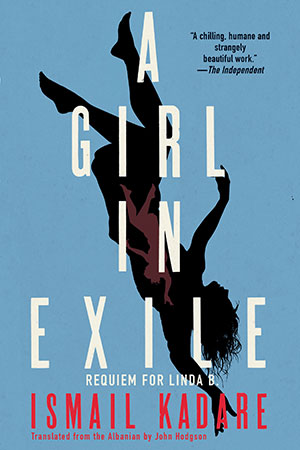
‘A Girl in Exile’ by Ismail Kadare – Requiem for Linda B.


‘A Girl in Exile’ by Ismail Kadare   (2009) – 185 pages    Translated from the Albanian by John Hodgson

I was surprised to find that this is the fourth novel by Ismail Kadare that I have reviewed here at Tony’s Book World.  That fact alone does indicate the high esteem in which I hold Ismail Kadare as a writer of modern fiction.

Kadare spent much of his childhood and many years thereafter living in his home country of Albania then ruled by the Communist totalitarian regime of Enver Hoxha.  This life in a brutal repressive regime has been the main subject of Kadare’s fiction especially since 1991 when the Communist government in Albania collapsed.  ‘A Girl in Exile’ is another Kadare novel which deals with this terrible time in Albanian history.

The narrator in ‘A Girl in Exile’ is a writer – a playwright – much like Kadare himself.  Like Kadare, this playwright achieved great success at an early age and is held in watchful respect by the Communist Party.  However the Party does monitor his plays before allowing them to be performed, and that is one of the possible reasons the playwright thinks that he may have been called in to be interviewed by two members of the Party.  The other possible reason he thinks he may have been called in to be questioned is for a fight in which he has hit his latest girlfriend.

However the real reason he has been called in is neither his new play nor his fight with his new girlfriend.  Instead the officials are curious about another girl, Linda B., who has never met the playwright but who has one of his books which he had personally signed.  During the Communist years, certain families were forced into internal exile within Albania itself for the “crime” of being middle class.  These people who were victims of internal exile were forced to live in some remote town and were not allowed to travel within the country, especially not to the biggest Albanian city of Tirana where the playwright lives.

The playwright’s new girlfriend is a college age student who is a friend of Linda B.  He has taken up with this new young girl while his longtime paramour is away. This young girlfriend takes the book he signed to Linda B.   As I mentioned before, the playwright is worried that the authorities may have found out about his fight with this new girlfriend in which he hit her.  This playwright is no saint.  The Communist authorities allow this playwright to get away with much more than other Albanian people because of his world-renowned stature as a writer.  Linda B. worships him from afar because of his writing.  Linda B. has fallen in love with the playwright although she has never met him. Linda B. will do anything to get to Tirana to meet the playwright, even fake cancer.

So there are two themes in ‘A Girl in Exile’, the brutality of the Communist officials in imposing these internal exiles on their own Albanian people and the adulation by even the Communist authorities and everyone else of a major literary star.

I found the worship of this playwright by this college age girl Linda B. who never met him rather unbelievable and also hard to take.  Somehow I felt like all of this adulation for this playwright has gone straight to his head.

.

Grade :   B   


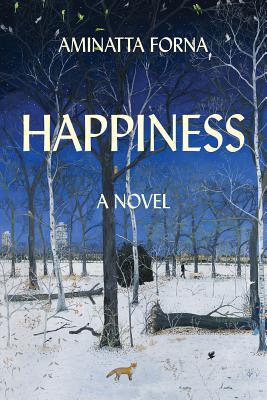
‘Happiness’ by Aminatta Forna – Tracking the London Foxes


‘Happiness’ by Aminatta Forna   (2018) – 312 pages

I was very much anticipating reading ‘Happiness’ by Aminatta Forna after reading her excellent previous novel ‘The Hired Man’, and now after finishing ‘Happiness’ I can say that it has even exceeded those high expectations.  ‘Happiness’ is my favorite novel that I have read so far this year.

I defy anyone to read the first eight pages and not continue reading ‘Happiness’.  They are that good.  These pages about a wolf hunter in Massachusetts in 1834 are only peripherally related to the rest of the story, but they do set the stage.

The main story takes place in today’s London, especially on the streets of London, where the two main characters literally collide when they first meet each other.  The two characters, Jean and Attila, are both middle-aged; both have been married before but are single now.

The woman Jean is from Massachusetts but she is currently living by herself in London studying urban foxes.  Now that England has banned fox hunting, many foxes have taken to living on the streets of London, surviving to some extent on the food waste that is thrown away. Her passion for these urban foxes keeps Jean searching for them on the streets, and we get a street-level view of the city.  She has a network of volunteers to help her track the foxes.

The man Attila is a renowned psychiatrist from Accra, Ghana who aside from his regular work must also deal with immigration crises that arise for other Africans living in London. When a young Ghanaian woman gets swept up in an immigration crackdown, her young son goes missing.  By this time Jean and Attila are beginning their friendship, and Jean employs her network of fox watchers to help find the boy.

The gradual emerging of a close relationship between Jean and Attila is the centerpiece of this novel.  Its theme can perhaps be best stated by the following lines:

 “The reckless open their arms & topple into love, as do dreamers who fly in their dreams without fear or danger. Those who know that all love must end in loss do not fall but rather cross slowly from the not knowing into the knowing.”

Aminatta Forna writes her story in a clear, direct, and straightforward manner without resorting to any flamboyant language or tricks.  By capturing more than just what is happening on the surface, she achieves a depth that is missing from many novels.  She delves into several subtle subjects such as the starkness of nature and humans’ natural resilience to tragedy.

“What if by labeling our patients damaged from the outset, we not only condemn them to a self-fulfilling prophecy, but have overlooked a finding of equal importance? That the emotional vulnerability of trauma is oftentimes transformed into strength.  What if we were to have revealed to us that misfortune can lend life quality? Whatever does not kill me makes me stronger, yes. What if I told you that there are times when whatever does not kill me can make me more, not less, than the person I was before?”

Also Forna takes up a not new idea that is similar to one that has been intriguing me lately, hers being that we humans, like those urban foxes, are just as much a part of nature.

In my review of ‘The Hired Man’, I compared the writing of Aminatta Forna to that of Kazuo Ishiguro, and I still believe that comparison holds.

The best fiction excites and exhilarates us up to a place we have never been before, and ‘Happiness’ definitely did that for me.


Grade:   A+ 


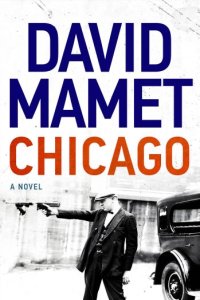
‘Chicago’ by David Mamet – A Slug of Violent Cynicism Mixed with a Pill of Maudlin Sentimentality


Chicago’ by David Mamet   (2018) – 332 pages

“Jackie Weiss had died of a broken heart, it being broken by several slugs from a .45.”     

‘Chicago’ by David Mamet is an old-fashioned gangster novel that wears its all-pervasive cynicism and violence proudly. It is a tale of unending corruption written in Mamet’s distinctive tough-guy style.

The scene is the all too familiar one of Chicago in the 1920s.  Al Capone’s Italian gang runs the south side of town; Dion O’Banion’s Irish gang runs the north side. Mike Hodge is a hard-drinking reporter for the Chicago Tribune covering the action at all costs with his deadpan partner Parlow.

All the clichés of the era are here, the hooker Peekaboo with a heart of gold, the nightclub owner murdered by the mob using a Thompson sub-machine gun, the wise-guy reporters trying to write it all down by deadline.  The story morphs into a murder mystery when Mike’s so sweet love-of-his-life girlfriend Annie is gunned down as the couple sits in a restaurant.

The plot in ‘Chicago’ is about as clichéd as a story can get, and the characters are all trite stereotypes you would find in any old gangster movie or story. There are only two ways in ‘Chicago’ to react to anything that happens, either you are perversely cynical or you are maudlin with sentimentality.  What saves the novel to some extent is the energy of the writing.  As you would expect from the playwright Mamet the dialogue is vivid and engaging, though drop-dead cynical.  Here is a good example of this wise-ass style of writing:

“A newspaper is a joke.  Existing at the pleasure of the advertisers, to mulct the public, gratifying their stupidity, and render some small advance on investment to the owners, offering putative employment to their etiolated wastrel sons, in those young solons’ circuit between the Fort Dearborn Club and the Everleigh House of Instruction.”

“Well, fuck you,” Mike said, “as we said in the Great War.”

Mike often waxes sentimental about his days fighting and flying in World War I.  Why are the most cynical and disdainful of men also the most mawkishly maudlin and sentimental about the things that they themselves happen to like?

I had no problem reading this novel.  I sped through all the plot clichés, the shopworn unoriginal characters, the cynicism, the sentimentality.  However ‘Chicago’ left little of lasting value.


Grade:   B


‘Troilus and Cressida’ by William Shakespeare – A Decidedly Un-Heroic Play


‘Troilus and Cressida’ by William Shakespeare, a play  (1601-1602) – 114 pages

William Shakespeare started the drama ‘Troilus and Cressida’ in 1601 shortly after he had finished ‘Hamlet’ and only a couple of years before he started ‘Othello’, ‘King Lear’, and ‘Macbeth’.  There is little doubt that Shakespeare was operating at his peak during this period.  However ‘Troilus and Cressida’ has never attained the stature of these four other dramas.  Why not?  While I discuss ‘Troilus and Cressida’, I will attempt to answer that question.

‘Troilus and Cressida’ takes place in ancient Greek times during the seventh year of the Trojan War.  Besides Homer, one of Shakespeare’s primary sources for the play was the epic poem ‘Troilus and Criseyde’ written by Geoffrey Chaucer in the mid-1380s.  In Shakespeare’s time, the Greek love story of Troilus and Cressida was as famous as that of Romeo and Juliet.

In the play, there are scenes of human passion and of human battle.  Neither in passion nor in battle do the characters act heroicly or divinely or even honorably.  In both cases, these people act all too human.  That is why ‘Troilus and Cressida’ is sometimes considered a modern play.

We start with the character Pandarus.  His name Pandarus is actually the derivation for the modern verb “to pander”. Pandarus is Cressida’s uncle.  After he finds out that Troilus has the hots for Cressida, he keeps praising Troilus to Cressida until he accomplishes his goal which is to get Cressida in bed with Troilus.  Afterwards Troilus and Cressida pledge undying love to each other.  However, soon Cressida’s father makes a deal with the Greeks to trade Cressida for a Trojan soldier held prisoner by the Greeks.  Cressida is taken to the Greek camp where she is warmly welcomed.  Unbeknownst to her, Troilus is watching as she becomes increasingly drawn toward one of the Greek soldiers Diomedes, and Troilus watches as she gives Diomedes the sleeve which Troilus had given her as a token of his undying love.  Troilus, of course, is outraged at her faithlessness.

At the outset of the battle scenes, the Greeks are depending on Achilles to lead the fighting against the Trojans, but Achilles just lays in his tent with his buddy Patroclus and has “grown dainty of his worth”:

“The Great Achilles, whose opinion crowns
The sinew and the forehand of our host,
Having his ear full of his airy fame,
Grows dainty of his worth,
And in his tent
Lies mocking our designs.  With him Patroclus
Upon a lazy bed the livelong day
Breaks scurrile jests.”

Instead the Greek leaders decide to pick the fool Ajax to lead the fighting in the hopes that Achilles will get jealous and step in to take over.

Meanwhile the Trojans begin to realize it is ridiculous for both sides to have so many men killed in fighting just for the sake of this one beautiful woman Helen.  The Trojans propose to return Helen to the Greeks and stop the war, but the Greeks don’t accept their offer.

The war continues and the Trojan warrior Hector defeats Ajax easily and among the scores of Greeks he slays is Achilles’ buddy Patroclus.  This finally rouses Achilles to battle.  However Achilles’ behavior is by no means heroic.  Achilles has his men attack and kill Hector while Hector is resting with his armor off.  Then he ties Hector’s body to the back of his horse and drags the body over rough land.

In ‘Troilus and Cressida’, there is no honor or fidelity in either love or battle.  This is Shakespeare’s most cynical but perhaps also his most realistic play. If people act so poorly, how can anything that happens to them be tragic? Joyce Carol Oates has written of ‘Troilus and Cressida’ that “no darker commentary on the predicament of man has ever been written”.

“There is no help;
The bitter disposition of the time
Will have it so.”

Why hasn’t ‘Troilus and Cressida’ achieved more popularity? Perhaps people are more comfortable and enthusiastic with the romance and undying love of ‘Romeo and Juliet’ than with the bitter cynicism and darker realism of ‘Troilus and Cressida”.


Grade:   A