Archive for the ‘Book Reviews’ Category

‘Big Sky’ by Kate Atkinson – A Very English Crowd


Big Sky’ by Kate Atkinson   (2019) – 400 pages

There is nothing really wrong with ‘Big Sky’. It is an entertainment with a lot of English cute along the way. But the novel is so busy showing the idiosyncrasies of its large cast of quirky characters that it has no time for any real depth. You almost need a scorecard to keep track of all the folks running around.

This time detective Jackson Brodie has moved to the northeastern coast of England and while watching for a possible wayward husband is reluctantly on the trail of a sex trafficking ring which supplies young girls from other countries for some of Britain’s elites. The sex trafficking ring is made up of three small-time criminals who conveniently are not involved in any of the actual sexual abuse so that they and their family members can also be portrayed as cute. Since the sexual abuse is never portrayed, ‘Big Sky’ can keep its characteristic light sense of humor. Instead of sex abuse we get loads of physical violence.

Along the way of this very tangled plot there are some humorous lines:

You would have thought that getting divorced from a woman would free you from the obligation of identifying her corpse, but apparently not.”

Since Jackson Brodie is a recurring character in a series of novels, we find references to other extraneous events here. Also there are more recurring characters including Brodie’s family and the two female policewomen Ronnie and Reggie. The subplots concerning Jackson’s family are probably of great interest to Jackson Brodie fans but not so much to the rest of us readers.

‘Big Sky’ is a whirlwind of English persons and plot lines. ‘Big Sky’ is so busy with its multitude of eccentric characters to have any profundity. It is all on the surface. Atkinson would have to slow down, simplify her story, and drastically reduce the number of characters in order to achieve any real depth. This is a crowd pleaser which is not a bad thing, but that’s all it is.

I still very much admire Kate Atkinson’s more literary novels such as ‘Life After Life’ and ‘Behind the Scenes at the Museum’. However Atkinson’s Jackson Brodie novels do not have the depth of for instance Louise Penny’s Inspector Gamache detective series, so from now on I will probably stick with Atkinson’s more literary novels and avoid her detective novels.


Grade:   B


‘The Party Wall’ by Catherine Leroux – Linked Stories of Four Family Member Pairs


‘The Party Wall’ by Catherine Leroux (2013) – 243 pages Translated from the French by Lazer Lederhendler

‘The Party Wall’ is a highly original intriguing work about four pairs of family members. Thus we have young sisters Monette and Angie, husband and wife Ariel and Marie, brother and sister Simon and Carmen, and double woman Madeleine and Madeleine (If you are wondering why Madeleine is listed twice, read the book).

Catherine Leroux is a Canadian author from Quebec writing in French.

At first there seems to be no linkage between the four separate stories but subtle connections develop. The arrangement of the stories is quite unique with a very short story about the little sisters Angie and Monette opening each new section, and the other three stories each first having a opening section and then later each has a closing section. All this jumping around did seem somewhat disjointed and hard for me to follow, but I’m sure the author had her purposes.

My favorite of the stories is that of the politician Ariel and his wife Marie, so I will mainly refer to that story. Politician Ariel rises to a Canadian leadership role only for him and his wife to become the subjects of a huge scandal through no fault of their own. They wind up having to leave Quebec in disgrace and wind up in the sparse plains of Saskatchewan. Leroux gives us an apt description of the people living there:

In any event, in this region of vast distances, where neighbors are recognized by virtue of their cars more than their faces, no one studies them up close. The inhabitants of central Saskatchewan have become so scarce they hardly look at each other and are identified from a sideways glance at their hairdos, their voices, the unique vibration of their presence, always perfectly distinct from someone else’s.”

The political scandal that beset Ariel and Marie involved an extremely rare medical or biological family anomaly which I won’t reveal. All three of the main stories are driven by just such uncommon biological aberrations, and I felt the author over-relied on this plot device.

Another device the Leroux overuses is the surprise grotesque horrific ending. Stories don’t have to be grotesque or have dreadful endings in order to be interesting. If they have quiet happy endings, they might be even more satisfying for the reader, at least for me.

‘The Party Wall’ is a difficult novel to rate. The writing itself is intelligent and well-crafted and carried me along pleasantly. I suppose its odd arrangement, one-in-a-million coincidences, and sudden terrible conclusions could all be considered part of its charm. However I would not count on it.


Grade:   B


‘Drive Your Plow Over the Bones of the Dead’ by Olga Tokarczuk – Astrology and the Plight of the Animals

‘Drive Your Plow Over the Bones of the Dead’ by Olga Tokarczuk (2009) – 274 pages                                                      Translated from the Polish by Antonia Lloyd-Jones

‘Drive Your Plow Over the Bones of the Dead’ begins with alarming but fascinating stark intensity:

We left the house and were instantly engulfed by the familiar cold, wet air that reminds us every winter that the world was not created for Mankind, and for at least half the year it shows us how very hostile it is to us. The frost brutally assailed our cheeks, and clouds of white steam came streaming from our mouths.”

The old woman who lives in a rural forest area, Janina Duszejko, and her neighbor Oddball find the newly dead body of their other neighbor Bigfoot lying on his kitchen floor. He appears to have choked to death on the bone of a deer. Nearly everyone here has a nickname. The old woman’s reaction is severe:

I disliked him. To say I disliked him might be putting it too mildly. Instead I should say I found him repulsive, horrible. In fact I didn’t even regard him as a human Being. Now he was lying on the stained floor in his dirty underwear, small and skinny, limp and harmless…for someone as foul as he was did not deserve death. Who on earth does?”

I can think of no other novel in which the main character’s reaction to events is so fierce and sharp.

The old woman has two strong beliefs. One is a belief in astrology. There is much talk of which planet or moon is ascendant or in opposition. I usually avoid like the plague books that go too heavily into astrology, but I am happy I stuck with this one.

Her second belief is a love of and a passion for justice for animals. She absolutely detests the killing of animals, especially by hunters. Here is her justification:

They were more human than people in every possible way. More affectionate, wiser, more joyful… And people think they can do whatever they want to Animals, as if they are just things. I think my dogs were shot by the hunters.”

She becomes livid when she finds the hunters near her home have set up salt licks to attract deer.

And when the Animals come to feed, they shoot at them. It’s like inviting someone to dinner and murdering them.”

She is fanatic about all animals, even the lowliest:

It occurred to me that every unjustly inflicted death deserved public exposure. Even an Insect’s. A death that nobody noticed was twice as scandalous.”

When the old woman reports cases of animal cruelty to the authorities, they see her as “a tedious madwoman who is hopeless at everything, pathetic and laughable”. However in her younger days, she worked as a bridge construction engineer and then a grade school teacher.

At one point the irate old woman tells us of the value of anger:

“Sometimes when a Person feels Anger, everything seems simple and obvious. Anger puts things in order and shows you the world in a nutshell. Anger restores the gift of Clarity of Vision, which is hard to attain in any other state.”

All I can say is that despite the old woman’s beliefs in things I don’t necessarily agree with, she states her views in such a clear straightforward fashion that she won me over as a fictional character.

‘Drive Your Plow Over the Bones of the Dead’ is a powerful passionate intense novel, and I strongly recommend it.


Grade:    A


‘Turbulence’ by David Szalay – A Whirlwind Trip Around the World


‘Turbulence’ by David Szalay   (2019) – 145 pages

‘Turbulence’ is a quick trip around the world in twelve separate airplane flights.

Turbulence – irregular atmospheric motion especially when characterized by up-and-down currents; violent disorder or commotion

This novel depicts not the turbulence in the air but instead the turbulence in people’s lives.

Thus we have twelve very short stories about 12 very diverse people of many different nationalities and occupations – pilot, co-pilot, writer, elderly mother, etc. – as they travel from city to city around the world. Thus we travel from London to Madrid to Dakar to Sao Paulo to Toronto to Seattle to Hong Kong to Saigon to Bangkok to Delhi to Kochi to Doha to Budapest to London.

Along the way we deal with people who are avoiding close members of their own family, unfaithfulness, severe illness, and other kinds of unrest. The stories are only minimally connected.

This is perhaps a clever idea for a novel, but it did not work this time. There are too many characters with not enough development of the characters and not enough plot. We barely get to know these people before we are off to the next flight and an entirely different set of people. There is little description of the landscape or atmosphere in all these diverse cities except for the airports which all tend to be about the same.

The stories are too sketchy and too diffuse to have much of an impact. All Szalay does is show the turbulence in these characters’ lives. He makes no attempt to show how each character handles the turbulence. He is in too much of a hurry to move on to the next character, and that was unsatisfying for this reader. The stories that make up ‘Turbulence’ just do not go deep enough into these characters’ lives.

Previously I had been extremely impressed with ‘All That Man Is’ which was also written by David Szalay and I considered it one of the very best novels I read in 2016. That novel was also a collection of only slightly connected stories of people on the move, in that case men traveling around Europe. However the stories in ‘All That Man Is’ were much more fully developed and entirely convincing in their understanding and insight into the male psyche.

‘Turbulence’ is a sketchy disappointment.


Grade:    C+


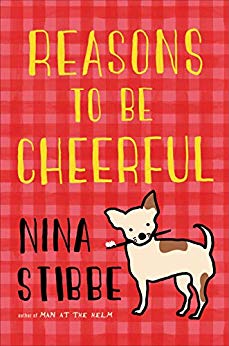
‘Reasons to be Cheerful’ by Nina Stibbe


‘Reasons to be Cheerful’ by Nina Stibbe (2019) – 275 pages

‘Reasons to be Cheerful’ has been called a comic novel, but for me it went way beyond humor to be a very fine meaningful work indeed. Nina Stibbe doesn’t try to be funny, she is just naturally funny. It is her way of putting things.

Lizzie, the first-person 19-year-old narrator here, has a mind of her own, a sharp mind of her own. She is moving out of her family house and starting her first job. When you look back on your first real job, you probably remember the people there quite vividly, whether for good or bad. Lizzie works in a dental office for a dentist she can’t stand. She lives in an apartment right above the dentist’s office. The dentist won’t do work for brown-skinned people through the National Health Service so Lizzie, having watched the dentist extract a tooth and so on, does the work herself.

Lizzie meets a young guy named Andy Nicolello who is a member of a family from her neighborhood that her family has known and that has been the subject of gossip from way back. Lizzie’s family has quite a few quirks of their own, especially her mother.

Did it honestly matter that we’d been raised and shaped by eccentric mothers?

Mine: drunk, divorcee, nudist, amphetamine addict, nymphomaniac, shoplifter, would-be novelist, poet, playwright.

His: teetotal, anti-establishment, rabbit trapper, alleged suicide-pact participant, television-forbidder, misery guts.

Did it make us incompatible in the eyes of the world? Plus, what did it matter what people thought?”

Yet often Lizzie’s mother is the voice of baffling reason. But this time it is Lizzie’s sister with the advice:

Look, you’re weird, he’s weird, together you will be a million times weirder. Your mutual weirdness will reflect forever – like mirrors that face each other.”

Lizzie’s attitude toward life and friends and love is irresistible.

‘Reasons to be Cheerful’ is a jaunty sustained spirited performance. I have found that with many comic novels I grow weary of the author’s sense of humor. These novels tend to be too episodic without a continuous story. Then I sense the author is trying too hard to be funny. In ‘Reasons to be Cheerful’, Nina Stibbe avoids all these problems. Even when events turn tragic, we are with Lizzie all the way.

‘Reasons to be Cheerful’ is a reason to be cheerful.


Grade:    A


‘A Sleepless Summer’ by Bram Dehouck – Rampant Mischief In a Small Town in Flanders


‘A Sleepless Summer’ by Bram Dehouck (2011) – 179 pages Translated from the Dutch by Jonathan Reeder

The folks in this little Belgian town of Blaashoek are nasty for sure, but their nastiness is the same kind we encounter in our own lives every day.

If your own life is a failure then nothing beats seeing someone else’s life fail even more. She no longer strove for her own happiness, but lived for the unhappiness of others.”

Nastiness is all around us. Bram Dehouck just takes this neighborly nastiness to the next level. When these townspeople are fed up, they grab something, usually a gun, and commit violent acts.

Sadly or comically, as the case may be, the nastiness gets out of hand, and the town descends into chaos, all to the tune of the incessant whirring noise of the ten electric wind turbines that have been installed next to the town. Perhaps it is this constant whirr that is driving the townspeople crazy.

Each character we meet is credible and crazy at the same time. Herman Bracke who runs the town butcher shop is famous for his delicious summer paté which the townspeople love. One night he uses the paté mix to cover his ears to block out the nonstop noise of the wind turbines, and his wife Claire persuades him to sell it in the meat shop anyway. Unfortunately a mass outbreak of diarrhea from food poisoning ensues. We the readers are subjected to all the individual twists and turns and embarrassments caused by this diarrhea

This may be dark humor but it is also low rather crude humor. I found most of the incidents in ‘A Sleepless Summer’ rather raunchy and coarse. One of the town ladies has wild sex with the only black immigrant in town, a man named Bienvenue, without any explanation of how they met. Here the author is just playing to town prejudices.

There are a few occasions where the humor in ‘A Sleepless Summer’ is not so crude, and these are the parts that I enjoyed the most. The quite young woman Saskia ran away from her grandfather’s farm and is now looking for work without much luck. Her advisor gives her some advice:

There was no need to feel unworthy or unwanted. Businesses received hundred of applications for a single job. The odds of them choosing you were smaller than of being run over by a garbage truck in broad daylight. Saskia had to laugh at that. Since then she had caught herself keeping an eye out for garbage trucks when crossing the street.”

However Saskia, like nearly everyone else, is ultimately caught up in the insanity and brutality of this small town.

In the end we come back to the cynicism that pervades this narrow-minded small town.

He did not believe what Catherine said, that people forgive and forget. People forget the bad things about themselves, but when it’s someone else, they forget only the good. Mistakes come back to haunt you, even years later.”

Perhaps that cynicism is warranted?


Grade:   B-


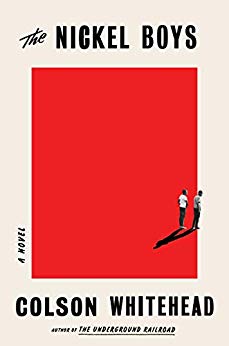
‘The Nickel Boys’ by Colson Whitehead – An Inhuman Reform School


‘The Nickel Boys’ by Colson Whitehead  (2019)  –  212 pages

We must believe in our souls that we are somebody, that we are significant, that we are worthful, and we must walk the streets of life every day with this sense of dignity and this sense of somebody-ness.” – Martin Luther King

This is good advice that applies to all of us. I got this quote straight from ‘The Nickel Boys’ which quotes King several times. The United States has a holiday for Martin Luther King, and ‘The Nickel Boys’ shows us why he is great. The family of Elwood, the main character in the novel, has a phonograph record of Martin Luther King giving a speech at Zion Hill.

Even though you can’t go to FunTown (a local amusement park)”, I want you to know you are as good as anybody who goes to FunTown.” – Martin Luther King

‘The Nickel Boys’ begins in early 1960s when King is still alive. Elwood is a smart conscientious boy who gets put in the Nickel Reform School for Boys in northern Florida through no fault of his own, for being in the wrong place at the wrong time.

Nickel magnified and refined the cruelty of the world.”

The black inmates at the reform school were kept in separate buildings from the white inmates. There the mistreatment of black inmates was passed down from the slave owners all the way to this reform school in the 1960s.

Their daddies taught them how to keep a slave in line, passed down their brutal heirloom. Take him away from his family, whip him until all he remembers is the whip, chain him up so all he knows is chains. A term in an iron sweatbox, cooking his brains in the sun, had a way of bringing a buck around, and so did a dark cell, a room aloft in darkness, outside time.”

Elwood gets into a fight trying to keep two bullies from beating up a smaller boy. The authorities don’t ask any questions of the boys and blame all four equally, and Elwood is administered a beating that lands him in the hospital for several weeks.

Even if you avoided trouble, trouble might reach out and snatch you anyway.”

The staff has it in for Elwood in particular, and he gets punished for acting above his station as a black boy.

Colson Whitehead’s descriptions of people, places, and events are always straightforward and matter-of-fact. He never over dramatizes for effect. Thus we readers trust what he says. We readers believe Whitehead when he writes that the black schools used the schoolbooks that were first worn out by the white schools and that some of the white students, knowing the black schools would soon be getting these worn-out test books, would scribble all kinds of racist epithets and pictures in them.

‘Underground Railroad’ was a fine historical novel, but ‘The Nickel Boys’ is even better due to its immediacy and its intensity and a surprising twist at the end.


Grade:    A


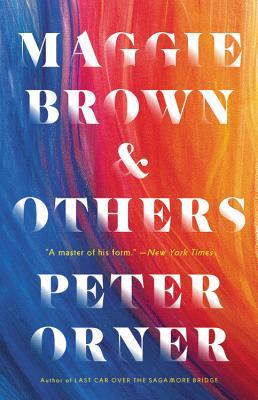
‘Maggie Brown and Others’ by Peter Orner – Stories that Compress A Person’s Life into a Very Few Pages


‘Maggie Brown and Others’ by Peter Orner (2019) – 319 pages

The story collection ‘Maggie Brown and Others’ consists of many very short stories written from varying characters’ points of view, each story by a different individual, that somehow get to the main issues in each person’s life. The following sentence from one of the stories goes a long way in explaining why these stories in ‘Maggie Brown & Others’ are so attractive to us readers:

“I’m always interested in the way people edit the details of their lives, the way they compress all the years into sentences.”

This compression of a person’s life into a very few pages is exactly what Peter Orner does in each of these stories. These stories are character driven.

Along the way, there are penetrating insights into how we people live.

“Is it always a choice between love and pity? Back then she felt neither. Is there nothing in between?”

Many of the stories appear to be based on acquaintances that Peter Orner has met along his way from Fall River, Massachusetts to Chicago to Wisconsin and then winding up in northern California. Others are based on his relatives residing mostly in Fall River. Other stories concern himself and his wife and family.

All of the stories involve this compression technique of telling vignettes from a person’s life to get at the essence of that person. Even the 110-page novella which ends the collection is made up short one-to-seven page vignettes which tell a meaningful story of, I assume, his father’s life in Fall River.

Peter Orner uses one device that I particularly appreciate, the old-fashioned use of an astute observation or moral to tell the reader the point of the story. Even the one-page stories have a clear point. So many current writers in order to “Show, not Tell”avoid this device today, and their stories wind up seeming pointless and aimless. I see nothing wrong with a writer being straightforward and just telling us what the point of their story is.

In the story ‘On the Floor, beside the Bed’, the story about the guy who used to play for the San Diego Padres, the narrator who volunteers as a paramedic is fascinated by this former ballplayer husband and his wife.

“I’m sometimes struck by how people who don’t look like they’d fit together actually do.”

Throughout this book of stories, there are memorable characters, poignant moments, and life lessons. This is fiction at its most moving and meaningful.


Grade:    A


A Few of my My Favorite Fictions by Women Which Have Been Translated Into English


When I look back on my reading lists over the years, I find the number of fictions I have read by women which were translated into English has been pathetically low. At certain times in my reading career, I have steered away from translations of either men or women fearing I would not get the pure original voice of the author. However for the classic male writers there were always translations available which I ultimately read. As for females there were very few women considered classic writers, and most of them wrote in English. The women who did get translated were those like Simone de Beauvoir (Jean Paul Sartre), Elsa Morante (Alberto Moravia), or Irmgard Keun (Joseph Roth) who had connections to famous male writers.

It was not until the 2000s that I started reading translated female writers in earnest. Perhaps the turning point for me was the rediscovery of Irene Nemirovsky starting with the publication of a translation of ‘Suite Francaise’ in 2004. here was one of the major writers of all time finally getting her due. I continued to read all her fine work as it was translated.

The next major event was the discovery of Elena Ferrante. Her four-novel cycle, the Neapolitan Novels (‘My Brilliant Friend’, ‘The Story of a New Name’, ‘Those Who Leave and Those Who Stay’, and ‘The Story of a Lost Child’) , enchanted me as few fictions do and caused me and many others to pay more attention to translated novels in general and those by women im particular. 

Here are some of my other favorites by women who have been translated into English.
‘The Princess of Cleves’ by Madame de la Fayette (1676) Translated by Nancy Mitford

Here’s one from way back that has somehow survived until today. The Princess of Cleves” gives us an inside view of the French royal court in the sixteenth century.  Although Madame de la Fayette wrote the novel around 1676, the time portrayed in the novel is about 1558 when Henry II was king of France and Elizabeth was just beginning her reign as Queen of England. It seems that nearly all the men and women in the royal court of France, including the King himself, have someone on the side besides their husband or wife. This is a fascinating and different view of royal history than the usual.
‘Mitsou’ by Colette (1919) Translated by Jane Terry

Colette is one of the few translated female authors I read before 2000. Of all her suggestive novels, ‘Mitsou’ is probably my favorite.
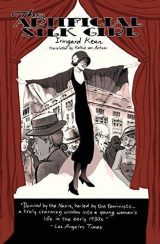


‘The Artificial Silk Girl’ by Irmgard Keun (1932) Translated by Kathie von Ankum

Here is a German writer known for her sharp-witted humor. She had a romantic relationship with the writer Joseph Roth. Her later life was overshadowed by alcoholism and homelessness.
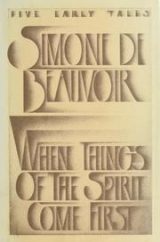


‘When Things of the Spirit Come First’ by Simone de Beauvoir (1937) Translated by Patrick O’Brian

Although I have read de Beauvoir’s more major work ‘The Mandarins’, my favorite is still this collection of interconnected short stories all titled with female names.



‘Kallocain’ by Karin Boye (1940) – Translated by Gustaf Lannestock

Here is a dystopian novel about a government who uses truth drugs to ensure the subordination of every citizen to the state. This novel transcends the science fiction genre.
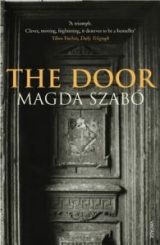


The Door’ by Magda Szabo (1987) Translated by Len Rix

This novel contains the ultimate hate-love relationship between a modern woman and her old housekeeper. I say “hate-love” because at first these two opposites are disgusted and furious with each other, and it is only later that they recognize that there is a deep closeness between them.
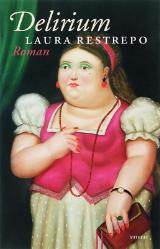
‘Delirium’ by Laura Restrepo (2004) Translated by Natasha Wimmer

Colombian writer Restrepo uses a multiple narrator technique which speeds this story along because we don’t have to wait for one person to discover every little detail.


‘Purge’ by Sofi Oksanen (2010) Translated by Lola Rogers
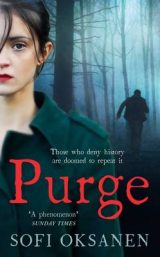
‘When the Doves Disappeared’ by Sofi Oksanen (2012) Translated by Lola Rogers

Estonian Sofi Oksanen is one of my best recent discoveries. Oksanen has done a fine job of bringing these characters to life in these tales of politics and psychology which are never predictable.
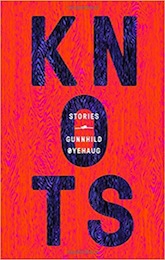
‘Knots’ by Gunnhild Øyehaug (2012) -Translated by Kari Dickson

In these 26 very, very short stories Norwegian writer Gunnhild Øyehaug puts her characters in comic risqué situations with a lot of humor and from a quirky woman’s point of view. There is nothing that Øyehaug won’t try for a story.  These are not your standard issue stories by any means. 
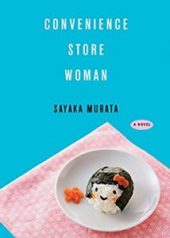
 

‘Convenience Store Woman’ by Sayaka Murata (2016) Translated by Ginny Tapley Takemori

Here is a fun way to ease into Japanese literature. Convenience Store Woman’ is a well-done enjoyable novella that celebrates someone who normally doesn’t get the credit she deserves.


There are surely other female writers from the past whose works qualify as classics but still have not been translated.


#100BestWIT

#WITMonth

#womenintranslation


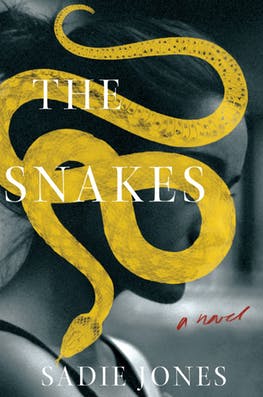
The Snakes’ by Sadie Jones – A Whole Lot of Money Corrupts Absolutely


‘The Snakes’ by Sadie Jones (2019) – 438 pages

Money corrupts, and a whole lot of money corrupts absolutely. This is the novel I have been waiting for, the one that captures our time precisely, both the widespread casual racism and the dreadful power of money to corrupt.

One banknote had value, you could buy things with it- food, clothes – but a box full felt different. It had power.”

Bea’s father Griff Adamson made his first money as a slumlord and increased it through many other crooked schemes. Now he’s retired and a billionaire and thinks very highly of himself. He has a private jet, a duplex in New York, a manor house in Hampshire and a hotel in France run by his self-indulgent frivolous son Alex. The men who hang around him, lawyers and such, treat Griff and his family like royalty.

He smiled and went. He must make over a million pounds a year, he had a family, yet he tiptoed around her like a lackey.”

Daughter Bea has total disdain for her father Griff. She won’t take any of her father’s money. She, a psychological therapist, and her husband Dan get by without any help from father.

Did you think he was just hard-working and lucky? Do you know the people he associates with?”

Bea and Dan live in a one-bedroom flat in north London. Dan is the son of a black mother and a white father who left when Dan was still a kid. Up until now Bea has avoided her father and his money.

It wasn’t the love of money that was the root of all evil, only the love of it above other things. Like fire, it could be a good servant. If she could be disciplined, not be seduced, or let it master her. If she were strong enough not to be corrupted. If she were vigilant and not let it master her.”

Bea and Dan decide to take some time off and go traveling using the Cushion, a few thousand dollars they have saved. Their first stop is brother Alex’s dilapidated hotel in France.

‘The Snakes’ starts out quite light, but things get intense in France especially after Bea’s father Griff and her mother Liv show up at the hotel. Sadie Jones rolls out this story in irresistible deadpan style. We learn about her characters not by explanations or descriptions but by their own actions, words, and thoughts. And these characters are at least as off the wall as the people in real life.

‘The Snakes’ is the first novel which I have read which effectively captures the current plight of England, France, and indeed the United States today. Money corrupts, and a whole lot of money corrupts absolutely.


Grade:   A


‘On Earth We’re Briefly Gorgeous’ by Ocean Vuong – A Letter to Mother


‘On Earth We’re Briefly Gorgeous’ by Ocean Vuong (2019) – 244 pages

‘On Earth We’re Briefly Gorgeous’ is a novel I feel extremely ambivalent about. It takes the form of a letter written in English by a young man in his late twenties who is nicknamed ‘Little Dog’ to his mother who cannot read English. First ‘Little Dog’ tells of his grandmother when she was living in Vietnam during the Vietnam War. His grandmother meets and marries a United States soldier, and later the family winds up living in Connecticut which is where our story finishes.

‘Little Dog’ does not shy away from telling the true story about his family and himself no matter how gruesome and painful that story is. It is written in exquisite and evocative language that makes for a compelling read. The prose is over-the-top, poetic, gorgeous. The story is intense, and Ocean Vuong does not shy away from the grotesque. Sometimes and in some places life is grotesque.

‘Little Dog’ gets some good advice from his mother:

Remember, don’t draw attention to yourself, you’re already Vietnamese.”

When the American police come to arrest his father for beating up his mother in Connecticut, the father gets out a twenty dollar bill to offer the police to avoid arrest. That’s what the wife beaters did in Vietnam.

They say nothing lasts forever and I’m writing you as an endangered species.”

This is a novel that intentionally sets out to disturb its readers. It disturbed me, so I guess it accomplished its goal. That doesn’t mean I enjoyed reading it. There is a lot of intentionally disgusting imagery. Early on there is a scene in Vietnam of a group of men slicing out the brain tissue of a live Macaque monkey and eating it. That scene sets the tone for the rest of the novel. Later there are graphic scenes of young-man-on-young-man sex as well as excessive unrestrained drug use, and the drugs they use are the killers, heroin laced with Oxycontin or fentanyl.

This is dark decadent fiction on the order of Jean Genet and ‘Our Lady of the Flowers’.

So on the one hand ‘On Earth We’re Briefly Gorgeous’ is exquisitely written, but it is appalling, sad, and painful to read on the other hand. The truth is not always easy to confront or deal with.


Grade:   B


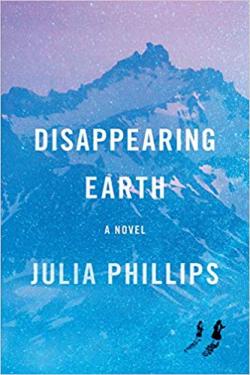
‘Disappearing Earth’ by Julia Phillips – Two Young Sisters Disappear in Kamchatka

‘Disappearing Earth’ by Julia Phillips (2019) – 256 pages


I never expected to read a novel that takes place in the far remote location of Kamchatka. Kamchatka is a long peninsula located on the far northeastern coast of Russia. Not least of Julia Phillips’ many feats is making the residents of this far-flung place so likable and accessible to us readers.

And air and sea were the sole options for leaving. Though Kamchatka was no longer a closed territory by law, the region was cut off from the rest of the world by geography. To the south, east, and west was only ocean. To the north, walling off the Russian mainland, were hundreds of kilometers of mountains and tundra. Impassable. Roads within Kamchatka were few and broken: some, to the lower and central villages, were made of dirt, washed out for most of the year; others to the upper villages, only existed in winter when they were pounded out of ice. No roads connected the peninsula to the rest of the continent. No one could come or go over land.”

‘Disappearing Earth’ is a novel consisting of several subtly connected stories all relating to the mystery of two missing girls, Alyona and Sophia, at the center. The girls are eight and eleven. Their mother Marina must deal with their disappearance alone, her ex-husband now living far away in Moscow.

Everyone’s lurid questions. Their suppositions. Every conversation Marina had over the past year was long, unbearable, one after the next in a rhythm as steady as dirt shoveled into a hole.”

Most of the people of Kamchatka are now Russian and white, but there is also a large native population who traditionally made their living through reindeer herding.

Though Marina couldn’t tell northern people apart. Even or Chukchi or Koryak or Aleut. Her grandparents used to speak fondly about how the peninsula’s natives had been pushed together, Sovietized, with their lands turned public, the adults redistributed into working collectives and the children taught Marxist-Leninist ideology in state boarding schools.”

‘Disappearing Earth’ is totally involving, a novel you will live in as long as you read it. It goes well beyond the central mystery of these two girls’ disappearance to capture the entire area’s deep-seated feelings and reactions.

I read a little about the author Julia Phillips. She lived in Kamchatka for two years on a Fulbright scholarship. She totally captures the spirit and the emotions of these people in this remote place so that this reader felt they could be living next door to him. This is a super fine novel about a remote location, but the people are not at all remote.  


Grade:   A


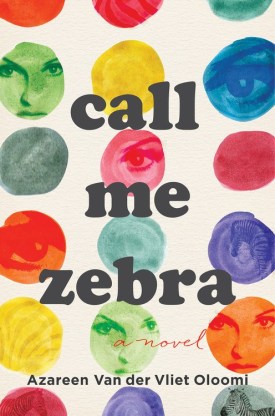
‘Call Me Zebra’ by Azareen Van der Vliet Oloomi – An Exile and the Guy Who Loves Her


‘Call Me Zebra’ by Azareen Van der Vliet Oloomi (2018) – 292 pages

‘Call Me Zebra’ is the winner of the 2019 PEN/Faulkner Award for Fiction.

Our narrator, a woman nicknamed Zebra, is a member of a family which was part of the Iranian intelligentsia which were persecuted by the Iran Revolutionary Guard after the Islamic Revolution of 1979. Her Hosseini family have the first Hosseini Commandment: “Love nothing but literature”. Then Saddam Hussein and Iraq started war with Iran in the early 1980s firing poison gas into Iranian towns, and she, still a young girl, and her father and mother were forced to escape her country and become exiles. Her mother is killed during the escape, and after many stops along the way, she and her father wind up in New York.

After leaving Van (in Turkey), my father, Abbas Abbas Hosseini, and I spent years moving across the surface of the earth in search of a place to think. We were like the slugs that come out after a hard rain: ugly, weather-beaten, dispossessed, the refuse of the world. So it goes.”

Zebra is passionate about literature and about being an exile, having to flee her homeland. Large sections of the novel are devoted to her struggle and her pain at being one of the world’s unfortunates, an exile from her home country. When Zebra is alone her thoughts often turn to abstractions about life, literature, and death. I much preferred the parts of the novel when she is out and about and with other people, at first her father and later Ludo Bembo, an Italian man who she meets in Spain after her father’s death and who falls for her hard.

Most of the story does takes place in Spain as Zebra retraces the route that brought her to the United States.

‘Call Me Zebra’ just did not cohere for me. When Zebra is alone, many of her thoughts are a prolonged lamentation or mournful complaint. And since she is constantly pushing away Ludo the guy who loves her, she is alone much of the time. When Zebra is by herself, her language becomes painful but sometimes opaque. Phrases like “performative transcription” or “The Matrix of Literature” are not evocative or easy to like.

If there had been a girlfriend or a sister to Zebra, it may have brought this story more down to earth. Softening the story does not necessarily mean weakening it. There is too much abstract thinking in the novel, and the many quotes from famous literary and artistic figures did not hit home for me. Of course I have never been forced to become an exile so cannot identify fully with her situation.

I would say that ‘Call Me Zebra’ is an ambitious novel about the struggle and pain of being exiled from your home country that does not fully succeed but is probably more significant than other novels which do not attempt as much.


Grade:    B-


‘Lanny’ by Max Porter – A Missing Boy During the New Dark Ages


‘Lanny’ by Max Porter (2019) – 210 pages

The villagers of the unnamed present-day English town in ‘Lanny’ chant their fears and superstitions and gossip in a chorus of disembodied voices like peasants from the Middle Ages. And listening to it all is Dead Papa Toothwort, an ancient earth and plant spirit who stirs in the air and on the ground.

Dead Papa Toothwort hears the cacophony of English voices.

Dead Papa Toothwort exhales, relaxes, lolls inside the stile, smiles and drinks it in, his English symphony.”

Dead Papa Toothwort picks up on all the chatter.

He swims in it, he gobbles it up and wraps himself in it, he rubs it all over himself, he pushes it into his holes, he gargles, plays, punctuates and grazes, licks and slurps at the sound of it, wanting it fizzing on his tongue, this place of his.”

The Age Of Reason is over, and superstitions, rumors, and lies have more credence than rational truth.

A family, Dad Robert and Mum Jolie and young son Lanny, live in the village. Dad commutes to London each day to earn a living. Mum was a former TV actress but now writes gory crime novels. The boy Lanny is too cute to the point of sappiness. Lanny’s Mum asks local notorious gay artist Mad Pete Blythe to give Lanny lessons in drawing and painting.

Lanny likes to scuffle off to the woods and play among the birds and trees, disappearing from his parents and causing them excessive worry. But Lanny always comes back…

After Lanny goes missing, the neighbors all suspect of course old Mad Pete. We are back to hearing the neighbors’ voices. The green and brown spirit Dead Papa Toothwort listens to them too.

The lights went out on the Age of Enlightenment, and we now live in the post-rational society after the end of the centuries-long Age of Reason. But Dead Papa Toothwort, that troublesome being from before recorded time, is still there slurping up our sounds and listening to us.


Grade:    B


‘Mac’s Problem’ by Enrique Vila-Matas – The Pleasant and Sometimes Inspired Meanderings of a Literary Sage/Fool

Mac’s Problem’ by Enrique Vila-Matas (2017)  211 pages                  Translated from the Spanish by Margaret Jull Costa and Sophie Hughes

Like several of Enrique Vila-Matas’s previous novels, ‘Mac’s Problem’ is a way-out modernist novel about reading and writing fiction, in this case a group of short stories written decades ago by our narrator Mac’s neighbor in Barcelona. Each short story was based on a famous author from the twentieth century (John Cheever, Djuna Barnes, Raymond Carver, Jorge Luis Borges, Ernest Hemingway, etc.) I won’t go any further into the plot which takes many surprising and wicked turns but would be quite boring if I tried to summarize it.

In this novel, Vila-Matas dispenses literary and philosophical wisdom from a wide variety of sources in an offhand way. I find this technique entirely fascinating, but I’m sure many readers may not take to it. I suppose how you react to this novel will depend on what you think of this first quote that Vila-Matas mentions which is probably the keystone for the entire novel.

As Nathalie Sarraute once said – writing is really an attempt to find out what we would write if we wrote.”

I’m sure some of you will see this quote as meaningless, a tautology. However I find it quite brilliant in its own crazy unique way. So goes this entire novel which is filled with these kind of statements from many persons.

As a writer, Vila-Matas lives for distractions, and sometimes the distractions are the most interesting parts of ‘Mac’s Problem’. For instance, since the narrator of the book of stories that Mac wants to rewrite is a ventriloquist, Mac recalls all the ventriloquists he has encountered in his life. This is a quite amusing distraction.

Occasionally reality intrudes on our fiction writer.

If you ask me, reality doesn’t need anyone to organize it into a plot; it is itself a fascinating, ceaseless creative center. But there are days when reality turns its back on the aimless drifting center that is life and tries to give events a novelish turn.”

Once in a while our narrator even gets down to earth away from his airy fictional concerns, especially when he is dealing with his wife Carmen.

And perhaps the worst thing was not being able to say any of this to my wife, because it would only prove to her that I was already crazier than she already thought I was.”

Sometimes the author can be annoying. First Vila-Matas quotes Schopenhauer saying that the true national characteristic of the Germans was ponderousness. Then Vila-Matas writes his own long ponderous sentence in imitation of the German writers. A reader gets impatient with this sort of tiresome game. This reader also got annoyed with his long summaries of the plot lines of the imagined stories in this collection that he wants to rewrite.

But overall, ‘Mac’s Problem’ is exasperating in a good way.

But we forgive Vila-Matas. He is buoyant; we come back to his pleasant meandering, his strolls around the Coyote neighborhood where he lives.

Like all of Vila-Matas’s works, ‘Mac’s Problem’ is a hit-and-miss affair with plenty of misses, but the hits outweigh the misses so it is well worth reading.


Grade:    B+


‘Orange World’ by Karen Russell – Vivid Peculiar Situations

‘Orange World’, stories by Karen Russell (2019) – 266 pages

Each story in ‘Orange World’ has a supernatural element which drives the story. In ‘The Prospectors’, two young venturesome women visiting a ski resort are entertained by a group of twenty-five men who were buried in an avalanche when the Evergreen Lodge was first being built. In ‘Bog Girl: A Romance’, a teenage boy falls in love with a girl who was murdered two thousand years ago and whose body was preserved in a peat bog. In ‘The Tornado Auction’, customers buy and sell tornadoes for their own enjoyment and fun. ‘In ‘Orange World’ a woman makes a deal with a porcupine-looking devil in hopes of keeping her baby healthy. And so on. Each story has its ghostly or fantastical premise.

The stories of course require a suspension of disbelief on the part of the reader. Through the clever use of metaphors, similes, and other literary devices, Karen Russell makes each of these stories almost believable to the point where we readers withhold our skepticism. The author puts us inside the persons who are experiencing these strange things. These situations are vivid and entertaining throughout. There is also quite a lot of comedy and humor as the characters in these stories react to their strange unusual circumstances.

I mentioned Russell’s use of simile, and this is a tried-and-true literary method that she uses effectively throughout. When the aforementioned young women look out the window of the ski lodge, they see the face of one of the ghost men who inhabit the place.

His wild eyes were like bees trapped on the wrong side of a window, bouncing along the glass.”

In each story Russell builds a complete fascinating imagined world where this strange event might actually happen.. The stories are long, usually 30 or 40 pages,

Usually in story collections there are stories near the end that don’t quite measure up to the early stories, but in ‘Orange World’ there is not a weak story among the eight. I see Karen Russell as a writer who has learned to use the proven literary techniques so effectively that the reader willingly enters the world of each story no matter how off-kilter it happens to be. Karen Russell is one of the most effective, imaginative, and entertaining writers of today.

Grade:    A


‘Afternoon of a Faun’ by James Lasdun – An Era of “Errant Masculinity”


‘Afternoon of a Faun’ by James Lasdun   (2019) – 164 pages

Here is a novel with a story ripped from today’s headlines, and I actually liked it.

A woman accuses a man of raping her while they slept together in the 1970s, and she is going to get her story published in a magazine. By this time, both man and woman are in their sixties. The man realizes that soon his life may be ruined for all intents and purposes by “the ritual of public denunciation”.

Yes, this story focuses on the assault and harassment scandals that seem to be breaking every week in the news. It is also a firsthand account of the sexual mores of the 1970s.

The gist of it was that men were more overtly sexist then; more condescending, imperious, entitled, aggressive and preeningly lustful.”

It was an era of “errant masculinity”. All kinds of behavior we question now were considered perfectly acceptable in those days. One-night stands , the sexual revolution, the birth control pill, “The Joy of Sex”.

If you think James Lasdun vehemently takes either the man’s side or the woman’s side, you do not know James Lasdun. The narrator of ‘Afternoon of a Faun’ sees himself as “an appraiser of the truth” who is only interested in finding out what actually happened. He meets with the woman who is an old family friend of his deceased mother who was a confidant to her.

There was no such thing as rape in those days, once you’d gotten in bed with a man. I didn’t even think of it as rape myself, at the time. The word didn’t enter my head.”

The narrator decides she is telling the truth. The narrator is also a friend of the man accused.

On one occasion he said he was surprised I hadn’t already written a book about a predicament exactly like his. I’d explained the difficulty: that in a made-up story you’d have to clarify in your mind who was lying, the man or the woman, and that this would inevitably read as a larger statement about the relative truthfulness of men and women in general, which would in turn reduce the story to polemic or propaganda.”

I have read all of the novels and stories James Lasdun has written including his first wonderful collection of stories, ‘Delirium Eclipse’. Lasdun also writes poetry, some of which I have read. I have found all of his work reliably well-written and fascinating, and ‘Afternoon of the Faun’ is no exception.


Grade:    A


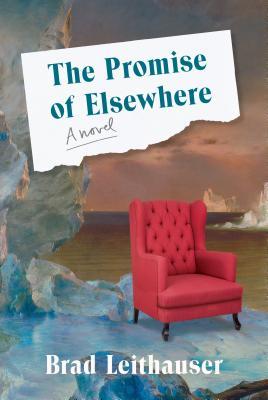
‘The Promise of Elsewhere’ by Brad Leithauser – Not the Journey of a Lifetime


‘The Promise of Elsewhere’ by Brad Leithauser (2019) – 331 pages

‘The Promise of Elsewhere’ is many things. It is part travelogue of Rome, London, and Greenland. It is part comedy of a down-and-out loser confronting his life. It is part romance, part self-absorbed analysis of a life lived. But throughout, the author offers the reader no compelling reason to read this story.

Louie Hake is a guy in his early forties with a lot of problems. He was a professor at a small Michigan college which he considers is below him. His wife Florence has taken up with her director in an amateur theatre company, and these two are arrested one night in January for a violation of section 750.338b of the Michigan Penal Code , or “gross indecency between male and female persons” in a car. Now Florence has moved out of the house and is staying with her boyfriend ironically on one of the Virgin Islands. Besides that, Louie has been diagnosed with a macular eye condition that may eventually cause him to lose his sight. Besides that, he is manic-depressive or bipolar and sees a psychiatrist.

Louie gets an inheritance of about $20,000 and decides to leave his job and take the Journey of a Lifetime starting with Rome. After Rome, he travels to London and Iceland, but our main character’s travel observations are for the most part mundane, forgettable, and self-absorbed. There are attempts at humor, but mainly you feel sorry for Louie’s plight. Ultimately this novel turned into more a slog than a jaunt for me.

Louie is definitely not enough of a compelling character to sustain such a long novel.

The only bright parts of the novel for me were when Louie meets someone interesting on his travels. When good things start to happen to this ordinary guy, we take notice and root for him. The London section where Louie meets a woman who has been stood up on her honeymoon is particularly a ray of sunshine in this mostly dismal novel.

If this world had its priorities straight, statues would be erected to the kindest people, for in the whole history of civilization, what achievement is more impressive than human empathy?”

The prose in the novel is well-done, but the subject is hopelessly mundane. This may have worked as a shorter novel but at 331 pages it is too much. The main character just cannot sustain our attention.

I suppose there are times when I am open to a lengthy disquisition on the color blue but not on page 242 of a 331 page novel. The last Greenland section of the novel is particularly forlorn and forgettable.

I had read Brad Leithauser’s first two novels, ‘Equal Distance’ and ‘Hence’, and thought they were extremely well-done. I had high hopes and expected big things for Leithauser. However I read one of his later efforts, I forget which one, and did not enjoy it. I had not read him for many years until now.

‘The Promise of Elsewhere’ is not a comeback. This experience has convinced me to in the future give up on a novel I don’t care for sooner even if I have enjoyed that writer in the past.


Grade:   C


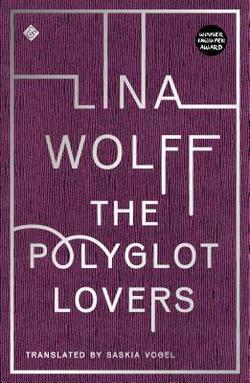
‘The Polyglot Lovers’ by Lina Wolff – “Keep an Eye on Your Masculinity.” “Be Nice. Just That.”


‘The Polyglot Lovers’ by Lina Wolff  (2016) – 244 pages                 Translated from the Swedish by Saskia Vogel

There is no reason a novel this wildly disjointed and far-fetched should succeed, but ‘The Polyglot Lovers’ somehow does. It is strange, mesmerizing, fascinating. The three parts of ‘The Polyglot Lovers’ are greater than the sum of the whole which really does not make much sense at all.

The writing here is delicious and fun to read.

In the first part, Ellinor posts the following on an internet dating site:

I’m thirty-six years old and seeking a tender, but not too tender, man.”

Of course she gets many responses from men. One man named Ruben wrote back,

Other than the fact that your age suggests you and I will be able to engage in many interesting conversations and you in all likelihood can cook a very good dinner (I will, however, choose the wine.), I’m convinced that your body, which I assume has already been enjoyed by many, contains a wealth of possibility. And your sex must be a cache of dirty acts of which I too can enjoy.”

Ellinor immediately replies,

You devil!”

She travels to Stockholm to meet him. This guy Ruben is a disgusting creature in many ways. Besides his favorite author is Michel Houellebecq. But Ellinor stays with him trying to make it work.

Ruben has been given a copy of a novel by its author Max Lomas for assessment. The title is ‘The Polyglot Lovers’. This is the only copy of the novel so dreadful things happen to it.

And things only get more grotesque and dubious as we proceed to parts two and three of ‘The Polyglot Lovers’.

The second part shifts to the author Max Lomas who is also a fan of Michel Houellebecq. This famous French author whose works have been criticized for their vulgarity and misogyny is a recurring obsession of this novel. An underlying theme here seems to be disgust with men’s behavior.

Keep an eye on your masculinity. Don’t let it consume you.”

What are you getting at?” he said.

Be nice. Just that. Be nice.”

Later Max encounters Ruben’s ex-wife Mildred, and the following conversation ensues.

I write too”, I said.

Yes, she said, “About sex, right?”

No”, I said, “I don’t write about sex. I write about love.”

That’s what all men say,” she said. “But actually they’re just writing about men. Men and sex.”

I laughed. I took her point.

The third part takes us back a few years to Italy when Max is first writing ‘The Polyglot Lovers’.

There is a lot going on beneath the surface of ‘The Polyglot Lovers’, more than I totally comprehend. Some novels are simple and austere; ‘The Polyglot Lovers’ is the opposite. It challenges our attitudes, especially men’s attitudes, and I do like to be challenged. This is not a novel for the faint of heart.

‘The Polyglot Lovers’ is a wild and wonderful, if disjointed, read.


Grade:   A-


‘England Made Me’ by Graham Greene – Twins in Stockholm


‘England Made Me’ by Graham Greene (1935) – 207 pages

My favorite story about the author Graham Greene is when the New Statesman magazine held a writing contest in 1949. The three best parodies of Greene’s unique style of writing would win prizes. Unbeknownst to the magazine editors, Greene secretly submitted his own entry under the name “N. Wilkinson” which was made up of the first two paragraphs of a novel set in Italy called ‘The Stranger’s Hand: An Entertainment’. He won second prize in the contest.

In ‘England Made Me’, Kate and Anthony are twins in their thirties. Kate, having been born first by a half hour, has always been protective of her younger brother. Anthony is a charmer with the ladies.

You’d be gone on me,” Anthony said, turning on her the same glance as he turned she knew, on every waitress, calculated interest, calculated childishness, a charm of which every ingredient has been tested and stored for future use.”

So Anthony is a charmer, but he is also a ne’er-do-well. He cannot keep a job. Each time he tells his family that he has resigned, but they all know that he has been sacked again.

Kate is the mistress of Sweden’s most successful businessman Eric Krogh, owner of Krogh Industries. After Anthony loses his last job and has no prospects, Kate puts in a good word for him with her boss and lover who gives Anthony a job at Krogh Industries as a security guard protecting Krogh himself.

As in all Graham Greene novels, there is a subtle and fascinating interplay between the characters and the plot of the story. Each character has his or her own set of traits which prove crucial to the plot.

In Greene’s stories, no one is ever too good to be true. All the characters are morally ambiguous. Certainly some are worse than others, but even the best are bad enough. To err is human. Each person has his or her own set of faults. Greene always portrays, in his words, “a world of black and gray”.

There are more sinners among the bourgeois than among peasants.” – Graham Greene, ‘Monsignor Quixote’

They did make a movie of ‘England Made Me’ starring Michael York in 1973, but they reset the location of the story from Stockholm to Germany. The movie’s producers must have felt that Nazi Germany fit the moral climate of the novel better than Sweden.


Grade:    A