Archive for the ‘Book Reviews’ Category

‘Heaven, My Home’ by Attica Locke – A Texas Ranger


‘Heaven, My Home’ by Attica Locke (2019) – 292 pages

My usual fare is the more recognizably literary fiction, but once in a while I like to dig into a well-written mystery novel and in this case it is ‘Heaven, My Home’.

Darren Matthews is a Texas Ranger from Houston assigned to a case on the northeastern border of Texas with Louisiana, an area of swamps and cypress trees and virulent white racists and small southern towns. A nine year old boy, Levi King, is missing. His father, a white supremacist Aryan Brotherhood of Texas leader, is sitting in jail. The boy’s grandmother is one of the elite in the small town of Jefferson and calls in the Texas Rangers to find the boy. The last person to see the boy and the primary suspect in the boy’s disappearance is Leroy Page, a black man who lives in the unincorporated backwater town of Hopetown. This is a racially charged crime story.

Did I mention that Darren Matthews, the Texas Ranger working on the case, is a black man? Darren asks his lieutenant, “Come on, you sending me into an Aryan Brotherhood mess, least you can do is tell me why?” In this part of Texas, the Aryan Brotherhood is the prevailing white racist criminal gang, and the Texas Rangers are working on a massive indictment of key members of the Aryan Brotherhood on charges of drug running and illegal gun sales and various other felony conspiracies. Our Texas Ranger must constantly deal “with befuddled anger at what a handful of scared white people could do to a nation”.

There are many strands to this Texas Ranger’s story including his personal life. His best friend may be having an affair with his estranged wife. He has had a drinking problem, his mother is blackmailing him, and he is in constant danger of “falling off the cliff of his own morality”. Somehow the author balances all of these complicated story lines into a meaningful whole. Since this novel is part of a series, the lead character is a difficult well-rounded character who can hold up several novels.

‘Heaven, My Home’ is a compelling atmospheric crime story that deals with the hate groups and attitudes of the current racially charged situation. It is the second novel in Attica Locke’s hard-boiled Highway 59 series for which her first, ‘Bluebird, Bluebird’, won the Edgar Award for best mystery novel of 2017. Attica Locke is also a writer for the television series ‘Empire’ and ‘When They See Us’.


Grade:    A-


‘Fly Already’ by Etgar Keret – Stories Which Are Like Being Shot Out of a Cannon


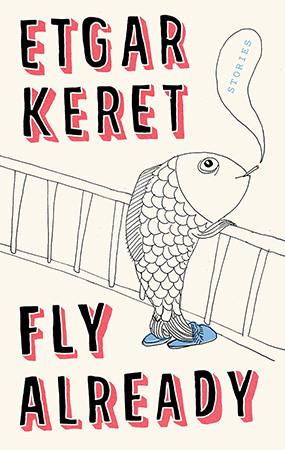
Fly Already’ by Etgar Keret (2019) – 209 pages Translated from the Hebrew by Sandra Silverston, Nathan Englander, Jessica Cohen, Miriam Shlesinger, and Yardenne Greenspan

In the lead-off and title story of this new Etgar Keret collection of stories, a divorced father and his eight year old boy are out for a walk in the city when the boy spots a man standing on the roof of a four story building. The father fears the anxious man is going to jump off the building, and the father yells up, “Don’t do it, please! Whatever brought you up there must seem like something you will never get over, but believe me you will.”

However the boy figures the guy standing on the roof must be a superhero, and the obnoxious kid shouts up to him, “Come on, fly already!”.

This is an ingenious setup for a story, and Etgar Keret follows through to a apt and significant conclusion.

The story “Dad With Mashed Potatoes” begins as follows:

Stella, Ella, and I were almost ten years old the day Dad shapeshifted.”

Yes, in this story the children’s father has shape-shifted into a rabbit. This is about par for the course of an Etgar Keret story.

Because there he was, waiting for us in his armchair, glowing in the full whiteness of his glorious rabbithood, and when we bent to pet him behind the ears, he didn’t try to run away, he just wrinkled his nose with happiness.”

While the situations in ‘Fly Already’ are often outlandish, they are also quite human and poignant. The children in these stories are usually precocious but frequently annoying as kids often are.

It is an enjoyable experience to read Etgar Keret stories, and people ought to read them just to find out what all can be done with a short story by a wildly imaginative writer.

The following is from the story “The Next-to-Last Time I Was Shot Out of a Cannon”:

I’ve never been shot out of a cannon,” I said and took another drag on my cigarette. “Sure you have,” Roman said, “when your ex left you, when your son told you he hates you, when your fat cat ran away. Listen, to be a human cannonball, you don’t need to be flexible or fast or strong, just lonely and miserable as hell.”

I’m not lonely,” I protested. “Really?” Roman laughed. “So tell me – never mind sex, when was the last time someone even smiled at you?”

The story “Todd” is about a woman who meets a man like Todd who is “charming, and in favor of eternal free love and all the other bullshit that men who want to fuck the whole world believe”:

And he gives her a passionate explanation of evolution, of how women are monogamous because they want a male to protect their offspring, and how men are polygamous because they want to impregnate as many women as possible, and how there’s nothing you can do about it, it’s nature, and it’s stronger than any conservative Presidential candidate or Cosmopolitan article called “How to Hold on to Your Husband”.

Read these wild and preposterous stories by Etgar Keret, and I doubt you will be disappointed.


Grade:   A-


‘Alice Adams’ by Booth Tarkington – The Reproach of Not Being Part of the Upper Class in an Indiana City


‘Alice Adams’ by Booth Tarkington (1921) – 288 pages


Booth Tarkington won two Pulitzer Prizes for best novel of the year early in his career, one for ‘The Magnificent Ambersons’ and one for ‘Alice Adams’. In 1922, the Literary Digest announced Tarkington as America’s greatest living writer. This just goes to show how useless awards and polls can be. Among the writers living then, the following list of American authors writing during that same era have all gained more acclaim, I believe deservedly, than Tarkington: Willa Cather, Theodore Dreiser, Edith Wharton, Sinclair Lewis, Ernest Hemingway, and F. Scott Fitzgerald.

The New Yorker recently published a long, long article about Booth Tarkington entitled “The Gentleman from Indiana – The Rise and Fall of a Literary Reputation”. The main gist of this article is that although Tarkington was a highly respected writer in his day, he had only one novel, ‘Alice Adams’, which is still worth reading today. I had never read anything by Booth Tarkington, so I decided to read ‘Alice Adams’.

Except for its casual racism, calling black people “coons” or “darkies” and making fun of their speech and behavior, ‘Alice Adams’ is quite well written. I suppose these prejudiced attitudes were typical in Indiana at that time and could be justified as an accurate portrayal of white attitudes, but they did try my patience as a reader. You won’t find this kind of racist writing in any of the other authors I mentioned above. Tarkington wrote a children’s book titled ‘Penrod’ which was extremely popular back in the 1920s, but is embarrassing and virtually unreadable today due to its racist depictions. One of the reasons why Tarkington’s later books are no longer read is the hardening of his right-wing attitudes later in life.

Then there is the flip side to this racism. Alice Adams’ father works for the white owner of a company in town, and Tarkington’s and his characters’ attitude toward this old white guy business owner is almost worshipful.

What is the theme of ‘Alice Adams’? The Adams father and mother want the best for their twenty-two year old daughter Alice, and that means she must find a suitable husband. That proves difficult, because based on what the father makes, their family is only middle class, and the really respectable well-to-do people rather avoid those who don’t have an excess of money even if they are white. Thus the Adams come up with a scheme to get a lot of money by opening a glue factory based on a project the father worked on for his boss early in his career.

Due to her vivacity and good looks, Alice meets a suitable guy, but she doesn’t bring him into her house, instead staying on the porch swing, knowing that he would find their home rather dilapidated. However soon her mother decides it is time to have a formal dinner to introduce this suitor to the family. This dinner party winds up being the dinner party from Hell.

This story of class distinctions and antagonism between upper class white people and middle class white people rang true to me and held my interest throughout, although I did find some of the unprogressive opinions expressed by some of the characters annoying.


Grade:   B


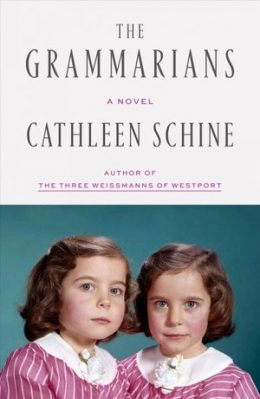
‘The Grammarians’ by Cathleen Schine – A Fiction For Those Who Delight in Words


‘The Grammarians’ by Cathleen Schine (2019) – 258 pages

‘The Grammarians’ is a novel about a family with identical twin daughters, Laurel and Daphne, who both grow up to love words. Their father is prescient enough to buy the still very young daughters a complete old edition of Samuel Johnson’s Dictionary of the English Language and install it on a stand in their family den. Thanks to the dictionary, the daughters share a fascination with the meaning and use of words which continues through their entire lives. They both become word mavens. Daphne becomes a columnist, the Miss Manners of modern speech”, who writes a popular column on the use and abuse of words. The other daughter Laurel, after a long stint of motherhood, becomes a poet of sorts.

One of the several charms of ‘The Grammarians’ is the witty word play the two girls bring to their conversation. Each chapter begins with the definition and usage of a word taken from the Samuel Johnson dictionary. Usually the words are ones that have fallen out of usage or that one or more of their meanings have fallen out of usage.

BABERY. n. s. [from babe] finery to please a babe or child.

Other words that are used to start chapters are: conversableness, scrine, collectitious, to swop, disbranch, edacious. We have lost many of these useful words as the English language has become streamlined. The twin girls use a lot of these dropped words in their conversations.

Daphne said, “Grammar makes you respect words. Every individual word. You make sure it’s in the place where it feels the most comfortable and does its job best.”

Here is Daphne’s riff on the word “Tight”:

She loved the word “tight”. It meant so many different things that were all somehow the same thing. Tight muscles. Tight with money. Money is tight. The organization is tight and well run. Tight friends. Tight-lipped. Hold tight. Sleep tight. Of course it also means tipsy, which makes less sense. And apparently it meant cool too. Better than “groovy,” anyway, a word she shamefully remembered using freely. A kind of progress, then, in the world.”

The other twin sister Laurel thinks the following about the word “Deadline”:

The components of the word “deadline” struck her. A line that is dead. No, a line that you must not cross or you will be shot dead. From prisons in the Civil War. Was that right? She would look it up later.”

Later the twin sisters have a falling out, a philosophical difference in their approaches to words, that causes these very close identical twin sisters to avoid each other for several years.

‘The Grammarians’ is a light, humorous, witty novel which I entirely enjoyed, and I’m quite sure most ‘word’ persons will enjoy it.


Grade:    A


A Season in the Life of Emmanuel’ by Marie-Claire Blais – A Wild, Wicked, Woeful, Wonderful Novel


‘A Season in the Life of Emmanuel’ by Marie-Claire Blais (1966) – 145 pages         Translated from the French by Derek Coltman

I discovered Canadian writer Marie-Claire Blais through a recent article in the New Yorker entitled “Will American Readers Ever Catch on to Marie-Claire Blais?”

‘A Season in the Life of Emmanuel’ is a wicked, wicked novel; it is diabolically outrageous and wonderful. I loved it. The way I look at it is that what Joseph Heller did to World War II in Catch-22, Marie-Claire Blais does to the Quebec farm family. Blais exagerates the prevailing attitudes on the farm to the point of ridiculousness. Perhaps it is my small poor farm background which caused me to love this novel.  Gallows humor and biting coruscating irony come to a farm in Quebec. There is not one iota of sentimentality in this novel, and that is just fine with me.

The first chapter is written from the perspective of new-born baby Emmanuel. He was born without fuss today, and his mother is already back outside working on their farm. There are 16 children in this Catholic family, about one a year. Old Grand-mere Antoinette watches over all the little children in the family who are too young to work yet. Grand-mere Antoinette is ancient but she runs the household and she expects to live forever. She is a stern and very religious taskmaster.

Most of the older children are outside working on the farm but Jean-Le Maigre stays inside because he is tubercular and the family knows he is going to die soon. Grand-mere is looking forward to his death because she knows he will be going to a better place then.

There had been so many funerals during the years that Grand-mere Antoinette had reigned in her house, so many little black corpses, in the wintertime, children always disappearing, babies who had only lived a few months, adolescents who had vanished mysteriously in the fall, or in the spring. Grand-mere Antoinette allowed herself to be rocked gently in the swell of all these deaths, suddenly submerged in a great and singular feeling of content.”

Jean-Le Maigre is in his usual spot under the kitchen table with his head in a book. That is the only place he can get some quiet time among all the squawking kids. Jean Le Maigre also does a lot of writing. However his farmer father thinks school and learning and reading and writing are a waste of time.

I had been leaving my Greek prose, my funeral orations, my fables, and my tragedies lying around all over the house for some time before I discovered that my father had consigned them to the latrine as fast as I could write them. What a disappointment!”

Also one of the daughters Heloise stays in her room while the others are all outside working. Heloise is a rabid religious zealot with a love of suffering. Grand-mere Antoinette sends her off to the church in order to prepare her for a life in the convent, but Heloise proves too fanatical even for the Mother Superior to handle.

There is a very different future in store for Heloise which Marie-Claire Blais hints at early on when she mentions that Heloise’s temptations turned more and more to something she didn’t recognize as desire. Let’s just say that Heloise winds up being the one economic success story in the family.

Jean Le Maigre also gets sent to the church school by Grand-mere for religious classes. At the church there is a Brother Theodule who “during the melancholy hours spends chasing little boys around the noviciat’s evil-smelling corridors”.

That man has chosen our sons to prey upon.”


Blais is prescient about the Catholic scandals to come.  Brother Theodule is kicked out of the church school but later reappears around town and is given the appropriate name Brother Theo Crapula.

I had not read a novel that so successfully used grim gallows humor in a long time, but Marie-Claire Blais also uses the humor to make some devastating points about life and religion.

Once in a while I will find an unknown older novel that beats everything that is written today. That is what happened here.


Grade:     A+


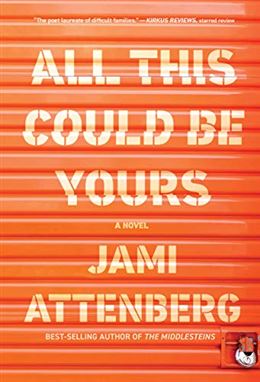
‘All This Could Be Yours’ by Jami Attenberg – The Dad Was Bad


‘All This Could Be Yours’ by Jami Attenberg    (2019) – 298 pages

The catchphrase for ‘All This Could be Yours’ is “family dysfunction at its finest”, and I am always up for some family dysfunction in my fiction reading.

At the center of this novel is Victor Tuchman. He is a miserable human being who sometimes beats his wife and has hurt every member of his family in one way or another.

Every so often he smacked her. The arguments were stupid, trivial, about nothing, about money which they had plenty of. Nothing was ever worth violence, but she grew used to it, and in a way, it was how she knew he was still paying attention to her, because most of the time, he wasn’t around.”

The family does live in a nice house in Connecticut and all, because Victor is not a criminal low life; he is a criminal high life. We live in a time when many of the richest people are outright criminals because white collar crime perpetrated by white people is rarely punished. Victor has made his living in some forms of organized criminal activity which he never discusses with his family. Later he is beset with several sexual harassment lawsuits from a few of his former mistresses.

Anyhow very early in the novel he has a severe heart attack, and for the rest of the novel he lays dying in a hospital in New Orleans where he and his wife have moved in old age. We then meet other members of his immediate family with their own awful memories and feelings about Victor.

This is a story of severe family dysfunction, and these are best told in an oppressive claustrophobic atmosphere. ‘All This Could Be Yours’ loses its intensity when it wanders too far from this immediate family situation. Sometimes it becomes as discursive as a New Orleans travelogue.

Things to do in New Orleans. Drink, eat, drink, eat, jazz. The Mississippi. Cemeteries and ghosts. Alligators. She crossed Canal Street and the threshold of the French Quarter. Drink, eat, jazz. Ghosts.”

The novel loses its way for me when about half way through it tells the life story of daughter-in-law Twyla. Ultimately Twyla is also very much a victim of Victor Tuchman as shown in one of the weirdest scenes I have ever encountered, but her back story probably could have been left out. It is only after she meets and marries the son Gary Tuchman that her story relates at all the Tuchman family. Now they are getting divorced. The novel becomes diffuse and wandering, lacking focus.

So for me the catchphrase for ‘All This Could Be Yours’ would be changed to “family dysfunction at its middling”.


Grade:    B-


‘Olive, Again’ by Elizabeth Strout – She’s Back


‘Olive, Again’ by Elizabeth Strout (2019) – 289 pages

Olive Kitteridge of the small town of Crosby, Maine is getting old, but she still is a lively strong character who gets around the streets of the town.

In one story the husband of younger housewife Candy calls Olive Kitteridge an “old bag”. However Olive is one of only two people in town who will still stop by to visit with Candy. Candy’s other old friends are too scared. Candy is receiving radiation treatments for cancer, has lost all her hair, and is unsure if the current treatments will be successful.

Olive, you’re the kind of person people want to talk to.”

I don’t know about that,” Olive said.

Several shocking surprising goings on play against readers’ expectations of what goes on in a small town. Murder, arrests, several would-be suicides, family sexual abuse. These things do happen in small towns, but they get swept under the living room carpet. In the fictional works of Strout, the terrible events in the small town of Crosby, Maine, are brought out in the open. I would call her attitude small-town fatalism.

Elizabeth Strout gets to the crux of things, of life and death, which gives these linked stories more depth than you would expect. The stories are about the events, both good and bad, that make up each person’s life. The reader identifies with these not always admirable characters. Along the way, Strout achieves these moments of real near-wordless profundity.

These were openings into the darkness of a relationship one saw by mistake, as if inside a dark barn, the door had momentarily been blown off and one saw things not meant to be seen.”

Also we get glimpses of Olive’s own family life. At the beginning of ‘Olive, Again’, Olive remarries at age 70. Olive is not close to her own only son and his family who live in New York, but finally they come to visit her.

So there was this: Her son had married his mother, as all men – in some form or other – eventually do.”

Having an old person, Olive Kitteridge, near the center of your stories means you can deal with both life and death in them. Elizabeth Strout takes full advantage of this.

She was going to die. It seemed extraordinary to her, amazing. She had never really believed it before.”

The last two stories are about the hard truths we all must eventually contend with. Actually all the stories deal with hard truths of one sort or another. Elizabeth Strout’s fiction is the opposite of escapism.


Grade:    A


The Other Elizabeth Taylor – One of my Favorite Writers of the 20th Century


Elizabeth Taylor

Born:    July 3, 1912         
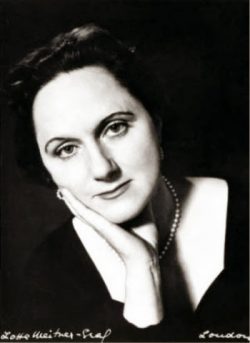
Died:   November 19, 1975


I was a bit unusual for a grown-up farm boy from Wisconsin. For years and years one of my foremost pleasures was reading one of the novels or collections of stories by English author Elizabeth Taylor, not the actress Elizabeth Taylor who was of little interest to me, but the fiction writer.

I have had a rather uneventful life, thank God,” the other Elizabeth Taylor told the London Times in 1971. But, she added, “another, more eventful world intrudes from time to time in the form of fan letters to the other Elizabeth Taylor. Men write to me and ask for a picture of me in my bikini. My husband thinks I should send one and shake them up, but I have not got a bikini.”

The author Elizabeth Taylor is still known as the Other Elizabeth Taylor. But that may change.

As a writer of domestic fiction, Elizabeth Taylor was the best of her time, a latter-day Jane Austen. There have been at least a dozen “rediscoveries” of author Elizabeth Taylor in various publications, but today she still is under-recognized as an outstanding fiction writer.
What makes her writing so special?

Taylor’s prose is so understated and at times lightly witty yet ultimately scathing, you hardly notice that it is there. That is the definition of fine writing to me. Like Graham Greene, Elizabeth Taylor makes good writing seem effortless.

Taylor’s novel ‘Angel’ is about a really bad writer of romance novels, Angelica Deverell, who becomes famous and wealthy due to sales of her atrocious novels. A lot of authors would look upon this situation as an opportunity for very cruel comedy; however Taylor always has a deep empathy for even her most forlorn characters.

This article by Phillip Hensher is the best appreciation of the writing of the other Elizabeth Taylor that I have come across.

I wish I could write as lucidly and as straightforward as the other Elizabeth Taylor, but I do try.
Where to start with the author Elizabeth Taylor?

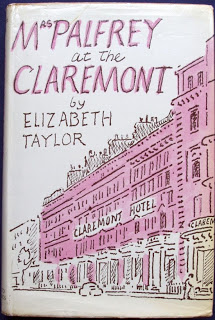
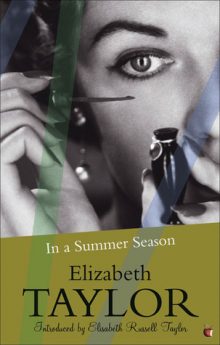
Elizabeth Taylor was consistent as well as excellent, so just about any of her books would be a good place to start. Of her novels, I can remember being particularly impressed with ‘A Game of Hide-and-Seek’, ‘Angel’, ‘In a Summer Season’, and ‘The Soul of Kindness’. Taylor was one of the very best short story writers also, so those of you who lean toward short stories might want to read ‘You’ll Enjoy It When You Get There – The Selected Stories of Elizabeth Taylor’ by NYRB.
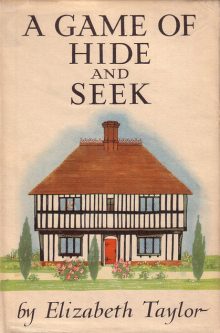
Quotes about her

Elizabeth Jane Howard once said of Elizabeth Taylor: “How deeply I envy any reader coming to her for the first time.”

For years, the New Yorker published nearly every story she finished, 35 of them between 1948 and 1969. William Maxwell claimed that job applicants were given her stories to edit as a test, ‘and if they touched a hair of its head, by God, they were no editors’. There wasn’t much to tinker with: her style was spare, usually shorn of adverbs and adjectives, and her plots were similarly unencumbered.” – Deborah Friedell, London Review of Books

“Sophisticated, sensitive and brilliantly amusing, with a kind of stripped, piercing feminine wit.” Rosamond Lehmann

Ruthlessness was also one of her great strengths as a writer. Far from being “charming”, her novels and stories often go straight to the rotten heart of things, fearlessly confronting betrayal, loneliness, despair and, above all, self-deception. Her prose is unshowy but wickedly subversive, quietly undermining her characters’ pretensions and wittily exposing the evasions people practise as they negotiate life.” – Peter Parker

What did not help was that Elizabeth’s perceptions, her interests, her awareness were essentially feminine; then there is her reticence, the domestic subject matter, the lending library aura that surrounds her work, the Thames Valley settings, the being married to a sweet manufacturer….the assumption that her work is predictable…one could go on. And as for her style, too many reviewers found it too feminine, missed the humour, missed the bleakness, could only see the subject material was domestic and then condemned the entire oeuvre as minor, certainly incapable of greatness.” – Nicola Beauman
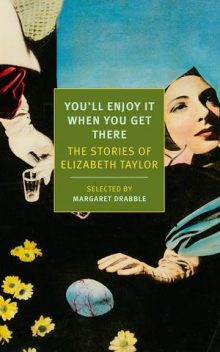
Quotes from Elizabeth Taylor herself

I’ve no imagination and can only write of what I know.”

I never wanted to be a Madame Bovary. That way for ever—literature teaches us as much, if life doesn’t—lies disillusion and destruction. I would rather be a good mother, a fairly good wife, and at peace.” – Elizabeth Taylor, A Game of Hide-and-Seek

The secret of your power over people is that you communicate with yourself, not your readers.” – Elizabeth Taylor, Angel

The whole point is that writing has a pattern and life hasn’t. Life is so untidy. Art is so short and life so long. It is not possible to have perfection in life but it is possible to have perfection in a novel.”



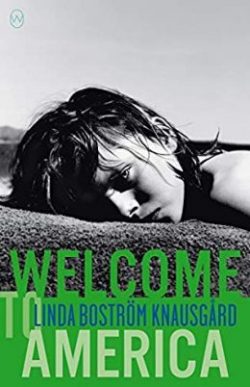
‘Welcome to America’ by Linda Boström Knausgård – Unspeakable Family Life


‘Welcome to America’ by Linda Boström Knausgård (2016) – 124 pages              Translated from the Swedish by Martin Aitkin

In ‘Welcome to America’, eleven year-old narrator Ellen has stopped talking. Her father has recently died, and Ellen is living with her stage actress mother and Ellen’s older brother.

Ellen believes she killed her father because she wished him dead, and then he died. Her father had severe mental problems, and he was a danger to people around him, especially his wife, so he was locked up in an institution.

The ambulance that pulled up slowly outside, and me trying not to draw his attention to it, so he wouldn’t run away. I’d dreamt about them coming to get him. Men in white coats who took him away and locked him up for good.”

Now the father has died, and daughter Ellen lives in nearly unrelieved misery and has stopped talking.

The backstory is that the father was relatively stable up in northern rural Sweden. Then he married his wife who soon became an acclaimed stage actress and in order to advance her career the family had to move to the city. The father couldn’t stand complicated city life and went bonkers, and died in the asylum.

A broken man. Mom had chewed him up and spit him out. She’d lived their life as if it were the most natural thing in the world, only then to shut him out.”

This entire novel is overwrought, and the young girl Ellen is a case study in severe depression. It has the cold sad disquiet of one of Ingmar Bergman’s darker movies, but even Bergman would have put in a few lighter scenes for contrast. ‘Welcome to America’ would have been more convincing if there had been a couple of happy moments for variation from all of the despair.

I also don’t like the proposition that the mother’s stage success and vivacity naturally led to the father’s craziness, but that is probably just the kid’s projection anyway.

The novel is written in short staccato sentences and in many cases mere short phrases. Despite the short sentences, I wasn’t entirely convinced this was a young girl speaking. It is difficult for me to believe that an eleven year old girl could be this clinically depressed. In any case I’m not sure the story should have been told entirely from a depressive’s point of view, even if she is only eleven.

Also the title is misleading, because ‘Welcome to America’ has absolutely nothing to do with the story, except that Ellen is in a play at school about the Statue of Liberty. This play is barely mentioned.


Grade:   C+


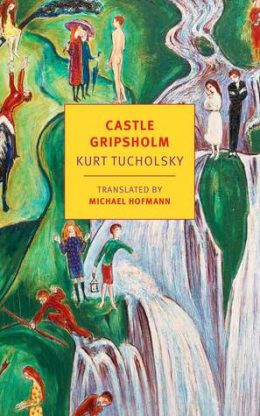
‘Castle Gripsholm’ by Kurt Tucholsky – An Idyllic Summer Vacation in Sweden


‘Castle Gripsholm’ by Kurt Tucholsky   (1931) – 127 pages         Translated from the German by Michael Hoffman

The New York Review Books Classics series has done a remarkable job of rescuing neglected wonderful fiction from the past. Whenever I get fed up with the over-hyped novels of today, I read one of these classics in order to restore my faith in fiction. ‘Castle Gripsholm’ is another fine novel by a writer I had never heard of before.

I probably should have heard of Kurt Tucholsky before. There are two literary prizes, one in Sweden and one in Germany, named after him. He was perhaps Germany’s finest journalist in the 1920s but his work was banned, declared un-German, and burned in bonfires when the Nazis came to power in 1933. He left for Sweden then. ‘Castle Gripsholm’ was his only novel.

‘Castle Gripsholm’ is a fictional playful, lighthearted account of a five-week vacation trip to Sweden.

Our narrator Kurt travels by train with his girlfriend Lydia (called the Princess) from Berlin to Copenhagen, then up to Sweden by ship. They stay in the Swedish countryside near a lake at an annex to the Castle Gripsholm. There the two have a restful vacation.

Swimming in the lake; lying naked on the shore, in a sheltered spot; soaking in the sun so you rolled home at noon, wonderfully dozy, and drunk on the light, the air and the water; quiet; eating; drinking; sleeping; resting – holiday.”

Later Kurt’s good friend Karlchen arrives and stays a few days. The Princess and Karlchen immediately hit it off well, and Kurt is happy to have his two great friends there.

To have someone to trust! To be with someone for a change who doesn’t eye you suspiciously when you use a phrase that might perhaps offend his vanity, someone who isn’t prepared at any moment to lower his visor and do battle to you to the death…Friendship is like one’s homeland. We never talked about it, and whenever there was any slight surge of emotion unless it happened in a serious late-night talk – it would be quenched in a bucketful of colorful abuse. It was marvelous.”

After Karlchen leaves, a friend of the Princess, Billie, arrives for a few days, and the idyll continues.

Much of the fun of ‘Castle Gripsholm’ is in the playful witty repartee between these friends. However there are also the quiet times.

How wonderful it is to be silent with someone.”

Of course even a charming novel must have some dramatic tension to sustain interest, so there is a side story about a young girl Ada who they discover is being terribly abused by the cruel headmistress of a children’s home, Frau Adriani.

I have always tried to maintain certain balances in my reading between male and female writers, between authors from various parts of the world, and between new novels and the classic old novels. The New York Review Books Classics series helps me maintain all these balances. The one constant is that I look for novels that are meaningful and that I will enjoy.


Grade:    A


‘Klotsvog’ by Margarita Khemlin – A Vivacious Self-Justifying Russian Woman


‘Klotsvog’ by Margarita Khemlin (2009) – 245 pages                         Translated from the Russian by Lisa C. Hayden

‘Klotsvog’ is by far the liveliest Russian novel I have read that takes place during Communist times. This is thanks to our vivacious first-person narrator Maya. People find a way to live their lives as they want to in almost any circumstances.

‘Klotsvog’ takes the form of a fictional memoir of Maya who was born in Kiev, Ukraine in 1930 to a Jewish family. She was on a trip with her mother out of town when her village was destroyed and the rest of her family as well as the rest of the community were murdered by the Nazis.

However Maya’s memoir begins in 1950. Jewish people then still had to worry, because Stalin still had a scheme to murder all the survivors of the Holocaust. Fortunately Stalin died in 1953 which was a great burden removed from the surviving Jewish people in Russia. Maya shares this insight into Communism:

The house is burning but the clock still keeps time.”

In 1950, Maya is a beautiful young woman, and she enters into an affair with her older instructor who is married. Another man named Fima is also interested in her. When she finds out she is pregnant by her instructor, she agrees to marry Fima and attempts to have sex with him so he will believe the baby will be his. She is only partially successful. This sets the pattern for the entire rest of the memoir. By the end Maya has had three husbands, two children, and four other intimate boyfriends, occasionally while she was still married. Of course in one case the husband was fooling around too. When she finds out that her husband is having an affair with his mother’s live-in nurse, she reacts thus:

Of course there could be no talk of love here. This was the usual male impermanence. Romance based on a fresh outward appearance and a young woman’s affected good-naturedness.”

Throughout I admired the honesty and insight of Maya.

Maya is honest in her memoir throughout, but the memoir is an exercise in self-justification as most memoirs are. Maya comes from a Ukrainian Yiddish background, but she does not want her children to speak Yiddish under any circumstances. Her mother and the few other family survivors criticize her mothering of her kids. The boy who is the older child spends much time with the grandmother in Kiev while Maya and one of her husbands move to Moscow. The grandmother instills the boy with some of the old family values, and Maya becomes estranged from the boy. Maya criticizes her daughter severely for being overweight, and the daughter becomes a severe behavior problem. Neither child likes their mother Maya much. In this memoir, Maya attempts to justify her parenting throughout, but is only partially successful.

I liked ‘Klotsvog’ a lot because Maya is an astute woman. But towards the end it does get somewhat discursive or repetitive or ambiguous. But as Maya would say:

But that’s not my point.”

Life is ambiguous.


Grade:    A-


‘Night Boat to Tangier’ by Kevin Barry – A Funny Sad Elegy for Two Aging Irish Criminals.


‘Night Boat to Tangier’ by Kevin Barry   (2019) – 255 pages

‘Night Boat to Tangier’ is the story of two fading Irish gangsters, best friends, in their early fifties, Maurice and Charlie. Charlie has a severe limp; Maurice has lost one of his eyes. Maurice and Charlie started dealing dope in high school.

Money accrued; ambition was fed. Dope brought girls and money. There was langour by day and violence in the night.”

Since then, they had devoted their entire adult life to smuggling drugs. They have made huge amounts of money at times, nearly all of which has somehow flown away, mostly on bad investments and illegal drugs for their own personal use.

They are at the waiting room of the ferry terminal in Algeciras on the southern coast of Spain expecting Maurice’s 23 year old daughter Dilly to show up. Dilly left Ireland three years ago and has not returned, but Maurice has heard rumors that she might be coming in on the ferry from Tangier today. Early on they encounter a dreadlocked young guy Ben who looks like he might know Dilly, so Maurice and Charlie manhandle him to find out more of Dilly:

I don’t know if you’re getting the sense of this yet, Ben. But you’re dealing with truly dreadful fucken men here.”

As they wait, Maurice and Charlie talk about the old days. Scenes from the past are juxtaposed with scenes of the two waiting, and we readers get nearly their entire life story.

‘Night Boat to Tangier’ doesn’t glorify these hardened Irish criminals but it surely humanizes them. What we are dealing with here is a novel in the Loveable Irish Criminal genre times two. Many of us readers have been here a thousand and one times before.

Of course at times Maurice gets soppy sentimental about his daughter Dilly even though he was not around most of the time when she was growing up.

Twenty years ago I was so sick of cuteness in Irish fiction that I made it a point to avoid it at all costs. However Kevin Barry is so good at Irish cute that I can’t resist.

The scenes in this novel are supremely constructed. There is one brazen incident from the past when Maurice confronts Charlie in a bar. Kevin Barry heightens the menace of this cofrontation by having it told by the bar owner who wishes to maintain order in his bar at all costs.

The scenes are highly climactic and cinematic. I believe there is a strong possiblility that ‘Night Boat to Tangier’ will be turned into a movie, something along the lines of ‘In Bruges’ starring Colin Farrell and Brendan Gleeson.

Along the way in ‘Night Boat to Tangier’, Maurice and Charlie give us the “Seven True Distractions in Life” which I think are quite good. The “Seven True Distractions in Life” are want-of-death, lust, love, sentimentality, grief, pain, and avarice.


Grade:    A


‘Drive Your Plow Over the Bones of the Dead’ by Olga Tokarczuk – Astrology and the Plight of the Animals

‘Drive Your Plow Over the Bones of the Dead’ by Olga Tokarczuk (2009) – 274 pages                                                      Translated from the Polish by Antonia Lloyd-Jones


I decided to re-post this article on this day since Olga Tokarczuk won the Nobel Prize for Literature today.

‘Drive Your Plow Over the Bones of the Dead’ begins with alarming but fascinating stark intensity:

We left the house and were instantly engulfed by the familiar cold, wet air that reminds us every winter that the world was not created for Mankind, and for at least half the year it shows us how very hostile it is to us. The frost brutally assailed our cheeks, and clouds of white steam came streaming from our mouths.”

The old woman who lives in a rural forest area, Janina Duszejko, and her neighbor Oddball find the newly dead body of their other neighbor Bigfoot lying on his kitchen floor. He appears to have choked to death on the bone of a deer. Nearly everyone here has a nickname. The old woman’s reaction is severe:

I disliked him. To say I disliked him might be putting it too mildly. Instead I should say I found him repulsive, horrible. In fact I didn’t even regard him as a human Being. Now he was lying on the stained floor in his dirty underwear, small and skinny, limp and harmless…for someone as foul as he was did not deserve death. Who on earth does?”

I can think of no other novel in which the main character’s reaction to events is so fierce and sharp.

The old woman has two strong beliefs. One is a belief in astrology. There is much talk of which planet or moon is ascendant or in opposition. I usually avoid like the plague books that go too heavily into astrology, but I am happy I stuck with this one.

Her second belief is a love of and a passion for justice for animals. She absolutely detests the killing of animals, especially by hunters. Here is her justification:

“They were more human than people in every possible way. More affectionate, wiser, more joyful… And people think they can do whatever they want to Animals, as if they are just things. I think my dogs were shot by the hunters.”

She becomes livid when she finds the hunters near her home have set up salt licks to attract deer.

And when the Animals come to feed, they shoot at them. It’s like inviting someone to dinner and murdering them.”

She is fanatic about all animals, even the lowliest:

It occurred to me that every unjustly inflicted death deserved public exposure. Even an Insect’s. A death that nobody noticed was twice as scandalous.”

When the old woman reports cases of animal cruelty to the authorities, they see her as “a tedious madwoman who is hopeless at everything, pathetic and laughable”. However in her younger days, she worked as a bridge construction engineer and then a grade school teacher.

At one point the irate old woman tells us of the value of anger:

“Sometimes when a Person feels Anger, everything seems simple and obvious. Anger puts things in order and shows you the world in a nutshell. Anger restores the gift of Clarity of Vision, which is hard to attain in any other state.”

All I can say is that despite the old woman’s beliefs in things I don’t necessarily agree with, she states her views in such a clear straightforward fashion that she won me over as a fictional character.

‘Drive Your Plow Over the Bones of the Dead’ is a powerful passionate intense novel, and I strongly recommend it.


Grade:    A


‘Cantoras’ by Carolina de Robertis – Five Women Around a Campfire


‘Cantoras’ by Carolina de Robertis   (2019) –  317 pages

The small country of Uruguay was supposed to be immune from collapsing into a dictatorship. It was supposed to be a tiny oasis of calm. The country prided itself on being a progressive democracy, a role model. However on June 27, 1973 it fell into the throes of a severely repressive military dictatorship. Citizens were arrested and disappeared for no reason. Many of these were tortured and/or murdered it was found out later. Large numbers of people left the country, escaped as exiles. Not until 1984 was Uruguay returned to civilian rule.

‘Cantoras’ is the story of that appalling time in Uruguay told from the perspective of five women who had thought they had found refuge on a remote beach on the Atlantic Ocean. These women all have a special reason to be concerned about the alarming events in their country because they are women who are attracted to other women. They call themselves “Cantoras” which is the Portuguese word for female singers or songstresses.

There was no future for women in this godforsaken country, must less for women like her.”

We readers are there when one or more of these women fall in love or fall apart or bring in another woman from outside the group.

She had never seduced a woman who was so much older than her before; the thrill of it helped her survive the terror of her days. She was only seventeen years old but she’d been watching men for a long time, the way they acted as if they knew the answers to questions before they were asked, as if they carried the answers in their mouths and trousers.”

We are there when one of this female group is arrested.

There she was, a prisoner flanked by soldiers in plain clothes, and yet she looked as free and normal as anyone else. The essence of dictatorship, she thought. On the bus, on the street, at home; no matter where you are or how ordinary you seem, you’re in a cage.”

I have previously read the novel ‘Perla’ by Carolina de Robertis which is also about the military dictatorship in Uruguay. After reading ‘Perla’ I was already sure that I had discovered a new major world-class novelist in Carolina de Robertis, and ‘Cantoras’ reinforces that view. ‘Cantoras’ is a moving blend of the political and the personal, how these women start, continue, and end their romantic relationships under difficult conditions.

…at twenty-eight, she would never know how much of who she was was deformed by dictatorship, like a plant twisting its shape to find light. That so much had been lost or broken.”

We do not realize how important freedom is to living our lives until it disappears. The significance of living freely and the destruction of lives caused by the loss of freedom are conditions too many South Americans know all too well.

We don’t appreciate what we have until it’s gone. Freedom is like that. It’s like air. When you have it, you don’t notice it.” – Boris Yeltsin


Grade :    A-


Richard Yates – One of My Favorite Fiction Writers of the 20th Century

Richard Yates

Born:  February 3, 1926     Died:  November 7, 1992

If you don’t go for realism or portrayals of life as it actually is lived in fiction, you might as well just skip Richard Yates. However I, on the other hand, devoured all of Yates’ works.

If you still want to read Richard Yates, where should you begin? The short stories are spectacular achievements of poignant realism, perhaps the best since Anton Chekhov. The titles of Yates’ two short story collections, ‘Eleven Kinds of Loneliness’ and ‘Liars in Love’, are a good indication of his human subject matter. As for the novels, I would start with ‘The Easter Parade’ even before his most acclaimed work, ‘Revolutionary Road’. I have found no other author who could make me feel the same degree of empathy as Richard Yates does for the two sisters portrayed in ‘The Easter Parade’.

“There were worse things in the world than being alone. She told herself that every day.”

Perhaps this is why I read fiction, to gain insight into the human predicament. Not sympathy mind you, but empathy.

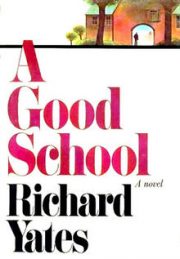
Anothe fine novel by Yates is ‘A Good School’. But, nearly all of Yates’ novels are excellent acute protrayals of their characters, even his two lesser works (in my opinion), ‘A Special Providence’ and ‘Young Hearts Crying’.

Perhaps the most striking quality of Yates is the clearness and lucidity of his prose. From this directness comes his ability to write scenes that resonate with and emotionally move readers.

Blake Bailey wrote a massive biography of Richard Yates which seems to chronicle every little detail of Yates’ sad life called ‘A Tragic Honesty’. Yes, Richard Yates did have a tragic post-World-War-II life. Plagued by TB at a young age, too much alcohol, too many cigarettes, ten nervous breakdowns, always too little money, divorces, too many short-term girlfriends. One time he accidentally almost killed himself by starting his apartment on fire with a cigarette and after that was confined to the psych ward at Bellevue Hospital for a few months. He was too meticulous in his writing method to make it as a Hollywood screenwriter, spending sometimes hours searching for exactly the right word. He had to watch as writers with less talent than he got the awards, the acclaim, and the book sales.

I’m only interested in stories that are about the crushing of the human heart.” ― Richard Yates

Richard Yates’ life might be considered a failure except for his fiction which fortunately is still here for us to read. The one thing Richard Yates could do was capture life on the page. During his life, he was known as a writers’ writer, admired by his fellow writers if not be the book-buying public.

Here is more than fine writing; here is what, added to fine writing, makes a book come immediately, intensely and brilliantly alive. If more is needed to make a masterpiece in modern American fiction, I am sure I don’t know what it is.” – Tennessee Williams on Revolutionary Road.

I love Richard Yates, his work, and the novel ‘Revolutionary Road’. It’s a devastating novel.” – Michael Chabon
‘The Aspern Papers’ by Henry James – A Literary Predator Acts with Hypocrisy and Duplicity in Venice


‘The Aspern Papers’ by Henry James    (1888) – 96 pages

Our nameless narrator comes to Venice for one purpose. The ancient lady Juliana had at one time a romance with the famous poet Jeffrey Aspern who died young, and she is known to have in her possession some valuable letters and other papers of Aspern’s, and our narrator wants them at nearly all costs. He concocts a scheme to rent some rooms from Juliana and her niece Miss Tita in their Venice palazzo and somehow get hold of the papers. Although our narrator has no romantic interest whatsoever in the niece Miss Tita, he rents the apartment at an exorbitant fee with a ruse to pretend to court Miss Tita in hopes of gaining access to the Aspern papers that way. Or perhaps he can grab the papers in the confusion that will arise when the old lady dies.

Our narrator in ‘The Aspern Papers’ is a predator, but not a predator of these women whom he makes abundantly clear he has little or no interest in. Our narrator is a literary predator. By his own admission, he will practice hypocrisy and duplicity in order to get the Aspern papers.

I can arrive at the papers only by putting her off her guard, and I can put her off her guard only by ingratiating diplomatic practices. Hypocrisy, duplicity are my only chance. I am sorry for it, but for Jeffrey Aspern’s sake I would do worse still. First I must take tea with her; then tackle the main job.”

After Juliana rejects his efforts to talk her into giving him the papers, he plays with the affections of Miss Tita. I won’t go any farther into the plot than this, but Henry James does seem to treat this scoundrel narrator more lightly than he deserves. Our narrator’s hypocrisy is that he pretends to like Miss Tita at all.

As is my usual pattern with Henry James novels, I was originally put off by the upper class twit-iness of the writing. When our narrator says he’d like to take care of the garden at the palazzo, he immediately says he will hire some gardeners to tend it for him. Then he also has a gondolier to haul him around Venice and I imagine a couple of servants to clean up his rooms.

However I then got beyond the twit-iness, and became deeply absorbed in the plot. By the end, I was hanging on every sentence. I finally had to admit that this novel or novella was very well done, even though Henry James’ distaste for women shines through to the very end.


Grade:   B+


‘The Tartar Steppe’ by Dino Buzzati – Waiting, A Soldier’s Life


‘The Tartar Steppe’ by Dino Buzzati    (1940) – 198 pages            Translated from the Italian by Stuart Hood

‘The Tartar Steppe’ follows the life of a young soldier in such a clear and precise manner that it is as though it were etched in stone rather than written.

When Giovanni Drogo first arrives at the remote Fort Bastiani, he misses the excitement and color of the city, the bars and the young women. On his way to the fort he meets a Captain Ortiz who has been there who gives him some advice.

Watch out,” he said, “you will let them convince you, you’ll end up by staying here too, I have only to look into your eyes.”

Drogo wonders if he should just leave this drab military fort immediately. But then he agrees to sign up for just four months. But the monotonous regularity of military life somehow grows on him, and after four months he decides to stay on for two more years.

The men at the fort are waiting for their enemy, the Tartars, to make an advance toward them. I had to look up who the Tartars were and found they are a semi-nomadic ethnic group that comes from a Russian place called Tatarstan which is about 100 miles east of Moscow.

Before he knows it, thirty years have passed, and Drogo is still at the fort. A couple of times over the years it has appeared that the Tartars were staging an attack.

Never before had the orderlies run up the stairs so quickly, never had the uniforms been so tidy, the bayonets so gleaming, the bugle calls so military. So they had not waited in vain; the years had not been wasted; the old Fort would, after all, be of some use.”

But these indications of activity by the Tartars turn out to be false alarms.

As the decades pass with Drogo and his fellow soldiers waiting for an enemy who never surfaces, his old friends in the city meanwhile have married, had children, and led full lives.

One after another the pages turned – the grey pages of the days, the black pages of the nights, and both Drogo and Ortiz (and perhaps some of the other senior officers) felt a growing anxiety that they might no longer have enough time left.”

‘The Tartar Steppe’ is about a soldier’s life, but its theme of time passing is universal. Life happened while we were waiting, and the years and decades went by before we knew it.

Previously I have read two other excellent books by Dino Buzzati, the graphic novel ‘Poem Strip’ and the children’s story ‘The Bears’ Famous Invasion of Sicily’. This guy Buzzati was multi-talented.


Grade:    A


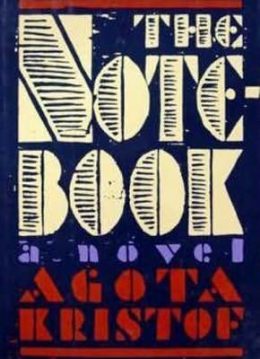
‘The Notebook’ by Agota Kristof – Living Through Hell on Earth While Losing the War


‘The Notebook’ by Agota Kristof (1986) – 183 pages            Translated from the Hungarian by David Sheridan

‘The Notebook’ has some of the most brutal perverse scenes I have read in a novel. It is painful to read but original, blunt, and powerful. It takes place during 1944 and 1945 in I suppose Hungary whose people welcomed the Germans, but now they are waiting for the invading Russians who will stay there for many decades.

If ever there was a place of Hell on Earth it was Hungary during the last days of the war. The Germans and some of the Hungarians, upset about their losing the war, started murdering the Jewish people in earnest, murdering and destroying whole camps in order to cover their evil tracks. The civilian population, realizing that the war is ending and they lost, either welcome their rampaging Russian liberators or descend into theft, violence, or insanity.

During this time, life is perverse for everyone, not just the soldiers. Life is hard for rural folk, but the situation is even more desperate in the cities.

A mother from the city where there is no food sends her two twin boys to live with their grandmother who lives in a small town and is called the Witch by her neighbors. She is cruel and stingy with the little money she gets through selling vegetables in the town. The grandmother takes the boys whom she calls “sons of a bitch” since the mother agrees to send her money. The grandmother is rumored to have murdered her husband many years ago.

The twin boys always act in unison throughout and are never differentiated from each other. They learn to dispense a rough form of justice during these brutal times. They must do what it takes to survive and will retaliate against those who are cruel to their neighbors. One of these neighbors is a desperately poor woman and her daughter Harelip. The daughter went to the local priest for money just to survive, and the priest would give a little money to the girl if she let him see her slit. When the boys find out about this, they blackmail the priest into providing regular payments to Harelip and her mother.

There are scenes in this novel would make a sailor blush. Along with a rough sense of justice there is a stark sense of honesty here.

At one point there is the following exchange.

A man says:

You shut up. Women have seen nothing of the war.”

A woman says:

Seen nothing? Idiot!! We have all the work and all the worry: children to feed, wounds to tend. Once the war is over, you men are all heroes. The dead: heroes. The survivors: heroes. That’s why you invented war. It’s your war. You wanted it, so get on with it – heroes my ass!”

The chapters in ‘The Notebook’ are all very short and are made up of short and choppy sentences. It is difficult to read more than a few pages at a time. However this rugged crude style is entirely appropriate for this harsh and blunt account.

I plan to read the other two novels, ‘The Proof’ and ‘The Third Lie’, in this trilogy by Agota Kristof after I recover from ‘The Notebook’.


Grade:      A


‘The Seagull’ by Anton Chekhov – A Play of Unrequited Lovers


‘The Seagull’ by Anton Chekhov (1898) – 61 pages             Translated from the Russian by David Magarshack

When the one you love loves someone else, it’s a problem that only a play can resolve.

The schoolmaster Simon loves only Masha, but Masha ignores Simon because she has her heart set on aspiring writer Konstantin. However Konstantin is madly in love with and has eyes only for aspiring actress Nina. Nina begins the play in love with Konstantin but when renowned author Trigorin arrives, Nina immediately falls for him. Meanwhile Trigorin hangs around with the famous actress Irina Arkadina who happens also to be the mother of Konstantin, but Trigorin is open to any and all affairs on the side. And the married Paulina, the mother of Masha, is having an affair with the doctor Dorn. Of course women have always fallen for the doctor Dorn. So it goes.

Each of these unrequited love situations resolves itself in its own way.

Anton Chekhov subtitled ‘The Seagull’ as “A Comedy in Three Acts”, but for the life of me I can’t find much of anything humorous about the play. There is a silly play within the play in which Chekhov makes fun of symbolist plays which were coming into vogue in Russia at that time. Also there are plenty of other good-natured people around besides all these unrequited lovers. However I believe most viewers would say this play is a tragedy.

‘The Seagull’ contains a large cast of characters, and the amazing thing is that Chekhov can capture the human qualities of each person on stage with just a few lines of dialogue for each. Although Konstantin and Nina and Trigorin would probably be considered the main characters, Chekhov does not slight any of the more peripheral characters, and their life situations are also rendered with poignancy. I believe that is why I admire Chekhov’s writings so much, his strong empathy for each of his characters. Someone may be off to the side, but their life is just as important to them as it is for the main characters. Chekhov recognizes this fact.

The following introductory lines by the translator David Magarshack go a long way to explain the appeal of ‘The Seagull’:

Chekhov’s attitude toward the characters in his plays is one of profound understanding without any false sentimentality. It is this that explains best of all the marvelous blend of the tragic and the comic that is so characteristic of them.”

Much of ‘The Seagull’ takes place near the lake on the country estate of old man Sorin. Here Chekhov is opening up the stage beyond the restrictions of the drawing room.

And then there is the seagull or, in a fancy literary term, the objective correlative of the play. First Nina mentions the seagull to show how she is drawn to the lake. Later Konstantin shoots the seagull and gives it to Nina who just leaves it lying dead on the stage. Then Trigorin has the seagull stuffed as an ironic token of what he is doing to Nina by entering into a love affair with her. Heavy stuff.


Grade:   A


Some Humorous Quotes About Writing and Other Things


The following quotes were all found in the Oxford Dictionary of Humorous Quotes by Gyles Brandreth.


I’ve learned from my mistakes, and I’m sure I can repeat them.” – Peter Cook

I always wanted to be somebody, but now I realize I should have been more specific.” – Lily Tomlin

The trouble with words is that you never know whose mouth they have been in.” – Dennis Potter

If you judge a fish by its ability to climb a tree, it will live its whole life believing it is stupid.” – Anonymous

“The best argument against democracy is a five minute conversation with the average voter.” – Winston Churchill

Too much of a good thing can be wonderful “ – Mae West

Maturity is a high price to pay for growing up.” – Tom Stoppard

I have never yet met a man who could look after me. I don’t need a husband. What I need is a wife.” – Joan Collins

This is not a novel that should be tossed aside lightly. It should be thrown with great force.” – Dorothy Parker

Oh, Jack Kerouac – That isn’t writing, it’s typing.” – Truman Capote

To see him (Stephen Spender) fumbling with our rich and delicate language is to experience all the horror of seeing a Sevres vase in the hands of a chimpanzee.” – Evelyn Waugh

Words are like leaves and where they most abound, much fruit of sense beneath is rarely found.” – Alexander Pope

Facebook is for people who can’t face books.” – Madeleine Beard

No snowflake in an avalanche ever feels responsible.” – Stanislaw Lem

“Computers make it easier to do a lot of things, but most of the things they make it easier to do don’t need to be done.” – Andy Rooney

The only way to amuse some people is to slip and fall on an icy pavement,” – E. W. Howe

I would have answered your letter sooner but you didn’t send one.” – Ace Goodman

Two things are infinite. The universe and human stupidity, and I am not yet completely sure about the universe.” – Albert Einstein

“No one gossips about other people’s secret virtues.” – Bertrand Russell

“There is only one thing in the world worse than being talked about, and that is not being talked about.” – Oscar Wilde

I won’t say she was silly, but one of us was silly, and it wasn’t me.” – Elizabeth Gaskell

If you want to get rich from writing, write the sort of thing that’s read by persons who move their lips while reading.” – Don Marquis

There is no greater bliss in life than when the plumber eventually comes to unblock your drains. No writer can give that sort of pleasure.” – Victoria Glendinning