Archive for the ‘Book Reviews’ Category

‘Pedro Páramo’ by Juan Rulfo – Eerie Folks in a Mexican Town


‘Pedro Páramo’ by Juan Rulfo (1955) – 124 pages                   Translated from the Spanish by Margaret Sayers Peden

A dying mother sends her son on a quest to find his father in a town called Comala. After his mother dies, the son heads out to this town, and the townspeople treat him kindly. However he soon discovers that many of these same people who greet him are, surprise, already dead.

What happens with these corpses that have been dead for a long time is that when the damp reaches them they begin to stir. They wake up.”

This novella is filled with the sounds of the rustling and murmuring of dead people.

As the son stays, he finds out all about his father, Pedro Páramo. Pedro owned nearly all the land that surrounds the town. He was a ruthless tyrant who subjugates all the men in town to his brutal rule and subjects many of the women in town to his desires. The only son that he actually claims as his own, Miguel, is spoiled and even worse than he is.

We also hear from the last wife of Pedro Páramo who is in the cemetery.

A woman’s voice? You thought it was me? It must be that woman who talks to herself. The one in the large tomb. Dona Susanita. She’s buried close to us. The damp must have got to her and she’s moving about in her sleep.”

Who is she?”

Pedro Páramo’s last wife. Some say she was crazy. Some say not. The truth is she talked to herself even when she was alive.”

The novella ‘Pedro Páramo’ was at first met with a cool critical reception and sold only two thousand copies during its first four years. However over the years it has gained stature as a classic. Gabriel Garcia Marquez and Jorge Luis Borges have both championed this little novella with Garcia Marquez claiming he “could recite the whole book, forwards and backwards”. Now ‘Pedro Páramo’ has been translated into more than thirty different languages and the English version has sold over a million copies.

I found this to be a haunting Mexican tale but somewhat confusing in places.

Sometimes they say the dead speak to us but they usually don’t mean it this literally.


Grade:   A-


‘Actress’ by Anne Enright – Katherine O’Dell, The Star


‘Actress’ by Anne Enright   (2020) – 264 pages

At its beginning, it would be easy to mistake ‘Actress’ for Anne Enright’s actual memoir about her own mother; it has that veracity. The novel takes the form of a first-person memoir of the actress Katherine O’Dell by her daughter Norah. Katherine O’Dell is not the actress mother’s real name; she’s not even Irish, but English instead. Coming from a family of stage actors, young Katherine gains fame and fans on the stage and is swept off to Hollywood.

It happened instantly. Perhaps there is no other way. A star is born, not made, because stars are not actors – some of them, indeed, are very bad actors, at least that is what my mother used to say. Whatever a star has, they had it all along, and, at nineteen, Katherine O’Dell had it in spades. Offstage, you could hardly see her, onstage, you could not look away.”

Who is daughter Norah’s father? It is probably not the gay actor to whom Katherine O’Dell was married off to in a Hollywood-arranged ceremony when she was just 21. For a homosexual man, getting married was definitely the best cover there was at that time.

Of course Katherine had other lovers, but it is difficult for her daughter to figure out who they might be.

Later in her acting career Katherine faces the plight of many middle age actresses.

In 1975, Katherine O’Dell finally gave in. At the age of forty-seven, she moved from her unconvincing twenties to her mid-sixties – there was nothing for her to play in between.”

The novel ‘Actress’ is not entirely successful. Some of the problems result from the format as a daughter’s memoir. Most of the scenes of Katherine O’Dell as a young actress occurred before her daughter Norah was born, so Norah recalls them from a remote distance rather than up close, vivid, and personal.

Much of the second half of the novel is concerned with Norah herself, her love life, the Irish troubles of the 1970s, her marriage, etc. In fact Norah addresses some of her discourse to her husband which is a strange thing to do in a memoir of her mother. I found these asides by Norah to her husband to be clumsy, distracting and diverting from the remembrance of her mother. The story of her mother is sidelined to some extent.

Ultimately my assessment of a novel is usually based on the level of enthusiasm I have when I return to it after having put it down. ‘Actress’ kind of dragged for me in this regard especially in the second half.


Grade:   B-


Some Fiction From the First Decade of the 2000s (2000-2009) That is Too Good to be Forgotten


Below are ten works of fiction from the early 2000s all about which I became enthusiastic and which led me to put these writers in my Must-Read category.


‘The Other Side of You’ by Salley Vickers (2006) – Salley Vickers connects the great works of art, in this case the art of Caravaggio, with the conscious daily lives of her characters in a compelling way. Her novels are definitely literary, yet are as light as a soufflé.


‘Ludlow’ by David Mason (2007) – Here is a novel-in-verse but not with the subject matter you would expect for a novel in verse. The coal miners of Ludlow, Colorado go on strike in 1914, one of the cruelest, bloodiest chapters in the history of American labor. The verse novel strategy works brilliantly to describe scenes that are not always pretty.


‘The Beauty of the Husband’ – A Fictional Essay in 29 Tangos by Anne Carson (2001) – In lyrical lines that suggest the movements of tango dancers, Carson describes scenes from a doomed marriage. This is a modern take on the intimate cruelties of marriage.

Three minutes of reality

All I ever asked

She stands looking out at rain on the roof.”

‘The Inheritance of Loss’ by Kiran Desai (2006) – I read much of the work of her mother Anita Desai, and daughter Kiran Desai carries on brilliantly. ‘The Inheritance of Loss’ has depth, emotion, hilarity, and imagination; what more can you ask for?. But why hasn’t Kiran Desai published any fiction since 2006?


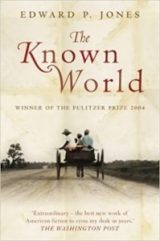
‘The Known World’ by Edward P. Jones (2003) – By focusing on a black slave owner, Edward P. Jones avoids turning this novel into a morality play of good and evil. There is no one preaching. The matter-of-fact tone only intensifies the reader’s reaction to this story.


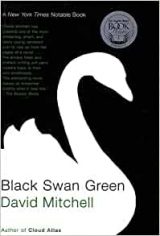
‘Black Swan Green’ by David Mitchell (2006) – This is David Mitchell’s lightest most engaging novel, and it is my favorite of his work.

These jokes the world plays, they’re not funny at all.”


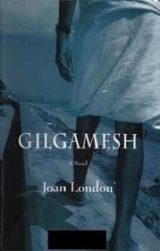
‘Gilgamesh’ by Joan London (2001) – A teenage woman and her young child take an amazing trip from rural Western Australia to Armenia and back. This is a blunt and beautifully written novel that deals with life’s tough truths.


‘John Henry Days’ by Colson Whitehead (2001) – Even before ‘Underground Railroad’, Colson Whitehead wrote wonderful novels. This novel is more humorous and thus more fun for me than ‘Underground Railroad’. Sometimes it seems writers lose their lightness as they get older.


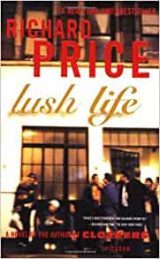
‘Lush Life’ by Richard Price (2008) – Richard Price is the excellent writer of novels that take place on the streets of New York. He lived in a housing project as a child and knows all about the city street life. He has branched out to writing for TV and the movies, but I have followed his written fiction from the beginning.


‘How the Light Gets In’ by M. J. Hyland (2004) In 2004, M. J. Hyland was the new female novelist who burst on the scene with this her first wonderful novel and got much of the attention and some awards. After reading this novel and her next, ‘Carry Me Down’, I put her in my must-read category. However she has not published a novel since 2009.


Generosity’ by Richard Powers (2009) – A likable and passionate novel about the search for happiness and the Happiness gene. And you thought our state of mind was the result of happy or sad events in our lives?


Happy Reading!

‘My Life’ by Anton Chekhov – “Worms eat grass, rust eats iron, and lying eats the soul!”


‘My Life’ by Anton Chekhov (1896) – 106 pages          Translated from the Russian by Richard Pevear and Larissa Volokhonsky


I am always up for reading more Anton Chekhov so I grabbed the chance to read Chekhov’s novella ‘My Life’ especially since it was translated by the current gold standard in Russian translation, the team of Richard Pevear and Larissa Volokhonsky.

In the novella, young man Misail is the son of the town architect who is well-respected in the town. At first, friends of Misail’s father were happy to hire the young man. So far his father has lined Misail up for nine office desk jobs around town, and Misail has been dismissed from every one of them.

I keep you only out of respect for your esteemed father, otherwise I’d have sent you flying long ago.”

Many townspeople look upon Misail as a ne’er do well, but he isn’t enamored of the town either. Misail sees the corrupt underside of the most prominent people in the town. Even his own father is not exempt.

I didn’t know a single honest man in the whole town. My father took bribes and imagined they were given him out of respect for his inner qualities; …And those who didn’t take bribes – for instance the court administration – were haughty, offered you two fingers to shake, were distinguished by the coldness and narrowness of their judgments, played cards a lot, drank a lot, married rich women, and undoubtedly had a harmful corrupting influence on their milieu.”

Everywhere Misail looks in these upper echelons of town society, Misail finds dishonesty, chicanery, and mendacity. After losing his ninth office job, Misail finally decides to forsake his family’s position in the community and takes a job involving physical labor; he becomes a house painter. His father threatens to disown him.

Here he encounters the rough peasants of the town, but are they any more dishonest than the upper classes? Misail finds satisfaction in honest physical work. He actually becomes a town sensation among the younger people of the town for making this choice to forsake the town’s conventions. This is probably Chekhov’s most political work.

But as always with Chekhov, some of the main characters are female. We have Misail’s sister who tries to bridge the gap between him and his father. We have Misail’s girlfriend who is one of the young people who is enamored of him for choosing to do hard physical labor. Both of these young women figure in poignant story lines in ‘My Life’. There is always an emotional payoff in reading Chekhov.

‘My Life’ is a good indicator of the Russian people’s mindset just before the Communist revolution. What does a people do when the upper classes of society are rampant with corruption?


Grade:    A-


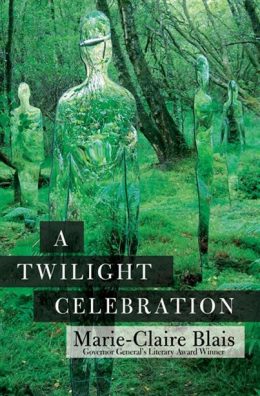
The Difficulties and the Delights of ‘A Twilight Celebration’ by Marie-Claire Blais


A Twilight Celebration’ by Marie-Claire Blais (2015) – 255 pages       Translated from the French by Nigel Spencer

Again I have read Marie-Claire Blais. She is a highly lauded author originally from Quebec who has written many novels and has earned some of the highest literary awards in French literature. She has even been nominated for the Nobel Prize in Literature. Most of her work has been translated into English including  ‘A Twilight Celebration’ which I have recently read. So how come is it that when I go to GoodReads there is not one review of ‘A Twilight Celebration’ there? Very strange. To remedy that sad situation, I posted this review there this morning.

I have read enough of Marie-Claire Blais to know that whatever difficulties her text presents, it will ultimately be worth my while. First I am going to explain the difficulties I encountered in reading ‘A Twilight Celebration’, and then proceed to describe how this novel finally transfixed me.

Marie-Clare Blais makes no concessions to her readers when in the pursuit of her vision. The entire novel is one long paragraph composed of about twenty sentences. It tries to capture the rapid-fire stream of thoughts that pass through several collective individuals’ minds in what Pasha Malla in the New Yorker calls “dizzying cascades of language”. There are several seemingly unrelated plot scenes, and Blais switches from one scene to another scene in mid-sentence without warning the reader. So you might start one sentence reading about Daniel at his writers conference in Scotland and wind up the sentence reading about transsexual Victroire dancing on stage in San Francisco. Along the way you also may have dealt with Angel’s misfortunes or Petites Cendres’s struggles somewhere else.

Actually Marie-Claire has written a ten-novel cycle about these same characters. I started with one of the later numbers in the cycle because with Marie-Claire Blais, as with Virginia Woolf, plot doesn’t much matter.

If your plan is to read only complete sentences at one time, forget about it. The few periods appear inconspicuously, and you will probably miss them. What really stunned me was that after several of her rare end-of-sentences, she would start her next sentence with “And”. Apparently everything in Blais’ world is connected.

I must say that at first I resented the author for not making her work less difficult for me to follow. I don’t like to have my inadequacies as a reader shoved in my face. I would have much preferred that this novel had been written in the relatively straightforward manner of Blais’ brilliant ‘A Season in the Life of Emmanuel’. ‘A Twilight Celebration’ does get easier to comprehend and appreciate as you go along.

However, on to the delights of reading ‘A Twilight Celebration’.

‘A Twilight Celebration’ is intense, driven, and heartfelt. I suppose you might call this stream of revelations a reverie, but Blais gets it right – the actions and events that are occurring in front of us intrude on our reverie. This is not a distant reverie but instead an engaged reverie. Some of the reflections as well as some of the actual events are strikingly vivid.

The subjects of Marie-Claire Blais are those who are oppressed in this world, the social outcasts and those marginalized persons who lead rough lives. She deals with political, religious, and especially sexual oppression. One of her subjects is mothers who are left stranded by men with whom they had loveless relationships and one baby or more. The forces of society make it particularly difficult for these mothers.

Here is a good statement of the theme:

we need to get beyond this world that reeks of the worst kind of prejudice,”

Here is a good example of the writing in the novel, this one from the poet Daniel. Of course it begins in mid-sentence.

we are the cantors of a fury too long contained, even asphyxiated, by a hypocritical society that reduces its poets to positions of inertia and impotence, paying them so little heed they end up dying,”

Here is one last example. This concerns the transsexual Victroire as he prepares to dance on stage.

you’re not the lonely fighter you think you are, soon enough you will be teaching the most rigid sectors of society not only basic tolerance but respect, so I’m telling you, Victroire, don’t be afraid, don’t be intimidated by threats and bald-faced blackmail, oh my Victroire, you’ll make love work for everybody, the young are listening to you,”

What if I find it more rewarding to comprehend 60% of what Marie-Claire Blais writes in ‘A Twilight Celebration’ than comprehending 100% of what some other writers write?

Finally, I cannot grade ‘A Twilight Celebration’. My reactions to it are just too complex. This is the second novel that I have refused to grade. The other was written by Jane Bowles.  I encourage you to give ‘A Twilight Celebration’ a try.


Grade:    ?


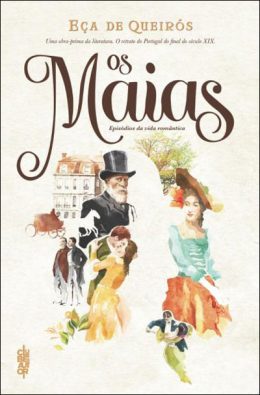
‘The Maias’ on Living, Loving, and Writing


‘The Maias’ by Eça de Queirós  (1888) – 628 pages              Translated by Margaret Jull Costa

Not only does ‘The Maias’ have a moving and enjoyable story, but also some of the lines from the novel are quite striking. I want to share with you some excellent words from ‘The Maias’ about art, literature, love, and life. Don’t worry; I won’t be giving away any of the plot. These are incidental comments made along the way. I found this novel not only delightful but also perceptive in the extreme.

Due to circumstances described in ‘The Maias’, our hero Carlos is raised by his grandfather Afonso who discusses the boy’s upbringing with the parish Abbot.

You see, abbot, that’s the main difference. I want the boy to be virtuous out of a love for virtue and honest out of a love of honesty, not out of a fear of Old Nick’s cauldrons, or because he’s tempted by the thought of entering the Kingdom of Heaven.”

Carlos grows up to become a doctor.

The keen-eyed Dr. Teodosio had one day said to him quite frankly “You’re too elegant to be a doctor! What female patient could resist flirting with you! And what good bourgeois gentleman is going to trust you with his wife in her bedroom? You would terrify any paterfamilas.”

Thus we move on to the Carlos’s love life.

You really are extraordinary! But your case is a perfectly simple one. It’s the old Don Juan syndrome. Don Juan experienced these same alternations between fire and ashes. He was looking for his ideal woman, and looking for her principally, and quite rightly too, among the wives of other men. And once he had slept with a woman, he’d declare he’d been deceived, that she was not the one for him.”

However all is not a bed roses for Carlos in these adulterous romances.

And this wasn’t the first time he experienced these false rushes of desire, which always came disguised as love, threatening at least for a time, to absorb his whole being, but which always ended in tedium and boredom.”

Then Carlos meets Maria Eduarda, another married woman.

She sincerely believed that there could be such a thing as pure disinterested friendship between a man and a woman, based on the loving meeting of two sensitive souls. ”

Carlos falls hard.

It did not even occur to him to think that this ideal friendship, with its entirely chaste intentions, was the surest road to deceive her gently into his ardent male arms.”

Meanwhile Carlos continues to see and have lively discussions with his friends, two of whom are writers. First a couple of quotes about writing in general:

It’s a matter of temperament. There are inferior beings to whom the sound of an adjective is more important than the exact working of a system – and I’m one of those monsters.”

In poetry, it’s often the need for a rhyme that produces the most original image…Long live the beautiful phrase!”

There is much talk of Romanticism vs. Realism.

All this business about realism and romanticism is a lot of nonsense. A lily is as natural as a bedbug. If some prefer the stench of the gutter, fine, open up the public sewers. I prefer a dusting of powder on a soft white breast, you can do what you like. What you need is heart.”

However at that time naturalism, a form of realism, was advancing by such writers as Gustave Flaubert and Emile Zola. Flaubert was the writing idol of Eça de Queirós.
It was a social necessity to call things by their proper name. What use, otherwise, was the great Naturalist movement? If vice continued unabated, it was because an indulgent romantic society gave it names that embellished and idealized it. Why should a woman scruple to roll about in the conjugal sheets with a third party if the world insisted on referring to it sentimentally as “a romance” and if poets sang about it in golden verses?”

Here’s one last exchange in the Romanticism vs. Realism debate which I found particularly meaningful.

And what are we, if not romantics?” exclaimed Ega. “What have we been since we were at school, since we were sitting for our Latin exam? Romantics, which is to say, inferior individuals ruled in life by feelings and not by reason.”

Carlos wanted to know if, deep down, they really were so much happier, these people who were guided solely by reason, never deviating from it, determined to toe that inflexible line – dry, rigid, logical and emotionless to the last, and putting themselves through torments.

Finally an observation from ‘The Maias’ about the Portuguese people of that time:

Basically, we are nothing but thugs. What we like is cheap wine, a bit of guitar music, a good brawl, and plenty of back-slapping bonhomie afterwards! That’s how it is!”
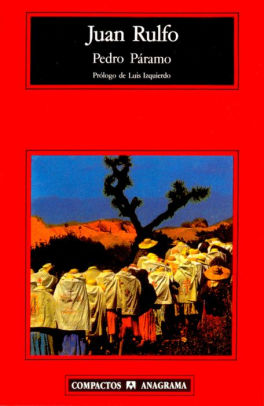


‘The Maias’ By Eça de Queirós – A Portuguese Romance


‘The Maias’ By Eça de Queirós  (1888) – 628 pages           Translated from the Portuguese by Margaret Jull Costa

As of today, it looks like ‘The Maias’ will be the novel of the year for me. ‘The Maias’ is romantic and passionate as I expected somehow a Portuguese novel to be, but it is also quite humorous in places and with finely drawn characters and a gripping busy plot. It is a jaunty vastly pleasurable trip in mid-to-late 19th-century Lisbon, Portugal society with some lively quick-witted companions. Whenever our characters get into a position that is just too comfortable or romantic or pleasing so that they start to notice the luxurious flower gardens and the old trees and sunny days of Portugal, a new predicament arises.

With this excellent translation by Margaret Jull Costa, ‘The Maias’ is filled with appealing details of its time which is the 1870s in Portugal. The descriptions of the settings are precise, and the descriptions of nature are luminous. The characters in the novel are the well-to-do, the rich of inherited money, who don’t really have to work to maintain their place in society. Thus they are avidly interested in literature and the arts and have almost violent arguments pitting the new naturalism and realism of such writers as Zola and Flaubert against the lyricism of the old school of writers.

Writers, for their part, read the precise chiseled style of a Goncourt or a Verlaine and immediately tortured and tangled and mangled their own poor sentences until they descended into the crazed or the burlesque.”

Sometimes these young men are fiercely critical of Portuguese society:

Here we import everything, ideas, laws, philosophies, theories, plots, aesthetics, sciences, style, industries, fashions, manners, jokes, everything arrives in crates by steamship.”

Carlos Maia, the main character in ‘The Maias’, is living the good life. He comes from a family which is well-respected in Lisbon and has enough inherited money so he barely has to work at all, even though he has been trained as a doctor. He has a wide group of well-to-do friends who spend their time playing cards, fencing, drinking alcohol, discussing the artistic and literary and political issues of the day, and pursuing women who are already married. That’s right, most of Carlos’ and his friends’ romances are on the sly with married women.

One of the premises of ‘The Maias’ seems to be that many beautiful young women want to improve their status in life by marrying a rich husband. Frequently these potential rich husbands are several years or decades older than the young woman. These young gals find their rich suitor, get married, and then discover that their husband is a dreadful bore. Thus these young married women are easy marks for romance by the right young guy who approaches with the appropriate smooth line. The first step is to become very good friends with the woman’s husband.

Yes, one does not read ‘The Maias’ for moral or spiritual guidance. ‘The Maias’ is a novel of marital infidelities.

Her urgent kisses seemed to go beyond his flesh, to pierce him through, as if wanting to absorb both will and soul.”

‘The Maias’ has a passionate, romantic, and world-wise plot that coheres throughout the entire novel.

One thing that ‘The Maias’ is not is introspective. It is very much a novel of people conversing and socializing. On a continuum of extroversion to introversion, Eça de Queirós would definitely rate as an extrovert. He was a diplomat for much of his lifetime, and ‘The Maias’ reflects his love of being around people. ‘The Maias’ is above all a social novel.

There are several grand set pieces in the novel, one is of a horse race. Many of Carlos’ friends have shown up for the horse races and are placing their bets. Carlos is sitting in the grandstand with his current married mistress Countess Gouvarinho and awaiting the arrival of his new prospective married mistress Maria Eduarda who is the wife of Castro Gomes.

Readers new to Eça de Queirós can start with the short novella ‘The Yellow Sofa’ to determine if you like his style of writing or not. If you do like his work then you can read ‘The Relic’ or ‘Cousin Basilio’ or one of the other novels he wrote and then you can finally graduate to his masterpiece ‘The Maias’.


Grade:    A+


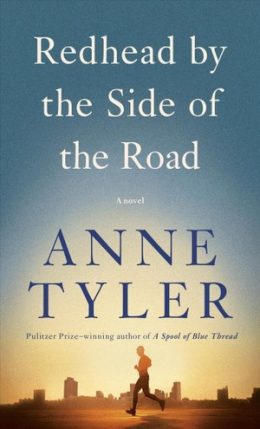
‘Redhead by the Side of the Road’ by Anne Tyler – Back to Baltimore


‘Redhead by the Side of the Road’ by Anne Tyler (2020) – 192 pages

In a review of Anne Tyler’s early novel ‘Searching for Caleb’ for the New Yorker in 1975, John Updike wrote “Funny and lyric and true, exquisite in its details and ambitious in its design…This writer is not merely good, she is wickedly good.” Updike took an interest in Tyler’s work and reviewed her next four novels as well, thus launching Tyler’s career into the stratosphere where she has remained since then. The English novelist Nick Hornby has stated that his ambition was to be a male Anne Tyler.

I have read nearly every one of Anne Tyler’s twenty-three novels, even the first four which she doesn’t like anymore but which I thought were very good. All of her novels take place in Baltimore, and that city has Anne Tyler bus tours for tourists except during the lock down. Tyler’s subject has always been the inexplicable personal mysteries in our ordinary routine day-to-day lives. She finds the fascination in even the most mundane of lives. Her novels of ordinary people connect with us readers on a visceral level.

However…

Micah Mortimer in ‘Redhead by the Side of the Road’ is still another of Anne Tyler’s gentle, cautious, fastidious male characters who view women, especially women with whom they might have a close relationship, as disruptive and a source of problems and thus trouble. He is in his forties and has never been married. In many ways Micah is the archetype for most of the males that appear in Tyler’s novels. He is seemingly happy with his life in his small apartment which he keeps fussily clean. Micah is a home computer software guy who runs his own small door-to-door business in Baltimore. He has a girlfriend Cass who is a school teacher.

Tyler starts the novel with these lines about Micah:

“You have to wonder what goes through the mind of a man like Micah Mortimer. He lives alone; he keeps to himself; his routine is etched in stone.”

Etched in stone? That was the problem for me. Anne Tyler has used this same type of male character in so many of her novels, it’s almost like she etches them in stone. These quiet, finicky, mild guys have become almost a formula for Tyler. The novel had somewhat of a “been there, done that” feel for me. This guy Micah seemed like nearly every other male character who has ever shown up in an Anne Tyler novel.

I suppose I would have been bowled over by ‘Redhead by the Side of the Road’ if I had not read so much Anne Tyler before.


Grade:    B


Tony’s Stay-At-Home Song PlayList


These videos from YouTube are my background music for the lock down. I’ve played these tunes hundreds of times. Just ask my family! Either click on the title or on the accompanying picture to play the YouTube video.


‘Whenever You Come Around’ by Alison Krauss with Vince Gill – I will never be able to get this Vince Gill song off my mind; it is haunting and romantic at the same time. If you like this song, also play ‘Tryin’ To Get Over You’, another Vince Gill song sung by Alison Krauss. Astonishingly Alison Krauss, I don’t believe, has ever put these two songs on an album. Her talent is an embarrassment of riches.

‘If Ever You’re in My Arms Again’ by Peabo Bryson – This is the quintessential romantic tune sung by The Voice.


Don’t Worry Baby’ by The Beach Boys – The Beach Boys’ finest (in my humble opinion). Brian Wilson himself sings lead vocal on this one.


‘The Last Cheaters’ Waltz’ by Emmylou Harris – It’s the last waltz of the evening. The guy she came with is dancing with some other woman. She has been relegated to the sidelines. She’s a little bitter.

T. G. Sheppard first had a hit with this song, but I like Emmylou’s version better.

‘You Can’t Change That’ by Raydio – It’s Ray Parker Jr. and his band of the theme from Ghostbusters fame, but this is a much, much better song. This one makes you want to dance like an eighteen year old. I’ve already devoted an article here to this song, and one of the comments there was from Arnell Carmichael who gives a wonderful performance singing on this song.

‘Travelling Alone’ by Jason Isbell – This is proof I’m still listening to new songs to find ones I like. It is my favorite Jason Isbell song.


‘How ‘Bout Us’ by Champaign

Some people are made for each other
Some people are made for another for life, how ’bout us

Because he was part of a band from Champaign, Illinois, Paul Carman has never received his due as just an incredible vocalist. Just listen.

‘Misty Blue’ by Dorothy Moore – This is a One-Hit Wonder, but what a wonder it is.


‘I Can’t Help It If I’m Still In Love With You’ by Linda Ronstadt – Linda Ronstadt sings Hank Williams. What could be better?


‘River in the Rain’ by Alison Krauss and Union Station – This is the only sad song on the list, but it’s not really sad. It was written by Roger Miller for his play ‘Big River’ in 1983. As always, Alison Krauss sings it beautifully. This song is on her album ‘Windy City’ which is Krauss’ perfect album, but some critics couldn’t figure that out.


Honorable Mention: You can click on the titles  to watch these videos too. You’re the Reason God Made Oklahoma’ by David Frizzell and Shelly West, ‘Need You Now’ by Lady Antebellum, ‘What Becomes of the Broken-Hearted’ by Jimmy Ruffin, ‘When Did You Stop Loving Me’ by George Strait with Sheryl Crow, ‘September’ by Earth, Wind, and Fire


The Strangers in the House’ by Georges Simenon – He Didn’t Know About his Daughter’s Wild Parties?


‘The Strangers in the House’ by Georges Simenon (1940) – 194 pages     Translated from the French by Geoffrey Sainsbury

Here is another engaging roman durs (hard novel) from Georges Simenon, this one starring retired lawyer Hector Loursat.

Loursat comes from one of the most prominent families in the community and thus is well-to-do and lives in a big house with three floors. He is only 48 years old, but has already retired from his position as a lawyer several years ago. He has a twenty year old daughter Nicole. He was married, but his wife ran off and left him when Nicole was only two years old.

As a young man he was already a lonely figure, too proud, perhaps. He had imagined a person could marry and still keep his solitude. Then one day he came home to an empty house.”

The housekeeper took care of Nicole, and Loursat has spent most all of his time in his study drinking wine and reading poetry and philosophy. He is a virtual recluse in that study.

He doesn’t even realize that his 20 year old daughter Nicole is going to bars and is inviting her disreputable friends over to their house and having wild drunken parties in the third floor of the house.

On the night which begins our story Hector Loursat is sitting in his room as always drinking wine and reading when he hears a loud noise that seems to be coming from his own house. He goes upstairs to investigate and finds a man lying in bed, apparently shot, who dies as soon as he arrives. Stunned, he asks his daughter if she knows anything about it, and she claims to know nothing. Then he calls his cousin who happens to be the public prosecutor for their town to report the murder. Thus begins our murder mystery.

Since the Loursats are one of the most respected families in the town, they want to keep the news and gossip about this murder as quiet as possible.

Since Loursat is a retired lawyer, he agrees to defend his daughter’s male friend Edmond who has been accused and arrested for the murder. Thus the story evolves into a courtroom drama.

Daughter Nicole is surprised and gratified by her father’s interest in the case.

Not only had he said something, but he had actually betrayed an interest in what went on in the house. It was incredible!”

That the daughter Nicole would begin to have admiration for her father after being neglected by him for 18 years seems a little far-fetched. That is the only false note in the whole novel.

This novel did not grip me to the extent of some of Simenon’s other hard novels, for example ‘Dirty Snow’, but did hold my interest throughout.

At some point I will finally break down and read one of Simenon’s Inspector Maigret detective novels, but I haven’t reached that point yet.

Could someone recommend a really good Inspector Maigret novel?


Grade:    B+


‘Roadside Picnic’ by Arkady and Boris Strugatsky – The Aftermath of a Space Alien Visit


‘Roadside Picnic’ by Arkady and Boris Strugatsky (1972) – 193 pages     Translated from the Russian by Olena Bormashenko

“What sane person could live in this world and not be crazy?” – Ursula K. Le Guin
I was looking for a change of pace, something totally different from what I normally read, and I found it.

I don’t usually read science fiction, but ‘Roadside Picnic’ has a strong recommendation from Ursula K. Le Guin and a number of others so I read it.

This is down-to-earth working man’s science fiction. The men in town smoke all the time, get drunk, and pick up women. ‘Roadside Picnic’ details small town life – the small cafes, the town bars, the local police – so well that we almost believe it when they introduce reanimated corpses and a Golden Sphere that grants human wishes. Almost.

Space alien creatures landed in six different zones on Earth and stayed for several weeks and then just took off and left. For them, Earth was just a roadside picnic ground. One zone is in a fifty mile wide area just outside the Canadian town of Harmont. The Canadians sent in a military unit to deal with the aliens, but the aliens killed them all. Then the aliens left, and they left behind a treasure trove of objects, things never before found on Earth and have properties no Earth items have. These items are eerie, mysterious, and dangerous. They are also very valuable, and some men risk their lives to go into the Zone and get these items and sell them on the black market. These men are called stalkers. They get top dollar for these items but working in the Zone is extremely dangerous, and many stalkers have been killed or severely injured there. And the police are vigilant in arresting known stalkers.

He didn’t know the driver, a pimply beaked kid, one of the thousands who had recently flocked to Harmont looking for hair-raising adventures, untold riches, international fame, or some special religion; they came in droves but ended up as taxi drivers, waiters, construction workers, and bouncers in brothels – yearning, untalented, tormented by nebulous desires, angry at the whole world, horribly disappointed, and convinced that here, too, they had been cheated.”

At the center of ‘Roadside Picnic’ is one of these stalkers named Redrick Schuhart, called Red. Originally Red worked for the Harmont Branch of the International Institute of Extraterrestrial Cultures but after his best friend gets killed in the Zone he quits and becomes a stalker. He now lives a comfortable life with his wife Guta and their daughter Monkey who has some mystifying qualities which may be a result of Red’s line of work.

Red keeps in touch with the scientists at the Institute. In fact one of the scientists, Noonan, is involved with the item bootlegging himself. I found some of the conversations among the scientists quite interesting.

At its core is a flawed assumption – that an alien race would be psychologically human.”

Why flawed?” asked Noonan.

Because biologists have already been burned attempting to apply human psychology to animals. Earth animals, I note.”

Just a second,” said Noonan. “That’s totally different. We’re talking about the psychology of intelligent beings.”

True, and that would be just fine, if we knew what intelligence was.”

And we don’t?” asked Noonan in surprise.

Believe it or not, we don’t.”

What makes ‘Roadside Picnic’ a winning novel for me is that it is not at all cold or antiseptic or remote like science fiction sometimes tends to be, but rather it is coarse and sometimes crude and deals with real people. 

And compared to what is happening these days, ‘Roadside Picnic’ does not seem all that outlandish or strange.


Grade:    A-


Long Novels and Me


I do not take the matter of reading extremely long novels lightly. I do read long novels, but will do everything within my power to make sure that I will treasure and enjoy the many hours I will spend reading the book.

Perhaps the first long novel I read was ‘Ulysses’ by James Joyce. Of course I had already read and valued ‘Portrait of the Artist as a Young Man’ and ‘The Dubliners’, but ‘Ulysses’ was supposed to be his finest so I just had to read that. I am happy I did and will never forget the adventures of Leopold Bloom and his wife Nora Barnacle during that one day in Dublin. I still have not attempted Finnegan’s Wake.

My history with George Eliot is somewhat more complicated. First I read the short ‘Silas Marner’ and really didn’t like the story about this old country weaver and the little baby daughter he adopts. I thought it was somewhat sentimental and schmaltzy. I stayed off Eliot’s novels for a few years until I read a lot of good things about her fiction. Then I read ‘Adam Bede’ and ‘Mill on the Floss’, and loved them both. So I was ready for ‘Middlemarch’ which is a bit of an undertaking. ‘Middlemarch’, the story of an unfortunate marriage, was wonderful. I consider ‘Middlemarch’ one of my very favorite novels of all time. Eliot’s portrait of the dry husband Casaubon will stay in my mind forever. Later I read the equally long ‘Daniel Deronda’ which I did not find quite as rewarding as ‘Middlemarch’.

By the time I reached Leo Tolstoy, there was no question. I absolutely had to read ‘War and Peace’ and ‘Anna Karenina’, both monster novels. Of course both are easily appreciated masterpieces.

Perhaps the most humorous long book I have ever read is the 800+ page entire ‘The Good Soldier Schweik’ by the Czech novelist Jaroslav Hasek. This novel, being about the ineptitude of authority figures, was right up my alley and certainly is relevant today.

As far as humor goes, ‘Don Quixote’ by Miguel de Cervantes is right up there, but ‘Don Quixote’ has both charm and humor. ‘Don Quixote’ checks in at over a 1000 pages, but the time spent reading them just flies by. I will never forget Sancho Panza and his mad boss Don Quixote.

My experience with Henry James has been inconsistent. Sometimes I really like his work, sometimes I don’t. In 2015, I finally decided to read ‘Portrait of a Lady’ which checks in at over 600 pages. I don’t classify it as one of the finest novels I’ve read, but I did really like it.

Deep River’ by current author Karl Marlantes is a long 700+ page novel that has tempted me since I consider his ‘Matterhorn’ one of the classics of recent years, but I still have not succumbed, having not read enough positive reviews yet.

The four novels that make up Elena Ferrante’s Neapolitan Novels probably could be considered one long book, but I prefer to think of them separately.

I have not approached ‘Ducks, Newburyport’, perhaps if it is still talked about in a few years.

Other long novels I have read and treasure:

‘The Crimson Petal and the White’ by Michel Faber (834 pages)

‘An American Tragedy’ by Theodore Dreiser (934 pages)

‘The Magic Mountain’ (838 pages) and ‘Buddenbrooks’ (731 pages) by Thomas Mann

‘The Vivisector’ by Patrick White (640 pages)

‘The Man Without Qualities’ by Robert Musil (1774 pages!)

I am writing all this about long novels because I am embarking today on a 628-page novel with small print, ‘The Maias’ by José Maria Eça de Queirós. I have much appreciated three of his previous works, so now I am ready for the big one. I plan on writing a couple of articles about this novel in the upcoming weeks. Famed author Jose Saramago said of ‘The Maias’ that it is “the greatest book by Portugal’s greatest novelist”. We’ll see how that goes.

What is your favorite long novel?


‘Such a Fun Age’ by Kiley Reid – Emira and Her Friends and Little Blair


Such a Fun Age’ by Kiley Reid (2020) – 320 pages

‘Such a Fun Age’ has a light touch. During the onrush of situations, there is no time for preaching or pontificating. The story just moves on to the next predicament. This gives the novel a speedy feel.

Plus this author’s enthusiasm for her own story rubs off on the reader.

Going along with the lightness is a delight with dialogue. One of the main strengths of ‘Such a Fun Age’ is capturing the talk of people socializing, whether it be a group at a party or dinner or just two people alone. Rather than an individual character contemplating a problem or situation, we get the interplay of many voices. When an attitude or a view is expressed in a conversation, it is just one of several attitudes.

What this novel really excels in are exchanges between groups of young women, whether young mothers or young single women.

This novel tackles persistent racial issues which are not normally confronted in novels. Our views about white people and non-white people go much deeper than we think. Even when we try to treat everyone the same, there is so much hidden subconscious stuff that keeps us from doing so. Our attitudes are so deeply embedded in us that we might believe we are doing good when it is obvious to others we are not. Each of us, including myself, has to carefully examine his or her own attitudes and behavior.

I don’t need you to be mad that it happened. I need you to be mad that it just like… happens.”

Another outstanding feature of ‘Such a Fun Age’ is its original unique plot. It all starts with our young woman Emira leaving her friends’ party to take the three-year-old girl Blair whom she is babysitting to the corner Market Depot store at the request of the girl’s well-to-do parents. At the store they are stopped by a security guard who confronts Emira and accuses her of kidnapping the little girl. A white man films the whole incident, and Blair’s mother thinks Emira should publicize the video. Emira doesn’t want that at all.

But more than the racial bias, the night at Market Depot came back to her with a nauseating surge and a resounding declaration that hissed, You don’t have a real job. This wouldn’t have happened if you had a real fucking job, Emira told herself on the train ride home, her legs and arms crossed on top of each other. You wouldn’t leave a party to babysit. You’d have your own health insurance. You wouldn’t be paid in cash. You’d be a real fucking person.”

Babysitting is not a real job for Emira because she doesn’t get health insurance, a major issue for many people. She has a special relationship with the little girl Blair, but Emira sees her friends progressing in their careers, and she knows she can no longer stay on her parents’ health insurance when she turns 26 which will be soon.

But as I said before ‘Such A Fun Age’ has a light touch. The interplay between Emira and Blair is one of this novel’s many pleasures, and Emira and her friends are a fun group to hang around with.


Grade:    A


‘The Farcical History of Richard Greenow’ by Aldous Huxley – School Days


‘The Farcical History of Richard Greenow’ by Aldous Huxley (1920) – 54 pages         #1920Club

In the twentieth century there was a grand tradition of male English novelists writing fiction satirizing academic life. These novels include ‘Lucky Jim’ by Kingsley Amis, both ‘Decline and Fall’ and ‘Brideshead Revisited’ by Evelyn Waugh, the Campus Trilogy (‘Changing Places’, ‘Small World’, and ‘Nice Work’) by David Lodge, ‘The History Man’ by Malcolm Bradbury, ‘Anglo-Saxon Attitudes’ by Angus Wilson, and others. Usually these novels were written early in the authors’ writing careers while their school experiences were still fresh in their minds. ‘The Farcical History of Richard Greenow’ is Aldous Huxley’s academic satire about his years at Eton and Oxford which he wrote when he was 26. It was part of his first published work, ‘Limbo’.

This short novella is a parody of Huxley himself and his friends and instructors. The stand-in for Huxley here is of course Richard Greenow who even while still in school is struggling to be a writer. One night a feminine spirit takes over Richard and he completes a story overnight which he is able to sell to a woman’s magazine. Soon this spirit takes over Richard every night, and he is serializing an entire novel for the woman’s magazine for a nice sum of money. He gives this woman writer inside himself the pen name of Pearl Bellairs.

Thus Richard is leading a double life, a politically engaged male student during the day, and a writer of women’s stories by night.

It was there that he solved the problem, perceived the strange truth about himself. He was a hermaphrodite.”

Later World War I breaks out, and Richard becomes a conscientious objector for pacifist reasons. However his alter-ego Pearl convinces him to become a land girl instead of going to prison.

One requirement that these academic satires must have is malicious irony. Here is an example of this malicious irony concerning one of his instructors:

His knowledge was enormous; but he possessed the secret of a strange inverted alchemy – he knew how to turn the richest gold to lead, could make the most interesting topic so intolerably tedious that it was impossible, when he talked, not to loathe it.”

I found the language and the attitude in this short novella quite delightful throughout. Here is one particularly delectable example concerning the headmaster’s wife at Eton:

Mrs. Cravister received her guests – they were all of them boys – with stately courtesy. They found it pleasant to be taken so seriously, to be treated as perfectly grown men; but at the same time they always had with Mrs. Cravister a faint uncomfortable suspicion that all her politeness was an irony so exquisite as to be practically undistinguishable from ingenuousness.”

I should finally also mention that two of the very best academic parodies were written by United States writers: ‘The Groves of Academe’ by Mary McCarthy and ‘Pictures from an Institution’ by Randall Jarrell.


Grade:   A-


‘The King at the Edge of the World’ by Arthur Phillips – The Question of the King after Elizabeth I


‘The King at the Edge of the World’ by Arthur Phillips (2020) – 265 pages

In ‘The King at the Edge of the World’, Arthur Philips tells a rollicking story that takes place during the reign of Elizabeth I in England.

The time is 1601. Elizabeth I has had a long peaceful and productive reign and has grown old; now her health is rapidly declining. Who is going to follow her to the throne? According to the traditional royal lineage, next in line to follow Elizabeth to the English throne is James who is already King James VI of Scotland. However James is the son of Mary Queen of Scots who was put to death by Elizabeth in 1587 for Catholic plotting against the English throne. There is widespread concern among the English nobles that James might have Catholic beliefs. This would be the perfect time to send a spy up to Scotland to find out the truth about James: Protestant or Catholic?

Nearly all the royal families in Europe at that time were fervent Catholics. The Pope and other Catholic royalty across Europe were constantly plotting and conspiring to return England to the Catholic Church. The English already had a terrible experience with their earlier Catholic ruler Mary I, Bloody Mary, who had had 280 Protestants burned at the stake.

Geoff Beloq runs a network of secret agents for Queen Elizabeth to uncover and foil secret Catholic plots against the Queen. It is his mission to determine whether or not James is a Catholic.

Extracting James’ religious views is a necessarily delicate operation, one that is suited for neither a Protestant or a Catholic, so Beloq recruits a well-educated Muslim doctor, Mahmoud Ezzedine, from the Ottoman Empire who got stuck in England through no fault of his own.

There was something amusing, and reassuring, in his foreign perspective: He was unlikely to be led astray by emotional confusions.”

Dr. Ezzedine has a Muslim perspective on Christian doctrine:

And now, to distinguish between Christian madmen? This one is confused because he kneels or does not, or reads Latin or does not, or trusts his priest to perform the magic bread spell or does not. Therefore this fellow or that one must be burned alive.”

James I of England

Although ‘The King at the Edge of the World’ would fall into the category of historical fiction, it is on the wild, creative, and unpredictable side of historical fiction. It uses the real historical backdrop of Elizabethan times to tell a fanciful frequently humorous tale.

Arthur Philips is an imaginative enthusiastic storyteller whose each novel is vastly different from his others. I have read and enjoyed all his work and will be looking forward to his next.


Grade:   A


‘Daisy Jones & The Six’ by Taylor Jenkins Reid – A Seventies Rock Band


‘Daisy Jones & The Six’ by Taylor Jenkins Reid  (2020) – 351 pages


Billy: Karen was just a great musician. That was all there was to it. I don’t care if you’re a man, woman, white, black, gay, straight, or anything in between – if you play well, you play well. Music is a great equalizer.”


The golden age of rock and roll was the late 1960s and the 1970s. Back then the music was everywhere with new young bands forming constantly and plenty of live venues in every town and city where these acts could grow and develop musically. There was excitement from the ground up, and all the record companies had to do was sign the best of these young acts. How times have changed.

Now it all seems so calculated, totally driven by a few record industry executives who pretty much manipulate their artists. The originality, the creativity, the excitement, the enthusiasm seem to have disappeared. The music now is over-produced and too calculated to quickly sell records rather than to produce anything original, creative, or lasting.

‘Daisy Jones & The Six’ is about one of those bands that formed in the late 1960s and achieved huge success in the 1970s traveling throughout the United States, Europe, and even Japan. The entire novel is written as an oral history with each member of the band as well as the producers, agents, etc. interviewed, and their words are written down verbatim.

Starting out, the band is The Six with Billy Dunne as its lead vocalist and band leader. Circumstances lead to Daisy Jones joining the band as the co-vocalist, and then the band rises to stratospheric heights and a number one album, Aurora.

The author Taylor Jenkins Reid says she was influenced by the real band Fleetwood Mac in writing her novel. In actual fact, the story of Fleetwood Mac and its members is even more wild and improbable than ‘Daisy Jones & The Six’.

‘Daisy Jones & The Six’ uses just about every cliché for a rock band in the Seventies that you ever heard of, but that doesn’t mean the novel doesn’t work. It is all about the drinking, the drugging, the sleeping around, occasionally interrupted by musical interludes.

Eddie: L.A. Was a trip. Everywhere you looked, you were surrounded by people who loved playing music, who liked to party. The girls were gorgeous. The drugs were cheap.”

We have Billy, the intense talented lead singer and defacto band leader who falls into heavy partying with groupies and drugs who is saved by a beautiful caring woman.

Warren: And then it always ended with Billy going back to his hotel room and the rest of us staying out partying until we found somebody to screw.”

Then Daisy Jones joins the band.

She is the free-spirited female singer who lives on Sunset Strip and parties constantly taking more pills, uppers and downers, than she can keep track of, who has no musical training, but who has a beautiful angelic voice and a natural instinct for singing songs.

There is the Rolling Stone article with the headline “Daisy Jones & The Six: Are Billy Dunne and Daisy Jones Rock ‘n’ Roll’s Biggest Foes?”.

Try singing a love duet with someone you hate. It is the mutual disdain that Billy and Daisy have for each other that put their album Aurora over the top in sales, not the quality of the music.

The lyrics to the songs are rather dopey like most rock songs.

Perhaps for the TV series that will be based on this novel, it is a good thing that the novel is rather cliched and formulaic.

Will the TV series be a success? It depends on if the music and the performers are as inspired as some of the performers and much of the music of the 1970s were.


Grade:    B


‘The Splendid and the Vile’ by Erik Larson – The Battle of Britain and the Blitz


‘The Splendid and the Vile’ by Erik Larson (2020) – 503 pages


I generally don’t read a work of non-fiction like I do a novel. For non-fiction, I usually skip around looking for interesting parts. However, for the non-fiction works of Erik Larson, I read them straight through from beginning to end.

Erik Larson is a popularizer of history, not an original source. His works are not original or rigorous or deep. Larson writes for enthusiastic novices like me.

It helps that in ‘The Splendid and the Vile’, he is writing about one of my own personal heroes, Winston Churchill, during the time of the Battle of Britain and the Blitz when England was under severe attack by Nazi Germany’s air force. Larson does write about all the major players, but the emphasis always returns to Winston Churchill.

Here, as in other speeches , Churchill demonstrated a striking trait: his knack for making people feel loftier, stronger, and, above all more courageous.”

Besides the war coverage, the book covers many personal scenes of Churchill and his family and his friends such as Lord Beaverbrook, Minister of Aircraft Production, and Frederick Lindemann, Churchill’s scientific advisor. Larson captures the vivid personalities of the major players.

Embarrassed officials would often encounter Winston, robed like a Roman emperor in his bath towel, proceeding dripping from his bathroom across the main highway to his bedroom…Churchill strutting about in his gold-dragon nightclothes and jabbing the air with a dead cigar, savoring the sound and feel of words. ”

We have the horrific results of the German bombing raids in London and other places in England juxtaposed with idyllic garden scenes of “sunny loveliness and perfect peace”.

Midst the havoc, life goes on. We get party scenes, one where Churchill’s daughter Mary dances with a Frenchman, Jean Pierre Montaigne.

I felt incredibly gay – I waltzed with Jean Pierre incovertly, wildly and very fast – great fun. I missed only a few dances.”

It helps to capture the spirit that quite a few individuals kept personal diaries during that time.

So much for the splendid; Larson also captures the vile, the Nazi leaders such as Herman Göring, chief of the German Luftwaffe, and Rudolf Hess, the Deputy Fuhrer.

But we always come back to Winston Churchill, “his vast knowledge of history, his power of expression, and his huge energy”.

Somehow, through it all, Churchill had taught them the art of being fearless.”


Grade:    A


The Yellow Sofa’ by Jose Maria Eca de Queirós – “No Digressions, No Rhetoric – Everything is Interesting and Dramatic and Quickly Narrated”.


The Yellow Sofa’ by Jose Maria Eca de Queirós     (Sometime during the 1880s) – 112 pages                                                         Translated from the Portuguese by John Vetch

As ironic as it might seem, there are still new developments occurring in 19th century literature. There are almost-forgotten writers finally being rediscovered for the virtuosos that they really were. Perhaps the biggest recent development is the ascendancy of the Portuguese writer Jose Maria Eca de Queirós to the upper echelons of the literary world.

José Saramago, no slouch of a writer himself, called Eca de Queirós ‘ novel ‘The Maias’ “the greatest book by Portugal’s greatest novelist.”

Eca ought to be up there with Dickens, Balzac, and Tolstoy as one of the talismanic names of the nineteenth century.” – The London Observer

I am going to quote a long paragraph from V. S. Pritchett, because I believe it captures the essence of Eca de Queirós :

The making of this novel and indeed all the others, is the restless mingling of poetry, sharp realism and wit. Queirós is untouched by the drastic hatred of life that underlies Naturalism; he is sad rather than indignant that every human being is compromised; Indeed that enables him to present his characters from several points of view, and explore the unexpectedness of human nature.”

‘The Yellow Sofa’ was not published during Queirós lifetime. In 1925 his son found it in a desk among other miscellaneous writings, and his son had it published then. We almost lost a short masterpiece.

‘The Yellow Sofa’ is a novella that is a vivid thoughtful thorough argument against rash action. In Eca de Queirós’ own words, he wrote ‘The Yellow Sofa’ with “no digressions, no rhetoric – everything is interesting and dramatic and quickly narrated”. I won’t go into any of the details of the plot of ‘The Yellow Sofa’ because it is full of surprises, and I don’t want to spoil any of them for you.

One of the reasons I always enjoy reading Eca de Queirós is because I find his novels always upbeat. His main characters are strongly etched and always fascinating in their approach to their own situations.

In 2009, ‘The Yellow Sofa’ was turned into an opera by British composer Julian Philips and attracted wide critical notice.

‘The Yellow Sofa, being a novella, would be a great place to start to get to know this important yet delightful author.

Now with the epidemic lock down upon us, I may take the time to read Eca de Queiros’ 628-page masterpiece ‘The Maias’.


Grade:   A+


‘Writers and Lovers’ by Lily King – Torn Between Two Lovers


‘Writers and Lovers’ by Lily King  (2020) – 324 pages

I was quite interested in what Lily King would do next after her novel ‘Euphoria’ which was spectacularly well done. Now King’s follow-up novel, ‘Writers and Lovers’, has arrived.

Whereas ‘Euphoria’ takes place in the wilds of the island of New Guinea in the early 1930s, ‘Writers and Lovers’ has a much more conventional setting in Boston in 1997. The two novels are much different from each other, and about the only characteristic that they share is a love triangle.

I almost hesitate to tell you the plot of ‘Writers and Lovers’ for fear of putting you off the book entirely. It is about a young woman in her late twenties who is having difficulty completing her novel which she has been working on for six years. She works in an upscale fashionable restaurant as a waitress and lives in a former potting shed in order to support herself and her writing.

She has just broken up with her last boyfriend.

I’m usually better at protecting myself from this kind of thing.”

From heartbreak?”

Yeah.” My throat is closing. “I can usually get out of the way before it hits me straight on.”

That’s not really heartbreak then, is it?”

Early on, she meets two new men. One is a somewhat famous writer in his forties whose wife has recently died leaving him with two preschool children. The other man is closer in age to her and is also a writer but so far not remotely successful.

As you can see, this novel is all about the struggles and triumphs of characters writing their fiction and poetry, a theme which is usually a death warrant for a novel. Here is yet another novel by a female writer about a female writer and the problems she encounters. We have an author searching for an adequate subject but not finding it so she writes about her former life. Yes, writing fiction is a struggle, but who wants to read about it?

In ‘Writers and Lovers’ favor, it does have the formidable writing talents of Lily King. She captures exactly what it must be like working in a fashionable expensive restaurant, the painstaking efforts to present the exotic menu items to the customers perfectly and the camaraderie of the restaurant workers. In the dating scenes, King captures the small nuances and the intensity or lack of intensity in her feelings about these two men. King is especially adept in relating female desire.

My whole body responds to his hand in mine.”

The desire to press up against him is on a short loop in my head.”

However after the wild and adventurous ‘Euphoria’, ‘Writers and Lovers’ was a bit of a letdown. Like its title, this novel is rather amorphous and prosaic. I did like quite a number of the scenes and attitudes of ‘Writers and Lovers’, but for me it did not quite reach the perfection of ‘Euphoria’.


Grade:    B


‘Liber Amoris or The New Pygmalion’ by William Hazlitt – More a Rant Than a Novel


Liber Amoris or The New Pygmalion’ by William Hazlitt (1823) – 112 pages

William Hazlitt was the great essayist and critic of the Romantic era in the early 19th century. He was an adept prose stylist and is regarded as the finest arts critic of his age.

However his one foray into fiction is a one-note rant of a novel dealing with his real-life obsession with Sarah Walker, the daughter of his landlord at one point. The story of William Hazlitt and Sarah Walker has been well documented, and there is little in the novel that has not been registered as fact.

H: “Tell me why you have deceived me, and singled me out as your victim?”

S: “I never have, Sir. I always said I could not love.”

H: “There is a difference between love and making me a laughing-stock.”

Hazlitt does not even disguise the first letters of their real names.

It all started when Hazlitt moved out of his family’s house, leaving behind his wife and son. He moved into this rooming house, and the landlord’s 19 year-old daughter Sarah would serve him breakfast. Hazlitt was 41 at the time. Soon this turned into something more than breakfast and Sarah would be “sitting and fondling a man sometimes for half a day together”.

…that you come up here, and stay as long as you like, that you sit on my knee and put your arms round my neck, and feed me with kisses, and let me take other liberties with you, and that for a year together; and you do all this not out of love, or liking, or regard, but go through your regular task like some young witch, without one natural feeling…”

Hazlitt went off the deep end over Sarah Walker.

Am I mad or a fool?” The correct answer would be “Yes”.

Hazlitt began making all these plans about marrying Sarah. Then Hazlitt finds out that Sarah is doing the same fooling around with one of the other guys who is staying at the rooming house. This unfortunate circumstance does not change Hazlitt’s intention to marry Sarah.

I gave way to all the fury of disappointed hope and jealous passion.”

‘Liber Amoris’ is a chronicle of Hazlitt’s “self-tormenting folly”. Most of the novel is in epistolary form consisting of letters to his friend regarding the Sarah Walker episode. At one point he actually has his friend rent a room at the same rooming house and try to seduce Sarah.

There is nothing in the world that can afford me a drop of comfort – this I feel more and more. Everything is to me a mockery of pleasure, like her love. The breeze does not cool me: the blue sky does not cheer me.”

I suppose William Hazlitt should get points for being honest, for letting it all hang out. However ‘Liber Amoris’ is a sad obsessive spectacle of “a half-disordered mind”.

S: “I have always told you I have no affection for you.”

H: “She was my life – it is gone from me, and I have gone spectral.”


Grade:    C-