Here is a reprint of one of my more troublesome and popular articles:
Sonnet #129 – “The Expense of Spirit in a Waste of Shame”

Good Reading!
12 Oct
Here is a reprint of one of my more troublesome and popular articles:
Sonnet #129 – “The Expense of Spirit in a Waste of Shame”
Good Reading!
11 Oct
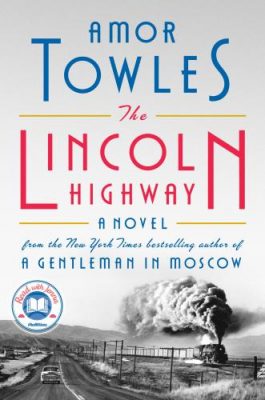 There are more than several lengthy new novels out this Fall which I want to read. Of these, I first chose to read ‘The Lincoln Highway’ (576 pages). Why?
The decision was not a difficult one. I had been grandly entertained by both of Towles’ previous novels, ‘The Rules of Civility’ and ‘A Gentleman in Moscow’. Here are just a couple of lines from my earlier reviews of these novels:
“How long has it been since you have read a smart stylish elegant novel? If you are interested, “Rules of Civility” is the ticket.”
“However it is in the intriguing and warm interactions between characters where Towles excels. ‘A Gentleman in Moscow’ casts a likable alluring spell like no other novel I have ever read.“
“After now reading two novels by Amor Towles I have come to the conclusion that he is a great literary stylist on the order of Vladimir Nabokov. A literary stylist knows that it is not our final destination that matters but the pleasures we have along the way.”
Excuse me for quoting myself.
Basically Amor Towles is fun to read at the sentence level. He makes whatever he is writing about intrinsically interesting in a steady, clear manner that is rare today. There is a certain exuberant verve in his writing that is catching. I believe one of the reasons for Towles’ mastery of fiction writing is that he did not publish his first novel until he was 47 years old. He had many years to hone his skills before publishing, and thus did not develop any bad habits that were praised by the reviewers anyway.
Each of his novels is a departure and an arrival at another vastly different location. ‘Rules of Civility’ is his New York City novel in the 1930s. ‘A Gentleman in Moscow’ all takes place in a single hotel in Moscow, Russia. ‘The Lincoln Highway’ focuses on two brothers, eighteen and eight, who leave their family farm in rural Nebraska during the early 1950s. It’s a wild road trip novel.
As you can guess, I have already been captivated by ‘The Lincoln Highway’, and I am reading it rapidly. It is a quick read since so much of it is dialogue and crystal clear exposition.
Since I am only about halfway through ‘The Lincoln Highway’ so far, I will not be posting my final review for a week or so. In the meantime I will be posting reviews of a couple, not quite so lengthy or expansive, fictions.
4 Oct
‘Harlem Shuffle’ by Colson Whitehead (2021) – 318 pages
 “Ray Carney was only slightly bent when it came to being crooked.”
Ray Carney is a furniture store owner. He lives in a good neighborhood with his wife and two children. Ray has had to overcome a lot of adversity to get where he is today. His store has a good reputation, and he wants to keep it that way. But then his cousin and best childhood friend Freddie drops by.
Freddie is a small-time crook and gangster who keeps trying to drag Ray into his crooked schemes and the shady world of Ray’s now-dead father.
The rich white guys are also committing crimes to capture and hang on to their fortunes, but they usually are not held accountable for their criminal acts.
”Crooked world, straight world, same rules – everybody had their hand out for the envelope.”
‘Harlem Shuffle’ takes place during the late 1950s and early 1960s. This is a vivid time, and the novel captures the excitement. The Hotel Theresa in Harlem is where all the black sports and show business stars stayed when they came to New York. Most of the other hotels in the city were segregated or at least did not welcome black people with open arms.
Even the waitress in the Hotel cafe has been a dancer on stage.
“Certainly she hadn’t quit show business, waitressing being a line of work where you had to play to even the cheapest of seats.”
Ray’s in-laws are part of the upper crust of Harlem society, his father-in-law a member of the venerable Dumas Club.
“Listening to his father-in-law gloat about screwing over the government had taught Carney about rich people and how they hold on to their money.”
Ray’s wife Elizabeth works for the Black Star Travel Agency which gives advice to black people on where they can’t stay and those few places where they can stay and where they can avoid trouble from the KKK, other white supremacists and assorted other angry white people.
One character in particular here stood out for me, a criminal acquaintance of Freddie named Pepper who has a “malevolent aplomb”.
I first started reading Colson Whitehead with his first novel ‘The Intuitionist’ which is one of the most unusual novels I have read, and I have kept up with his novels since then. ‘Harlem Shuffle’ can be considered a novel of the crime genre, but Whitehead’s natural audacious tone and his fine accumulation of meaningful details make it another fine addition to his oeuvre of work.
‘Harlem Shuffle’ is a wildly adventurous ride through the Harlem underworld and upper world, violent and gruesome at times, but told with an edge of humor.
Grade: A
30 Sep
Some of these new Fall offerings I do want to read.
Crossroads – Jonathan Franzen – 592 pages
The Book of Form and Emptiness – Ruth Ozeki – 560 pages
Cloud Cuckoo Land – Anthony Doerr – 640 pages
The Lincoln Highway – Amor Towles – 592 pages
The Sentence – Louise Erdrich – 416 pages
The Every – Dave Eggers – 608 pages
Apples Never Fall – Liane Moriarty – 480 pages
The War for Gloria – Atticus Lish – 464 pages
The Morning Star – Karl Ove Knausgaard – 688 pages
The Magician by Colm Toibin – 448 pages
My next read? I am considering ‘Assembly’ by Natasha Brown which checks in at 106 pages.
27 Sep
These are all novels that got my highest rating when I read them. For this article, I have intentionally steered away from novels and authors that have been discussed often recently already.
 ‘The Sin Eater’ (1977) by Alice Thomas Ellis (1932-2005) – The Welsh writer Alice Thomas Ellis had a dark and strange sense of humor. ‘The Sin Eaters’ tells of family strife as they all come for a final visit to their ailing patriarch.
 ‘Tirra Lirra by the River’ (1978) by Jessica Anderson (1916-2010) – Here is an Australian novel about a woman escaping a selfish sanctimonious husband and a failed marriage by relocating in London. The year it was published, the Washington Post said “There may be a better novel than Tirra Lirra by the River this year, but I doubt it.”
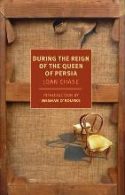 ‘During the Reign of the Queen of Persia’ (1983) by Joan Chase (1936-2018) – No, this does not take place in ancient times in the Middle East. It is the story of a family in rural Ohio during the 1950s. It should be easy to find since it was reissued by NYBR in 2014.
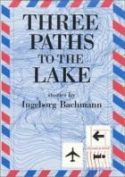 ‘Three Paths to the Lake’ (1972) by Ingeborg Bachmann (1926-1973) – OK, this is a collection of five stories, not a novel. Each of the stories is a portrait of an Austrian woman trying to make a go of it in a male-dominated society in the 1960s.
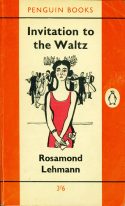 ‘Invitation to the Waltz’ (1932) by Rosamond Lehmann (1901-1990) – I am enormously impressed by most of the writings by Rosamond Lehmann, and I could have mentioned several others here. ‘Invitation to the Waltz’ is a good example of her work. It is the story of a young woman preparing for her first society dance.
 ‘The Widow’s Children’ (1976) by Paula Fox (1923-2017) – Here is a powerful novel that takes place during a single night while a family goes out to dinner. Most of the novel is intense dialogue.
 ‘A Dubious Legacy’ (1994) by Mary Wesley (1912-2002) – An English novel about a bizarre marriage. While stationed abroad during World War II, a man marries a complete stranger at his father’s request. When the war is over, the man brings his bride back to his estate. Upon her arrival, she punches him in the eye and marches upstairs to her bedroom where she will stay for most of the time afterwards.
All of the writers mentioned here are worthy and deserving of being remembered by future generations.
21 Sep
‘Yours Cheerfully’ by A. J. Pearce (2021) – 291 pages
 In this world where there are so many unresolved problems, it is easy to be dismissive of a novel so relentlessly upbeat as ‘Yours Cheerfully’. However during devastating times such as World War II in England, perhaps remaining upbeat is the best strategy.
‘Dear Mrs. Bird’ was great fun, and now, yes, its sequel ‘Cheerfully Yours’ is more of the same.
This novel jauntily steamrolls over any and all difficulties whether they are obnoxious plant managers, wartime fatalities, arriving late for your own wedding, insufferably cute kids, or plot inconsistencies. The title ‘Cheerfully Yours’ is quite appropriate.
We are back with Emmy and Bunty and their friends and family in London during World War II. It is late summer of 1941. The terrible Blitz bombings have finally ended, but the country is fully engaged in defeating Hitler and Nazi Germany. Most of the able-bodied men are off fighting, so the government is trying to recruit women to work in the factories. The magazine where Emmy works as a writer, Woman’s Friend, wants to help with this industrial recruitment of women, so Emmy gets an assignment to interview the women who work in the munitions factory, Chandlers. Of course Emmy and even her friend Bunty become great friends with these women as well as their children including one cute, cute four-year kid named Ruby.

However neither the companies nor the government has made any provisions for childcare for these women. The companies were all gung ho about hiring women to work in the factories since they paid them less than the men doing the same work. Some days when no one was available to take care of a woman’s little children, she would bring them to work. The male managers would see the kids playing in the hallway, get upset, and fire the woman. When one of Emmy’s new-found friends is fired for bringing her children to work, Emmy is of course devastated.
“To win the war, we’re asking, please,
Help us get our nurseries.”
Emmy’s boss at the Woman’s Friend magazine where she works as a writer is Mr. Collins who is about the same age as Emmy’s parents. Emmy’s boyfriend Charles Mayhew is Mr. Collins’ brother. Charles Mayhew is either much older than Emmy or there is a 20-year gap in the ages between the two brothers. I suppose back in the 1940s, it may not have been so unusual to have a 20-year gap between brothers’ ages. But then why do the brothers have different last names? A little explanation would have been helpful, but I suppose the explanation could have been in ‘Dear Mrs. Bird’, and I don’t remember it.
Meanwhile Emmy gets engaged to her boyfriend Charles, and she and her friends must plan a wedding quickly before Charles gets sent off to fight. And guess who is to be the littlest bridesmaid? You guessed it, Ruby.
It is all entirely predictable, but still fun as Emmy’s and A. J. Pearce’s cheerful and upbeat spirits carry the day during this devastating time.
Grade: B+
16 Sep
‘A Moon for the Misbegotten’ by Eugene O’Neill, a play (1943) – 115 pages
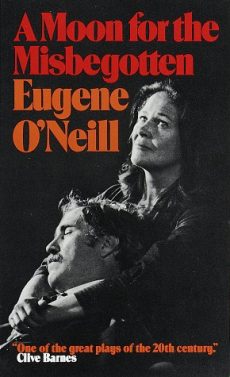 Anyone who has a real interest in literature must finally confront the soul-searching dramas of Eugene O’Neill. Eugene O’Neill was the first United States playwright to take drama seriously, and performances of his plays hold up well even today.
O’Neill’s plays are often about people not facing or finally facing the hard truths about themselves, how people lie to themselves about who they really are in order to make it through the day.
Eugene O’Neill had already won the Nobel Prize for Literature in 1936, years before he wrote his two most famous plays, ‘A Long Day’s Journey into Night’ and ‘The Iceman Cometh’. It was a movie production of ‘The Iceman Cometh’ in 1973 that really spurred my interest in literature. That production of the play caused me to conclude that literature had some things important to say to me.
‘A Moon for the Misbegotten’, like ‘A Long Day’s Journey into Night’, is closely related to O’Neill’s own family, and O’Neill did not allow stage production of either play until after O’Neill died. One of the main characters in both plays is Jamie Tyrone who is based closely on Eugene O’Neill’s actual older brother Jamie O’Neill.
The year is 1923. Since his actor father James has already died, Jamie is now known as James Tyrone. He is 33 and also a stage actor and a hopeless alcoholic. He has come home from New York to recover and manage his father’s holdings which includes a farm rented to Phil Hogan. Hogan lives with his daughter Josie after all six of her brothers have run off from the farm. When James comes to visit Hogan, the two joke around and kid each other while Josie listens. Then James and old man Hogan head off to the bar for the day. Hogan comes back by himself at late afternoon angry because James has said that he will sell the farm to this obnoxious rich guy Harder. So Hogan hatches this scheme for Josie to seduce James, then Hogan can catch them in bed and force them to get married.
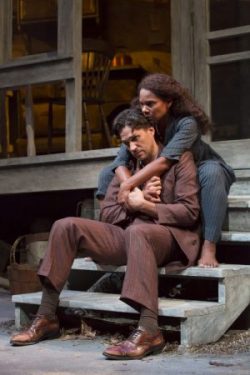 Josie goes along with her dad’s scheme despite being strongly attracted to James anyhow. James harbors tremendous guilt because when his mother died, he was so drunk he couldn’t attend her funeral.
I won’t give away any more of the plot of this deeply affecting emotional drama.
As a dramatist, Eugene O’Neill had something of the Irish poet in him. And no one came up with better titles for his works than O’Neill.
Grade: A
13 Sep
‘Matrix’ by Lauren Groff (2021) – 257 pages
And now for something completely different.
Can Lauren Groff make a novel about an abbey of nuns in 12th century England that is moving and interesting to modern readers? Well, she succeeded with this not-so-modern reader.
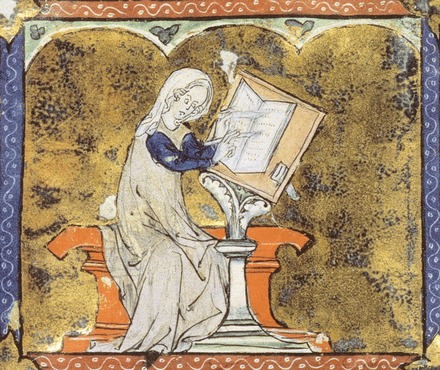
I suppose ‘Matrix’ could be considered historical fiction, but virtually nothing is known of the life of Marie de France, so those annoying facts do not get in the way of a good story. The 12th century was a time in English history that I was mostly unfamiliar with, so I had the added pleasure of researching this era.

Geoffrey, Duke of Anjou
In ‘Matrix’, Marie de France is a bastardess, the product of a rape by her father Geoffrey who is the Duke of Anjou and also the progenitor of the Plantagenet royal family. Thus she is the half-sister of King Henry II and sister-in-law to his wife Queen Eleanor of Aquitaine.
After her mother has already died and while Marie is still a teenager she is cast out of the royal court by Eleanor of Aquitaine who considers Marie too big and rough-hewn and coarse for royal life. She is sent to an impoverished abbey to be its prioress.
“In the night, a voice whispers that she cannot do this, she is but an uncouth girl belonging nowhere, beloved by no one, merely seventeen, not even seventeen, not even a real nun yet, and her habit is shamefully patched in different-colored wool, and her face holds no beauty, and her arms are merely woman’s arms. How dare she.”
 But Marie is a strong thoughtful woman. As at first prioress and then as abbess, Marie must contend with many adversaries to the abbey including nearby wealthy landowners, delinquent renters, gangs of ruffians and even the male Church hierarchy as well as nature itself with storms and droughts. She kicks ass, she’s tough and big and forceful. She assigns each woman in the abbey to a role for which they are suited. Soon the underfed women in the abbey are well-fed and the abbey prospers.
“With their heads bent over their books like this, their words palely shining, she understands that the abbey is a beehive, all her good bees working together in humility and devotion. This life is beautiful. This life with her nuns is full of grace. Marie sends a prayer to the Virgin in gratitude.”
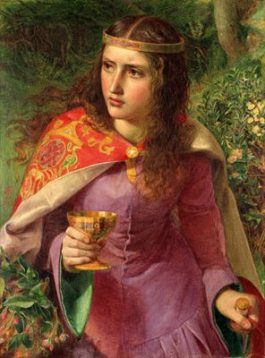
Eleanor of Aquitaine
As depicted in ‘Matrix’, the life of Marie de France is heroic, but Marie has someone who is her own hero. Despite having sent her off to be the prioress, her sister-in-law Eleanor of Aquitaine is Marie’s hero. I researched the life of Eleanor, and it is indeed the stuff of legend. Eleanor was the most powerful woman and perhaps the most powerful person in 12th century Europe. She was Queen of France, married to Louis VII, for 15 years from 1137 to 1152. Then she had that marriage annulled due to consanguinity and married Henry II, King of Angevin (large parts of England, France, and Wales). where she was Queen for 35 years from 1154 to 1189. She led armies several times in her life and was one of the leaders of the Second Crusade. She was imprisoned by her husband Henry II for 16 years from 1173 to 1189 for supporting the revolt of her eldest son who later became Richard I (Richard the Lionhearted). While Richard went off to fight in the Third Crusade, Eleanor effectively ruled Angevin.
Meanwhile, back at the abbey, decades go by, and there are new threats to the abbey’s existence. Marie has visions from the Virgin Mary, and she has the nuns build a labyrinth to protect the abbey and then a dam to ensure the abbey has plenty of water for the animals and all. She names one of the old nuns, Swan-neck, to be the mistress of the lepers:
“Swan-Neck smiles. Alas, she says, of course she is no saint. Only an old woman with pity in her heart. A rather common form of goodness. Marie tells her gently, so as to take away the sting, that such goodness can seem common only to those who see holiness in places where it is not.”
Here we have an eloquent and persuasive depiction of a successful society composed entirely of women. On one of her trips to London, as she is leaving, Marie reflects “she cannot take this seething city into her anymore, being in the proximity of so many of the far worser sex is filling her with aggression and fret. She thinks she is taking evil into her body with every breath.”
About all we know for sure with the current pandemic is that we are not so far removed from the Middle Ages as we thought we were.
Is God indeed a woman? We should be so lucky.
Grade: A
9 Sep
‘The Pillowman’ by Martin McDonagh, a play (2003) – 83 pages
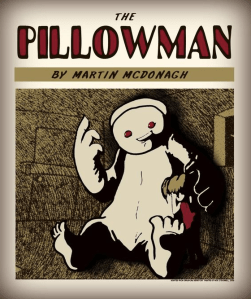 My favorite movie of all the 2000s so far is probably ‘In Bruges’, a dark comedy written and directed by Martin McDonagh and starring Colin Farrell and Brendan Gleeson. Since then McDonagh has written and directed the movies ‘Seven Psychopaths’ and ‘Three Billboards Outside Ebbing, Missouri’. When I found out that Martin McDonagh had been writing plays before he became a movie director and writer, I just had to read one of them.
‘The Pillowman’ is a dark comedy about a mom-and-dad killer and his child killer brother. This play is grossly offensive to a person’s sense of right or decency, and it’s great fun.
Katurian and his brother Michal are sitting in prison, waiting to be executed, Katurian for killing his parents and Michal for killing three little children.
Michal: “Don’t cry, Kat. It’ll be alright.”
Katurian: “How will it be alright? How will it ever be alright?”
Michal: “I dunno. It’s just sort of something you say at a time like this, isn’t it? ‘It’ll be alright.’ Course it won’t be alright. They’re going to come and execute us any minute, aren’t they? That isn’t alright, is it? That’s almost the opposite of alright. Mm.”
This play is definitely only for those with a warped sense of humor. I like it.
Michal: “What? My story was a happy ending. You came and rescued me and you killed Mom and Dad. That was a happy ending.”
Katurian: “And then what happened?”
Michal: “And then you buried them out behind the wishing well, and put some limes on them.”
Katurian: “I put lime on them. ‘Put some limes on them.’ what was I doing, a fruit fucking salad?”
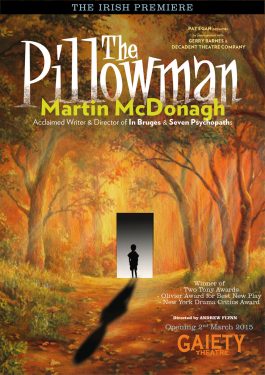 At one point in the play, there is the following stage direction:
“The dreadful details of the following are all acted out on stage.”
And in this Martin McDonagh play, that which follows is indeed dreadful.
I really couldn’t figure out the point of this play or if it even has a point. But who cares?
However much of the dialogue in ‘The Pillowman’ is grim fun, and I will continue to watch the movies of Martin McDonagh as they come out. Especially, because of ‘In Bruges’.
Grade: B
7 Sep
‘If on a Winter’s Night, a Traveler’ by Italo Calvino (1979) – 253 pages Translated from the Italian by William Weaver
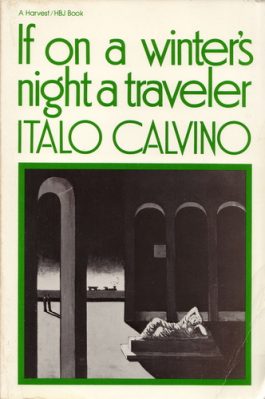 The best description of ‘If on a Winter’s Night a Traveler’ is provided by Italo Calvino himself within the novel itself:
“I have had the idea of writing a novel composed only of beginnings of novels. The protagonist could be a Reader who is continually interrupted. The Reader buys the new novel A by the author Z. But it is a defective copy, he can’t go beyond the beginning….He returns to the bookshop to have the volume exchanged….
I could write it all in the second person: you, Reader….I could also introduce a young lady, the Other Reader, and a counterfeiter-translator, and an old writer who keeps a diary like this diary….”
So here we have the first chapters of ten separate novels, each with its own separate characters and situations. This is the challenge that Italo Calvino has set for himself, switching the narrative ten times while somehow maintaining the readers’ interest
This is the kind of ridiculous challenge the members of the avant-garde literary group OULIPO, which included Georges Perec and Italo Calvino among others, would set for themselves.
Each chapter starts out with a section where You the Reader is the main character who is just trying to find a good novel to read but keeps getting interrupted after the first chapter for some technical or ridiculous reason and must start again still another novel on the first chapter. Along the way You the Reader meet the female Other Reader Ludmilla to whom you are strongly attracted.
Then each chapter winds up with the first chapter of one of the ten different novels that You the Reader begins.
It took me a long while to warm up to ‘If on a Winter’s Night a Traveler’. Why would I want to read the first chapters of ten different novels, each with its own separate characters and plots? I longed for the simple playfulness of Calvino’s early work like his Our Ancestors trilogy (‘The Cloven Viscount’, ‘The Baron in the Trees’, and ‘The Nonexistent Knight’) or of the stories in his whimsical ‘Cosmicomics’ series. My first impression was that “If on a Winter’s Night…” was way too cluttered and convoluted for its own good.
The plot, as well as the humor, of “If on a Winter’s Night…” is more convoluted, more difficult to follow, than in his earlier novels.
It is complicated tying all these first chapters of ten novels together, and Calvino makes it as far-fetched as possible. That is part of the fun, but this work lacks the simple playfulness of many of his earlier novels.
 In each of the ten first chapters of novels, the reader must cut through a thicket of obscure references to get to Calvino being his usual playful self. It is hard work to read this novel, harder than it ought to be.
By all means read Italo Calvino because he is one of the best, but start with something else other than “If on a Winter’s Night…”.
‘If on a Winter’s Night, a Traveler’ is not for beginners to Italo Calvino. People new to Calvino should start with the ones I mentioned above and fall in love with his playful writing right away as they are most likely to do.
Grade: B
2 Sep
‘Suite for Barbara Loden’ by Nathalie Léger (2012) 123 pages Translated from the French by Natasha Lehrer and Cecile Menon
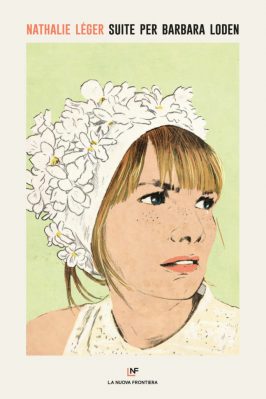 Barbara Loden was a real person, a United States actress who also directed one movie in 1971 titled ‘Wanda’.
Nathalie Léger is not only fascinated by the movie ‘Wanda’; she is also fascinated by the life of Barbara Loden. In this book, exact detailed descriptions of each and every scene from the movie Wanda are inter-cut with biographical accounts of incidents from Barbara Loden’s own life.
One requirement is to watch the movie ‘Wanda’ first before reading this book which is what I did. Otherwise you will not be able to follow this book.
The actress/director Barbara Loden started out as a “hill-billy’s daughter” in Asheville, North Carolina. She moved to New York in 1949 at age 16 and found minor success as a model for detective and romance magazines, then worked as a pin-up girl, model and dancer at the Copacabana nightclub. Then she started studying acting. She joined the cast of the Ernie Kovacs Show as a “scantily clad” sidekick to Kovacs. By 1957, she also appeared on stage in a play with Robert Redford. She had minor film roles in Elia Kazan’s ‘Wild River’ and also the film ‘Splendor in the Grass’ and she took up with Kazan who was 23 years older than she. They were married in 1966.
Barbara Loden’s greatest acting success was playing the role of Maggie in the stage play of “After the Fall” in 1964 which Arthur Miller wrote about his recently died ex-wife Marilyn Monroe. Loden won the Tony Award for Best Featured Actress.
Although Loden preferred the stage and had claimed that she hated movies saying “People on the screen were perfect and they made me feel inferior”, she did direct and star in the low-budget but heartfelt film ‘Wanda’ which won the International Critics Prize at the 1971 Cannes Film Festival.
‘Wanda’ is an honest portrayal of a woman made vulnerable by her own weaknesses, misdeeds, and failures who slides through her life by any means she can. Early in the movie Wanda goes to court for a custody hearing for her children.
“When she comes in we already know all about her, the husband has let it all out, we know he has to prepare his own breakfast, that she doesn’t care about anything, doesn’t take care of the kids, neglects them, spends her days lying on the couch.”
Wanda agrees that their children would be better off with their father than with her.
Because she is alone, Wanda drifts aimlessly into bad relationships and situations. To whom is she vulnerable? She is vulnerable to unscrupulous men. Critic David Thomson says the following:
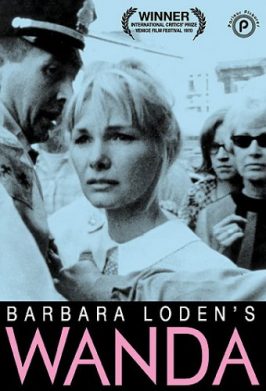 “Shot originally in 16mm Kodachrome, ‘Wanda’ is full of unexpected moments and raw atmosphere, never settling for cliché in situation or character.”
The movie is a fine example of the cinéma vérité style.
Nathalie Léger’s mind is totally engaged with every detail of the movie ‘Wanda’. No one has ever watched a movie as closely as Nathalie Léger has watched ‘Wanda’. She gives us the backstory of every moment in ‘Wanda’.
Barbara Loden died of breast cancer at the age of 48 in 1980.
Grade: A
31 Aug
‘The Passenger’ by Ulrich Alexander Boschwitz (1938) – 266 pages Translated from the German by Philip Boehm
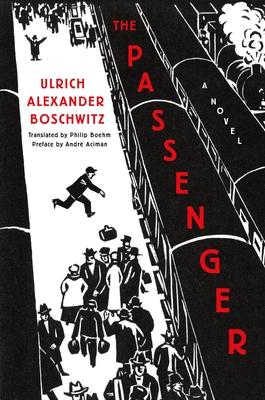 The night of November 9-10, 1938 – Kristallnacht in Germany, the Night of Broken Glass.
“I haven’t committed any crime, and not once in my life have I had anything to do with politics. Nevertheless they came to arrest me and they smashed up my apartment. Not entirely, but to a great extent. They’re arresting Jews, as you know.”
The Germans are consumed with Nazi hatred for the Jewish people, and each Jewish person faces annihilation. ‘The Passenger’ vividly captures the sense of impending doom which all the Jewish people there must have felt.
“For a Jew the entire Reich is one big concentration camp.”
Otto Silbermann is on the run. He should have gotten out of Germany years or months ago. He moves from train to train to escape Germany and avoid the authorities. He does have the ultimately slight advantage of not looking Jewish. However his passport is marked with a big red “J”. His wife is non-Jewish, but Otto still fears what the Nazis will do to her. He fought for the Germans in World War I but the new breed of Nazis are a people driven by hate.
“Don’t walk too fast or too slow. Because if you stick out precisely when you’re trying so hard not to, if you look suspicious because you’re trying so hard not to, if you look suspicious because you’re trying to look as unsuspicious as you can…My God, what do these people want from me?”

Ulrich Alexander Boschwitz
Otto’s non-Jewish business partner uses Otto’s impending arrest as a bargaining chip to cheat him out of large amounts of money. The guy who buys his apartment does the same.
‘The Passenger’ is a rapid read, a thrilling page turner that is filled with suspense.
The discovery and publishing of this novel written by 23 year old Ulrich Alexander Boschwitz in four weeks after Kristallnacht is quite a story also which you can read about here.
Grade: A
26 Aug
‘New Teeth’ by Simon Rich, stories (2021) – 227 pages
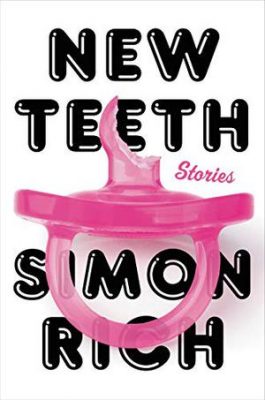 The stories in ‘New Teeth’ are wildly inventive and laugh out loud funny. I would recommend this collection to anyone but especially to young adults who are beginning to develop an interest in literary fiction.
Simon Rich takes typical situations and gives them an off-the-wall twist.
In the first story ‘Learning the Ropes’, the two pirates Black Bones the Wicked and Rotten Pete find that they have a 3 year old girl stowaway who was left on their ship. The story juxtaposes pirate lingo with modern parenting psychobabble to comic effect. Thus we have “Shiver me timbers” alongside “acting passive-aggressive”, “walking the plank” with “limit testing”.
The second story is called “LaserDisc”. Remember the LaserDisc machine, vintage 1991, that was supposed to replace the VHS and Beta players with a much better sound and picture quality, only to be quickly cast aside by the advent of the DVD player? Now it is 2018.
“They’re watching you ironically,” explained the DVD player. They’re watching you to laugh at how you suck.”
“The LaserDisc machine began to weep, and thick tears of battery acid slid down his display screen. He sobbed so hard, his wires convulsed, shooting sparks into the air, like something out of the classic film Backdraft.”
That mention of Backdraft as a classic film is a nice humorous touch.
‘The Big Nap’ is a funny title for a detective story with its play on ‘The Big Sleep’. In ‘The Big Nap’ our world-weary tough detective spouts most of the conventions that are found in detective stories. Except our detective is only two years old.
“He searched the couch for clues, but all he found were Cheerios.”
Then there is ‘Chip’ who is an office robot who gets caught up in bureaucratic office politics.
The ability to be humorous is not spread out democratically. At any given time, there are only a few people in the world who can actually make me laugh. Simon Rich is one of them.
In ‘Case Study’ a London physician rescues the deformed Elephant Man Joseph Merrick from a sideshow only to find that the Elephant Man forms a romantic attachment with the physician’s wife. The comedy here is in the physician’s less-than-scientific jealous reaction to this romance.
In “Raised by Wolves”, a woman raised by wolves and her husband entertain her parents for Thanksgiving dinner.
Only ‘Screwball’, the Babe Ruth baseball story, does not rely on this other-worldly juxtaposition device, and I think Simon Rich would be wise to study this story to see how it achieves its moving and comedic effects without resorting to these artificial ruses.
But every one of these stories in ‘New Teeth’ put a smile on my face. These are the first stories that I found that were laugh-out-loud funny in a long time, and I can well see why the New Yorker would want Simon Rich to write for them.
Grade: A
24 Aug
‘Second Place’ by Rachel Cusk (2021) – 180 pages
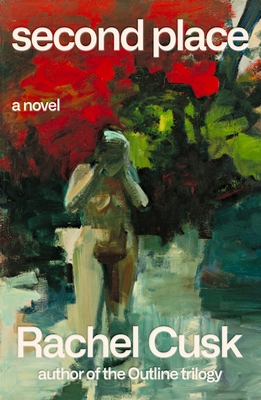 Here is the first sentence of the narrative by the woman M in ‘Second Place’ that really stood out for me:
“I had spent the evening in the company of a famous writer, who was actually nothing more significant than a very lucky man.”
This is one plain-spoken sentence that particularly resonated with me. I’m wishing that more sentences in this novel were as easy to follow. Often it was difficult for me to figure out the sophisticated and abstract reasoning of our M.
M, now in her late forties, lives in the coastal southern part of France. M is married to Tony, a supremely practical, successful, and even-tempered man. M herself has artistic longings and has been enthralled with the work of the artist L for a long time. She invites him to stay with them in the building which she calls their second place. She describes L as “wiry and small, dapper and goatish”, nearly the opposite of her husband. However, she is struck by his paintings. Unbeknownst to M and Tony, L brings along his quite young girlfriend Brett.
Throughout the novel, It is a struggle to follow our narrator M’s sophisticated speculations and ruminations, but I suppose I prefer this mental struggle to the overly simplistic reasoning often found in much other fiction.
Rachel Cusk is a special case. Her style of writing is so finely tuned, she can get away with a level of lofty abstraction that most writers wouldn’t dare.
“The pattern of change and repetition is so deeply bound to the particular harmony of life, and the exercise of freedom is subject to it, as to a discipline. One has to serve out one’s changes moderately, like strong wine.”
Just when you think M is going to go wandering off into the cosmos with her thoughts, she brings them back to Earth with strong wine.
However there are many other sentences from M that if you can comprehend and appreciate their full meaning, you are a more perceptive reader than I am.
“An image is also eternal, but it has no dealings with time – it disowns it, as it has to do, for how could one ever in the practical world scrutinize or comprehend the balance sheet of time that brought about the image’s unending moment? Yet the spirituality of the image beckons us, as our own sight does, with the promise to free us from ourselves.”
All this dense theorizing about art camouflages the rather simple theme of the novel which I assume to be the never-ending conflict between the practical and the artistic or, in terms of this novel, the practical Tony and the artistic L.
In a final note to the novel, Rachel Cusk says she owes a debt to ‘Lorenzo in Taos’, a memoir by Mabel Dodge Luhan. and that L is the D. H. Lawrence figure in the story. ‘Second Place’ did make me curious about that memoir.
Grade: B
.
19 Aug
‘Wild Swims’ by Dorthe Nors, stories (2018) – 124 pages Translated from the Danish by Misha Hoekstra
 How can I best describe these stories by Dorthe Nors?
Elsewhere the style of Dorthe Nors has been described as “minimalism that is under attack from within”. Each of her stories are only a few pages long but there is a lot in each story. All are written in short blunt sentences that don’t always connect with the sentences before.
A device that Nors often uses is for some image or small event in the current daily life of her character to set off in him or her a memory from childhood or previous family life. I suppose you could call her technique “stream of consciousness”, but in Nors’ case the stream is quite choppy and rough.
These stories capture the free flow of thoughts that enter her characters’ minds. Their current situation causes them to remember specific events from the past that are only peripherally related to it. Sometimes the connection is not immediately apparent. Sometimes it is just the funny way their minds work. Nors’ stories capture some of this absurdity of our thought and memory processes. However sometimes these slant-wise memories are the most profound and meaningful of all.
 In ‘By Sydvest Station’ Karina and Lina are supposedly collecting for the Cancer Society but they are keeping the money themselves. Meanwhile Lina is thinking about the guy who dumped her and also her own cancer diagnosis.
In ‘The Freezer Chest’, the story starts out with a guy in her high school class telling his female classmate straight out “I don’t like you”.
In “Between Offices”, a guy visiting his company’s Minneapolis office sees the Mississippi River, and it spurs memories of his childhood and family.
The characters in these stories usually seem to have other things on their minds besides what they happen to be doing now.
Nors’ overriding theme is her characters’ connection or lack of connection with the people around them. More often than not, Nors is most interested in the lack of connection or self-imposed isolation of her characters. Her previous novel ‘Mirror, Shoulder, Signal’ was quite humorous, but these stories are more on the discomforting side.
Sometimes the references in the stories are a little too scattered for me to make much sense of them. In that case the story may have formed an interesting word picture but remained somewhat incoherent for me.
Grade: B
17 Aug
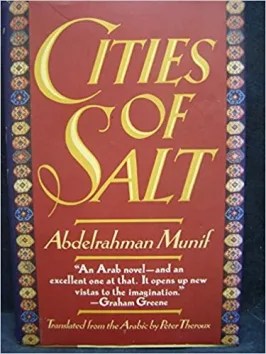 The acknowledged Arabic masterpiece ‘East of the Mediterranean’ has never been translated into English. Why not?
‘East of the Mediterranean’ was written in 1975 by Saudi Arabian writer Abdelrahman Munif. Some of his other novels had already been published to wide acclaim, even by fellow author Graham Greene. No other writer has had as deep an impact on changing my view of the world as Abdelrahman Munif with the powerful novels in his ‘The Cities of Salt’ series. Yet ‘East of the Mediterranean’ is nowhere to be found.
Munif opened my eyes to how the real world operates. He was born a Saudi Arabian national in Jordan in the year 1933. He studied law in Baghdad and Egypt, and got his law degree from the Sorbonne and also got a doctorate in oil economics in Belgrade. In 1963, he was stripped of his Saudi citizenship for his political activity and his opposition to the Saudi royal family. Forced into exile, he then moved to Syria to work as an economist in the oil ministry and also as an editor of ‘Oil and Development’ magazine. In the late 1970s, he quit working in the oil industry to concentrate on his fiction writing. He died in 2004 at the age of 71.
His novels deal with the history of the oil industry in Saudi Arabia, how the United States and British oil interests came in and propped up these authoritarian Saudi princes with unlimited money and resources, destroyed the environment with their oil drilling and devastated the lives of the common people living there. His work so offended the rulers of Saudi Arabia that many of his books were banned for their scathing criticism of the oil industry in the Middle East and of the elite Saudis who played along with the oil companies.
The ‘Cities of Salt’ trilogy tells a compelling story which had a profound effect on me. It has been translated into English and is there for us to read. The message of ‘the three ‘Cities of Salt’ trilogy novels is that in the Arab oil countries, the Arabs have been the victims of their rulers and the foreigners. It is a gripping disturbing work. However according to Arabic sources, Munif’s most celebrated work is ‘East of the Mediterranean’ which has never been translated into English. Why not?
According to Arabic sources, ‘East of the Mediterranean’ reveals in graphic detail the torture and abuse that prisoners suffered in Arab prisons and detention centers of which Munif had personal experience. It highlighted the fact that “a human being in the lands east of the Mediterranean is cheaper than anything and a cigarette stub has more value than him”.
‘East of the Mediterranean’ is a political prisoner novel to rival the classic ‘Darkness at Noon’ by Arthur Koestler, yet no publisher has felt the need to translate it into English. It has been translated into German. One can obviously see that it would be deeply embarrassing to the Saudi elite and probably to some of the oil interests in the United States and Great Britain too.
Yet we readers of English are being denied an acknowledged masterpiece, and the reasons for this have never been explained at least to me.
12 Aug
If you love words, you will probably love what Antonio Lobo Antunes does with them. Nearly every sentence captures its subject so brilliantly and devastatingly as to have left nothing unsaid. Multiple similes and vivid metaphors roll off his pen (or computer) in every sentence.
 While reading ‘The Land at the End of the World’, I was so impressed with Antune’s skillful use of those two literary devices, similes and metaphors, that I decided to write an entire article about it. Never have I encountered such effective use of similes and metaphors. All quotes in this article are from that novel.
A simile draws a resemblance between two dissimilar things. Similes can usually be spotted by seeing the words “is like a” or “is ___ as a”. Similes are apt comparisons.
“The ship’s orchestra blasted out boleros for the officers, who looked as melancholy as owls caught in the dawn light”.
“speaking a strange language I could barely understand, which sounded like Charlie Parker’s saxophone when he’s not screaming out his wounded hatred for the cruel ridiculous world of the white man.”
“kisses as loud as the sucking of sink plungers”
“ah, the meals eaten in silence opposite one another, full of a rancor you can smell in the air like a widow’s cologne.”
“We are therefore in a condition to go over to the bed to make love, a love as insipid as that frozen fish we ate in the restaurant, whose one eye fixed us with the dying glassy glare of an octogenarian among the faded green of the lettuce.”
“these long winters as dull as blown light bulbs”
An exhausted soldier slings his rifle “over his shoulder as if it were a useless fishing rod”.
Knitting needles “secrete sweaters as they clashed like domesticated fencing foils”.
 As these examples show, Antunes frequently goes over-the-top with his similes, brazenly and delightfully over-the-top.
A metaphor is the direct comparison of two unlike things by saying that one of them is the other.
“inside my head, a slow October rain is falling on the sad geraniums of the past.”
“If I were a giraffe, I would love you in silence, gazing down at you from over the wire fencing, as melancholy as a dockyard crane, I would love you with the awkward love of the very tall, and, thought-fully chewing a leaf as if it were gum, jealous of the bears, the anteaters, the duck-billed platypuses, the cockatoos, and the crocodiles, I would slowly lower my neck on the pulleys of my tendons in order, tenderly, tremulously, to nuzzle your breasts with my head.”
“The war has made animals of us, you see, cruel stupid animals trained to kill”.
In the case of ‘The Land at the End of the World’, the effective use of these literary devices makes for a colorful entertaining read.
Grade: A
10 Aug
‘The Land at the End of the World’ by Antonio Lobo Antunes (1979) – 217 pages
Translated from the Portuguese by Margaret Jull Costa
 Nothing of the many, many works of fiction I have read before has prepared me for the brilliant and devastating expressiveness of Portuguese writer Antonio Lobo Antunes.
But first, some background about the story here.
The Portuguese dictator Antonio Salazar sent his army off to a misbegotten, godforsaken war in southern Africa in order to quell an uprising and to keep Portugal’s African colonies including Angola and Mozambique.
Portugal’s involvement in the Angolan War (1961-1975) was almost as contemptible as the United States’ involvement in the Vietnam War.
The original title of this novel was “Os Cus de Judas” or “Judas’s Asshole”.
Here is a guy sitting and drinking at a bar telling his war story to the woman sitting next to him, intending to pick her up just for the night. And what a story it is, since it is the truth.
Our hero is one of those reluctant young men on a ship from Portugal “dragged from the native forests of their government offices, billiard tables, and clubs, and catapulted, in the name of vehemently held but imbecilic ideas, into two years of anguish, uncertainty, and death.” They are headed to southern Africa to fight the people who live there.
In the Portuguese army, our guy was a nurse or what we would call a medic. When someone gets shot in the stomach and their intestines come dribbling out, he is there to push them back in until the doctor arrives. Or when someone has their leg or legs shot or destroyed to the point that they will be amputated, he is there to console them.
“We were fish, you see, in aquariums of cloth and metal, dumb fish, simultaneously fierce and tame, trained to die without protest, to lie down without protest in those army coffins, where we would be welded in, covered with the national flag, and sent back to Europe in the hold of a ship, our dog tags over our mouths to quash even the desire to utter a rebellious scream.”
This novel is not for the self-satisfied or the faint of heart. ‘The Land at the End of the World’ is for those who have adventurous minds and those who appreciate the magic of powerful coruscating evocative sentences.
Despite being a fairly short novel, this is not a quick read. Each sentence is filled with metaphors, similes, other literary devices, and historical and cultural references as well as allusions to pop culture such as Charlie Chaplin, Andy Warhol and even ‘Fifty Ways to Leave Your Lover’ by Paul Simon. It is exhausting yet wonderfully flamboyant and outrageous.
Extraordinary fiction sometimes requires extraordinary readers. Antonio Lobo Antunes is a writer who could make even a Leo Tolstoy feel inferior.
 In my next article, I will examine Antunes’ skillful and sublime usage of literary devices such as similes and metaphors and others by providing examples from his writing.
In my efforts to fully appreciate every one of its magnificent sentences, I found reading ‘The Land at the End of the World’ slow-going but richly rewarding. I found reading this novel akin to digging up a literary treasure.
Grade: A
5 Aug
‘Here is the Beehive’ by Sarah Crossan (2020) – 266 pages
 Over the years I have had good luck reading novels in verse. I must admit that I find a lot of other regular short stand-alone poetry too abstract and impenetrable for my taste and comprehension. However when a novel is written in verse, I find that the verse usually moves the story along in a pleasant rhythmic way. Here is a list of some of my favorite novels in verse. I actually seek out verse novels to read.
‘Here is the Beehive’ is my latest written in a lyrical free verse. This is the first novel for adults written by Sarah Crossan. She has written numerous books for children and young adults.
‘Here is the Beehive’ on the contrary has a very adult subject. It is narrated in the first person by estate lawyer Ana Kelly and is addressed to Connor Mooney, a man with whom she has been carrying on a three-year affair, unbeknownst to their respective mates. Connor has already died in the first chapter in a bicycle accident.
“I miss the freckles on your shoulders,
the wispy tufts of hair there
and the clean soapy smell of you.”
Somehow despite Connor and Ana’s intense affair, they have kept it a secret. When Ana and her husband Paul go on a trip,
“Paul showers,
leaving the door to the en suite
open so I can’t get even
ten uninterrupted minutes
to think of you and touch myself.”
After Connor’s death, Ana secretly attends his funeral and encounters his wife Rebecca there.
“She is forty-six, rich, with incredible posture.
But she is nervous, I think, busily fussing.
Her hair is greasy.”
This is a tale as old as time, a woman’s obsessive adulterous love affair with a man who ultimately has no intention of leaving his wife. The man’s death provides an original slant to the story.
“I imagined you writing a list –
pros and cons
me and her
for and against
good and bad
stay or go
wondering how I measured up
and
knowing I was always the loser.”
 Both couples have children, but the children play barely any role in the story.
I found ‘Here is the Beehive’ a fresh affecting take on an old story and found the writing both lively and sociable.
Grade: B+
3 Aug
‘Shaky Town’ by Lou Matthews (2021) – 232 pages
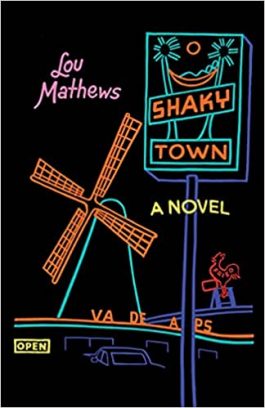
Before I read this work, I did not know that Shaky Town was a nickname for Los Angeles. Shaky Town refers to Los Angeles due to the earthquakes that make the buildings shake.
There are two sides to Los Angeles. There is Hollywood, the unreal Los Angeles most of us know about, and then there is the real Los Angeles.
Here are two surprising statistics about Los Angeles. Latino or Hispanic residents of any race make up over 47% of the population of the city while non-Hispanic whites make up less than 26% of the population. A definite south-of-the-border atmosphere infuses the city, and Mexican-Spanish words are in common usage.
‘Shaky Town’ is a collection of stories and a novella that all take place in the real Los Angeles. A novel? Not so much.
The first story ‘Crazy Life’ is told from the point of view of a young woman whose boyfriend Chuey calls her from jail because he was involved in a drive-by shooting.
The second story ‘The Garlic Eaters’ is written from the point of view of a Korean small convenience store owner who is beset by a group of drug junkies who steal merchandise from him and one time severely beat up his wife to the extent she was in the hospital. He buys a gun.
“So who you dealing with there?” Again, he answered his own question. “You got crackheads, right? You got street gorillas, crazies, glue-sniffers, red freaks, junkies. You got kids, right?”
Most of these stories here deal with the rough part of Los Angeles. The violence and cruel acts seemed somewhat excessive and sensationalistic, beyond the point of realism even for this rough neighborhood. Is the picture presented here overly grim? Having never been to Los Angeles, I cannot judge.
One device that the author uses a few times is to end a story with a shocking particularly violent act. These stories reminded me of Chekhov’s famous line, “If in the first act you have hung a pistol on the wall, then in the following one it should be fired. Otherwise don’t put it there.”
As I mentioned before, as well as the stories there is a novella, also called ‘Shaky Town’. It deals with a teacher facing an abusive situation in a Catholic high school. The novella has some surprising and engaging twists.
Grade: B
 Tony's Book World
Recent Comments