Archive for the ‘Book Reviews’ Category

‘The Dog of the South’ by Charles Portis – A Road Trip and a Shaggy Dog Story


‘The Dog of the South’ by Charles Portis    (1979) – 256 pages
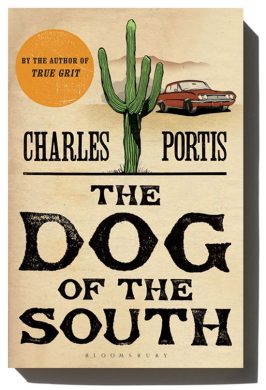
 

I had read a few articles on how sparkling and lively is the picaresque style of Charles Portis. Now that I have just read ‘The Dog of the South’, I remain entirely unconvinced.

Here we have a bunch of good old white boys and good old white girls. These white Southern characters in ‘The Dog of the South’ use the foulest bigoted epithets on those of different races who are around them, yet they are all scam artists and/or fools themselves. I suppose that makes this a true Southern novel.

Our first person narrator is 26 year old guy from Arkansas Ray Midge. Another guy named Dupree has run off with Ray’s wife and Ray’s 1968 Ford Torino, and left him with a 1963 compact Buick Special, and Ray ultimately travels through Texas and Mexico to British Honduras (now Belize) in Central America to recover them. Ray is more anxious to get the Ford Torino back than his wife, as the 1963 Buick Special leaks transmission fluid and has a hole in the floorboard in front of the driver’s seat.

Did you get your sweetie back?”

I’m not trying to get her back. I’m trying to get my car back.”

This is a shaggy dog story and a road trip novel, a long rambling joke.

There is a lot of talk of car problems like loose fan belts and bad fuel pumps and puddles of transmission fluid under the car, the kind of car problems which were a lot more common in the 1970s than they are today. It reminded me of the early times when I had to drive old used cars, and you never knew what would happen next.

On his long drive, Ray picks up Dr. Reo Symes, the opinionated fool who claims to be a medical doctor. ‘The Dog of the South’ is the legend that was painted on the white bus that Dr. Reo Symes was driving through Mexico when it broke down and he was picked up by our hapless narrator.

Portis captures the bigoted talk of two white guys from the South in casual conversation. He probably couldn’t get away with writing some of this racist stuff today. Somehow I failed to see the humor in these white Southern bigoted yahoos.

I just don’t have the required patience to calmly read pointless page after pointless page, but pointlessness was the whole point. Somehow I did manage to read the entire novel; however I muddled through it.


Grade:    C-
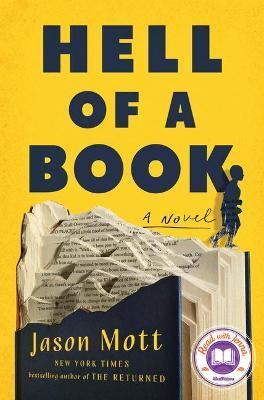


‘Hell of a Book’ by Jason Mott – An Audacious Performance


‘Hell of a Book’ by Jason Mott   (2021) – 321 pages


When I read a novel, I try to find that one word which absolutely describes it. While I was reading ‘Hell of a Book’, the one word that kept coming up for me was “audacious”. This novel is as audacious as its title.

Our main protagonist here is a young male author with a vivid imagination who has just written a hell of a book. That’s what the publicist and everyone at his publishers say. Now he is on a book tour of major cities in the US.

I mean, White writers don’t have to write about being White. They can write whatever books they want. But because I’m Black . . .” I pause to look at my hands to reaffirm that, yes, I really am Black. The story checks out. “. . . does that mean I can only ever write about Blackness? Am I allowed to be something other than simply the color of my skin?”

As our author flies from city to city, a young boy shows up occasionally, The Kid. Is The Kid real or just a figment of our author’s vivid imagination? Is The Kid our author when he was a boy in a small town in North Carolina?

The fact of the matter is that if I had a bambino of my own, I might hesitate to strip down illusion and build up the reality that’s bleak, and painful, and full of woe and sadness. A parent sees a child come into the world, and all they want is for that child to have everything the world has to offer.”

Our author explains white people to The Kid.

Most of them will think everything is okay and that you’re being treated well enough and that everything is beautiful. Because, I guess for them, all they can imagine is a world in which things are fair and beautiful, because, after all, they’ve always been treated fairly and beautifully.”

And there is a romantic interest for our author. He meets the young woman Kelly who shows up at one of his public readings, and he tries to explain her part.

Your role is one of the great traditions of not only American storytelling but Western storytelling as a whole. The woman is the oracle through which men like me find redemption and self-correction. You’re the mirror in which I am able to see myself for who I really am and, in doing so, correct the flaws that have been plaguing me from my earliest days.”

Fuck you,” she says. Each word is an anvil slammed across my spine.

Our author also finds time to express his views on our world.

One of the truths we often overlook is that we are all hurtling on a rocky raft through the void, taking the tour of the cosmos at 67,000 miles per hour, every second of every day, and yet we still find time to stop and talk over bridges in the late hours of the night and maybe reach out and touch somebody’s hand.”

This is a thought I on occasion have. 67,000 miles per hour.

I found this bold daring story to be deeply affecting. It is a lively and spirited and, yes, an audacious performance.


Grade:    A


The Trojan Women’ by Rosanna Bruno, Text by Anne Carson – A Comic


‘The Trojan Women’ by Euripides via Rosanna Bruno, Text by Anne Carson  (2021) – 78 pages


I have no qualms about reading a comic or graphic version of Euripides’ play ‘The Trojan Women’, especially when it is scripted by the world-renowned classicist of Ancient Greece and one of my personal favorites Anne Carson.

Troy has been defeated in war by the Greeks, and all of its men are dead in battle. The women and children of Troy have been rounded up and will be carried off on ship by the Greeks to serve as the Greeks’ concubines or slaves.

We can’t go on. We go on.”

‘The Trojan Women’ focuses on four of these women:

Hecabe (often spelled as Hecuba) – Wife of King Priam who is of course dead now

Helen – The most beautiful woman who some say started the war by leaving her husband Menelaus to join King Priam’s son Paris in Troy. Paris is of course dead now too.

Kassandra – daughter of King Priam. Some say she’s a prophetess, some say she’s crazy.

Andromache – another daughter of King Priam, married to the brave warrior Hector who is also dead. Much of the play ‘The Trojan Women’ centers around the murder of her young son Astyanax by the Greeks

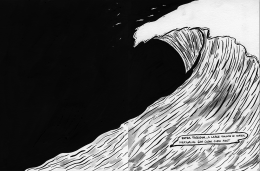
The artist of this comic book, Rosanna Bruno, takes great liberties in depicting these characters as well as all of the other characters in the play. Hecabe is depicted as a dog, Helen as a sable fox, Andromache as a poplar tree. Only the psycho Kassandra is depicted as a human woman. The god of the sea Poseidon is depicted as a giant ocean wave. The goddess Athena is depicted as an owl wearing overalls.

These depictions do take a bit of getting accustomed to, especially that of Andromache as a poplar tree, but ultimately I did not have a problem with them.

All of these Trojan women are bemoaning the fate of Troy and their own fates as they are forced on to ships to be taken away by the Greeks. Troy has been burned to the ground. The Greeks murder the child Astyanax for fear he will become a brave warrior like his father Hector.

That man is a fool who counts on success lasting, it leaps around like a lunatic. And no one makes their own luck.”

Reading this comic proved to be a mainly painless way to become familiar with this ancient Greek play.


Grade:    A


Remember the Penguin 60s?


Back in 1995, in order to celebrate their 60th Anniversary in business, Penguin Books issued a series of very small books by famous authors called Penguin 60s which contained only around sixty to eighty pages. These books are tiny, only 4 inches by 5 inches, 10 centimeters by 12 centimeters.

I really liked this idea, because I am one of those who believe that a true genius can show her or his genius in 60 pages as well as in 100, 200, or 900 pages. They sold for only $.95 here in the United States and I wound up with about twenty of them. However here I am 26 years later, and nearly all my Penguin 60s remain unread.

So I decided to read and review a couple of them now. I picked works by two of my favorite authors, Graham Greene and Robert Musil.

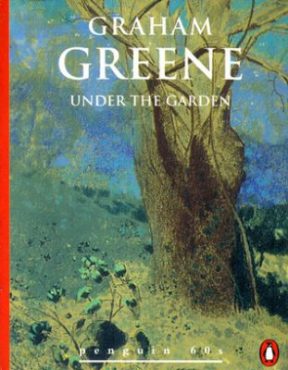
In ‘Under the Garden’, Graham Greene attempts a childhood fantasy, something much different from the adult spy and foreign adventure fiction that he is justly famous for. I must say that I had a lot of difficulty appreciating this work, as fantasy is probably my least favorite genre of fiction. A boy of seven goes underground beneath the garden at his home and discovers some strange creatures and persons living there. There is the one-legged old man Javitts and his woman Maria who “kwahk”s instead of talks. Their daughter has left them and is now in the upper world and has been crowned Miss Ramsgate. Even though Greene’s other work nearly always appeals to me, this one did not really sustain my interest.

‘Flypaper’ by Robert Musil starts with eight short good-natured essays. Some of them were dated, having been written a hundred years ago. The standout for me was the first one, ‘Flypaper’, which is about that sticky paper people used to control the number of flies before there were a lot of insecticides. It was paper with this golden yellow sticky poison on it. The flies would land on it, get stuck, and slowly die. Robert Musil exactly describes what happens to the fly. I suppose as a child watching the flies land on flypaper was my first intimation of mortality. I thought Musil’s essay was a brilliant example of close sharp observation as he captures the plight of the flies.

In another of these essays, Musil closely observes the behavior of monkeys on a monkey island at the zoo. One can learn a lot about human nature by observing the behavior of monkeys on monkey island.

Essays don’t have the same impact for me that fiction does. ‘Flypaper’ does wind up with a twenty-six page fictional story which is also good-natured and has some of the qualities of Musil’s other fiction.

I suppose that if there were any real money to be made in the reprints of these works, they would have been given a proper reprint instead of a Penguin 60 reprint. I definitely would not recommend buying a box set of all the Penguin 60s today.


‘Under the Garden’ by Graham Greene       Grade:    C+

‘Flypaper’ by Robert Musil                               Grade:   B


‘Five Tuesdays in Winter’ by Lily King vs. ‘Songs for the Flames’ by Juan Gabriel Vásquez – Round 2, The Final Round


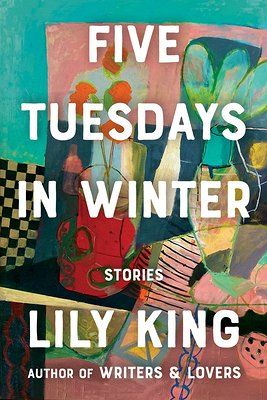
‘Five Tuesdays in Winter’ by Lily King  (2021) – 231 pages

‘Songs for the Flames’ by Juan Gabriel Vásquez  (2018) – 237 pages    Translated from the Spanish by Anne McLean

Both of these story collections follow the usual pattern with the best stories first, and the stories gradually getting less involving except for the last story which is usually one of the better stories to leave a good impression on the way out.

I have read Lily King’s last two novels, ‘Euphoria’ and ‘Writers and Lovers’, and have much enjoyed her spirited and original emotional insights into her characters’ personal lives. By the same token, I have read two of the previous novels of Juan Gabriel Vásquez, ‘The Sound of Things Falling’ and ‘Reputations’, and have been much impressed with his profound insights into the situation of Colombia. The United States, with its unofficial war on Communism and its unofficial War on Drugs, has been heavily involved in the waves of violence that have shattered Colombia. The result has been more like War on Colombia.

Meanwhile, the stories of Lily King are compelling slices of emotional family life that resonated with my own experiences. One story that in particular held me was ‘When in the Dordogne’. A mother and father are in Europe recovering from the father’s suicide attempt while they leave two young male college students to look after their fourteen year old boy. Contrary to all expectations, the college students and the boy have a fine old time.

The stories in ‘Five Tuesdays in Winter’ are intimate and exhilarating; the stores in ‘Songs for the Flames’ are wide-ranging and devastating in their violence. The two collections could not be more different except for the mastery of each of their territories.

Lily King wins, since her enthusiasm for her stories shines through in her sentences. Of course Juan Gabriel Vásquez was operating at a disadvantage because I had to read his collection in translation.


‘Five Tuesdays in Winter’ by Lily King                      Grade: A

‘Songs for the Flames’ by Juan Gabriel Vásquez   Grade: A-


‘Five Tuesdays in Winter’ by Lily King vs. ‘Songs for the Flames’ by Juan Gabriel Vásquez – Round 1


‘Five Tuesdays in Winter’ by Lily King (2021) – 231 pages

‘Songs for the Flames’ by Juan Gabriel Vásquez (2018) – 237 pages      Translated from the Spanish by Anne McLean

When I have two collections of short stories I want to read, both by authors whom I admire and whom I have read before, I like to bounce back and forth between the two. I alternate reading the individual stories by the two writers, because somehow that makes both sets of stories more interesting. That way I can compare and contrast. So now my victims are ‘Five Tuesdays in Winter’ by Lily King and ‘Songs for the Flames’ by Juan Gabriel Vásquez. The content and the style of these two collections have almost nothing in common, which makes the effort even more fun for me.

Most of Lily King’s vivacious stories in ‘Five Tuesdays in Winter’ take place in the home, mostly upper and upper-middle class homes. She even makes the distinction between mansions and houses; mansions are stone and houses are wood, a distinction I had not considered but surely rings true. King’s stories are domestic stories of social interactions between members of a family and their friends. Several of the stories are coming of age stories of young people growing up within the family. Lily King has a light touch which I much appreciated. I loved the title story which was all about “the most reticent man in the world”. I found King’s stories to be lively and buoyant.

The stories of Juan Gabriel Vásquez have a much larger canvas. Vásquez is vitally aware of nearly every facet of public life in the nation of Colombia over the past fifty years and has studied the past of Colombia from its earliest days. His stories resonate with the history of Colombia. Colombia has been one of the most war-torn countries during the last fifty years with over 220,000 of its citizens killed, the large majority of them civilians. His stories are cosmopolitan; they often take place in airports or hotels in Bogota or Paris or other places. Nearly all the people who populate Vásquez’s stories are grown-ups dealing with grown up problems.

The stories in ‘Songs for the Flames’ are more substantial and thus require more effort for the reader to understand and appreciate them. The stories involve drug traffickers, paramilitary death squads, hit men, informants, intelligence agents, machine gun fire, the police, the army, persecution by the drug cartels, organized and unorganized crime, and detectives.

On a lighter note, I will leave you today with a line of French which appears untranslated in one of the family stories of Lily King:

une femme qui rit est une femme au lit”.

Let’s just say this line will be worth your while to translate.

Stay tuned for the next and final round of this contest when I will announce the winner.


The Top 12 List of the Favorite Fiction I’ve Read in 2021


This year I was again tempted to expand my favorites list beyond 12 to 15 or 20 but finally had the good sense to keep it at 12.

Click on either the bold-faced title or the book cover image to see my original review for each work.


‘The Land at the End of the World’ by Antonio Lobo Antunes (1979) – Nothing of the many, many works of fiction I have read before has prepared me for the brilliant and devastating expressiveness of Portuguese writer Antonio Lobo Antunes.


‘The Promise’ by Damon Galgut (2021) – There is something special in the way Damon Galgut continuously and quickly shifts the focus from person to person here, each with their own vivid, frequently shocking, insights into what is happening.


‘Matrix’ by Lauren Groff (2021) – I did not expect a novel about an abbey of nuns in 12th century England to be this high on the list, but it totally fascinated me. Here we have an eloquent and persuasive depiction of a successful society composed entirely of women.


‘Cosmicomics’ by Italo Calvino (1965) – Italo Calvino’s playful conceit is that there were people, a family, around to witness the creation of the Universe, the Sun, the moon, the stars, and the planets. There’s Grandma, Grandpa, and Mother and Father, as well as the boy Qfwfq and his sister as well as some of their neighbors, and especially there is always a lady or girl friend to help Qfwfq on his way through the Universe.


‘The Bottle Factory Outing’ by Beryl Bainbridge (1974) – This is a deadpan comedy like nothing you have ever read before. Somehow Beryl Bainbridge manages to keep a straight face while telling us this outrageous story.


‘Agua Viva’ by Clarice Lispector (1973) – If ‘Agua Viva’ made complete sense to someone, I would worry about that person. But the fragments are deeper and make more visceral sense than most writers’ complete thoughts.


‘The Passenger’ by Ulrich Alexander Boschwitz (1938) – A novel which vividly captures the terrors of Kristallnacht in Germany, the Night of Broken Glass.


‘The Inquisitors’ Manual’ by Antonio Lobo Antunes (2004) – This year will be remembered as the year I discovered Antonio Lobo Antunes. What impresses is the striking use of words and images throughout.


‘Sorrow and Bliss’ by Meg Mason (2021) – Meg Mason maintains a wry deadpan tone throughout this emotional roller coaster of a novel.


‘Au Bonheur des Dames (The Ladies’ Delight)’ by Emile Zola (1883) Here is Zola on Octave Moiret who runs the department store in Paris: “He made an absolute rule that no corner of Au Bonheur des Dames should remain empty; everywhere, he demanded noise, people, life…because life, he said, attracts life, breeds and multiplies.”


‘A Calling for Charlie Barnes’ by Joshua Ferris (2021)There are many, many novels where the main characters are just too good to be true. However ‘A Calling for Charlie Barnes’ is not one of them, and that’s quite a high bar to attain in novel writing, especially when you are writing about your parents.


‘Mrs. March’ by Virginia Feito (2021) – The Mrs. March in this novel is quite repellent. It takes real talent for a writer to pull this off, and this is Virginia Feito’s first novel.


Happy Reading!


‘The Inquisitors’ Manual’ by Antonio Lobo Antunes – A Most Foul Political Minister of Portugal


‘The Inquisitors’ Manual by Antonio Lobo Antunes    (2004) – 431 pages          Translated from the Portuguese by Richard Zenith


This has been a remarkable reading year for me, in particular for having discovered the Portuguese writer Antonio Lobo Antunes.

Antunes removes the veneer of niceness and reveals just how crude and coarse we humans can be. Yes, we humans are animals and not very nice animals at that and don’t you forget it. And dictators bring out the absolute worst in the human animal. Antunes is one of the few writers who can face up to this.

Instead of a narrator explaining the words, thoughts, and actions of the characters, in ‘The Inquisitors’ Manual’ we get the voices of about twenty different characters, each expressing his or her point of view. They tell us how things really are, not how they are supposed to be.

The voices that speak are quite evenly divided between the males and the females. This is an effective device for Antunes. Through the various voices we get closer to the real story. But we never get the complete story, because no one knows everything. There is no omniscience.

At the center is the political minister, Senhor Francisco. He is a close advisor to Professor Antonio Salazar who was the actual dictator of Portugal from 1932 to 1968. Salazar ruled Portugal with a tight fascist fist for decades with the Catholic church backing him up. He used secret police to crush opposition, and he and his close advisors, including Senhor Francisco, could put anyone they wanted into prison just by calling them “Communists”.

Senhor Francisco runs his farm Palmela, “a weird farm full of birds and cows”, like Salazar runs Portugal, and after his wife Isabel leaves him, Francisco uses some of the females working on the farm including the cook and the milkman’s daughter for sexual purposes resulting in a couple of illegitimate children. When the cook is ready to deliver his baby, he calls in the veterinarian rather than a doctor.

Years later the old decrepit Minister Francisco is attracted to the young woman Mila since she reminds him of his first wife Isabel who left him, and he showers Mila and her mother with presents and gifts. While he is fondling her, Mila can’t hide her repulsion.

Her mother asks, “What did you do to the codger, Mila, that he went away looking like a man about to die?”

Before the dictator Professor Salazar visits the Minister’s farm, Senhor Francisco has his workers shoot all the crows so Salazar doesn’t think the crows are mocking and taunting him with their cawing.

What impresses in ‘The Inquisitors’ Manual’ is the vivid visceral use of words and images throughout. This is writing that takes you outside of the safe, comfortable territory into wild uncharted original terrain.


Grade:    A


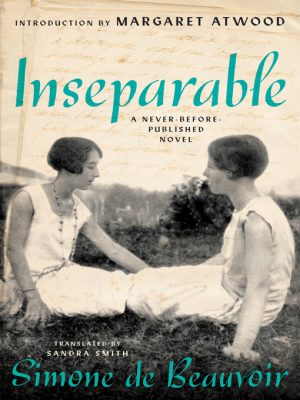
‘Inseparable’ by Simone de Beauvoir – A Friendship

‘Inseparable’ by Simone de Beauvoir (2021) – 156 pages             Translated from the French by Sandra Smith


The novella ‘Inseparable’ is based on the real child friendship of Simone de Beauvoir and Elizabeth Lacoin (Zaza). The photograph on the cover is of them which was found in a letter of Simone’s to Zaza dated September 15, 1920. Simone at that time would have been 13 years old. However this real friendship has been transformed into fiction in ‘Inseparable’. Beauvoir wrote this novella in 1954, but it was not published until this year.

‘Inseparable’ was written sixty years before Elena Ferrante turned the history of a friendship between two young girls into four best sellers.

There is nothing sweeter in the world than feeling there is someone who can completely understand you and on whose friendship you can count on absolutely.” – Zaza’s letter to Simone, Sept 3, 1927

In the novella, Simone and Zaza are Sylvie and Andrée. The friendship between the two girls begins when they are nine years old and continues through the next 12 years. They met at age nine in Catholic parochial school. Catholicism plays a significant major role in this friendship.

For a daughter, the predetermined path led straight to marriage or a convent; she could not decide her fate according to her own desires or feelings.”

Therein lies the problem for the developing woman Andrée.

Sylvie and Andrée are much different from each other as good friends often are. Sylvie is steady; Andrée is impulsive.

Sylvie’s parents are nominally Catholic and intellectual. Her father no longer believes in God. And Sylvie, during high school, questions her faith and decides that she also is a non-believer. Andrée’s family, especially her mother Madame Gallard, are rigorous strict Catholics. Madame Gallard continually steers Andrée away from spending time with Sylvie, but somehow Sylvie and Andrée are able to continue their close friendship through high school.

There are hints along the way of an ominous doomed ending.


Grade:    B


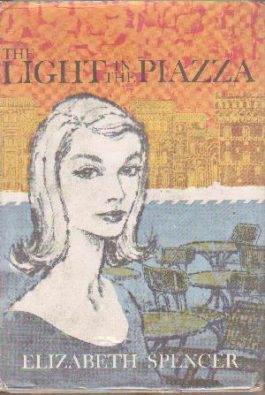
‘The Light in the Piazza’ by Elizabeth Spencer – First a Novella, Then a Movie, and Then a Broadway Musical


‘The Light in the Piazza’ by Elizabeth Spencer    (1960) 110 pages


Set in Florence, Italy, the unique captivating plot of ‘The Light in the Piazza’ is likely the reason that it has inspired both a movie in 1962 and a Broadway play, a musical no less, in 2005 based on the novella. Now the musical is being put on by theater groups nearly everywhere.

Here is the setup. Mrs. Margaret Johnson and her 20 year old daughter Clara are in Florence as part of their extended stay in Italy as tourists from North Carolina. As Clara hurries to see a historical marker, she bumps into 22 year old Italian Fabrizio Naccarelli. From the get-go, he is entirely smitten with Clara, and in the following days he shows up wherever Mrs. Johnson and Clara happen to be. He buys and sends elaborate gifts to Clara, never mind that Clara can speak no Italian and Fabrizio speaks very little English. Soon Mrs. Johnson and Clara meet the entire Naccarelli family.

However there is a backstory. Due to a childhood injury when she was kicked in the head by a Palomino horse, Clara has the mental age of a child of ten. The accident with the horse has not affected Clara in any physical way nor her striking beauty. Deep in her heart of hearts, Mrs Johnson hopes that Clara can lead a normal life despite her injury. Should she encourage Fabrizio in his romantic intentions for Clara or should she discourage him? That is the question.

The author Elizabeth Spencer displays a sure grasp of human nature in this novella. What mother would not want the best for her daughter even in these difficult unusual circumstances? The language difficulties between Italian and English might conceal her daughter’s problems to some extent. Fabrizio might behave like your stereotypical Italian guy, but stereotypes arise in the first place because there is some truth of them, And of course Mrs. Johnson’s businessman husband Noel would not understand the subtleties of the situation going on here in Florence.

Although Elizabeth Spencer wrote several other well-regarded works, she will likely most always be remembered for this novella.


Grade:   A


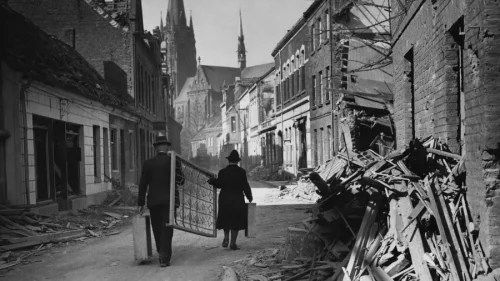
‘Eight Days in May’ by Volker Ullrich – A Reckoning for a Country Which was Severely Misled


‘Eight Days in May – The Final Collapse of the Third Reich’ by Volker Ullrich   (2020) – 271 pages          Translated from the German by Jefferson Chase


My favorite non-fiction of the year? Not a difficult question. This is my first foray into nonfiction this year.

As one of the German officers in a Russian prisoner of war camp put it, “You repeatedly clutch your head in disbelief that we all followed this lunatic.”

This is the story of Germany during the eight days after Adolf Hitler and Eva Braun committed suicide on April 30, 1945 by taking cyanide pills. Hitler had designated Karl Donitz as his successor. On the following day, Joseph Goebbels and his wife Magda murdered their six children, and then both committed suicide.

The Third Reich has dissipated like an apparition.” – Ruth Andreas-Friedrich

They were not alone. The city of Berlin alone reported more than 7,000 suicides in 1945. In the small town of Demmin in northeastern Germany, up to a 1,000 people killed themselves in “their almost apocalyptic fear of the advancing Soviets” as the Russian army advanced into the town.

Fascism, which had almost overwhelmed our world, which had almost ruined it, and which had caused more obscene misery to more human beings than any other movement in recorded time, was being buried with the men who had made and led it.” – William Shirer

While English Field Marshal Bernard Montgomery was negotiating a peace for the western part of Germany, one of the German military leaders asked him if some of the units fighting the Russians could surrender to the English. Montgomery replied, “The Germans should have thought of all these things before they began the war and particularly before they attacked the Russians in June 1941”.

As the Allied forces finally liberated the concentration camps, few Germans were prepared to confront the facts and their own involvement in them. “We didn’t know!” became like a national chant for Germany. Nearly all the Germans denied they were ever Nazi supporters or avoided acknowledging their own complicity in Nazism. Hanna Arendt diagnosed in the German people, “a deep-rooted, stubborn, and at times vicious refusal to face and come to terms with what really happened”.

Every one of the millions of Nazi Party members was also culpable for Germany’s disaster.” – Friedrich Kellner

German armed forces surrendered unconditionally on May 8, 1945 and spontaneous celebrations erupted around the world.


Grade:   A


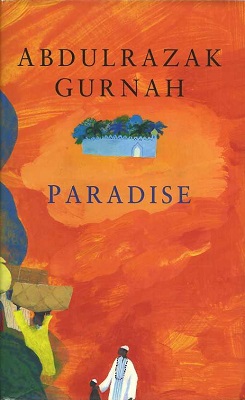
‘Paradise’ by Abdulrazak Gurnah – An African Novel by Someone Who Really Likes Africa and Africans


‘Paradise’ by Abdulrazak Gurnah    (1994) – 247 pages


No, I am not going to claim to have more literary knowledge than the committee which picks the Nobel Literature winner. A writer’s stock rises and falls, there are revaluations and reappraisals. A writer may be neglected for decades like one of my personal favorites Dawn Powell, and then become an icon. Other writers remain neglected.

The stock of Abdulrazak Gurnah is definitely on the rise. If he is lucky, he will not become another Dario Fo or Sully Prudhomme or others who have been nearly forgotten despite winning the Nobel prize for literature.

‘Paradise’ is written by a guy who obviously likes Africa and Africans, so its perspective is much different from that of many Europeans who wrote about it and were terrified by Africa. ‘Paradise’ is not portentous like ‘Heart of Darkness’, far from it.

‘Paradise’ has qualities we don’t usually associate with novels about Africa. It is playful, and its descriptions capture the human qualities of the people as well as the beauty of the land. It depicts the great variety of people and places in Africa.

Our 12 year old boy Yusuf has the good fortune to have been born to a family living on the coast, and his father runs a hotel. However his father gets in debt to the Arab trader Uncle Aziz (not really Yusuf’s uncle), and Yusuf is handed over to Uncle Aziz to live and work for him. We accompany Yusuf on Uncle Aziz’s trading trips into the interior of Africa to trade with “the savages” there.

‘Paradise’ is the coming of age story of Yusuf as he loses his naivety and discovers how the world really works. There are many lighthearted moments mixed in with times of high drama.

‘Paradise’ takes place just before World War I which is when the Germans had become the dominant group in this part of eastern Africa which is now Tanzania. The Germans are always referred to as “the Europeans” and are known by the Africans to be more ruthless and cruel than anyone else.

Everything is in turmoil. Those Europeans are very determined, and as they fight over the prosperity of the earth they will crush all of us. You’d be a fool to think they are here to do anything that is good. It isn’t trade they’re after but the land itself. And everything in it. . . us.”

Many of the customs in this part of eastern Africa are strange to us. A man, especially a rich trader like Uncle Aziz, can have more than one wife. And the various tribes of “savages” in the interior can have even stranger customs than that.

Dar es Salaam, Tanzania

In ‘Paradise’ we get a more complicated, more varied, picture of Africa and Africans than we get in most novels written from outside. There are unfamiliar and unusual African customs and practices, but there is also much joking and camaraderie.

So how does ‘Paradise’ differ from other accounts of journeys into the interior of Africa such as Joseph Conrad’s ‘Heart of Darkness’? Nearly all agree that the Africans, even those known as “savages”, are no match for the Europeans when it comes to cruelty or heartlessness. So, after World War II, is there anyone who will argue against it?


Grade:    A


‘The Faces’ by Tove Ditlevsen – Almost Too Painful to Read


‘The Faces’, a novella, by Tove Ditlevsen (1968) – 151 pages            Translated from the Danish by Tiina Nunnally


‘The Faces’ is a disturbing Danish novella that is almost too painful to read. It is about a woman’s sojourn in an insane asylum, and it is not as though she was put there wrongly or incorrectly.

At the beginning of ‘The Faces’, the renowned author Lise is lying in bed. Her fabulous writing talent is still with her. You can tell that by the words and similes she uses. However her constant use of sleeping pills has taken its toll and has done terrible damage to her psyche. You can tell she is sliding down the rabbit hole of insanity.

She has a husband, Kurt, who discusses his other mistresses with her. At the outset of ‘The Faces’, he tells his wife while she is lying in bed that one of his mistresses, Grete, has committed suicide by overdosing on sleeping pills. Later, he has the maid take Lise’s sleeping pills away from her.

Lise finds the sleeping pills in the maid’s room, and after her own overdose on sleeping pills, Lise is first taken to the unlocked ward of the insane asylum. However she scratches a woman in the face there, so she is put in the locked ward where she is belted to the bed.

She hears voices, voices from her family which tell her that her husband, her maid, and her daughter are plotting against her. She has hallucinations, and the reader can never be sure if what she hears and sees is real or not.

Do you hear voices?” she asked.

Of course,” said Lise. “You hear them too.”

No,” she said adamantly, shaking her head. “All the voices you hear come from inside yourself.”

It dawned on Lise that the whole staff must be in on the plot.

If I believed that,” she said, “I would be insane.”

You aren’t well, you know.”

Lise is hallucinating that her maid Gitte is one of the nurses in the locked ward.

Just listen to how meek she is,” said Gitte triumphantly’ “She thinks she’s going to go home again. As if anyone has ever gotten out of here alive.”

Is it true that Lise’s husband is having an affair with her daughter, his step-daughter? We don’t know if this is something that is happening or one of her hallucinations.

The author of ‘The Faces’, Tove Ditlevsen, was a renowned Danish author and poet herself. She was very prolific; in her lifetime she published 29 books. Ditlevsen struggled with alcohol and drug abuse throughout her adult life, and she was admitted to a psychiatric hospital several times. She died by suicide overdosing on sleeping pills in 1976, aged 58.

Ditlevsen’s astute use of similes and metaphors throughout ‘The Faces’ makes this novella a compelling if harrowing read.


Grade:   B+


Afternoon Men’ by Anthony Powell – Wayward Young Men and Women


‘Afternoon Men’ by Anthony Powell    (1931) – 221 pages


This is a novel about young men and young women in England in the early 1930s, but it will surely be real to life for many of us today.

These are young men and young women in their early twenties. The young men are volatile and unpredictable. The young women are capricious. Because that’s the way both sexes are at that age, wayward. Everything, including the future, is still up in the air.

There is lots of partying and drinking and camaraderie, a lot of dialogue. The writer Anthony Powell (rhymes with Lowell) captured the dynamics of this situation better than anyone else in his first novel ‘Afternoon Men’ which was published in 1931 when he was 25.

The main young guy to watch for is William Atwater, since he is in every scene and sees and hears all that is happening. Much of what is going on is light and amusing, but sometimes it is deadly serious. All is presented in a brisk fashion.

Atwater works in a museum. He finds his job dull, as most jobs right after college are dull. He spends most of his time away from the job socializing with his friends and drinking. He has a couple of close young woman friends, of which one Susan Nunnery he wants to get even closer despite her resistance. His two best male friends are Raymond Pringle and Hector Barlow, both of whom are toying with careers in creating art.

One of the many things that Anthony Powell captures in this novel is the way these young men and women talk, as there is much dialogue in ‘Afternoon Men’. Here is Atwater talking to Susan Nunnery between fights on a boxing night he has taken her to:

She said: “You’re rather sweet really.”

Aren’t I?”

Yes. But that’s how I feel.”

Anyway, I never see you, so it doesn’t make any difference.”

Well, if it doesn’t make any difference.”

Exactly.”

Don’t be like that,” she said.

Why not.”

I don’t like it.”

Nonsense.”

No,” she said. “I don’t.”

It can’t be helped. I’m like that.”

You’re being such a bore.”

I know.”

She said: “Why not be nice? You’re so nice sometimes.”

I don’t feel nice today.”

Anthony Powell as a writer is not flashy, and the power of his work will only creep up on you. Later, after ‘Afternoon Men’, Powell would write one of the lasting pillars of 20th century literature, the twelve-volume ‘A Dance to the Music of Time’. Each volume of that work is a separate stand-alone novel, although with the same characters. I have only put a couple of dents into that structure having read only 2 or 3 of its novels. However after reading ‘Afternoon Men’, I probably will be putting more dents into it.


Grade:    A


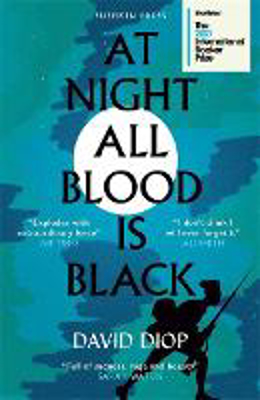
‘At Night All Blood is Black’ by David Diop – Trench War is Hell


‘At Night All Blood is Black’, a novella, by David Diop  (2018) 145 pages        Translated from the French by Anna Moschovakis


‘At Night All Blood is Black’ has probably the best credentials of any novella or novel. It won both the prestigious French literary 2019 Prix Goncourt as well as the 2021 International Booker Prize. It is a brutal war novel depicting grisly trench battle scenes including disembowelment and evisceration during World War I. This novella is not for the faint of heart.

First a little of the background.

With World War I raging in Europe, African soldiers were forced to fight for their colonial masters between 1914 and 1918. France recruited more Africans than any other colonial power, sending 450,000 troops from West and North Africa to fight against the Germans in Europe on the front lines. These black troops were known as the Chocolat Soldiers. During the war, around 30,000 Africans died fighting on the side of France alone.

“People from Senegal, Ivory Coast and Mali died for France. It’s true that France colonized them, but it wasn’t their choice. You could almost say they died for nothing, at least not for their countries.” Clemence Kouame, an African student

‘At Night All Blood is Black’ vividly tells the ugly truth about trench warfare during World War I. Many more civilians were killed and wounded during World War II, but World War I was much worse for the soldiers who had to fight in those trenches.

This story begins with trench soldier Alfa Ndiaya from Senegal watching his more-than-brother friend Mademba Diop die after being stabbed in the stomach by a German soldier. While Mademba is pushing his own guts back into his stomach, he begs Alfa to shoot him to put him out of his misery quickly. Alfa cannot force himself to do that, and afterwards he feels tremendous guilt for not having shot his friend.

After his more-than-brother Mademba’s death, Alfa goes on his own murderous revenge spree leaving the trench each night by himself and shooting a German soldier, then using his machete to chop off the German soldier’s hand and bringing it and the German’s rifle back to the trench as trophies. He murders seven German soldiers in this fashion.

At first the French officers are very pleased with his efforts, but they begin to question his sanity.

Don’t tell me that we don’t need madness on the battlefield. God’s truth, the mad fear nothing…You’d have to be mad to obey Captain Armand when he whistles for the attack, know there is almost no chance you’ll come home alive…God’s truth, you have to be crazy to drag yourself screaming out of the belly of the beast.”

The whole idea of war, groups of people out to murder each other, is insane, but some forms of insanity are acceptable and some are not.

Temporary madness makes it possible to forget the truth about bullets. Temporary madness, in war, is bravery’s sister.”

However there are still rules about what is tolerated.

In war, when you have a problem with one of your soldiers, you get the enemy to kill him. It’s more practical.”

In one troubling scene, the French Captain Armand does exactly that.

Not all of ‘At Night All Blood is Black’ is this horrific battlefront account. When Alfa is removed from the front, he recalls scenes with his mother and family and friends back in Senegal in his childhood and youth which might or might not explain his behavior.

Up until the last 15 pages or so, I was fully prepared to give this novel my highest ranking for its clear, lucid, and moving, if grim, story line. However I cannot quite fully recommend this novella because of the somewhat incoherent ending in the last three chapters which veers drastically from the intense accurate bluntness of the novella up to this point. I can understand the reason for this incoherence. Our soldier who so blithely chops the hands off other soldiers is at a loss when his violence spills over to other parts of his life. However the last few shaky pages are quite a change for this sure-footed novel.


Grade:    B+


‘Dead Souls’ by Sam Riviere – An Outrageous Rant on Modern Poems and Poets and Poetry Events


‘Dead Souls’ by Sam Riviere    (2021) – 289 pages


You may have heard of the Russian classic ‘Dead Souls’ by Nikolai Gogol. However this ‘Dead Souls’ by Sam Riviere is about the sorry state of the poetry community in England and the rest of the world today,

Yes, this is a delightfully unhinged rant about poetry. The narrator is so obsessed and incensed that he can’t even take time to organize his thoughts into paragraphs.

It’s about poetry readings where no one who is there wants to be there, “and though the audience members attended with an outwardly cheerful, hardy demeanor, occasionally their masks slipped”, “making the reciting of poetry at best a kind of willed insanity”.

For a long time now there had been no poetry in the poetry.”

This ‘Dead Souls’ is honest, cutting, cruel, and quite a laugh riot. This is a novel that is intended to provoke the people who read it, probably many of them in that small poetry community that he is writing about.

Most of ‘Dead Souls’ takes place, where else?, at the Travellodge bar after the poetry readings at the biennial Festival of Culture.

A long poem by the poet Solomon Wiese had been found by the computerized system named the Quantitative Analysis and Comparison System (QACS) to breach the newly introduced standards for plagiarism and thus his current and future work was deemed unacceptable by all publishers.

It’s even worse if you harbor some form of respect for the writer, Solomon Wiese said, the worst thing you can do is to meet a writer that you in some way respect, because you will leave the meeting having lost all respect for that person, and you will be unable to recapture or reconstitute that respect by returning to the work, which you will find has been contaminated by the writer’s tedious and egomaniacal private persona.”

These type of revolting statements actually attracted me to this new ‘Dead Souls’. There are many of these statements in the novel like the following one about poets without poems:

if one admitted that the things they called their poems were nothing of the sort, that they were actually word-approximations; they were arrangements of words that resembled poems when you looked at them, but turned out on further examination not to be poems at all; they turned out to be nothing like a poem, at best they were simulations of poems”

The first one hundred pages are one long merciless rant about modern poetry in London. I liked that. On the next fifty pages, Riviere kind of lost me by getting away from this subject, and I almost gave up on the novel. Whenever Riviere’s characters don’t talk about poetry or literature, the novel dragged for me. Then the novel returns for the last one hundred pages to bemoaning the current fate of literature, and once again it held my interest. The lack of paragraphs makes ‘Dead Souls’ a difficult read.

Anyone who has attended a poetry recital within the last five years will probably want to read this novel if only for its spleen.


Grade:    B+


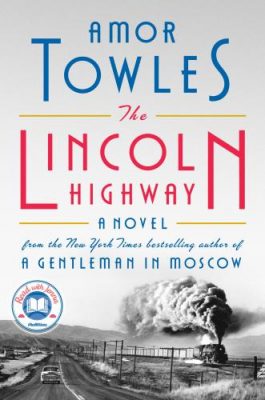
‘The Lincoln Highway’ by Amor Towles – A High-Spirited Wild Ride from Nebraska to New York City


‘The Lincoln Highway’ by Amor Towles    (2021) – 576 pages


‘The Lincoln Highway’ is a rollicking road trip of a novel. We start out in the rural farmlands of Nebraska and wind up in the middle of New York City. The time is the 1950s. Elegantly written as all the novels of Amor Towles are, ‘The Lincoln Highway’ is superior entertainment, but is that enough for a 576 page novel?

In this novel, even the diversions have diversions, but in the end it wraps up to a magnificent whole.

We have the straight and upright young mid-westerner Emmett, his super-precocious little brother Billy, the brisk steady neighbor young lady Sally, the New York delinquent Duchess, and the guileless childlike dreamer Woolly.

The Lincoln Highway’ is a novel of asides, glorious asides. There is the story of Fitzy Fitzwilliams, who gains fame and fortune impersonating Walt Whitman and Santa Claus at society parties only to lose it all one night by performing as Karl Marx.

The story of Fitzy is certainly a sharp turn away from the main plot, but it is a fascinating story in itself.

There is a basic decency that some people have and other people do not have. In most of the tales here basic decency prevails against all odds.

The young troublemaker called Duchess (named after the county he was from) enters the hotel room where his father had previously stayed and encounters this decrepit guy who is currently staying there.

At the Sunshine Hotel, for every room there was a weakness, and for every weakness an artifact bearing witness. Like an empty bottle that had rolled under the bed, or a feathered deck of cards on the nightstand, or a bright pink kimono on a hook. Some evidence of that one desire so delectable , so insatiable that it overshadowed all others, eclipsing even the desires for a home, a family, or a sense of human dignity.”

Later as Duchess leaves the hotel room, he makes the following observation:

Ah, I thought, seeing the corner of the book poking out from the folds of his sheet, I should have known. The poor old chap, he suffers from the most dangerous addiction of all.”

Yes, reading, the most dangerous addiction of all. These sharp, witty and, yes, insightful lines alone were worth the price of admission to ‘The Lincoln Highway’.

But should you read ‘The Lincoln Highway’?

The novel is a superb yarn, but is that enough? When I read a novel this lengthy, I usually look for something more than a high-spirited story, something with more depth and something that will change my attitude or worldview. There are a couple of not-so-recent long novels on my to-be-read list that I expect would do just that.

However, if you have not read any Amor Towles novels yet, you are missing out.


Grade:    A


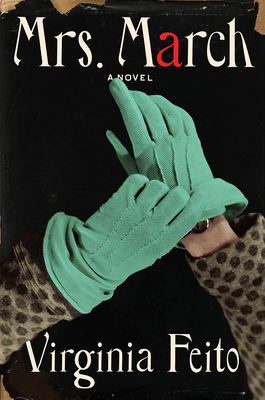
‘Mrs. March’ by Virginia Feito – An Appalling Mrs.


‘Mrs. March’ by Virginia Feito      (2021) – 288 pages


Too many novelists seem to figure that if you like their main characters, you will like their novel. However I’m prone to think that writing novels is more than creating ingratiating characters.

I was ready for a fiction where the main character is unpleasant and unlikable. Writers such as Patricia Highsmith and Daphne du Maurier were rather successful writing this kind of novel where the main character is not at all someone the reader would want to know. The Mrs. March in this novel is that kind of woman, quite repellent. It takes real talent for a writer to pull this off, and this is Virginia Feito’s first novel.

Here is just one example of the evocative writing style in ‘Mrs. March’ that I really like:

Mrs March strolled through the cereal aisle as if she were sightseeing along the ChampsÉlysées. It had always seemed to her the most curious of aisles, with all the garish colors on the otherwise uniform boxes, the cartoons threatening to leap out at you, screaming for you to choose them.”

George and Mrs Marsh would seem to be living the good life in an upper class neighborhood in New York City. George is a best-selling author. Mrs. Marsh has a maid Martha to do most of the work around the house. They have one eight year old boy Jonathan. They throw lavish catered parties for their friends and neighbors.

However nothing here is as it seems.

The trouble starts when the woman in the pastry shop asks Mrs. March if she were proud that the main character Joanna in George’s new novel was based on her. This stuns Mrs. Marsh since Joanna in the novel is a pathetic prostitute whose clients only paid her out of pity and who is ugly and stupid. Mrs March flies into a rage and vows never to shop at this place again.

If someone behaves toward her in the least way that reflects badly on her, Mrs, March will exact her revenge.

Everyone and everything in the novel is seen through her judgmental sophisticated upper-class eyes. She is continually hoping that terrible things have happened to the people she comes in contact with. Here is Mrs. March when her sister Lisa and her husband come to visit for New Year’s Eve dinner:

As she welcomed the couple inside, greeting them warmly, Mrs. March was thrilled to see that Lisa’s hips, tight under a hideous woolly skirt, had broadened. It always brought her joy, the sign of any physical deterioration in her sister, no matter how slight.”

The character Mrs. March is a nasty piece of work. And if the slightest thing goes wrong, Mrs. March gets hysterical.

Her mind is loaded with horrific obsessions. She spots a large cockroach on the bathroom floor and smashes it with her slipper leaving a black jelly-like stain on the tile. “Out damn spot” she shouts out loud. The reference to Lady Macbeth is surely intentional.

She also has vivid terrible suspicions concerning the people closest to her.

After seeing a newspaper clip while rummaging among her husband’s things, she becomes suspicious that he raped and murdered a young woman while on a hunting trip to Maine.

Novels this eccentric and peculiar are rare and special.


Grade:    A


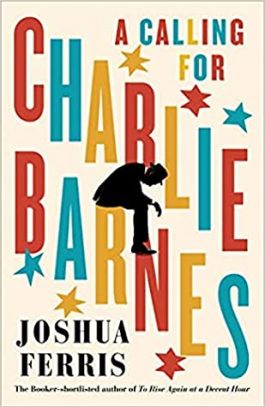
‘A Calling for Charlie Barnes’ by Joshua Ferris – “My Father, a Fairly Standard Mid-Century Model”


‘A Calling for Charlie Barnes’ by Joshua Ferris   (2021) – 342 pages


Real life makes for good novels because it’s lived as a bunch of lies, and because fictions of one kind or another are the only things worth living for.”

Charlie Barnes is by no means too good to be true. Five marriages, four divorces, three or four children with different mothers. He has a libido. He’s kicked around in many jobs and has had several oddball money-making schemes that never panned out. His grown-up kids are none too crazy about him, except for his foster son Jake who is writing this novel about him.

Well, Barbara, he was a clown for a time there. A lot of other things too. That’s kind of the point. He lived a full life. He has a complicated past. A man, he’s just a man.”

What makes ‘A Calling for Charlie Barnes’ so special is that Joshua Ferris is writing about Charlie Barnes like any one of us could be writing about one of our own parents. We younger people see through our parents of course, but we somehow also see what was good about them anyway. And we just might not be as good as them anyhow.

Joshua Ferris gives a flippant raucous humorous slant to the hapless events in the life of the father Charlie Barnes. I suppose when one looks back at all the random and not-so random events that occurred in a parent’s sixty or seventy or eighty or ninety years of existence, it all does seem a bit cartoonish.

This account may at first seem laughable and simplistic but ultimately there are hidden depths, which is probably true of people’s lives in general.

The novel is divided up into three parts. First is the actual comical history of Charlie Barnes which is a farce. The second is the redemption of Charlie Barnes late in life which is a fiction. Finally there are the facts, the bitter end.

There are many, many novels where the main characters are just too good to be true. ‘A Calling for Charlie Barnes’ is not one of them, and that’s quite a high bar to attain in novel writing, especially when you are writing about your parents.


Grade:   A


‘Near to the Wild Heart’ by Clarice Lispector – Hurricane Clarice


‘Near to the Wild Heart’ by Clarice Lispector   (1943) – 194 pages      Translated from the Portuguese by Alison Entrekin


You read Clarice for the intensity.

Reading her again, I had to relearn a lesson that I had learned before.

It is often difficult to follow Clarice’s tortuous lines of reasoning. But you always think if you concentrate a little more, don’t get distracted, it will all make perfect sense in the end.

The lesson I learned is to not even try to “get” everything in a Clarice Lispector novel because no matter how hard you try you will not “get” everything. Just relax and give up the struggle to reach full comprehension, because you won’t. Relaxing is probably the best way to “get” what is there. Guilt is a terrible inhibitor to understanding.

The title ‘Near to the Wild Heart’ is taken from the following quote from the novel ‘Ulysses’ by James Joyce.

He was alone. He was unheeded, happy, and near to the wild heart of life.”

Yes, Clarice Lispector and James Joyce are both “near to the wild heart of life”.

What Lispector has in common with James Joyce is the manic flight or rush of words that go beyond reason to a deeper understanding. There are very few writers who can go beyond reason to summon up more profound truths.

As Benjamin Moser puts it, Lispector’s writing is “shot through by a ceaseless linguistic searching, a grammatical instability, that prevents them from being read too quickly”.

The situation of this novel is really quite simple. Joana’s mother died when she was very little. Her father died when she was about ten, and she was taken in by an aunt and uncle who had a daughter of their own. She is sent off to a boarding school. Her aunt says of Joana:

She’s a viper. She’s a cold viper, Alberto, there’s no love or gratitude in her. There’s no point liking her, no point doing the right thing by her. I think she’s capable of killing someone…”

Later Joana develops a relationship with Otávio. Here Clarice captures young romance:

Because when he embraced her, he had felt her suddenly come to life in his arms like running water. And seeing her so alive, he had understood crushed and secretly pleased that if she wanted him he wouldn’t be able to do anything about it…When he finally kissed her he himself had finally felt free, forgiven beyond what he knew of himself, forgiven in what he knew lay beneath everything he was.

From then on he had no choice.”

Been there, done that.

However even before Joana marries Otávio, she realizes that she is going to leave him.

To Otávio she’d only be able to say the indispensable words, as if he were a god in a hurry, if she rambled on in one of those leisurely aimless chats, which gave her so much pleasure, she noticed his impatience or his excessively patient, heroic face, Otávio, Otávio. What to do?”

As soon as they are married, Otávio starts up with his old girlfriend Lidia again because “he never sees a woman with a large bust without thinking about laying his head on it”.

When I read Clarice, I have a tendency to want to quote nearly every line in the book.

She felt a perfect animal inside her, full of selfishness and vitality.”


Grade:   B+