Archive for the ‘Book Reviews’ Category

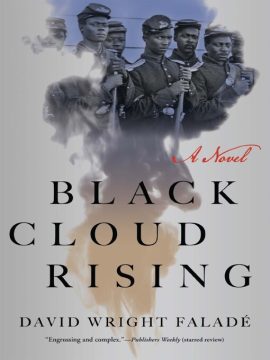
‘Black Cloud Rising’ by David Wright Falade – Literally Fighting for Their Freedom


‘Black Cloud Rising’ by David Wright Falade   (2022) – 290 pages
 

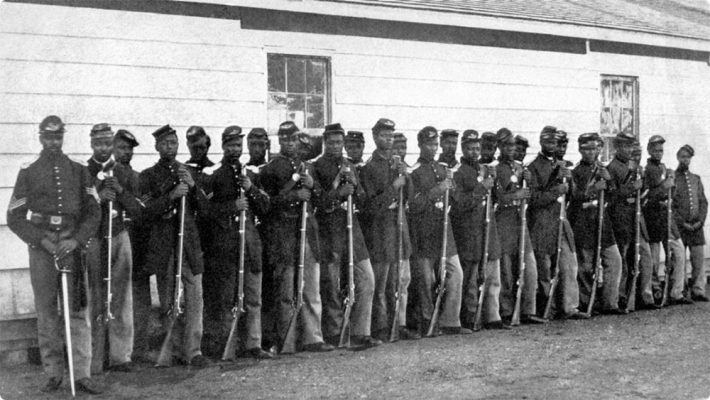
Imagine a troop of black soldiers marching in the South of the United States in 1863, freeing the slaves on the farms and plantations there.

‘Black Cloud Rising’ tells a fictionalized account of the experiences of the real person Richard Etheridge. Richard was born a slave in 1842 on one of the islands of the Outer Banks near Virginia. When the Civil War started, these islands were among the first to be recaptured by the forces of the Union. In 1863, Richard became a Sergeant in the African Brigade, a recently-formed black troop. One of the first duties of the African Brigade was to go around to the various farms in rural Virginia and actually emancipate the slaves living on these farms. As the slaves were being freed, many of the men would then enlist in the African Brigade.

‘Black Cloud Rising’ takes off to a rousing start when the slaves on one farm tell the troops how their owner used to beat them using a whipping post. The troops then subject the owner to a beating using his own equipment.

Later the African Brigade moves into North Carolina. There they had to deal with the bushwhackers, loosely formed Rebel guerrilla groups who would be particularly cruel to these ex-slaves if they could get away with it. Some of the white slave owners took off to Texas keeping their slaves.

We will be in the enemy’s country, men, so look sharp and bring pride to the African Brigade.”

Some of the white officers expressed surprise at how fiercely the black troops fought. But black soldiers were fighting for much more than restoring the Union. They were fighting to liberate their people.

Since, in the days of slavery, the slave owners themselves often took on the task of impregnating the young female slaves in order to replenish their slave supply, you had situations where the white and black children on the farm or plantation were nearly all half-brothers or half-sisters, and they would play together as little kids. Later the black kids would be put to work from sunup to sundown, while the owners would tell their white kids not to associate with the black kids, their half-brothers and half-sisters, anymore.

Thus in some cases, the Civil War was a family feud, with half-brother fighting his half-brother.

Richard’s half-brother Patrick uses the N-word, and Richard calls him on it. Then Patrick says, “It’s different with you, we come up together. You’re like family”.

Like family? Patrick, you and I are family.”

The upper echelon of officers in the African Brigade were white. Some of these white officers were better than others.
As I said before, ‘Black Cloud Rising’ is a rousing lively novel dealing with a little-mentioned aspect of the Civil War. This is a dramatic stirring historical novel.

At one point, we get a first-hand account of the public hanging of a bushwhacker.

How well did the members of the African Brigade perform as soldiers? One of the white officers of the African Brigade, Colonel Draper, said:

It seems to me that what makes you and your lot good soldiers has to do with what was beaten into you to make you learn to submit. Soldiers and slaves, their daily surrender to authority was similar.”

As for me, I expect they performed as well as many of the black players in the major sports leagues of football, baseball, and basketball today. In other words, I have no doubt that they probably excelled as soldiers.


Grade:   A


‘Cold Enough for Snow’ by Jessica Au – A Sightseeing and Shopping Trip to Japan With Her Mother


‘Cold Enough for Snow’ by Jessica Au   (2022) – 95 pages


Instead of a heavy-duty plot or unusual characters, the novella ‘Cold Enough for Snow’ flows from subject to subject like a stream. It has a quiet strength which requires attention.

A grown-up daughter has taken her mother on a sightseeing and shopping trip to Tokyo, Japan. As well as this elliptical mysterious story of a daughter and her mother, we get views of and insights into some of the major tourist places within and near Tokyo. It saved me an airplane ticket. Japan has an atmosphere all its own, and here we get meticulous descriptions of some of its features.

Inside a beautiful church they are touring, the daughter asks her mother a question.

I asked my mother what she believed about the soul, and she thought for a moment. Then looking not at me, but at the hard white light before us, she said that she believed we were all essentially nothing, just series of sensations and desires, none of it lasting”.

Here is an example of the kind of quiet wisdom you will find in ‘Cold Enough for Snow’ if you pay attention.

I thought of how, at the bathhouse, the babies and younger children had clung to their mothers as they bathed them, tipping water over their heads while holding up a hand to protect their eyes, how they did not feel separated from each other yet, but rather still part of the same body, the same spirit. There was a time when my sister and I would have felt the same.”

Mother and little child, “how they did not feel separated from each other yet, but rather still part of the same body, the same spirit”. Priceless, and something I had never considered before, and I very well could have missed it.

Other times I got impatient with some of the lengthy descriptions that did not advance the plot, whatever there is of a plot.

There is an enigma between the daughter and her mother throughout this novella which is never fully explicated, which is probably a good thing.


Grade:   B


‘Blank Pages’ by Bernard MacLaverty – An Irish/Scottish Master of the Short Story


‘Blank Pages’ by Bernard MacLaverty, stories (2021) – 259 pages


Since this is ‘Blank Pages’, it was a very quick read. Just kidding.

I had the good luck, though not actually good luck since I do pay attention to what’s going on in the world of fiction, to discover Bernard MacLaverty quite early in his career in the early 1980s. At that point, he had written two novellas, ‘Cal’ and ‘Lamb’, and only two collections of stories. I have been keeping up with his work ever since.

His latest collection of stories, ‘Blank Pages’ is another winner as his collections of stories usually are.

In these stories, MacLaverty captures the poignancy of everyday routine domestic life. Most of these stories take place or at least start out in the home, usually in Ireland or Scotland. His characters frequently live alone or with one close relative in an often seedy apartment. MacLaverty has always been able to find the pathos and feeling without resorting to wild plots or flashy techniques.

In ‘The Fairly Good Samaritan’, a man in his fifties spends most of his days and nights drinking at the bar or in his room. Here his landlady talks to him:

You need someone to help you mend your ways, m’boy.”

I’m much too old to change now.”

It matters not how crooked the hook, the picture can be hung straight.”

That’s the kind of stuff she comes out with all the time. When the lecturing starts, he always nods his head and stares vaguely in the direction of the window.

In the story the man comes back from the bar to find her lying on the floor. Drunk as he is, he saves her life.

Many of these stories manage to deal with mortality without becoming morbid. The final story is about a man escaping almost certain death. Yet the stories are quite sociable with a lot of dialogue.

In MacLaverty’s previous novella called ‘Midwinter Break’, I was somewhat overwhelmed by the mundane circumstances of the few characters, and I downgraded it for that reason. However, here, with 12 different stories and different characters in each story, I feel MacLaverty is just sketching ordinary plain life as it is lived. With the everydayness spread and dispersed over so many different stories and characters and each separate story so moving, it presented no problem at all in this excellent collection.

My favorite story in the ‘Blank Pages’ collection is the first story, “A Love Picture”. Nothing is more unexpected or moving than a small act of kindness given by one person to another person.


Grade:   A


‘Fictional Father’ by Joe Ollmann – Sonny Side Up

‘Fictional Father’, a graphic novel, by Joe Ollmann    (2021) – 192 pages


Whereas other publishers’ comics are loud and violent and repetitive with their endless stockpile of superheroes and super-villains, the Montreal, Canada publishing house Drawn and Quarterly produces comics and graphic novels that are subtle, moody, nuanced, and human. These are graphic novels that could actually qualify as fiction and literature.

‘Fictional Father’ is about a cartoonist who is very famous and beloved for his daily comic strip ‘Sonny Side Up’ which features an adoring father and his little boy, but in real life the cartoonist is actually a terrible father.

The critics of the comic strip say, “Who knew that the relationship of a father and son could be so dog-gone funny? And heartfelt?”, yet the real cartoonist father locks himself up in his home office and never has any time for his kid.

Along the way in this amusing story we get a lot of commentary on the state of the newspaper comic strip industry (not good) and the famous comic strips and their makers: Dennis the Menace by Hank Ketcham, Peanuts by Charles Schultz, the Family Circus by Bill Keane, Hi and Lois, Blondie, even Dilbert and others. Nobody reads newspapers anymore, so apparently the future is in graphic novels.

The son is grown up now, trying to make it as an artist (not a comic book artist), and living with his boyfriend James. There are all these unresolved issues from his childhood and from his parents that intrude. And then his father, the famous comic strip artist, dies. Should the son take over for his father and continue the daily comic strip ‘Sonny and Me’? He could do it, but should he?

His roommate and partner tells him,

It’s pathetic, fretting over how many Likes you get. Jesus, I’m embarrassed even saying “Likes…”

You’re a grown man, Cal. Are you really that desperate?”

‘Fictional Father’ is a fine example of the humor, the artwork, and the depth of story that can be achieved in the graphic novel. It has a cohesive plot, well-defined characters, vivid scene-setting, and at times is a laugh riot.


Grade:    A


‘Small Things Like These’ by Claire Keegan – The Magdalene Laundries


‘Small Things Like These’ by Claire Keegan    (2021) – 114 pages

The main subject of ‘Small Things Like These’ is a Magdalene Laundry located in the small town of New Ross in Ireland in the year 1985. Magdalene Laundries were mostly Roman Catholic institutions that operated from the 18th century to the late 20th century, ostensibly to house and employ “fallen women”. They were often owned and operated by convents.

According to one of the girls working in this Magdalene Laundry:

Those were put in there because “they hadn’t a soul in the world to care for them. All their people did was leave them wild and then, when they got into trouble, they turned their backs.”

Many of the laundries were effectively operated as penitentiary workhouses. The young women locked up there had to work long hours, the heat in these laundries was often unbearable, and the women were subject to severe punishment. Most of the public outside figured it was OK since it was being run by the Church.

In a mass grave at the Donnybrook Cemetery in Dublin, Ireland, 155 unmarked tombs were found that touched off a scandal that exposed the horrific treatment of the inmates of these Magdalene laundries. The deaths of these women were shrouded in secrecy. The last Magdalene laundries closed in 1996.

‘Small Things Like These’ is about a husband and father with four small daughters who happens in 1985 to find out what is going on in one of these Magdalene Laundries. This man has a differing perspective than most, since his mother was left unmarried to raise him alone with the help of a kind employer.

This father is told to keep his nose out of the convent’s business:

Tis no business of mine, as I’ve said, but surely you must know these nuns have a finger in every pie.”

Even though the events in the novel are said to take place in 1985, ‘Small Things Like These’ feels like it could have occurred a hundred years ago. The more things don’t change, the more they stay the same. Excuse me for the tautology.

Claire Keegan makes absolutely no concessions to modern attitudes or times; her scenes and her characters are almost Dickensian. Every scene, every remembrance, every sentence has a moral purpose. I’m not criticizing; it’s just that it’s an out-of-fashion way to write.


Grade:    A-


My Method of Reviewing Fiction


After reviewing novels and collections of stories for over twelve years, I do have some strong opinions and specific ideas about it.

The duty of a book reviewer is not always to be a merciless or merciful arbiter of a book’s value, but also to help those ones deciding to read the book to find the special qualities contained within. Even in a book I don’t particularly like, there are often good things that could be pointed out to the potential reader. By the same token, I might really, really like a book and still find some shortcomings.

Usually I will have read at least one review of the book I’m currently reading. That’s how I decided to read it in the first place. Since I don’t get paid for this reviewing, I only read books I think I will like. Sometimes when early on I’m having trouble following a book’s plot, I will read more reviews just to help me follow the story.

I give up on books real easily, even sometimes with authors I know and like. If I don’t completely finish reading a work, I won’t review it. Hence I have a somewhat positive view of most of the books I do finish.

I always try to give some idea of the work’s plot, characters, and setting in my review without revealing any plot resolutions or surprises. As I am reading the work, I try to think of and write down single words or phrases that best describe this book and set it apart from other works. I will usually use these words and phrases in my review.

As you probably have noticed, I often like to use quotes from the work, because I have found that this is the best way to showcase the author’s style of writing. I like to use shorter quotes that still capture the spirit of the work.

I always keep my little notebook handy to write down notes about the book I’m currently reading. Quite often I will wake up at around 6 AM with some idea that seems brilliant at the time and occasionally I will incorporate these ideas into my review.

The grade I give a work (I do give nearly every work a grade) reflects my final visceral reaction to the work. It is not a score sheet of the pluses and minuses of the various qualities I point out in the review. Although it doesn’t happen often, I could imagine really liking a work that is poorly written or disliking a work that is well-written.

Finally, I must say that I do like reading and reviewing, because otherwise I would not have stuck with it all these years.


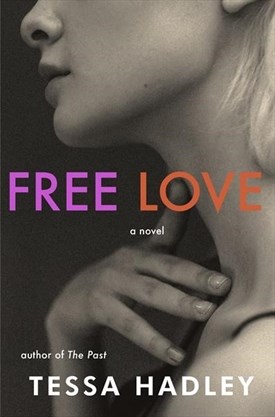
‘Free Love’ by Tessa Hadley – Love and Sex in the 1960s


‘Free Love’ by Tessa Hadley (2022) – 285 pages


I have been quite critical as well as quite complimentary of the writing of Tessa Hadley in past reviews. However I keep reading her works, because she writes those rarities, substantial novels. This time I will be praising her, mostly.

Perhaps a key to Tessa Hadley’s writing is this quote of hers:
“If I met my characters, I might not like them.”

Whereas most writers seem to bend over backwards to create characters their readers will like, Hadley writes about her characters more honestly and objectively and thus more deeply than other writers.

Under the placid surface of suburbia, something was unhinged.”

Forty year-old Phyllis is wife to husband Roger who works in the foreign office and mother of Colette who is 15 and Hugh who is 9. The year is 1967, not long after The Pill became widely available and ancient history now, and women are just discovering they can do things that were unthinkable only a few years before. The young guy Nicky is one of the lucky beneficiaries of this new-found women’s freedom.

One day Phyllis is a dutiful wife and mother, and the next day she is scrounging around making up excuses to the family for her extended absences. Nicky can hardly believe his good fortune. It all started with a kiss in the dark.

No one had kissed her like that, so wetly and hungrily, in all the years of her marriage; that space had been unfilled in her passionate nature.”

Hadley makes it quite clear that this affair between Phyllis and Nicky is all about sexual excitement and very little about love or even mutual liking. Soon Phyllis makes a complete break with her family and moves in to the London apartment building with the young Nicky.

There wasn’t any point, she told herself, in thinking about the children. No reparation could be made for what she’d done.”

However, of course, Nicky’s mind and body soon start to wander.

This “love” story starts out quite straightforward, but complications develop that make things “as fatally twisted as a Greek drama”. These complications weren’t entirely believable to me.

In the first half of ‘Free Love’ we see things mainly from the point of view of the mother Phyllis. In the second half of the novel, the focus shifts somewhat to the fifteen year-old daughter Colette. It is difficult for the daughter when the daughter is not as good looking as the mother.

Tessa Hadley does not allow undue emotion to get in the way of her even-handed view of the circumstances and predicaments of her characters, and that makes her fiction more reliable and ultimately more true.


Grade:   A


‘The President and the Frog’ by Carolina de Robertis – A Fable for Our Time


To fully appreciate this simple novel ‘The President and the Frog’, you first must know a few facts about the real person who is this fiction’s main character, José Mujica.

José Mujica was President of the South American country of Uruguay from 2010 to 2015. What makes his story unique is that in his younger days Mujica was a leader of the left-wing urban guerrilla movement the Tupamaros. The Tupamaros were responsible for political kidnappings and assassinations during the time of Uruguay’s right-wing dictatorship. In 1970, the Tupamaros kidnapped and killed United States CIA torture instructor Dan Mitrione. During the years that Uruguay was ruled by the US-backed military junta, Mujica was imprisoned in squalid conditions, locked in a cell by himself in a hole in the ground. In all Mujica spent 13 years in prison and was subjected to frequent torture.

Once upon a time there was a group of revolutionaries who’d dreamed of changing the world for the better by fighting the forces of repression, but the forces of repression were a monster that grew new tentacles with every battle they fought.”

The military dictatorship of Uruguay ended in 1984 with democratic elections, and Mujica was finally released from prison. Later Mujica would become Uruguay’s Minister of Agriculture and later was elected President of Uruguay in 2009.

‘The President and the Frog’ celebrates the breaking away of Uruguay from the evil influence of the United States government which supported and aided severe dictatorships across South America which tortured and murdered many of their own people for opposing their tyranny.

A Norwegian TV reporter has come to interview Mujica now that he is President.

You have many admirers in Norway.”

That’s very kind.”

It’s quite true. You’re a beacon of hope, giving the world a different view of leadership, showing us that it’s possible for a president to truly serve the people.”

During the interview Mujica recalls his prison days.

As you can tell from the title ‘The President and the Frog’, it is written as a fable. When Mujica is imprisoned in a hole in the ground, only the frog is there for him to talk to. The frog is kind of a wise guy, but sometimes he has some good advice.

You don’t want to be broken. Don’t be broken.

You’re a frog. You don’t know what humans do to each other – what they’ve done to us.”

And what they haven’t done.

There’s nothing they haven’t done. Just look at me. They’ve starved me, beaten me, tortured me with their fancy imported torture machines, put me here alone, and done it not just to me but to the lot of us, the resistance lost, we’re lost, we’re all done for. “

Ho-de-hum, co-co-comes a sto-rm.

Have you even been listening?”

Silly man.

This is a simple inspiring story about a remarkable leader we here in the United States have not heard much about.


Grade:    A


‘Mayflies’ by Andrew O’Hagan – Six Guys from Glasgow


‘Mayflies’ by Andrew O’Hagan    (2020) – 277 pages


‘Mayflies’ juxtaposes two stories from a Glasgow man’s life, one from 1984 and the other from 2017.

In 1984 a group of six young Glasgow men barely out of high school head to Manchester, England for a music festival with some of the indie bands that were big at the time: The Smiths, the Fall, New Order, etc. The six guys are:

Tully, Tibbs, Clogs, Limbo, Dave Hogg, and Noodles

All are from working-class families, all somewhat to the left of Karl Marx, and all disgusted with Thatcherism.

Thatcherism had passed through the town like the plagues of Exodus. We’d had blood and frogs, and we were waiting for boils and locusts.”

It’s a wild and crazy drinking-and-weed weekend, and it is told by one of the young guys, Jimmy or Noodles as he is called, who is known to read novels during raucous rock shows.

Six Scottish Pricks Get Wasted in Major European City.”

Although I’m quite familiar with a lot of 1980’s music from perpetually listening to MTV at the time, I am not too familiar with the groups listed above. As part of my research for this review, I asked Google what kind of music the Smiths played:  Indie rock jangle pop post-punk alternative rock”.

There you have it.

While the six are wandering the streets of Manchester, they see the two most famous members of the Manchester music group The Smiths, Morrissey and Johnny Marr, riding away in a Rolls-Royce. One of our guys from Glasgow picks up a cigarette one of the Smiths has dropped.

I took a puff. The filter was wet. I passed it to Tully and told him whose fag it was as he had the last drag.”

He cow’s-arsed it,” I said.

Fuck it,” he said. “I don’t mind a bit of saliva. The guy wrote “How Soon is Now”.

In the second half of ‘Mayflies’ its 2017, and one of these formerly young guys, Tully, tells Jimmy that he has terminal cancer and will probably die within the year. Tully and Jimmy then set about planning Tully’s exit which includes Tully finally getting married to his long-time girlfriend Anna.

This second half of the novel is darker than the first half, probably necessarily so and that probably is the point that Andrew O’Hagan is making. There is always an end to the good times.

O’Hagan handles both of these vastly different times in a man’s life in an engaging fashion.


Grade:    A-


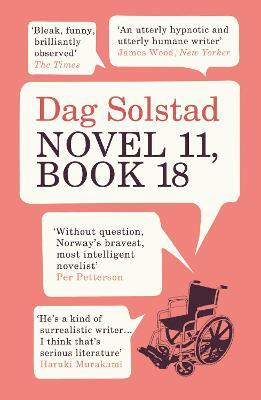
‘Novel 11, Book 18’ by Dag Solstad – “What bothers me is that my life is so unimportant.”


‘Novel 11, Book 18’ by Dag Solstad    (2001) – 161 pages             Translated from the Norwegian by Sverre Hyngstad


‘Novel 11, Book 18’ is a novel that I wound up feeling deeply ambivalent about. First I will explain the situation depicted in the novel since its title gives the reader no clue as to what is going on.

Norwegian Bjorn Hansen is about 50 years old. Eighteen years ago Bjorn left his wife and his two-year old son because he was strongly attracted to the young woman Turid Lammers. He left his management position in Oslo and moved to the small town of Kongsburg about 50 miles from Oslo. There he runs the office of the County Treasurer.

For several years, the woman Turid Lammers becomes the dazzling focal point, the center of things, in Bjorn’s life. They both become involved in the Kongsburg Theater Society, a group that puts on amateur operettas which are crowd-pleasers. Up until he met Turid, Bjorn considered himself a slow, introverted, and not very spontaneous person.

Art and literature were not proper subjects to him, they were interests one could cultivate in one’s spare time, not means whereby to acquire a position, which he, with a genuine assuming matter-of-factness, saw as the end of academic study.”

However after living with Turid for twelve years, Bjorn becomes disenchanted.

Because Turid Lammers had faded. She had turned forty-four, and it had long been clear that the ravages of the years had left their mark on her face and body. Her face had become sharp, scraped, hard. How he missed the softness of it! But that was gone forever, and along with it many of the ideas on which Bjorn Hansen had built his whole way of life.”

After this brusque assessment of Turid, he eventually moves out of her house into an apartment in Kongsburg.

Later his son Peter who Bjorn abandoned 18 years ago moves into the apartment with him in order to attend college in Kongsburg. Bjorn discovers that he really does not like his son very much.

He couldn’t endure his son’s preachy and boastful manner.”

I guess the reason that kept me fascinated with this novel for much of the way was Bjorn’s blunt honesty about himself and those around him. Here we have a man leaving a woman because she has aged and her looks have hardened. This might be despicable, but it does happen. Then we have this same man who finds out that he doesn’t like his grown child very much. These are natural emotions, but they are rarely discussed in books because they are difficult to deal with.

However ultimately, despite it’s quite fascinating early situations, I must downgrade my opinion of ‘Novel 11, Book 18’ for Bjorn Hansen’s final self-imposed plan which struck me as entirely incomprehensible and senseless.

In the last third of the novel Bjorn Hansen travels to Vilnius, Lithuania and subjects himself to an incomprehensible future (I won’t give away this denouement) which strained this reader’s and I would imagine most readers’ credibility. Because I could not believe that anyone would constrain himself in this way, this severely detracted from my appreciation of this novel.


Grade:   B-


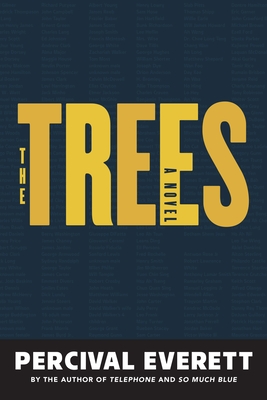
‘The Trees’ by Percival Everett – The Revenge of Emmett Till


‘The Trees’ by Percival Everett   (2021) – 308 pages


The lynching and murder of Emmett Till is a horrific example of United States white racism, past and present.

Emmett Till was a 14 year old boy from Chicago visiting his relatives down South in Money, Mississippi during the summer of 1955. Emmett and his cousin went to the Bryant’s Grocery and Meat Market to buy candy. Twenty-four year old Carolyn Bryant, wife of the proprietor, was alone in the store waiting on customers. Emmett may have whistled at and may have said a few words to the woman. Mrs. Bryant told her husband Roy about the incident. Roy Bryant and his half-brother J. W. Milam abducted Emmett from his grandfather’s house, took him away, beat and mutilated him, then shot him in the head, and sank his body in the Tallahatchie River.

Later an all-white jury found Bryant and Milam not guilty of Emmett Till’s murder. The “not guilty” verdict was based on Carolyn Bryant’s testimony. Carolyn Bryant admitted in a 2008 interview that some of her testimony at the trial was false.

Emmett Till was only one of thousands of black people and people of other races who were murdered by white people for no good reason, and the murderers went unpunished.

‘The Trees’ takes place in Money, Mississippi. Two black Special Detectives are sent from Hattiesburg to investigate the mysterious murders of Roy Bryant and J. W. Milam. Along with these white men’s bodies, there is the badly decomposed body of a black man.

You know what they be sayin’,” she said.

What’s that?”

That he’s the ghost of that boy Robert Bryant and J. W. kilt all them years back. They say he come back to get revenge. I guess he got it.”

In this town, even those in positions of authority like police officers and pastors use the N-word. This is Mississippi. The white locals use the N-word even when they are talking to black people.

When one of the black Special Detectives starts chatting with the waitress in the local diner, the other warns him,

You’re going to mess around and get yourself shot,” Ed said once they were on the street. “She could have some crazy-ass husband or boyfriend. You know, a stupid redneck with a gun.”

That’s redundant.”

In this novel only the black characters are intelligent and decent; the whites are all stupid crazy-ass rednecks and know-nothing peckerwoods wearing Trump hats. This is rural Mississippi.

May I remind you that we are in Money, Mississippi. Maybe I should say that again: Money, Mississippi. The important part of that is the word Mississippi. You do understand what I’m saying?”

This is the twenty-first century.” Jim said.

Yeah, well, tell that to those fuckers back there wearing Trump hats.”

‘The Trees’ starts out strong in this small Southern town, but when it goes farther afield and introduces a couple too many extraneous characters, its power gets somewhat diluted.


Grade:   B+


‘A Thousand Ships’ by Natalie Haynes – “You say proud but you mean vain.”


‘A Thousand Ships’ by Natalie Haynes    (2021) – 345 pages


This tale of Troy and Greece and the Trojan War is a delight. Or I should say this collection of tales is a delight.

Natalie Haynes is so familiar with these stories surrounding the Trojan War, she makes them her own and the characters come alive. She has a light touch with these tales, these ancient myths.

Haynes avoids the stiffness in the telling that so many accounts of the siege of Troy have. Here these ancient Greek stories are humanized in simple down-to-earth language with some humorous and ironic twists. And Haynes gives a fair account of both the men and the women on both sides, both the Greeks and the Trojans.

I was quite familiar with some of the myths here, but some of the myths were new to me. At the end of each scene, Haynes provides a little meaningful twist that gives the scene its significance.

Here we have the entire Trojan war from the Judgment of Paris which caused the war in the first place until the day many, many years later when Odysseus finally returns home to Penelope and murders all 108 of her suitors. The main sources are the two epic poems by Homer, the ‘Iliad’ and the ‘Odyssey’, along with some of the early Greek plays.

Who could love a coward, she had once heard a woman say. Laodamia knew the answer. Someone for whom the alternative is loving a corpse.”

Laodamia is speaking of her brave dead husband Protestilaus, the first Greek soldier to be killed in the war. The Greek King Agamemnon had already sacrificed his daughter Iphigenia on the day she was to marry Achilles in order to get a stiff wind for the Greek ships so they could leave Aulis for Troy.

Odysseus and Penelope

Later, after the Greeks have defeated Troy with their Trojan horse subterfuge, we have the long trek of Odysseus back home to Greece and his long-suffering wife Penelope. Time for some humor.

Because really how many cannibalistic giants can one Greek plausibly meet as he sails the open seas? “

Penelope gets impatient waiting and waiting for Odysseus to return.

The bards all sing of the bravery of heroes and the greatness of your deeds: it is one of the few elements of your story on which they all agree. But no one sings of the courage required by those of us who were left behind.”

Throughout ‘A Thousand Ships’ presents the women’s views of events as well as those of the men.

When a war was ended, the men lost their lives. But the women lost everything else. And victory made the Greeks no kinder.”


Grade:    A


Why I Enjoy the Greek Myths


Whoever came up with monotheism – the idea that there is only one God – suffered from a severe lack of imagination. Yet millions of people today are stuck with this notion of an all-knowing, all-seeing, all-good “Big Man in the Sky”. And why would God be a man when the woman is much more integral to the birth process?

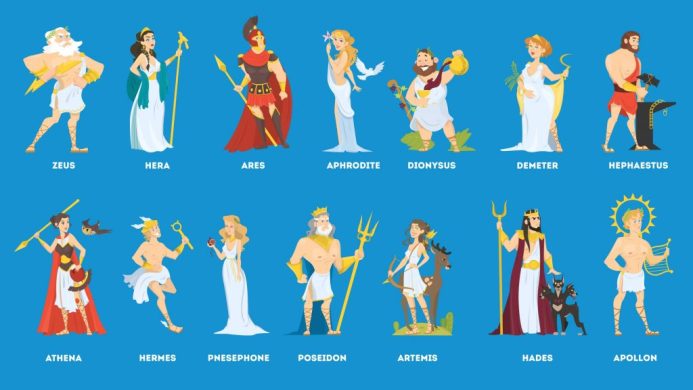
The ancient Greeks had it right, gods and goddesses for every occasion. We have Zeus and Athena and Apollo and Aphrodite. We have Ares, the god of war, but we also have Eris, the goddess of strife and chaos. We have a god or goddess for every facet of existence.

The Greeks also had it right that the gods and goddesses were not too good to be true. Their gods and goddesses had the same faults and weaknesses that we humans do. However there is one critical difference, the gods and goddesses are immortal; they do not die.

The Greek gods and goddesses intermingle with the humans too. The gods and goddesses have all the human faults. They are vain and selfish. Zeus has slept with many of the women in the kingdom, much to the displeasure of his goddess sister Hera to whom he is also married. Demigods – half god and half human – are popping up all over the place. And there are many, many other examples of gods or goddesses and human hook-ups.

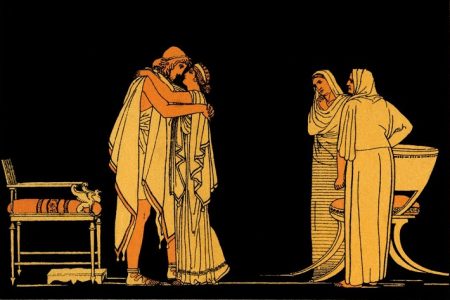
‘Thetis Dipping Achilles in the Styx’ by Honoré Daumier

To take one famous example, Achilles was the son of the Nereid goddess Thetis and Peleus, the mortal king of the Myrmidons. Thetis loved her shining son Achilles, so she dipped his entire body in the holy river Styx in the hope that Achilles would then be immortal. However she held the baby boy by his heel which did not get submerged. Later Achilles would have many successes on the battlefield to become known as the Greeks’ greatest warrior. Finally Achilles would die on the battlefield after he is stabbed in the heel by a spear wielded by the Trojan warrior Paris.

These are the kind of stories that monotheism does not have due to its lack of imagination and of diversity. There are hundreds of these stories in the Greek myths about the interplay of the gods and goddesses with the humans, and then the resulting demigods.

Stay tuned for my next post in regard to ‘A Thousand Ships’, a re-telling of the stories of the Trojan War, by Natalie Haynes.


‘Don’t Look at Me Like That’ by Diana Athill – A Young Woman in the Swinging 1960s


‘Don’t Look at Me Like That’ by Diana Athill    (1967) – 185 pages


In the late 1960s and early 1970s, many candid coming-of-age novels were written by young women, dramatizing the new freedom that a young woman had and some of the problems this freedom presented. ‘Don’t Look at Me Like That’ is a novel that fits in that category. By the late 1960s, things had opened up for young women to some extent before closing down later.

Meg Bailey is the daughter of a low-paid parson and his wife who live near Oxford. Even from the first line of this novel Meg gives us an honest forthright assessment of herself:

When I was at school, I used to think that everyone disliked me, and it wasn’t far from true.”

Despite her lack of friends, Meg is taken up by another girl at school, Roxane Weaver, and Roxane’s mother. The two girls hit it off right away, and they remain best friends through the years.

Meg is artistic, but during her school years comes to realize she does not have what it takes to be an artist. However she has just enough talent to pursue a successful career as a children’s book illustrator in London.

As she grows up, Meg develops a better opinion of herself:

I am going to say something which I have never said before; and something which, when it has been said to me, I have usually half-pretended not to hear. I am a pretty woman.”

Problems arise when Meg begins a long-standing affair with her best friend Roxane’s husband, Dick Sherlock.

The author of this perceptive coming-of-age novel, Diana Athill, is famous for the many memoirs she wrote. I never learned to appreciate memoirs. Fiction has always been my thing, so when I learned that Athill had wrote this one single novel I decided to read it.

The era of the free-spirited and swinging 1960s depicted in ‘Don’t Look at Me Like That’ now seems so long ago and so far away that reading about it today seems almost like reading historical fiction.


Grade:    B


‘Harsh Times’ by Mario Vargas Llosa – Banana Republic or Banana Dictatorship?


‘Harsh Times’ by Mario Vargas Llosa (2021) – 288 pages               Translated from the Spanish by Adrian Nathan West


The country of Guatemala, just south of Mexico in Central America, has the ideal conditions for growing bananas. Today, we in the United States and also those in Europe take bananas for granted, but at one time they were not available in the North. The modern-day company Chiquita Brands Incorporated, formerly United Fruit Company, has a monopoly on the banana trade.

‘Harsh Times’ is the true story of how the United Fruit Company warped the government of the United States to fund and arm a military coup to topple the democratically elected government of Guatemala and replace it with a far right-wing dictatorship in 1954. The United States CIA, under Allen Dulles whose brother John Foster Dulles was also Secretary of State in the Eisenhower administration, conspired with the dictators Trujillo of the Dominican Republic and Somoza of Nicaragua to remove the duly elected government of Guatemala led by Jacobo Árbenz and replace it with a military dictatorship under Castillo Armas.

This is historical fiction with a vengeance.

Jacobo Árbenz was a great admirer of the supposed democratic values of the United States and was attempting to implement land reforms which would improve the living conditions of the large number of poverty-stricken Guatemalans, including those of the native Indians. The United Fruit Company saw these land reforms as interfering with their banana business and worked with the Eisenhower Administration to replace the elected Guatemalan government. United Fruit Company hired a New York public relations firm to spread the false rumor that Árbenz was a supporter of Soviet Communism. This was the “Communist” boogieman which the United States used so often to damage South American progressive governments.

After the military coup succeeded, the United States brought in Johnny Abbes Garcia, a torture expert from Trujillo’s Dominican Republic, to deal with Guatemalan dissidents. Much of ‘Harsh Times’ is taken up with colorful stories of Garcia as well as the so-called Miss Guatemala, the new dictator Armas’s girlfriend.

The Armas dictatorship did not last long and was replaced by dictatorship after dictatorship. After United States intervention the Guatemala banana republic became a banana dictatorship.

The US put an end to whatever optimism I had, and now we’re back with the same thing we’ve always had: one dictatorship after another.”

The people of Central America might consider it poetic justice that the United States stuck itself with its own far right-wing would-be-dictator fool in Donald Trump, just like the far right-wing would-be-dictator fools that the US and its CIA installed as leaders in many countries throughout Central and South America. What goes around comes around.


Grade:    A


‘The Invention of Morel’ by Adolfo Bioy Casares – A Machine that Can Copy a Person or Group of Persons


‘The Invention of Morel’ by Adolfo Bioy Casares    (1941) – 103 pages            Translated from the Spanish by Ruth L. C. Simms


What is this strange invention by the scientist named Morel? It is a device that captures not only sight like a camera and sound like a microphone, but also all of the other senses – touch, smell, and taste to name just three of the other senses. In other words, Morel’s device can capture and re-create the entirety of a person or a group of persons.

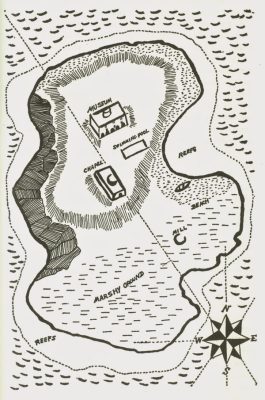
A remote tropical island, a desperate fugitive from the police, a group of vacationers dancing and singing to the music of ‘Valencia’ and ‘Tea for Two’, a beautiful woman Faustine, a love story, two suns, the mad scientist Morel and his fantastic new invention. These are some of the elements in the novella ‘The Invention of Morel’.

However Morel is not the hero of our novel, No, our hero is a fugitive from the authorities who escapes to an uninhabited island. Thus he has the entire island to himself. But eventually a boat arrives and a group of tourists takes over the main building on the island, a museum.

They moved the phonograph out of the green room next to the aquarium, and they are, men and women together, sitting on benches or sprawling on the ground, chatting, listening to music, or dancing, in the midst of a torrential downpour that threatens to uproot all of the trees!”

Our hero retreats to the swamps on the southern part of the island. However he spies on the tourists and spots one woman, Faustine, whom he quickly falls in love with. He approaches her, but she does not notice him. Later our hero overhears the leader of the tourists Morel discuss his machine which will allow Morel to spend eternity with the woman that he loves, who our hero assumes to be Faustine.

The group of tourists do not react in any way to our fugitive. They do not recognize his presence.

The people who live here are dreadful snobs – or else they are the inmates of an abandoned insane asylum!”

Possibilities: Insane asylum. Heaven or purgatory. Is he invisible due to improper diet and polluted air? Are the intruders from a different planet? Does he have a disease that causes him to imagine the intruders? Was he dead?

The story behind this novella is that the Argentine author Adolfo Bioy Casares became infatuated with the famous silent screen actress Louise Brooks just be watching her movies and was inspired by her image to write this novel. The character Faustine is based on Louise Brooks. Hence the picture of Louise Brooks on the cover. The novella is illustrated with drawings throughout which adds to its enjoyment.

The life in a projection becomes more real for our fugitive than the life he is actually living.

So we have here a desert island fantasy, a science fiction, and a love story all rolled into one short novella.


Grade:    B+


‘The Maid’ by Nita Prose – Molly the Hotel Maid


‘The Maid’ by Nita Prose   (2022) – 289 pages


There are seasons in publishing just as there are in nature. New fiction by established writers often gets published in October so it is ready and available for Christmas shopping. By December, too late for Christmas, little fiction is published. What about January? January is the time for debut novelists who will then have nearly a full year for the public to get acquainted with them before the next Christmas shopping rush.

The Maid” by the debut novelist Nita Prose was published this month, January 2022.

Consider the maids in a luxury hotel, in this case the Regency Grand. It makes no difference where the hotel is located since the situation is the same around the world. The maids must clean up whatever messes the guests have made and leave their assigned rooms in perfect condition. They are probably paid minimum wage or thereabout, yet they are around luxury and well-to-do people their entire workday. Do they make much in guest tips? I don’t know. There is a tendency to take the maids for granted.

It’s easier than you’d ever think – existing in plain sight while remaining largely invisible. That’s what I’ve learned from being a maid. You can be so important to the fabric of things and yet be entirely overlooked. It’s a truth that applies to maids, and to others as well so it seems. It’s a truth that cuts close to the bone.”

What gives this murder story its charm is that it is told from the perspective of the maid Molly. Molly loves her job as a maid at the Regency General. Her grandmother who brought her up instilled in Molly the old-fashioned values – honesty, outward cheerfulness, and reliability.

Being brought up in quite isolated circumstances by her grandmother, now Molly is grateful when anyone does any act that indicates they may want to be friends with her. Thus she is a poor judge of character. She has not learned that “Poor company is worse than none”.

What Molly is very good at is cleaning up each hotel room she is assigned and returning it to a state of perfection. She also practices “Discreet courtesy, invisible but present customer service.” She is totally and completely dedicated to her job, yet she is accused of the murder of a prominent business man who rents a penthouse room in the hotel along with his wife.

This is the kind of murder mystery that you don’t examine the details too closely with a critical eye for inconsistencies or improbabilities. You just go with the flow and feel the warmth. Some of the surprises are telegraphed way, way ahead of time, and you would have to be a imbecile not to see them coming. This is a story for the heart, not the intellect.

This is not a heavy-duty demanding read like a lot of my reading. I enjoyed this lighter fare and the engaging personality of Molly the Maid for a change.


Grade:   A


‘Intimacies’ by Katie Kitamura – The Trials of an Interpreter


‘Intimacies’ by Katie Kitamura    (2021) – 226 pages


‘Intimacies’ is the second novel by Katie Kitamura which I have read, the first being ‘A Separation’. To both novels, Kitamura brings a forthright clear style that is easy to like.

In ‘Intimacies’, our first-person narrator is a female interpreter at the U.N. International Court of Justice or as it is often called, the World Court, in The Hague, Netherlands. This court mainly deals with cases of war crimes or genocides or other crimes against humanity perpetrated by leaders of nations.

The record was unfortunately blunt: the Court had primarily investigated and made arrests in African countries, even as crimes against humanity proliferated around the world.”

The case she is called on to act as interpreter involves the former president of a, yes, African country for terrible atrocities committed in his former country. This is “her first true encounter with evil”.

Although she knew there was nothing the man could do to her, she could not deny that she was afraid, he was a man who inspired fear, even while sitting immobile he radiated power.”

Meanwhile our interpreter, new to The Hague, moves into an apartment, meets a couple of new friends, and begins a relationship with a man, a still-married man who has children.

Being an interpreter, especially for this type of World Court, is a particularly fraught experience. She must interpret the words of this African leader as he tries to defend himself against these brutal charges.

He is petty and vain but he understands the depths of human behavior. The places where ordinary people do not go. That gives him a great deal of power, even when he is confined to a cell.”

Interpreting is more than just translating word for word. There are subtleties that must be taken into consideration.

If a joke was made, it was the interpreter’s job to communicate the humor or attempt at humor; similarly when something was said ironically it was important to indicate that the words were not to be taken at face value. Linguistic accuracy was not enough.”

What I found most impressive about ‘Intimacies’ is the steady plain clarity of its prose style. Often the best style is one that does not call attention to itself and proceeds ahead in a reliable straightforward manner. This lucid style as well as the interesting story sold me on ‘Intimacies’, and I will be eagerly awaiting the next novel by Katie Kitamura.


Grade:    A


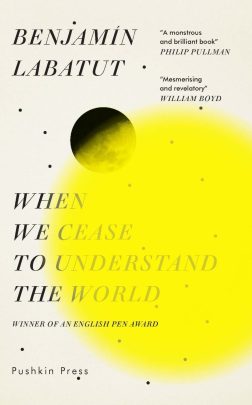
‘When We Cease to Understand the World’ by Benjamin Labatut – Our Amazing Terrible World of Science


‘When We Cease to Understand the World’ by Benjamin Labatut   (2020) – 188 pages        Translated from the Spanish by Adrian Nathan West


I try to keep up with the major happenings in this world of ours. Yet until I read ‘When We Cease to Understand the World’ I had not ever or even heard of the Haber-Bosch process, the process developed in 1907 used to extract nitrogen directly from the air.

The Haber-Bosch process is the most important chemical discovery of the twentieth century. By doubling the amount of disposable nitrogen, it provoked the demographic explosion that took the human population from 1.6 billion to 7 billion in fewer than a hundred years. Today nearly fifty percent of the nitrogen atoms in our bodies are artificially created, and more than half the world population depends on foodstuffs fertilized thanks to Haber’s invention. The modern world could not exist without “the man who pulled bread from air”, in the words of the present day.”

And I thought I was well-read.

Fritz Haber, the German Jewish scientist who invented this process, somehow escaped Nazi Germany in 1933 only to die shortly thereafter. The cyanide poison gas Zyklon which the Germans used during World War I was also produced by Haber and his team. After World War I, Zyklon was banned for use in warfare. However the Germans modified Zyklon into Zyklon B and used it in gas chambers to poison the Jewish concentration camp inmates. Many of Haber’s relatives were murdered by the Nazis in this fashion.

‘When We Cease to Understand the World’ is about those scientists and mathematicians who have shaped our modern world for better or worse. The Heisenberg Uncertainty Principle, the name, has always intrigued me although I still do not understand it. In this book we meet the odd eccentric man who developed this principle, Werner Karl Heisenberg.

In a feverish fit of delirium which lasted for days on the island of Heligoland in 1925, Heisenberg shaped his strange revelations into a publishable article.

After Niels Bohr read Heisenberg’s paper, Bohr wrote to Albert Einstein.

Heisenberg’s latest paper, soon to be published, appears rather mystifying but is certainly true and profound and will have enormous implications.”

And spare us any resort to the repulsive algebra of that cursed Wunderkind, Werner Heisenberg!” Erwin Schrödinger said to them provoking a fit of laughter among his colleagues.”

The Heisenberg Uncertainty Principle is the entire basis of quantum theory which explains how everything works at the sub-atomic level as both wave and particle. That is as much as I know.

However the stories of these strange brilliant scientists and mathematicians are intriguing. Fritz Haber, Karl Schwarzschild, Alexander Grothendieck, Werner Karl Heisenberg, Erwin Schrödinger, Albert Einstein. These are the individuals who have created our modern world.

But is this book fiction or non-fiction?

Although all of the persons in this book are real people, and their circumstances have been well-documented, there are fictional flourishes in describing some of the incidents in the lives of these physics and chemistry geniuses that go beyond what the author could possibly know and thus violate the standards of non-fiction. The book starts out almost totally factual with its portrayal of the German chemist Fritz Haber, but it uses more fictional devices as it goes along. For example, how does our author know there was a tingle running down Schrödinger’s spine?

The author himself states in the Acknowledgments that “This is a work of fiction based on real events.”

Fiction or non-fiction, it makes for fascinating reading.


Grade:    A


‘The Twilight Zone’ by Nona Fernández – “They Disappeared Him”


‘The Twilight Zone’ by Nona Fernández (2016) – 219 pages   Translated from the Spanish by Natasha Wimmer


If this novel were an actual Twilight Zone episode it would be the torture episode. Unfortunately what happened in Chile under General Pinochet is all too real. The systematic human rights violations that were committed by the military dictatorship of Chile, under General Augusto Pinochet, included gruesome acts of physical and sexual abuse, as well as psychological damage. From 1973 to 1990, Chilean armed forces, the police and all those aligned with the military junta were involved in institutionalizing fear and terror in Chile as part of Operation Condor.

Operation Condor was a United States backed and conceived campaign of political repression and state terror involving intelligence operations and assassination of opponents in South America. The governments in Argentina, Chile, Uruguay, Paraguay, Bolivia, and later Brazil signed the agreement. The United States government provided planning, coordinating, and training on torture, provided technical support, and supplied military aid to the juntas.

After the legitimate President of Chile, Salvador Allende, was ousted and killed in a United States CIA-backed coup, Pinochet persecuted leftists, socialists, and political critics. There never has been a full accounting of all the people who were murdered by the government of Chile, but the Valech Report of 2005 contains the testimony of more than 35,000 Chileans who were detained and subjected to torture.

Somehow with a national ‘No’ vote against Augusto Pinochet, he got removed from being dictator of Chile in 1990, but instead of executing or imprisoning him, the country allowed him to live out his years first as leader of the Chile military then as a Senator.

At the center of the novel ‘The Twilight Zone’ is “the man who tortured people”. Apparently in 1985 a popular Chilean magazine called Cauce published an article with the headline ‘I Tortured People’ . It was a first-person account by someone who worked at one of these military torture centers. This brought the subject of torture in Chile out in the open. In this novel, Nona Fernández imagines what may have happened to this guy after the article was published.

Toward the end of ‘The Twilight Zone’, a short history of the Augusto Pinochet Torture and Terror Regime appears to the tune of Billy Joel’s “We Didn’t Start the Fire”. It begins as follows.

Coup in Chile,

President Allende died in La Moneda,

Mass arrests,

Secret executions,

war tribunals,

The Caravan of Death travels South and North.

Victor Jara is tortured

and killed at the National Stadium.”

Later, we get these lines:

Pinochet cedes command of the army

and becomes a Senator for life in the National Assembly.

The world laughs at Chilean democracy.”

Now the United States has had its own attempted Far Right coup. What goes around, comes around.


Grade:      A