Archive for the ‘Book Reviews’ Category

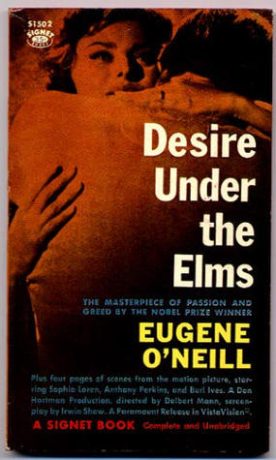
‘Desire Under the Elms’ by Eugene O’Neill – A Greek Tragedy on a New England Farm


‘Desire Under the Elms’ by Eugene O’Neill    (1923) – 70 pages
 

The reason I read the plays of Eugene O’Neill is for their psychological intensity. In such plays as ‘The Iceman Cometh’, ‘Long Day’s Journey Into Night’, ‘Moon for the Misbegotten’ and others O’Neill delves more deeply into what it is to be human than other playwrights before or since. If you get a chance, read or watch one of these plays either in the theater or on TV and you will see what I mean.

‘Desire Under the Elms’ is one of O’Neill’s earlier plays, written in 1923. O’Neill always did have a way with giving his plays enticing titles. His experimental idea for this play was, I think, a good one. He would take one of the ancient Greek tragedies, in this case Euripides’ Hippolytus and loosely update it into a United States play. ‘Desire Under the Elms’ takes place on a New England farm around the year 1850. Instead of Theseus, Hippolytus, and Phaedra, we have Ephraim, Simeon, Peter, Eden, and Abbie.

Old man Ephraim has worked two wives to death keeping his stony farm land producing, and now he’s working his three sons to death. Meanwhile Ephraim’s off to the city to find wife number three. Two of the sons, Simeon and Peter, decide to run away to California to find gold while he is gone, but youngest son Eden decides to stick around. Soon Ephraim returns with his new wife Abbie who is quite young, only in her thirties. Abbie is repulsed by old man Ephraim, and she only married Ephraim because she was in terrible financial straits. Since the young son Eden hates his father, Ephraim decides he wants to have another baby son to inherit the farm, and Abbie says she’s willing, because she wants the farm for herself. Meanwhile Abbie and Eden naturally develop a strong attraction for each other.

As you would expect in a play written by O’Neill, he captures the way these New Englanders talk perfectly. However the plot is straight out of Greek tragedy. When we people of today read these old Greek tragedies, we can handle the often disturbing and gory plots which include patricide, matricide, and even infanticide, since we are so far removed from these ancient Greek people. However ‘Desire Under the Elms’ brings one of these terrible events directly home to us here. It is almost too gruesome, overwrought, and intense for us modern playgoers, including myself , to handle.

There is a 1958 movie of ‘Desire Under the Elms’ starring Anthony Perkins, Sophia Loren, and Burl Ives, but the consensus is that this movie isn’t very good so I didn’t watch it. I believe that under the right circumstances, someone could make a powerful movie of this play.


Grade:    B+
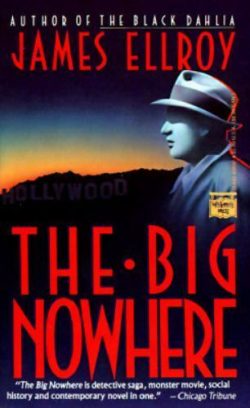


‘The Big Nowhere’ by James Ellroy – The Los Angeles Police in the 1950s


‘The Big Nowhere’ by James Ellroy      (1988) – 406 pages


Perhaps I was feeling overstuffed on high quality literature. It was time to shake up my reading big time. I liked the movie ‘L.A. Confidential’, so why not read James Ellroy?

‘The Big Nowhere’ is the second novel in Ellroy’s L. A. Quartet of police novels taking place in the 1950s. It does not matter in what order you read these novels; each novel is stand-alone.

And what did I get with reading ‘The Big Nowhere’? Non-stop sensationalism and wall-to-wall cynicism. Throw in graphic gross unpleasantness, the casual use of racist lingo and stereotypes by policemen, and a lot of general nastiness. I suppose cynicism comes with the job of police officer, but Ellroy’s take on the job is ridiculously extreme.

What outrageous or nasty thing will happen next? The first indication that ‘The Big Nowhere’ was different from most of the novels I read was in the first few pages where there is a detailed graphic description of an autopsy that is being performed on a Los Angeles murder victim. Ellroy is not satisfied with just having several grisly murders as the centerpiece of his novel. They have to be the grisliest murders ever, and we readers get a graphic nauseating description of all the grisly details.

Some of the cops are on the take, working for the crime boss Mickey Cohen who wants to replace the Hollywood labor unions with the Teamsters’ Union which is tightly under the crime boss Cohen’s control.

They come up with this scheme to have a grand jury investigate some of the current union people for Communist ties in order to discredit the current union and replace it with the Teamsters. The cops are all too happy to help out the crime boss Cohen’s scheme, and some of the cops use heavy-handed means to put pressure on the union members. The behavior of the cops is indeed disgusting.

Interspersed between the fictional characters and scenes, there are real personages from the Los Angeles of that time in the early 1950s – Howard Hughes and Mickey Cohen and Johnny Stompanato – who lend a certain unwarranted veracity to the story.

The novel does have a certain narrative energy that keeps you reading. Also I believe Ellroy is quite accurate in his description of police investigations into homicides.

However I will not be reading any more fiction by James Ellroy. I believe that each member of a police force makes a choice. They can be dishonest racist corrupt right-wing fools like Ellroy’s fictional cops or they can attempt to be professional and objective in their outlook and treat people whom they must deal with honestly and fairly. Unlike Ellroy, I believe most police strive to act as true professionals. I have respect for the police unlike Ellroy.


Grade:    C


‘Portrait of an Unknown Lady’ by Maria Gainza – An Argentine Novel about Art Fraud


‘Portrait of an Unknown Lady’ by Maria Gainza    (2018) – 177 pages                       Translated from the Spanish by Thomas Bunstad


This is a neat eloquent little Argentine novel about art fraud.

The best way for an aspiring artist to learn to paint like Renoir is to practice copying a painting by Renoir. However if someone did a superb job copying a Renoir, they might even be able to pass it off as the real thing. This is called forgery. Even better, an artist could paint a picture that looks like a Renoir but with a somewhat different subject matter. Perhaps they could pass that off as a Renoir. Renoir would be difficult even for an expert forger, but there are new names in the art world for whom it would be easier to forge their work.

Our female first person narrator works for Enriqueta Macedo who is Argentina’s preeminent expert in art authentication, a true great of the art world. Enriqueta Macedo is our narrator’s hero.

She was no longer young, but there was still the impunity of beautiful people in the way she walked. . . She didn’t need to be liked by anyone; that was her strength.”

Later our narrator finds out that Enriqueta Macedo, upright and beyond reproach, had been giving certificates of authenticity to forged works of art.

I very soon made it clear that I was at her disposal for whatever she should need; whether it be making coffee or carrying out an act of cold-blooded murder, she should do with me as she pleased. Enriqueta read me like a book.”

Later our narrator progresses on to even larger art frauds, one involving twenty-eight works by the artist known as Figari.

Throughout ‘Portrait of an Unknown Lady’, our author Maria Gainza has an over-the-top style of writing which is enjoyable to read.

I was big enough to know that the truth is always something that does not smile.”

As though truth were the be-all and end-all and not just another well-told story.”

Each of the various chapters of this novel has a different striking focus. But whatever this novel may lack in continuity it more than makes up for with its dramatic prose style.

Characters with precisely wrought histories, linear psychologies, and coherent ways of behaving are one of literature’s fallacies.”


Grade:    A-


Back to School – Fourteen Excellent School Novels


Here are the novels that take place at school, whether grade school or high school or college, which I have particularly enjoyed over the years.


Election’ by Tom Perrota (1998) – Here is a novel about high school politics wherein a history teacher decides to get involved in a school election much to his detriment. Given the circumstances and the manipulative overly ambitious girl Tracy Flick, who can blame him?

This Side of Paradise’ by F. Scott Fitzgerald (1920) – This is Fitzgerald’s first novel written when he was only twenty-three years old, and I like it better than ‘The Great Gatsby’. It is a thinly disguised version of Fitzgerald’s college days at Princeton turned into fiction.

They slipped briskly into an intimacy from which they never recovered.” 

I’m a slave to my emotions, to my likes, to my hatred of boredom, to most of my desires.”

The Prime of Miss Jean Brodie’ by Muriel Spark (1961) – What would a list of school novels be without Miss Jean Brodie in her prime?

Give me a girl at an impressionable age and she is mine for life.”

 It is impossible to persuade a man who does not disagree, but smiles.” 

The Sweet Hereafter’ by Russell Banks (1991) – This is probably the saddest novel on the list, because it begins with a school bus crash that kills fourteen of a small town’s children and cripples several others. Not only does it tell what happens in the town’s schools afterwards, but also it explores the entire town’s reactions through the points of view of four different townspeople.

The Groves of Academe’ by Mary McCarthy (1951) – There have been many satires of academic campus life, and this novel is one of the sharpest.

To be disesteemed by people you don’t have much respect for is not the worst fate.’ – Mary McCarthy, New Yorker 

I’ll Take You There’ by Joyce Carol Oates (2002) – I consider this one of the prolific lady’s best. It takes place in the 1960s with a girl being asked to join a popular sorority, then getting kicked out and falling for a troubled but brilliant grad student in one of her classes.

The individual who’d been myself the previous year… had become a stranger.’

Pnin’ by Vladimir Nabokov (1957) – ‘Pnin’ is an academic comedy about Professor Pnin who is supposedly based on Nabokov’s time teaching at Cornell University in New York. The novel has been described as ‘heartbreakingly funny’.

Caleb’s Crossing’ by Geraldine Brooks (2011) – The school scenes here are particularly memorable. The Pilgrim boy is an indifferent student more interested in other things. The Indian boy is the far superior inquisitive student and will go on to Harvard. All is seen through the eyes of the sister of the Pilgrim boy.

‘Lucky Jim’ by Kingsley Amis (1954) – Some novelists hit the jackpot on their first novel and will never again attain that success. That’s Kingsley Amis. This would go on my list as one of the funniest novels ever.

If you can’t annoy somebody, there is little point in writing.” 

The History Man’ by Malcolm Bradbury (1975) – a dark and scathing satire about the absurdities and contradictions of campus politics and life. This is the novel that killed sociology as an academic discipline

Marriage is the most advanced form of warfare in the modern world.’ .

The Getting of Wisdom’ by Henry Handel Richardson (1910) – It is one of the few classic coming-of-age stories depicting a girl becoming a woman as she attends a girls’ school.

The most sensitive, the most delicate of instruments, is the mind of a child.”

A Good School’ by Richard Yates (1978) – The story of a boy in the shabby second-rate Connecticut boys’ boarding school Dorset Academy in the 1940s much like the one Richard Yates attended himself. This is a strong novel by one of the best, if not the best, late twentieth century writers.

Wonder Boys’ by Michael Chabon (1995) – The hilarious blocked novelist Grady Tripp is also a professor, but the main reason I’m including it here is because the New York Times review by Michiko Kaukitani contains a sentence that is perfectly suited for all of us book bloggers: “It is a beguiling novel, a novel that for all its faults is never less than a pleasure to read.” This is the perfect line in order to hedge one’s bet about a novel. It is also accurate. ‘Wonder Boys’ is a modern classic.

Staggerford’ by Jon Hassler (1977) – This book humorously pins down school life in a small Minnesota town through the eyes of a teacher. Jon Hassler is a Minnesota writer who died in 2008. He is too good to be forgotten. Hassler has been described as a Minnesota Flannery O’Connor. The several novels of his that I have read, including Staggerford, have all been excellent.

I have left out so many school novels starting with ‘Small World: An Academic Romance’ by David Lodge, ‘A Separate Peace’ by John Knowles, and Galatea 2.2 by Richard Powers.

This is a reprint of an article I first published in September 21, 2014.

‘Happiness, as Such’ by Natalia Ginzburg – A Novel In Letters

‘Happiness, as Such’ by Natalia Ginzburg     (1973) – 162 pages         Translated from the Italian by Minna Zallman Proctor


I suppose now, instead of an epistolary novel, a novel-in-letters, we will get novels-in-emails, perish the thought.

I remember it now as a happy day. It’s unfortunate that we rarely recognize the happy moments while we are living them. We usually only recognize them with the distance of time.”

Adriana’s son Michele has left Italy for England, and the only way for his mother Adriana and his sisters Angelica and Viola can communicate with him is through letters. The son Michele has left behind a pregnant young woman Mara. Michele might be the father, but Mara admits she also slept with several other men who could also be the father. (After all it is 1973.)

Adriana the mother writes to her son:

I sometimes think about how little time we’ve spent together, you and me, and how little we know each other. I think how specifically we pass judgment on each other. I think you’re a moron. But I don’t know you’re a moron. Maybe you’re secretly wise.”

Later, the mother writes, ”passing judgment on the intelligence of your own children is a tricky matter”.

Still later, the mother writes her son:

People who love you may be judgmental, but their vision is clear, merciful, and severe, and they can be rough, but it’s just healthy to face clarity, severity, and mercy.”

Michele writes to his sister Angelica that he has a machine gun hidden in his old room, and his sister must dispose of it. Angelica does so, throwing it in a lake.

Natalia Ginzburg was an Italian writer who was almost forgotten, but was somehow recovered due to the popularity of that other Italian writer Elena Ferrante. One special quality that Ginzburg has is that she can be sad and funny at the same time.

Somehow I just don’t think a novel-in-emails would have quite the same thoughtfulness or impact.


Grade:   B


‘The Shades’ by Evgenia Citkowitz – An English Gothic Drama with Cell Phones


‘The Shades’ by Evgenia Citkowitz   (2018) – 197 pages


‘The Shades’ is a modern novel for which the phrase “English Gothic” could have been invented if the term hadn’t already been used for over 200 years.

In the novel, we have a family haunted by the recent sudden death of one of its members, the 17 year old daughter Rachel, in a car accident. The rest of the family, mother Catherine and father Michael and brother Rowan, nearly tear the family and themselves apart in grief and remorse as often happens to a family after a tragedy like this.

While Catherine stays in their isolated mansion Hamdean, Michael often stays in London on business. Is Catherine dealing with her daughter’s terrible death in a rational manner or is she descending into madness herself? Another blow to the family is when their son Rowan decides to move out of their house.

A few months after the accident, a young woman Kiera Martin nearly the same age as their deceased daughter mysteriously appears at the mansion. Catherine immediately takes an interest in her. Is Catherine viewing the girl as a possible replacement for her lost daughter? It turns out that Kiera had lived in the Hamdean house with her mother in the past. Yes, there is a big old house that plays a critical role in this unnerving dark story.

I have previously read Evgenia Citkowitz’ first work of fiction ‘Ether’ which is a collection of stories and a novella. I was much impressed with her handling of the strangeness and wonder of people’s real lives in these stories. Because she handles this everyday strangeness so well, Gothic fiction would seem to be a perfect fit for Citkowitz.

As it turns out, ‘The Shades’ is a modern English Gothic fiction of a higher literary order than most Gothic fictions. The individual sentences are clear, meaningful and well-written, and they held my interest throughout.

The novel reaches its dramatic open-ended conclusion (in the mansion, of course), leaving the reader wondering what really happened.


Grade:    A


‘The Seaplane on Final Approach’ by Rebecca Ruckeyser – An Alaskan Resort for the Adventurous


‘The Seaplane on Final Approach’ by Rebecca Ruckeyser (2022) – 268 pages


Lavender Island Wilderness Lodge is an Alaskan resort for those who want a more strenuous active vacation. Ocean fishing, kayaking, mountain climbing, camping, bear watching, sightseeing glaciers.

The novel ‘The Seaplane on Final Approach’ takes place at this resort which is located on its own small island, Lavender Island, near Kodiak Island in the Gulf of Alaska. I was going to say that this novel was the first novel I have read that takes place in Alaska since reading those of Jack London, but I then found out that London’s novels actually take place in the Yukon in Canada. ‘The Seaplane on Final Approach’ is thus the first novel I have read that takes place in Alaska.

There are no cars on Lavender Island. People arrive and leave the island via seaplane. When you walk on Lavender Island, it is a good idea to carry a bell with you which will usually keep the many bears there from approaching you.

Pushki was a lesser Kodiak danger, listed below earthquake and fire and bears and hypothermia and volcano and jellyfish. It wasn’t fatal, but would give you a brilliant bubbly rash if you came into contact with its sap.”

Mira is a young 18 year old woman who works at the lodge. She has a talent for baking which is much appreciated by the owners of the resort, Stu and Maureen. Mira has signed up to work for them for the summer. After a long day of strenuous activity kayaking or hiking or fishing (which is more than tremendous) or sightseeing glaciers and extremely tall mountains, the guests at the lodge can gather around the fireplace for refreshments including baked goods, or, if they like, they can relax in the hot tub.

The day of the big storm – the wind flattening the alders so that all you saw was the silver side of their leaves, seagulls blowing haplessly across the water like scraps of tissue – the Vermonters were forced to stay inside. The water was all whitecaps, and there could be no kayaking.”

As I mentioned before, Mira is quite young and she does have some wayward ideas. Mira is hung up about a guy she has barely met, Ed, who works on fishing boats. When Mira isn’t busy at the lodge, she has sexual fantasies about Ed or she’s trying to figure out the exact meaning of sleaze. I think that author Rebecca Rukeyser has done a superior job capturing the insecurities of this young person and the dynamics of an Alaskan resort. Over the summer, personal connections develop that threaten the very future of the resort.

The nice thing about Alaska is that we don’t let a little weather come between us and doing what we want to do.”


Grade:    A-


‘Mercury Pictures Presents’ by Anthony Marra – Not a Hollywood Novel


‘Mercury Pictures Presents’ by Anthony Marra    (2022)  – 408 pages


I suppose there are many other readers like me who have been waiting for a more literary Hollywood novel, and with its title this novel presents itself in its opening pages as exactly that.

What kind of masochist enjoys realism? Realism is everywhere. It stinks.”

We start with the two brothers Artie and Ned Feldman who run Mercury Pictures during the World War II years, a profitable B-movie operation in Hollywood.

The Feldman brothers are rather stock stereotypical characters, but at least the opening dialogue is witty and comedic and sharp.

I pay you to be honest.”

Honestly, you look like Elmer Fudd’s dad.”

Artie winced. “I don’t pay you to be that honest.”

Then you should pay me more.”

However the novel wanders a long way from its Hollywood opening, all the way to Mussolini’s fascist Italy to tell of the plight of Maria Lagana, a woman who later is heavily involved in making Mercury movies, and her family. ‘Mercury’ establishes its pattern very early on. First a short, sharply written Hollywood scene, then an interminable scene back in Italy where the people are suffering under the Mussolini Fascist regime. The Italian scenes suffer from an overdose of sincerity.

I found that the Italian section of the novel which goes on for at least one hundred pages dragged for me. Perhaps my problem was my expectation that this would be a Hollywood novel, not a World War II novel. We are introduced to all these minor Italian characters, and when they later appear in the novel I couldn’t remember why they were there in the first place. That only added to my frustration in reading this novel.

The only parts of the novel that I really enjoyed were the short injections of Hollywood humor usually involving Artie Feldman.

He was a harried man with eyes clouded in resignation and a misplaced faith in the magnetism of bowties. He looked like someone’s ex-husband.”

After Pearl Harbor, and the United States goes to war, Mercury Pictures makes propaganda films which are quite profitable. We have the story of Chinese actor Eddie Lu, Maria’s boyfriend. hired to play an evil Japanese spymaster for a war propaganda movie made after Pearl Harbor was bombed.

You weren’t hired to act,” the director told him bluntly. “You were hired to be hated.”

Eddie is disgusted with the movie business.

The way I see it, they’ll have me playing Jap villains until the end of the war, then it’s back to the usual devious Chinaman shit.”

Although there are some short sharp comedic interludes in ‘Mercury Pictures Presents’, I found most of the novel diffuse and meandering, and it dragged for me.


Grade:    B-


‘Dunce’, the Poems of Mary Ruefle – Explaining the Inexplicable


‘Dunce’, poems by Mary Ruefle (2019) – 96 pages


Playful and profound. That’s a good combination. And Mary Ruefle pulls it off in her poems.

Here are some rather typical lines of Mary Ruefle, from the poem “Tuna and a Play”:

Earlier I picked grasses with J.

Blue grass, pink grass, silver grass,

We each carried a bouquet.

I asked J. if she was happy to be human –

J., are you glad to be a human?

But she couldn’t say;

She walked through the grasses

for what seemed like a day,”

We can be happy as long as we don’t question it. I’m one of those who believes good poetry, actually good anything, is visceral. Reason and analytical thinking only take you so far, no farther. Beyond that, there is an intuitive gap that must be jumped by any simple means necessary, the simpler, the better.

Thus we have the poetry of Mary Ruefle. I will use her short poem “Sequoia” as an example.

I keep some moss in a bowl

Tiny unreal deer there

looking out over the hills for some water.”

What do you see when you look into a bowl of moss? Probably something that looks like green vegetation or rocks, but you probably don’t see tiny deer looking out over the hills for some water.

At the black glass lake

Alone at the edge

I stand shaking myself out

didn’t think to bring a towel.”

Standing by a lake, Mary has plenty of water, so much that she could have brought a towel.

In nearly every poem, Mary Ruefle goes that extra step beyond reason to really communicate with us. I found that I needed to be in the right frame of mind to truly appreciate these poems. Sometimes I could pick up the book, and none of the poems made much sense to me. Other times I would pick up the book and every poem hit home.

At one point in the poem “A Late Dense Work”, Mary is her harshest critic:

Do you want I should make

some rapt contemplation

descending into useless particulars?”

I must say that when I read the poems of Mary Ruefle, I get the same feeling I get when I read the poems of Robert Frost. There’s something there, and it’s often inexplicable. She starts with a bowl of moss and winds up somewhere else entirely.

‘Dunce’ is a collection of poems that one can keep coming back to and get something else each time.

‘Tis a gift to be simple.


Grade:    A


‘The Black Sheep’ by Honoré de Balzac – Two Brothers, A Cain and Abel Story


‘The Black Sheep’ (La Rabouilleuse) by Honoré de Balzac (1842) – 339 pages             Translated from the French by Donald Adamson


For me, the sign of a good historical fiction is that it captures the joys as well as the hardships of those olden times. This Balzac does in spades. Anyone can write of hardship and misery, but very few can communicate or describe joy. Perhaps the greatest example of an author communicating joy for me is ‘A Christmas Carol’ by Charles Dickens. Of course Balzac and Dickens weren’t writing historical fiction; they were writing about their own time, the post-Napoleonic Era.

‘The Black Sheep’ is one of Balzac’s collection of interlinked novels called ‘The Human Comedy’ depicting French society in the post-Napoleonic Bourbon Restoration era (1815-1830). So far I have read about 5 or 6 of these novels.

‘The Black Sheep’ is what I call a Cain and Abel novel. Two brothers, Philippe and Joseph, are very different from each other. Joseph is a would-be artist spending his time even as a boy learning artistic techniques from the monks at a nearby monastery. Philippe is a soldier rising to the level of Colonel as a young man in Napoleon’s army before Napoleon’s final defeat at Waterloo in 1815. Philippe is a dashing young man who later gets in trouble for plotting against the Bourbon Restoration with some of the other soldiers remaining from Napoleon’s army.

While Joseph labors away making little money on his art, the dashing Philippe rises to the heights of society. For Philippe, life is wine, women, and song. However Philippe is brought down by his gambling addiction. His family catches him stealing money from under a mattress from his aunt.

A frequent cause of death in a Balzac novel is the shock to the system of a woman caused by a close relative’s behavior. Twice this happens in ‘The Black Sheep’. This plot point may not be medically sound but is psychologically sound.

One thing that is always true in the novels of Honoré de Balzac is the author’s fixation with money. Balzac is always aware of the financial situation of each of his characters down to their last franc. If a son disobeys his father, the father will reduce the amount of money that son will inherit or write that son out of the will entirely. And there is always a will or bequeathing from some shoestring relative that is being disputed.

Later, when Philippe returns, no mention is made to his addiction to gambling which supposedly has been cured by his time in prison. He becomes a hero and later becomes even a lord under Charles X. The reader senses that Balzac favored the Bourbon Restoration over the Napoleonic remnants of the French Revolution, but one never knows for sure under Balzac’s embedded sarcasm.

All in all, ‘The Black Sheep’ is a rouser and a page-turner of a novel, showcasing Balzac’s storytelling capability.

The Guardian listed ‘The Black Sheep’ by Balzac at number 12 on their list of the 100 greatest novels of all time in 2015. I would place it at number 72 or 73. (Actually I have no idea where I would rank ‘The Black Sheep’. This is just my little joke making fun of ranking these 100 greatest novels.)


Grade:    A


‘The Dressmaker’ by Beryl Bainbridge – A Humorous Gothic Horror Novel


‘The Dressmaker’ by Beryl Bainbridge     (1973) – 183 pages


Bainbridge has no truck with counting your blessings or happy endings or spelling out the psychology of her disparate characters. She writes as she sees life (I think) – she knows that our struggles and hopes make comic figures of us all and sometimes, quite often, turn us nasty. I have never heard Bainbridge be pompous; I have never heard her suggest that she has ever got life right, or, indeed, that there is a right way.” – Mavis Cheek, The Guardian

I didn’t miss much in my early days of fiction reading, but I surely neglected a great fiction writer in Beryl Bainbridge. I am making up for my mistake now, and the down-to-earth novels of Beryl Bainbridge are one of my major reading pleasures today.

‘The Dressmaker’ was the first of five of her novels to be shortlisted for the Booker Prize. It captures perfectly the ambiance of English working class life during World War II in Liverpool, including “the spam fritters cooking on the stove”. The two aunts Nellie and Margo have brought up their niece Rita since she was not yet five when her mother died. Rita’s father Jack, who is a butcher and is Nellie and Margo’s brother, visits them often. Now Rita is 17.

A German bomb blast in the neighborhood had killed 12 people and “cracked the little mirror bordered in green velvet with the red roses painted on the glass” in their living room. Now young United States soldiers are flooding into Liverpool, and they are of much interest to the young women including Rita. When Rita attends an engagement party for a neighbor girl and her US beau, Rita meets her own young US soldier Ira. Aunt Nellie invites Ira to dinner to determine if his attentions with Rita are good or bad.

Not all of the Liverpudlians welcomed the US soldiers. Jack says,

There’s only three things wrong with them Yanks. They’re overpaid, oversexed, and over here.”

This is a Gothic horror novel, but I had a smile on my face the entire time I was reading it. Each of the characters is flaky in his or her own way. Much of the fun stems from that.

Nellie is the dressmaker, “and it was her instrument, the black Singer with the hand-painted flowers.” Nellie is practical minded, but she does have her rages.

At this she made a funny little gesture of contempt with her elbows, flapping them like a hen rising from its perch in alarm.”

Margo, who works in a munitions plant, is flighty.

.

Margo was a follower. She’d do what anyone wanted, provided it was silly enough. Her intentions were good, but she lacked tenacity. She was the big blaze that died down through lack of fuel.”

And the niece Rita is in love with her Yank soldier.

Every time he spoke to her, color flooded her cheeks. She wondered how anyone survived being in love, let alone get married – condemned to live forever in this state of quivering anxiety…”

Later, this story which starts out as a deadpan English working-class comedy of manners takes a very wicked turn indeed.


Grade:   A


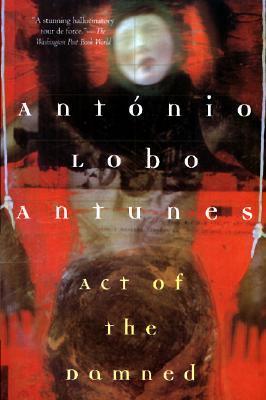
‘Act of the Damned’ by Antonio Lobo Antunes – “Hatred is Vital to Good Health.”

‘Act of the Damned’ by Antonio Lobo Antunes   (1985) – 246 pages            Translated from the Portuguese by Richard Zenith

If you have not read Antonio Lobo Antunes before, please, please, do not start with ‘Act of the Damned’. It is a novel that is quite difficult, especially for a novice, to appreciate. It is not the best place to start with Antunes.

‘Act of the Damned’, this tale of familial sin and disintegration, is Antunes’ William Faulkner novel. It is an over-the-top cacophony of voices similar to ‘The Sound and the Fury’ but even more extreme.

Perhaps my personal experience with reading William Faulkner will be instructive. As a farm boy in school, I always did fine in school classes, especially in math and science. However I was a disaster to my parents on doing the work on the farm. After high school I set off for the University of Wisconsin – Madison to major in mathematics. However my interests started turning in different directions. During my sophomore year, I decided to take a course in Contemporary Literature. This opened up a whole new world for me, but one of the novels we were to read for the course was ‘Absalom, Absalom’ by William Faulkner. Now ‘Absalom, Absalom’ is a difficult novel with some of the sentences running on for pages. I couldn’t finish that novel and dropped out of the Contemporary Literature course.

However by this time I was so intrigued by literature that I signed up for the same Contemporary Literature course the following semester. This time the assigned Faulkner novel was the much easier ‘Light in August’, and I sailed through that and through the course.

I realize that William Faulkner is rather “out” today in the world of literature, but I still consider him one of the most powerful of writers. Later, I even read ‘Absalom, Absalom’ and ‘The Sound and the Fury’ and was much moved by both.

‘Act of the Damned’ is the nasty story of one of the old rich families in Portugal who helped the dictator Antonio Salazar stay in power for 36 years. The time is the mid-1970s, just after the Carnation Revolution, and the family is plotting to flee first to Spain and then to Brazil. There are nine separate narrators in ‘Act of the Damned’, each with their own tale of decadence and twisted motivation. This dissolute family is described in all its decreptitude.

All of the characters in ‘Act of the Damned’ are contemptible except for the mongoloid daughter, the result of incest, who is now a grown woman with the mind of a small child and who at least has an excuse for her behavior.

Some of the paragraphs in ‘Act of the Damned’ run on for four pages.

It would have helped the novel to have a list of the names and a short description of each of the characters at the beginning of the novel.

‘Act of the Damned’ is a novel that if I were to read it slowly a second time, I would probably find it to be brilliant. However, I don’t feel like doing that now.

This is not the novel you should read if you are just discovering Antunes. Antonio Lobo Antunes is still definitely one of the few major figures in world literature today, and a good place to start is ‘The Land at the End of the World’.

Grade:    C+

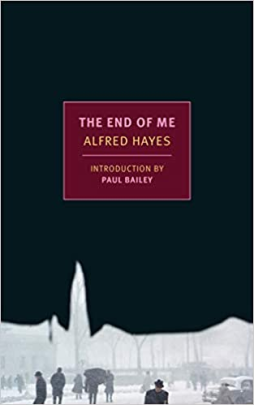
‘The End of Me’ by Alfred Hayes – His Sixties Novel


‘The End of Me’ by Alfred Hayes    (1968) – 178 pages


‘The End of Me’ is very much Alfred Hayes’ Sixties novel. In other words, it is partially about fooling around with sex. The Sixties were famous for fooling around with sex.

Alfred Hayes was a Hollywood screenwriter, and it much shows in his writing. He writes in short declarative sentences which is what I imagine screenwriters do. It is not stylish, it is a steady plain style like giving stage directions which does have its advantages but also its limitations. Alfred Hayes is the only successful Hollywood screenwriter I know of who also became a successful literary novelist as well.

‘The End of Me’ is the third novel of what they call a “loose trilogy” as the other two novels have different characters but all have a screenwriter as the central character. The other two novels in the trilogy are ‘In Love’ and ‘ My Face for the World to See’ which I have also read and reviewed.

At the beginning of this novel a husband in his fifties, a Hollywood screenwriter named Asher, accidentally catches his wife having sex with her tennis instructor.

On the floor through the window with the unheard music he reached under the soft sweater and unhooked her brassiere. I had not howled. I had run. I was finished.”

Not only Asher’s marriage but also his career as a screenwriter have crashed as he has not gotten any scripts to write lately.

Asher immediately leaves, takes a flight to New York City which was his childhood home and where he lived for thirty-five years.

In New York City, the screenwriter meets up with a young nephew Michael and his girlfriend Aurora d’Amore (which does sound like a stripper’s name). Michael takes Asher around to places from the past that have meaning to the screenwriter. Meanwhile Michael and Aurora try to get money out of Asher.

Later Michael and Aurora have a fight, and Aurora winds up in bed with Asher. Thus we have the partial redemption of a man in his fifties when he sleeps with the young woman Aurora d’Amore. Sure, sure.

The writing in ‘The End of Me’ is of the same good quality as the other two novels in the trilogy, but this is a very Sixties plot, quite outdated.


Grade:    B


‘We Had To Remove This Post’ by Hanna Bervoets – The Content Moderator


‘We Had To Remove This Post’ by Hanna Bervoets      (2022) 134 pages         Translated from the Dutch by Emma Rault


This is a novel; I say that first, because otherwise you might wrongly guess that it is non-fiction.

In the novel, Kayleigh is a content moderator for an on-line social media platform called Hexa. A content moderator screens the livestreams, videos, photos, and text-only posts that are coming into the platform. Kayleigh is telling her story to Mr. Stitic who is, I suppose, a psychiatrist.

Is it OK to leave this up on the platform? If not, why not?”

With their cell phone cameras, people can now film just about anything. Acts of self-mutilation, animal cruelty, death threats, suicides, etc. The platform has these supposedly rigid guidelines as to what can be posted and what cannot be posted. However being a content moderator is a Hell of a job, watching all this stuff.

But how on earth were you able to stand it there under those conditions?”

I expect that by now most of the reputable sites err on the side of caution as to what they will post.

While this subject of content moderation is definitely of interest, I felt that ‘We Had To Remove This Post’ did not sufficiently turn this real-life account into fiction. Much of the novel centers around the love affair of Kayleigh and her fellow worker Sigrid and the effects that their job has on their love life. Kayleigh and Sigrid often sneak up to an empty work room in their office building between their work sessions. The other characters in this novel besides Kayleigh and Sigrid did not really come alive for me and remained little more than stick figures.

At the end of this novel is a list of the selected sources which the author used as research. Two of her sources are:

The Back End of Facebook: Eight Months in Hell”

Revealed: Catastrophic Effects of Working as a Facebook Moderator”


Grade:   C


In Praise of the United States Author Theodore Dreiser


Theodore Dreiser   (1871 – 1945)


Yes, but another writer I read in high school who just knocked me out was Theodore Dreiser. I read An American Tragedy all in one weekend and couldn’t put it down – I locked myself in my room. Now that was antithetical to every other book I was reading at the time because Dreiser really had no style, but it was powerful.” – Joan Didion

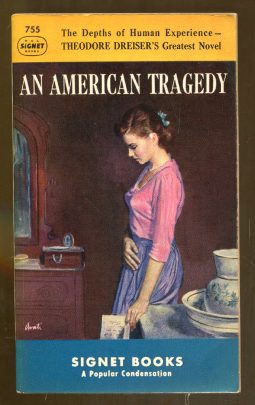
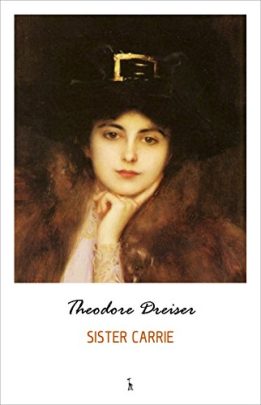
I feel pretty much the same way about Theodore Dreiser as Joan Didion did. I have read most of his work, and it is powerful. His two masterpieces are ‘An American Tragedy’ and ‘Sister Carrie’ but the novels ‘The Financier’, ‘The Titan’, and ‘Jenny Gerhardt’ are also excellent.

Theodore Dreiser was never as stylish as F. Scott Fitzgerald; Dreiser never intended to be stylish. But when it came to getting inside the heads of his characters whether it be aspiring actress Caroline Meeker in ‘Sister Carrie’ or hapless murderer Clyde Griffiths in ‘An American Tragedy’ , Dreiser far outclasses Fitzgerald and nearly every other writer this side of Fyodor Dostoevsky.

You may have accidentally encountered Theodore Dreiser’s work already. ‘An American Tragedy’ was made into the movie ‘A Place in the Sun’ in 1951 starring Elizabeth Taylor and Montgomery Cliff and Shelley Winters which is an outstanding movie that captures the essence of Dreiser’s work. In ‘An American Tragedy’, Dreiser felt a kinship with his protagonist that allowed him to portray him as a pitiable, arresting, trapped creature.

The novels of Dreiser are strong examples of the literary view called naturalism, a literary view first expounded by Emile Zola that says our lives and our character as individuals are determined by our father, our mother, the rest of our family, and the upbringing circumstances of our lives. The novelist is then an outside observer who records the effects of these factors on their characters’ lives. Thus naturalism is a step beyond realism which records what actually happens. Naturalism brings in to play those factors that cause a person to be the way he or she is.

He (Dreiser) shared with Hardy, James, and only a few other male novelists the capacity to portray women convincingly and unpatronizingly.” – Martin Seymour-Smith

‘An American Tragedy’ is rather a massive work (880 pages) so you probably will want to start with Dreiser’s other acclaimed masterpiece ‘Sister Carrie’ (464 pages). ‘Sister Carrie’ is the story of a small town girl who struggles to become a world famous actress. At its time, it was considered too sordid and almost too realistic, but the London Express said of it, “It is a cruel, merciless story, intensely clever in its realism, and one that will remain impressed in the memory of the reader for many a long day.”

Theodore Dreiser earned his place as one of the great United States fiction writers, and his novels have withstood the test of time to remain masterpieces.


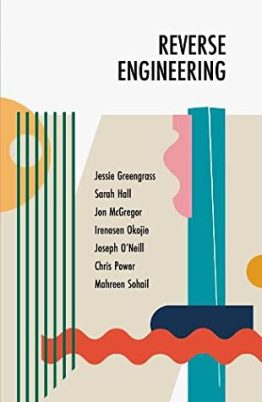
‘Reverse Engineering’ – Modern Short Stories Disassembled by their Authors


‘Reverse Engineering’, a collection of short stories by various authors  (2022) – 170 pages


I read collections of short stories by various authors for my own purpose. Usually in a collection I will find that one story which I like more than the others. In that case I will often later get a novel or an entire story collection by that author alone. Anthologies are a good way to try out a number of authors to find those few who appeal to my individual taste.

The stories in this anthology have nothing in common that I am aware of, except all examples of vivacious diversity.”

In ‘Reverse Engineering’ the editor, Tom Conaghan, has re-published one of the more acclaimed stories written by each of these authors, and then discusses that story with the author. The authors included in order of their stories are Chris Power, Sarah Hall, Jon McGregor, Mahreen Sohail, Jessie Greengrass, Irenosen Okojie, and Joseph O’Neill.

How did the author achieve the effects of their story?

All of the authors seem to agree that a story is powerful because it is not completely determined by the author ahead of time. In other words, it is not all cut and dried, not all prearranged ahead of time. This allows room for the imagination, for surprises. Perhaps a good story goes beyond its author’s original intentions.

I didn’t see it coming either. You don’t want to see it coming, if you’re the writer. Because if you don’t, neither will the reader.” – Joseph O’Neill

This is a good solid collection of short stories. I had read only one of these authors, Jon McGregor, before. I quite enjoyed the stories by Chris Power, Sarah Hall, Jon McGregor, Mahreen Sohail, and Joseph O’Neill. My favorite somewhat surprisingly was ‘Hair’ by Pakistani writer Mahreen Sohail. ‘Hair’ is about the somewhat universal way young men and young women interact, using the metaphor of cutting or not cutting your hair as the example.

She is eighteen, almost nineteen, and most of her friends are dating the men they believe they will marry. Surely a man she is here for right now in the most impossible moment of his life will want her by his side forever, the girl thinks.”

Sohail discusses her inspiration for ‘Hair’ afterwards:

I was talking to a friend about how you know when a relationship is over, how you can like someone and then they seem suddenly irritating and even physically unattractive – I thought the idea would make for a funny story, a bit ironic.”

Two of the stories in the collection I could not appreciate. The story ‘Filamo’ by Irenosen Okojie is dense and surreal, two qualities which I am not fond of in stories. I guess I prefer the stories I read to be plain-spoken and realistic. Although a quite short short story, the Jessie Greengrass story has one paragraph that is three pages long. This is another case where the density of the writing got in the way of my appreciation. This may be my problem, not the author’s.

This is the nice thing about anthologies of stories. They give the reader an opportunity to try out a variety of authors with little effort.


Grade:   B


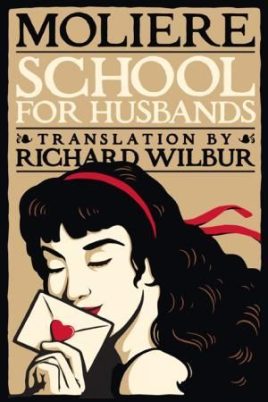
‘The School for Husbands’ by Molière – Molière and Richard Wilbur, A Match Made in Literary Heaven


‘The School for Husbands’ by Molière     (1661)  76 pages        Translated from the French by Richard Wilbur


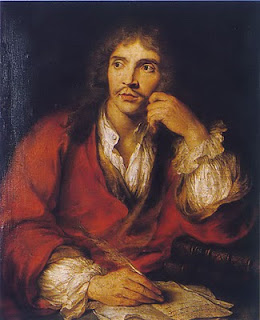
Among the great pleasures of literature (at least for me) are the translations of the plays of 17th century French playwright Molière by the poet Richard Wilbur. With Wilbur’s light touch with the verses, these plays sparkle and shine. Moliere’s playful and lusty wit are on full display.

‘The School for Husbands’ is typical Molière. A young woman outfoxes the old stern wretch who intends to be her husband and instead she finds true young love. Molière gives the plot away early in the play. It doesn’t matter. it is still great fun.

I’m one of those who think there is still a much-needed place in writing for verse, especially light verse. The verse here has the studied carelessness that makes it a delight. Here we have simple rhythmic verses that advance the story.

Here is the old wretch Sganarelle describing his treatment of his young ward Isabelle:

But my charge, be it known,

Shall live by my desires, and not her own;

She’ll dress in serge, in simple browns and grays,

And not wear black except on holidays;

Like any prudent girl, she’ll stay indoors

And occupy herself with household chores;”

His brother Ariste has a very different view of how he will treat his young ward Lèonor:

As you like, but still I say

That we should school the young in a pleasant way,

And chide them very gently when they’ve erred,

Lest virtue come to seem a hateful word,

I’ve raised Leonor by maxims such as these;

To all her young desires I’ve given consent –

of which, thank Heaven, I’ve no cause to repent.”

Ariste has some advice for Sganarelle which is of course not followed:

Farewell. Do change your views and realize

That locking up one’s wife can be unwise.”

When the man is mean and tyrannical, a woman’s main tool is deception. In Molière, it’s great fun to watch the woman and her chosen mate, Valère , outwit and deceive her overbearing fool of a husband or guardian.

For the young suitor Valère :

A woman closely watched is halfway won,

And a harsh husband or a crabbed sire

Is just what any lover should desire.”

In short, if you have hopes of Isabelle,

Her guardian’s cranky ways may serve you well.”

That Richard Wilbur takes such liberties with translating the rhymes is part of the fun.

The final lines of the play are by Lisette who is a maid to one of the young women in an aside to the audience:

D’you know any churlish husbands? If you do,

Send them to us, we’ll teach them a thing or two.”

I have read several of the ten Molière plays which Richard Wilbur has translated, and each has been a delight.


Grade:    A


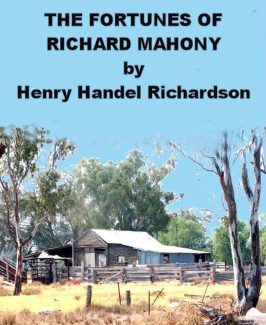
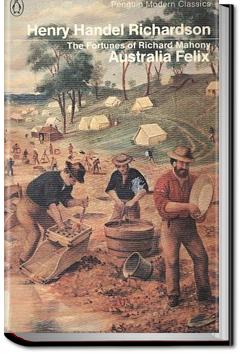
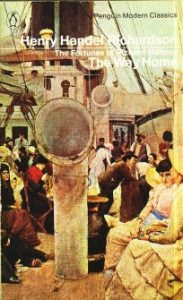
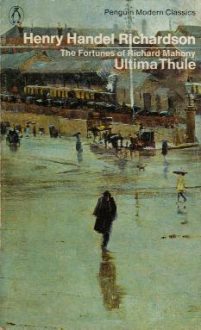
‘ The Fortunes of Richard Mahony’ by Henry Handel Richardson – The Very First Article I Wrote for the Internet

The Fortunes of Richard Mahony, a trilogy by Henry Handel Richardson   (1930)


I wrote this article in 2007 for “The Neglected Books Page”, a site that is still going strong 15 years later. This was long before I had a site of my own. I didn’t change one word for this reprint, and I still believe every word in it.

Here goes:

An Appreciation of “The Fortunes of Richard Mahony,” by Henry Handel Richardson

9 December 2007

How I do hate the ordinary sleek biography. I’d have every wart and every pimple emphasized, every murky trait or petty meanness brought out. The great writers are great enough to bear it.” These are the words of Henry Handel Richardson, a woman writer from Australia who lived from 1870 to 1946. Yes, woman writer, for like George Eliot, she wrote under a male pseudonym.

Mrs. Richardson applied this principle of exact unrelenting truth she stated above to her own fiction. Her masterpiece, completed in 1929, is ‘The Fortunes of Richard Mahony’, a trilogy of novels, which tells the story of a family living in the gold fields of frontier Australia, immigrated from Ireland, having to cope with the devastating effects of the young doctor father’s severe mental and physical deterioration from syphilis. I’ve read it is based quite closely on Mrs. Richardson’s own childhood.

I read this trilogy of novels about at the same time in my life as I was reading the great Russian novels of Tolstoy and Dostoyevsky. The trilogy, being over 900 pages, is related to these Russian novels in size. But more importantly ‘The Fortunes of Richard Mahony’, is similar to these Russian novels in its penetrating psychological realism Not often will you find a novel written almost eighty years ago that deals this honestly with no sugar coating or sentimentality with the severe mental illness of a young doctor head of a family. You can feel for the young mother and her children having to face the growing ostracism by her neighbors caused by her husband’s bizarre behavior. Of course, the doctor’s patients drop away after several of his episodes, and the family is reduced to poverty.

But not only is this family’s story courageous. Henry Handel Richardson is a writer of the very top rank. Although here in the United States she is little known beyond the movie of her novel ‘The Getting of Wisdom’ which was made by Bruce Beresford in 1978, in Australia Henry Handel Richardson is considered a classic novelist. Sentence for sentence, the writing holds your interest as only the best novels do. Here is a writer in English we can read without the filter of translation.

Later in my reading life, I discovered Patrick White, another writer from Australia, whom I consider probably the greatest novelist ever to write. I can’t help but think he must have read Henry Handel Richardson in his youth. If you like one of these writers, you will probably like the other.

Since ‘The Fortunes of Richard Mahony’ is divided into three separate novels, I would recommend a reader start with the first volume, ‘Australia Felix’, and see if you are not hooked as I was into reading the other two volumes, ‘The Way Home’ and ‘Ultima Thule’.


I must say this was not a bad start.


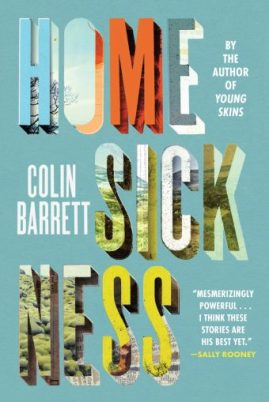
‘Homesickness’ by Colin Barrett – Humorous and Eloquent Slices of Irish Life


‘Homesickness’, stories by Colin Barrett   (2022) – 213 pages


I wanted something a little lighter and less intense than my recent reading and I found it in the collection of stories ‘Homesickness’ by Colin Barrett. What stands out is the expressiveness of many of these stories’ sentences.

In the story “The Alps”, we have this description of the three Irish Alps brothers, Rory and Eustace and the youngest Bimbo:

The Alps were not men comfortably acquainted with the carnal, but they could become as fissured and rent with yearning as anyone.”

And here’s more on the Alps brothers:

The Alps still felt young in their souls but it was the bloodshot eyes, pouched necks and capitulating hairlines of middle age that leered back at them from mirrors. They ate too much takeaway, slept fitfully, downed vats of Guinness every weekend.”

In ‘The Silver Coast’, a woman, her mother, and her friends attend a funeral luncheon in January while her husband and son dispose of the Christmas tree.

Lydia Healy? Having a tumultuous affair? A woman who when you looked at her, made you think of terms like beetling and doughty, words that were archaic and obscure and cumbersome and probably didn’t mean what you thought they meant.”

But “the world is filled with unaccountable things if you’re keeping track”.

These stories are often told in a humorous vein, but several of them have a sad twist which is something I associate with Irish fiction in general.

One characteristic which all of the stories share is that they have open-ended endings. By this I mean that you get the sense that the real story continues after the written story ends. Life goes on. This is probably more realistic than to end a story with a more conclusive final ending. I like it.

‘Homesickness’ had for me that good effect when I am looking forward and anticipating what Colin Barrett would do with his next story. It was a pleasure to skip around from story to story.


Grade:   A


‘In the Distance’ by Hernan Diaz – The Western Legend of a Man Called Hawk


‘In the Distance’ by Hernan Diaz    (2017) – 356 pages


After reading and much admiring ‘Trust’, I absolutely had to go back and read the first novel of Hernan Diaz, ‘In the Distance’.

Like ‘Trust’ which deals with the history of Wall Street, ‘In the Distance’ deals with an aspect of United States history in a personal way. ‘In the Distance’ is the personal history of one Swedish man, Hakan Soderstrom (called Hawk), during the great westward expansion of the United States during the 1850s, fueled by the gold rush in California.

But Hawk is going the opposite way; he’s going east. While he and his brother Linus were migrating from Sweden, the young man Hawk accidentally got on the wrong ship, one headed around Cape Horn and then going all the way up to California, while Linus presumably got on the right ship headed for New York City. Hawk sets out from the gold rush site near San Francisco, California to go to New York City to hook up with his brother in New York City. Sometimes he walks, sometimes he’s fortunate enough to have a horse or burro. Everyone else on the trail is headed in the opposite direction toward the west.

On his long, long lonely trek, Hawk meets up with various individuals and groups of people. Ultimately Hawk becomes a legend and is pursued by law enforcement throughout the West.

Hawk’s encounters with others along the way are sporadic. Thus ‘In the Distance’ necessarily is not as tightly plotted as ‘Trust’. For me at least, the long stretches when Hawk is alone in the desert or prairies make for less lively reading than the times when he encounters people along the way. These alone stretches were somewhat slow going for me. The prose is stately and perceptive, but I get impatient for conversation or more things to happen.

But Hawk’s encounters with others tend to be quite engaging. His encounter with the naturalist Lorimer on the Utah salt flats I found to be particularly interesting. Lorimer dissects the various small animals he finds as he travels with his crew by covered wagon. He does not catalog the differences between the various species, but instead the similarities.

Everything we do, from breathing to walking, from thinking to defecating, is governed by the cord traversing our upper body.”

All animal life is controlled and determined by that nexus of the spinal cord and the brain. Thus,

All animal life was, in essence, the same.”

Is Lorimer brilliant or a crackpot? Hawk and I were both won over to Lorimer’s way of thinking.

Knowing nature, Lorimer would often say, means learning how to be. And to achieve this, we must listen to the constant sermon of things. Our highest task is to make out the words to better partake of the ecstasy of existence.”

For me, ‘In the Distance’ is not as tightly plotted and brilliant as ‘Trust’ but is still an insightful and thought-provoking read.


Grade:   B+