Posts Tagged ‘Colm Toibin’

‘Long Island’ by Colm Toibin – A Midlife Love Triangle


‘Long Island’ by Colm Toibin   (2024) – 294 pages
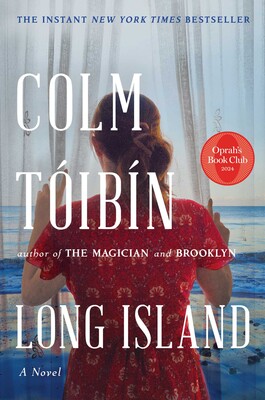
 

Several Irish fiction writers of today bring a fine sense of humor into their novels and stories. Colm Toibin is not one of them. His works are dramatic and austere. Dialogues between characters tend to be short and to the point, and his characters speak in abrupt sentences. Toibin has written novels about two acclaimed authors, Henry James (‘The Master’) and Thomas Mann (‘The Magician’), neither of whom is known for their sense of humor. Here is a conversation between one of the main characters Eilis and her son Larry in ‘Long Island’.

I need you here,” she said.

Why?”

She indicated he should follow her into the living room.

What’s this about?” he asked.

It’s about your father.”

I know all that.”

What do you know?”

I was sworn to secrecy.”

By whom?”

By everyone.”

What is the secret?”

He has a girlfriend.”

Who told you that?”

The characters here speak with a certain stilted reticence where every word becomes momentous. One wishes Toibin allowed his characters to relax a little, become more unrestrained and expansive. This conversation is short and terse, but it does reveal one of the main plot points of ‘Long Island’. A man has stopped by Eilis’ Long Island house and told her that her husband Tony has gotten his wife pregnant while working on a plumbing job for them, and this man is going to drop the baby off at Eilis and Tony’s house after it is born. Although quite happily married up to this point, Eilis wants no part of this other woman’s baby. In the meanwhile, Tony and his Italian mother make secret plans for bringing up the baby.

Eilis heads back to Enniscorthy, Ireland and her own mother. Her children will come later. Most of this novel named ‘Long Island’ takes place in Ireland.

In Enniscorthy. Eilis meets up with her old flame Jim Farrell who owns one of the local bars. Their original affair was the subject of ‘Brooklyn’, so ‘Long Island’ is somewhat of a sequel, but it can stand alone. However Jim Farrell now is in a long-standing relationship with another woman, Nancy Sheridan. Good single men over forty still looking for a wife are hard to find, and Jim Farrell is one of them.

At Nancy’s daughter Miriam’s wedding Nancy sees Jim talking to Eilis.

She had seen Eilis and Jim talking to each other in a way that appeared casual, relaxed, almost familiar. It was odd because she had presumed that any encounter between them would be strained and uneasy. But then someone distracted her, someone demanded her full attention, and she did not think about that scene again.”

If an intense drama of midlife passion is what you are looking for, you will find it in ‘Long Island’.


Grade:    B+


‘House of Names’ by Colm Toibin – How is the World Treating You, Clytemnestra?


‘House of Names’ by Colm Toibin   (2017) – 275 pages

When you are reviewing a novel based on the ancient Greek myths and legends, I suppose you needn’t worry about writing spoilers since the Greeks wrote the spoilers almost 2500 years ago.  In the case of ‘House of Names’  the shape of the narrative was taken from those three ancient Greek master playwrights  Aeschylus, Sophocles, and Euripides.  It is a novel about that famous Spartan family from the house of Atreus consisting of warrior king Agamemnon, his wife queen Clytemnestra, and their three children Iphigenia, Electra, and Orestes.

The first thing I do when I read a novel based on Greek myth is to consult Wikipedia in order to refresh myself on the original story.  For ‘House of Names’, I will relate the early part of the story which many of you will be familiar with anyway, but will not tell of any later events which constitute the last two-thirds of the novel.

Agamemnon would like to take his warriors along with his fleet of boats from Sparta to Troy to help his brother Menelaus capture back his unfaithful wife Helen who has run off to Troy with Paris.  However the fleet is stuck in Aulis due to an absence of wind.  A priest tells Agamemnon that the winds would be favorable if only he would sacrifice his daughter Iphigenia to the gods.  Agamemnon tricks his wife Clytemnestra to bring Iphigenia to Aulis by saying that he has arranged for the daughter to marry Achilles there.   Iphigenia is instead murdered, Clytemnestra is enraged, but the winds do change and Agamemnon is off to Troy with his fleet.  After ten years the Spartans led by Agamemnon are victorious in the Trojan War, and  Agamemnon returns home with his new young Trojan mistress Cassandra in tow.   By this time the enraged Clytemnestra has remarried to this slimy shady guy Aegisthus and they rule Sparta together.

I have always been impressed with this Greek story of which Clytemnestra is at the center.  What makes it so powerful for me is that it is not just a story with Evil solely on one side and Good on the other side.  The character of Clytemnestra is morally ambiguous and deep, not at all clear-cut.  We feel her righteous anger when she is tricked into bringing her daughter Iphigenia to Aulis to be sacrificed.  We are totally on her side at that point.  However when in her rage she takes up with new hubby Aegisthus and together they rule Sparta, we are less impressed with her.  Later she becomes outright villainous.

The Anger of Achilles by Jacques-Louis David, 1819

Even today in most of the stories written, the cards are still stacked with Good entirely on one side and Evil on the other.  But we know from our own experience that things are usually more unclear and confused.  The ancient Greek playwrights, especially Aeschylus, realized this pervasive inconclusiveness, and they gave the myths a depth that is missing from so many stories.  It was not until Shakespeare that someone later achieved the depth of these ancient Greek playwrights.

This is the background of the story.  However most of ‘House of Names’ is instead taken up with the story of the other two children, Electra and Orestes, after all these events have occurred.

It would be difficult for a writer to mess up this exciting plot.  I did think that Toibin’s own later story of Orestes in the wilderness dragged a little in comparison.  As always Toibin’s prose is smooth and serviceable and does not draw attention to itself which can at times be persuasive but can also be sleep inducing.

I did feel that Toibin, in telling the later story of Orestes, casts him as entirely heroic which is too simplistic compared to the stories of the ancient Greek playwrights.  The Greek playwrights would have emphasized that the sacrificial murder of his sister would also have had a deleterious effect on Orestes.   Actions have consequences.

The last three novels Colm Toibin has written have been ‘Brooklyn’, ‘The Testament of Mary’, and now ‘House of Names’.  It is difficult to imagine two novels as different as ‘Brooklyn’ and ‘House of Names’.

Overall ‘House of Names’ is a meaningful retelling of these ancient Greek myths.


Grade:   B+