Alberto Moravia
Born : November 28, 1907 Died : September 26, 1990
 I suppose by this time that Alberto Moravia has been almost forgotten. How am I going to convince you that Alberto Moravia is an author well worth reading today?
“Every true writer is like a bird; he repeats the same song, the same theme, all his life. For me, this theme as always has been revolt.” – Alberto Moravia
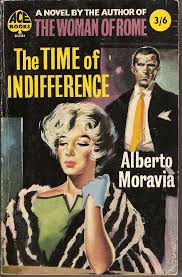
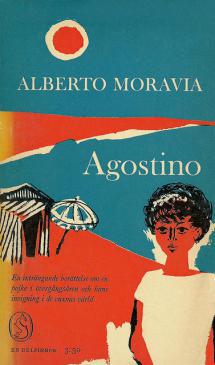
The best writers make it seem almost effortless. In plain simple language, Moravia early on was critical of the Roman middle class for its apathy to the fascism which was pervading Italy under Mussolini before World War II in his first novel ‘Time of Indifference’, written in 1929 when he was only twenty one. After that the fascists clamped down on his work and actually banned his wonderful novel ‘Agostino’ (Two Adolescents) in 1941. Moravia and his first wife Elsa Morante had to hide out from the fascists in Ciocaria in central Italy in 1943.
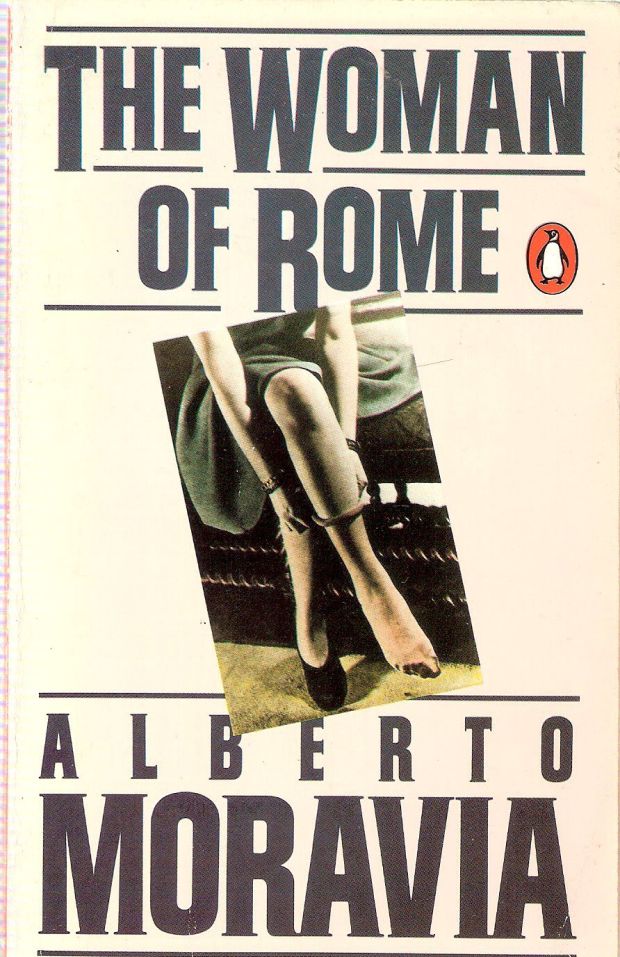 In May of 1944 with the liberation of Rome, Moravia returned. After the war, Moravia’s popularity steadily increased with such novels as ‘The Woman of Rome’ in 1947 and ‘The Conformist’ in 1951. In the Fifties and Sixties, several of his works were made into movies by the great film directors of the time including Vittorio De Sica (‘Two Women’), Jean Luc-Godard (‘Contempt’), and Bernardo Bertolucci ( ‘The Conformist’). After reading ‘Contempt’, I watched the movie which was outstanding and contains Brigitte Bardot’s best performance as an actress.
“One must try to say complicated things in a clear way,” – Alberto Moravia
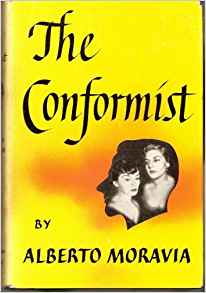 How can I characterize Moravia’s work after the war? His themes are the hypocrisy of modern life and the inability of people to find happiness in traditional ways such as love and marriage. Moravia is a realist and a sharp but sensitive narrator of contemporary life. ‘The Woman of Rome’ is the story of a young woman who becomes a prostitute. Many of his novels were put on the Roman Catholic Church index of works that Catholics were forbidden to read because of his frankness in dealing with issues relating to sex and marriage.
“This thought strengthened in me my belief that all men, without exception, deserve to be pitied, if only because they are alive.” ― Alberto Moravia, ‘The Woman of Rome
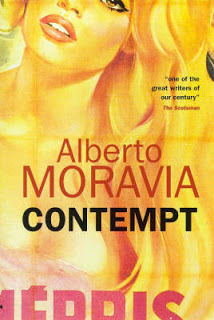 Two of his best novels have very simple titles, ‘Boredom’ and ‘Contempt’. Both of these novels would serve as a good introduction to Moravia’s work with his accurate depiction of unsettling feelings in intimate relationships.
“Alberto Moravia was always trying to get to the bottom of the human imbroglio.” – Anthony Burgess
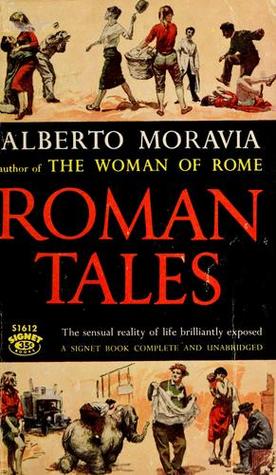
I have read almost all of Moravia’s novels and found them all to be strong and moving works. He was also an excellent short story writer as exemplified by his ‘Roman Tales’ and ‘More Roman Tales’.
“Friendship is more difficult and rarer than love, so we must save it as is.” – Alberto Moravia

 Tony's Book World
Recent Comments