‘The Lost Wife’ by Susanna Moore (2023) 172 pages
 ‘The Lost Wife’ is based closely on a real chapter in United States history, the Dakota Uprising of 1862 in Minnesota. Minnesota had become a state in 1858, and large numbers of white settlers were arriving every day. The Indians who lived there were being pushed on to reservations and were given next to nothing for the land they gave up in treaties. What little the Indians were given, they were being cheated out of by the white traders. Many of the Indians were starving to death. The Indian chief Little Crow and his men decided their only recourse was to attack the white settlements.
“They said they were at war with an enemy who cheated and starved them, and would always cheat and starve them.”
In one infamous incident which is in ‘The Lost Wife’, one of the white traders was asked to give the Indians some of his own stock. The trader replied, “If the Dakota are so hungry, they can eat grass. Or their own dung, if they prefer.” Later the body of that trader was found with clumps of grass stuffed in his mouth, and on a plank laying across his legs were scrawled the words, “Feed your own women and children grass”.
During the uprising which lasted only a couple of months, more than 500 white settlers and over 100 soldiers were killed by the Indians. No one knows how many Indians were killed.
‘The Lost Wife’ is written in the form of a diary kept by a woman named Sarah which tells of her and her children’s capture by the Indians. This woman is also based on a real person, Sarah Wakefield. Thanks to the intervention of one of the Indians, Chaska, the lives of her children and herself were spared.
The first half of ‘The Lost Wife’ tells the backstory for Sarah, her harrowing life in Rhode Island before she arrived in Minnesota. I expect this is mostly fictional. After she arrives in Minnesota the story mostly adheres to the written records for Sarah Wakefield.
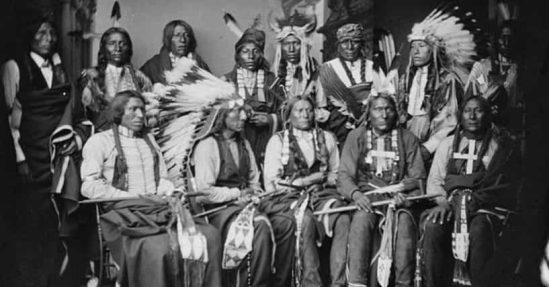
After the uprising, Little Crow and many of his followers fled to Canada. Of those who stayed, A US military commission sentenced 303 Indian men to death. Chaska was one of those sentenced to death. Despite damage to her own reputation, Sarah Wakefield spoke up for Chaska to be spared, and the authorities finally agreed, but by a possible administrative mistake Chaska was one of the 38 Indians hanged on December 26, 1962.
Basically ‘The Lost Wife’ is a solid retelling of this quite major event in United States history.
Grade: B


Recent Comments