‘Case Study’ by Graeme Macrae Burnet (2022) – 271 pages
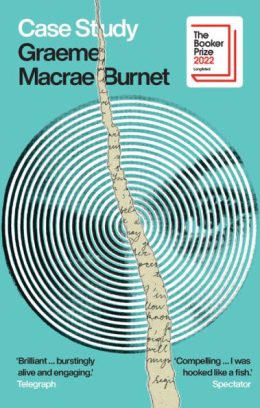 The decade of the 1960s saw many of the old established ideas of mental illness and psychiatry being challenged by younger professionals in these fields. At that time there were still large facilities called insane asylums for the severely mentally ill. Electroshock therapy, insulin shock, and lobotomy were still routine “treatments” being used on mental patients to adjust their mental states. One of the leading proponents of new less drastic and less harmful methods of dealing with the mentally ill was young Scottish psychiatrist R. D. Laing. I remember being aware of Laing and his then revolutionary ideas back during my college days in the 1960s. Laing would write:
“I was beginning to suspect that insulin and electric shocks, not to mention lobotomy and the whole environment of a psychiatric unit, were ways of destroying people and driving people crazy.”
The novel ‘Case Study’ in not about R. D. Laing but instead a fictional young Scottish psychiatrist who is also trying to make a name for himself, Arthur Collins Braithwaite.
“He (Braithwaite) declared himself to be “an untherapist”: his task was to convince people they did not need therapy; his mission was to bring down the ‘jerry-built edifice’ of psychiatry.”
Like Laing, Braithwaite has also published books suggesting new ways of dealing with the mentally ill. His books are titled ‘UnTherapy’ and ‘Kill Your Self’.
Although Dr. Braithwaite meant that second title metaphorically, one of his patients took it literally. A young woman named Veronica who was a psychiatric patient of Braithwaite has indeed killed herself. Her sister Dorothy is convinced that it was Braithwaite’s methods which caused her suicide. Dorothy decides to go under cover with an alias name of Rebecca and also become a patient of Braithwaite. She kept five notebooks detailing her experiences as a patient of Braithwaite, and these notebooks make up a large part of the novel ‘Case Study’. The rest of the novel is more or less a fictional biography of Braithwaite.
Soon this alter ego Rebecca becomes nearly a separate character from Dorothy.
I appreciated that ‘Case Study’ is about an important subject that is not often covered in the world of fiction, the treatment of mental illness. I also liked the variety of formats which make up the novel.
The main problem I had with the novel is with the five notebooks written by Dorothy/Rebecca. Much of the subject matter of these notebooks does not concern this main plot of the novel and was much less compelling for me. I found that especially the scenes of her away from the psychiatrist’s office involving just her and her acquaintances were not particularly interesting and were rather a drag on the rest of the proceedings. We also get long stretches of the conversations between Rebecca and Braithwaite that do not deal with the primary story line.
Still, the main premise of ‘Case Study’ is solid, and the variety of sources is engaging.
Grade : B


Recent Comments