‘Marrow and Bone’ by Walter Kempowski (1992) – 188 pages Translated from the German by Charlotte Collins
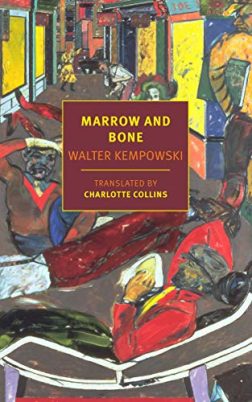 German author Walter Kempowski was punished by the Nazis as a teenager and later imprisoned for 9 years by the East German Communists. In other words, he is my kind of hero. Walter Kempowski was also an exceptional fiction writer, especially in his novel ‘All For Nothing’ about the last days of World War II in East Prussia.
‘Marrow and Bone’, originally translated as ‘Homeland’, is a very different work of fiction from that novel. Whereas ‘All For Nothing’ is a deeply imagined and intensely moving work of historical fiction, ‘Marrow and Bone’ is ironic, deadpan, and topical, taking place at nearly the time it was written in 1992. Some of the offhand observations in ‘Marrow and Bone’ are ones that the German people of that time could more readily appreciate than us outsiders. It is contemporary fiction aimed at the Germans of the time and risks being somewhat outdated now. However ‘Marrow and Bone’ still has its rewards for today’s readers.
A young Hamburg writer, Jonathan Fabrizius, decides to go on a road trip to what was formerly East Prussia and which is now part of Poland, his expenses paid for by a Japanese auto manufacturer. Both his parents lived in East Prussia, and both died near the end of World War II.
Jonathan’s girlfriend Ulla does not accompany him since she is busy with her project organizing depictions of cruelty in art for an exhibition. Besides Ulla and Jonathan have not been getting along very well anyway.
“Cruelty? The subject was infinite.”
This is an example of Kempowski’s irony. Ulla is studying cruelty throughout history but has no interest in Poland where 6 million citizens were killed as a direct result of the German Nazis. She’s too busy with her cruelty project, and she’s had enough of “that Jewish stuff”.
The author’s sarcasm is directed at the attitudes of these young Germans toward their Nazi past and even the Holocaust. These young Germans are preoccupied with all their new gadgets, and touring an old concentration camp from World War II is such a bore.
Anyway Jonathan goes on this road trip through Danzig, now Gdansk, all the way to eastern Poland to what was East Prussia. He still wants to refer to these villages and cities by their old German names rather than their new Polish names. Jonathan has the typical German disdain for the Poles.
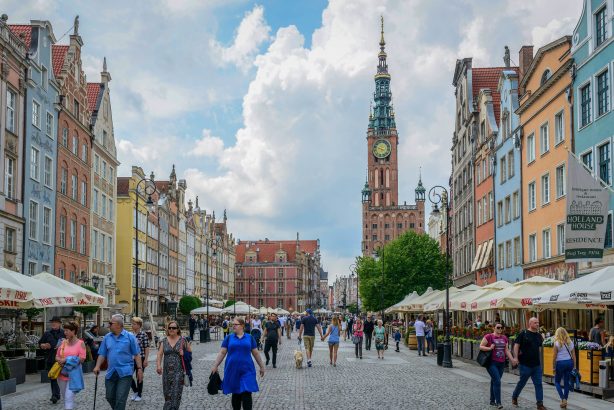
Gdansk, Poland Today
A lot of the sarcasm here went over my head. One would need to better understand the opinions and attitudes that Germans and Poles have had about each other through the ages to fully appreciate some of the subtle humor here.
Only when Jonathan visits the church where his fleeing mother died giving him birth at the end of World War II and only when he visits the Vistula Spit where his father was killed in battle is Jonathan finally moved.
My final grade for ‘Marrow and Bone’ is probably more a result of my not fully comprehending some of the ironies and sarcasm here rather than deficiencies in the novel itself.
Grade: C+


Recent Comments