‘Adam & Eve in Paradise’ by Eca de Queiros (1897) – 60 pages Translated from the Portuguese by Margaret Jull Costa
 Whenever I get a chance to read another fiction by Eca de Queiros, the author whom Jose Saramago called Portugal’s greatest novelist, I take it. That this translation was just released this year and is by that wonderful translator Margaret Jull Costa is an additional treat.
Whereas in the Bible the Garden of Eden is described as a delightful place, here, in the version by Eca de Queiros, it is at first a quite frightful place:
“All of Eden was covered in flocks of vultures and crows, because of so many animals dying of hunger and thirst, there was an abundance of rotting meat.”
What Eca de Queiros is doing is incorporating what the scientists of the 19th century had learned about early times such as dinosaurs, the discovery of fire and weapons into the Biblical story.
At first, when Adam, the Father of Mankind, leaves the other primates behind in the trees and descends to the ground, he is still a hairy beast, “a truly alarming sight”. Whereas our cousins the orangutans stayed in the trees eating fruits and vegetables, the humans came down from the trees into Paradise where they learned to kill and eat other animals and go to war against other tribes of humans. Who actually is better off?
Only later, Adam “became truly human, and thus simultaneously sublime and absurd”.
Things really change when the woman Eve, our Venerable Mother, appears. Instead of Eve being created from Adam’s rib, here she just shows up.
In this version, it is Eve who discovers fire and later figures out to first cook the raw meat that they eat and to use fire to heat their cave.
“Ah how sweet it was, that penetrating warmth, drying the cold dew from his skin and filling his craggy home with golden light from the Sun. More than that, it delighted and enchanted his eyes, sending him into fertile reveries, in which, inspired, he saw the shape of arrows, hammers with handles, curved bones for catching fish, serrated stones that cut through wood! And Adam owed those creative moments to his strong wife.”
And Eve is also the consoler-in-chief.
“It was Eve who laid the foundation stones on which Humanity was built.”
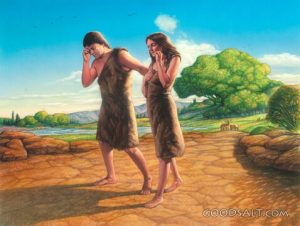
Perhaps the biggest difference between this story of the Garden of Eden and the biblical story is that the Bible version portrays Eve eating the apple from the Tree of Knowledge and then offering the apple to Adam to eat as a very negative act which introduced sin into the world. In the Eca de Queiros version this act is seen as much more positive.
“And in persuading Adam to share that Transcendental Apple, she very sweetly and slyly convinced him of the advantages, the happiness, the glory, and the power that Knowledge brings! This allegory written by the poets of Genesis reveals to us with splendid subtlety the great work that Eve carried out in those painful years in Paradise.”
At the end of this novella God tells Adam and Eve, “you are now irredeemably human”.
Grade: A




 Tony's Book World
Recent Comments