‘Wild Swims’ by Dorthe Nors, stories (2018) – 124 pages Translated from the Danish by Misha Hoekstra
 How can I best describe these stories by Dorthe Nors?
Elsewhere the style of Dorthe Nors has been described as “minimalism that is under attack from within”. Each of her stories are only a few pages long but there is a lot in each story. All are written in short blunt sentences that don’t always connect with the sentences before.
A device that Nors often uses is for some image or small event in the current daily life of her character to set off in him or her a memory from childhood or previous family life. I suppose you could call her technique “stream of consciousness”, but in Nors’ case the stream is quite choppy and rough.
These stories capture the free flow of thoughts that enter her characters’ minds. Their current situation causes them to remember specific events from the past that are only peripherally related to it. Sometimes the connection is not immediately apparent. Sometimes it is just the funny way their minds work. Nors’ stories capture some of this absurdity of our thought and memory processes. However sometimes these slant-wise memories are the most profound and meaningful of all.
 In ‘By Sydvest Station’ Karina and Lina are supposedly collecting for the Cancer Society but they are keeping the money themselves. Meanwhile Lina is thinking about the guy who dumped her and also her own cancer diagnosis.
In ‘The Freezer Chest’, the story starts out with a guy in her high school class telling his female classmate straight out “I don’t like you”.
In “Between Offices”, a guy visiting his company’s Minneapolis office sees the Mississippi River, and it spurs memories of his childhood and family.
The characters in these stories usually seem to have other things on their minds besides what they happen to be doing now.
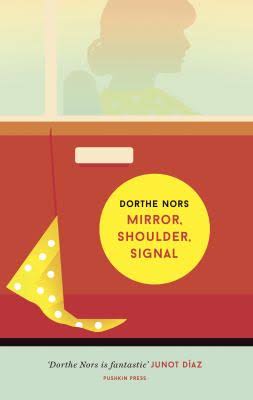
Nors’ overriding theme is her characters’ connection or lack of connection with the people around them. More often than not, Nors is most interested in the lack of connection or self-imposed isolation of her characters. Her previous novel ‘Mirror, Shoulder, Signal’ was quite humorous, but these stories are more on the discomforting side.
Sometimes the references in the stories are a little too scattered for me to make much sense of them. In that case the story may have formed an interesting word picture but remained somewhat incoherent for me.
Grade: B


Recent Comments