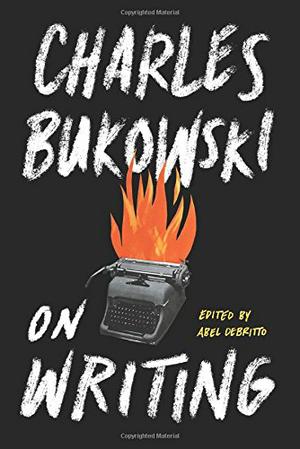
‘On Writing’ by Charles Bukowski (2015) – 214 pages – Edited by Abel DeBritto
There is still a lot of controversy about Charles Bukowski so before you read this article I want you to read Bukowski’s famous poem of writing advice called ‘So You Want to be a Writer’. This poem might change your mind about him. Then again, maybe not.
Charles Bukowski, the King of the Underground, would never be mistaken for a respectable person. Lewd, crude, and rude are three words often used to describe him.
“I don’t write so much now. I’m getting on to 33, pot-belly and creeping dementia. Sold my typewriter to go on a drunk 6 or 7 years ago and haven’t got enough non-alcoholic dollars to buy another.”
‘On Writing’ is a collection of the letters that Bukowski wrote to editors and to other writers from early in his career until the end. After some early success getting stories and poems published, he went on “a ten-year drunk” during which he sold his typewriter for alcohol and horse race money but still submitted a few poems to editors in longhand. He was persistent. Around 1960 he took a job at the post office, got another typewriter, and wrote some more poetry. Beginning in 1967 he wrote a column called “Notes From a Dirty Old Man” for an underground newspaper. In 1969 Bukowski accepted an offer from Black Sparrow Press to become a full-time writer. He was 49 years old.
“I have one of two choices – stay in the post office and go crazy … or stay out here and play at writer and starve. I have decided to starve.”
The following year he published his first novel, ‘Post Office’.
What kind of writing advice does Charles Bukowski give in ‘On Writing’? Above all, “Don’t try”. This is the actual epitaph that is written on his gravestone.
“We work too hard. We try too hard. Don’t try. Don’t work. It’s there. It’s been looking right at us, aching to kick out of the closed womb. There’s been too much direction. It’s all free, we needn’t be told. Classes? Classes are for asses. Writing a poem is as easy as beating your meat or drinking a bottle of beer.”
Here are some more good lines of advice from ‘On Writing’.
“It’s best to stay loose, work wild and easy and fail any way you want to.”
“My writing is jagged and harsh; I want it to remain that way, I don’t want it smoothed out.”
“That’s crude. I like it.”
“I’m not interested in poetry. I don’t know what interests me. Non-dullness, I suppose. Proper poetry is dead poetry even if it looks good.”
Bukowski also expresses some literary criticism of other writers in ‘On Writing’. Here is his take on the poet Conrad Aiken:
“His main fault was that he wrote too well; the silk-cotton sounds almost hid the meaning, and, of course, this is the game of most shit-poets: to appear more profound than they really are, to sneak in little delicious darts and then retire to their safe comforts.”
 Charles Bukowski’s literary heroes were Knut Hamsun, Louis-Ferdinand Celine, John Fante, and Henry Miller. Those first two were Nazi sympathizers who also wrote fiction. Lately there has been a lot of talk about whether Bukowski himself was a Nazi sympathizer. After all he was born in Germany. He may have been, but he wasn’t much interested in politics at all. His interests were elsewhere.
“Right now I’m into a great many things: screenplay, correcting somebody else’s screenplay, a short story and playing the horses and fighting with my girlfriend, and visiting my daughter, and then feeling bad and then feeling good, and all the rest of it.”
He was given to saying outrageous things just to set people off. I’ll end with one of his better lines.
“Most drunks I’ve known aren’t very interesting people. Of course, most sober people aren’t either.”


Recent Comments