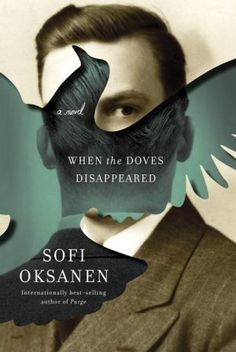
‘When the Doves Disappeared’ by Sofi Oksanen (2012) – 296 pages Translated by Lola Rogers Grade: A
In 2009, my family and I visited Tallinn, Estonia as part of a tour package which included St. Petersburg in Russia, Riga in Latvia, and Tallinn. During the three short days we spent in Tallinn, I developed a quite optimistic impression of Estonia. Finland has an informal partnership with Estonia which works to the betterment of both countries. We learned that there is a Finno-Ugric language and cultural bond between the people of the two countries. During the time there, we took a ferry to Helsinki, Finland across the Baltic Sea and back. I got the impression that Estonia was a small country which really has its act together. Even the buildings seemed more brightly painted than in the other countries.
The following interesting fact about Estonia is from Wikipedia:
In 1936, the British based Jewish newspaper The Jewish Chronicle reported that “Estonia is the only country in Eastern Europe where neither the Government nor the people practice any discrimination against Jews and where Jews are left in peace and are allowed to lead a free and unmolested life and fashion it in accord with their national and cultural principles.
‘When the Doves Disappeared’ is about two much less optimistic times for Estonia. The early 1940s were a despicable time for middle Europe with those two brutal dictators Adolf Hitler and Joseph Stalin strutting their stuff. First Russia occupied Estonia during World War II, then the Germans took over, then Russia again for 45 years. Scenes in ‘When the Doves Disappeared’ switch back and forth between the German occupation in the early 1940s to the Russian occupation in the 1960s.
The title ‘When the Doves Disappeared’ refers to the fact that the occupying Germans liked to eat doves, and thus they disappeared from the city.
The novel centers on three Estonian people who know each other well. Roland is part of the Estonian underground who helps smuggle people in danger out of the country to Finland. His cousin Edgar collaborates first with the Russians, then with the Germans, and then again with the Russians. The same people like Edgar who tried to advance themselves under the Germans behaved similarly with the Russians. The best way to advance under both the German and Russian regimes is to report to the authorities negative information on your neighbors and relatives.
The third main character is Edgar’s wife Juudit. Juudit is dissatisfied with her marriage and dates a German officer while Edgar is gone during the German occupation. However Edgar and Juudit get back together after the war and are still living together twenty years later under the Russian occupation.

Sofi Oksanen
So we get the stories of three people: the hero Roland, the collaborator Edgar, and the damaged Juudit. One particular strong thing I liked about this novel is that it tells its story with as much moral ambiguity and mystery as the events probably actually occurred. Yes, people do collaborate with the enemy, and, yes, local women do date the occupying officers. Those who try to do the right thing look like losers in the short run and perhaps even in the long run. They pay a price.
I was much impressed with the writing in ‘When the Doves Disappeared’. It clearly and methodically tells the unique story of the interactions of these three intriguing main characters. Sofi Oksanen has done a fine job of bringing these characters to life in a tale of politics and psychology that is never predictable.
Grade: A


Recent Comments