
Another fine year of fiction reading is drawing to a close. Most of the fiction here is recently published, but there are a couple of old timers mixed in.
 ‘The Son of Man’ by Jean-Baptiste Del Amo (2021) – This novel is built around a quite simple but profound premise. The human animal has struggled to survive for two million years. That long, long struggle to survive has shaped the human animals of today, not always in good ways. This is the kind of profundity that is rarely found in literature anymore.
 ‘The Most’ by Jessica Anthony (2024) – From its cover, I did not expect this novella to have such depth. Thus I was most pleasantly surprised. ‘The Most’ is a straightforward honest story of a modern-day marriage.
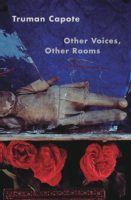 ‘Other Voices, Other Rooms’ by Truman Capote (1948) – Capote put his heart and soul and himself into this, his first novel. I find that often a writer’s first work is their finest while they are still trying hard to get first published. This is a novel of a boy growing up. After all of the new people he has met and the adventures he has had, at the end Joel looks back “at the boy he had left behind”.
 ‘The Safekeep by Yael Van der Wouden (2024) – In some novels, all of the characters are so nice, so thoughtful, that I can’t empathize or identify with them at all. Fortunately ‘The Safekeep’ does not have that problem at all. Not one of the characters here is too nice, least of all Isabel. They can all often be quite mean or nasty. The novel gets high marks for realism.
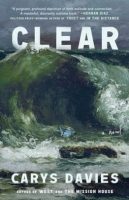 ‘Clear’ by Carys Davies (2024) – This is not your typical modern novel plot. ‘Clear’ is a quiet, although at times harrowing and at times joyful, life-affirming story of three people trying to make a go of it in this world. Exposition and explanation are kept to a minimum, as we are drawn into the plights of these three characters, John and Mary and Ivar.
 ‘Tell’ by Jonathan Buckley (2024) – Next we have an offbeat fun story of a gardener telling in casual conversation the life of his inexcusably rich boss. The rich guy’s father “had been a sperm provider with a bad personality, and that’s all.”
 ‘The Wind That Lays Waste’ by Selva Almada (2012) – In this novella, we have a classic situation. Two fathers, one a reverend and the other an auto mechanic, have opposing views on parenthood. Selva Almada does not tilt her novella either way, toward the religious or toward the pragmatic. The author maintains a balance between the two mindsets.
 ‘Day of the Oprichnik’ by Vladimir Sorokin (2006) – The year is 2028. Modern Russia has now returned to leadership by an all-powerful Czar who is referred to only as “His Majesty”. The modern Russian leader is much like Russian leaders from the past like Genghis Khan and Ivan IV, also known as Ivan the Terrible. The wicked humor in this novel is quite prescient.
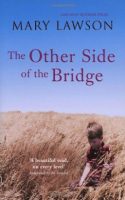 ‘The Other Side of the Bridge’ by Mary Lawson (2006) – This story of two opposite brothers living on a farm in northern Ontario, Canada was very affecting for me. The intensity of the drama here is at a Shakespearean level. Yes, modern stories, if told the right way, can be that dramatic. Author Mary Lawson is a writer whose novels I trust to create a compelling story.
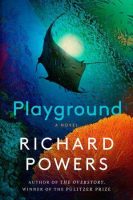 ‘Playground’ by Richard Powers (2024) – Despite a few reservations, I just cannot leave this novel off of my list. The vivid descriptions of fascinating ocean life are impossible to resist.
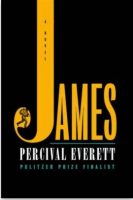 ‘James’ by Percival Everett (2024) – Here is another novel I just cannot leave off of my list. I prefer Percival Everett when he tells his own original stories rather than when he is rewriting someone else’s work, in this case Mark Twain’s Huckleberry Finn. Still it’s a strong performance.
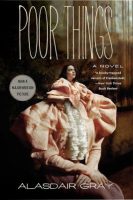 ‘Poor Things’ by Alasdair Gray (1992) – Have you noticed a certain well-edited or over-edited sameness to much of today’s fiction? Then ‘Poor Things’ may be the novel for you. This preposterous novel breaks all the rules. It is a delight, in that sense. It has been a while since I have read an amusing pastiche novel like ‘Poor Things’. They don’t make novels like this anymore.
 ‘You Are Here’ by David Nicholls (2024) – Here is the kind of light “opposites attract” novel that in some ways is much deeper than many much more serious novels. Usually a novel like this would almost always wind up with a wedding, but it is the 2020s and we are all obviously way too cool for that.
That’s all, folks. I hope you didn’t notice I added a thirteenth.
 Tony's Book World
Posted by Lisa Hill on December 11, 2024 at 2:57 AM
LOL I have a history of not counting mine properly too…
I’ve read two of yours: Tell, and Clear, and they would both make my Top Ten+ but I only includes Australian titles because Australian books never make it into international lists.
LikeLike
Posted by Anokatony on December 11, 2024 at 5:26 AM
Hi Lisa,
I’ve seen Charlotte Wood, Richard Flanagan, and Tim Winton on quite a few lists this year, so Australian writers aren’t completely shut out.
LikeLike
Posted by Lisa Hill on December 11, 2024 at 6:16 AM
Oh yes, I know, when an Australian author wins a major prize the international bookworld acknowledges it, so I shouldn’t have said ‘never’ but there are many fine Australian writers who write wonderful books that the world doesn’t notice. A book like Oblivion (2024) by Patrick Holland, for instance, is global in its contemporary concerns and he is one of the most interesting, most thoughtful writers that we have, but…
LikeLiked by 1 person
Posted by Anokatony on December 11, 2024 at 7:57 AM
I had not heard of Patrick Holland, but I read your review of ‘Oblivion’ and read the Wiki entry for Patrick Holland. I will watch out for him.
LikeLiked by 1 person