Archive for April, 2025

‘Twist’ by Colum McCann – Fixing the Glass Cables Under the Seas


‘Twist’ by Colum McCann     (2025) – 239 pages


It still astounded me that nearly all our information travels through tiny tubes at the bottom of the ocean. Billions of pulses of light carrying words and images and voices and texts and diagrams and formulas, a flow of pulsating light. In tubes made from glass.”

Fiber-optics is a fascinating little-discussed subject, the glass cables which span the world’s oceans and make the vast transfers of data on the internet possible. Satellites get all the publicity, but transmitting information via satellite is expensive and slow. Nearly all internet communication is done via fiber-optic glass cables on the bottom of the seas.

The tubes are tiny. They are hollow. They weigh nothing. All they carry is light. I can’t presume to explain this.”

Most of the novel ‘Twist’ takes place on a ship that is sent out to repair these vital glass cables.

An underwater mudslide on the Congo River gains all kinds of debris as it moves along. This debris has damaged some of these underwater glass cables. Where the Congo meets the Atlantic, the power of the river current has created a canyon so deep in the Atlantic that divers cannot go to the bottom of the ocean where the cables lay, so they must use remote devices and grappling hooks to reach the cables.

Our narrator, Anthony Fennell, is a journalist who wants to do a story about the repair of these communication cables. John Conway, the captain of this cable repair ship, allows our narrator to stay aboard the ship on this repair mission.

But just how much of this internet traffic is helpful or valuable? Much of the traffic on the world-wide web is worthless and in many cases even harmful.  Gossip, lies, conspiracy theories, character assassinations. Some sources suggest that as much as 30% to 40% of all data transferred across the internet is pornography.

In my cabin, I allowed myself to descend again into the rabbit hole of the web, a tumble into the worst part of ourselves.”

It was filthy and it was wrong and, like everyone else, I was consuming it willingly.”

Even the captain of the repair ship has very mixed opinions about the internet.

And we’re just putting the ends together so people can ruin one another… Everything gets fixed, and we all stay broken.”

Later we find out just how conflicted the captain is.

This is a fascinating subject. However the main characters in this novel, who are the repair ship captain snd the captain’s actress girlfriend Zanele and the journalist narrator, did not really come alive for this reader.


Grade:    B


‘Flesh’ by David Szalay – Scenes From a Guy’s Life


‘Flesh’ by David Szalay     (2025) – 353 pages


Ever since I read ‘All That Man Is’ in 2016, I have been keenly interested in the career of writer David Szalay. I read a couple of his earlier novels, waiting for his next big one that I was confident he would produce. Now ‘Flesh’ has arrived.

‘Flesh’ begins with the fifteen year old Istvan living with his mother in an apartment in Hungary. A neighbor lady, forty-two years old, initiates a sexual affair with the boy. Later in a confrontation with the lady’s husband, he is suspected of pushing the husband down the stairs causing her husband’s death. He spends time in a young offenders institution.

This is the first of many twists and turns in Istvan’s life. Later he volunteers for the army in the hopes of redeeming his reputation. He is sent to Iraq where he winds up with a good conduct medal.

After the army, he has an instance of self-sabotaging behavior punching a door and severely hurting his hand. Then he goes to London where he first works the door of a strip club. He then saves the life of a man who is the owner of a security agency who hires Istvan as a guard and driver based on his military experience. The meteoric rise of Istvan begins. He spends a lot of his time driving the owner’s wife around.

There are angles here about physical sexual attraction that are not at all sentimental. That is probably why the novel is called ‘Flesh’. It’s his flesh that he can’t escape, that brings him back to the human.

‘Flesh’ captures a life: the good things, the really good things, the not-so-good things, the bad things, the wonderful things, the terrible things. It is all there, this man’s life in plain unadorned language. I’m impressed. This causes me to reflect on my own life which has also contained all these things.

So much of the success and failure in this man’s life is just happenstance. Things happen. Isn’t that true for most of us?

Most writers tend to tip the scales in favor of their main protagonist or protagonists. However the writer David Szalay strives for complete objectivity rather than subjectivity. He is meticulous in describing events and doesn’t take sides. He doesn’t assign blame or praise, just states the facts of each situation even if they cause his main character to look bad. This is a refreshing somewhat unique approach to writing fiction.

‘Flesh’ is the novel I have been waiting for from this writer.


Grade:    A


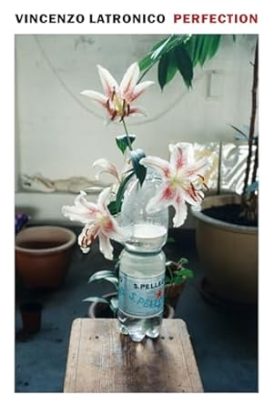
‘Perfection’ by Vincenzo Latronico – Perfect in Berlin in 2015?


‘Perfection’ by Vincenzo Latronico   (2022) – 134 pages                Translated from the Italian by Sophie Hughes


I had heard or read very little about Berlin since the Berlin Wall was torn down in 1989 and the city was reunited. ‘Perfection’ showed me that a lot has been going on in Berlin since then.

Berlin has become a hot spot for techies, young professionals who can work from their apartments and set up web sites for restaurants and other businesses that want a strong internet presence.

They were graphic designers and front-end developers and artists…”

The time of ‘Perfection’ is 2015 which was probably the height of this phenomenon as business internet sites are somewhat old hat by now.

Anna and Tom are two such young creative professionals, “a term even they found vague and jarring”. They have emigrated to Berlin from southern Europe as have many others with whom they bond. The first chapter of ‘Perfection’ describes their apartment in loving detail. Everything in the apartment is stylish and perfect from the sand-colored Berber rug to the hardwood floor boards to the luxuriant plants.

It would seem that Anna and Tom have achieved something close to perfection in their lives.

They spent all their time in plant-filled apartments and cafes with excellent WiFi. In the long run it was inevitable they would convince themselves that nothing else existed.”

However Chapter II of ‘Perfection’ begins with:

Reality didn’t always live up to the pictures.”

As Anna and Tom (The two names are always spoken together and never differentiated in the novel.) work on their two monitors in their lovely office, they sense a vague dissatisfaction.

over the course of the day, more out-of-place objects and signs of slovenliness would enter their field of vision, breaking their concentration.”

And Berlin changes. In the beginning, Berlin is “their main pastime. … In many ways it defined them much more than their profession did.” As more and more young techies arrive, Berlin goes through gentrification with resulting higher rents and higher prices throughout. Of course Anna and Tom can sublet their apartment for an exorbitant rental fee.

As Anna and Tom become more dissatisfied, they decide to sublet their apartment for six months and head to another young techie hot spot in Europe – Lisbon, Portugal where they appreciate the warmer weather.

But perhaps it is not their chosen city and occupation that are causing Anna and Tom to be dissatisfied. Perhaps Anna and Tom are just getting older.

The lengthy description of Anna and Tom’s luxurious apartment at the beginning of ‘Perfection’ would probably appeal more to New Yorker readers than to me, but after that ‘Perfection’ held my complete interest.

Besides, I did want to know what was happening in Berlin these days.


Grade:    A


The Ideal Man and the Not-At-All Ideal Man According to Jane Austen


I have been reading ‘Persuasion’ and came across the following passages which I think accurately describe the ideal man according to Jane Austen. In ‘Persuasion’, there are three of these men who might qualify to some extent, Captain Frederick Wentworth, Captain Benwick, and Anne Elliot’s cousin William Walter Elliot, Esq. However Anne’s father Sir Walter Elliot is definitely not one of Jane Austen’s ideal men, being described by Jane as “a conceited, silly father” and as quite vain about his aristocratic title of baronet.

But even Jane’s heroine in ‘Persuasion’, Anne Elliot, can make mistakes in her evaluations of the men who are around her. Here are Anne Elliot’s first thoughts on her cousin William Walter Elliot, Esq. :

[She] could not picture to herself a more agreeable or estimable man. Everything united in him; good understanding, correct opinions, knowledge of the world, and a warm heart. He had strong feelings of family-attachment and family honor, without pride or weakness; he lived with the liberality of a man of fortune, without display; he judged for himself in every essential, without defying public opinion in any point of worldly decorum. He was steady, observant, moderate, candid; never run away with by spirits or by selfishness, which fancied itself strong feeling; and yet, with a sensibility to what was amiable and lovely, and a value for all the felicities of domestic life, which characters of fancied enthusiasm and violent agitation seldom possess.”

However later Anne Elliot decides that Mr. Elliot is not the man for her:

Mr. Elliot was rational, discreet, polished, – but he was not open. There was never any burst of feeling, any warmth of indignation or delight, at the evil or good of others. This, to Anne, was a decided imperfection.”

Only near the end does Anne Elliot find out the awful truth about Mr. Elliot from her friend Mrs. Smith:

Mr. Elliot is a man without heart or conscience; a designing, wary, cold-blooded being, who thinks only of himself; who for his own interest or ease, would be guilty of any cruelty, or any treachery, that could be perpetrated without risk of his general character. He has no feeling for others. Those whom he has been the chief cause of leading into ruin, he can neglect and desert without the smallest compunction. He is totally beyond the reach of any sentiment of justice or compassion. Oh! He is black at heart, hollow and black.”

Anne Elliot’s first impressions of her cousin Mr. Elliot were badly wrong. But these three passages combined do give us an indication of the type of man who is best suited for Anne Elliot and probably Jane Austen. There is still one other man whom I mentioned above who is perfectly suited for Anne Elliot.

Later we get the opinion of Anne Elliot (with words provided by Jane Austen) on what good company is:

My idea of good company, Mr. Elliot, is the company of clever, well-informed people who have a great deal of conversation; that is what I call good company.”

Jane Austen was never shy about sharing her strong opinions, some very positive and some very negative, about her characters with her reader audience.


‘The Unfinished Harauld Hughes’ by Richard Ayoade – a Documentary on the Life of the Playwright / Screenwriter / Poet


‘The Unfinished Harauld Hughes’ by Richard Ayoade     (2024) – 182 pages


The novel ‘The Unfinished Harauld Hughes’ begins with the funeral of Harauld Hughes, noted English playwright, screenwriter, and poet. The ostensible writer of this story wants to produce a documentary on Harauld Hughes. Elsewhere this novel has been described as “Pinteresque” since apparently there are many parallels between the fictional life of Harauld Hughes and the real life of Nobel Prize-winning playwright, screenwriter, and sometime poet Harold Pinter. I did not know much about Harold Pinter until I read the Wikipedia biography of him just now,

What we get in this novel is a supposedly comic pastiche of various people relating their experiences with Harauld Hughes as the would-be documentary maker interviews them. His first wife Felicity Stoat who was an actress in his early plays and later a screen actress has already died. His second wife is Lady Lovilocke.

She the daughter of an aristocrat, and Hughes a man of mixed ancestry, his wild hair, ‘born in Wales no less’.”

The novel also includes lines from Hughes’ plays and poems. The problem with including these quoted excerpts is that the reader doesn’t know if the lines are written as intentionally bad to be part of the parody. I did not find any lines in the poems particularly meaningful.

Occasionally the humor in the novel worked for me, especially on the quite humorous asides:

The next time I saw Harauld was six years later, at a poetry recital in honor of some of the poems T. S. Eliot thought of writing, but ultimately decided not to.”

Anyhow, after Harauld Hughes left his first wife and took up with Lady Lovilocke, he gave up stage play writing and switched to the more lucrative screenwriting.

Hughes’s marriage to Stoat which lasted from 1953 until its official dissolution in 1980, was unhappy, distant, and creatively productive; his marriage to Lady Lovilocke was happy, close, and seemed to put his creativity into endless abeyance.”

A few years after hooking up with Lady Lovilocke, Hughes takes on the task of writing a screenplay for a movie called ‘O Bedlam O Bedlam!’. Apparently the movie had a ridiculous plot for a serious artist and never gets made and virtually ends Hughes’ career as a writer.

There is talk of the differences between movies and stage plays:

In the cinema all seats cost the same, more or less – sometimes it’s a few quid more for extra leg room – but one expects a comparable experience throughout the auditorium. Different story in theatre. It can sometimes cost ten times as much to sit near the front as compared to the cheap seats in the balcony. And that’s because it’s worth it.”

And there are insights into art itself:

And what else is art but an attempt at high quality thought? But even to make such an assertion is to open oneself up to the derision of imbeciles.”

Overall, I found some of the lines in the novel quite funny and some of the insights clever, but ultimately the lines from the poems and from the stage plays of Harauld Hughes did not really speak directly to me, so I failed to see why anyone would consider him a literary genius.


Grade:     B


‘Adam and Eve in Paradise’ by Eca de Queiros – A Re-Imagining of the Bible Story


‘Adam & Eve in Paradise’ by Eca de Queiros (1897) – 60 pages   Translated from the Portuguese by Margaret Jull Costa


Whenever I get a chance to read another fiction by Eca de Queiros, the author whom Jose Saramago called Portugal’s greatest novelist, I take it. That this translation was just released this year and is by that wonderful translator Margaret Jull Costa is an additional treat.

Whereas in the Bible the Garden of Eden is described as a delightful place, here, in the version by Eca de Queiros, it is at first a quite frightful place:

All of Eden was covered in flocks of vultures and crows, because of so many animals dying of hunger and thirst, there was an abundance of rotting meat.”

What Eca de Queiros is doing is incorporating what the scientists of the 19th century had learned about early times such as dinosaurs, the discovery of fire and weapons into the Biblical story.

At first, when Adam, the Father of Mankind, leaves the other primates behind in the trees and descends to the ground, he is still a hairy beast, “a truly alarming sight”. Whereas our cousins the orangutans stayed in the trees eating fruits and vegetables, the humans came down from the trees into Paradise where they learned to kill and eat other animals and go to war against other tribes of humans. Who actually is better off?

Only later, Adam “became truly human, and thus simultaneously sublime and absurd”.

Things really change when the woman Eve, our Venerable Mother, appears. Instead of Eve being created from Adam’s rib, here she just shows up.

In this version, it is Eve who discovers fire and later figures out to first cook the raw meat that they eat and to use fire to heat their cave.

Ah how sweet it was, that penetrating warmth, drying the cold dew from his skin and filling his craggy home with golden light from the Sun. More than that, it delighted and enchanted his eyes, sending him into fertile reveries, in which, inspired, he saw the shape of arrows, hammers with handles, curved bones for catching fish, serrated stones that cut through wood! And Adam owed those creative moments to his strong wife.”

And Eve is also the consoler-in-chief.

It was Eve who laid the foundation stones on which Humanity was built.”

Perhaps the biggest difference between this story of the Garden of Eden and the biblical story is that the Bible version portrays Eve eating the apple from the Tree of Knowledge and then offering the apple to Adam to eat as a very negative act which introduced sin into the world. In the Eca de Queiros version this act is seen as much more positive.

And in persuading Adam to share that Transcendental Apple, she very sweetly and slyly convinced him of the advantages, the happiness, the glory, and the power that Knowledge brings! This allegory written by the poets of Genesis reveals to us with splendid subtlety the great work that Eve carried out in those painful years in Paradise.”

At the end of this novella God tells Adam and Eve, “you are now irredeemably human”.


Grade:      A


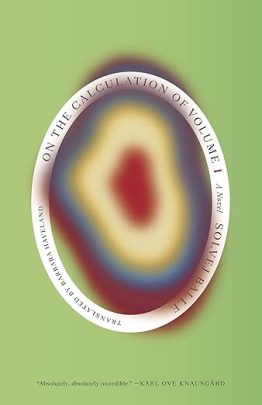
‘On the Calculation of Volume (Book 1)’ by Solvej Balle – The Groundhog Day Phenomenon


‘On the Calculation of Volume (Book 1)’ by Solvej Balle (2020) – 161 pages          Translated from the Danish by Barbara Haveland


I wondered why this somewhat clumsily titled novel had become so popular. Then I found out it was the Groundhog Day novel.

In the movie “Groundhog Day”, Bill Murray has his Groundhog Day repeat itself over and over for comedic effect. It is a movie that is difficult not to like.

In ‘Groundhog Day’, the repeats of the day are played for laughs, for comedy. In the novel ‘On the Calculation of Volume I’, Tara Selter is very serious about the many repetitions of her day.

Wife and husband Tara and Thomas Selter run their antiquarian book buying and reselling business as T & T Selter. They specialize in 18th century illustrated works. On a trip to Paris to buy more old books, Tara burns her hand on an old space heater. After that she finds to her horror that she is stuck in that same day, November 18.

…everything that was going on around me was happening exactly as it had the day before, it was a replica of the day I already had stored in my memory.”

Somehow she is able to change the pattern of that day enough so that she can return home to find that her husband Thomas is not stuck in this same day. For him and everyone else the days keep advancing as always.

There are lengthy descriptions of Tara’s thoughts on her repeating day which did not, for me, make for interesting reading.

We could discern no clear pattern and this bothered me. I wanted to find a pattern and break it but instead we discovered too many unknowns for us to comprehend the mechanics of the day. There were gray areas and unanswered questions.”

My basic problem with this phenomenon is that her husband Thomas and the rest of the world are moving on, while Tara is staying in the same day. So for Tara, Thomas is doing the same things he did on her first November 18, However Thomas himself has different events and experiences in each new day that he has. How can Thomas be in two places at the same time?

That’s what we encountered: patterns and inconsistencies, two worlds trying to merge.”

And what about season changes. How can the seasons not change for one person while the seasons change for everybody else?

It seems to me that time can only stand still for everybody or not at all. This day repeating itself for only one person makes no sense to me.

Since the whole concept of a day repeating itself over and over for only one person while the rest of the world continues to move on from new day to new day did not make sense to me, Tara’s thoughts about this phenomenon seemed pointless and tiresome, and these thoughts were almost the entire novel.

I will not be reading the other six volumes that Solvej Balle plans to publish about this repeating day of Tara Selter.


Grade:     C-