Archive for March, 2025

‘Eurotrash’ by Christian Kracht – A Road Trip by Christian and His Mother


‘Eurotrash’ by Christian Kracht     (2024) – 190 pages      Translated from the German by Daniel Bowles


Autofiction is fiction that blends details of the author’s own life into a story.

In ‘Eurotrash’, Christian Kracht picks up his mother from her home in Zurich, Switzerland and they travel around Switzerland, mainly by taxi. His mother is in her eighties, and although she is now living on her own with the help of a housekeeper, she had previously been committed to the Winterthur Psychiatric Hospital where she spent her eightieth birthday.

She drank from her cup and looked at me. Her eyes were the eyes of my mother and at the same time the eyes of an insane old woman.”

The Christian Kracht in the novel does not have a good opinion of his own family. His grandfather was a Nazi SS man during the Hitler reign and was unrepentant after the war. His mother had been locked up in an insane asylum. His father liked to show off to others his wealth and power.

And I wondered whether my entire family fed off the humiliation of others, whether they defined themselves through an elitism that was merely the air of a middle class wanting to ascend to the upper class, afraid of nothing more than its own proletarian background.”

If I were to choose one word to describe Christian’s attitude in ‘Eurotrash’, it would be “mordant”. He has a wry somewhat caustic view of his family and himself.

My goodness, this life, what a perfidious, sordid, miserable melodrama it was.”

And Christian also has a cynical attitude toward Switzerland itself.

This country, Switzerland that is, didn’t even exist until the English invented it at the end of the eighteenth century, she had said, until it was captured on postcards, as a panorama. as a sight, as a view…that’s when the Swiss saw how easily money could be made from their pleasant vistas, which until then they hadn’t found to be anything special, but if foreigners wanted to pay for them, why not.”

And then there is Christian’s sardonic view of the places he and his mother travel to on their road trip.

I had always hated Geneva, that dreadful, phony, ice-cold Protestant city, full of poseurs and braggarts and bean counters. Calvingrad is what we’d always called Geneva. I preferred Zurich a hundred thousand times more.”

But as the road trip progresses, a warmth develops between this son and this old woman, his mother, with all her obvious mental and physical problems.

I have had my problems reading autofiction in the past. It is not one of my favorite genres. But ‘Eurotrash’ is an exceptionally good autofiction, perhaps because its ambitions aren’t so high, just a road trip with a son and his mother.


Grade:    A


Selected Stories by John O’Hara – Slices of Life from the Not-So-Recent Past


Selected Stories by John O’Hara – 303 pages


Which renowned writers will remain read after they are gone, and which of these writers will fall by the wayside?

Version 1.0.0

John O’Hara published around 247 stories in The New Yorker from 1928 to 1967. This is still a record for the magazine. O’Hara’s stories definitely captured their era and were modern and up-to-date back then, but how do they hold up as lasting literature?

To find out what life in the United States was really like in the 1930s and the 1940s and the 1950s, the stories of John O’Hara are as good a place as any to go. His stories go way back in the Prohibition era and continue up to the Kennedy era. O’Hara was especially strong on dialogue. He captured the way people talked back then with a great amount of accuracy.

Here is an example of O’Hara’s dialogue from the story “The Moccasins”:

He walked with them to the car. “Tracy, I would like to say one thing to your sister.”

My guess is you’ve said too much already. I probably ought to punch you in the nose, if I knew what this was all about.”

You don’t, and anyway don’t try it,” said Doc. He spoke to Mary. “Just remember one thing. You don’t have to walk through moccasins for it.”

What’s he talking about?” said Jack?

Who cares?” said Mary.

In the story “The Doctor’s Son’, there is a diphtheria epidemic. The doctor goes to the various bars – Irish, Hungarian, and Polish – to treat sick patients who all come to the bar to see the doctor. Diphtheria must have been a severe communicable illness that people died from, but that wouldn’t stop the bar owner from passing a bottle around to both the sick patients and the well people at the bar to drink from. We also get the derogatory names they used for other groups of people besides themselves.

There are the mild jokes of the time:

You know that joke: we can’t afford a Ford.”

Most of these stories are ten or less pages long. That is one of the qualities I like about these stories. O’Hara just presents the scenes as are without a lot of preliminary explanation or ending summary. We go quickly in and out of these people’s situations without a lot of messing around.

John O’Hara captured American life at the time. He wrote with a great deal of verisimilitude about the way people talked and acted in his era. Is that enough? Perhaps, perhaps not.


Grade:    B+


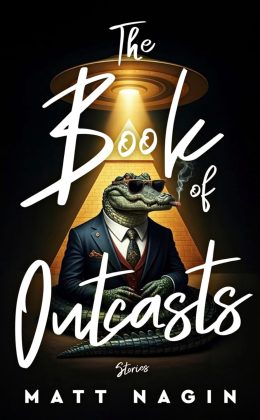
‘The Book of Outcasts’ by Matt Nagin – Wild Stories for This Demented Time


‘The Book of Outcasts’, stories by Matt Nagin   (2025) – 243 pages


Outcasts. The outcasts in these stories include a severe gambling addict, a serial wandering husband, a shopaholic, several loan deadbeats, a mommy’s boy, a failure (One story is simply entitled “The Failure”), and a pair of evil twins on the internet named Nagin.

But always look on the bright side. Even the most gruesome stories here, even the one about being eaten alive by twenty crocodiles, are told with a comical mischievous undertone. It is the direct straightforward quality of the writing that make these stories work, as well as the undercurrent of dark humor which is always there.

In the story “Valley of Darkness”, gambling addict Sam is so desperate for money that he sells his baby daughter Lucy to a Baby Pawn Shop in order to get money to gamble. At the Baby Pawn Shop, the babies are kept in cages, and if Sam doesn’t pay the money with steep interest back within six months, his baby daughter will be sold to the highest bidder. Outcasts, indeed.

In the doppelganger story, “Nagin vs. Nagin”, our “hero” justifies himself:

All would have been lost had I not broken into this house, stolen his manuscript, slept with his wife and beaten him to the punchline—a necessary evil—a matter of survival in a cruel, barbarous world. It was war. And in war a man had to do what was necessary to achieve victory!”

All of the stories in this collection are imaginative, well written and a pleasure to read. Perhaps my favorite story is “Get Your Implant”. In this story, many of the people around James are getting AI (Artificial Intelligence) implants in their brains.

Face it James. I’m a better version of myself. You’ll be one too once you get your implant.”

People who only had their lame human brains were useless and put in detention camps. James refuses to get an implant and joins Cerebral Freedom Fighters.

Why would employers hire someone without memory of everything in human history? Without the capacity to execute lightning quick decisions with perfect reliability? Without an intelligence no mortal can match? Why accept that liability? I sat there looking at my hands, feeling like an alien.”

Considering the direction things are headed now, this is an all too likely scenario. No one with an AI implant has any empathy or concern for anyone else besides themselves; in other words, Trump World.

There is a wild energy surging through these stories, and despite the desperate extreme circumstances and the characters’ outlandish frenetic actions, the stories are playful and ring true as a bell.


Grade:    A


‘Three Days in June’ by Anne Tyler – The Ex-Husband Returns


‘Three Days in June’ by Anne Tyler       (2025) – 176 pages

Anne Tyler is one of the main writers who got me attracted to fiction in the first place back in the early 1970s. After I read a couple of her novels, I went back and read everything she had written up to that point. Now, every few years, I return to one of her delightfully realistic novels, and I still get the same thrill I had gotten from them in the beginning.

As far as I know, every Anne Tyler novel takes place in Baltimore. Baltimore has become rather a mythical place for us readers where the residents are rather oddball but usually quite engaging.

How we handle day-to-day life as we go through it, with its disappointments and its pleasures, that’s all I want to know,” – Anne Tyler, a Guardian interview

In ‘Three Days in June’, the daughter of Gail Baines is getting married in a very traditional wedding after the pandemic. I’m not sure that recent weddings have returned to the traditional form. The “three days” in the title are the day before the wedding, the day of the wedding, and the day after the wedding. Each day gets one chapter.

Gail’s ex-husband Max comes up for the wedding and stays with Gail. This would be unusual except in an Anne Tyler novel. Max is one of Tyler’s typical oddball-but-likeable male characters, scruffy and hapless but good-hearted. He brings a stray animal shelter kitten with him. Max is “the kind of man who would never ever in his life knowingly harm another person”.

What is exceptional about ‘Three Days in June’ for an Anne Tyler novel is that its theme is marriage infidelity, not Max’s but Gail’s.

Why had I, who truly loved my husband – at least in the on-again-off-again, maybe-maybe-not, semi-happy way of just about any married woman – broken apart my whole world for a man I never really knew? But maybe that was just it: I hadn’t known him. There are times when that can be the strongest draw of all.”

As always, Anne Tyler brings a light touch to this story of marital unfaithfulness which is probably why she is underrated. Anne Tyler is never in her writing obscure. All of her fictional situations are as clear as a bell.

Perhaps the best style of all is no self-conscious style.


Grade:   A


‘To Save the Man’ by John Sayles – A Misguided School for Native American Students


‘To Save the Man’ by John Sayles   (2025) – 320 pages


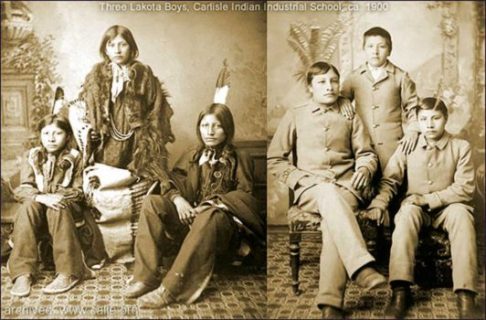
Much of the historical novel ‘To Save the Man’ takes place at the Carlisle Indian Industrial School in Carlisle, Pennsylvania. This school actually did exist and had all Native American students from its founding in 1879 until its closing in 1918.

The student body was made up of young high school age boy and girl students from native American tribes from across the United States. Each tribe spoke their own language and were very different from each other, differences the white people did not recognize. Lakota, Pawnee, Blackfoot, Shawnee, Pueblo, Kiowa, Comanche, Ojibwe, Navajo, Apache, Sioux, Dakotah, Choctaw, Lakota, Ottawa, Potawaami, Mohawk, Oglala, Cheyenne, Arapaho.

This military-like school was founded by Captain Richard Henry Pratt. Perhaps he started out with good intentions, to assimilate these young native Americans into the dominant white society by training them. However the methods at the school were heavy-handed. The first thing they did at the school was cut the boys’ hair off so they looked more like white boys. They were made to look like white students as much as possible. The Carlisle students were punished if they spoke their native language. Captain Pratt’s motto for the school was “To save the man, we must kill the Indian”.

This novel traces the day-to-day lives of a few of these native American students at the school as they live in the dorms and attend their classes. The students are given new names to replace their tribal names. There is Antoine, Clarence, Grace, Trouble (short for Make-Trouble-in-Front), Wilma, and Lizzie.

The novel takes place in 1890 which was a momentous year in native American history. Cheated by white people out of most of their land, the tribes were forced on to reservations where they were forced to depend on the United States government for their food which usually arrived late and was of extremely poor quality. Their people were going hungry, nearly starving. Some of the white people (including L. Frank Baum who wrote ‘The Wizard of Oz’) called for “the total annihilation of the remaining Indians”.

Meanwhile, some of the tribes were practicing the Ghost Dance which they believed would reunite the living with spirits of the dead, bring back the buffalo, end white westward expansion, and bring peace, prosperity, and unity to Native American peoples.

Though we are few in number now, soon the ghosts of all our people who ever walked the earth will join us, driving before them herds of buffalo and fine horse -”

These Ghost Dances made the whites, who had most of the guns, extremely nervous.

When the Carlisle student Clarence hears that his old tribal leader Sitting Bull has been murdered by white people, he hops on a train which takes him back to his reservation at Wounded Knee. South Dakota. By the time Clarence gets there the Wounded Knee Massacre has occurred in which nearly 300 Lakota people were killed by soldiers of the United States army. Also 25 United States soldiers were killed.

Meanwhile at the Carlisle school, an epidemic of the white people’s disease scarlet fever has begun.

‘To Save the Man’ is the dramatic re-telling of these critical events in United States history – the Carlisle School, the Ghost Dances, and the Wounded Knee Massacre. I have been an admirer of the fiction of John Sayles from the beginning. John Sayles is also an excellent independent movie director of such movies as ‘The Return of the Secaucus 7’, ‘Matewan’, and ‘Lone Star’. In both his fiction and his movies, Sayles dramatizes often little-known incidents or situations in United States history.

The terrible treatment of our native American tribes is another shameful episode in United States history.


Grade:    A