‘The Daughter of Time’ by Josephine Tey (1951) – 206 pages
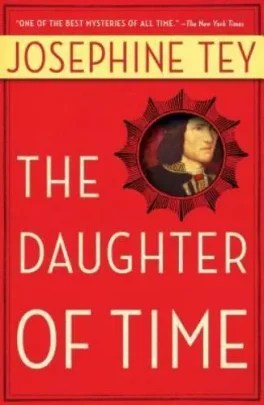 Here is a detective book like no other. Inspector Alan Grant of Scotland Yard hurt his back and leg, is laid up in the hospital, and is thoroughly bored. He needs something to occupy his mind. His friend brings some pictures of historical figures to perhaps get him interested in English history.
Inspector Grant becomes intrigued with Richard III who was King of England from 1483 to 1485 and who is considered one of the most monstrous villains of English history. Richard III was said to be a venomous hunchback who had his two child nephews locked up in the Tower of London and murdered so that he could become King himself. Even William Shakespeare mentions the child “Princes in the Tower” murder charge against Richard III in his play ‘Richard III’. Inspector Grant decides to look into this child homicide case using the detective techniques he uses on Scotland Yard cases.
“Give me research. After all, the truth of anything at all doesn’t lie in someone’s account of it. It lies in all the small facts of the time. Advertisements in a paper, the sale of a house, the price of a ring.”
First Inspector Grant reads the available literature regarding the murders, most notably “History of Richard the Third” by Thomas More which Shakespeare used as his source for his plays. The Inspector quickly becomes disenchanted with More’s writing considering that More was only five years old when the murders supposedly took place and that Thomas More was an apologist for Henry VII, the first Tudor King, who took the English throne away from Richard III after Richard III was killed in battle.
“As far as he was concerned there was nothing so uncritical or so damn silly as your Great Mind. As far as he, Alan Grant, was concerned, Thomas More was washed out, cancelled, deleted; and he, Alan Grant was beginning from scratch again tomorrow morning.”
Inspector Grant brings in a young assistant who has full access to the British Museum to help him with the case.
“P.S., it’s an odd thing but when you tell someone the true facts of a mythical tale, they are indignant not with the teller but with you. They don’t want to have their ideas upset.”
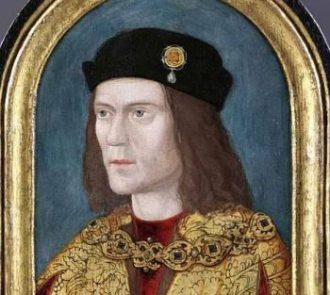
Richard III
This is a sharp, fun story written with exuberance. ‘The Daughter of Time’ is mercifully free of anti-Semitic remarks which are known to appear in some of Josephine Tey’s crime novels written in the 1930s.
I was impressed with this combination of a detective novel and an historical novel. It is a quite unique approach to somewhat ancient history.
Grade: A
 Tony's Book World
Posted by Fi B on June 27, 2024 at 4:41 PM
Quote of the day “Truth is the daughter of time, not authority”. Francis Bacon, I believe. Great book, good review Tony
LikeLiked by 1 person
Posted by Anokatony on June 27, 2024 at 4:46 PM
Hi Fi B,
Thank You, I am going to use that quote as my “Quote of the Day”.
LikeLike
Posted by Janakay | YouMightAsWellRead on June 27, 2024 at 9:02 PM
Enjoyed the review, Tony! It’s been some time since I read this, but I do remember loving it very much — it’s just so clever and so well written. It launched me on a real binge of history reading about the period (actually, I was reading quite a lot of European history in those days) as I wanted to form my own opinion regarding Richard III’s guilt (or lack thereof). I don’t know the conclusions of current scholarship, but as I recall Tey’s research was for the time at least quite sound.
LikeLiked by 1 person
Posted by Anokatony on June 27, 2024 at 9:20 PM
Hi Janakay,
Josephine Tey comes to the conclusion, which seems warranted, that Richard III did not kill his nephews, but she doesn’t speculate if someone else, perhaps Henry VII or his men, killed them or whether or not they were killed at all.
I guess you can’t always rely on William Shakespeare, the Tudor apologist, for accurate history.
LikeLiked by 1 person
Posted by Janakay | YouMightAsWellRead on June 27, 2024 at 11:38 PM
I agree! I think Will was in it for a good drama, not historical accuracy!
LikeLiked by 1 person