‘You Dreamed of Empires’ by Alvaro Enrigue (2022) – 219 pages Translated from the Spanish by Natasha Wimmer
 ‘Sudden Death’ was a highly successful tour de force of a novel by Alvaro Enrigue, and now Alvaro Enrigue returns once again to the 16th century with ‘You Dreamed of Empires’.
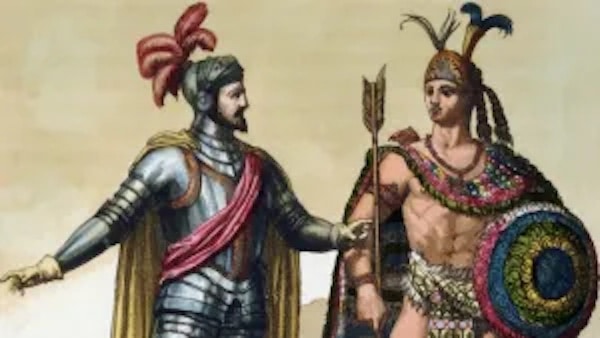
This time we are in Tenoxtitlan which was the name for the Aztec ruling courts in what is now Mexico City. The year is 1519, and the Spaniard adventurer Cortés and his men have arrived in Tenoxtitlan. They are expecting to meet Moctezuma (often spelled Montezuma) and his court. Moctezuma is the “huey tlanoani”, the supreme leader, of the Aztec people.
Tlilpotonqui is the “cihuacoatl” (mayor) of the city of Tenoxtitlan and second in line for the imperial throne. Moctezuma’s son Cuitlahuac is next in line. The Spaniards are named Caxtilteca by the Aztecs. Hernán Cortés is called El Malinche.
The author Enrigue plays this early meeting of Moctezuma and Cortés for a wild black comedy farce. Of course no one knows what actually transpired between these two men in 1519, so Enrigue is free to imagine, and that he surely does. Moctezuma wanders his palace “cooked to the gills” on magic mushrooms and eating grasshopper tacos with avocado sauce. One room in the palace is dedicated solely to the 40,000 skulls of the human sacrifices which Moctezuma can order with just the nod of his head. The Aztec practice of sacrificing humans to their gods in particularly brutal ways often comes up for some dark broad humor in the novel.
“The festivals with their severed heads, dismembered bodies, and rivers of blood flowing down temple steps were disgusting, but they also brought feasting, music, dances, intoxication.”
Whereas ‘Sudden Death’ had only the two main characters playing a relatively simple tennis match, ‘You Dreamed of Empire’ has a larger set of characters and a much more convoluted situation. The story becomes even more complicated for the reader with the lengthy unfamiliar Aztec names and the untranslated Aztec words.
There is a guide to the characters at the beginning of the novel, and I would suggest that the reader refer to it as often as necessary. I also believe it would have been useful to have a short index of the several ancient Aztec words that are used and their meanings, although the author Alvaro Enrigue himself writes in a prefatory note “Let the meanings reveal themselves: the brain likes to learn things, and we’re wired to register new words.“ However, for myself, a short dictionary of the ancient Aztec terms used would have been very helpful.
Grade : B-
 Tony's Book World