‘Secondhand Time’ by Svetlana Alexievich (2012) – 470 pages Translated from the Russian by Bela Shayevich
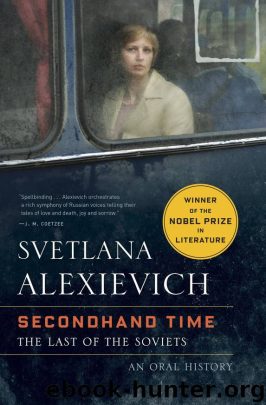 In the early 1990s, the Gorbachev years, there was great hope in Russia for “Perestroika”, the restructuring of the economic and political system of the country. Russian leaders talked of bringing in capitalism, but there was no foundation for capitalism in the Russian way of life.
“Today, no one has time for feelings, they’re all out making money. The discovery of money hit us like an atom bomb.”
Instead they wound up with the Russian oligarchs.
“The Russian oligarchs aren’t capitalists, they’re just thieves.”
“so-called businessmen – thieves and swindlers – sitting there munching, chomping, drinking”
“The bad guys took over, and the smart ones became the idiots. We’d built it all, then handed it over to the gangsters – that’s what happened right?”
The author Svetlana Alexievich or at least one of her interviewees apparently believes that the great promise of Gorbachev was that he was going to fix socialism, not replace it with a spurious thieving capitalism.
“They felt that they’d been lied to, that no one had told them that there was going to be capitalism; they thought that socialism was just going to get fixed.”
One problem with an oral history in a country like Russia is that the interviewees are still afraid after all these years to criticize the murderous Stalin and today they don’t dare criticize Putin, so instead they complain about Gorbachev and Yeltsin, safe targets.
“I was listening to their endless grumbling: Gorbochev is all talk. . .Yeltsin is an alcoholic. . . The people are just cattle. . . How many times have I heard these things already? A thousand times.”
‘Secondhand Time’ was written in 2012. By then, it probably was already dangerous to criticize Putin. If an oral history were done in Russia today, would any interviewee dare say an unkind word about Vladimir Putin?
“I only liked perestroika when it first started. If someone had told us back then that a KGB lieutenant-colonel would end up as President,…”
Is this capitalism? Or organized crime, these Russian oligarchs? Somehow current Russian leader Vladimir Putin managed during this time to parley himself into the richest man on Earth.
However Vladimir Putin does not tolerate dissent or anyone criticizing him. In ‘Second-Hand Time’, Putin is rarely mentioned at all, even though he had been in power since 1999.
“If half of the country is dreaming of Stalin, he’s bound to materialize, you can be sure of it.”
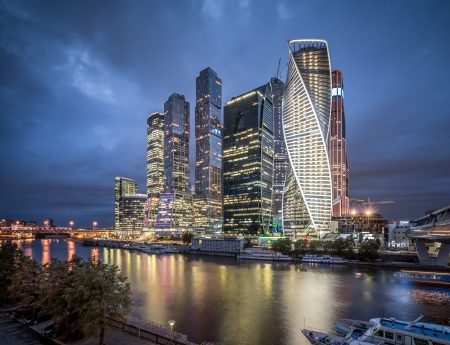
Moscow today
In one of the last sections of ‘Secondhand Time’, the police in Belarus, mostly young guys, clamp down on a street protest. One thing the Soviets taught the modern police real well is how to torture the people who take part in peaceful demonstrations. By using an example from Belarus, a direct criticism of Russia is avoided.
 Tony's Book World
Posted by RussophileReads on March 14, 2024 at 6:44 PM
“In one of the last sections of ‘Secondhand Time’, the police in Belarus, mostly young guys, clamp down on a street protest. One thing the Soviets taught the modern police real well is how to torture the people who take part in peaceful demonstrations. By using an example from Belarus, a direct criticism of Russia is avoided.”
I think it is important to note that Svetlana Alexievich is Belarusian herself and has been an outspoken critic of both Lukashenko’s Belarusian regime and Putin’s regime for years. She had to go into exile a few years ago because of her dissident views.
LikeLiked by 1 person
Posted by Anokatony on March 15, 2024 at 7:05 AM
Hi Russophile,
I either had not known or had forgotten that Svetlana Alexievich was from Belarus. Although Belarus is now a sovereign country by itself, it remains closely allied with Russia. Belarus is close to those northern Baltic states, and it’s somewhat surprising that they went off the deep end for authoritarianism like Russia did. It will be interesting to see what happens to Belarus when they in time get a new leader.
I wonder if the book ‘Secondhand Time’ is even available to buy or read in Russia or Belarus.
LikeLiked by 1 person
Posted by RussophileReads on March 15, 2024 at 2:53 PM
That’s a good question! I know some of her work has been banned in Belarus, but I’m not sure which ones . . . it’s quite a sad situation, as she is so celebrated abroad but not able to live and write freely in her home country. A fate that is very common for Eastern European intellectuals in the 20th century and beyond, unfortunately. Really great to see you read and give her work a spotlight here! I hope you enjoyed it.
LikeLiked by 1 person
Posted by Anokatony on March 16, 2024 at 12:45 AM
Hi Russophile,
Yes, banned in their own country. That is something that carries over from Soviet days. I spent about 8 days reading ‘Secondhand Time’, and like you said before the quality of the writing was such that I did not mind it being non-fiction. It has definitely improved my understanding of the situation of Russia and the surrounding countries.
One part of the book I did not mention was the arrival of the Muslim immigrants from the former Soviet -stan countries that now have come to Russia. The Russians call them “brown” people, but when I look at images of these people, they look quite white to me.
LikeLiked by 1 person