Archive for October, 2023

‘The Pole’ by J. M. Coetzee – Beatriz and Witold


‘The Pole’ by J. M. Coetzee    (2023) – 167 pages
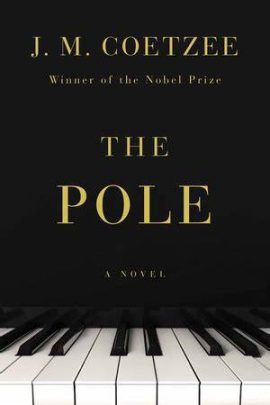
 

Witold is a 70 year-old man from Poland who is a concert pianist but refers to himself as simply “a man who plays the piano”. His name, Witold Walczykiewicz, “has so many w’s and z’s in it, no one on the board even tries to pronounce it. They refer to him simply as ‘the Pole’.” He travels around Europe giving concerts playing the music pieces of his fellow countryman, Frédéric Chopin.

Beatriz is a 49 year-old society lady from Barcelona, Spain who volunteers with the Concert Circle to arrange monthly music recitals. Beatrix is married, but her husband has other lovers and she no longer sleeps with him.

She has also with a cool eye observed how the men of her class behave. She has emerged from her explorations with no great respect for men and their appetites, no wish to have a wave of male passion splash over her.”

The Concert Circle arranges for Witold to perform in Barcelona, and Beatriz attends his concert. During the concert, she compares Witold’s renditions of Chopin to those of Chilean pianist Claudio Arrau, and finds Witold’s renditions lacking. Witold’s piano playing left her unmoved.

At the piano he plays with soul, undeniably, but the soul that rules him is Chopin’s, not his own. And if that soul strikes one as unusually dry and severe, it may point to a certain aridity in his own temperament.”

The Concert Circle takes Witold out to dinner after the concert, and Beatriz meets Witold. She is unimpressed. That would be the end of it.

However a week later, Beatriz receives a note in the mail from Witold addressed “to the angel who watched over me in Barcelona” and a recording of his music. She is still not impressed. Beatriz can’t figure out why this old man is pursuing her. He arranges to meet her again in the nearby city of Girona. She agrees to it, but asks “Why are you here, Witold?” He replies, “I am here for you,”. Things progress or not from there.

Not every lover from afar is a supreme artist like Dante. Beatrix, the Spanish benefactress, considers Witold, the aging pianist from Poland who has fallen in love with her, a rather lame interpreter of Chopin.

I’m not sure what J. M. Coetzee’s point in all this is or even if he has a point. This novel held my interest, but I was not tremendously or even significantly moved by it.


Grade:    B


‘Study for Obedience’ by Sarah Bernstein – A Young Woman Shunned


‘Study for Obedience’ by Sarah Bernstein   (2023) – 189 pages


How can one individual uproot an entire town’s prejudices which they have been nursing for hundreds of years? The young woman in ‘Study for Obedience’ attempts to overcome the townspeople’s animosity toward her by leaving dolls woven from willow on doorsteps and windowsills. This act only causes the townspeople to revile her more.

When our young woman moves to this small town in “a remote northern country”, she is not just an outsider who is at first distrusted. She visits the town cafe where all the townspeople customers shun her.

Did I not have a right to a cup of coffee, a slice of pie? What had I ever done wrong?”

She does not speak their language. When the farmers start having calamities with their animals and crops – “the madness and extermination of the cows, the demise of the ewe and her nearly born lamb, the dog’s phantom pregnancy, the containment of domestic fowl, a potato blight” – her presence in the town is blamed for them all.

The young woman’s brother who moved to this town first has not faced the prejudice or ill will that she has faced. Why not? That is a question I still have from this novel.

They are both from an ethnic group and a religion that has been reviled in the North for a long, long time.

It was the late twentieth century. What did we have left? A prayer book, some scraps of song, a history lesson beginning with devastation.”

‘Study for Obedience’ is challenging and original. It is not a comfort read. There is no dialogue in the novel, no well defined characters beyond our young narrator herself, and very little plot. The conclusion is open-ended with no resolution to the problem of this town’s hatred for her. Perhaps there is no resolution, no happy ending. This novel has the ambiance of a fable, not an upbeat fable. It has been compared to the Shirley Jackson’s story ‘The Lottery’ which also deals with the sinister side of small town life in a different way.

‘Study for Obedience’ is an authentic attempt to deal with pervasive anti-Semitism even in the years after the Holocaust.


Grade:    A


‘North Woods’ by Daniel Mason – The Bountiful, Yet Haunted, North Woods


‘North Woods’ by Daniel Mason    (2023) – 372 pages


‘North Woods’ is the captivating story of a plot of land in western Massachusetts and the people who lived there through the years from colonial times until the near present when it is now advertised as Catamount Acres.

The New England novel ‘North Woods’ begins with a horrific scene from King Philip’s War (1675 – 1676). This King Philip’s War, a war between the colonists and some of the indigenous native people of the region, was the largest calamity in seventeenth century New England and is considered to be the deadliest war in Colonial American history. More than 1,000 colonists and 3,000 natives were killed. More than half of all New England towns were attacked by native warriors, and many were completely destroyed.

With such a horrific beginning what could the future hold for this place in western Massachusetts?

The next scene in ‘North Woods’ centers on Charles Osgood and his two daughters Alice and Mary. In the 1770s Charles bought this piece of land, built a house, and started an apple orchard that produces the famous Osgood Wonder apples. Here we get word pictures of the beauty of the woods and flowers and other vegetation and the birds and animals who live there.

Everywhere the tracks of little animals, the deep steps of the deer. The snow renders their passage legible, reveals the long night’s silent maps.

Would they listen, the animals? She smiles ruefully, imagines the chipmunk scolding from his oak confessional. The gossiping chickadees. The wolf’s summary revenge.”

We get scenes of the idyllic country life as the apple orchard prospers. However given its bloody past, the place is haunted.

Later we get scenes from this site’s more recent history. These sections are written with a variety of characters and in a variety of styles which keep the goings on interesting. But we always come back to the apple trees, the chestnut trees, the squirrels, the beetles of the north woods. Yes, even the sexual exploits of a pair of beetles are described in several pages.

He mounted.

And then she threw him off, smashed him against the wall with such aggression that the peeping mites were scurrying in fear.”

Much of the later sections are devoted to uncovering the haunted ghostly happenings from the past.

What makes ‘North Woods’ a special delight is that the author Daniel Mason’s playful enthusiasm for his material shines through. It is written with a certain esprit with warmth and intensity. As I’ve shown he will interrupt the narrative with pictures, views of nature, poems and songs.

Now sing us a December song

To ease the cold of winter night.

The year, we fear, is not for long,

As is the day, as is the light.”

Not that the stories are all joyous; some are very dark as the actual history of the northeast United States really is. Some are ghostly.


Grade:    A


Gone, but not Forgotten Redux


In 2013 I posted ‘Gone but not Forgotten’ in which I highlighted authors who made a strong vivid impression on me and who had recently died. Now, ten years later, it is time again to remember those who have left us recently. This is a personal list of authors who may or may not have been all that famous but who had at least one work that I found impressive.

Günter Grass (1927 – 2015) The German writer Günter Grass wrote the Danzig Trilogy (‘The Tin Drum’, ‘Cat and Mouse’, and ‘Dog Years’) which I have read in its entirety and consider one of the great works of fiction. I would recommend anyone who loves literature read at least the first volume, ‘The Tin Drum’. Of Grass’s later work, I enjoyed ‘Crabwalk’ about the sinking of the Wilhelm Gustloff ship.

Ruth Rendell (1930 – 2015) Whenever I wanted to take a break from heavy duty literature, Ruth Rendell / Barbara Vine was my “go to” author. She published under two names. Her murder mysteries never failed to intrigue me.


Russell Banks (1940 – 2023) I see Russell Banks as one of the finest US realist writers, in the tradition of John Steinbeck. Banks usually wrote about working class people. Two novels of Banks that I can strongly recommend are ‘Continental Drift’ and Affliction’. There is also ‘The Sweet Hereafter’ about the aftermath of a bus crash which is probably the saddest novel I have ever read or should I say most poignant.

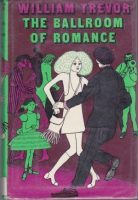
William Trevor (1928 – 2016) The Irish writer William Trevor, along with Elizabeth Taylor, were my go-to writers for a long time. If I couldn’t think of anything else to read, I would read another novel or collection of stories from either of them. Both were highly reliable for both stories and novels. For Trevor, I preferred his younger works which were always high-spirited and lively.

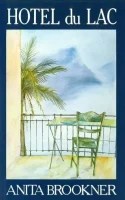
Anita Brookner (1928-2016) Anita Brookner was what I would call a writer’s writer. She never wrote less than exquisite sentences. She published her first novel at age 53, but after that she published about one novel a year which I always looked forward to. She never married and commented in one interview that she had received several proposals of marriage, but rejected all of them, concluding that men were “people with their own agenda, who think you might be fitted in if they lop off certain parts. You can see them coming a mile off.” She once joked that she should be in The Guinness Book of Records as the world’s loneliest woman – a “poor unfortunate creature who writes about poor unfortunate creatures”.

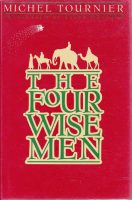
Michel Tournier (1924 – 2016) The French writer Michel Tournier was a fabulist who re-interpreted myths and legends. It was always a great pleasure for me to read his books. There is ‘Friday’ which was based on Defoe’s Robinson Crusoe. Others that I particularly liked are ‘The Ogre’, ‘Gemini’, ‘The Four Wisemen’, and ‘The Golden Droplet’.


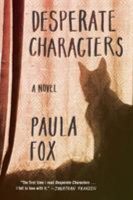
Paula Fox (1923 – 2017) The US writer Paula Fox wrote a lot of children’s fiction and not so much adult fiction, but her adult fiction will last. Two novels of Fox that I highly recommend are ‘Desperate Characters’ and ‘The Widow’s Children’. It is her lack of sentimentality that lends her writing its force.


That’s all for now. I’m sure there are a few that I’ve missed.

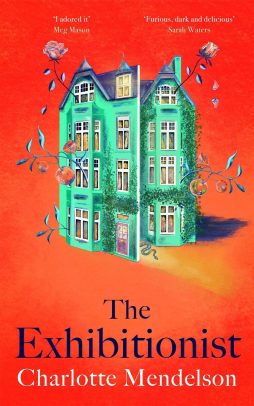
‘The Exhibitionist’ by Charlotte Mendelson – A Dysfunctional Artistic Family in London


‘The Exhibitionist’ by Charlotte Mendelson    (2022) – 294 pages


Ray and Lucia Barnes are married and are both artists in London. Ray had early success in his artistic career; now he is 65 and he hasn’t had a personal show, an exhibition, in decades, but he is having an exhibition in the weekend that is portrayed in ‘The Exhibitionist’. Lucia’s own artistic career has slowly been building. Any success she has that Ray finds out about enrages him, and Lucia tries to hide her achievements from him.

Lucia is a classic case of self-abnegation. Faced with Ray’s contempt, Lucia belittles herself constantly. Only recently has she had a little sunshine in her life as she has started an affair with Priya, a female member of Parliament. Ray Barnes is a monster. His brother David says that Ray “was always looking for someone to ruin”. He also has a doctor who provides him with illegal drugs. All three of their children have suffered from Ray’s cruel behavior. The oldest, Leah, has never left their home and spends her time defending Ray’s cruelties. The middle son, Patrick, has suffered so much abuse from Ray that he hates himself and cannot pursue his career desires. The youngest Jess is the only one who has escaped from Ray’s clutches by going to college and moving to Edinburgh. However she is still well aware of the damage Ray has done to her.

Some of the reviews of ‘The Exhibitionist’ have called the novel “bleakly comic”. I certainly agree with the “bleak” characterization, but I totally failed to see the humor in this dysfunctional family. The prose in this novel is exceptionally appropriate, but the terrible circumstances make everyone in this family overwrought in their speech and thoughts. In each section that is devoted to Patrick, the reader constantly worries that he is about to do himself in.

Will Ray’s exhibition be successful? Will Lucia be able to pursue and continue her affair with Priya despite Ray’s disapproval? Will Lucia accept the arts foundation’s offer of an apartment in Venice for a couple of months to pursue her artistic vision? It would mean leaving Ray for that time. Will Patrick take the cooking job that he’s been eyeing?These are a few of the central questions of this novel.

Despite the novel being well-written, I found it to be an overwrought, slow, and somewhat painful read.


Grade :   B+