‘The Lost Wife’ by Susanna Moore (2023) 172 pages
 ‘The Lost Wife’ is based closely on a real chapter in United States history, the Dakota Uprising of 1862 in Minnesota. Minnesota had become a state in 1858, and large numbers of white settlers were arriving every day. The Indians who lived there were being pushed on to reservations and were given next to nothing for the land they gave up in treaties. What little the Indians were given, they were being cheated out of by the white traders. Many of the Indians were starving to death. The Indian chief Little Crow and his men decided their only recourse was to attack the white settlements.
“They said they were at war with an enemy who cheated and starved them, and would always cheat and starve them.”
In one infamous incident which is in ‘The Lost Wife’, one of the white traders was asked to give the Indians some of his own stock. The trader replied, “If the Dakota are so hungry, they can eat grass. Or their own dung, if they prefer.” Later the body of that trader was found with clumps of grass stuffed in his mouth, and on a plank laying across his legs were scrawled the words, “Feed your own women and children grass”.
During the uprising which lasted only a couple of months, more than 500 white settlers and over 100 soldiers were killed by the Indians. No one knows how many Indians were killed.
‘The Lost Wife’ is written in the form of a diary kept by a woman named Sarah which tells of her and her children’s capture by the Indians. This woman is also based on a real person, Sarah Wakefield. Thanks to the intervention of one of the Indians, Chaska, the lives of her children and herself were spared.
The first half of ‘The Lost Wife’ tells the backstory for Sarah, her harrowing life in Rhode Island before she arrived in Minnesota. I expect this is mostly fictional. After she arrives in Minnesota the story mostly adheres to the written records for Sarah Wakefield.
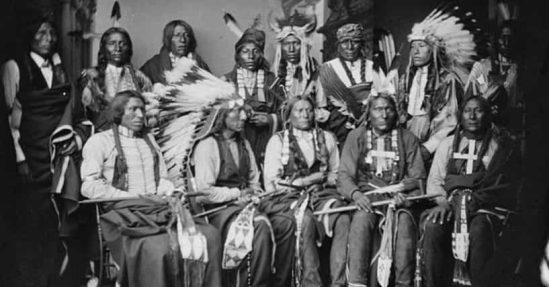
After the uprising, Little Crow and many of his followers fled to Canada. Of those who stayed, A US military commission sentenced 303 Indian men to death. Chaska was one of those sentenced to death. Despite damage to her own reputation, Sarah Wakefield spoke up for Chaska to be spared, and the authorities finally agreed, but by a possible administrative mistake Chaska was one of the 38 Indians hanged on December 26, 1962.
Basically ‘The Lost Wife’ is a solid retelling of this quite major event in United States history.
Grade: B


Posted by Lisa Hill on July 12, 2023 at 5:26 AM
Is this an event that students learn about at school?
LikeLiked by 1 person
Posted by Anokatony on July 12, 2023 at 6:10 AM
Hi Lisa,
I live in Minnesota and have visited one of the main sites of the uprising in New Ulm, Minnesota. I am pretty sure that Minnesota students are taught about the uprising.
Here is something I got from Wikipedia:
On August 16, 2012, Minnesota Governor Mark Dayton issued a proclamation calling for a Day of Remembrance and Reconciliation for the 150th anniversary of the Dakota War and also repudiating Governor Alexander Ramsey’s calls for the Dakota people to be either exterminated or driven from the state when he addressed the Minnesota state legislature in September 1862; flags were also ordered to be flown at half-staff statewide. Dayton declared, among other things, that “The viciousness and violence, which were commonplace 150 years ago in Minnesota, are not accepted or allowed now.” On May 2, 2013, Dayton again issued a repudiation Ramsey’s September 1862 speech, which he claimed he was “appalled” by, and call for a Day of Reconciliation, which also involved flags being flow at half staff. On December 26, 2019, Minnesota Governor Tim Walz issued an apology for the 1862 Mankato hangings and other acts against the Dakota people while participating in the annual Dakota 38+2 Memorial Ride and Run which was held at the site of the hangings. Walz stated, among other things, that “On behalf of the people of Minnesota and as governor, I express my deepest condolences for what happened here, and our deepest apologies for what happened to the Dakota people” and that “While we can’t undo over 150 years of trauma inflicted on Native people at the hands of state government, we can work to do everything possible to ensure that Native people are seen, heard, and valued today.”
LikeLike
Posted by Lisa Hill on July 12, 2023 at 7:15 AM
The reason I ask is because there’s a similar ‘colonisation story’ thread in publishing here and in interviews the authors always say that they were never taught about whatever event it was and they’re telling the untold story that they say other people do not know about. It’s usually the untold story of a woman or a minority group. Or both.
And of course if you go looking for sexism or racism in the colonial era, well, of course you’re going to find it.
What these (Australian) authors and their publishers do not seem to know is the Australian Curriculum (whatever its flaws in the past) is now inclusive of women and minority groups and these events have been taught in schools for a couple of decades now. I think the authors talk to granny or great uncle Bob and extrapolate from that, that nobody knows about the event when in fact the ignorance is generational…
It’s harmless enough, I guess, though annoying for teachers!
LikeLiked by 1 person
Posted by Anokatony on July 12, 2023 at 7:25 AM
Among the Republicans and the Trump MAGAs, there is a major effort not to teach the truth about minorities, in other words to lie. We do seem to have a very sick situation here in the United States today.
LikeLike
Posted by Lisa Hill on July 12, 2023 at 7:51 AM
*smacks forehead* You won’t believe this, but I had forgotten about Trump!
We’ve had political parties ‘revise’ the curriculum to make it more celebratory, (i.e. not breast beating about colonisation) to include ‘values’ (i.e. a weird version of sex ed) and teach a lot of military history (because that sells more armaments in the long run), but they haven’t been able to do much harm because the states have authority — and more importantly, the money for education, and schools only get their funding if they teach a comprehensive curriculum that looks a lot like the Australian Curriculum. So while we do have some loopy religious schools insisting that creationism belongs in the science curriculum, they’re not funded by the state.
LikeLiked by 1 person