Archive for November, 2022

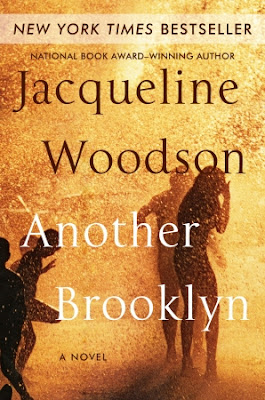
‘Another Brooklyn’ by Jacqueline Woodson – A Fictional Memoir of Her Early Teens in Brooklyn


‘Another Brooklyn’ by Jacqueline Woodson (2016) – 192 pages
 

In the deep heat of summer, we watched as kids circled around the heroin addicts, taking bets on whether or not they’d fall over.”

Jacqueline Woodson has written more than two dozen books for young adults, middle graders, and children. Thus she knows her way around a story. ‘Another Brooklyn’ is one of only three novels she has written for adults. In ‘Another Brooklyn’, Woodson captures Brooklyn in the early 1970s through the eyes of the young teenage girl August (Auggie), both the good stuff and the bad stuff. Yes, she does not avoid the bad stuff, and there is plenty of bad stuff going on in Brooklyn at that time.

Auggie is now an adult, and she remembers the time when she was 11 and when her father, her brother, and herself moved to Brooklyn from SweetGrove, Tennessee. Her mother had started hearing voices after she found out that her brother Clyde had been killed in Vietnam. Then her mother “walked into water and kept on walking”. Auggie’s own upright father also fought in Vietnam and returned home with only eight fingers.

The three move into a Brooklyn apartment. On the floor below lives a prostitute with two children until her children were taken away from her by the authorities.

We were not poor, but we lived on the edge of poverty.”

Auggie paints a prose picture of the Brooklyn as she saw and lived in then. In Brooklyn, as black people are arriving, white people are leaving.

Without her mother, the only thing that makes life tolerable for the young Auggie is the clique of young friends she makes at school.

Sylvia, Angela, Gigi, August. We were four girls together, amazingly beautiful and terrifyingly alone.”
Each of the girls tells the stories of her own life. Some of the stories are humiliating, some are gruesome. By each girl telling her own story, the four girls form a close bond.

When we had finally become friends, when the four of us trusted each other enough to let the world surrounding us into our words, we whispered secrets, pressed side by side by side or sitting cross-legged in our newly tight circle. We opened our mouths and let the stories that had burned nearly to ash in our bellies finally live outside us.”

In striving to capture this Brooklyn from an earlier time, Jacqueline Woodson uses a language style which is as close to poetry as it is to prose.

I have found that when writers who usually write children’s books turn to adult fiction, they often come up with a story that is vivid and easy to follow. This is true of ‘Another Brooklyn’.


Grade:   A-


‘The Hero of this Book’ by Elizabeth McCracken – A “Novel” about her Mother


‘The Hero of this Book’ by Elizabeth McCracken     (2022) – 177 pages


We could all spend some time thinking about our mothers. Your birth mother, that woman who went through all that trouble to bring you into this world, surely deserves it.

We love our mothers, and most of us could write nice things about them. If we couldn’t, it would probably make for a more interesting book.

Elizabeth McCracken’s mother is the hero of this memoir. I have no doubt that her mother was a wonderful person. Maybe that was the problem for me. This “novel” lacked a certain tension, a certain drama, which a conflict or a villain would have given it.

Early on, Elizabeth McCracken writes that if you invent even one minor character then your memoir becomes a novel. I believe her, and I believe that is what she has done in ‘The Hero of this Book’. Thus we have only a fictional “gentle, blinky Englishman named Trevor” who checks her into her hotel. All of the details our narrator tells us about herself and her father and her mother are just too exact to have been made up.

Our narrator takes a trip to London several months after her mother dies and recalls previous trips she had made with her mother and remembers what her mother was like. Her mother was left with a gimpy leg at childbirth either due to a forceps injury or cerebral palsy. For the last few years of her life she used a scooter device to get from place to place.

On this trip to London by herself, our narrator visits the places she visited with her mother before, the Tate Modern, the Tate Britain, the London Eye, and a production of ‘A Midsummer Night’s Dream’. At the Tate Britain, our narrator gives us a half-page listing of all the things she could buy at the Tate Britain museum store. This interminable list does not exactly make for scintillating reading. It felt like filler to me.

I hope no one else reads this book expecting the qualities of good fiction. It has no plot line, no conflict, no drama, not even particularly interesting characters. This “novel” is contrived to avoid criticism at all costs. It is McCracken’s paean to her mother, broken up occasionally with one of the author’s asides, usually about writing. At times one of these asides can be humorous.

She liked to quote her favorite New Yorker cartoon, a man on an analyst’s couch, saying, “I had a difficult childhood, especially lately.”

Occasionally things are lightened by an anecdote or some other tidbit. However most of the stories about her mother would only be of interest to her family members. Even as a memoir, I did not find it particularly entertaining.

However, this is still a memoir, folks. I guess I’m not as happy to be fooled into reading a memoir under the guise of being a novel as most other reviewers seem to be.


Grade:   C+


‘The Art of Losing’ by Alice Zeniter – From Algeria to France


The Art of Losing’ by Alice Zeniter (2017) – 431 pages                  Translated from the French by Frank Wynne


431 pages. No, this is definitely not a novella. During this November, this reader has learned that he sometimes requires something more substantial than a novella. Novellas have their place, but full novels have their place also.

‘The Art of Losing’ by Alice Zeniter has won the 100,000 pound Dublin Literary Award this year, the world’s largest prize for a single novel published in English.

Why read a novel about an Algerian family being confronted with the struggle for independence of Algeria from France during the 1950s? Because people are people the world over, and Alice Zeniter has captured so much of human behavior that applies to people everywhere.

Colonization, like slavery, was one of the great evils of the past. In nearly every case, the colonizers reaped the financial and other benefits of the natural resources from their colonies while the great majority of the native folk who lived there were mostly left in poverty. The French military patrolled Algeria like an occupied country and torture was the French technique to keep the Algerians in line.

Ali’s family is poor like most Algerian families under French rule. He enlists in an Algerian unit of the military fighting for France during World War II.

In the four battles for Monte Cassino, soldiers from the colonies were sent to the front lines; the French sent Moroccans, Tunisians, and Algerians; the British sent Indians and New Zealanders. They provided the cannon fodder, the dead and the wounded that meant the Allies could afford to lose fifty thousand men on a rocky outcrop.”

After the war, Ali has the good fortune to get an olive press, and the profits from his olive oil business as well as his French military pension allow him to provide a comfortable living for his family.

During the early 1950s, the push for Algerian independence heats up. The most fervent rebels are the Muslim mujahideen in the FLN who operate in the desert mountains. They try to force the ex-French soldiers in Algeria to give up their military pensions and have nothing to do with the French. The Algerian War for independence is usually given the time frame of from 1954 to 1962.

Both the French military officials and the FLN are ruthless not only with their real enemies but with anyone they suspect of helping their enemy.

Ali and his family are stuck in the middle. He wants to keep his olive oil business profitable and that means keeping peace in his town, so he meets with the French officials there. Of course the FLN hears about it, and Ali must worry about the safety of his family.

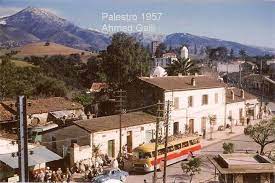
Lakhdaria, formerly Palestro

After Algerian independence is achieved in 1962, Ali and his entire family are denounced as traitors to the cause of independence. This is a scary time for the family, because there are brutal retaliations against traitors.

Ali makes arrangements to relocate his family to France. For the first ten months of their French life, the family must live in a tent in a relocation camp inside France. They can not travel outside the camp, and the camp is, of course, overcrowded with “harkis” which is the name given to these Algerians who supposedly helped the French and now had to leave Algeria.

For these people to forget an entire country, they would have to be offered a new one. But the doors to France were not thrown open to them, only the gates of a camp.”

‘The Art of Losing’ is a multi-generational saga covering about sixty years of this Algerian, now French, family. In the last section, the granddaughter of Ali returns to Algeria.

To have waged such a war only to end up neither with democracy or stability is a terrible waste.”

This is a family story told in vivid and affecting fashion. Near the end of Section II, there is a well-earned epiphany that brought tears to my eyes. That does not happen often.


Grade:   A


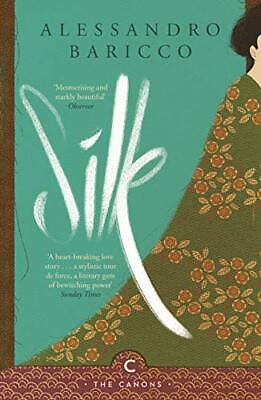
‘Silk’ by Alessandro Baricco – Arduous Trips from France to Japan to Buy Silkworms


Silk’ by Alessandro Baricco (1996) – 91 pages              Translated from the Italian by Guido Waldman


Silk is a unique cloth in that it is produced by worms, silkworms, to form their cocoons. The shimmering appearance of silk is due to the triangular prism-like structure of the silk fiber, which allows silk cloth to refract incoming light at different angles, thus producing different colors.

The novella ‘Silk’ takes place in the early 1860s during a time when a disease in France is making their silkworm eggs unusable. This disease is likely to put the silk enterprise of French entrepreneur Hervie Joncour out of business. The French government has even brought in young biologist Louis Pasteur to study the disease and perhaps find a solution.

Meanwhile Joncour has heard about the thriving silk industry in Japan and how their silkworms are not susceptible to this disease. Joncour decides to make the arduous many month trip from France to Japan of 8,000 kilometers and which requires riding two thousand kilometers of Russian steppe on horseback.

In Japan, he negotiates the purchase of a large number of silkworms to bring back to France with a local Japanese baron, Hara Kei. Joncour becomes infatuated with Hara Kei’s concubine, a girl whose “eyes did not have an oriental slant and her face was the face of a young girl”.

After Joncour gets back to France, the Japan silkworms do not get the disease and they keep Joncour’s business profitable. Joncour makes a couple more arduous trips to Japan, each time becoming more infatuated with the concubine girl. Meanwhile Joncour’s wife stays at home in France.

I have something important to tell you monsieur. We’re all disgusting. We’re all marvelous, and we’re all disgusting.”

I won’t go any further into the story. Let’s just say that ‘Silk’ is an elegant and exotic strange little novella. The story is a romance and is far from realistic, but it doesn’t really matter. Even though it is very short, this novella is not a quick read because the story has many natural stopping points when the reader should just stop and not try to force it.

As I said before, the story takes place in the early 1860s. The Suez Canal, which opened in 1869, reduced Europeans trips to Japan to only 20 days.


Grade:    B


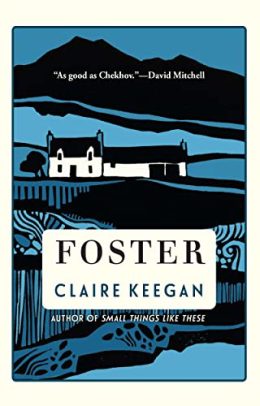
‘Foster’ by Claire Keegan – A Stay with Her Aunt and Uncle


‘Foster’ by Claire Keegan    (2010) – 92 pages


At the beginning of ‘Foster’, a young girl, perhaps 6 or 7 or 8, is being driven by her father to the farm home of her mother’s sister and her husband Kinsella. Her parents have packed a suitcase for her, so she knows she will be staying there for awhile. Her mother is expecting, so maybe that is why she will be staying with this couple she hardly knows.

How long should they keep her? Can’t they keep her as long as they like?”

In a novella written from a child’s point of view, the author must make sure that the child doesn’t know any more than what that child would know. Of this Claire Keegan is keenly aware. We know that ‘Foster’ takes place in rural Ireland. We are not given any exact details as to when the story takes place. The story could easily have taken place during my childhood. It could have taken place during anyone’s childhood. The story has an eternal feel to it.

This aunt and uncle treat the girl well, and soon she starts to compare her life at this new place with her life at home. She has no idea of how long she will be staying. Perhaps it is permanent.

I won’t be revealing any more about this novella. This is a very quick read as opposed to some novellas which slow you down to savor.

On the cover of my copy of ‘Foster’, there is a quote from the author David Mitchell: “As good as Chekhov”. That still seems to me like an audacious thing to say. However Claire Keegan is a mighty fine writer. And she, like Anton Chekhov, understands that what your characters don’t say is sometimes more important than what they do say and what the author doesn’t write is sometimes more important than what the author does write.


Grade:   A


‘Venomous Lumpsucker’ by Ned Beauman – An Outrageous Comic Satire about Endangered Species and Animal Extinctions


‘Venomous Lumpsucker’ by Ned Beauman    (2022) – 327 pages


Now with threats of nuclear war, we are probably more concerned with the extinction of the human species rather than the extinctions of the venomous lumpsucker fish and thousands of other species. However I have found an animal extinction novel that is worthy of spending some time with.

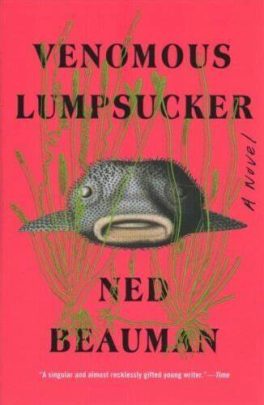
Yes, there really is a family of fish called lumpsuckers.

Since Beauman has set ‘Venomous Lumpsucker’ in the 2030s, the near future, he can parody the way our cell phone/internet lives are now, the way we speak, and our facile understanding of things. We can still pretend all this computer stuff is actually improving our lives.

No more browsing for hours while your dinner gets cold: let us decide what movie you’d enjoy tonight, based on your hormonal and metabolic indicators!”

The novel is mostly about the animal extinction industry that has sprung up. Underwater mining executive Mark Halyard and “species intelligence evaluator” Karin Resaint are the main characters. Companies buy and sell “extinction credits” which a company receives when it has supposedly done something beneficial to help save an endangered species. These extinction credits can be used to allow the company to eliminate other species in the course of their operation. Actually “extinction credits” are a wicked parody of “carbon offsets”, a real-life environmental concept that has had limited success.

Karin Resaint has been assigned the task of evaluating the intelligence of the venomous lumpsucker, because if the animal has been determined to be intelligent, it’s extinction would cost the company 13 extinction credits rather than 1 extinction credit.

Of course at the same time the extinction authorities are considering changing the definition of extinction so that a species would not be considered extinct if it had a living population of zero, as long as enough imprints of it were preserved in bio computer banks or clouds around the world. This change would drive the value of extinction credits way down.

Halyard and Resaint travel from body of water to body of water looking for the few remaining living venomous lumpsuckers. At the Sanctuary North in Estonia, they and the scientists there must don a complete costume of otter fur so that the black-footed otter cubs there don’t form any positive associations with humans which would make it much harder for them to reintegrate into the wild population. The scientists must also spray themselves with otter urine. The writer Ned Beauman has a lot of fun with that; sophisticated humor it definitely is not, but it’s quite funny anyway.

The Real Lumpsucker

Since ‘Venomous Lumpsucker’ is an outrageous comedy with rather broad-brushed characters, these characters really were not deep enough to sustain an over 300 page novel. These characters would have fit nicely in a 200 to 250 page novel. I found the first 200 pages quite enlightening and humorous, but I somewhat wearied of the story after that since there was very little that was new and different. However the novel does recover nicely during the last fifty pages when our characters reach the Hermit Kingdom.

The author Ned Beauman has great fun with some of these endangered animals’ names. Besides the venomous lumpsucker, we have the legless skink, the rusty pipistrelle, the Hainan black-crested gibbon, the variable cuckoo bumblebee, the marbled gecko, the hoary-throated spinetail, etc.

I decided that ‘Venomous Lumpsucker’ requires three grades.

Grade :

For techies (lacking a better word) : A-

For non-techies: B

Since I am somewhere between a techie and a non-techie, I give it: B+


The English Understand Wool’ by Helen DeWitt’ – A Novella that Avoids Mauvais Ton (bad taste)


‘The English Understand Wool’ by Helen DeWitt    (2022) – 65 pages


My early background has not permitted me to have much empathy for the upper classes, but occasionally I find myself reading fictions about them.

‘The English Understand Wool’ is written from the point of view of 17 year-old Marguerite who has been brought up in refinement by her Maman. The avoidance of mauvais ton (bad taste) is the guiding standard by which Maman and Marguerite live.

I spent a week at the keyboard. It seem to me that if I continued to work my way through Bach’s Well-Tempered Clavier this would be a strong guard against acting in mauvais ton.”

Unfortunately Maman absconds with a fortune that Marguerite was to inherit.

The Paris publishers believe that Marguerite’s first-person account of her plight would make for a sensational true-life book. Her editor wants her to express her feelings about losing her fortune, but Marguerite remains loyal to her Maman.

So perhaps there were people who would like to hear about feelings, but I did not think they were people I would want to know.”

Despite the theft of her fortune, Marguerite remains thankful to her Maman for inculcating her with those aristocratic values.

This novella is written in such a way that one cannot say for sure if it is a broad parody of upper class values or a spirited defense of them.

‘The English Understand Wool’ is one of the novellas in a new New Directions series of novellas called ND Storybook.

Our new series of slim hardcover fiction books—aims to deliver the pleasure one felt as a child reading a marvelous book from cover to cover in an afternoon.”

So far there are six novellas in the series with an intriguing list of authors: César Aira, Osamu Dazai, Helen DeWitt, László Krasznahorkai, Clarice Lispector, Yoko Tawada.


Grade:    B