Archive for April, 2022

‘An Explanation of the Birds’ by Antonio Lobo Antunes – A Stunning Portrait of a Hapless Fellow


‘An Explanation of the Birds’ by Antonio Lobo Antunes (1981) – 261 pages     Translated from the Portuguese by Richard Zenith


Talk about darkly funny. ‘An Explanation of the Birds’ is an often uproarious novel about this Portuguese guy named Rui who ultimately commits suicide when he is 33 years old, We find this out quite early in the novel, but it doesn’t spoil the comedy somehow.

Rui’s father is a successful industrialist who owns his own business. His father is severely disappointed when Rui takes up history in college.

One of my father-in-law’s cherished dreams,” Carlos said, “was that Rui would work for us, but the guy didn’t have the slightest knack for business. Come to think of it, he didn’t have much of a knack for anything.”

Rui’s upper-class first wife Tucha chimes in:

Sexually, I’ve never seen such a washout, he couldn’t get it up, he’d get all frustrated, apologize, cry. I don’t know why you’re so interested in him, nobody else is.”

And Rui’s second wife the communist Marilia has her say:

And not only your father,” she added in a wrathful torrent, “but also your mother, your sisters, your brothers-in-law, the whole shitload. First class assholes.”

Marilia again:

My relationship with you was like a time-out in my life,” Marilia explained, wiping her mouth on the sleeve. “I discovered that marriage wasn’t for me, you see; there are other things that mean a lot more to me.”

‘The Explanation of the Birds’ is part stream-of-consciousness, part remembrance, part Greek chorus, and part eulogy of “his unremittingly hapless existence”. Each sentence, some of which are pages long, crackles with its own manic energy.

The novel is written in a kaleidoscopic modernist disjointed fashion which is often confusing. The author juxtaposes several separate story lines without any transitions which often threw this reader off. However I see the novel as challenging rather than difficult. I got a lot out of reading ‘An Explanation of the Birds’. If I had paid more exacting attention, I’m sure I would have even gotten a lot more.

And then there are always the birds.

A flock of sparrows hopped among the reeds on the shore, the heavy moldy lagoon smelled like an unwashed armpit: something along the way went kaput, life took an abrupt ninety degree turn, and here I am more lost than ever.”

The novel it most reminded me of is ‘A Confederacy of Dunces’, about the only United States classic to come out of the 1960s. Though written in the 1960s, ‘Confederacy of Dunces’ was not published until 1980, by which time its author John Kennedy Toole had already committed suicide in disgust and discouragement in 1969. To compare a novel to ‘A Confederacy of Dunces’ is high praise indeed. However ‘A Confederacy of Dunces’ is a much easier read than ‘An Explanation of the Birds’.


Grade:    B+


Who Does an Aging Rocker Listen To? Jerome Kern


My fascination with Jerome Kern all started a few years ago when I somehow wound up with a CD by Light Opera of New York of the musical comedy or light opera ‘Sally’ with music by Jerome Kern, lyrics by Clifford Grey, and book by Guy Bolton. ‘Sally’ was first produced by Florenz Ziegfeld on Broadway in 1920 and ran for 570 performances, one of the longest runs on Broadway up to that time. It was based on a 19th century show called ‘Sally in Our Alley’.

This lively ‘Sally’ recording is a delight for me to which I listen over and over as I drive around in my car. There is something buoyant and cheerful about this recording that puts a smile on my face every time I hear it. The young gal ‘Sally’ rises from lowly dishwasher to the star of the hotel lounge show. Besides a lighthearted and easy-to-follow story, the show has many wonderful songs with perhaps the most famous being ‘Look for the Silver Lining’. However the songs ‘Joan of Arc’, ‘The Schnitze-Komisske’, and several others are fun also. ‘Sally’ quickly established itself as my favorite musical.

I spent my youth like most of those my age listening to rock and pop. I still keep an ever-changing and ever-expanding playlist of favorites on Spotify to which I have now added some of the songs from ‘Sally’. But what about this Jerome Kern? Here was a songwriter I knew very little about.

Then I bought a compilation album ‘Capitol Sings Jerome Kern – The Song is You’. It features songs performed by various artists including Nat King Cole, Peggy Lee, Lena Horne, etc. It turns out that Jerome Kern wrote some of the most well-loved songs of all time: ‘Ol’ Man River’, ‘Smoke Gets in Your Eyes’, ‘The Way You Look Tonight’, ‘The Last Time I Saw Paris’, ‘A Fine Romance’. Perhaps his most famous work is the musical ‘Showboat’ to which I still have not sufficiently listened. That will be my next Jerome Kern.

Some of the performances on this compilation album are from the 1950s and have somewhat insipid arrangements, but still the joy shines through. It would be a good opportunity for some musicians today to come up with new arrangements for these classic songs.

Jerome Kern died in 1945 at the age of sixty, before I was born. Now almost eighty years later, his songs still enrapture at least one person, me.


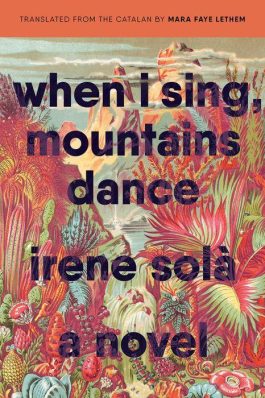
‘When I Sing, Mountains Dance’ by Irene Solà – A Celebration of Human and Other Nature in All its Mess


‘When I Sing, Mountains Dance’ by Irene Solà (2019) – 198 pages             Translated from the Catalan by Mara Faye Lethem


So you don’t consider nature a mess? Consider birth. I rest my case. Now have I convinced you? A glorious mess. Most fiction hides all the grisly details and just tells you that a baby has been born. The novel ‘When I Sing, Mountains Dance’ revels and dwells on all the gore as well as the glory. It is all part of nature, the crudities that are inescapably part of nature as well as the beauty.

Notice that this novel is translated from the Catalan rather than from the Spanish. The Catalans are citizens of Catalonia which is a region in northern Spain in and near the Pyrenees Mountains. The largest city in Catalonia is Barcelona. The Catalans have their own language.

It’s a damp morning. I inhale bringing all that clean wet pure mountain air into my lungs. That aroma of earth and tree and morning. It’s no surprise the people up here are better, more authentic, more human, breathing this air every day. And drinking the water from this river.”

In ‘When I Sing, Mountains Dance’, each chapter is a separate monologue from a separate point of view. The point of view might be that of a cloud or a group of black chanterelle mushrooms or a young roe-buck deer or one of the humans who live in this neighborhood of the Pyrenees. In other words, you might say in more conventional fashion that this novel is a group of unusual interconnected stories.

Emotions are more naked up here too. More raw. More authentic. Life and death, life and death and instinct and violence are present in every single moment up here. The rest of us, we’ve forgotten how sublime life is.”

Here are the black chanterelle mushrooms speaking to us:

There is no pain, if you’re a mushroom! Rain fell and we grew plump. The rain stopped and we grew thirsty. Hidden, out of sight, waiting for the cool night. The dry days came and we disappeared. The cool night came and we waited for more. The damp night came, the damp day came, and we grew. Full. Full of all the things. Full of knowledge and wisdom and spores.”

I am not at all sure this is the way mushrooms speak, so fervently. The mushrooms speak for three tightly written full pages. They won’t shut up.

In another chapter, a very young roe-buck deer speaks to us for five pages.

Here is not only the natural but also the supernatural, witches and ghosts.

The art, the poetic flourishes, sometimes got in the way of the straight facts of the story for me so that I could not fully understand and appreciate what was really happening. Sometimes I was moved by the poetic excesses of the text without fully understanding the basic plot.

Sometimes I wished that the writing was drier, somewhat less earthy, more plain and less poetic. However it is also somewhat refreshing to encounter a writer who lets it all hang out.


Grade:    B


‘Willful Disregard’ by Lena Andersson – An Unrequited Love Story


‘Willful Disregard’ by Lena Andersson (2013) – 196 pages               Translated from the Swedish by Sarah Death


She was by turns furious with him and filled with enormous tenderness and love for everything he had ever touched or been touched by (with certain obvious exceptions).”

This is the story of the Stockholm writer Ester and the artist Hugo.

Ester is sent by her employer to interview the famous artist Hugo Rask. They seem to hit it off during the interview and he asks her out to lunch following the interview. She immediately falls intensely in love with him.

Passion was raging inside her. It’s internal combustion engines were firing on all cylinders. She was living on air.”

However although Hugo sleeps with her three times during the next six days, he wants to avoid a close tie with her at all costs. They were intimate for a few days and Ester thought they were starting a relationship. However after that, Hugo just doesn’t call or contact her for weeks, and Ester almost goes crazy.

She calls him repeatedly and he doesn’t answer. She lingers outside his house and studio when she knows he’s in there. She texts him repeatedly. Still no answer. You might say she almost stalks him. Hugo makes it quite clear that he doesn’t want an ongoing relationship with Esther, but she somehow never gets the message. She keeps grabbing at straws, looking for the smallest signs that he hasn’t totally dropped her.

Something that had been of crucial importance to her had been nothing but a way of passing the time for Hugo.”

Over and over, Hugo gives some small sign that he might not be as disinterested in Ester as he seems, and Ester builds her hopes up to only once again be disappointed. It gets quite repetitive. I kept waiting for something else to happen, but it never does. Ester never comes to her senses that this guy Hugo is not really interested in her anyway. Her persistence may be because Hugo Rask is a world-famous artist.

Only a famous artist could get away with this behavior and still retain the good opinion of Ester. Finally she rings his doorbell and confronts him. Hugo claims he has been extremely busy with his art with no time to spare. She thinks:

How can anyone be so stupid as to believe it’s to do with time when people give time as their excuse?”

One wishes and hopes that Ester would give up on Hugo as a lost cause, maybe even hate him a little or a lot, but that never happens.

If she could only purge herself of that longing for contact.”

Despite my finding the occasional views expressed on current political events rather lame, I found the intensity and insights into this unrequited love plight did hold my interest and attention. Some of Ester’s insights seem quite profound at first but begin to wear thin as her obsession with Hugo continues.

Who is right or wrong here, Ester or Hugo?


Grade:   B


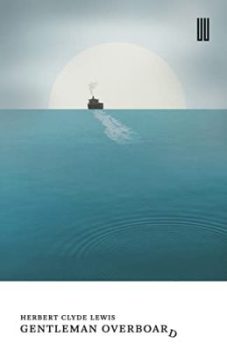
‘Gentleman Overboard’ by Herbert Clyde Lewis – All Alone in the Middle of the Ocean


‘Gentleman Overboard’ by Herbert Clyde Lewis   (1937) – 152 pages


I have often asked myself, “Is there no more to United States literature than what I have already discovered? ”Somehow it seems that the limited United States literary history is set in concrete with the same old names recurring over and over again. Hawthorne, Melville, Twain, James, Wharton, Fitzgerald, Hemingway. It is rare to find anything written about any other writers. The last great United States literary figure who I discovered was Dawn Powell, and that was almost thirty years ago. Is there no one or nothing else in the United States literary past to uncover? Whereas in the British and Irish Isles, every three weeks or so a formerly neglected author will be at long last remembered, in the United States it’s nearly always the same old, same old names.

However this week I have discovered a new long-neglected author and novel from the United States. That author is Herbert Clyde Lewis, and his novel is ‘Gentleman Overboard’ which was written in 1937. It was republished recently by Boiler House Press after being out of print for 70 years.

‘Gentleman Overboard’ is the seemingly simple story of a businessman from New York falling off his ship as it sails from Hawaii to Panama, and thus he is left floating in the warm waters of the Pacific Ocean.

In the novel, Henry Preston Standish is a thirty-five year old quite successful manager at a New York brokerage firm who lives in a well-appointed apartment in Central Park West in New York City with his wife Olivia and their two small children. Adventure was missing from his life so he goes on this long cruise vacation by himself. Little did he know that he would wind up floating by himself in the Pacific Ocean with no ship in sight.

Of all the idiotic tricks since time began, he decided rather heatedly, falling off a ship into the middle of the ocean was by far the most colossal. It was so stupid, so absolutely without reason or precedent, so out of place for a man in his position!”

It may seem an obvious story, but here is a man floating in the ocean with little hope of rescue contemplating his fate and his entire life. Meanwhile those on the ship wonder what happened to him. It becomes existential, something we can all relate to. The novel is written in clean spare affecting prose.

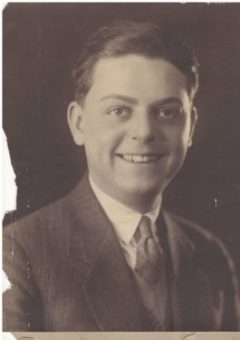
Herbert Clyde Lewis in his early 20s

The author Herbert Clyde Lewis wrote three novels as a young man between 1937 and 1940, ‘Gentleman Overboard’ the first. His novels received favorable reviews but met with limited success. He and his wife then moved to Hollywood for him to work as a screenwriter, and one of his scripts, ‘It Happened on Fifth Avenue’, did receive an Academy Award nomination in 1947. However by then he had sided with those Hollywood figures who had been blacklisted for possible Communist infiltration in the film industry and faced blacklisting himself when an FBI informant identified Lewis as a member of the Communist Party. He was drinking heavily. He moved back to New York alone without his wife. He filed for bankruptcy and was found dead in his apartment at the age of 41 in 1950.

‘Gentleman Overboard’ is a lost gem of a short novel that has now been found again. It is a welcome addition to the United States literary canon.


Grade:   A


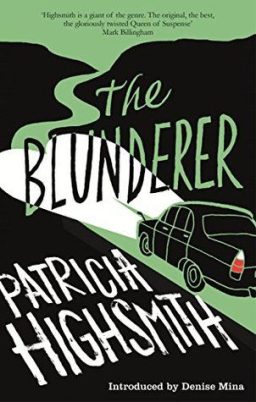
‘The Blunderer’ by Patricia Highsmith – “Proof is not the thing. Doubt is the thing.”


‘The Blunderer’ by Patricia Highsmith (1954) – 265 pages


No, ‘The Blunderer’ is not my biography.

Although the US crime author Patricia Highsmith was never married, she understood the complications, the petty differences, that can arise between a husband and wife. These differences usually start out as being quite minor, but after repeated instances and increasing aggravations, they often turn into major altercations.

Highsmith captures how we real people think, and takes it just a little farther into the realm of murder. Thus some of us can strongly identify with the murderer or the victim or at least with the situation. Above all, Highsmith’s crime stories and novels are psychologically astute.

A lesser writer would make the good guys and gals really good and the bad guys and gals really bad. However in ‘The Blunderer’, you probably will empathize with a murderer and fully understand and relate to his or her motivations. Highsmith does not let you off the hook.

In ‘The Blunderer’, the lawyer Walter Stackhouse has a fine upstanding life in his suburban New York City home. He gets along well with his many friends, his neighbors, his fellow workers, etc. His wife Clara also earns good money as a real estate agent. They have a maid Claudia to take care of their home. They don’t have children. The couple Walter and Clara get invited to frequent parties and they occasionally host a party at their house.

There is only one problem for Walter. His wife Clara’s overbearing behavior is alienating his friends and associates and spoiling his life.

It isn’t enough anymore to be in love with you physically – because mentally I despise you,” Walter said quietly.

Walter becomes fascinated, obsessed with this news story where a woman in Newark has been killed during a bus rest stop. Walter even drives to Newark to meet that woman’s husband.

I won’t relate any more of the plot, since there are many surprises.

One of the main characters in the novel is the police detective Corby. The way that Corby manhandles suspects, it’s obvious this novel was written before the Miranda ruling of the accuseds’ rights of 1966.

‘The Blunderer’ is a psychologically intense novel with many twists and turns.

A Young Patricia Highsmith

Patricia’s Highsmith’s first novel ‘Strangers on a Train’, published in 1950, was soon after made into an acclaimed movie by Alfred Hitchcock. However in the Author’s Notes in the back of ‘The Blunderer’ it says that despite this, Highsmith was unappreciated in the United States for the entire length of her career.

By now, I expect that Patricia Highsmith probably has more readers than just about any other US author from that time.


Grade:   B

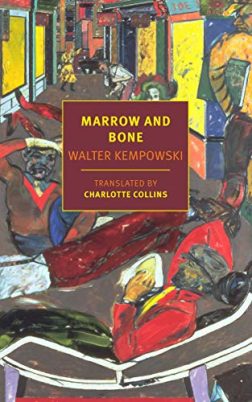
‘Marrow and Bone’ by Walter Kempowski – A Young German Man Visits East Prussia, Now Part of Poland


‘Marrow and Bone’ by Walter Kempowski  (1992) – 188 pages        Translated from the German by Charlotte Collins


German author Walter Kempowski was punished by the Nazis as a teenager and later imprisoned for 9 years by the East German Communists. In other words, he is my kind of hero. Walter Kempowski was also an exceptional fiction writer, especially in his novel ‘All For Nothing’ about the last days of World War II in East Prussia.

‘Marrow and Bone’, originally translated as ‘Homeland’, is a very different work of fiction from that novel. Whereas ‘All For Nothing’ is a deeply imagined and intensely moving work of historical fiction, ‘Marrow and Bone’ is ironic, deadpan, and topical, taking place at nearly the time it was written in 1992. Some of the offhand observations in ‘Marrow and Bone’ are ones that the German people of that time could more readily appreciate than us outsiders. It is contemporary fiction aimed at the Germans of the time and risks being somewhat outdated now. However ‘Marrow and Bone’ still has its rewards for today’s readers.

A young Hamburg writer, Jonathan Fabrizius, decides to go on a road trip to what was formerly East Prussia and which is now part of Poland, his expenses paid for by a Japanese auto manufacturer. Both his parents lived in East Prussia, and both died near the end of World War II.

Jonathan’s girlfriend Ulla does not accompany him since she is busy with her project organizing depictions of cruelty in art for an exhibition. Besides Ulla and Jonathan have not been getting along very well anyway.

Cruelty? The subject was infinite.”

This is an example of Kempowski’s irony. Ulla is studying cruelty throughout history but has no interest in Poland where 6 million citizens were killed as a direct result of the German Nazis. She’s too busy with her cruelty project, and she’s had enough of “that Jewish stuff”.

The author’s sarcasm is directed at the attitudes of these young Germans toward their Nazi past and even the Holocaust. These young Germans are preoccupied with all their new gadgets, and touring an old concentration camp from World War II is such a bore.

Anyway Jonathan goes on this road trip through Danzig, now Gdansk, all the way to eastern Poland to what was East Prussia. He still wants to refer to these villages and cities by their old German names rather than their new Polish names. Jonathan has the typical German disdain for the Poles.

Gdansk, Poland Today

A lot of the sarcasm here went over my head. One would need to better understand the opinions and attitudes that Germans and Poles have had about each other through the ages to fully appreciate some of the subtle humor here.

Only when Jonathan visits the church where his fleeing mother died giving him birth at the end of World War II and only when he visits the Vistula Spit where his father was killed in battle is Jonathan finally moved.

My final grade for ‘Marrow and Bone’ is probably more a result of my not fully comprehending some of the ironies and sarcasm here rather than deficiencies in the novel itself.


Grade:    C+