‘Free Love’ by Tessa Hadley (2022) – 285 pages
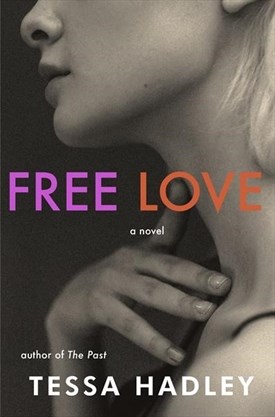 I have been quite critical as well as quite complimentary of the writing of Tessa Hadley in past reviews. However I keep reading her works, because she writes those rarities, substantial novels. This time I will be praising her, mostly.
Perhaps a key to Tessa Hadley’s writing is this quote of hers:
“If I met my characters, I might not like them.”
Whereas most writers seem to bend over backwards to create characters their readers will like, Hadley writes about her characters more honestly and objectively and thus more deeply than other writers.
“Under the placid surface of suburbia, something was unhinged.”
Forty year-old Phyllis is wife to husband Roger who works in the foreign office and mother of Colette who is 15 and Hugh who is 9. The year is 1967, not long after The Pill became widely available and ancient history now, and women are just discovering they can do things that were unthinkable only a few years before. The young guy Nicky is one of the lucky beneficiaries of this new-found women’s freedom.
One day Phyllis is a dutiful wife and mother, and the next day she is scrounging around making up excuses to the family for her extended absences. Nicky can hardly believe his good fortune. It all started with a kiss in the dark.
“No one had kissed her like that, so wetly and hungrily, in all the years of her marriage; that space had been unfilled in her passionate nature.”
Hadley makes it quite clear that this affair between Phyllis and Nicky is all about sexual excitement and very little about love or even mutual liking. Soon Phyllis makes a complete break with her family and moves in to the London apartment building with the young Nicky.
“There wasn’t any point, she told herself, in thinking about the children. No reparation could be made for what she’d done.”
However, of course, Nicky’s mind and body soon start to wander.
This “love” story starts out quite straightforward, but complications develop that make things “as fatally twisted as a Greek drama”. These complications weren’t entirely believable to me.
In the first half of ‘Free Love’ we see things mainly from the point of view of the mother Phyllis. In the second half of the novel, the focus shifts somewhat to the fifteen year-old daughter Colette. It is difficult for the daughter when the daughter is not as good looking as the mother.
Tessa Hadley does not allow undue emotion to get in the way of her even-handed view of the circumstances and predicaments of her characters, and that makes her fiction more reliable and ultimately more true.
Grade: A
 Tony's Book World
Posted by Lisa Hill on March 1, 2022 at 1:34 AM
I think it’s crazy to have all likeable characters. Real life isn’t like that, so why should books be?
LikeLiked by 1 person
Posted by Anokatony on March 1, 2022 at 2:33 AM
Hi Lisa,
Most fiction writers have a likeable main character and perhaps a villain or two, The difference with Tessa Hadley is that her main characters may not be all that likable.
LikeLike
Posted by Lisa Hill on March 1, 2022 at 7:15 AM
ha! I’ve just finished reading Thomas Bernhard’s Corrections, and trust me, there’s nobody likeable in that!
LikeLiked by 1 person
Posted by Anokatony on March 1, 2022 at 7:53 AM
:)
LikeLike
Posted by Janakay | YouMightAsWellRead on March 1, 2022 at 5:52 AM
Like you, I have mixed feelings about Hadley’s work. It’s not that she creates unlikable characters (I’m fine with that) but for some reason (I really must analyze “why” one of these days) her novels for the most part just don’t resonate with me. Also like you, however, I can’t ignore her, although for me it’s mostly reading reviews of her latest, rather than the novels themselves!
I enjoyed your review but will most likely pass on this one in favor of Late In The Day or London Train.
LikeLiked by 1 person
Posted by Anokatony on March 1, 2022 at 7:09 AM
Hi JanaKay,
My favorite Tessa Hadley so far is ‘The Past’, but I think I will take a “vacation” from Hadley’s work for awhile. I’m considering reading a few of female English writers whose work I never did get around to reading before: ‘Precious Bane’ by Mary Webb or ‘Frost in May’ by Antonia White or ‘Lolly Willowes’ by Sylvia Townshend Warner. I’m not sure which one I should read first.
LikeLiked by 1 person
Posted by Janakay | YouMightAsWellRead on March 1, 2022 at 7:22 AM
Since you liked it, maybe I’ll try Hadley’s The Past. I know what you mean about taking a vacation from Hadley’s work, as I frequently do the same thing with certain writers I find interesting but who aren’t quite my thing.
I have a whole list of writers I want to get to, but I find that participating in Challenges and so on has really diverted me. Antonia White’s Frost in May is on my own list to get to, for example. I’m not familiar with Mary Webb. I AM a big fan of Sylvia TW, however, and I’ve read most of her novels and several short stories. I discussed several of her novels, which I love, a couple of years ago, if you’re interested. More importantly, my post has a link to a great, great Warner resource, a yearly Warner week hosted by A Gallimaufry (tons of reviews of Warner’s work). https://youmightaswellread.com/2020/07/03/sylvia-townsend-warners-the-corner-that-held-them-or-how-i-became-an-stw-addict/
LikeLiked by 1 person
Posted by Anokatony on March 1, 2022 at 8:37 AM
First, I read your above and decided to look closer into the works of Sylvia Townsend Warner. I was tempted to read ‘The Corner That Held Them’ because recently I read ‘Matrix’, an excellent recent novel by Lauren Groff about 12th century convent life, and maybe I could compare the two.
Then I read your post and have decide to stick with ‘Lolly Willowes’ because you liked it a lot and it is on the shorter side. Then it looks like from your article that ‘Summer Will Show’ would be a good follow up if I like ‘Lolly’.
LikeLiked by 1 person
Posted by Janakay | YouMightAsWellRead on March 1, 2022 at 5:53 PM
Hi Tony! The problem with STW, which I may have alluded to in my overly long post, is that her books are quite different from each other. Hence, IMO at least, liking one is no guarantee you’ll like the others (and vice versa). It took me a very long time to get past Lolly Willowes, which is still my favorite. It’s delicate ambiguity and hint of “the strange” couldn’t be more different from The Corner That Held Them, which is almost like a documentary, if one can say such a thing of a novel (the main “character” is the process, the convent itself, rather than the individual nuns). I think the common thread in Warner’s work is her outlook — just a little ironically detached — and her beautiful style. Needless to say, she’s quite witty. Anyway, I’ll be interested to see your choice!
I really must get to The Matrix, sooner rather than later, but I actually want o read one of Groff’s earlier works, The Monsters of Templeton, much more at this point!
LikeLiked by 1 person
Posted by Anokatony on March 1, 2022 at 5:57 PM
Interesting.
LikeLike