This year I was again tempted to expand my favorites list beyond 12 to 15 or 20 but finally had the good sense to keep it at 12.
Click on either the bold-faced title or the book cover image to see my original review for each work.
 ‘The Land at the End of the World’ by Antonio Lobo Antunes (1979) – Nothing of the many, many works of fiction I have read before has prepared me for the brilliant and devastating expressiveness of Portuguese writer Antonio Lobo Antunes.
 ‘The Promise’ by Damon Galgut (2021) – There is something special in the way Damon Galgut continuously and quickly shifts the focus from person to person here, each with their own vivid, frequently shocking, insights into what is happening.
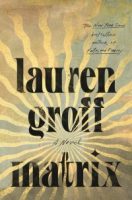 ‘Matrix’ by Lauren Groff (2021) – I did not expect a novel about an abbey of nuns in 12th century England to be this high on the list, but it totally fascinated me. Here we have an eloquent and persuasive depiction of a successful society composed entirely of women.
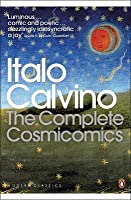 ‘‘Cosmicomics’ by Italo Calvino (1965) – Italo Calvino’s playful conceit is that there were people, a family, around to witness the creation of the Universe, the Sun, the moon, the stars, and the planets. There’s Grandma, Grandpa, and Mother and Father, as well as the boy Qfwfq and his sister as well as some of their neighbors, and especially there is always a lady or girl friend to help Qfwfq on his way through the Universe.
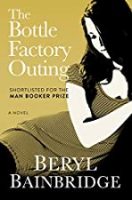 ‘The Bottle Factory Outing’ by Beryl Bainbridge (1974) – This is a deadpan comedy like nothing you have ever read before. Somehow Beryl Bainbridge manages to keep a straight face while telling us this outrageous story.
 ‘Agua Viva’ by Clarice Lispector (1973) – If ‘Agua Viva’ made complete sense to someone, I would worry about that person. But the fragments are deeper and make more visceral sense than most writers’ complete thoughts.
 ‘The Passenger’ by Ulrich Alexander Boschwitz (1938) – A novel which vividly captures the terrors of Kristallnacht in Germany, the Night of Broken Glass.
 ‘The Inquisitors’ Manual’ by Antonio Lobo Antunes (2004) – This year will be remembered as the year I discovered Antonio Lobo Antunes. What impresses is the striking use of words and images throughout.
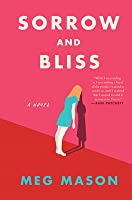 ‘Sorrow and Bliss’ by Meg Mason (2021) – Meg Mason maintains a wry deadpan tone throughout this emotional roller coaster of a novel.
 ‘Au Bonheur des Dames (The Ladies’ Delight)’ by Emile Zola (1883) – Here is Zola on Octave Moiret who runs the department store in Paris: “He made an absolute rule that no corner of Au Bonheur des Dames should remain empty; everywhere, he demanded noise, people, life…because life, he said, attracts life, breeds and multiplies.”
 ‘A Calling for Charlie Barnes’ by Joshua Ferris (2021) – There are many, many novels where the main characters are just too good to be true. However ‘A Calling for Charlie Barnes’ is not one of them, and that’s quite a high bar to attain in novel writing, especially when you are writing about your parents.
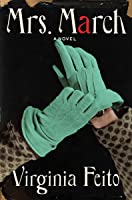 ‘Mrs. March’ by Virginia Feito (2021) – The Mrs. March in this novel is quite repellent. It takes real talent for a writer to pull this off, and this is Virginia Feito’s first novel.
Happy Reading!
 Tony's Book World
Posted by Lisa Hill on December 7, 2021 at 5:26 PM
Very pleased to see Zola there!
LikeLiked by 1 person
Posted by Anokatony on December 7, 2021 at 5:31 PM
Hi Lisa,
Yes, Emile Zola is still making the “Favorites’ lists in 2021.
LikeLiked by 1 person
Posted by David Long on December 21, 2021 at 9:28 AM
Tony: I just now finished Matrix and looking up Marie de France I found your blog. Thanks for doing that research. What an accomplishment that book is. I wrote a note a number of months ago about a story of hers in The New Yorker and she wrote back most wonderfully. Anyway, years ago I talked myself into an insane reading project: read a book published in each year–no deadline, no rules except to pick off a year every so often, enter it on the master list, and not to skip a good book because I “had that year already.” The virtue of the project was that I had to research what was published in a given year, the upshot of which was that–in addition to reading a whole slew of classics I’d never gotten around to–I read a number of books/writers I’d never heard. Some of the reading was tedious, but I was OK with that. It was good to just steep myself in primary sources. Last year I finally got back to the 1790s with no breaks between then and now. And, another reason I’m writing you, I discovered Zola in this operation; I think I’ve read 11 of the 20 Les Rougon-Macquart. I’m a Zola fan. I even found myself writing a fan letter to one of his translators I think L’Assommoir, Nana, The Belly of Paris, and Pot-Bouille my favorites. It was interesting to read Nana and The Lady of the Camillias
(Alexandre Dumas, fils) close to each other. Anyway, keep up the good work.
LikeLiked by 1 person
Posted by Anokatony on December 21, 2021 at 6:55 PM
Hi David,
The authors you mention are French. Somehow I have avoided Alexandre Dumas, writing his off as too “swashbuckling”. Maybe I should give him a try. I have not read as much Zola as you have, maybe 5 or 6 novels. Zola’s quality is that he put the entire world into his novels.
Your project of reading a book published in each year reminds me of a project I had in the 1970s and 1980s. At that time, my bible was “Who’s Who in 20th Century Literature” by Martin Seymour Smith. I was so impressed with his opinions, I tried to read every author he recommended. Later I branched out to the earlier classics, especially the Russian and the French. Then I read some of the classic South American literature.
Have you read ”Fates and Furies’, another excellent novel by Lauren Groff?
LikeLike
Posted by David Long on December 21, 2021 at 11:12 PM
I’m going to have to re-read Fates and Furies–I know I read it but it didn’t stick in memory well enough. The Dumas I cited was by the son, a different fellow altogether, a very moving book. That said, I read The Count of Monte Cristo, Les Miserables, The Hunchback of Notre Dame [Notre-Dame de Paris], . . . stopped short of the Musketeers, but found myself enjoying each of those. As you know, you have to read the old works on their own terms, and sometimes you find you have an inner lowbrow or suspender of disbelief . . . I even read several Gothic romances [The Castle of Berry Pomeroy, Edward Montague, 1806/The Italian, Ann Radcliffe, 1797]. And I was going to mention another great little surprise, Castle Rackrent by Maria Edgeworth, 1800 (it’s quite short).
LikeLiked by 1 person
Posted by Anokatony on December 22, 2021 at 6:54 AM
I suppose I attach too much value in what the highbrow critics say and thus miss some of the better lowbrow works.
I have read ‘Castle Rackrent’ but did not get on with it very well. I have not read any Gothic romances, not even ‘Jane Eyre’ or ‘Wuthering Heights’, two classics I have missed. I have read all six of the major Jane Austen novels, and her down-to-earth realistic sensibility more closely matches mine.
LikeLiked by 1 person
Posted by whisperinggums on December 27, 2021 at 1:22 PM
Love of course your enjoyment of Austen, but I have to say that I also enjoyed Castle Rackrent because it seemed such a spoof. I’m not a fan though of the long turgid gothic romances of the 18th and early 19th centuries. I think Jane Eyre and Wuthering Heights are more “refined” than those, but I agree that I prefer Austen (regardless of what Charlotte Bronte thought!!)
LikeLiked by 1 person
Posted by Anokatony on December 27, 2021 at 6:25 PM
Hi Sue,
Considering all of the classical literature I have read, it is quite surprising I never got around to reading any of the Brontes. This is a gap in my reading. I suppose I was always put off by the tag ‘Gothic Romance’. I have read nearly every work of George Eliot though, and consider ‘Middlemarch’ perhaps the greatest English novel. George Eliot is definitely not ‘Gothic Romance’.
LikeLike
Posted by whisperinggums on December 27, 2021 at 7:43 PM
NO, she is not. There are elements of it in those Bronte books but nothing like the ”true” Gothic romances. I’d commend Jane Eyre to you, even though, given your and my tastes, I don’t think it would beat Middlemarch!
LikeLiked by 1 person
Posted by Cathy746books on December 7, 2021 at 5:32 PM
The Promise and Mrs March will be in my Top Ten also!
LikeLiked by 1 person
Posted by Anokatony on December 7, 2021 at 5:38 PM
Hi Cathy,
Of the Irish writers, Both Lisa McInerney and Kevin Barry came very close to making the list.
LikeLiked by 1 person
Posted by Scott Eaton on December 14, 2021 at 7:22 PM
“If ‘Agua Viva’ made complete sense to someone, I would worry about that person.” I felt this way after reading The Passion According to G.H. a few months ago. One of the strangest, yet unforgettable, experiences of my reading year. Great list! I’ve been meaning to read Antunes for awhile now.
LikeLiked by 1 person
Posted by Anokatony on December 14, 2021 at 11:04 PM
Hi Scott,
‘Aqua Viva’ is a short, short novel. I started the same way you did with ‘The Passion According to G.H.’, and ‘Aqua Viva’ is even more wild and offbeat than that one. You might want to give ‘Aqua Viva’ a try.
And Antonio Lobo Antunes is more straightforward than Clarice Lispector but still original.
Thanks for stopping by!
LikeLike
Posted by Janakay | YouMightAsWellRead on December 15, 2021 at 4:56 AM
Great list! Although my pace of reading picked up considerably this year (2020 was pretty dismal) the only one of your list that I’ve actually read is Galgut’s The Promise. It would definitely be in my own top ten; I think it’s one of the best things I’ve read in the past several years. I was really happy to see that Galgut finally won the Booker.
Inspired by your review of the Bottle Factory Outing, I went back to my own inner Bainbridge and read Every Man For Himself. It was tremendous.
I also read a work by Clarice Lispector, but a different one from yours; my choice was The Hour of the Star. I’d been meaning to get to this very interesting writer forever, so I’m glad I finally squeezed her in last summer. Oddly enough (LOL) my reaction to Star was very similar to yours with respect to Aqua Viva — I can’t pretend that I came anywhere close to absorbing all it had to offer, but it blew me away! As you said, Lispector makes sense on an almost visceral level.
I’ve yet to read any Zola (although I’ve several novels lined up) or Calvino (ditto). So many books, etc.
I have copies of Matrix, Charley Barnes (I read and liked Ferris’ To Rise Again At A Decent Hour) and Mrs March waiting patiently on the shelf. What’s that I said about so many books?
Boschwitz and Antunes are unknown to me. I’ll have to check them out, along with Meg Mason’s Sorrow and Bliss.
LikeLiked by 1 person
Posted by Anokatony on December 15, 2021 at 6:45 AM
Hi Janakay,
Apparently Beryl Bainbridge ran out of original ideas for her novels, and then she resorted to historical fiction later in her career. I discovered her late in her career, and did not much care for her historical novels. Only recently have i discovered her odd early fiction like ‘The Bottle Factory Outing’ and ‘Sweet William’, and now I’m a big fan.
I believe the Galgut is one of those novels that will be remembered a hundred years from now.
Claire Lispector is definitely an acquired taste which I have acquired.
I have read quite a bit of Zola as he is one of those French classics. Of course he wrote many, many novels so is a never-ending source of fiction. :)
LikeLiked by 1 person
Posted by whisperinggums on December 27, 2021 at 1:19 PM
You are early with your list, Tony.
I always like it though when I can relate to some of the books. I gave my DIL another book by Meg Mason, which she really liked, and she is now reading Sorrow and bliss which she said she is liking. My reading group will do Damon Galgut’s The promise next year, and I’m looking forward to it. I have read a different book by Antonio Lobo Antunes and really liked it. Have always thought I’d like to read more. I have yet to read anything by Clarice Lispector, but I want to – and not just because I love her name!
LikeLiked by 1 person
Posted by Anokatony on December 27, 2021 at 6:17 PM
Hi Sue,
It is still a small club of us who have read Antonio Lobo Antunes. I put his name on my Christmas list and wound up getting five more of his novels which I have not read for Christmas. So I expect I will be reading more of him in 2022.
Meg Mason is a writer who is light and humorous enough to easily enjoy. And ‘The Promise’ is one of those novels to be approached with awe.
LikeLike
Posted by whisperinggums on December 27, 2021 at 7:39 PM
Thanks for all this Tony – but, especially, wow, re Antunes. How great to have all those.
LikeLiked by 1 person