Archive for November, 2021

‘Inseparable’ by Simone de Beauvoir – A Friendship

‘Inseparable’ by Simone de Beauvoir (2021) – 156 pages             Translated from the French by Sandra Smith
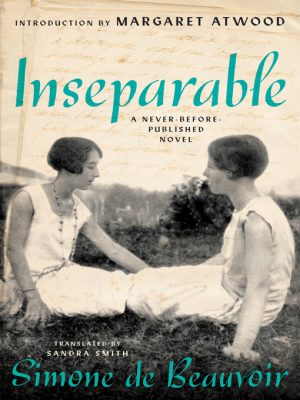
 

The novella ‘Inseparable’ is based on the real child friendship of Simone de Beauvoir and Elizabeth Lacoin (Zaza). The photograph on the cover is of them which was found in a letter of Simone’s to Zaza dated September 15, 1920. Simone at that time would have been 13 years old. However this real friendship has been transformed into fiction in ‘Inseparable’. Beauvoir wrote this novella in 1954, but it was not published until this year.

‘Inseparable’ was written sixty years before Elena Ferrante turned the history of a friendship between two young girls into four best sellers.

There is nothing sweeter in the world than feeling there is someone who can completely understand you and on whose friendship you can count on absolutely.” – Zaza’s letter to Simone, Sept 3, 1927

In the novella, Simone and Zaza are Sylvie and Andrée. The friendship between the two girls begins when they are nine years old and continues through the next 12 years. They met at age nine in Catholic parochial school. Catholicism plays a significant major role in this friendship.

For a daughter, the predetermined path led straight to marriage or a convent; she could not decide her fate according to her own desires or feelings.”

Therein lies the problem for the developing woman Andrée.

Sylvie and Andrée are much different from each other as good friends often are. Sylvie is steady; Andrée is impulsive.

Sylvie’s parents are nominally Catholic and intellectual. Her father no longer believes in God. And Sylvie, during high school, questions her faith and decides that she also is a non-believer. Andrée’s family, especially her mother Madame Gallard, are rigorous strict Catholics. Madame Gallard continually steers Andrée away from spending time with Sylvie, but somehow Sylvie and Andrée are able to continue their close friendship through high school.

There are hints along the way of an ominous doomed ending.


Grade:    B
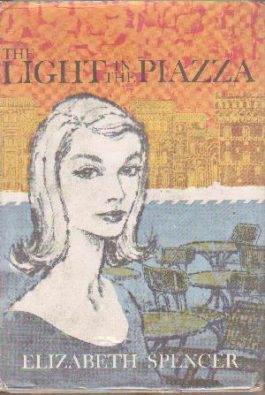
 

‘The Light in the Piazza’ by Elizabeth Spencer – First a Novella, Then a Movie, and Then a Broadway Musical


‘The Light in the Piazza’ by Elizabeth Spencer    (1960) 110 pages


Set in Florence, Italy, the unique captivating plot of ‘The Light in the Piazza’ is likely the reason that it has inspired both a movie in 1962 and a Broadway play, a musical no less, in 2005 based on the novella. Now the musical is being put on by theater groups nearly everywhere.

Here is the setup. Mrs. Margaret Johnson and her 20 year old daughter Clara are in Florence as part of their extended stay in Italy as tourists from North Carolina. As Clara hurries to see a historical marker, she bumps into 22 year old Italian Fabrizio Naccarelli. From the get-go, he is entirely smitten with Clara, and in the following days he shows up wherever Mrs. Johnson and Clara happen to be. He buys and sends elaborate gifts to Clara, never mind that Clara can speak no Italian and Fabrizio speaks very little English. Soon Mrs. Johnson and Clara meet the entire Naccarelli family.

However there is a backstory. Due to a childhood injury when she was kicked in the head by a Palomino horse, Clara has the mental age of a child of ten. The accident with the horse has not affected Clara in any physical way nor her striking beauty. Deep in her heart of hearts, Mrs Johnson hopes that Clara can lead a normal life despite her injury. Should she encourage Fabrizio in his romantic intentions for Clara or should she discourage him? That is the question.

The author Elizabeth Spencer displays a sure grasp of human nature in this novella. What mother would not want the best for her daughter even in these difficult unusual circumstances? The language difficulties between Italian and English might conceal her daughter’s problems to some extent. Fabrizio might behave like your stereotypical Italian guy, but stereotypes arise in the first place because there is some truth of them, And of course Mrs. Johnson’s businessman husband Noel would not understand the subtleties of the situation going on here in Florence.

Although Elizabeth Spencer wrote several other well-regarded works, she will likely most always be remembered for this novella.


Grade:   A


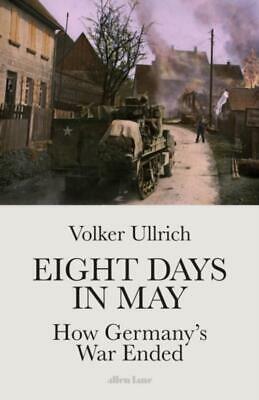
‘Eight Days in May’ by Volker Ullrich – A Reckoning for a Country Which was Severely Misled


‘Eight Days in May – The Final Collapse of the Third Reich’ by Volker Ullrich   (2020) – 271 pages          Translated from the German by Jefferson Chase


My favorite non-fiction of the year? Not a difficult question. This is my first foray into nonfiction this year.

As one of the German officers in a Russian prisoner of war camp put it, “You repeatedly clutch your head in disbelief that we all followed this lunatic.”

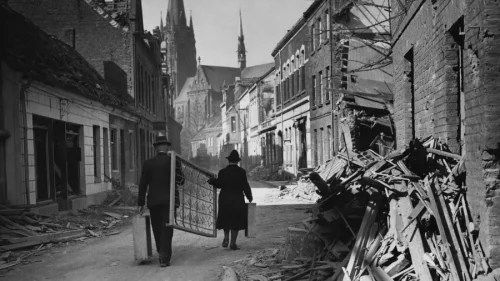
This is the story of Germany during the eight days after Adolf Hitler and Eva Braun committed suicide on April 30, 1945 by taking cyanide pills. Hitler had designated Karl Donitz as his successor. On the following day, Joseph Goebbels and his wife Magda murdered their six children, and then both committed suicide.

The Third Reich has dissipated like an apparition.” – Ruth Andreas-Friedrich

They were not alone. The city of Berlin alone reported more than 7,000 suicides in 1945. In the small town of Demmin in northeastern Germany, up to a 1,000 people killed themselves in “their almost apocalyptic fear of the advancing Soviets” as the Russian army advanced into the town.

Fascism, which had almost overwhelmed our world, which had almost ruined it, and which had caused more obscene misery to more human beings than any other movement in recorded time, was being buried with the men who had made and led it.” – William Shirer

While English Field Marshal Bernard Montgomery was negotiating a peace for the western part of Germany, one of the German military leaders asked him if some of the units fighting the Russians could surrender to the English. Montgomery replied, “The Germans should have thought of all these things before they began the war and particularly before they attacked the Russians in June 1941”.

As the Allied forces finally liberated the concentration camps, few Germans were prepared to confront the facts and their own involvement in them. “We didn’t know!” became like a national chant for Germany. Nearly all the Germans denied they were ever Nazi supporters or avoided acknowledging their own complicity in Nazism. Hanna Arendt diagnosed in the German people, “a deep-rooted, stubborn, and at times vicious refusal to face and come to terms with what really happened”.

Every one of the millions of Nazi Party members was also culpable for Germany’s disaster.” – Friedrich Kellner

German armed forces surrendered unconditionally on May 8, 1945 and spontaneous celebrations erupted around the world.


Grade:   A


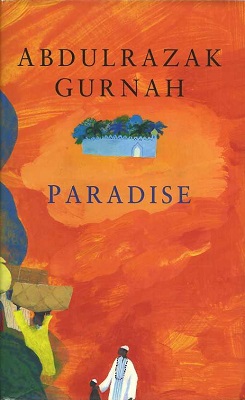
‘Paradise’ by Abdulrazak Gurnah – An African Novel by Someone Who Really Likes Africa and Africans


‘Paradise’ by Abdulrazak Gurnah    (1994) – 247 pages


No, I am not going to claim to have more literary knowledge than the committee which picks the Nobel Literature winner. A writer’s stock rises and falls, there are revaluations and reappraisals. A writer may be neglected for decades like one of my personal favorites Dawn Powell, and then become an icon. Other writers remain neglected.

The stock of Abdulrazak Gurnah is definitely on the rise. If he is lucky, he will not become another Dario Fo or Sully Prudhomme or others who have been nearly forgotten despite winning the Nobel prize for literature.

‘Paradise’ is written by a guy who obviously likes Africa and Africans, so its perspective is much different from that of many Europeans who wrote about it and were terrified by Africa. ‘Paradise’ is not portentous like ‘Heart of Darkness’, far from it.

‘Paradise’ has qualities we don’t usually associate with novels about Africa. It is playful, and its descriptions capture the human qualities of the people as well as the beauty of the land. It depicts the great variety of people and places in Africa.

Our 12 year old boy Yusuf has the good fortune to have been born to a family living on the coast, and his father runs a hotel. However his father gets in debt to the Arab trader Uncle Aziz (not really Yusuf’s uncle), and Yusuf is handed over to Uncle Aziz to live and work for him. We accompany Yusuf on Uncle Aziz’s trading trips into the interior of Africa to trade with “the savages” there.

‘Paradise’ is the coming of age story of Yusuf as he loses his naivety and discovers how the world really works. There are many lighthearted moments mixed in with times of high drama.

‘Paradise’ takes place just before World War I which is when the Germans had become the dominant group in this part of eastern Africa which is now Tanzania. The Germans are always referred to as “the Europeans” and are known by the Africans to be more ruthless and cruel than anyone else.

Everything is in turmoil. Those Europeans are very determined, and as they fight over the prosperity of the earth they will crush all of us. You’d be a fool to think they are here to do anything that is good. It isn’t trade they’re after but the land itself. And everything in it. . . us.”

Many of the customs in this part of eastern Africa are strange to us. A man, especially a rich trader like Uncle Aziz, can have more than one wife. And the various tribes of “savages” in the interior can have even stranger customs than that.

Dar es Salaam, Tanzania

In ‘Paradise’ we get a more complicated, more varied, picture of Africa and Africans than we get in most novels written from outside. There are unfamiliar and unusual African customs and practices, but there is also much joking and camaraderie.

So how does ‘Paradise’ differ from other accounts of journeys into the interior of Africa such as Joseph Conrad’s ‘Heart of Darkness’? Nearly all agree that the Africans, even those known as “savages”, are no match for the Europeans when it comes to cruelty or heartlessness. So, after World War II, is there anyone who will argue against it?


Grade:    A


‘The Faces’ by Tove Ditlevsen – Almost Too Painful to Read


‘The Faces’, a novella, by Tove Ditlevsen (1968) – 151 pages            Translated from the Danish by Tiina Nunnally


‘The Faces’ is a disturbing Danish novella that is almost too painful to read. It is about a woman’s sojourn in an insane asylum, and it is not as though she was put there wrongly or incorrectly.

At the beginning of ‘The Faces’, the renowned author Lise is lying in bed. Her fabulous writing talent is still with her. You can tell that by the words and similes she uses. However her constant use of sleeping pills has taken its toll and has done terrible damage to her psyche. You can tell she is sliding down the rabbit hole of insanity.

She has a husband, Kurt, who discusses his other mistresses with her. At the outset of ‘The Faces’, he tells his wife while she is lying in bed that one of his mistresses, Grete, has committed suicide by overdosing on sleeping pills. Later, he has the maid take Lise’s sleeping pills away from her.

Lise finds the sleeping pills in the maid’s room, and after her own overdose on sleeping pills, Lise is first taken to the unlocked ward of the insane asylum. However she scratches a woman in the face there, so she is put in the locked ward where she is belted to the bed.

She hears voices, voices from her family which tell her that her husband, her maid, and her daughter are plotting against her. She has hallucinations, and the reader can never be sure if what she hears and sees is real or not.

Do you hear voices?” she asked.

Of course,” said Lise. “You hear them too.”

No,” she said adamantly, shaking her head. “All the voices you hear come from inside yourself.”

It dawned on Lise that the whole staff must be in on the plot.

If I believed that,” she said, “I would be insane.”

You aren’t well, you know.”

Lise is hallucinating that her maid Gitte is one of the nurses in the locked ward.

Just listen to how meek she is,” said Gitte triumphantly’ “She thinks she’s going to go home again. As if anyone has ever gotten out of here alive.”

Is it true that Lise’s husband is having an affair with her daughter, his step-daughter? We don’t know if this is something that is happening or one of her hallucinations.

The author of ‘The Faces’, Tove Ditlevsen, was a renowned Danish author and poet herself. She was very prolific; in her lifetime she published 29 books. Ditlevsen struggled with alcohol and drug abuse throughout her adult life, and she was admitted to a psychiatric hospital several times. She died by suicide overdosing on sleeping pills in 1976, aged 58.

Ditlevsen’s astute use of similes and metaphors throughout ‘The Faces’ makes this novella a compelling if harrowing read.


Grade:   B+


Afternoon Men’ by Anthony Powell – Wayward Young Men and Women


‘Afternoon Men’ by Anthony Powell    (1931) – 221 pages


This is a novel about young men and young women in England in the early 1930s, but it will surely be real to life for many of us today.

These are young men and young women in their early twenties. The young men are volatile and unpredictable. The young women are capricious. Because that’s the way both sexes are at that age, wayward. Everything, including the future, is still up in the air.

There is lots of partying and drinking and camaraderie, a lot of dialogue. The writer Anthony Powell (rhymes with Lowell) captured the dynamics of this situation better than anyone else in his first novel ‘Afternoon Men’ which was published in 1931 when he was 25.

The main young guy to watch for is William Atwater, since he is in every scene and sees and hears all that is happening. Much of what is going on is light and amusing, but sometimes it is deadly serious. All is presented in a brisk fashion.

Atwater works in a museum. He finds his job dull, as most jobs right after college are dull. He spends most of his time away from the job socializing with his friends and drinking. He has a couple of close young woman friends, of which one Susan Nunnery he wants to get even closer despite her resistance. His two best male friends are Raymond Pringle and Hector Barlow, both of whom are toying with careers in creating art.

One of the many things that Anthony Powell captures in this novel is the way these young men and women talk, as there is much dialogue in ‘Afternoon Men’. Here is Atwater talking to Susan Nunnery between fights on a boxing night he has taken her to:

She said: “You’re rather sweet really.”

Aren’t I?”

Yes. But that’s how I feel.”

Anyway, I never see you, so it doesn’t make any difference.”

Well, if it doesn’t make any difference.”

Exactly.”

Don’t be like that,” she said.

Why not.”

I don’t like it.”

Nonsense.”

No,” she said. “I don’t.”

It can’t be helped. I’m like that.”

You’re being such a bore.”

I know.”

She said: “Why not be nice? You’re so nice sometimes.”

I don’t feel nice today.”

Anthony Powell as a writer is not flashy, and the power of his work will only creep up on you. Later, after ‘Afternoon Men’, Powell would write one of the lasting pillars of 20th century literature, the twelve-volume ‘A Dance to the Music of Time’. Each volume of that work is a separate stand-alone novel, although with the same characters. I have only put a couple of dents into that structure having read only 2 or 3 of its novels. However after reading ‘Afternoon Men’, I probably will be putting more dents into it.


Grade:    A


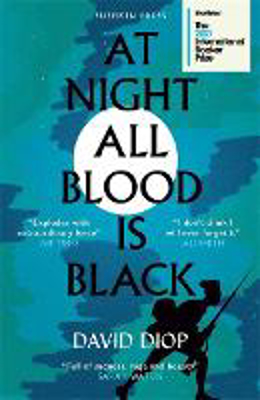
‘At Night All Blood is Black’ by David Diop – Trench War is Hell


‘At Night All Blood is Black’, a novella, by David Diop  (2018) 145 pages        Translated from the French by Anna Moschovakis


‘At Night All Blood is Black’ has probably the best credentials of any novella or novel. It won both the prestigious French literary 2019 Prix Goncourt as well as the 2021 International Booker Prize. It is a brutal war novel depicting grisly trench battle scenes including disembowelment and evisceration during World War I. This novella is not for the faint of heart.

First a little of the background.

With World War I raging in Europe, African soldiers were forced to fight for their colonial masters between 1914 and 1918. France recruited more Africans than any other colonial power, sending 450,000 troops from West and North Africa to fight against the Germans in Europe on the front lines. These black troops were known as the Chocolat Soldiers. During the war, around 30,000 Africans died fighting on the side of France alone.

“People from Senegal, Ivory Coast and Mali died for France. It’s true that France colonized them, but it wasn’t their choice. You could almost say they died for nothing, at least not for their countries.” Clemence Kouame, an African student

‘At Night All Blood is Black’ vividly tells the ugly truth about trench warfare during World War I. Many more civilians were killed and wounded during World War II, but World War I was much worse for the soldiers who had to fight in those trenches.

This story begins with trench soldier Alfa Ndiaya from Senegal watching his more-than-brother friend Mademba Diop die after being stabbed in the stomach by a German soldier. While Mademba is pushing his own guts back into his stomach, he begs Alfa to shoot him to put him out of his misery quickly. Alfa cannot force himself to do that, and afterwards he feels tremendous guilt for not having shot his friend.

After his more-than-brother Mademba’s death, Alfa goes on his own murderous revenge spree leaving the trench each night by himself and shooting a German soldier, then using his machete to chop off the German soldier’s hand and bringing it and the German’s rifle back to the trench as trophies. He murders seven German soldiers in this fashion.

At first the French officers are very pleased with his efforts, but they begin to question his sanity.

Don’t tell me that we don’t need madness on the battlefield. God’s truth, the mad fear nothing…You’d have to be mad to obey Captain Armand when he whistles for the attack, know there is almost no chance you’ll come home alive…God’s truth, you have to be crazy to drag yourself screaming out of the belly of the beast.”

The whole idea of war, groups of people out to murder each other, is insane, but some forms of insanity are acceptable and some are not.

Temporary madness makes it possible to forget the truth about bullets. Temporary madness, in war, is bravery’s sister.”

However there are still rules about what is tolerated.

In war, when you have a problem with one of your soldiers, you get the enemy to kill him. It’s more practical.”

In one troubling scene, the French Captain Armand does exactly that.

Not all of ‘At Night All Blood is Black’ is this horrific battlefront account. When Alfa is removed from the front, he recalls scenes with his mother and family and friends back in Senegal in his childhood and youth which might or might not explain his behavior.

Up until the last 15 pages or so, I was fully prepared to give this novel my highest ranking for its clear, lucid, and moving, if grim, story line. However I cannot quite fully recommend this novella because of the somewhat incoherent ending in the last three chapters which veers drastically from the intense accurate bluntness of the novella up to this point. I can understand the reason for this incoherence. Our soldier who so blithely chops the hands off other soldiers is at a loss when his violence spills over to other parts of his life. However the last few shaky pages are quite a change for this sure-footed novel.


Grade:    B+


‘Dead Souls’ by Sam Riviere – An Outrageous Rant on Modern Poems and Poets and Poetry Events


‘Dead Souls’ by Sam Riviere    (2021) – 289 pages


You may have heard of the Russian classic ‘Dead Souls’ by Nikolai Gogol. However this ‘Dead Souls’ by Sam Riviere is about the sorry state of the poetry community in England and the rest of the world today,

Yes, this is a delightfully unhinged rant about poetry. The narrator is so obsessed and incensed that he can’t even take time to organize his thoughts into paragraphs.

It’s about poetry readings where no one who is there wants to be there, “and though the audience members attended with an outwardly cheerful, hardy demeanor, occasionally their masks slipped”, “making the reciting of poetry at best a kind of willed insanity”.

For a long time now there had been no poetry in the poetry.”

This ‘Dead Souls’ is honest, cutting, cruel, and quite a laugh riot. This is a novel that is intended to provoke the people who read it, probably many of them in that small poetry community that he is writing about.

Most of ‘Dead Souls’ takes place, where else?, at the Travellodge bar after the poetry readings at the biennial Festival of Culture.

A long poem by the poet Solomon Wiese had been found by the computerized system named the Quantitative Analysis and Comparison System (QACS) to breach the newly introduced standards for plagiarism and thus his current and future work was deemed unacceptable by all publishers.

It’s even worse if you harbor some form of respect for the writer, Solomon Wiese said, the worst thing you can do is to meet a writer that you in some way respect, because you will leave the meeting having lost all respect for that person, and you will be unable to recapture or reconstitute that respect by returning to the work, which you will find has been contaminated by the writer’s tedious and egomaniacal private persona.”

These type of revolting statements actually attracted me to this new ‘Dead Souls’. There are many of these statements in the novel like the following one about poets without poems:

if one admitted that the things they called their poems were nothing of the sort, that they were actually word-approximations; they were arrangements of words that resembled poems when you looked at them, but turned out on further examination not to be poems at all; they turned out to be nothing like a poem, at best they were simulations of poems”

The first one hundred pages are one long merciless rant about modern poetry in London. I liked that. On the next fifty pages, Riviere kind of lost me by getting away from this subject, and I almost gave up on the novel. Whenever Riviere’s characters don’t talk about poetry or literature, the novel dragged for me. Then the novel returns for the last one hundred pages to bemoaning the current fate of literature, and once again it held my interest. The lack of paragraphs makes ‘Dead Souls’ a difficult read.

Anyone who has attended a poetry recital within the last five years will probably want to read this novel if only for its spleen.


Grade:    B+