Archive for September, 2021

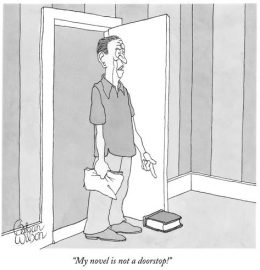
2021 – The Autumn of the Doorstop Novel

Some of these new Fall offerings I do want to read.

Crossroads – Jonathan Franzen – 592 pages

The Book of Form and Emptiness – Ruth Ozeki – 560 pages

Cloud Cuckoo Land – Anthony Doerr – 640 pages

The Lincoln Highway – Amor Towles – 592 pages

The Sentence – Louise Erdrich – 416 pages

The Every – Dave Eggers – 608 pages

Apples Never Fall – Liane Moriarty – 480 pages

The War for Gloria – Atticus Lish – 464 pages

The Morning Star – Karl Ove Knausgaard – 688 pages

The Magician by Colm Toibin – 448 pages

My next read? I am considering ‘Assembly’ by Natasha Brown which checks in at 106 pages.


A Few More Older Novels Written by Women that Are Too Good to be Forgotten


These are all novels that got my highest rating when I read them. For this article, I have intentionally steered away from novels and authors that have been discussed often recently already.


‘The Sin Eater’ (1977) by Alice Thomas Ellis (1932-2005) – The Welsh writer Alice Thomas Ellis had a dark and strange sense of humor. ‘The Sin Eaters’ tells of family strife as they all come for a final visit to their ailing patriarch.


‘Tirra Lirra by the River’ (1978) by Jessica Anderson (1916-2010) – Here is an Australian novel about a woman escaping a selfish sanctimonious husband and a failed marriage by relocating in London. The year it was published, the Washington Post said “There may be a better novel than Tirra Lirra by the River this year, but I doubt it.”


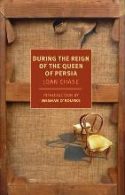
‘During the Reign of the Queen of Persia’ (1983) by Joan Chase (1936-2018) – No, this does not take place in ancient times in the Middle East. It is the story of a family in rural Ohio during the 1950s. It should be easy to find since it was reissued by NYBR in 2014.


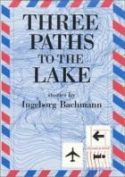
‘Three Paths to the Lake’ (1972) by Ingeborg Bachmann (1926-1973) – OK, this is a collection of five stories, not a novel. Each of the stories is a portrait of an Austrian woman trying to make a go of it in a male-dominated society in the 1960s.


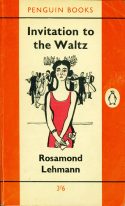
‘Invitation to the Waltz’ (1932) by Rosamond Lehmann (1901-1990) – I am enormously impressed by most of the writings by Rosamond Lehmann, and I could have mentioned several others here. ‘Invitation to the Waltz’ is a good example of her work. It is the story of a young woman preparing for her first society dance.


‘The Widow’s Children’ (1976) by Paula Fox (1923-2017) – Here is a powerful novel that takes place during a single night while a family goes out to dinner. Most of the novel is intense dialogue.


‘A Dubious Legacy’ (1994) by Mary Wesley (1912-2002) – An English novel about a bizarre marriage. While stationed abroad during World War II, a man marries a complete stranger at his father’s request. When the war is over, the man brings his bride back to his estate. Upon her arrival, she punches him in the eye and marches upstairs to her bedroom where she will stay for most of the time afterwards.


All of the writers mentioned here are worthy and deserving of being remembered by future generations.


‘Yours Cheerfully’ by A. J. Pearce – The Title Says It All


‘Yours Cheerfully’ by A. J. Pearce    (2021) – 291 pages


In this world where there are so many unresolved problems, it is easy to be dismissive of a novel so relentlessly upbeat as ‘Yours Cheerfully’. However during devastating times such as World War II in England, perhaps remaining upbeat is the best strategy.

‘Dear Mrs. Bird’ was great fun, and now, yes, its sequel ‘Cheerfully Yours’ is more of the same.

This novel jauntily steamrolls over any and all difficulties whether they are obnoxious plant managers, wartime fatalities, arriving late for your own wedding, insufferably cute kids, or plot inconsistencies. The title ‘Cheerfully Yours’ is quite appropriate.

We are back with Emmy and Bunty and their friends and family in London during World War II. It is late summer of 1941. The terrible Blitz bombings have finally ended, but the country is fully engaged in defeating Hitler and Nazi Germany. Most of the able-bodied men are off fighting, so the government is trying to recruit women to work in the factories. The magazine where Emmy works as a writer, Woman’s Friend, wants to help with this industrial recruitment of women, so Emmy gets an assignment to interview the women who work in the munitions factory, Chandlers. Of course Emmy and even her friend Bunty become great friends with these women as well as their children including one cute, cute four-year kid named Ruby.

However neither the companies nor the government has made any provisions for childcare for these women. The companies were all gung ho about hiring women to work in the factories since they paid them less than the men doing the same work. Some days when no one was available to take care of a woman’s little children, she would bring them to work. The male managers would see the kids playing in the hallway, get upset, and fire the woman. When one of Emmy’s new-found friends is fired for bringing her children to work, Emmy is of course devastated.

To win the war, we’re asking, please,

Help us get our nurseries.”

Emmy’s boss at the Woman’s Friend magazine where she works as a writer is Mr. Collins who is about the same age as Emmy’s parents. Emmy’s boyfriend Charles Mayhew is Mr. Collins’ brother. Charles Mayhew is either much older than Emmy or there is a 20-year gap in the ages between the two brothers. I suppose back in the 1940s, it may not have been so unusual to have a 20-year gap between brothers’ ages. But then why do the brothers have different last names? A little explanation would have been helpful, but I suppose the explanation could have been in ‘Dear Mrs. Bird’, and I don’t remember it.

Meanwhile Emmy gets engaged to her boyfriend Charles, and she and her friends must plan a wedding quickly before Charles gets sent off to fight. And guess who is to be the littlest bridesmaid? You guessed it, Ruby.

It is all entirely predictable, but still fun as Emmy’s and A. J. Pearce’s cheerful and upbeat spirits carry the day during this devastating time.


Grade:     B+


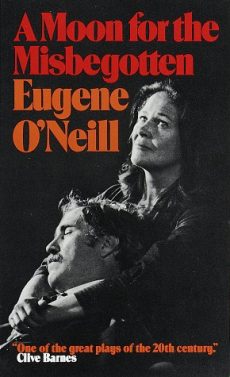
‘A Moon for the Misbegotten’ by Eugene O’Neill – A Doomed Romance


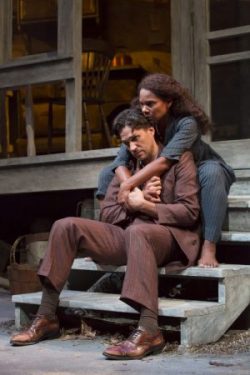
‘A Moon for the Misbegotten’ by Eugene O’Neill, a play  (1943) – 115 pages


Anyone who has a real interest in literature must finally confront the soul-searching dramas of Eugene O’Neill. Eugene O’Neill was the first United States playwright to take drama seriously, and performances of his plays hold up well even today.

O’Neill’s plays are often about people not facing or finally facing the hard truths about themselves, how people lie to themselves about who they really are in order to make it through the day.

Eugene O’Neill had already won the Nobel Prize for Literature in 1936, years before he wrote his two most famous plays, ‘A Long Day’s Journey into Night’ and ‘The Iceman Cometh’. It was a movie production of ‘The Iceman Cometh’ in 1973 that really spurred my interest in literature. That production of the play caused me to conclude that literature had some things important to say to me.

‘A Moon for the Misbegotten’, like ‘A Long Day’s Journey into Night’, is closely related to O’Neill’s own family, and O’Neill did not allow stage production of either play until after O’Neill died. One of the main characters in both plays is Jamie Tyrone who is based closely on Eugene O’Neill’s actual older brother Jamie O’Neill.

The year is 1923. Since his actor father James has already died, Jamie is now known as James Tyrone. He is 33 and also a stage actor and a hopeless alcoholic. He has come home from New York to recover and manage his father’s holdings which includes a farm rented to Phil Hogan. Hogan lives with his daughter Josie after all six of her brothers have run off from the farm. When James comes to visit Hogan, the two joke around and kid each other while Josie listens. Then James and old man Hogan head off to the bar for the day. Hogan comes back by himself at late afternoon angry because James has said that he will sell the farm to this obnoxious rich guy Harder. So Hogan hatches this scheme for Josie to seduce James, then Hogan can catch them in bed and force them to get married.

Josie goes along with her dad’s scheme despite being strongly attracted to James anyhow. James harbors tremendous guilt because when his mother died, he was so drunk he couldn’t attend her funeral.

I won’t give away any more of the plot of this deeply affecting emotional drama.

As a dramatist, Eugene O’Neill had something of the Irish poet in him. And no one came up with better titles for his works than O’Neill.


Grade:   A


‘Matrix’ by Lauren Groff – Marie de France, A Strong Visionary Woman


‘Matrix’ by Lauren Groff (2021) – 257 pages


And now for something completely different.

Can Lauren Groff make a novel about an abbey of nuns in 12th century England that is moving and interesting to modern readers? Well, she succeeded with this not-so-modern reader.
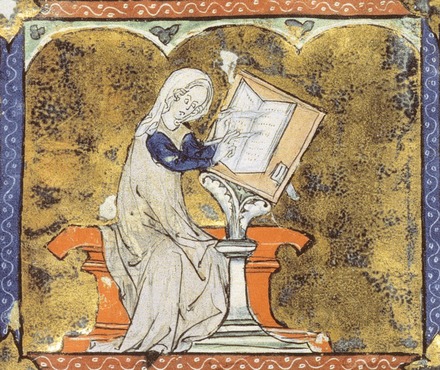
I suppose ‘Matrix’ could be considered historical fiction, but virtually nothing is known of the life of Marie de France, so those annoying facts do not get in the way of a good story. The 12th century was a time in English history that I was mostly unfamiliar with, so I had the added pleasure of researching this era.
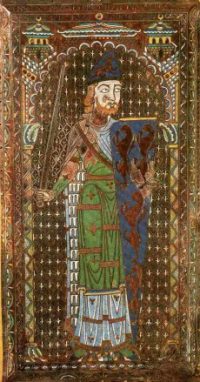
Geoffrey, Duke of Anjou

In ‘Matrix’, Marie de France is a bastardess, the product of a rape by her father Geoffrey who is the Duke of Anjou and also the progenitor of the Plantagenet royal family. Thus she is the half-sister of King Henry II and sister-in-law to his wife Queen Eleanor of Aquitaine.

After her mother has already died and while Marie is still a teenager she is cast out of the royal court by Eleanor of Aquitaine who considers Marie too big and rough-hewn and coarse for royal life. She is sent to an impoverished abbey to be its prioress.

In the night, a voice whispers that she cannot do this, she is but an uncouth girl belonging nowhere, beloved by no one, merely seventeen, not even seventeen, not even a real nun yet, and her habit is shamefully patched in different-colored wool, and her face holds no beauty, and her arms are merely woman’s arms. How dare she.”
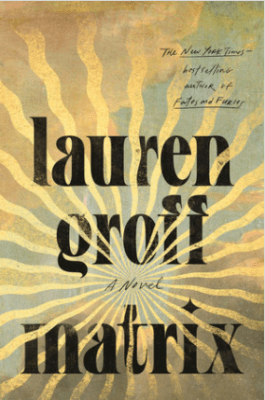
But Marie is a strong thoughtful woman. As at first prioress and then as abbess, Marie must contend with many adversaries to the abbey including nearby wealthy landowners, delinquent renters, gangs of ruffians and even the male Church hierarchy as well as nature itself with storms and droughts. She kicks ass, she’s tough and big and forceful. She assigns each woman in the abbey to a role for which they are suited. Soon the underfed women in the abbey are well-fed and the abbey prospers.

With their heads bent over their books like this, their words palely shining, she understands that the abbey is a beehive, all her good bees working together in humility and devotion. This life is beautiful. This life with her nuns is full of grace. Marie sends a prayer to the Virgin in gratitude.”

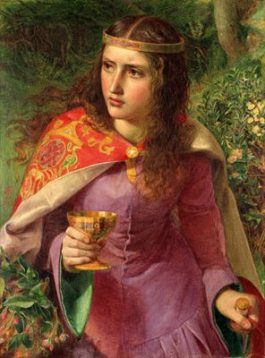
Eleanor of Aquitaine

As depicted in ‘Matrix’, the life of Marie de France is heroic, but Marie has someone who is her own hero. Despite having sent her off to be the prioress, her sister-in-law Eleanor of Aquitaine is Marie’s hero. I researched the life of Eleanor, and it is indeed the stuff of legend. Eleanor was the most powerful woman and perhaps the most powerful person in 12th century Europe. She was Queen of France, married to Louis VII, for 15 years from 1137 to 1152. Then she had that marriage annulled due to consanguinity and married Henry II, King of Angevin (large parts of England, France, and Wales). where she was Queen for 35 years from 1154 to 1189. She led armies several times in her life and was one of the leaders of the Second Crusade. She was imprisoned by her husband Henry II for 16 years from 1173 to 1189 for supporting the revolt of her eldest son who later became Richard I (Richard the Lionhearted). While Richard went off to fight in the Third Crusade, Eleanor effectively ruled Angevin.

Meanwhile, back at the abbey, decades go by, and there are new threats to the abbey’s existence. Marie has visions from the Virgin Mary, and she has the nuns build a labyrinth to protect the abbey and then a dam to ensure the abbey has plenty of water for the animals and all. She names one of the old nuns, Swan-neck, to be the mistress of the lepers:

Swan-Neck smiles. Alas, she says, of course she is no saint. Only an old woman with pity in her heart. A rather common form of goodness. Marie tells her gently, so as to take away the sting, that such goodness can seem common only to those who see holiness in places where it is not.”

Here we have an eloquent and persuasive depiction of a successful society composed entirely of women. On one of her trips to London, as she is leaving, Marie reflects “she cannot take this seething city into her anymore, being in the proximity of so many of the far worser sex is filling her with aggression and fret. She thinks she is taking evil into her body with every breath.”

About all we know for sure with the current pandemic is that we are not so far removed from the Middle Ages as we thought we were.

Is God indeed a woman? We should be so lucky.


Grade:    A


‘The Pillowman’ by Martin McDonagh – An Ugly Grotesque Comedy. I Kinda Like It.


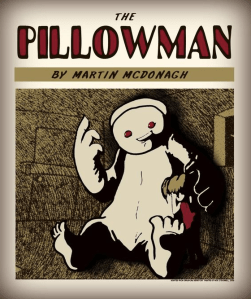
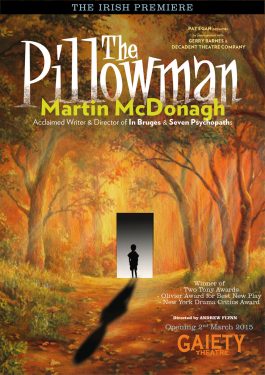
‘The Pillowman’ by Martin McDonagh, a play  (2003) – 83 pages


My favorite movie of all the 2000s so far is probably ‘In Bruges’, a dark comedy written and directed by Martin McDonagh and starring Colin Farrell and Brendan Gleeson. Since then McDonagh has written and directed the movies ‘Seven Psychopaths’ and ‘Three Billboards Outside Ebbing, Missouri’. When I found out that Martin McDonagh had been writing plays before he became a movie director and writer, I just had to read one of them.

‘The Pillowman’ is a dark comedy about a mom-and-dad killer and his child killer brother. This play is grossly offensive to a person’s sense of right or decency, and it’s great fun.

Katurian and his brother Michal are sitting in prison, waiting to be executed, Katurian for killing his parents and Michal for killing three little children.

Michal: “Don’t cry, Kat. It’ll be alright.”

Katurian: “How will it be alright? How will it ever be alright?”

Michal: “I dunno. It’s just sort of something you say at a time like this, isn’t it? ‘It’ll be alright.’ Course it won’t be alright. They’re going to come and execute us any minute, aren’t they? That isn’t alright, is it? That’s almost the opposite of alright. Mm.”

This play is definitely only for those with a warped sense of humor. I like it.

Michal: “What? My story was a happy ending. You came and rescued me and you killed Mom and Dad. That was a happy ending.”

Katurian: “And then what happened?”

Michal: “And then you buried them out behind the wishing well, and put some limes on them.”

Katurian: “I put lime on them. ‘Put some limes on them.’ what was I doing, a fruit fucking salad?”

At one point in the play, there is the following stage direction:

The dreadful details of the following are all acted out on stage.”

And in this Martin McDonagh play, that which follows is indeed dreadful.

I really couldn’t figure out the point of this play or if it even has a point. But who cares?

However much of the dialogue in ‘The Pillowman’ is grim fun, and I will continue to watch the movies of Martin McDonagh as they come out. Especially, because of  ‘In Bruges’.


Grade:   B


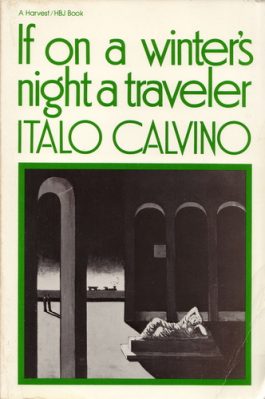
‘If on a Winter’s Night, a Traveler’ by Italo Calvino – Advanced Calvino


‘If on a Winter’s Night, a Traveler’ by Italo Calvino (1979) – 253 pages        Translated from the Italian by William Weaver


The best description of ‘If on a Winter’s Night a Traveler’ is provided by Italo Calvino himself within the novel itself:

I have had the idea of writing a novel composed only of beginnings of novels. The protagonist could be a Reader who is continually interrupted. The Reader buys the new novel A by the author Z. But it is a defective copy, he can’t go beyond the beginning….He returns to the bookshop to have the volume exchanged….

I could write it all in the second person: you, Reader….I could also introduce a young lady, the Other Reader, and a counterfeiter-translator, and an old writer who keeps a diary like this diary….”

So here we have the first chapters of ten separate novels, each with its own separate characters and situations. This is the challenge that Italo Calvino has set for himself, switching the narrative ten times while somehow maintaining the readers’ interest

This is the kind of ridiculous challenge the members of the avant-garde literary group OULIPO, which included Georges Perec and Italo Calvino among others, would set for themselves.

Each chapter starts out with a section where You the Reader is the main character who is just trying to find a good novel to read but keeps getting interrupted after the first chapter for some technical or ridiculous reason and must start again still another novel on the first chapter. Along the way You the Reader meet the female Other Reader Ludmilla to whom you are strongly attracted.

Then each chapter winds up with the first chapter of one of the ten different novels that You the Reader begins.

It took me a long while to warm up to ‘If on a Winter’s Night a Traveler’. Why would I want to read the first chapters of ten different novels, each with its own separate characters and plots? I longed for the simple playfulness of Calvino’s early work like his Our Ancestors trilogy (‘The Cloven Viscount’, ‘The Baron in the Trees’, and ‘The Nonexistent Knight’) or of the stories in his whimsical ‘Cosmicomics’ series. My first impression was that “If on a Winter’s Night…” was way too cluttered and convoluted for its own good.

The plot, as well as the humor, of “If on a Winter’s Night…” is more convoluted, more difficult to follow, than in his earlier novels.

It is complicated tying all these first chapters of ten novels together, and Calvino makes it as far-fetched as possible. That is part of the fun, but this work lacks the simple playfulness of many of his earlier novels.

In each of the ten first chapters of novels, the reader must cut through a thicket of obscure references to get to Calvino being his usual playful self. It is hard work to read this novel, harder than it ought to be.

By all means read Italo Calvino because he is one of the best, but start with something else other than “If on a Winter’s Night…”.

‘If on a Winter’s Night, a Traveler’ is not for beginners to Italo Calvino. People new to Calvino should start with the ones I mentioned above and fall in love with his playful writing right away as they are most likely to do.


Grade:    B


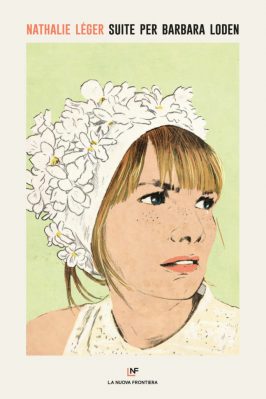
‘Suite for Barbara Loden’ by Nathalie Léger – The Movie ‘Wanda’ and its Director Barbara Loden


‘Suite for Barbara Loden’ by Nathalie Léger (2012)  123 pages Translated from the French by Natasha Lehrer and Cecile Menon


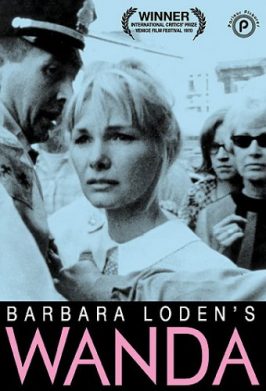
Barbara Loden was a real person, a United States actress who also directed one movie in 1971 titled ‘Wanda’.

Nathalie Léger is not only fascinated by the movie ‘Wanda’; she is also fascinated by the life of Barbara Loden. In this book, exact detailed descriptions of each and every scene from the movie Wanda are inter-cut with biographical accounts of incidents from Barbara Loden’s own life.

One requirement is to watch the movie ‘Wanda’ first before reading this book which is what I did. Otherwise you will not be able to follow this book.

The actress/director Barbara Loden started out as a “hill-billy’s daughter” in Asheville, North Carolina. She moved to New York in 1949 at age 16 and found minor success as a model for detective and romance magazines, then worked as a pin-up girl, model and dancer at the Copacabana nightclub. Then she started studying acting. She joined the cast of the Ernie Kovacs Show as a “scantily clad” sidekick to Kovacs. By 1957, she also appeared on stage in a play with Robert Redford. She had minor film roles in Elia Kazan’s ‘Wild River’ and also the film ‘Splendor in the Grass’ and she took up with Kazan who was 23 years older than she. They were married in 1966.

Barbara Loden’s greatest acting success was playing the role of Maggie in the stage play of “After the Fall” in 1964 which Arthur Miller wrote about his recently died ex-wife Marilyn Monroe. Loden won the Tony Award for Best Featured Actress.

Although Loden preferred the stage and had claimed that she hated movies saying “People on the screen were perfect and they made me feel inferior”, she did direct and star in the low-budget but heartfelt film ‘Wanda’ which won the International Critics Prize at the 1971 Cannes Film Festival.

‘Wanda’ is an honest portrayal of a woman made vulnerable by her own weaknesses, misdeeds, and failures who slides through her life by any means she can. Early in the movie Wanda goes to court for a custody hearing for her children.

When she comes in we already know all about her, the husband has let it all out, we know he has to prepare his own breakfast, that she doesn’t care about anything, doesn’t take care of the kids, neglects them, spends her days lying on the couch.”

Wanda agrees that their children would be better off with their father than with her.

Because she is alone, Wanda drifts aimlessly into bad relationships and situations. To whom is she vulnerable? She is vulnerable to unscrupulous men.  Critic David Thomson says the following:

Shot originally in 16mm Kodachrome, ‘Wanda’ is full of unexpected moments and raw atmosphere, never settling for cliché in situation or character.”

The movie is a fine example of the cinéma vérité style.

Nathalie Léger’s mind is totally engaged with every detail of the movie ‘Wanda’. No one has ever watched a movie as closely as Nathalie Léger has watched ‘Wanda’. She gives us the backstory of every moment in ‘Wanda’.

Barbara Loden died of breast cancer at the age of 48 in 1980.


Grade:   A