Archive for August, 2021

‘The Passenger’ by Ulrich Alexander Boschwitz – To be a Jewish Man in Germany on and after Kristallnacht


‘The Passenger’ by Ulrich Alexander Boschwitz (1938) – 266 pages           Translated from the German by Philip Boehm
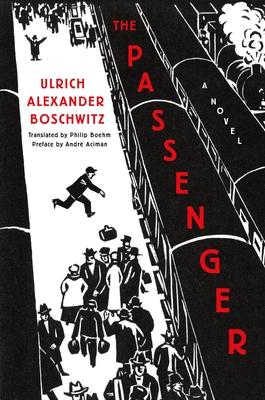
 

The night of November 9-10, 1938 – Kristallnacht in Germany, the Night of Broken Glass.

I haven’t committed any crime, and not once in my life have I had anything to do with politics. Nevertheless they came to arrest me and they smashed up my apartment. Not entirely, but to a great extent. They’re arresting Jews, as you know.”

The Germans are consumed with Nazi hatred for the Jewish people, and each Jewish person faces annihilation. ‘The Passenger’ vividly captures the sense of impending doom which all the Jewish people there must have felt.

For a Jew the entire Reich is one big concentration camp.”

Otto Silbermann is on the run. He should have gotten out of Germany years or months ago. He moves from train to train to escape Germany and avoid the authorities. He does have the ultimately slight advantage of not looking Jewish. However his passport is marked with a big red “J”. His wife is non-Jewish, but Otto still fears what the Nazis will do to her. He fought for the Germans in World War I but the new breed of Nazis are a people driven by hate.

Don’t walk too fast or too slow. Because if you stick out precisely when you’re trying so hard not to, if you look suspicious because you’re trying so hard not to, if you look suspicious because you’re trying to look as unsuspicious as you can…My God, what do these people want from me?”

Ulrich Alexander Boschwitz

Otto’s non-Jewish business partner uses Otto’s impending arrest as a bargaining chip to cheat him out of large amounts of money. The guy who buys his apartment does the same.

‘The Passenger’ is a rapid read, a thrilling page turner that is filled with suspense.

The discovery and publishing of this novel written by 23 year old Ulrich Alexander Boschwitz in four weeks after Kristallnacht is quite a story also which you can read about here.


Grade:   A
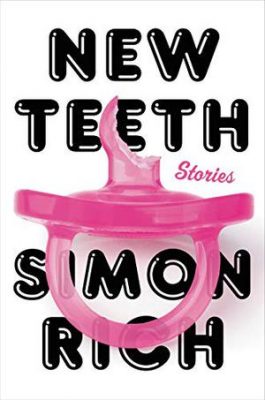


‘New Teeth’ by Simon Rich – Wildly Imaginative Humorous Juxtapositions


‘New Teeth’ by Simon Rich, stories (2021) – 227 pages


The stories in ‘New Teeth’ are wildly inventive and laugh out loud funny. I would recommend this collection to anyone but especially to young adults who are beginning to develop an interest in literary fiction.

Simon Rich takes typical situations and gives them an off-the-wall twist.

In the first story ‘Learning the Ropes’, the two pirates Black Bones the Wicked and Rotten Pete find that they have a 3 year old girl stowaway who was left on their ship. The story juxtaposes pirate lingo with modern parenting psychobabble to comic effect. Thus we have “Shiver me timbers” alongside “acting passive-aggressive”, “walking the plank” with “limit testing”.

The second story is called “LaserDisc”. Remember the LaserDisc machine, vintage 1991, that was supposed to replace the VHS and Beta players with a much better sound and picture quality, only to be quickly cast aside by the advent of the DVD player? Now it is 2018.

They’re watching you ironically,” explained the DVD player. They’re watching you to laugh at how you suck.”

The LaserDisc machine began to weep, and thick tears of battery acid slid down his display screen. He sobbed so hard, his wires convulsed, shooting sparks into the air, like something out of the classic film Backdraft.”

That mention of Backdraft as a classic film is a nice humorous touch.

‘The Big Nap’ is a funny title for a detective story with its play on ‘The Big Sleep’. In ‘The Big Nap’ our world-weary tough detective spouts most of the conventions that are found in detective stories. Except our detective is only two years old.

He searched the couch for clues, but all he found were Cheerios.”

Then there is ‘Chip’ who is an office robot who gets caught up in bureaucratic office politics.

The ability to be humorous is not spread out democratically. At any given time, there are only a few people in the world who can actually make me laugh. Simon Rich is one of them.

In ‘Case Study’ a London physician rescues the deformed Elephant Man Joseph Merrick from a sideshow only to find that the Elephant Man forms a romantic attachment with the physician’s wife. The comedy here is in the physician’s less-than-scientific jealous reaction to this romance.

In “Raised by Wolves”, a woman raised by wolves and her husband entertain her parents for Thanksgiving dinner.

Only ‘Screwball’, the Babe Ruth baseball story, does not rely on this other-worldly juxtaposition device, and I think Simon Rich would be wise to study this story to see how it achieves its moving and comedic effects without resorting to these artificial ruses.

But every one of these stories in ‘New Teeth’ put a smile on my face. These are the first stories that I found that were laugh-out-loud funny in a long time, and I can well see why the New Yorker would want Simon Rich to write for them.


Grade:   A


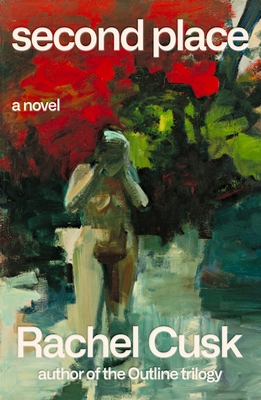
Second Place’ by Rachel Cusk – Don’t Let Me Be Misunderstood


‘Second Place’ by Rachel Cusk (2021) – 180 pages


Here is the first sentence of the narrative by the woman M in ‘Second Place’ that really stood out for me:

I had spent the evening in the company of a famous writer, who was actually nothing more significant than a very lucky man.”

This is one plain-spoken sentence that particularly resonated with me. I’m wishing that more sentences in this novel were as easy to follow. Often it was difficult for me to figure out the sophisticated and abstract reasoning of our M.

M, now in her late forties, lives in the coastal southern part of France. M is married to Tony, a supremely practical, successful, and even-tempered man. M herself has artistic longings and has been enthralled with the work of the artist L for a long time. She invites him to stay with them in the building which she calls their second place. She describes L as “wiry and small, dapper and goatish”, nearly the opposite of her husband. However, she is struck by his paintings. Unbeknownst to M and Tony, L brings along his quite young girlfriend Brett.

Throughout the novel, It is a struggle to follow our narrator M’s sophisticated speculations and ruminations, but I suppose I prefer this mental struggle to the overly simplistic reasoning often found in much other fiction.

Rachel Cusk is a special case. Her style of writing is so finely tuned, she can get away with a level of lofty abstraction that most writers wouldn’t dare.

The pattern of change and repetition is so deeply bound to the particular harmony of life, and the exercise of freedom is subject to it, as to a discipline. One has to serve out one’s changes moderately, like strong wine.”

Just when you think M is going to go wandering off into the cosmos with her thoughts, she brings them back to Earth with strong wine.

However there are many other sentences from M that if you can comprehend and appreciate their full meaning, you are a more perceptive reader than I am.

An image is also eternal, but it has no dealings with time – it disowns it, as it has to do, for how could one ever in the practical world scrutinize or comprehend the balance sheet of time that brought about the image’s unending moment? Yet the spirituality of the image beckons us, as our own sight does, with the promise to free us from ourselves.”

All this dense theorizing about art camouflages the rather simple theme of the novel which I assume to be the never-ending conflict between the practical and the artistic or, in terms of this novel, the practical Tony and the artistic L.

In a final note to the novel, Rachel Cusk says she owes a debt to ‘Lorenzo in Taos’, a memoir by Mabel Dodge Luhan. and that L is the D. H. Lawrence figure in the story. ‘Second Place’ did make me curious about that memoir.


Grade:    B


.


‘Wild Swims’ by Dorthe Nors – Explaining the Inexplicable


‘Wild Swims’ by Dorthe Nors, stories (2018) – 124 pages              Translated from the Danish by Misha Hoekstra


How can I best describe these stories by Dorthe Nors?

Elsewhere the style of Dorthe Nors has been described as “minimalism that is under attack from within”. Each of her stories are only a few pages long but there is a lot in each story. All are written in short blunt sentences that don’t always connect with the sentences before.

A device that Nors often uses is for some image or small event in the current daily life of her character to set off in him or her a memory from childhood or previous family life. I suppose you could call her technique “stream of consciousness”, but in Nors’ case the stream is quite choppy and rough.

These stories capture the free flow of thoughts that enter her characters’ minds. Their current situation causes them to remember specific events from the past that are only peripherally related to it. Sometimes the connection is not immediately apparent. Sometimes it is just the funny way their minds work. Nors’ stories capture some of this absurdity of our thought and memory processes. However sometimes these slant-wise memories are the most profound and meaningful of all.

In ‘By Sydvest Station’ Karina and Lina are supposedly collecting for the Cancer Society but they are keeping the money themselves. Meanwhile Lina is thinking about the guy who dumped her and also her own cancer diagnosis.

In ‘The Freezer Chest’, the story starts out with a guy in her high school class telling his female classmate straight out “I don’t like you”.

In “Between Offices”, a guy visiting his company’s Minneapolis office sees the Mississippi River, and it spurs memories of his childhood and family.

The characters in these stories usually seem to have other things on their minds besides what they happen to be doing now.

Nors’ overriding theme is her characters’ connection or lack of connection with the people around them. More often than not, Nors is most interested in the lack of connection or self-imposed isolation of her characters. Her previous novel ‘Mirror, Shoulder, Signal’ was quite humorous, but these stories are more on the discomforting side.

Sometimes the references in the stories are a little too scattered for me to make much sense of them. In that case the story may have formed an interesting word picture but remained somewhat incoherent for me.


Grade:    B


The Case of the Missing Masterpiece, ‘East of the Mediterranean’ – A Real Life Mystery


The acknowledged Arabic masterpiece ‘East of the Mediterranean’ has never been translated into English. Why not?

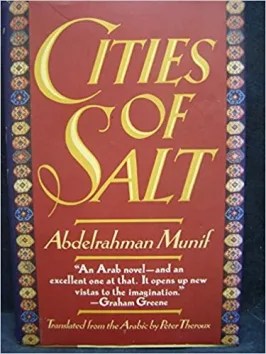
‘East of the Mediterranean’ was written in 1975 by Saudi Arabian writer Abdelrahman Munif. Some of his other novels had already been published to wide acclaim, even by fellow author Graham Greene. No other writer has had as deep an impact on changing my view of the world as  Abdelrahman Munif with the powerful novels in his ‘The Cities of Salt’ series. Yet ‘East of the Mediterranean’ is nowhere to be found.

Munif opened my eyes to how the real world operates. He was born a Saudi Arabian national in Jordan in the year 1933. He studied law in Baghdad and Egypt, and got his law degree from the Sorbonne and also got a doctorate in oil economics in Belgrade. In 1963, he was stripped of his Saudi citizenship for his political activity and his opposition to the Saudi royal family. Forced into exile, he then moved to Syria to work as an economist in the oil ministry and also as an editor of ‘Oil and Development’ magazine. In the late 1970s, he quit working in the oil industry to concentrate on his fiction writing. He died in 2004 at the age of 71.

His novels deal with the history of the oil industry in Saudi Arabia, how the United States and British oil interests came in and propped up these authoritarian Saudi princes with unlimited money and resources, destroyed the environment with their oil drilling and devastated the lives of the common people living there. His work so offended the rulers of Saudi Arabia that many of his books were banned for their scathing criticism of the oil industry in the Middle East and of the elite Saudis who played along with the oil companies.

The ‘Cities of Salt’ trilogy tells a compelling story which had a profound effect on me. It has been translated into English and is there for us to read. The message of ‘the three ‘Cities of Salt’ trilogy novels is that in the Arab oil countries, the Arabs have been the victims of their rulers and the foreigners. It is a gripping disturbing work. However according to Arabic sources, Munif’s most celebrated work is ‘East of the Mediterranean’ which has never been translated into English. Why not?

According to Arabic sources, ‘East of the Mediterranean’ reveals in graphic detail the torture and abuse that prisoners suffered in Arab prisons and detention centers of which Munif had personal experience. It highlighted the fact that “a human being in the lands east of the Mediterranean is cheaper than anything and a cigarette stub has more value than him”.

‘East of the Mediterranean’ is a political prisoner novel to rival the classic ‘Darkness at Noon’ by Arthur Koestler, yet no publisher has felt the need to translate it into English. It has been translated into German. One can obviously see that it would be deeply embarrassing to the Saudi elite and probably to some of the oil interests in the United States and Great Britain too.

Yet we readers of English are being denied an acknowledged masterpiece, and the reasons for this have never been explained at least to me.


‘The Land at the End of the World’ by Antonio Lobo Antunes – Part 2 : The Sublime Use of Simile and Metaphor

If you love words, you will probably love what Antonio Lobo Antunes does with them. Nearly every sentence captures its subject so brilliantly and devastatingly as to have left nothing unsaid. Multiple similes and vivid metaphors roll off his pen (or computer) in every sentence.

While reading ‘The Land at the End of the World’, I was so impressed with Antune’s skillful use of those two literary devices, similes and metaphors, that I decided to write an entire article about it. Never have I encountered such effective use of similes and metaphors. All quotes in this article are from that novel.

A simile draws a resemblance between two dissimilar things. Similes can usually be spotted by seeing the words “is like a” or “is ___ as a”. Similes are apt comparisons.

The ship’s orchestra blasted out boleros for the officers, who looked as melancholy as owls caught in the dawn light”.

speaking a strange language I could barely understand, which sounded like Charlie Parker’s saxophone when he’s not screaming out his wounded hatred for the cruel ridiculous world of the white man.”

kisses as loud as the sucking of sink plungers”

ah, the meals eaten in silence opposite one another, full of a rancor you can smell in the air like a widow’s cologne.”

We are therefore in a condition to go over to the bed to make love, a love as insipid as that frozen fish we ate in the restaurant, whose one eye fixed us with the dying glassy glare of an octogenarian among the faded green of the lettuce.”

these long winters as dull as blown light bulbs”

An exhausted soldier slings his rifle “over his shoulder as if it were a useless fishing rod”.

Knitting needles “secrete sweaters as they clashed like domesticated fencing foils”.

As these examples show, Antunes frequently goes over-the-top with his similes, brazenly and delightfully over-the-top.

A metaphor is the direct comparison of two unlike things by saying that one of them is the other.

inside my head, a slow October rain is falling on the sad geraniums of the past.”

If I were a giraffe, I would love you in silence, gazing down at you from over the wire fencing, as melancholy as a dockyard crane, I would love you with the awkward love of the very tall, and, thought-fully chewing a leaf as if it were gum, jealous of the bears, the anteaters, the duck-billed platypuses, the cockatoos, and the crocodiles, I would slowly lower my neck on the pulleys of my tendons in order, tenderly, tremulously, to nuzzle your breasts with my head.”

The war has made animals of us, you see, cruel stupid animals trained to kill”.

In the case of ‘The Land at the End of the World’, the effective use of these literary devices makes for a colorful entertaining read.


Grade:    A


‘The Land at the End of the World’ by Antonio Lobo Antunes – Part I : A Particularly Imbecilic War


‘The Land at the End of the World’ by Antonio Lobo Antunes (1979) – 217 pages              

Translated from the Portuguese by Margaret Jull Costa


Nothing of the many, many works of fiction I have read before has prepared me for the brilliant and devastating expressiveness of Portuguese writer Antonio Lobo Antunes.

But first, some background about the story here.

The Portuguese dictator Antonio Salazar sent his army off to a misbegotten, godforsaken war in southern Africa in order to quell an uprising and to keep Portugal’s African colonies including Angola and Mozambique.

Portugal’s involvement in the Angolan War (1961-1975) was almost as contemptible as the United States’ involvement in the Vietnam War.

The original title of this novel was “Os Cus de Judas” or “Judas’s Asshole”.

Here is a guy sitting and drinking at a bar telling his war story to the woman sitting next to him, intending to pick her up just for the night. And what a story it is, since it is the truth.

Our hero is one of those reluctant young men on a ship from Portugal “dragged from the native forests of their government offices, billiard tables, and clubs, and catapulted, in the name of vehemently held but imbecilic ideas, into two years of anguish, uncertainty, and death.” They are headed to southern Africa to fight the people who live there.

In the Portuguese army, our guy was a nurse or what we would call a medic. When someone gets shot in the stomach and their intestines come dribbling out, he is there to push them back in until the doctor arrives. Or when someone has their leg or legs shot or destroyed to the point that they will be amputated, he is there to console them.

We were fish, you see, in aquariums of cloth and metal, dumb fish, simultaneously fierce and tame, trained to die without protest, to lie down without protest in those army coffins, where we would be welded in, covered with the national flag, and sent back to Europe in the hold of a ship, our dog tags over our mouths to quash even the desire to utter a rebellious scream.”

This novel is not for the self-satisfied or the faint of heart. ‘The Land at the End of the World’ is for those who have adventurous minds and those who appreciate the magic of powerful coruscating evocative sentences.

Despite being a fairly short novel, this is not a quick read. Each sentence is filled with metaphors, similes, other literary devices, and historical and cultural references as well as allusions to pop culture such as Charlie Chaplin, Andy Warhol and even ‘Fifty Ways to Leave Your Lover’ by Paul Simon. It is exhausting yet wonderfully flamboyant and outrageous.

Extraordinary fiction sometimes requires extraordinary readers. Antonio Lobo Antunes is a writer who could make even a Leo Tolstoy feel inferior.

In my next article, I will examine Antunes’ skillful and sublime usage of literary devices such as similes and metaphors and others by providing examples from his writing.

In my efforts to fully appreciate every one of its magnificent sentences, I found reading ‘The Land at the End of the World’ slow-going but richly rewarding. I found reading this novel akin to digging up a literary treasure.


Grade:    A


‘Here is the Beehive’ by Sarah Crossan – A Modern Novel in Free Verse


‘Here is the Beehive’ by Sarah Crossan   (2020) – 266 pages


Over the years I have had good luck reading novels in verse. I must admit that I find a lot of other regular short stand-alone poetry too abstract and impenetrable for my taste and comprehension. However when a novel is written in verse, I find that the verse usually moves the story along in a pleasant rhythmic way. Here is a list of some of my favorite novels in verse. I actually seek out verse novels to read.

‘Here is the Beehive’ is my latest written in a lyrical free verse. This is the first novel for adults written by Sarah Crossan. She has written numerous books for children and young adults.

‘Here is the Beehive’ on the contrary has a very adult subject. It is narrated in the first person by estate lawyer Ana Kelly and is addressed to Connor Mooney, a man with whom she has been carrying on a three-year affair, unbeknownst to their respective mates. Connor has already died in the first chapter in a bicycle accident.

I miss the freckles on your shoulders,

the wispy tufts of hair there

and the clean soapy smell of you.”

Somehow despite Connor and Ana’s intense affair, they have kept it a secret. When Ana and her husband Paul go on a trip,

Paul showers,

leaving the door to the en suite

open so I can’t get even

ten uninterrupted minutes

to think of you and touch myself.”

After Connor’s death, Ana secretly attends his funeral and encounters his wife Rebecca there.

She is forty-six, rich, with incredible posture.

But she is nervous, I think, busily fussing.

Her hair is greasy.”

This is a tale as old as time, a woman’s obsessive adulterous love affair with a man who ultimately has no intention of leaving his wife. The man’s death provides an original slant to the story.

I imagined you writing a list –

pros and cons

me and her

for and against

good and bad

stay or go

wondering how I measured up

and

knowing I was always the loser.”

Both couples have children, but the children play barely any role in the story.

I found ‘Here is the Beehive’ a fresh affecting take on an old story and found the writing both lively and sociable.


Grade:    B+


‘Shaky Town’ by Lou Matthews – The Real Los Angeles?


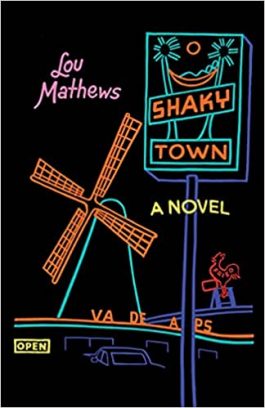
‘Shaky Town’ by Lou Matthews (2021) – 232 pages

Before I read this work, I did not know that Shaky Town was a nickname for Los Angeles. Shaky Town refers to Los Angeles due to the earthquakes that make the buildings shake.

There are two sides to Los Angeles. There is Hollywood, the unreal Los Angeles most of us know about, and then there is the real Los Angeles.

Here are two surprising statistics about Los Angeles. Latino or Hispanic residents of any race make up over 47% of the population of the city while non-Hispanic whites make up less than 26% of the population. A definite south-of-the-border atmosphere infuses the city, and Mexican-Spanish words are in common usage.

‘Shaky Town’ is a collection of stories and a novella that all take place in the real Los Angeles. A novel? Not so much.

The first story ‘Crazy Life’ is told from the point of view of a young woman whose boyfriend Chuey calls her from jail because he was involved in a drive-by shooting.

The second story ‘The Garlic Eaters’ is written from the point of view of a Korean small convenience store owner who is beset by a group of drug junkies who steal merchandise from him and one time severely beat up his wife to the extent she was in the hospital. He buys a gun.

“So who you dealing with there?” Again, he answered his own question. “You got crackheads, right? You got street gorillas, crazies, glue-sniffers, red freaks, junkies. You got kids, right?”

Most of these stories here deal with the rough part of Los Angeles. The violence and cruel acts seemed somewhat excessive and sensationalistic, beyond the point of realism even for this rough neighborhood. Is the picture presented here overly grim? Having never been to Los Angeles, I cannot judge.

One device that the author uses a few times is to end a story with a shocking particularly violent act. These stories reminded me of Chekhov’s famous line, “If in the first act you have hung a pistol on the wall, then in the following one it should be fired. Otherwise don’t put it there.”

As I mentioned before, as well as the stories there is a novella, also called ‘Shaky Town’. It deals with a teacher facing an abusive situation in a Catholic high school. The novella has some surprising and engaging twists.


Grade:   B