Archive for July, 2021

‘Sweet William’ by Beryl Bainbridge – A Quintessential 1970s Novel


‘Sweet William’ by Beryl Bainbridge  (1975) – 204 pages
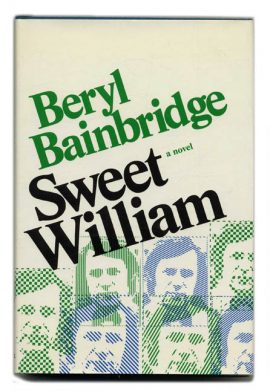
 

‘Sweet William’ captures the ambiance – the permissive atmosphere and the sexual politics – of the early 1970s. Ann is a young woman who has had relationships with a few men, even a short go with a married man. Now she is engaged to Gerald. However nothing has prepared her for her encounter with William.

Despite being engaged to Gerald who has headed off on a trip to the United States, she is swept off her feet by the insufferable playwright William.

You don’t want to expect normality from him. He’s an artist after all.”

He says the most beautiful things. He is an elemental charmer, and soon she winds up in bed with William.

There were no preliminaries. Nor did he take any precautions.”

Only later does she discover that he has been divorced and has kids. Only later does she discover that he has also remarried and thus has another wife now. Only later does she discover that he has started something going with her younger female cousin Pamela. Only later does she discover that she is pregnant.

She had been happier when he indicated love, not practiced it.”

But Ann still figures she can work things out with William. She loves him.

Oh he was terribly sincere. At least that first week.”

Ann’s mother Mrs. Walton takes a differing view of things. Her mother got married to a British officer shortly after he returned from World War II.

You talk about modern life and things being different now. You haven’t learned anything at all. All this permissiveness has led you young girls into slavery.”

Things are definitely different for Ann in the 1970s from her mother’s World War II times. Her mother and her aunt preferred the company of women and to “leave the nasty men alone with their brutish ways and their engorged appendages”.

It was very difficult for her under the circumstances. All those years of duty and conformity gone for nothing. Of no value. Twenty years later the old standards swept away as if they had never been.”

In our time more than forty years later, Sweet William would be accused of serial sexual harassment which doesn’t sound so sweet.

It is difficult to comprehend that we are now farther distant from the 1970s than those people in the 1970s were distant from the time of World War II.


Grade:    B+
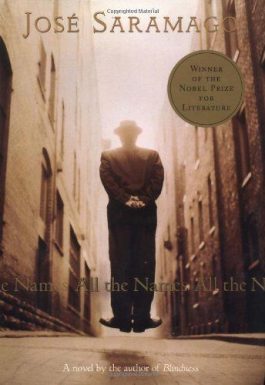


‘All the Names’ by Jose Saramago – A Central Registry of Records for the Living and the Dead


‘All the Names’ by Jose Saramago   (1997) – 238 pages             Translated from the Portuguese by Margaret Jull Costa

Jose Saramago was one of the few modern authors who could fully imagine complete meaningful allegories which he did time and time again. I have read a lot of the work of Saramago who I consider an absolute master of fiction, and ‘All the Names’ is another deeply intelligent work. However I found reading its long sentences and longer paragraphs rather slow going.

Of all of the works of Jose Saramago that I have read so far, ‘All the Names’ is the one that I have found to be the most difficult to read. For readers new to Saramago, my recommendation would be not to read ‘All the Names’ until you have read a few of Saramago’s other novels. ‘Blindness’ was a best seller; it has been a gateway into Saramago’s work for many people. I have found his two novels based on religious figures, ‘The Gospel According to Jesus Christ’ and ‘Cain’ to be quite accessible and enjoyable. Saramago’s amazing novel about fellow Portuguese writer Fernando Pessoa, ‘The Year of the Death of Ricardo Reis’, is another entertaining strong passage into his work.

However we are here today to discuss ‘All the Names’ which is probably the most metaphysical of all of Saramago’s work.

Our main character Senhor Jose, no last name, is a lowly clerk in the Central Registry of Births, Marriages, and Deaths. Above him are senior clerks, above the senior clerks are the deputies, above the deputies is the all powerful Registrar. Each level of management must keep their employees operating quietly and smoothly, thus not causing any problems for the next upper level of management. If you have ever worked in a business or government office, you know all about the bureaucratic decision-making process here.

In the Central Registry’s filing system. The records for the dead are kept separate from those for the living. That means that when any person in the living section of records dies, a clerk must retrieve their record from the living section and take it to the vast rarely-accessed dusty dead archive.

With all this trafficking between the living and the dead, you can easily see the allegorical possibilities here, and Saramago takes full advantage of them. ‘All the Names’ is profound as all of the work of Saramago is profound.

Our main character Senhor Jose becomes captivated with the search for an unknown woman when he comes upon her record in the living section. His quest for this woman begins quite humorously, but soon turns into a desperate obsession which interferes with his work life at the Central Registry. The Registrar sees certain actions that Senhor Jose takes as “mistakes committed against oneself, born of loneliness”.

‘All the Names’ is indeed profound.

Senhor Jose both wants and doesn’t want, he both desires and fears what he desires, that is what his whole life has been like.”

As Senhor Jose descends ever deeper into his compulsive obsession to find this woman, the reader gets long interminable paragraphs, some several pages long, of conversations with himself or, more absurdly, with the ceiling of his room. This is where I started to have problems as these expressions of the inner turmoil of his mind went on and on with little relief for the reader. I found all these lengthy machinations of Senhor Jose’s mind rather tedious to read.


Grade:    B


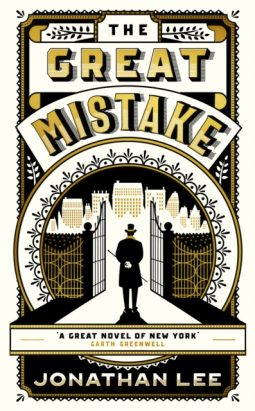
‘The Great Mistake’ by Jonathan Lee – The Man Who Got Things Done


‘The Great Mistake’ by Jonathan Lee  (2021)  –  289 pages


I pride myself on knowing a lot about United States history, but I had never heard of Andrew Haswell Green before. Green is the primary character of ‘The Great Mistake’. He was a New York City lawyer and city planner and civic leader, and he was responsible for many of the things New York City is famous for including Central Park, the Bronx Zoo, the New York Public Library, the American Museum of Natural History, and the Metropolitan Museum of Art. Green was also responsible for consolidating the five boroughs of New York into one city. At the age of 83, he was shot to death outside his home on November 13, !903.

‘The Great Mistake’ alternates between two modes, a fictional biography based on details from Green’s life and the police investigation into the circumstances of his shocking death.

The power of ‘The Great Mistake’ is in its individual sentences. The sentences are subtle and expressive and have a dramatic immediacy that puts you on the side of our hero Andrew Haswell Green. If you are the kind of reader who values fine evocative sentences, by all means read ‘The Great Mistake’.

The concert of barely connected moments that make up any life.”

If you can write lines like that, congratulations, you are a writer.

The entire novel left me quite moved. Our author Jonathan Lee finds the words and the scenes to express truths that are not often expressed. Green was a man who had to overcome circumstances which became all too apparent to him in childhood in order to accomplish what he did. Whether we are aware of it or not, each of us has had a childhood situation which has shaped most of our entire lives. That childhood situation includes:

Our parents attitudes toward us

Our own interests and proclivities

Our relations with our brothers and/or sisters

Other factors

Did anyone in the heavens really believe in him, Andrew Green, this awkward boy below, his spirit, his potential for good? His own question frightened him into muteness, the kind of silence the living rarely know, the moon hanging sullied by smoke in the sky, filthy with the expulsions of men.”

Central Park, New York City

Later Green leaves the childhood farm for New York City.

To be a gentleman in New York, one needed an education. To obtain an education in New York, one needed money. To obtain money in New York, one needed to be a gentleman. The city formed its circles.”

‘The Great Mistake’ was a very poignant and meaningful reading experience for me. Jonathan Lee finds the words and the scenes to express truths that are not often expressed.


Grade:    A


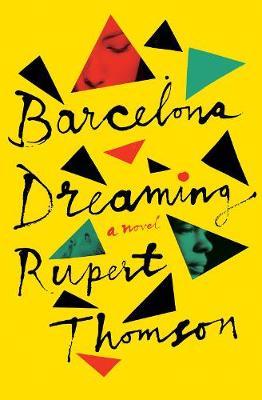
‘Barcelona Dreaming’ by Rupert Thomson – Day and Night Life in Barcelona


‘Barcelona Dreaming’, stories, by Rupert Thomson (2021) – 215 pages


Rupert Thomson lived in Barcelona, Spain, from 2004 to 2010. Thomson created the first draft of these three stories while still living in Barcelona.

Barcelona is a seaport on the Mediterranean in northern Spain. It is in a region near the Pyrenees called Catalonia and they speak their own language Catalan. It is the fifth largest city in the European Union with over five and a half million people, and in many ways it resembles the towns and cities along the southern coast of France and the French Riviera more than the rest of Spain.

The three stories are “The Giant of Sarria”, “The King of Castelldefels”, and The Carpenter of Montjuic”. I suppose Sarria, Castelldefels, and Montjuic are place names in or near Barcelona.

The stories are all written in the first person. Each is about 70 pages long, and I would consider them long stories rather than novellas. All of the stories center around somewhat odd offbeat relationships between men and women.

In the first story, a woman in her forties tells of her love affair with a young guy in his early twenties from Morocco. She lives in a fashionable section of Barcelona; he lives in a slum where mostly illegal immigrants live. While one of her friends try to dissuade her, she continues the affair.

I felt the part of me that might have questioned what I was doing fly off into the night, fast as a flung stone.”

In the second story, it’s the other way around. A 65 year-old man tells of his affair with a Brazilian woman in her thirties who has a 10 year-old son.

The third story is not about an affair. A man becomes friends with another guy who lives in his apartment building who intrigues him.

What if in a roundabout, almost allegorical way he was trying to warn me about himself? At first glance, he might seem open and accessible, someone you could talk to, but he was capable of unexpected and terrifying transformations.”

These stories share a distinctive enigmatic exotic atmosphere which I suppose is Barcelona. That some of the same peripheral characters float through the three stories somewhat loosely ties them together. Notice that on the cover above are the words “a novel”. Hardly.

These stories capture the lives of these diverse characters in this city of Barcelona without trying to instruct us with a moral or any other lesson. I’m too old to learn anything so I actually prefer fiction that doesn’t try to teach me lessons.


Grade:    A-


‘Secrets of Happiness’ by Joan Silber – A Lot of Random Persons Doing a Lot of Random Things


‘Secrets of Happiness’ by Joan Silber   (2021) – 274 pages


Secrets of Happiness’ is filled with men and women and their always frenetic activities. All this signifies very little. The characters in these very loosely linked stories go to the far reaches of the world, usually far south eastern Asia, and get involved in myriad affairs, but nothing has any real impact.

As far as I am concerned, all the characters could have been named what’s-his-name or what’s-her-name. They were all quite interchangeable.

An insignificant peripheral character in a previous story becomes the main protagonist in the next story. This is a valid stance as every person’s existence is significant on its own terms. However each story is an accumulation of near arbitrary events and movements for these people without any underlying motive.

The novel is divided up into seven sections each from a different character’s perspective except that the first and last sections are from a character named Ethan’s point of view.

The title ‘Secrets of Happiness’ is supposed to be the unifying factor that turns these loosely linked stories into a novel. So what are the secrets of happiness? About the only guidance that I found in this novel is to follow your own proclivities. However there is a line of dialogue in the book that contradicts that advice:

People think that if they are honest about their cravings, it makes anything OK,” I said. “That’s a fallacy of modern life.”

The onrush of incidents and forever more, more minor characters leaves no room for any real depth. All we are left with is a surface word-picture of frenetic activity and scattered casual acquaintances.

There were a couple of individual lines which I did enjoy in this “novel”:

“She’d been an English major in college, perfect preparation for not having a job,”

My mama so poor the ducks threw bread at her.”

However, overall, I found this work off-putting. You can read the more favorable reviews of ‘Secrets of Happiness’ after you read mine. There are some out there.


Grade:    C-


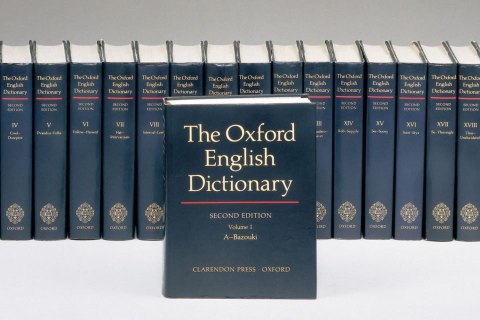
‘The Dictionary of Lost Words’ by Pip Williams – She Grew Up With the First Oxford English Dictionary


‘The Dictionary of Lost Words’ by Pip Williams (2021) – 359 pages


This book began as two simple questions. Do words mean different things to men and women? And if they do, is it possible that we have lost something in the process of defining them?” – Pip Williams

‘The Dictionary of Lost Words’ is a very traditional substantial novel, and that is not at all a criticism. It is also a very perceptive and impassioned story.

The time is the early 1880s. Six year-old Esme is the daughter of one of the lexicographers, the men who are assembling the very first Oxford English Dictionary. Her mother died in childbirth, so the men allow her to stay around in the Scriptorium or as she calls it, the Scrippy, where her father and other men are at work putting together the dictionary. Even as a young child, Esme develops an early liking of words and their meanings.

A family maid Lizzie takes care of Esme as Esme grows up, and the bond between them becomes like that of a mother and daughter. The maid’s way of talking is much different from that of the learned Oxford men who are working on the dictionary.

The world ain’t like the Scrippy, Essy. Words don’t lie around waiting for some light-fingered girl to pick them up.” She turned and gave me a reassuring smile.

That’s just the point, Lizzie. I’m sure there are plenty of wonderful words flying around that have never been written on a slip of paper. I want to record them.”

Esme develops a life-long interest in the common words that were excluded by the Oxford authorities because they were used by the poor or by women. Some of the words Esme hears from Lizzie and Lizzie’s friends are not in the dictionary because they have never been written down. Some of the words are Old English words written even by Chaucer but are excluded by the Oxford men as being “obscene”.

One of the tamer examples of a word that is excluded is a “git”. The word is now in the Merriam-Webster dictionary defined as “British; a foolish or worthless person”. Another word that was lost is “knackered”.

The first Oxford English Dictionary took over 40 years to complete, Each of its twelve volumes was published as it was completed. When Esme grows up, the Oxford men allow her to work on the dictionary, not as a lexicographer but performing other necessary tasks. Along the way, Esme compiles her own list of words that have been excluded from the dictionary.

And also along the way, we get Esme’s own dramatic and poignant life story.

Some of the Oxford lexicographers are more dogmatic than Esme’s father or the head editor, Dr. James Murray, and in time Esme learns to tell these men off:

You are not the arbiter of knowledge, sir. You are its librarian.” I pushed Women’s Words across his desk. “It is not for you to judge the importance of these words, simply to allow others to do so.”

I found ‘The Dictionary of Lost Words’ to be a very satisfying stimulating read that raised some issues about language and words that need to be raised.

The Dictionary, like the English language, is a work in progress.” – Pip Williams


Grade:     A