Archive for November, 2020

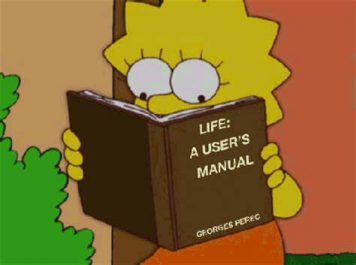
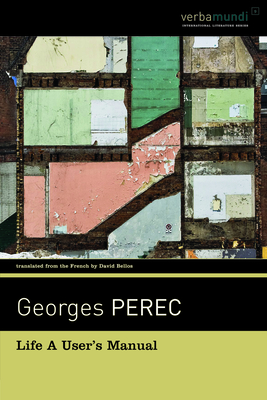
‘Life A Users Manual’ by Georges Perec – A More Traditional Review


‘Life A Users Manual’ by Georges Perec (1978) – 568 pages         Translated from the French by David Bellos

Reading ‘Life A Users Manual’ was an exasperating yet rewarding experience.

I am not going to pretend that I loved every one of the interminable lists of objects that Perec inundates us with or all the ornate or banal items on these lists. I remember one time when Perec is enumerating and lengthily describing all the appliances in a home improvement catalog, I skipped a couple of pages until the list finally ended. And I’m someone who usually has to read every word of a fictional work in order to feel that I’ve given it a chance. I certainly felt bad about skipping whole pages, but I could not see the point in reading them.

It took me awhile to discover the playful, antic, mischievous spirit of this work.

In the chapter “Valene (Servants Quarters, 9), Perec gives us a list of 179 story ideas including:

82 The lady who was interested in hoarding clockwork mechanisms

108 A painstaking scientist examining rats’ reactions to poisons

Some of these story ideas Perec later uses in ‘Life A Users Manual’.

At one point, Perec includes in one of his tales the story of someone who works for a company that produces a dictionary. New words are constantly being added to the dictionary, but Perec imagines someone whose job it is to remove words from the dictionary in order to make room for the new words. How do you decide that a word is no longer of use, for example a locomotive horse for children called a velocimane? Of course Perec gives us other examples of words which are removed.

LOUPIAT (masc. nn) Fam: Drunk “She was bloody stuck with her loupiat of a husband.” (E. Zola)

Georges Perec is the kind of writer who can find the magic in old dictionary definitions of obsolete words.

A Bedroom at 11 Rue Simon Crubellier

You must approach Perec with the spirit that he might just be putting you on, playing a trick on you. He might be taking advantage of your good intentions as a reader. You might not get the joke right away, but when you look back on it you might figure out that he was fooling you. The last thing you can assume is that Georges Perec is being straight with you. There is always a twist.

At last ‘Life A Users Manual’ with all of its endless lists and misbegotten tales broke down my resistance to it.


Grade:   A-


The Distinguishing Characteristics of ‘Life A Users Manual’ by Georges Perec which I Have Now Read


Some of these items may be contradictory. So be it.

In ‘Life A Users Manual’, the lives of all the people who lived in the apartment building at 11 Rue Simon Crubellier in Paris fit together like a jigsaw puzzle.

We are introduced to the residents of each apartment in the building by a description of the furnishings in the apartment. Georges Perec takes a sensuous pleasure in describing the objects in the rooms of the various flats in the building. These descriptions of objects are opulent, colorful, exquisitely detailed, and exceedingly long. There were such greater varieties of objects back in the days before all our products became mass-produced, uniform, and always the same with little diversity or spirit.

George Perec is a completist. Perec cannot mention anyone drinking whiskey without describing the picture on the label of the whiskey bottle (“a jovial wench giving a dram to a mustachioed grenadier in a bearskin hat”).

When Perec makes a list, it is sure to be exhaustive and exhausting. When listing all of the food provisions stored on the left hand wall shelves of the Altamonts’ cellar, he lists (I counted; I may have miscounted, but this number is close) 121 items including large jars of mustard and gherkins to sardines in oil to vermicelli to sausage and lentil stew. I found these massive lists which go on for pages and pages quite exasperating. The lists for furniture and room decorations and clothing tend to be somewhat more interesting, but the list of home decorating and outfitting appliances found in a catalog was even less engaging and more lengthy.

This is the busiest novel I have ever read. It wears you down, your resistance.

For some time, I considered the possibility that Perec created these interminable lists of sometimes banal items as a sly comic trick on his readers, and I still believe that may be partially true.

The reader can’t be sure if he is being conned or enlightened. In the long run, it probably doesn’t matter.” – Paul Auster

With his elaborate lush descriptions and long, long sentences, Perec’s style is the opposite of minimalism. I will call his style maximalism.

In many of the sentences I would often lose track of what Perec was first discussing as he moved on to involved situations of his many, many characters or long lists of ornately described objects. This was quite vexing for me.

If you could make your way through each long sentence without getting distracted, you are a better reader than I.

Georges Perec was a member of Oulipo, the Parisian group which had/has as its goal “constrained writing”. One of Perec’s constraints must have been that before telling his characters’ story, he had to describe all the flat’s furnishings and objects of interest. I can see how describing these objects in the rooms could be a spur to creating an interesting story.

I much preferred the sections in the novel where Perec tells a straightforward story without all the clutter.

Certainly ‘Life A User’s Manual’ is often quite annoying for the reader, but it is also endlessly inventive.

Life A Users Manual’ gives the lie to the literary trend of minimalism. Sometimes more is more. Sometimes more is better.

When Perec finally gets around to telling stories about his characters, they are quite fun and humorous to read. If you are not overwhelmed by all the ornate description of objects in front of them, you will probably enjoy them.

Perec expends seven pages capturing the high drama of one of his main protagonists Bartlebooth fitting the 750 pieces of a wooden jigsaw puzzle into a finished picture.

His characters tend to be hugely successful at first but ultimately come to a disappointing end or visa-versa. Many of these human endeavors screw up.

To read Georges Perec one must be ready to abandon oneself to a spirit of play.” – Paul Auster
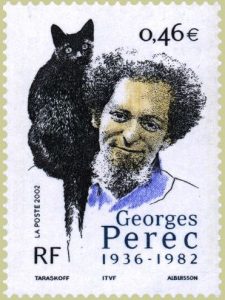
‘Life A Users Manual’ gives the lie to the literary trend of realism. Sometimes the more far-fetched, the better. Take, for example, when Perec likens the apartment building to an iceberg. I have rarely read anything so humorous as what Perec describes as being in the basement of the building. I’m learning to love lists.

Finally ‘Life A User’s Manual’ is a collection of tales. In the last index in the novel he lists all of the 108 tales therein and in which chapter they can be found.

Perec is mischievous. In the chapter titled “Foulerot, 3” after spelling out all of the other objects in the apartment, Perec spends a couple pages lavishing attention to a painting sitting on the floor of the apartment. Then he proceeds to tell the detective story which is depicted in the painting, a ridiculous story where all three of the suspects have murdered the Swiss diamond trader Oswald Zeitgeber who also commits suicide. The story has nothing to do with the apartment building besides being depicted in that picture, but it is fun to read anyhow.

Perec’s theme in ‘Life A User Manual’ appears to be the uselessness of human endeavor, perhaps starting with reading this novel. One could spend years tracking all the obscure references that Perec makes in ‘Life A User’s Manual’, but that would also be useless.

Here is what Perec seems to be really telling us. The main point in both literature and life is not the end destination but the trip along the way. You and I might as well take our time and enjoy the objects, people, and stories around us.

A more traditional review of ‘Life A User Manual’ will soon follow.


‘The Boy in the Field’ by Margot Livesey – An Economy of Style

‘The Boy in the Field’ by Margot Livesey    (2020) – 272 pages

‘The Boy in the Field’ begins with three children from the same family, a boy Mathew aged 17 and a girl Zoe aged 15 and another adopted boy Duncan aged 14, saving a life. They discover a boy in a field who has been severely injured in an assault. They get an ambulance thus saving his life.

The following chapters each are from the point of view of one of these three young siblings. Matthew, while trying to track down the assailant, finds out that his girlfriend has become involved with his best friend. Zoe has her first real love affair. Perhaps most poignant, Duncan begins a quest to find his real mother. Meanwhile their parents are having their own problems in their relationship.

The story takes place in Oxford, England.

The sparseness, economy of style, and the short declarative sentences in this novel reminded me of the trend of minimalism among United States writers more than those of England. Most of the famous minimalist fiction writers were from the United States following in Raymond Carver’s footsteps at the Iowa Writers Workshop. I do not associate minimalism with English writers at all.

Margot Livesey was born in Scotland and now lives in the Boston area. It turns out that she is now a professor of fiction at this Iowa Writers Workshop which is the epicenter of the minimalist movement in fiction.

Here is a good example of the minimalist style of Livesey from the character Zoe:

The pavement echoed under her new boots, the people she passed looked chilled, cramped, in their tiny lives, the blood inching through their veins. Litter rattled across the pavement; a beer can rolled in the gutter.”

I have read more than my fair share of minimalist fiction and I do like its plain no-nonsense style. It was quite unusual to find an English novel written in this fashion, but as shown above Margot Livesey does have the necessary credentials.

In the next to last chapter, all the main characters come together and the various strands of these three teenagers’ stories as well as one strand of their parents’ story are resolved. And then in the final chapter, we see the five members of the family in their new situations eight and a half years later. This is the grand finale.

‘The Boy in the Field’ has a real economy of style, so I won’t blather on about it.


Grade:    B+


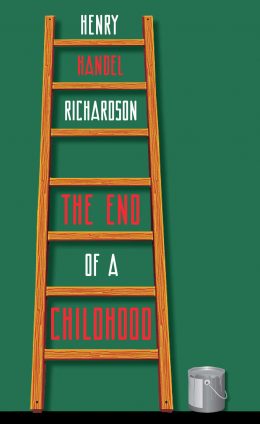
‘The End of a Childhood’ by Ethel Florence Lindesay Richardson…I Mean Henry Handel Richardson


‘The End of a Childhood’ by Henry Handel Richardson (Ethel Florence Lindesay Richardson)   (1934) – 76 pages


How I do hate the ordinary sleek biography. I’d have every wart and every pimple emphasized, every murky trait or petty meanness brought out. The great writers are great enough to bear it.”

These are the words of Henry Handel Richardson, a woman writer from Australia who lived from 1870 to 1946. Yes, woman writer, for like George Eliot, she wrote under a male pseudonym.

Mrs. Richardson applied this principle of exact unrelenting truth she stated above to her own fiction. Her masterpiece, completed in 1929, is ‘The Fortunes of Richard Mahony’, a trilogy of novels, which tells the story of a family living in the gold fields of frontier Australia, immigrated from Ireland, having to cope with the devastating effects of the young doctor father’s severe mental and physical deterioration from syphilis. You can feel for the young mother and her children having to face the growing ostracism by her neighbors caused by her husband’s bizarre behavior. Of course, the doctor’s patients drop away after several of his episodes, and the family is reduced to poverty. I’ve read It is based quite closely on Mrs. Richardson’s own childhood. This is one of the world’s greatest works of literature.

The stories in ‘The End of a Childhood’ are about this same mother Mary and her two children Cuffy and Lucie after the husband and father Richard Mahony has died. A reader unfamiliar with the work of Richardson can fully appreciate these related stories in ‘The End of a Childhood’ without knowing the background of the characters, but for those of us who have read ‘The Fortunes of Richard Mahony’ trilogy these stories are extra special. The stories bring back characters we know and care about.

Mary Mahony speaks of her children thus:

In other words, they both were very highly strung, and in consequence, the strain of his illness, and the unhappy years preceding it, had told on them more severely than if they had been ordinary children.”

No writer is better than Richardson at capturing the poignancy of those tragic and not-so-tragic incidents that occur during a normal lifetime. A neighbor lady caring for the children during their mother’s sickness, says the following to Cuffy:

Well I know this, my boy, there’s precious little of your poor Ma in either of you. It’s your Pa you take after, both of you, more’s the pity. He was just such another. What she had to put up with, her life long, simply doesn’t bear telling.”

I can never get enough of the story from the ‘Fortunes of Richard Mahony’ trilogy. It is amazing how vividly I remember the plight of the Irish family of Richard Mahony out in the Australian bush in Ballarat.


Grade:    A


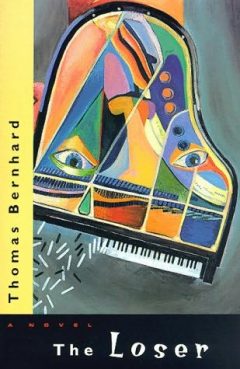
The Art of the Angry Rant – The Fiction of Thomas Bernhard


Another in my continuing series about my favorite writers


All my life I have been a trouble-maker, I am not the sort of person who leaves others in peace.” – Thomas Bernhard

It took me awhile to fall in love with the fiction of the Austrian writer Thomas Bernhard. Early on, I read ‘The Lime Works’ and ‘Concrete’ and I couldn’t figure out what was so special about his odd work. I must go back and read those two early novels.

However, now I can strongly recommend Bernhard’s novels ‘Extinction’, ‘The Loser’ (one of the characters is the pianist Glenn Gould), ‘Woodcutters’, and the short novella ‘Wittgenstein’s Nephew’. I also notice that the novella ‘Walking’ gets very strong reviews, but I haven’t read it yet.

Thomas Bernhard was born in 1931 to an unwed housemaid mother, apparently the result of a rape. His father, a carpenter and petty criminal from Germany, never acknowledged him as his son.

When Thomas was eight, a social worker arranged for him to be sent to a home for “maladjusted children”. Considering that at that time all Austrian young people were required to join a branch of the Hitler Youth which Bernhard hated, who really were the maladjusted ones? In a later play, Bernhard represented Austria’s Nazi legacy as a pile of manure on the stage.

While establishing a worldwide reputation as one its finest writers, Bernhard was always a figure of controversy in his home country of Austria. One of his plays included the line “There are more Nazis in Vienna now / than in thirty-eight.” referring to Austria’s Nazi past. Austrian leaders on the right called for his expulsion from the country.

After a strong literary career in which he wrote eleven novels and more than twenty plays, Thomas Bernhard died in 1989 in an assisted suicide at the age of 58. He had been having severe problems with his lungs.

His will was controversial in not allowing publication of his works or staging of his plays within Austria’s borders.

What makes the work of Thomas Bernhard special?

One of Bernhard’s main writing techniques is the monologue or, more precisely, the rant. He gives his characters free reign to say exactly how they feel and think about things, and it is often harsh and astringent.

Recently I read Bernhard’s early work, ‘Gargoyles’ which is about a doctor who sees the sometimes ugly truth in his patients’ lives. He sees people get sick and die close up, and sometimes it’s their own fault. He sees people’s families during these rough times in their lives and sees the breaking points within the family. In his village many of the men are cruel and spend all day drinking in the bar and then come home to beat their wives and children. These men are frequently anti-Semitic. There are two doctors in his town and the only Jew in town, Bloch, has “relieved the other doctor of the lasting shame of having to treat a Jew by consulting my father”. Now Bloch is one of the very few men in town in whom the doctor can confide.

I was quite impressed with the first half of ‘Gargoyles’, but later when the doctor visits The Prince the novel turns into a long incoherent deranged rant. I downgraded the novel a bit for that reason. However later in his career Bernhard perfected this monologue or rant technique, and in such novels as ‘Wittgenstein’s Nephew’ and ‘The Loser’, the included rants held my interest throughout.

Sometimes these rants get so over-the-top in their anger that they become humorous. The comic element in Bernhard’s work is frequently overlooked.

Thomas Bernhard told it like it was for him and it wasn’t all peaches and cream, and what more can we expect from any writer? He is one of the great ones.


‘Transcendent Kingdom’ by Yaa Gyasi – From Ghana to Alabama to Harvard to Stanford


‘Transcendent Kingdom’ by Yaa Gyasi (2020) – 364 pages

First, a few facts. Yaa Gyasi was born in Ghana in 1989. She and her family moved to the United States in 1991. From the age of ten, she was raised in Huntsville, Alabama. She received her Bachelors’ degree from Stanford University and her Masters degree from the Iowa Writers’ Workshop. She completed her first novel in 2015. After initial readings from publishers, she received several offers for the novel. She accepted a million dollar advance for the novel from Knopf. That novel, ‘Homecoming’, won several major awards including the PEN/Hemingway Award for best first novel. ‘Transcendent Kingdom’ is her second novel.

When the New York Times has an artist draw a picture of you, you know you have arrived.

So why all this excitement over Yaa Gyasi?

The writing of Yaa Gyasi is cerebral and thoughtful yet vivid and passionate. She brings an intensity to her character portrayals that makes you care about what happens to them.

Our female narrator here, Gifty, is a Stanford neuroscientist. Her research involves modifying the behavior of mice by altering their brain activity. If the behavior modification techniques are successful for mice, similar techniques could be applied to humans in the hope of controlling addictive or other abnormal behavior patterns. Gifty has a special family interest in addictive behavior, because her brother Nana died of a heroin overdose before he became 20 after becoming addicted to Oxycontin prescribed for a basketball injury. Then Gifty’s grief-stricken mother took to her bed and did not get up. Eighteen years later Gifty’s mother has a recurrence of her sleeping mental sickness, and Gifty who is now a graduate student at Harvard brings her mother to her campus apartment.

While reading ‘Transcendent Kingdom’, I learned a new word for Gifty’s mother’s ailment, anhedonia:

Anhedonia – lack of pleasure or the capacity to experience it

Gifty’s father came over to the US from Ghana with the family, but was unhappy living in Alabama where his family are treated worse than second class citizens because they are black:

In my country (Ghana) neighbors will greet you instead of turning their heads away like they don’t know you.”

He returns to Ghana leaving his wife working two jobs and raising the two children.

It’s those who stay who are judged the harshest, simply by virtue of being around to be judged.”

Gifty’s mother works hard to hold the family together under difficult circumstances.

She was a matter-of-fact kind of woman, not a cruel woman exactly, but something quite close to cruel.”

The familiar, perhaps over-familiar, plot of Oxycontin addiction is offset by a spirited portrayal of living in Alabama and then on to Harvard and Stanford.

Do we have control over our thoughts? When I was a child this was a religious question,” she says, “but it is also, of course, a neuroscientific question.”


Grade:   A-


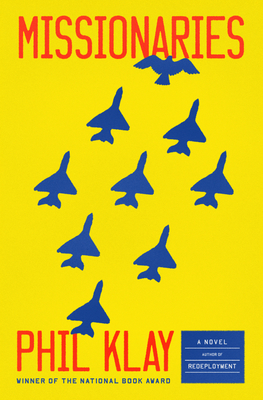
‘Missionaries’ by Phil Klay – It Opened My Eyes


‘Missionaries’ by Phil Klay   (2020)  –  404 pages

‘Missionaries’ is a novel about the United States’ never-ending, misbegotten wars in Afghanistan, Iraq, Colombia, and now Yemen. It is especially about the drug wars in Colombia. ‘Missionaries’ opened my eyes to what is really happening in this world. The United States has inserted themselves into the local battles in these countries with little understanding of what’s going on, like the war in Vietnam. This is about the new kind of wars the United States is fighting in the 21st century, wars that never end.

‘Missionaries’ is a novel that will change your entire worldview. It is an example of how fiction can provide more meaningful information than non-fiction and provide it in a more enjoyable and palatable form.

In Columbia, the United States has been heavily involved in the conflict since its beginnings, when in the early 1960s the U.S. government encouraged the Colombian military to attack leftist guerrillas in rural Colombia. This was part of the U.S. fight against “communism”. Besides the military, the United States also encouraged right-wing paramilitary groups to fight the guerrillas. These paramilitary groups soon developed into ruthless violent vigilantes, and they also became heavily involved in the illegal drug trade of cocaine and other substances themselves.

Here is what happens when a man is chainsawed in half in the public square of a small village.”

Now US private mercenary army companies such as Academi (formerly Blackwater) and Dyncorp recruit former members of Colombian paramilitary groups to fight in Afghanistan, Iraq, Yemen, and elsewhere because these guys have no qualms about killing or torturing people.

Even military people tend to hold mercenaries in contempt.”

In ‘Missionaries’, four narrators tell the interlocking stories in Colombia of the coco growers, the narcotics dealers, the Colombian army, and the paramilitary groups. And overseeing it all are the US Special Forces with their drones, a “higher level of badassery”. Most of the people who have been killed or tortured in these drug wars in Colombia do not belong to any of these groups but instead have been civilians. Shoot first and don’t ask questions later. It was not unusual for a former Colombian military officer to turn paramilitary operator, then turn narcotics dealer.

By relating the stories of each of the main characters up until then, Phil Klay has found a fascinating way to bring us up to speed on his intricate yet tragic story. And then ‘Missionaries winds up with a rousing scary thrill ride.

And now there is the war in Yemen, “one half war and one half extermination”, which the journalist in ‘Missionaries’ refers to as “the most fucked-up war we’re engaged in right now”.

‘Missionaries’ goes a long way to explain why the United States wound up with a nasty corrupt authoritarian fool for its President.


Grade:   A