Archive for August, 2020

‘Real Life’ by Brandon Taylor – Real Life at the University


‘Real Life’ by Brandon Taylor (2020) – 327 pages
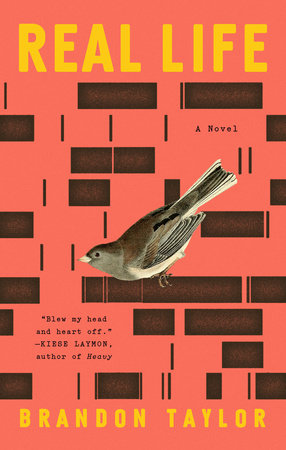
As I was reading the campus novel ‘Real Life’, the descriptions of the student union and the nearby lake seemed very, very familiar. I looked at the author’s bio in the back and found that one of the places Brandon Taylor had done graduate work was the University of Wisconsin-Madison, my alma mater. As I was reading ‘Real Life’, it was almost like I was back there sitting at an outdoor table on the Memorial Union terrace near the shore of Lake Mendota.

In ‘Real Life’ we see the world from the point of view of Wallace, a perceptive sensitive graduate student studying bio-science. He is doing research on nematodes, a kind of small worm that is able to reproduce rapidly and thus is ideal for genetic research.

Wallace has a small group of friends, most of whom are also doing graduate work in bio-science. In the first chapter and throughout the novel, Brandon Taylor captures all the subtle and not-so-subtle interactive dynamics of just a few college guys and gals sitting at a restaurant table talking. Early on the readers know they are in the hands of a master. Nearly every sentence gave me a smile of recognition.

And they fell into that chilly silence that comes between two people who ought to be close but who are not because of some early, critical miscalculation.”

Wallace is gay and black.

Through his character Wallace, Brandon Taylor explores those profound racial tensions that we all know exist but we cannot express.

The most unfair part of it, Wallace thinks, is that when you tell white people that something is racist, they hold it up to the light and try to discern if you are telling the truth. As if they can tell by the grain if something is racist or not, and they always trust their own judgment. It’s unfair because white people have a vested interest in underestimating racism, its amount, its intensity, its shape, its effects. They are the fox in the hen house.”

Throughout the novel, I was impressed with the ability of the author to go deeper into the psyches of his characters mainly through dialogue. ‘Real Life’ is a novel a reader can immerse oneself in as Wallace probes his life situation.

Is this what Dana was trying to say to him earlier? That he’s not the only one who has a hard time? That he doesn’t have some sort of monopoly on misery? But it’s different, he wanted to say then and wants to say now. It’s different. Can’t you see that? It’s different.”

Ordinarily I cannot relate to the quite explicit gay love scenes, but from Brandon Taylor’s original insights into other subjects, I suspect these scenes in the novel are true to life.

‘Real Life’ is long listed for the 2020 Booker Prize.

If you are looking for a novel that has profound insights into human behavior yet still is enjoyable, ‘Real Life’ is an excellent choice.


Grade:    A


‘Jumping the Queue’ by Mary Wesley – A Malicious Wit


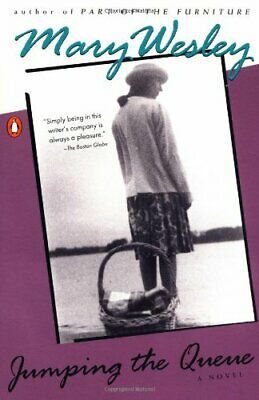
‘Jumping the Queue’ by Mary Wesley  (1983)  – 217 pages

Why am I drawn like a magnet to novels which are described as “maliciously witty”?

I first discovered Mary Wesley in mid-career with ‘Sensible Lives’, and I read her novels as they came out from that point. However I had not read her first adult novel, ‘Jumping the Queue’, which got Wesley’s career jump-started in 1983 when she was already a young 71 years old. ‘Jumping the Queue’ was first turned down by several publishers for being too scandalous and quirky for their tastes.

In ‘Jumping the Queue’ we have outrage piled on outrage: screwing around, mother murder, incest, and eating the family dog. I kind of like it. Many of the incidents in the novel seem to be taken from the sordid stories one finds in tabloids.

Do you realize I killed my mother?” he said gently.

Of course. Lots of people long to. You just did it.”

Here’s the opening plot of this black comedy. Middle-aged Matilda is standing on the bridge, ready to kill herself by jumping or walking into the sea in a manner similar to what Virginia Woolf did. Her unfaithful husband is dead, and her children are all grown and moved away. She really doesn’t want to live through her inevitable decline. Before she left her house she sold her pet gander Gus to a breeding farm so he could have some fun.

However, on the bridge, Matilda is interrupted by 35-year-old Hugh, the matricide. Yes, Hugh murdered his mother with her own silver serving tray, and the police have an all-out search for him. He also wants to kill himself in the sea.

However since these two have interrupted each other and spoiled their suicide plans, Matilda takes the polite Hugh back home with her. Soon the gander Gus returns home too.

All this happens during the first few pages, and ‘Jumping the Queue’ only gets more hysterical from there. This is a wild and raunchy novel.

Along the way we have set pieces about the faux-country life outside of London, going to an expensive stylish London hairdresser, shopping in London boutiques, attending a London concert, and just walking the streets of London. Mary Wesley makes ironic fun of everything.

And that is why I read Mary Wesley.


Grade:   A


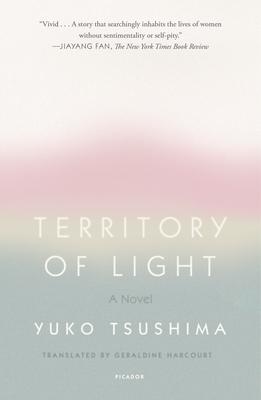
‘Territory of Light’ by Yuko Tsushima – A Young Mother and Her Daughter on Their Own in Tokyo


‘Territory of Light’ by Yuko Tsushima   (1979) – 183 pages    Translated from the Japanese by Geraldine Harcourt

‘Territory of Light’ is the story of a young mother in Tokyo going through a separation from her husband. It covers the same terrain as quite a few United States novels, a woman and her 3 year old daughter on their own. The aesthetic qualities of ‘Territory of Light’ are unique, but it turns out that getting separated and divorced wasn’t all that different in Tokyo in the Seventies from what it was in the United States. The young mother is the narrator here, and it is her husband Fujino who initiated the separation because he was seeing a different woman. However when he sees that his separated wife is enjoying life alone with her daughter, he starts showing up suddenly and unexpectedly.

What the hell was I thinking, he demanded to know, and how could I hate him so much? I looked on in silence, ruefully aware that I didn’t hate him at all. I was just too scared of him in this state to say anything.”

He is angry with her for calmly going along with the separation. He claims he has no money for child support which very likely is true since he is trying to get somewhere with a theater group.

Every woman thinks it’s going to be different for her, but she ends up at the bottom of the heap all the same.”

After a search for a new apartment, she finds one on the top, the fourth floor, of a converted office building. She and her daughter are the only ones who live in the building.

An unusual feature of ‘Territory of Light’ is that even though the narrator’s young daughter is one of the main characters in the novel appearing in many scenes, we readers never find out her name. It is always “my daughter”.

The three year old daughter is cute of course, but also sometimes quite irritating and gets on her mother’s nerves. One night while her daughter is sleeping in their top-of-the-building apartment, the mother goes out alone to a bar. This is probably dangerous, but the narrator is honest and forthright about her isolated situation.

As the novel’s title, ‘Territory of Light’, suggests, it has a fair share of subtleties about the qualities of light and the interpretation of dreams which were rather lost on me. However the realistic details of the story are precise, unique, and effective, and the reader gets a good sense of what life is like for this separated woman and her daughter in Tokyo.

Apparently Yuko Tsushima wrote this novel day-to-day while she herself was going through a very similar separation and divorce. She said she wrote only of what she herself experienced.

‘Territory of Light’ is in the running for the Best Translated Book Award of 2020. It is an honest vivid account of a separation without sentimentality or self-pity.

#WITMonth


Grade:    B


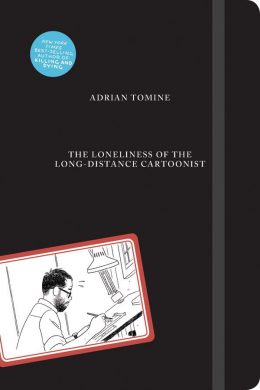
The Loneliness of the Long Distance Cartoonist’ by Adrian Tomine


‘The Loneliness of the Long Distance Cartoonist’, a graphic novel, by Adrian Tomine (2020) – 162 pages

But still…My clearest memories related to comics – about being a cartoonist – are the embarrassing gaffes, the small humiliations, the perceived insults…Almost everything else is either hazy or forgotten. It’s weird.” – Adrian Tomine

For Adrian Tomine, the humiliations start in grade school when he announces to the class that when he grows up he wants to be a famous cartoonist. The whole class breaks out in laughter and the boys in the class taunt and ridicule and shove and depants him during recess. A teacher has to ask another boy to sit with him at lunch.

On being a famous cartoonist, Daniel Clowes once said, “It’s like being a famous badminton player”. That line is the preface to this book.

The indignities continue through Adrian’s early days as a not-so-famous cartoonist as he tries to get established in the comic book industry. He goes to comic conventions to sign his books, and no one asks for his signature as other more famous graphic novelists such as Daniel Clowes get all the attention and adoration. Later Tomine is self-conscious when some of his fans see him eating pizza alone before he is to give a speech on cartooning.

‘The Loneliness of the Long Distance Cartoonist’ turns into a full-scale autobiography as Adrian meets his wife, gets married, and has children. By the end of the book you can imagine that Adrian Tomine is one of those major cartoonists who overshadows some of the talented but still unsure beginners.

All the humiliations Adrian puts up with get somewhat repetitive, and I wished that Tomine had some other points to make other than his jokey indignities. I preferred his previous graphic novel ‘Killing and Dying’ which had 6 separate stories and thus much more variety.

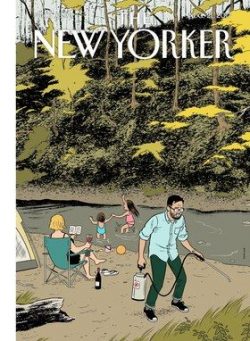
But I’m sure Adrian Tomine has the last laugh because besides his good-selling graphic novels he has done some covers for the, I suspect, well-paying New Yorker magazine, a couple of which I have included above.


Grade:    B


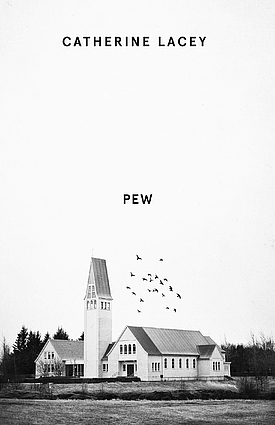
‘Pew’ by Catherine Lacey – A Modern-Day Fable


‘Pew’ by Catherine Lacey    (2020) – 207 pages

I suppose the first thing they tell you in Fiction 101 is to have a well-defined main character to drive your story or novel and to give that main character human emotions with which the readers can empathize and identify. However in Catherine Lacey’s new novel ‘Pew’, the main character narrator Pew is not at all well-defined. We don’t find out if the main character, Pew, is male or female, black or white or something else. Pew is homeless and sometimes sleeps overnight in churches which have accidentally or intentionally left one of their many doors open. For all intents and purposes, Pew is amorphous and talks barely at all.

But that is what significant novelists do, break the rules. Here Catherine Lacey has broken the rules to stimulate and challenge herself to come up with something new and different.

Steven and Hilda and their boys find him/her sleeping in their regular pew at church on Sunday morning. They decide to take him/her into their home and to call him Pew.

Pew is a blank slate. What we do find out in the novel is how the various townspeople react to his/her presence. Here is the son Jack:

We don’t even know if you’re a girl or a boy or where you come from or nothing and you’re sleeping in my bed. In my bed. It’s disgusting. You ought to go back where you came from, go back there and leave us alone.”

Some of the people Pew meets or is introduced to treat him much nicer than Jack at least on the surface. Steve and Hilda have Pew visit with church people or psychiatric or psychological staff. Pew sits through all these evaluations by the so-called experts.

There are a few people who relate to him/her much better than others. These people tend to be the ones who realize that they don’t have all the answers either. The people who are on Pew’s wavelength are those that have found out that life is a struggle for everyone. Pew almost wants to talk to these few people. One of these less judgmental people tells Pew:

I felt so sure then – of course I was younger. It’s easier to be certain of things then – and the older you get, the more you see that certainty depends on one blindness or another.”

The big event each year in this southern town is the Forgiveness Festival. This is when the townspeople let themselves off the hook for each other’s sins. Is it truly a Forgiveness Festival or is it a Forgetfulness Festival?

I felt that given the build-up and all the talk of the Forgiveness Festival, it could have been presented more dramatically than it was. My other complaint is that the blank-slate narrator Pew comes across as a bit sad and austere, perhaps because Pew says so little. I would have made him/her a bit more upbeat and playful, but then Pew probably would not have been a blank slate.

This is the second work of fiction by Catherine Lacey which I have read, and I still feel very strongly that she is one of the most significant fiction writers out there today because she is not afraid to deal uniquely with the larger matters. I will continue to read her work.


Grade:   A-


‘A Whole Life’ by Robert Seethaler – A Life in the Austrian Alps


‘A Whole Life’ by Robert Seethaler  (2014)  – 151 pages               Translated from the German by Charlotte Collins

As its title says, this novella gives the reader a whole life, the life of Andreas Egger who lives almost his entire life in the Austrian Alps. This is the story of a man contending with the majestic beauty and the dark calamity of both Mother Nature and Human Nature.

Andreas is born to a woman who “had led an irresponsible life, for which God had recently punished her with consumption and summoned her to his bosom”. As still a young boy of four, Andreas is taken in by his uncle Kranzstocker who already has a family of his own and looks upon this little boy as an extra unwanted burden.

Later Andreas somehow overcomes his bad childhood and does all the things people do, gets a decent job working in the mountains, marries, serves a stint in the German army during World War II, comes back to the mountains. During his lifetime he watches his neighborhood change from a farming area to a tourist destination with cable-cars that take the visitors up to the top of the mountains. His job is to clear the pathways for these cable-cars in the treacherous mountains.

Its austere beauty gives ‘A Whole Life’ its power by concentrating on only those things that finally matter. Like the mountains, it is elemental and fatalistic. Perhaps it is a little too simple to be entirely realistic. Nothing is complex or complicated. Andreas Egger never has to contend with his own Bad Nature. He is a little too good to be true.

However a novella can’t be everything at once, and ‘A Whole Life’ does give us the full life of a solid man living in the Austrian Alps.

It would not make sense for me to blabber on and on about such an austere and graceful novella.


Grade:    A-


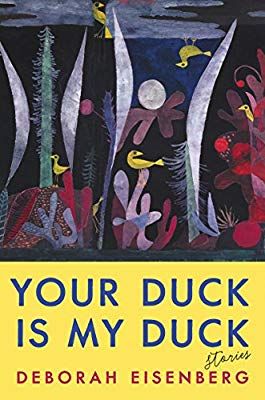
‘Your Duck is My Duck’ by Deborah Eisenberg – Stories to Challenge and Stimulate You


‘Your Duck is My Duck’, stories by Deborah Eisenberg, stories  (2018) – 226 pages

Occasionally I want to read something that really challenges me, not something I can too easily follow and figure out. Sometimes I want something more than 2 + 2 = 4. What is 759 x 3287 = ? I don’t know, but it is something substantial.

There are six stories in ‘Your Duck is My Duck’, each story about 30 to 40 pages long. Deborah Eisenberg says she spends about a year writing each story. This is dedication.

The stories are by no means straightforward, but by the end the various strands within each story usually all come together into a meaningful whole.

Entering Eisenberg’s fiction is like diving off a cliff into a freezing lake: you are plunged into a world of confusion, with no one to help you get your bearings and no recourse but to struggle your way to the surface.” – Ruth Franklin

The first three stories in ‘Your Duck is My Duck’ totally captivated me. The fourth and fifth stories did not live up to my expectations after reading the first three, and the sixth and final story was a rebound, quite good. I find this to be a quite typical arrangement of the stories in a first-published collection of stories.

Eisenberg approaches her subjects from different angles that can throw the reader off, but if the reader perseveres, he or she can capture the not-so-simple points that Eisenberg is making.

My favorite story in the collection is ‘Taj Mahal’, the second story. In ‘Taj Mahal’, Emma’s deceased mother was an actress. Emma is having lunch with some of the old fellow actors who worked with her mother. First these old actors discuss a new book of memoirs of their old Hollywood days which has just come out, and they question whether the incidents in the book really occurred or not. Then they reminisce about Emma’s mother studying a script:

She always seemed to believe there was a real person locked away in the words, no matter how inane,” Duncan says. “It was always as if she was rescuing somebody lost there or imprisoned.”

Emma’s mother was a beautiful actress who over time became romantically involved with a few of the other male actors and directors.

She never really got the credit she deserved,” Luther says. “The only thing people ever talked about was how pretty she was.”

When Emma’s mother finally did get married, one of the fellow actors describes the marriage as “Prefab rubble. What but rubble could it ever have been?”

Eisenberg does have a spiky way with words that stay in your mind.

My second favorite story is the first story in ‘Your Duck is My Duck’ which is the title story about a woman who finds out that hanging out with a rich and famous couple in their vacation home in summer is not all its cracked up to be. The only other summer guest, a puppeteer, says:

Christa told me you were coming, and I figured you wanted to get your stuff done, or why else would you be here.’

Well, I mean, to relax. “

Yeah? You must have a really unusual relaxation technique going.”

If you are tired of reading stories that are the same old, same old, and you want something that is original and challenging, you might give Deborah Eisenberg a try.


Grade:    B+