Archive for May, 2020

‘Actress’ by Anne Enright – Katherine O’Dell, The Star


‘Actress’ by Anne Enright   (2020) – 264 pages

At its beginning, it would be easy to mistake ‘Actress’ for Anne Enright’s actual memoir about her own mother; it has that veracity. The novel takes the form of a first-person memoir of the actress Katherine O’Dell by her daughter Norah. Katherine O’Dell is not the actress mother’s real name; she’s not even Irish, but English instead. Coming from a family of stage actors, young Katherine gains fame and fans on the stage and is swept off to Hollywood.

It happened instantly. Perhaps there is no other way. A star is born, not made, because stars are not actors – some of them, indeed, are very bad actors, at least that is what my mother used to say. Whatever a star has, they had it all along, and, at nineteen, Katherine O’Dell had it in spades. Offstage, you could hardly see her, onstage, you could not look away.”

Who is daughter Norah’s father? It is probably not the gay actor to whom Katherine O’Dell was married off to in a Hollywood-arranged ceremony when she was just 21. For a homosexual man, getting married was definitely the best cover there was at that time.

Of course Katherine had other lovers, but it is difficult for her daughter to figure out who they might be.

Later in her acting career Katherine faces the plight of many middle age actresses.

In 1975, Katherine O’Dell finally gave in. At the age of forty-seven, she moved from her unconvincing twenties to her mid-sixties – there was nothing for her to play in between.”

The novel ‘Actress’ is not entirely successful. Some of the problems result from the format as a daughter’s memoir. Most of the scenes of Katherine O’Dell as a young actress occurred before her daughter Norah was born, so Norah recalls them from a remote distance rather than up close, vivid, and personal.

Much of the second half of the novel is concerned with Norah herself, her love life, the Irish troubles of the 1970s, her marriage, etc. In fact Norah addresses some of her discourse to her husband which is a strange thing to do in a memoir of her mother. I found these asides by Norah to her husband to be clumsy, distracting and diverting from the remembrance of her mother. The story of her mother is sidelined to some extent.

Ultimately my assessment of a novel is usually based on the level of enthusiasm I have when I return to it after having put it down. ‘Actress’ kind of dragged for me in this regard especially in the second half.


Grade:   B-


Some Fiction From the First Decade of the 2000s (2000-2009) That is Too Good to be Forgotten


Below are ten works of fiction from the early 2000s all about which I became enthusiastic and which led me to put these writers in my Must-Read category.


‘The Other Side of You’ by Salley Vickers (2006) – Salley Vickers connects the great works of art, in this case the art of Caravaggio, with the conscious daily lives of her characters in a compelling way. Her novels are definitely literary, yet are as light as a soufflé.


‘Ludlow’ by David Mason (2007) – Here is a novel-in-verse but not with the subject matter you would expect for a novel in verse. The coal miners of Ludlow, Colorado go on strike in 1914, one of the cruelest, bloodiest chapters in the history of American labor. The verse novel strategy works brilliantly to describe scenes that are not always pretty.


‘The Beauty of the Husband’ – A Fictional Essay in 29 Tangos by Anne Carson (2001) – In lyrical lines that suggest the movements of tango dancers, Carson describes scenes from a doomed marriage. This is a modern take on the intimate cruelties of marriage.

Three minutes of reality

All I ever asked

She stands looking out at rain on the roof.”

‘The Inheritance of Loss’ by Kiran Desai (2006) – I read much of the work of her mother Anita Desai, and daughter Kiran Desai carries on brilliantly. ‘The Inheritance of Loss’ has depth, emotion, hilarity, and imagination; what more can you ask for?. But why hasn’t Kiran Desai published any fiction since 2006?


‘The Known World’ by Edward P. Jones (2003) – By focusing on a black slave owner, Edward P. Jones avoids turning this novel into a morality play of good and evil. There is no one preaching. The matter-of-fact tone only intensifies the reader’s reaction to this story.


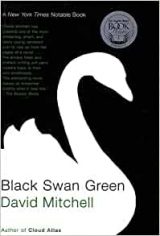
‘Black Swan Green’ by David Mitchell (2006) – This is David Mitchell’s lightest most engaging novel, and it is my favorite of his work.

These jokes the world plays, they’re not funny at all.”


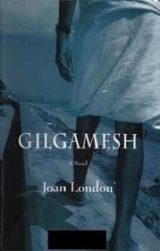
‘Gilgamesh’ by Joan London (2001) – A teenage woman and her young child take an amazing trip from rural Western Australia to Armenia and back. This is a blunt and beautifully written novel that deals with life’s tough truths.


‘John Henry Days’ by Colson Whitehead (2001) – Even before ‘Underground Railroad’, Colson Whitehead wrote wonderful novels. This novel is more humorous and thus more fun for me than ‘Underground Railroad’. Sometimes it seems writers lose their lightness as they get older.


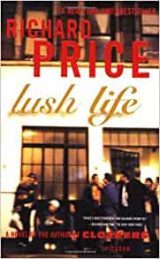
‘Lush Life’ by Richard Price (2008) – Richard Price is the excellent writer of novels that take place on the streets of New York. He lived in a housing project as a child and knows all about the city street life. He has branched out to writing for TV and the movies, but I have followed his written fiction from the beginning.


‘How the Light Gets In’ by M. J. Hyland (2004) In 2004, M. J. Hyland was the new female novelist who burst on the scene with this her first wonderful novel and got much of the attention and some awards. After reading this novel and her next, ‘Carry Me Down’, I put her in my must-read category. However she has not published a novel since 2009.


Generosity’ by Richard Powers (2009) – A likable and passionate novel about the search for happiness and the Happiness gene. And you thought our state of mind was the result of happy or sad events in our lives?


Happy Reading!

‘My Life’ by Anton Chekhov – “Worms eat grass, rust eats iron, and lying eats the soul!”


‘My Life’ by Anton Chekhov (1896) – 106 pages          Translated from the Russian by Richard Pevear and Larissa Volokhonsky


I am always up for reading more Anton Chekhov so I grabbed the chance to read Chekhov’s novella ‘My Life’ especially since it was translated by the current gold standard in Russian translation, the team of Richard Pevear and Larissa Volokhonsky.

In the novella, young man Misail is the son of the town architect who is well-respected in the town. At first, friends of Misail’s father were happy to hire the young man. So far his father has lined Misail up for nine office desk jobs around town, and Misail has been dismissed from every one of them.

I keep you only out of respect for your esteemed father, otherwise I’d have sent you flying long ago.”

Many townspeople look upon Misail as a ne’er do well, but he isn’t enamored of the town either. Misail sees the corrupt underside of the most prominent people in the town. Even his own father is not exempt.

I didn’t know a single honest man in the whole town. My father took bribes and imagined they were given him out of respect for his inner qualities; …And those who didn’t take bribes – for instance the court administration – were haughty, offered you two fingers to shake, were distinguished by the coldness and narrowness of their judgments, played cards a lot, drank a lot, married rich women, and undoubtedly had a harmful corrupting influence on their milieu.”

Everywhere Misail looks in these upper echelons of town society, Misail finds dishonesty, chicanery, and mendacity. After losing his ninth office job, Misail finally decides to forsake his family’s position in the community and takes a job involving physical labor; he becomes a house painter. His father threatens to disown him.

Here he encounters the rough peasants of the town, but are they any more dishonest than the upper classes? Misail finds satisfaction in honest physical work. He actually becomes a town sensation among the younger people of the town for making this choice to forsake the town’s conventions. This is probably Chekhov’s most political work.

But as always with Chekhov, some of the main characters are female. We have Misail’s sister who tries to bridge the gap between him and his father. We have Misail’s girlfriend who is one of the young people who is enamored of him for choosing to do hard physical labor. Both of these young women figure in poignant story lines in ‘My Life’. There is always an emotional payoff in reading Chekhov.

‘My Life’ is a good indicator of the Russian people’s mindset just before the Communist revolution. What does a people do when the upper classes of society are rampant with corruption?


Grade:    A-


The Difficulties and the Delights of ‘A Twilight Celebration’ by Marie-Claire Blais


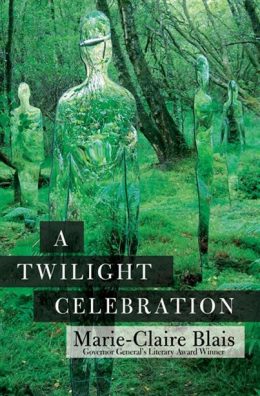
A Twilight Celebration’ by Marie-Claire Blais (2015) – 255 pages       Translated from the French by Nigel Spencer

Again I have read Marie-Claire Blais. She is a highly lauded author originally from Quebec who has written many novels and has earned some of the highest literary awards in French literature. She has even been nominated for the Nobel Prize in Literature. Most of her work has been translated into English including  ‘A Twilight Celebration’ which I have recently read. So how come is it that when I go to GoodReads there is not one review of ‘A Twilight Celebration’ there? Very strange. To remedy that sad situation, I posted this review there this morning.

I have read enough of Marie-Claire Blais to know that whatever difficulties her text presents, it will ultimately be worth my while. First I am going to explain the difficulties I encountered in reading ‘A Twilight Celebration’, and then proceed to describe how this novel finally transfixed me.

Marie-Clare Blais makes no concessions to her readers when in the pursuit of her vision. The entire novel is one long paragraph composed of about twenty sentences. It tries to capture the rapid-fire stream of thoughts that pass through several collective individuals’ minds in what Pasha Malla in the New Yorker calls “dizzying cascades of language”. There are several seemingly unrelated plot scenes, and Blais switches from one scene to another scene in mid-sentence without warning the reader. So you might start one sentence reading about Daniel at his writers conference in Scotland and wind up the sentence reading about transsexual Victroire dancing on stage in San Francisco. Along the way you also may have dealt with Angel’s misfortunes or Petites Cendres’s struggles somewhere else.

Actually Marie-Claire has written a ten-novel cycle about these same characters. I started with one of the later numbers in the cycle because with Marie-Claire Blais, as with Virginia Woolf, plot doesn’t much matter.

If your plan is to read only complete sentences at one time, forget about it. The few periods appear inconspicuously, and you will probably miss them. What really stunned me was that after several of her rare end-of-sentences, she would start her next sentence with “And”. Apparently everything in Blais’ world is connected.

I must say that at first I resented the author for not making her work less difficult for me to follow. I don’t like to have my inadequacies as a reader shoved in my face. I would have much preferred that this novel had been written in the relatively straightforward manner of Blais’ brilliant ‘A Season in the Life of Emmanuel’. ‘A Twilight Celebration’ does get easier to comprehend and appreciate as you go along.

However, on to the delights of reading ‘A Twilight Celebration’.

‘A Twilight Celebration’ is intense, driven, and heartfelt. I suppose you might call this stream of revelations a reverie, but Blais gets it right – the actions and events that are occurring in front of us intrude on our reverie. This is not a distant reverie but instead an engaged reverie. Some of the reflections as well as some of the actual events are strikingly vivid.

The subjects of Marie-Claire Blais are those who are oppressed in this world, the social outcasts and those marginalized persons who lead rough lives. She deals with political, religious, and especially sexual oppression. One of her subjects is mothers who are left stranded by men with whom they had loveless relationships and one baby or more. The forces of society make it particularly difficult for these mothers.

Here is a good statement of the theme:

we need to get beyond this world that reeks of the worst kind of prejudice,”

Here is a good example of the writing in the novel, this one from the poet Daniel. Of course it begins in mid-sentence.

we are the cantors of a fury too long contained, even asphyxiated, by a hypocritical society that reduces its poets to positions of inertia and impotence, paying them so little heed they end up dying,”

Here is one last example. This concerns the transsexual Victroire as he prepares to dance on stage.

you’re not the lonely fighter you think you are, soon enough you will be teaching the most rigid sectors of society not only basic tolerance but respect, so I’m telling you, Victroire, don’t be afraid, don’t be intimidated by threats and bald-faced blackmail, oh my Victroire, you’ll make love work for everybody, the young are listening to you,”

What if I find it more rewarding to comprehend 60% of what Marie-Claire Blais writes in ‘A Twilight Celebration’ than comprehending 100% of what some other writers write?

Finally, I cannot grade ‘A Twilight Celebration’. My reactions to it are just too complex. This is the second novel that I have refused to grade. The other was written by Jane Bowles.  I encourage you to give ‘A Twilight Celebration’ a try.


Grade:    ?


‘The Maias’ on Living, Loving, and Writing


‘The Maias’ by Eça de Queirós  (1888) – 628 pages              Translated by Margaret Jull Costa

Not only does ‘The Maias’ have a moving and enjoyable story, but also some of the lines from the novel are quite striking. I want to share with you some excellent words from ‘The Maias’ about art, literature, love, and life. Don’t worry; I won’t be giving away any of the plot. These are incidental comments made along the way. I found this novel not only delightful but also perceptive in the extreme.

Due to circumstances described in ‘The Maias’, our hero Carlos is raised by his grandfather Afonso who discusses the boy’s upbringing with the parish Abbot.

You see, abbot, that’s the main difference. I want the boy to be virtuous out of a love for virtue and honest out of a love of honesty, not out of a fear of Old Nick’s cauldrons, or because he’s tempted by the thought of entering the Kingdom of Heaven.”

Carlos grows up to become a doctor.

The keen-eyed Dr. Teodosio had one day said to him quite frankly “You’re too elegant to be a doctor! What female patient could resist flirting with you! And what good bourgeois gentleman is going to trust you with his wife in her bedroom? You would terrify any paterfamilas.”

Thus we move on to the Carlos’s love life.

You really are extraordinary! But your case is a perfectly simple one. It’s the old Don Juan syndrome. Don Juan experienced these same alternations between fire and ashes. He was looking for his ideal woman, and looking for her principally, and quite rightly too, among the wives of other men. And once he had slept with a woman, he’d declare he’d been deceived, that she was not the one for him.”

However all is not a bed roses for Carlos in these adulterous romances.

And this wasn’t the first time he experienced these false rushes of desire, which always came disguised as love, threatening at least for a time, to absorb his whole being, but which always ended in tedium and boredom.”

Then Carlos meets Maria Eduarda, another married woman.

She sincerely believed that there could be such a thing as pure disinterested friendship between a man and a woman, based on the loving meeting of two sensitive souls. ”

Carlos falls hard.

It did not even occur to him to think that this ideal friendship, with its entirely chaste intentions, was the surest road to deceive her gently into his ardent male arms.”

Meanwhile Carlos continues to see and have lively discussions with his friends, two of whom are writers. First a couple of quotes about writing in general:

It’s a matter of temperament. There are inferior beings to whom the sound of an adjective is more important than the exact working of a system – and I’m one of those monsters.”

In poetry, it’s often the need for a rhyme that produces the most original image…Long live the beautiful phrase!”

There is much talk of Romanticism vs. Realism.

All this business about realism and romanticism is a lot of nonsense. A lily is as natural as a bedbug. If some prefer the stench of the gutter, fine, open up the public sewers. I prefer a dusting of powder on a soft white breast, you can do what you like. What you need is heart.”

However at that time naturalism, a form of realism, was advancing by such writers as Gustave Flaubert and Emile Zola. Flaubert was the writing idol of Eça de Queirós.

It was a social necessity to call things by their proper name. What use, otherwise, was the great Naturalist movement? If vice continued unabated, it was because an indulgent romantic society gave it names that embellished and idealized it. Why should a woman scruple to roll about in the conjugal sheets with a third party if the world insisted on referring to it sentimentally as “a romance” and if poets sang about it in golden verses?”

Here’s one last exchange in the Romanticism vs. Realism debate which I found particularly meaningful.

And what are we, if not romantics?” exclaimed Ega. “What have we been since we were at school, since we were sitting for our Latin exam? Romantics, which is to say, inferior individuals ruled in life by feelings and not by reason.”

Carlos wanted to know if, deep down, they really were so much happier, these people who were guided solely by reason, never deviating from it, determined to toe that inflexible line – dry, rigid, logical and emotionless to the last, and putting themselves through torments.

Finally an observation from ‘The Maias’ about the Portuguese people of that time:

Basically, we are nothing but thugs. What we like is cheap wine, a bit of guitar music, a good brawl, and plenty of back-slapping bonhomie afterwards! That’s how it is!”


‘The Maias’ By Eça de Queirós – A Portuguese Romance


‘The Maias’ By Eça de Queirós  (1888) – 628 pages           Translated from the Portuguese by Margaret Jull Costa

As of today, it looks like ‘The Maias’ will be the novel of the year for me. ‘The Maias’ is romantic and passionate as I expected somehow a Portuguese novel to be, but it is also quite humorous in places and with finely drawn characters and a gripping busy plot. It is a jaunty vastly pleasurable trip in mid-to-late 19th-century Lisbon, Portugal society with some lively quick-witted companions. Whenever our characters get into a position that is just too comfortable or romantic or pleasing so that they start to notice the luxurious flower gardens and the old trees and sunny days of Portugal, a new predicament arises.

With this excellent translation by Margaret Jull Costa, ‘The Maias’ is filled with appealing details of its time which is the 1870s in Portugal. The descriptions of the settings are precise, and the descriptions of nature are luminous. The characters in the novel are the well-to-do, the rich of inherited money, who don’t really have to work to maintain their place in society. Thus they are avidly interested in literature and the arts and have almost violent arguments pitting the new naturalism and realism of such writers as Zola and Flaubert against the lyricism of the old school of writers.

Writers, for their part, read the precise chiseled style of a Goncourt or a Verlaine and immediately tortured and tangled and mangled their own poor sentences until they descended into the crazed or the burlesque.”

Sometimes these young men are fiercely critical of Portuguese society:

Here we import everything, ideas, laws, philosophies, theories, plots, aesthetics, sciences, style, industries, fashions, manners, jokes, everything arrives in crates by steamship.”

Carlos Maia, the main character in ‘The Maias’, is living the good life. He comes from a family which is well-respected in Lisbon and has enough inherited money so he barely has to work at all, even though he has been trained as a doctor. He has a wide group of well-to-do friends who spend their time playing cards, fencing, drinking alcohol, discussing the artistic and literary and political issues of the day, and pursuing women who are already married. That’s right, most of Carlos’ and his friends’ romances are on the sly with married women.

One of the premises of ‘The Maias’ seems to be that many beautiful young women want to improve their status in life by marrying a rich husband. Frequently these potential rich husbands are several years or decades older than the young woman. These young gals find their rich suitor, get married, and then discover that their husband is a dreadful bore. Thus these young married women are easy marks for romance by the right young guy who approaches with the appropriate smooth line. The first step is to become very good friends with the woman’s husband.

Yes, one does not read ‘The Maias’ for moral or spiritual guidance. ‘The Maias’ is a novel of marital infidelities.

Her urgent kisses seemed to go beyond his flesh, to pierce him through, as if wanting to absorb both will and soul.”

‘The Maias’ has a passionate, romantic, and world-wise plot that coheres throughout the entire novel.

One thing that ‘The Maias’ is not is introspective. It is very much a novel of people conversing and socializing. On a continuum of extroversion to introversion, Eça de Queirós would definitely rate as an extrovert. He was a diplomat for much of his lifetime, and ‘The Maias’ reflects his love of being around people. ‘The Maias’ is above all a social novel.

There are several grand set pieces in the novel, one is of a horse race. Many of Carlos’ friends have shown up for the horse races and are placing their bets. Carlos is sitting in the grandstand with his current married mistress Countess Gouvarinho and awaiting the arrival of his new prospective married mistress Maria Eduarda who is the wife of Castro Gomes.

Readers new to Eça de Queirós can start with the short novella ‘The Yellow Sofa’ to determine if you like his style of writing or not. If you do like his work then you can read ‘The Relic’ or ‘Cousin Basilio’ or one of the other novels he wrote and then you can finally graduate to his masterpiece ‘The Maias’.


Grade:    A+


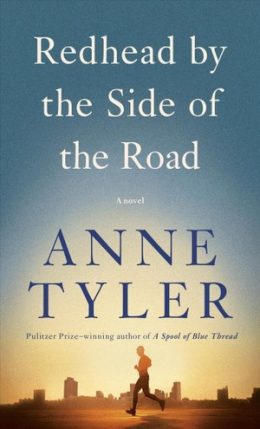
‘Redhead by the Side of the Road’ by Anne Tyler – Back to Baltimore


‘Redhead by the Side of the Road’ by Anne Tyler (2020) – 192 pages

In a review of Anne Tyler’s early novel ‘Searching for Caleb’ for the New Yorker in 1975, John Updike wrote “Funny and lyric and true, exquisite in its details and ambitious in its design…This writer is not merely good, she is wickedly good.” Updike took an interest in Tyler’s work and reviewed her next four novels as well, thus launching Tyler’s career into the stratosphere where she has remained since then. The English novelist Nick Hornby has stated that his ambition was to be a male Anne Tyler.

I have read nearly every one of Anne Tyler’s twenty-three novels, even the first four which she doesn’t like anymore but which I thought were very good. All of her novels take place in Baltimore, and that city has Anne Tyler bus tours for tourists except during the lock down. Tyler’s subject has always been the inexplicable personal mysteries in our ordinary routine day-to-day lives. She finds the fascination in even the most mundane of lives. Her novels of ordinary people connect with us readers on a visceral level.

However…

Micah Mortimer in ‘Redhead by the Side of the Road’ is still another of Anne Tyler’s gentle, cautious, fastidious male characters who view women, especially women with whom they might have a close relationship, as disruptive and a source of problems and thus trouble. He is in his forties and has never been married. In many ways Micah is the archetype for most of the males that appear in Tyler’s novels. He is seemingly happy with his life in his small apartment which he keeps fussily clean. Micah is a home computer software guy who runs his own small door-to-door business in Baltimore. He has a girlfriend Cass who is a school teacher.

Tyler starts the novel with these lines about Micah:

“You have to wonder what goes through the mind of a man like Micah Mortimer. He lives alone; he keeps to himself; his routine is etched in stone.”

Etched in stone? That was the problem for me. Anne Tyler has used this same type of male character in so many of her novels, it’s almost like she etches them in stone. These quiet, finicky, mild guys have become almost a formula for Tyler. The novel had somewhat of a “been there, done that” feel for me. This guy Micah seemed like nearly every other male character who has ever shown up in an Anne Tyler novel.

I suppose I would have been bowled over by ‘Redhead by the Side of the Road’ if I had not read so much Anne Tyler before.


Grade:    B


Tony’s Stay-At-Home Song PlayList


These videos from YouTube are my background music for the lock down. I’ve played these tunes hundreds of times. Just ask my family! Either click on the title or on the accompanying picture to play the YouTube video.


‘Whenever You Come Around’ by Alison Krauss with Vince Gill – I will never be able to get this Vince Gill song off my mind; it is haunting and romantic at the same time. If you like this song, also play ‘Tryin’ To Get Over You’, another Vince Gill song sung by Alison Krauss. Astonishingly Alison Krauss, I don’t believe, has ever put these two songs on an album. Her talent is an embarrassment of riches.

‘If Ever You’re in My Arms Again’ by Peabo Bryson – This is the quintessential romantic tune sung by The Voice.


Don’t Worry Baby’ by The Beach Boys – The Beach Boys’ finest (in my humble opinion). Brian Wilson himself sings lead vocal on this one.


‘The Last Cheaters’ Waltz’ by Emmylou Harris – It’s the last waltz of the evening. The guy she came with is dancing with some other woman. She has been relegated to the sidelines. She’s a little bitter.

T. G. Sheppard first had a hit with this song, but I like Emmylou’s version better.

‘You Can’t Change That’ by Raydio – It’s Ray Parker Jr. and his band of the theme from Ghostbusters fame, but this is a much, much better song. This one makes you want to dance like an eighteen year old. I’ve already devoted an article here to this song, and one of the comments there was from Arnell Carmichael who gives a wonderful performance singing on this song.

‘Travelling Alone’ by Jason Isbell – This is proof I’m still listening to new songs to find ones I like. It is my favorite Jason Isbell song.


‘How ‘Bout Us’ by Champaign

Some people are made for each other
Some people are made for another for life, how ’bout us

Because he was part of a band from Champaign, Illinois, Paul Carman has never received his due as just an incredible vocalist. Just listen.

‘Misty Blue’ by Dorothy Moore – This is a One-Hit Wonder, but what a wonder it is.


‘I Can’t Help It If I’m Still In Love With You’ by Linda Ronstadt – Linda Ronstadt sings Hank Williams. What could be better?


‘River in the Rain’ by Alison Krauss and Union Station – This is the only sad song on the list, but it’s not really sad. It was written by Roger Miller for his play ‘Big River’ in 1983. As always, Alison Krauss sings it beautifully. This song is on her album ‘Windy City’ which is Krauss’ perfect album, but some critics couldn’t figure that out.


Honorable Mention: You can click on the titles  to watch these videos too. You’re the Reason God Made Oklahoma’ by David Frizzell and Shelly West, ‘Need You Now’ by Lady Antebellum, ‘What Becomes of the Broken-Hearted’ by Jimmy Ruffin, ‘When Did You Stop Loving Me’ by George Strait with Sheryl Crow, ‘September’ by Earth, Wind, and Fire


The Strangers in the House’ by Georges Simenon – He Didn’t Know About his Daughter’s Wild Parties?


‘The Strangers in the House’ by Georges Simenon (1940) – 194 pages     Translated from the French by Geoffrey Sainsbury

Here is another engaging roman durs (hard novel) from Georges Simenon, this one starring retired lawyer Hector Loursat.

Loursat comes from one of the most prominent families in the community and thus is well-to-do and lives in a big house with three floors. He is only 48 years old, but has already retired from his position as a lawyer several years ago. He has a twenty year old daughter Nicole. He was married, but his wife ran off and left him when Nicole was only two years old.

As a young man he was already a lonely figure, too proud, perhaps. He had imagined a person could marry and still keep his solitude. Then one day he came home to an empty house.”

The housekeeper took care of Nicole, and Loursat has spent most all of his time in his study drinking wine and reading poetry and philosophy. He is a virtual recluse in that study.

He doesn’t even realize that his 20 year old daughter Nicole is going to bars and is inviting her disreputable friends over to their house and having wild drunken parties in the third floor of the house.

On the night which begins our story Hector Loursat is sitting in his room as always drinking wine and reading when he hears a loud noise that seems to be coming from his own house. He goes upstairs to investigate and finds a man lying in bed, apparently shot, who dies as soon as he arrives. Stunned, he asks his daughter if she knows anything about it, and she claims to know nothing. Then he calls his cousin who happens to be the public prosecutor for their town to report the murder. Thus begins our murder mystery.

Since the Loursats are one of the most respected families in the town, they want to keep the news and gossip about this murder as quiet as possible.

Since Loursat is a retired lawyer, he agrees to defend his daughter’s male friend Edmond who has been accused and arrested for the murder. Thus the story evolves into a courtroom drama.

Daughter Nicole is surprised and gratified by her father’s interest in the case.

Not only had he said something, but he had actually betrayed an interest in what went on in the house. It was incredible!”

That the daughter Nicole would begin to have admiration for her father after being neglected by him for 18 years seems a little far-fetched. That is the only false note in the whole novel.

This novel did not grip me to the extent of some of Simenon’s other hard novels, for example ‘Dirty Snow’, but did hold my interest throughout.

At some point I will finally break down and read one of Simenon’s Inspector Maigret detective novels, but I haven’t reached that point yet.

Could someone recommend a really good Inspector Maigret novel?


Grade:    B+