Here are some more fiction writers whom I consider just too good for us to forget about them.
 Henry Handel Richardson (Real Name: Ethel Florence Lindesay Richardson) (1870 – 1946) She chose a male nom de plume, because woman fiction writers weren’t accepted in her time. The trilogy ‘The Fortunes of Richard Mahony’ (comprising the novels: Australia Felix, The Way Home and Ultima Thule), which is based on her traumatic but colorful early years and her childhood family in Australia, is up there as one of the finest works of fiction in English ever written.
Her Must-Read Fiction: The Fortunes of Richard Mahony, The Getting of Wisdom
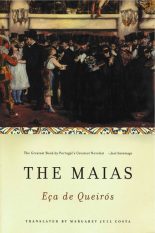 José Maria de Eça de Queirós (1845 – 1900) He was the first of Portugal’s great triumvirate of literary virtuosos: Eca de Queirós, Fernando Pessoa, and Jose Saramago. He had a wicked sense of humor. Himself a Portuguese diplomat, he wrote the following: “The number of dolts, dullards and nincompoops who represent us overseas is enough to make one weep. This really is a most unfortunate country.” But you can tell by his writing that he loves Portugal and especially its women.
His Must Read Fiction: The Maias, The Relic, The Sin of Father Amaro
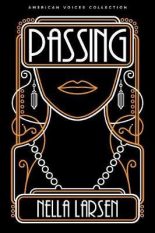 Nella Larsen (1891 – 1964) She worked as a nurse and a librarian in New York, but Nella Larsen got caught up in the Harlem Renaissance of the 1920s, and she wrote and published two short novels and a few short stories. Then she went back to being a nurse. She died in obscurity, but her work has now achieved the status of classic and is taught in many literature courses. I have read all of her fiction and
  consider it wonderful. ‘Passing’ was probably the first novel ever to deal with being of mixed race in the United States. I was moved by the efforts of Heidi Durrow to get a proper gravestone for Nella Larsen which you can read about here.
Her Must-Read Fiction: Passing, Quicksand, The Short Fiction of Nella Larsen
 Theodore Dreiser (1871 – 1945) If you have ever watched the great classic movie ‘A Place in The Sun’ starring Elizabeth Taylor and Montgomery Clift and Shelley Winters, you are familiar with Theodore Dreiser’s work. That movie is based on Dreiser’s novel, ‘An American Tragedy’. Who can ever forget the scene in the movie where he rows his fiancée out to the middle of the lake and then pushes her out of the boat into the water, knowing she cannot swim? All because he had found a beautiful new love from a rich family. Some critics found Dreiser’s work crude and rude, but I have found his fiction to be vivid and powerful.
His Must-Read Fiction: Sister Carrie, The Financier, An American Tragedy
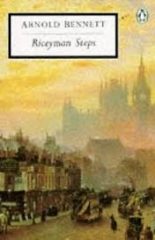 Arnold Bennett (1867 – 1931) – He wrote the best novel ever about a second-hand bookstore, ‘Riceyman Steps’. To the Bloomsbury Group including Virginia Woolf, Arnold Bennett was considered one of the Old Guard whose work was so prosaic that they were rebelling against it. However from my later vantage point I recommend Bennett’s work for its fine eye for detail and his strong empathy for the lower classes.
His Must-Read Fiction: Riceyman Steps, Anna of the Five Towns, The Card, An Old Wives Tale
 Jean Stafford (1915 – 1979) – She was seriously injured and facially disfigured when she was 23 in a car accident in 1938. The reckless, angry, and intoxicated driver was the mentally unstable poet Robert Lowell whom she would soon marry and 8 years later divorce. She suffered from alcoholism and depression for much of her life. After publishing only three novels, all of which won critical acclaim, she wrote only short stories, many of which were published in the New Yorker. Of her work, ‘The Mountain Lion’ is my favorite.
Her Must-Read Fiction: The Mountain Lion, The Catherine Wheel, The Collected Stories of Jean Stafford
 Francois Mauriac (1885 – 1970) – In early Mauriac, Evil is so attractive and Good is so smug that a winner is by no means assured. After those early novels, in 1928 Mauriac turned to Christianity and Catholicism with a vengeance, and the critical consensus was that he then stacked the deck in his fiction in favor of Good, and that his work weakened due to his new-found religious fervor. However one of his novels that I most admire, ‘The Vipers’ Tangle’, was written in 1933 after his conversion. One of the qualities that make Mauriac’s earlier fiction so appealing is how he depicts the life of Evil as quite delightful, just like it is in real life.
His Must-Read Fiction: The Desert of Love, Thérèse Desqueyroux, Flesh and Blood, Vipers’ Tangle
Here and here are two earlier lists of writers who wrote some mighty fine fiction.
 Tony's Book World
Posted by kaggsysbookishramblings on March 11, 2020 at 7:32 PM
A nice list of authors, some of whom I’ve read and some of whom I want to! :D
LikeLike
Posted by Anokatony on March 12, 2020 at 2:44 AM
I’m surprised you haven’t read them all already. :)
LikeLiked by 1 person
Posted by Lisa Hill on March 12, 2020 at 2:29 AM
Yes, yes and yes about Henry Handel Richardson. I’ve read her trilogy twice, and I understand why many refer to it as The Great Australian Novel. But Maurice Guest (which is reviewed on my blog) is fine study of obsession in music-mad Vienna. A brilliant book.
I’ve read (and reviewed) Dreiser too. I think I discovered him through 1001 Books, he’s in my canon of US authors I’d like everyone to read. He has a remarkable ability to represent the limited choices for women in his era.
But the others? You’ve just added to my wishlist. Again!!
LikeLiked by 1 person
Posted by Anokatony on March 12, 2020 at 2:41 AM
Hi Lisa,
After reading The Fortunes of Richard Mahony trilogy, I did read Maurice Guest, but that novel didn’t quite have the impact for me of the trilogy.
If you do read Mauriac, be sure to read the novels early in his career before his religious conversion. The Viper’s Tangle has a later date but I suspect it too was written before the conversion. For Eca de Queiros, ‘The Maias’ is his 600+ page masterpiece, but ‘The Relic’ is an excellent shorter novel, about 200+ pages.
LikeLike
Posted by Lisa Hill on March 12, 2020 at 4:37 AM
Like John Donne. I like his early poems with their salacious overtones much better than his religious ones.
LikeLiked by 1 person
Posted by Emma on March 22, 2020 at 5:36 PM
I can only recommend Mauriac, he’s good.
I have The Fortunes of Richar Mahony on the shelf.
And thanks for Nella Larsen, I hadn’t heard of her before.
This is a great idea for a post.
LikeLiked by 1 person
Posted by Anokatony on March 22, 2020 at 7:02 PM
Hi Emma,
Since ‘The Fortunes of Richard Mahony’ is three separate novels, I divided it up that way. The first ‘Australia Felix’ is particularly affecting.
The fiction of Nella Larsen is a quick read.
Francois Mauriac is one of your Frenchmen who understood that the battle between Good and Evil is not as straightforward as it sounds, especially in his early work.
LikeLike