Archive for November, 2019

‘The Grammarians’ by Cathleen Schine – A Fiction For Those Who Delight in Words


‘The Grammarians’ by Cathleen Schine (2019) – 258 pages
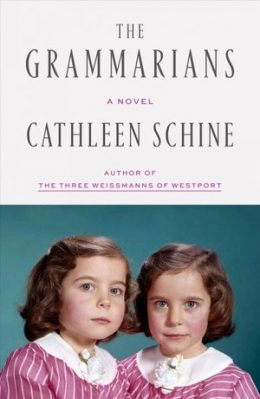
‘The Grammarians’ is a novel about a family with identical twin daughters, Laurel and Daphne, who both grow up to love words. Their father is prescient enough to buy the still very young daughters a complete old edition of Samuel Johnson’s Dictionary of the English Language and install it on a stand in their family den. Thanks to the dictionary, the daughters share a fascination with the meaning and use of words which continues through their entire lives. They both become word mavens. Daphne becomes a columnist, the Miss Manners of modern speech”, who writes a popular column on the use and abuse of words. The other daughter Laurel, after a long stint of motherhood, becomes a poet of sorts.

One of the several charms of ‘The Grammarians’ is the witty word play the two girls bring to their conversation. Each chapter begins with the definition and usage of a word taken from the Samuel Johnson dictionary. Usually the words are ones that have fallen out of usage or that one or more of their meanings have fallen out of usage.

BABERY. n. s. [from babe] finery to please a babe or child.

Other words that are used to start chapters are: conversableness, scrine, collectitious, to swop, disbranch, edacious. We have lost many of these useful words as the English language has become streamlined. The twin girls use a lot of these dropped words in their conversations.

Daphne said, “Grammar makes you respect words. Every individual word. You make sure it’s in the place where it feels the most comfortable and does its job best.”

Here is Daphne’s riff on the word “Tight”:

She loved the word “tight”. It meant so many different things that were all somehow the same thing. Tight muscles. Tight with money. Money is tight. The organization is tight and well run. Tight friends. Tight-lipped. Hold tight. Sleep tight. Of course it also means tipsy, which makes less sense. And apparently it meant cool too. Better than “groovy,” anyway, a word she shamefully remembered using freely. A kind of progress, then, in the world.”

The other twin sister Laurel thinks the following about the word “Deadline”:

The components of the word “deadline” struck her. A line that is dead. No, a line that you must not cross or you will be shot dead. From prisons in the Civil War. Was that right? She would look it up later.”

Later the twin sisters have a falling out, a philosophical difference in their approaches to words, that causes these very close identical twin sisters to avoid each other for several years.

‘The Grammarians’ is a light, humorous, witty novel which I entirely enjoyed, and I’m quite sure most ‘word’ persons will enjoy it.


Grade:    A


A Season in the Life of Emmanuel’ by Marie-Claire Blais – A Wild, Wicked, Woeful, Wonderful Novel


‘A Season in the Life of Emmanuel’ by Marie-Claire Blais (1966) – 145 pages         Translated from the French by Derek Coltman

I discovered Canadian writer Marie-Claire Blais through a recent article in the New Yorker entitled “Will American Readers Ever Catch on to Marie-Claire Blais?”

‘A Season in the Life of Emmanuel’ is a wicked, wicked novel; it is diabolically outrageous and wonderful. I loved it. The way I look at it is that what Joseph Heller did to World War II in Catch-22, Marie-Claire Blais does to the Quebec farm family. Blais exagerates the prevailing attitudes on the farm to the point of ridiculousness. Perhaps it is my small poor farm background which caused me to love this novel.  Gallows humor and biting coruscating irony come to a farm in Quebec. There is not one iota of sentimentality in this novel, and that is just fine with me.

The first chapter is written from the perspective of new-born baby Emmanuel. He was born without fuss today, and his mother is already back outside working on their farm. There are 16 children in this Catholic family, about one a year. Old Grand-mere Antoinette watches over all the little children in the family who are too young to work yet. Grand-mere Antoinette is ancient but she runs the household and she expects to live forever. She is a stern and very religious taskmaster.

Most of the older children are outside working on the farm but Jean-Le Maigre stays inside because he is tubercular and the family knows he is going to die soon. Grand-mere is looking forward to his death because she knows he will be going to a better place then.

There had been so many funerals during the years that Grand-mere Antoinette had reigned in her house, so many little black corpses, in the wintertime, children always disappearing, babies who had only lived a few months, adolescents who had vanished mysteriously in the fall, or in the spring. Grand-mere Antoinette allowed herself to be rocked gently in the swell of all these deaths, suddenly submerged in a great and singular feeling of content.”

Jean-Le Maigre is in his usual spot under the kitchen table with his head in a book. That is the only place he can get some quiet time among all the squawking kids. Jean Le Maigre also does a lot of writing. However his farmer father thinks school and learning and reading and writing are a waste of time.

I had been leaving my Greek prose, my funeral orations, my fables, and my tragedies lying around all over the house for some time before I discovered that my father had consigned them to the latrine as fast as I could write them. What a disappointment!”

Also one of the daughters Heloise stays in her room while the others are all outside working. Heloise is a rabid religious zealot with a love of suffering. Grand-mere Antoinette sends her off to the church in order to prepare her for a life in the convent, but Heloise proves too fanatical even for the Mother Superior to handle.

There is a very different future in store for Heloise which Marie-Claire Blais hints at early on when she mentions that Heloise’s temptations turned more and more to something she didn’t recognize as desire. Let’s just say that Heloise winds up being the one economic success story in the family.

Jean Le Maigre also gets sent to the church school by Grand-mere for religious classes. At the church there is a Brother Theodule who “during the melancholy hours spends chasing little boys around the noviciat’s evil-smelling corridors”.

That man has chosen our sons to prey upon.”


Blais is prescient about the Catholic scandals to come.  Brother Theodule is kicked out of the church school but later reappears around town and is given the appropriate name Brother Theo Crapula.

I had not read a novel that so successfully used grim gallows humor in a long time, but Marie-Claire Blais also uses the humor to make some devastating points about life and religion.

Once in a while I will find an unknown older novel that beats everything that is written today. That is what happened here.


Grade:     A+


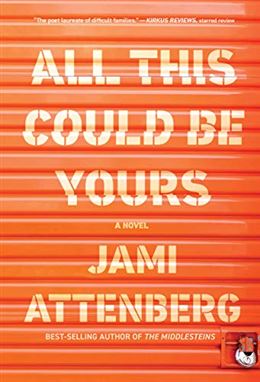
‘All This Could Be Yours’ by Jami Attenberg – The Dad Was Bad


‘All This Could Be Yours’ by Jami Attenberg    (2019) – 298 pages

The catchphrase for ‘All This Could be Yours’ is “family dysfunction at its finest”, and I am always up for some family dysfunction in my fiction reading.

At the center of this novel is Victor Tuchman. He is a miserable human being who sometimes beats his wife and has hurt every member of his family in one way or another.

Every so often he smacked her. The arguments were stupid, trivial, about nothing, about money which they had plenty of. Nothing was ever worth violence, but she grew used to it, and in a way, it was how she knew he was still paying attention to her, because most of the time, he wasn’t around.”

The family does live in a nice house in Connecticut and all, because Victor is not a criminal low life; he is a criminal high life. We live in a time when many of the richest people are outright criminals because white collar crime perpetrated by white people is rarely punished. Victor has made his living in some forms of organized criminal activity which he never discusses with his family. Later he is beset with several sexual harassment lawsuits from a few of his former mistresses.

Anyhow very early in the novel he has a severe heart attack, and for the rest of the novel he lays dying in a hospital in New Orleans where he and his wife have moved in old age. We then meet other members of his immediate family with their own awful memories and feelings about Victor.

This is a story of severe family dysfunction, and these are best told in an oppressive claustrophobic atmosphere. ‘All This Could Be Yours’ loses its intensity when it wanders too far from this immediate family situation. Sometimes it becomes as discursive as a New Orleans travelogue.

Things to do in New Orleans. Drink, eat, drink, eat, jazz. The Mississippi. Cemeteries and ghosts. Alligators. She crossed Canal Street and the threshold of the French Quarter. Drink, eat, jazz. Ghosts.”

The novel loses its way for me when about half way through it tells the life story of daughter-in-law Twyla. Ultimately Twyla is also very much a victim of Victor Tuchman as shown in one of the weirdest scenes I have ever encountered, but her back story probably could have been left out. It is only after she meets and marries the son Gary Tuchman that her story relates at all the Tuchman family. Now they are getting divorced. The novel becomes diffuse and wandering, lacking focus.

So for me the catchphrase for ‘All This Could Be Yours’ would be changed to “family dysfunction at its middling”.


Grade:    B-


‘Olive, Again’ by Elizabeth Strout – She’s Back


‘Olive, Again’ by Elizabeth Strout (2019) – 289 pages

Olive Kitteridge of the small town of Crosby, Maine is getting old, but she still is a lively strong character who gets around the streets of the town.

In one story the husband of younger housewife Candy calls Olive Kitteridge an “old bag”. However Olive is one of only two people in town who will still stop by to visit with Candy. Candy’s other old friends are too scared. Candy is receiving radiation treatments for cancer, has lost all her hair, and is unsure if the current treatments will be successful.

Olive, you’re the kind of person people want to talk to.”

I don’t know about that,” Olive said.

Several shocking surprising goings on play against readers’ expectations of what goes on in a small town. Murder, arrests, several would-be suicides, family sexual abuse. These things do happen in small towns, but they get swept under the living room carpet. In the fictional works of Strout, the terrible events in the small town of Crosby, Maine, are brought out in the open. I would call her attitude small-town fatalism.

Elizabeth Strout gets to the crux of things, of life and death, which gives these linked stories more depth than you would expect. The stories are about the events, both good and bad, that make up each person’s life. The reader identifies with these not always admirable characters. Along the way, Strout achieves these moments of real near-wordless profundity.

These were openings into the darkness of a relationship one saw by mistake, as if inside a dark barn, the door had momentarily been blown off and one saw things not meant to be seen.”

Also we get glimpses of Olive’s own family life. At the beginning of ‘Olive, Again’, Olive remarries at age 70. Olive is not close to her own only son and his family who live in New York, but finally they come to visit her.

So there was this: Her son had married his mother, as all men – in some form or other – eventually do.”

Having an old person, Olive Kitteridge, near the center of your stories means you can deal with both life and death in them. Elizabeth Strout takes full advantage of this.

She was going to die. It seemed extraordinary to her, amazing. She had never really believed it before.”

The last two stories are about the hard truths we all must eventually contend with. Actually all the stories deal with hard truths of one sort or another. Elizabeth Strout’s fiction is the opposite of escapism.


Grade:    A


The Other Elizabeth Taylor – One of my Favorite Writers of the 20th Century


Elizabeth Taylor

Born:    July 3, 1912         

Died:   November 19, 1975


I was a bit unusual for a grown-up farm boy from Wisconsin. For years and years one of my foremost pleasures was reading one of the novels or collections of stories by English author Elizabeth Taylor, not the actress Elizabeth Taylor who was of little interest to me, but the fiction writer.

I have had a rather uneventful life, thank God,” the other Elizabeth Taylor told the London Times in 1971. But, she added, “another, more eventful world intrudes from time to time in the form of fan letters to the other Elizabeth Taylor. Men write to me and ask for a picture of me in my bikini. My husband thinks I should send one and shake them up, but I have not got a bikini.”

The author Elizabeth Taylor is still known as the Other Elizabeth Taylor. But that may change.

As a writer of domestic fiction, Elizabeth Taylor was the best of her time, a latter-day Jane Austen. There have been at least a dozen “rediscoveries” of author Elizabeth Taylor in various publications, but today she still is under-recognized as an outstanding fiction writer.

What makes her writing so special?

Taylor’s prose is so understated and at times lightly witty yet ultimately scathing, you hardly notice that it is there. That is the definition of fine writing to me. Like Graham Greene, Elizabeth Taylor makes good writing seem effortless.

Taylor’s novel ‘Angel’ is about a really bad writer of romance novels, Angelica Deverell, who becomes famous and wealthy due to sales of her atrocious novels. A lot of authors would look upon this situation as an opportunity for very cruel comedy; however Taylor always has a deep empathy for even her most forlorn characters.

This article by Phillip Hensher is the best appreciation of the writing of the other Elizabeth Taylor that I have come across.

I wish I could write as lucidly and as straightforward as the other Elizabeth Taylor, but I do try.

Where to start with the author Elizabeth Taylor?

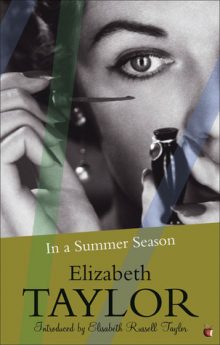
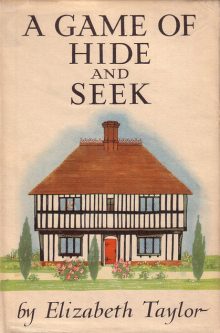
Elizabeth Taylor was consistent as well as excellent, so just about any of her books would be a good place to start. Of her novels, I can remember being particularly impressed with ‘A Game of Hide-and-Seek’, ‘Angel’, ‘In a Summer Season’, and ‘The Soul of Kindness’. Taylor was one of the very best short story writers also, so those of you who lean toward short stories might want to read ‘You’ll Enjoy It When You Get There – The Selected Stories of Elizabeth Taylor’ by NYRB.

Quotes about her

Elizabeth Jane Howard once said of Elizabeth Taylor: “How deeply I envy any reader coming to her for the first time.”

For years, the New Yorker published nearly every story she finished, 35 of them between 1948 and 1969. William Maxwell claimed that job applicants were given her stories to edit as a test, ‘and if they touched a hair of its head, by God, they were no editors’. There wasn’t much to tinker with: her style was spare, usually shorn of adverbs and adjectives, and her plots were similarly unencumbered.” – Deborah Friedell, London Review of Books

“Sophisticated, sensitive and brilliantly amusing, with a kind of stripped, piercing feminine wit.” Rosamond Lehmann

Ruthlessness was also one of her great strengths as a writer. Far from being “charming”, her novels and stories often go straight to the rotten heart of things, fearlessly confronting betrayal, loneliness, despair and, above all, self-deception. Her prose is unshowy but wickedly subversive, quietly undermining her characters’ pretensions and wittily exposing the evasions people practise as they negotiate life.” – Peter Parker

What did not help was that Elizabeth’s perceptions, her interests, her awareness were essentially feminine; then there is her reticence, the domestic subject matter, the lending library aura that surrounds her work, the Thames Valley settings, the being married to a sweet manufacturer….the assumption that her work is predictable…one could go on. And as for her style, too many reviewers found it too feminine, missed the humour, missed the bleakness, could only see the subject material was domestic and then condemned the entire oeuvre as minor, certainly incapable of greatness.” – Nicola Beauman

Quotes from Elizabeth Taylor herself

I’ve no imagination and can only write of what I know.”

I never wanted to be a Madame Bovary. That way for ever—literature teaches us as much, if life doesn’t—lies disillusion and destruction. I would rather be a good mother, a fairly good wife, and at peace.” – Elizabeth Taylor, A Game of Hide-and-Seek

The secret of your power over people is that you communicate with yourself, not your readers.” – Elizabeth Taylor, Angel

The whole point is that writing has a pattern and life hasn’t. Life is so untidy. Art is so short and life so long. It is not possible to have perfection in life but it is possible to have perfection in a novel.”