Archive for September, 2018

‘The Story of a Marriage’ by Geir Gulliksen – The Break-Up


‘The Story of a Marriage’ by Geir Gulliksen (2015) – 152 pages Translated from the Norwegian by Deborah Dawkin

‘The Story of a Marriage’ is a novel about the breaking up of a marriage. It is told by Jon who haplessly watches and listens as his second wife Timmy is attracted to and gradually falls in love with another guy named Gunnar.

As a little inside knowledge about the writing of ‘The Story of a Marriage’ it must be noted that the former real wife of the author Geir Gulliksen complained that during their bitter breakup Gulliksen threatened that he was going to write a novel about the breakup and then he did. So this is reality fiction with a vengeance.

Jon in the novel ditched his first wife when he became attracted to Timmy, and then his first wife prophetically announced ‘Wait until this happens to you’. Twenty years and two kids later…

In the early stages of Timmy’s attraction to Gunnar, Jon is so confident of his good relationship with his wife that he actually encourages her to meet up with Gunnar and perhaps even do more than that. Later he rues that strategy.

I understand that this guy Jon is hurting because his wife left him for another man, but ‘The Story of a Marriage’ could have used a bit of humor. Without any lightness or sense of fun the many extended sex scenes in the novel veer into sappiness. I really can’t blame the girl Timmy for ditching this guy Jon who has no sense of humor for someone else.

Although I’ve got to hand it to the Scandinavians. They can discuss rationally at length what goes on between two people in bed. That’s more than what the rest of the world can do. That’s more than I can do.

The lengthy sober detailed descriptions of the mechanics of the various sex acts between Jon and Timmy in bed are about the only things I found laughable in this entire novel, and I’m sure that was unintentional.

This novel did remind me of ‘Scenes From a Marriage’, a movie directed by Ingmar Bergman which is also about the dissolution of a marriage and which I do consider a much stronger work. In the movie, the husband and wife are on an equal basis and thus each can present his or her side of the story. In ‘The Story of a Marriage’, Jon is the sole narrator, and even though he tries real hard to get inside of his wife Timmy’s thoughts and feelings we don’t really get her views of things.

By the way, I went through several years of watching great Ingmar Bergman films and my favorite of his work is ‘Smiles of a Summer Night’ which is loosely based on Shakespeare’s ‘A Midsummer Night’s Dream’.

My bottom line on ‘The Story of a Marriage’ is that it is not a bad novel if you can get by the sappiness of its extended sex scenes.


Grade :    C


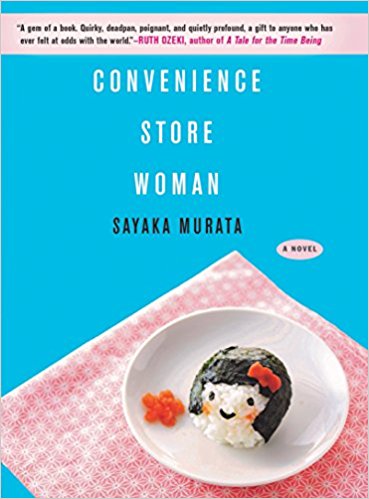
‘Convenience Store Woman’ by Sayaka Murata – An Unsung Hero


‘Convenience Store Woman’ by Sayaka Murata (2016) – 163 pages     Translated from the Japanese by Ginny Tapley Takemori

In every successful endeavor whether it be a family, a business, a clinic, or even a convenience store, there are people who keep it running smoothly and efficiently while at the same time keeping things pleasant and clean. These people are often not the bosses, but they are still totally dedicated to the success of the enterprise. Often these unsung heroes are women. At the same time if there is someone messing up the works with a hateful spiteful attitude, it is often a man who may or may not be the boss.

I read this Japanese novella because convenience stores are something I can relate to, having several of these little stores in our vicinity, usually combined with a gas station. Convenience stores are one thing Japan and Minnesota have in common.

Keiko Furakura has worked part-time at her neighborhood Smile Mart for 18 years. She is not the boss. She greets each customer with a friendly “Irasshaimase, Good Morning”. She makes sure the store keeps the items which customers want in stock, and she arranges her displays to make them attractive. She is dedicated to her store, and her managers think well of her.

Keiko has never had a boyfriend even though she is 38. Her family and her few friends are worried about her because she has no life outside of her job.

Her convenience store hires a young man named Shiraha. It soon becomes apparent that he doesn’t measure up as an employee since he does not do the tasks assigned to him and is insolent and not friendly with the customers. Shiraha is fired from the Smile Mart.

Later Shiraha hangs around Keiko, and Keiko puts up with him because her family feels bad for her for never having a boyfriend. Shiraha moves in with her, does no work, and sponges money off of her. He convinces Keiko to quit the Smile Mart and look for a real job. Keiko’s family and friends are happy for her that she has finally found a male someone.

That is the setup. I won’t tell you what happens next.

Much of what has been written about ‘Convenience Store Woman’ discusses the rigidity and homogenizing pressures of Japanese society. I prefer to concentrate on the similarities between the little stores in Japan and the little stores in Minnesota. Stories like this one about a convenience store woman in Japan could well happen here in Minnesota too. In both places there is a wide variety of types of people that makes it difficult to generalize. I don’t see this situation as at all strange or unusual for any place in the world.

‘Convenience Store Woman’ is a well-done enjoyable novella that celebrates someone who normally doesn’t get the credit she deserves.


Grade :   A


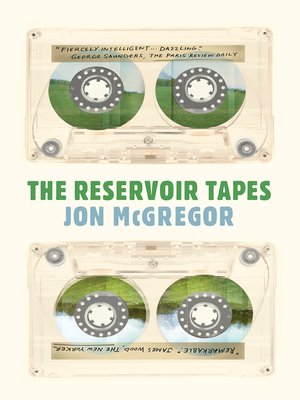
‘The Reservoir Tapes’ – Stories Relating to the Disappearance of Becky Shaw


‘The Reservoir Tapes’ by Jon McGregor (2018) – 166 pages

‘The Reservoir Tapes’ contains a group of linked stories or vignettes involving the people who live in the small rural northern English village from which thirteen year-old Becky Shaw disappeared in McGregor’s last novel ‘Reservoir 13’. Whereas ‘Reservoir 13’ presents a wide picture of the people of this village over time, ‘The Reservoir Tapes’ presents small snapshots of people who knew Becky or knew about her disappearance. It is like Jon McGregor imagined ‘Reservoir 13’ so vividly that he had some leftover material about these people which he put into ‘The Reservoir Tapes’.

In the first story Charlotte, the mother of Becky, is being interrogated by a police officer soon after Becky disappeared. We only get the one policeman side of the conversation.

Okay. And then did you come downstairs before she finished her breakfast?

And was that when the idea of going for a walk was discussed?

It would be fair to say that Becky’s response wasn’t positive, would it?

Is it OK if I call her Becky?

She wasn’t enthusiastic about the walk. And the weather wasn’t great, at that point.

So you let the matter rest for the time being. To avoid a conflict.

This one-sided conversation is a good way to get us readers back into this rural village after the Becky Shaw disappearance.

There are fifteen of these quick short stories about various people in the village. ‘The Reservoir Tapes’ started out as a radio broadcast of fifteen episodes and is a fast easy read, but it would not work effectively for those who haven’t read ‘Reservoir 13’ which is a much deeper novel. Just as is the case of most villages, many of these people know or have heard about each other. The stories involve a wide sweep of people.

By the end of ‘The Reservoir Tapes’, we are no closer to figuring out what actually happened to Becky Shaw, but many possibilities are suggested. She could have drowned in the quarry pond or in Reservoir 13 where she had swam before. She may have been attacked by someone. She may have gotten lost during her walk on the mountain. All are possibilities.

All of these first-hand personal accounts relate to Becky Shaw’s disappearance in one way or another, but some veer far away from that to more recent occurrences or disagreements. Life moves on for the people of the village, and other things become of more immediate concern. There have been adulteries, divorces, a laborer gets trapped under quarry rock. Some of the accounts make you feel uneasy about the potential for violence in this or that character. By the end, we readers have the same eerie feeling we had at the end ‘Reservoir 13’.


Grade :    A


‘Only to Sleep’ by Lawrence Osborne – From the Border Down Into Mexico

‘Only to Sleep’ by Lawrence Osborne     (2018) – 256 pages

Lawrence Osborne was asked by the Raymond Chandler estate to write a Philip Marlowe detective novel, and ‘Only to Sleep’ is what Osborne came up with. I’m not that familiar with Raymond Chandler’s writing, but this is my fourth Osborne novel. I find reading Lawrence Osborne to be a more than adequate replacement for reading Graham Greene whose work I’ve nearly completed. So for me the crucial question would be “Is ‘Only to Sleep’ a good Lawrence Osborne novel?

In ‘Only to Sleep’ we have a 72 year-old retired Philip Marlowe living along the California-Mexico border. The year is 1988. He is lured out of retirement by a life insurance fraud case where the company suspects the beneficiary of faking his death. Most of the story takes place south of the border in Mexico. Apparently Osborne worked as a reporter in this area at one time so he knows this colorful locale well.

This is a Mexico where rich old United States men bring their extremely young wives or girlfriends along in their yachts to Mexican towns along the coast. This is their last fling to which these guys think they are entitled, and they throw wild parties aboard the yachts with drugs and lots of alcohol. Meanwhile Marlowe stays in exotic Mexican hotels as he investigates the case.

In ‘Only to Sleep’, the young femme fatale wife is named Dolores who says lines like “The only thing that matters in life is getting through it to the end without being broke.”

I am familiar enough with Raymond Chandler to realize that he is famous for his snappy lines, and Osborne has written plenty of them here.

It was ninety-seven in the shade and there was no shade.”

He moved like a sloth in linen.”

She seemed dressed for a date in the middle of nowhere.”

We all need something in this world. We all come from places where we can’t get them.”

You get so tired of the people you already know.”

But does this work as a Lawrence Osborne novel? My answer would be “Yes”, it does. I used to not read whodunits considering them a lesser genre, However this one really does capture the flavor of the lives of these rich old Americans living along the Mexican border, and we do get glimpses of the wandering Mariachi bands and the Carnaval parades and the Mexican town police forces that must deal with these rich United States tourists.

I will keep reading Lawrence Osborne. ‘Only to Sleep’ is more than a whodunit.


Grade : A-


Jose Saramago – One of my Favorite Fiction Writers of the 20th Century (and 21st)


Jose Saramago

Born: November 16, 1922  Died: June 18, 2010

Jose Saramago from Portugal was one of those literary giants who make what is being written today seem small and insignificant. I suppose that it is not a good argument for reading Saramago that he spoils modern fiction for you, but read him anyhow. He is one of three Portuguese literary virtuosos – Jose Maria de Eca de Queirós of the late nineteenth century, Fernando Pessoa of the early twentieth century, and Jose Saramago of the late twentieth century – all of whom wrote incredible fictions that are still powerful today. Portugal can consider itself fortunate to have had three such impressive writers.

Jose Saramago wrote convincing allegories that reflect upon the human condition. It was Saramago’s practice as a fiction writer to set whimsical parables against realistic historical backgrounds in order to comment ironically on the human situation. This gives his work a depth that few writers attain.

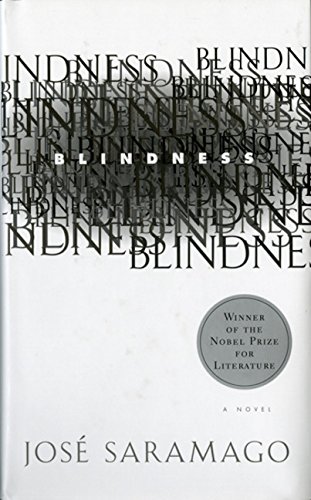
Perhaps his most famous work is ‘Blindness’. In ‘Blindness’ an epidemic of white blindness strikes the city, and the story becomes a parable for the loss and disorientation and struggle for survival which beset the world in the twentieth century. Saramago as a writer never shied away from the big themes and ideas.

Inside us there is something that has no name, that something is what we are.”

I don’t think we did go blind, I think we are blind, Blind but seeing, Blind people who can see, but do not see.”

The difficult thing isn’t living with other people, it’s understanding them.”

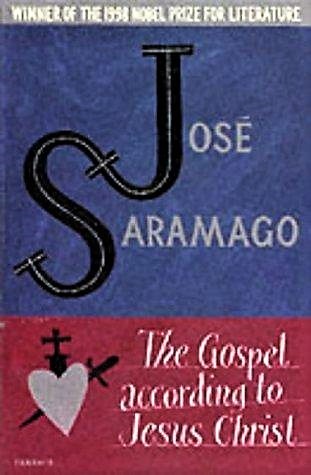
But I’ve been reading Saramago a long time, and there are other novels that I’ve read that absolutely demand to be mentioned. ‘The Year of the Death of Ricardo Reis’ is Saramago’s fictional homage to that maverick Portuguese genius Fernando Pessoa who also wrote poetry as well as fiction. Saramago also wrote ‘The Gospel of Jesus Christ’ which got him into big trouble with the Catholic Church. I will list other Saramago novels that I have read, but the fact that I’m only listing them represents no drop-off in quality : ‘Baltazar and Blimunda’, ‘The Stone Raft’, ‘The History of the Siege of Lisbon’, ‘Cain’.

Saramago was prolific having written at least twenty-five novels, so I still have a lot of his work left to read. Reading each of his novels, even the short ones, is an exhilarating, exhausting, and transforming experience, so I wait a long time between novels.

The above may have wrongly convinced you that Saramago is a difficult writer, but that is not the case. He did his best to make his books readable. Here is one of his thoughts on writing.

Sometimes I say that writing a novel is the same as constructing a chair: a person must be able to sit in it, to be balanced on it. If I can produce a great chair, even better. But above all I have to make sure that it has four stable feet.”

I really think you all have got to read this exciting and mind-altering writer, Jose Saramago.


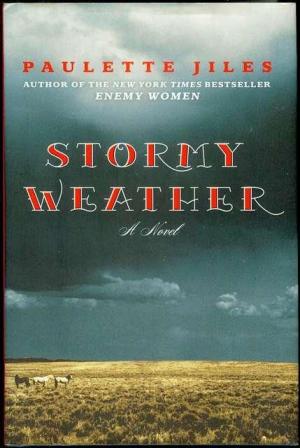
‘Stormy Weather’ by Paulette Jiles – Texas Dust, Rain, and Oil During the Great Depression


‘Stormy Weather’ by Paulette Jiles (2007) – 342 pages

I was quite impressed with Paulette Jiles’ latest novel ‘News of the World’, and that novel made my Best of 2017 list. That Western story is told in a dignified and stately fashion in simple and straightforward prose. So I decided to listen to another novel from Jiles’ back catalog, ‘Stormy Weather’, on audio book. ‘News of the World’ was strong enough to revive my interest in the author’s back catalog as sometimes happens.

Not every novel is made for listening. If a novel contains complex sentences or a difficult plot, it becomes tricky to capture the full effect of the book even with repeated listening. I do read most novels the old-fashioned way (even in physical book form rather than Kindle). However I do occasionally want an audio book (while I’m walking our dog, Bailey) so I am careful to choose only novels for listening that I think will suit the medium. I find these clear and elegant Western novels by Paulette Jiles perfect for audio listening.

‘Stormy Weather’ takes place in Texas oil country during the Great Depression. It is a family story of the Stoddards. The heavy-drinking and gambling father Jack Stoddard dies early on under questionable circumstances, and the mother and three daughters are left to fend for themselves. The only thing their father left them was a race horse named Smokey Joe and a bad reputation. They move back to their mother’s family farm. Much of the story centers around the middle daughter Jeanine who starts out as a scrappy six year old in 1924 and by the end of the novel is twenty-one. As she comes of age, she meets a couple of guys on separate occasions who are quite different from each other, and we get the scenes of her romantic and not-so-romantic encounters as she grows up.

Along the way we get credible stories both happy and sad about what happens to a family through time, And of course there are scenes of the horse Smokey Joe in rural horse races.

‘Stormy Weather’ has the same qualities that drew me to ‘News of the World’. It is a steady family portrait of life during hard times, a story that works just as well for teenagers as it does for adults. It is not the most original story in style or substance, but it is perfect for audio listening.


Grade :    A