Archive for July, 2018

‘Sabrina’ by Nick Drnaso – An Edgy Original Graphic Novel that Captures Our Times


‘Sabrina’ by Nick Drnaso (2018) – 203 pages

Sabrina’ is a subtle graphic novel that captures the unease, the sense of anomie, and the isolation of our current times.

A woman, Sabrina, is missing, perhaps the victim of foul play. Her affectless boyfriend Teddy is at a loss and goes out to Colorado to stay in the apartment of a guy he sort of knew in childhood Calvin Wrobel. Wrobel is newly separated from his wife and child and is a military serviceman who works nights. Wrobel hardly knows this Teddy but lets him have a room. They can barely talk to each other. Teddy spends all his time locked in the room listening to talk radio hosts with wild conspiracy theories. Wrobel goes to his military base job where he must take the following personal survey each day.

How many hours of sleep did you get last night?

Rate your overall mood from 1 to 5, 1 being poor.

Rate your stress level from 1 to 5, 5 being severe.

Are you experiencing depression or thoughts of suicide?

Is there anything in your personal life that is affecting your duty?

At first Wrobel can answer the quiz quite positively, but as Teddy gets on his nerves his mood worsens. Wrobel is also trying to get back with his wife and daughter.

A smaller part of ‘Sabrina’ also follows Sabrina’s sister Sandra as she copes with the aftermath of Sabrina’s disappearance.

‘Sabrina’ is more about capturing the anxieties and the various pensive moods of its characters more than concerning itself with concrete plot incidents. There are hundreds, perhaps thousands of little drawings that depict the isolation and disquiet of these characters. In that way ‘Sabrina is more like a novel than a comic.The colors are subdued, not at all bright or flashy.
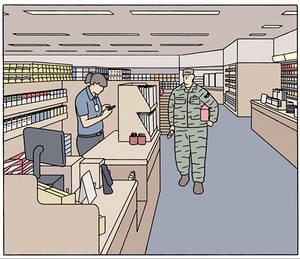
Sabrina is not a cheery story, but it does nail the uncertainty and distress of our lives today at this moment.

‘Sabrina’ was published by the Montreal comic and graphic novel publisher Drawn and Quarterly. Whereas other publishers’ comics are loud and violent and repetitive with their endless stockpile of superheroes and anti-heroes, Drawn and Quarterly produces comics and graphic novels that are subtle, moody, nuanced, and human. These are graphic novels that could actually qualify as fiction and literature.

Last week, ‘Sabrina’ by Nick Drnaso became the first graphic novel ever to be selected for the Man Booker longlist. This is a fortunate circumstance for me as I had already completed it. Let me say that I believe ‘Sabrina’ fully deserves this honor.

‘Sabrina’ is an original graphic novel for adults.


Grade : A
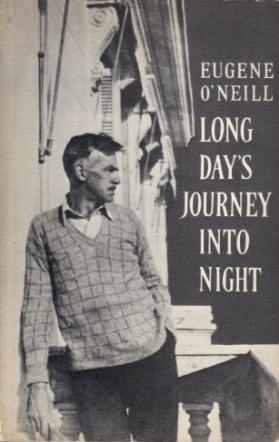


‘Long Day’s Journey into Night’ by Eugene O’Neill – The Tyrone Family

‘Long Day’s Journey into Night’ by Eugene O’Neill (1941) – 179 pages

Many claim that ‘Long Day’s Journey into Night’ is the greatest play written by a writer from the United States. Personally I think that distinction belongs to another play written by Eugene O’Neill, ‘The Iceman Cometh’. If you ever get the chance to see Lee Marvin in John Frankenheimer’s movie ‘The Iceman Cometh’ from 1973, don’t miss it. Lee Marvin plays gregarious salesman Harry Hickey who comes to his old bar to destroy the pipe dreams of everyone who is at the bar. Pipe dreams are those lies we tell ourselves to get us through each day. That play profoundly moves me to this day.

But on to ‘Long Day’s Journey into Night’ which is O’Neill’s most autobiographical play. O’Neill wrote the play in 1941 about his wretched early family situation involving his father, mother, and older brother. O’Neill would not publish the play while he was alive, and he made arrangements not to publish it until 25 years after his death. However his widow Carlotta recognized what a great play it was, and had it published in 1956. The play was first performed in November, 1956.

As its title suggests, the play of four acts takes place during one day in 1912. The Tyrone family is living in their summer seaside home in Connecticut. The father James is a famous actor who could have been a great Shakespearean actor if he hadn’t settled for more money. The sons Jamie and Edmund are fully grown. Older brother Jamie works as an actor in jobs that his father gets for him but mainly Jamie is a rake about town spending most of his time in bars and whorehouses. Edmund, the younger son, has worked as a journalist, written poetry, and has traveled widely but is sickly and may have consumption (tuberculosis) probably somewhat due to excessive alcohol consumption. Edmund is O’Neill’s stand-in for himself. All three men are alcoholics, but it is the mother Mary who has the worse problem; she is a morphine addict and has been confined to a sanatorium before.

One can comprehend how difficult it was for Eugene O’Neill to confront his real family situation. This is family realism at its most honest and most brutal. Each character must confront his or her own reality and shortcomings or else another member of the family will point them out for him or her.

None of us can help the things life has done to us. They’re done before you realize it, and once they’re done they make you do other things until at last everything comes between you and what you’d like to be, and you’ve lost your true self forever.”

I do think ‘Long Day’s Journey into Night’ is a very strong honest family drama. However it is somewhat of a sad and depressing play with no redemption for its characters. I prefer ‘The Iceman Cometh’ because while it is still brutally honest with the people on stage, it still offers a way out for these people at the end.

Under any conditions, Eugene O’Neill is still the greatest playwright from the United States.

Grade : A

‘Jakob Von Gunten’ by Robert Walser – The Hare and the Tortoise Revisited


‘Jakob Von Gunten’ by Robert Walser (1908) – 176 pages Translated from the German by Christopher Middleton

‘Jakob Von Gunten’ is a fictional journal kept by young Jakob Von Gunten during the time he spent attending and living at the Benjamenta Institute. This private institute is a school for training young men to become servants. It is run by Herr Benjamenta and his sister Fraulein Benjamenta. Robert Walser did actually attend such a school, and the novel is based on his experiences there.

Jakob Von Gunten is a young guy who is a born writer in a society that has no use for writers, much like Robert Walser himself.

How fortunate I am not to be able to see in myself anything worth respecting and watching! To be small and to stay small.”

The following journal entry will give you a good idea of the playful ironic spirit of this novel.

We wear uniforms. Now, the wearing of uniforms simultaneously humiliates and exalts us. We look like unfree people, and that is possibly a disgrace, but we also look nice in our uniforms, and that sets us apart from the deep disgrace of those people who walk around in their very own clothes but in torn and dirty ones. To me, for instance, wearing a uniform is very pleasant because I never did know, before, what clothes to put on. But in this, too, I am a mystery to myself for the time being.”

Jakob refuses to take himself too seriously. Jakob prides himself on being silly, impolite, cheeky, and stubborn. Jakob gets bored quite easily. There is another guy named Kraus at the Institute who is the exact opposite of Jakob Kraus is extremely hard-working and has a serious demeanor and does what he is told without questions or even thinking. Kraus never gets bored because he is always concentrating on the task at hand and looking for ways to improve it. Krauss’s motto is “make yourself invisible, or get busy with something.” In contrast Jakob sometimes sleeps late at the Institute, and Kraus comes around and pushes him out of bed and tells Jakob to get to work. However Jakob gets his revenge by teasing and annoying Kraus mercilessly.

Much of the novel is taken up with the interaction between these two guys, Jakob and Kraus. This is a fundamental difference between people, somewhat similar to the difference between the hare and the tortoise in that Aesop’s fable race. Jakob is the hare, and Kraus is the tortoise The hare is at least ten times quicker but is easily distracted and winds up losing the race to the slow and steady tortoise. When I look back on my own years at work, I must admit I was always more of a Jakob, a hare, than a Kraus, a tortoise. I was more of a wise guy who seemingly didn’t take the work all that seriously and got bored with routine tasks, and thus got into conflicts with the tortoise types.

But there is much more to the novel than the interactions between these two guys. We get an entire picture of the Institute including its founders. The writing is always lively and intense. It is not the easiest novel to read because some of the things referred to are foreign or dated, but the overall story is well worth the effort even today.

Here is an interesting side note on the author Robert Walser. At the age of fifty, after suffering from anxieties and hallucinations for many years, he checked himself into a mental institution called Waldau in Bern, Switzerland where he lived for 29 more years. He was known for taking long walks in the surrounding area. He gave up fiction writing completely, and was rumored to have said, “I’m not here to write, I’m here to be mad,”


Grade : A


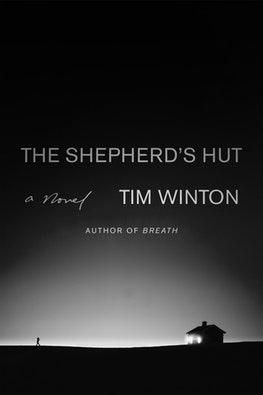
‘The Shepherd’s Hut’ by Tim Winton – A Missed Opportunity


‘The Shepherd’s Hut’ by Tim Winton ( 2018) – 267 pages

‘The Shepherd’s Hut’ starts out strong with a fascinating offbeat family. Fifteen year-old Jaxie Clackton has an all-consuming hatred for his abusive drunken father whom Jaxie calls Captain Wankbag. His father bashes Jaxie regularly, but even worse the father had beat up Jaxie’s beloved mother who has recently died of cancer. Meanwhile Jaxie consoles himself thinking about his distant girlfriend, his first cousin Lee, who is six months younger than Jaxie. Her mother Auntie Marg vehemently disapproves of their relationship as does the rest of Jaxie’s family.

Then old Captain Wankbag dies in a nasty car jacking accident, and Jaxie sets off across Western Australia to join up with his girlfriend Lee. Here is Jaxie driving out of town:

But bugger me, here I am hitting a hundred already and still not even in top gear. On squishy upholstery, with one of them piney tree things jiggling off the mirror. I’m flying. And just sitting on my arse to do it. Off the ground. Out of the dirt. And I’m no kind of beast anymore.”

I was settling in for a delicious family drama or melodrama on the order of Tim Winton’s wonderful probably classic ‘Cloudstreet’. Winton is a master of the Australian argot, and his mastery is on full display here. Jaxie narrates ‘The Shepherd’s Hut’ and his voice is raw, energetic, working class, down-to-earth, and colorful.

However…

However Winton throws this brilliant setup away and forsakes this vivid family story to give us entirely something else, and that is where I think Winton loses his way. Jaxie gets stuck in the harsh desert wilds of Western Australia and meets up with a disgraced old Irish priest named Fintan MacGillis. I expect this priest is supposed to be some enigmatic figure, but he seemed pretty stock to me. The momentum of this novel was lost for me when Jaxie’s family story was totally dropped and instead we’re out in the wilderness with this priest. It probably would have helped if Winton had presented this priest as some sort of father figure for Jaxie replacing old Captain Wankbag, but this is never even considered.

Later Jaxie and Fintan MacGillis must face villains who are nearly nameless and thus of little interest to this reader. So Winton traded an intense family drama for a routine generic adventure story in the Western Australian wilderness with a boring priest as a sidekick.


Grade : B


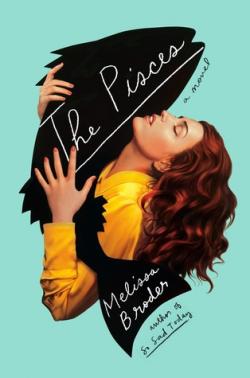
‘The Pisces’ by Melissa Broder – The Modern Woman’s Lover


‘The Pisces’ by Melissa Broder (2018) – 270 pages

Here is a comic coarse take on modern love. Our heroine Lucy is 38 and has just broken up with her long-time boyfriend. She is staying in her sister’s beach house on Venice Beach dog sitting and supposedly working on her dissertation on Sappho. In her spare time Lucy attends a love addiction therapy group for women who are all boy-crazy like junior high school girls.

‘The Pisces’ is all about Lucy the narrator’s voice of which some will find refreshingly honest and candid while others will find it self-centered and anxiety ridden. Although the novel makes it clear that Lucy is 38 years old, just by her interests and attitudes expressed, I would have guessed her age at about 16.

On the beach she meets Theo the swimmer and she is immediately attracted to him. He seems different, cooler than the other guys she meets. I won’t give away a major plot point of the story, but let’s just say there is something fishy about Theo.

‘The Pisces’ is a hot and steamy romance story told from the woman’s point of view with lascivious, explicit, and nasty sex scenes.

There are many New Age references in ‘The Pisces’ regarding such items as horoscopes, rose quartz crystals, and magic candles. There is talk of Internet memes and texting, and everyone is relentlessly up to date. There is also talk of getting nails and toenails done in a salon. Since my interest in New Age stuff and getting my toenails done is about zero, this probably was not the right novel for me. So perhaps you readers should take my following criticisms of ‘The Pisces’ with a grain of salt.

The other characters, the women in Lucy’s support group and her previous lovers before she meets Theo, are interchangeable ciphers. That these characters are not developed even to the point where we can tell them apart is one of the major problems with this novel. It is not really worth the effort to keep track of the little backstory these peripheral characters have.

As for Theo, he is a guy who is just too good to be true like the hero of an old TV Western or a police drama. This cardboard wonderfulness of Theo subtracted from my interest in him. But perhaps that is the point, that Theo is an unrealistic love interest.

‘The Pisces’ was the wrong novel for me.


Grade :    C


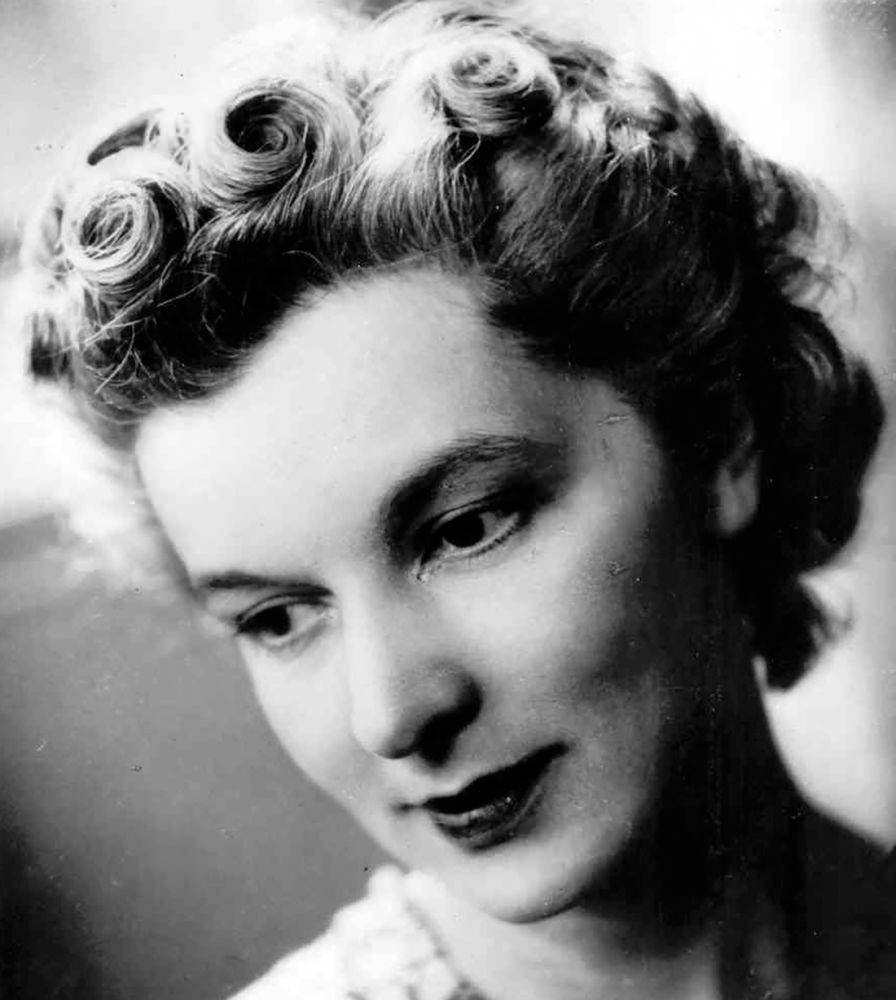
Is it Time for Another Rosamond Lehmann Revival?


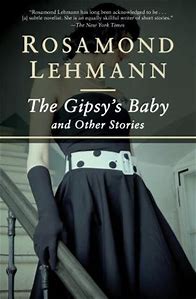
‘The Gipsy’s Baby’ by Rosamond Lehmann (1946) – 192 pages

When Virago republished all of her novels in 1982, there was a major Rosamond Lehmann revival. Is it time for another revival?

Rosamond Lehmann is sometimes considered a women’s romance novelist. Yes, her novels usually dealt with the close relationships of her characters. However she captured the emotional life of her women and men with such intensity and vivacity that guys would do well to read her too just as some real men read and enjoy Jane Austen. Lehmann used her own happy and unhappy romances and marriages to give her stories and novels more depth and feeling and humor than most writers achieve.

Rosamond was born in 1901 and brought up in well-to-do circumstances. Her first novel ‘Dusty Answer’ was published in 1927 and was a best selling scandalous success. Alfred Noyes lauded it as “quite the most striking first novel of this generation”. ‘Dusty Answer’ was an intense unhappy love story told with sparkle and verve, the type of story Rosamond Lehmann specialized in perhaps based on incidents from her own life.

There is a steady enduring quality to all of Lehmann’s early work. She followed ‘Dusty Answer’ with ‘A Note in Music’ and then she wrote the two novels ‘Invitation to the Waltz’ and ‘The Weather in the Streets’ which center on one heroine Olivia Curtis. If I were starting over to discover Rosamond Lehmann, I probably would begin with ‘Invitation to the Waltz’ which was called “a perfect novel” by her biographer Selina Hastings.

Mel u, editor of The Reading Life wrote the following of ‘Invitation to the Waltz’ and Rosamond Lehmann: “Her narrative methods are a mixture of devices, many of the sentences, even in the lesser novels, are pure gems.  The middle chapter of ‘Invitation to the Waltz’ is just hilarious, a perfect presentation  of the persons at a country dance.  The depiction of the pretentious young poet down from Oxford made me laugh out loud as I marveled at what a wonderful scene I was witnessing.“

And here is a quote taken directly from ‘Invitation to the Waltz’:

Advice to Young Journal Keepers: Be lenient with yourself. Conceal your worst faults, leave out your most shameful thoughts, actions, and temptations. Give yourself all the good and interesting qualities you want and haven’t got. If you should die young, what comfort would it be to your relatives to read the truth and have to say: It is not a pearl we have lost, but a swine?” – Rosamond Lehmann, ‘Invitation to the Waltz’.

Her strong literary career continued with two excellent fine novels in the ’40’s and early ’50’s, ‘The Ballad and the Source’ and ‘The Echoing Grove’. Like Graham Greene, Rosamond Lehmann not only had a strong literary reputation, but also her novels were best sellers. Her novels are straight-forward, accessible, and easy to enjoy.

Around the time of her daughter Sally’s death at 24 in 1957, Rosamond’s profound grief led her to take up psychic spiritualism, and both of her only two later works, the autobiography ‘The Swan in the Evening’ and ‘A Sea-Grape Tree’, were written under this psychic influence. If a reader wants to fully appreciate the fiction of Rosamond Lehmann, he or she should probably avoid these two late works.

I recently read all the stories in ‘The Gipsy’s Baby’. This collection was first published in 1946 and these stories are prime Rosamond Lehmann, but I would still start with the early novels which are quite short anyhow.

Let the second Rosamond Lehmann Revival begin.


Grade:   A