‘American Histories’ by John Edgar Wideman (2018) – 221 pages
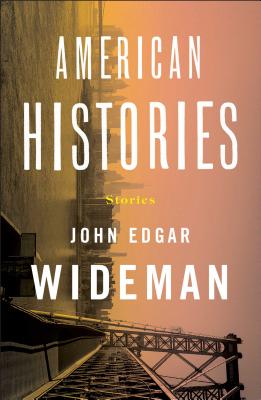
Most of the items in the new collection ‘American Histories’ do not reach the level of a story although one of them, ‘Writing Teacher’, did get published in the New Yorker. Most of these are narratives or accounts or vignettes or dialogues. They do not tell fully developed stories with fully developed characters. Some are very short, only a couple pages long.
I first encountered the fiction of John Edgar Wideman in the 1990s, I became hugely impressed with his fictional work, especially his novels ‘Philadelphia Fire’, ‘Reuben’, and ‘Sent For You Yesterday’. His dramatic stories gave me some much-needed insight into black life in the United States. Since the 1990s, Wideman has mostly switched from writing fiction to writing memoirs and other forms of non-fiction, and since I generally only read fiction I have not kept up with his work.
So I returned to John Edgar Wideman with ‘American Histories’ after a twenty-year hiatus. Unfortunately ‘American Histories’ is not a collection for us fiction lovers but rather more for those who like non-fictional forms of writing. I am disappointed that Wideman gave up on fiction as he was such an excellent fiction writer.
The first entry in the collection is ‘JB & FD’ which is a dialogue between the fiery abolitionist John Brown and the statesman and orator Frederick Douglas. Basically this piece is just a dialogue between the two figures with very little historical context. If you are wondering if these two historical figures ever met in real life, you will not find that out from this sketchy dialogue.
I did like the story ‘Writing Teacher’ because it probably was the closest to having the values of fiction. ‘Williamsburg Bridge’ is about a man sitting on the bridge contemplating jumping, and again any context is missing.
I don’t believe this collection is top-shelf Wideman but instead leftovers from a busy writing career. Also the work is more geared to people who like non-fiction. I found the work too didactic with too many generalities, abstractions, and cliched situations throughout the work to contend with. If anything, this collection reinforced my reasons for avoiding non-fiction. There is too much telling and not enough showing.
For those of you who like fiction, I would recommend reading Wideman’s excellent early fictional work such as ‘Philadelphia Fire’ or ‘Sent For You Yesterday’ instead.
Grade: C
 Tony's Book World
Posted by Lisa Hill on May 20, 2018 at 7:27 AM
I’ve never heard of this author… I’ll have a look to see if they’ve got any of those early novels at my library…
LikeLiked by 1 person
Posted by Anokatony on May 20, 2018 at 7:55 AM
Hi Lisa,
A lot of reviewers think that writers keep getting better and better the older they get, but I find that many writers do their best work when they are young. Maybe some day I will write a post about that.
LikeLike
Posted by Lisa Hill on May 20, 2018 at 8:54 AM
Iris Murdoch comes to mind…
Apparently she, like some other very successful editors, refused to be edited, and sometimes, apparently, editors are reluctant to edit successful writers because they’re bit intimidated. And sometimes, I think, they just run out of ideas…
LikeLiked by 1 person
Posted by Anokatony on May 21, 2018 at 5:43 AM
One example I would mention is William Trevor. He continued to write great stories until the end. However his stories became progressively more stark and simple and rural. I much prefer his earlier stories which are more lively and busy and more urban and more merry.
LikeLike
Posted by Lisa Hill on May 21, 2018 at 10:50 AM
Maybe he was relying more on memories from long ago, and perhaps more influenced by the bleaker style of short story that has become prevalent?
LikeLiked by 1 person
Posted by Anokatony on May 23, 2018 at 7:08 AM
I don’t think Trevor was keeping up with the modern styles. His attitude just became bleaker with age.
LikeLike
Posted by Lisa Hill on May 23, 2018 at 8:49 AM
Yeah, I can relate to that…
LikeLike