‘The Vegetarian’ by Han Kang (2007) – 188 pages Translated from the Korean by Deborah Smith
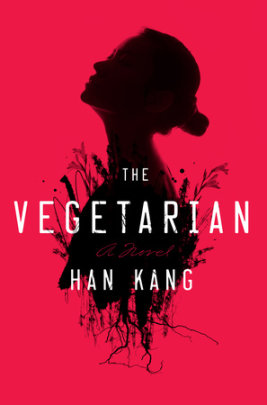
If you thought a novel by a South Korean woman writer might be too polite or decorous for you, forget about it. ‘The Vegetarian’ is lurid and violent, and it has sex scenes that would make that old purveyor of masturbatory fantasy Philip Roth blush.
“I do not eat meat,” Yeong-Hye announces one day. Her husband is indifferent to what she does as long as she keeps up a respectable front with his work associates and bosses. However Yeong-Hye makes a big scene at a company dinner with her refusal to eat meat, and this embarrasses her husband no end.
Yeong-Hye’s father and mother come to visit. She refuses to eat meat. This so infuriates her father that he beats her severely and force feeds her a piece of meat. She spits it out and then brandishes a fruit knife and cuts her wrist. She is taken to the hospital in critical condition.
At this point, we realize that Yeong-Hye is mentally ill. I doubt that someone deciding to become a vegetarian would ever be considered a sign of mental illness in the United States, but Yeong-Hye has other symptoms. She not only refuses meat; she starves herself. She takes her clothes off and goes naked regardless of whoever happens to be around. In the second section of “The Vegetarian”, her artist brother-in-law is consumed with sexual desire for her. He is obsessed with sexual fantasies featuring Yeong-Hye. Because she is in her own little world, she is a helpless victim.
In the third section, Yeong-Hye’s sister confronts her sister’s sickness:
“Life is such a strange thing, she thinks, once she has stopped laughing. Even after certain things have happened to them, no matter how awful the experience, people still go on eating and drinking, going to the toilet, and washing themselves – living in other words. And sometimes they even laugh out loud.”
One thing I noticed while reading the author’s notes was that Han Kang was a participant in the Iowa Writers’ Workshop. Apparently afterwards she returned to South Korea, because the novel was written in Korean. So what we have here is a hybrid, a South Korean novel infused with a western sensibility.
All of the scenes in the novel are portrayed with a vivid dramatic intensity I wasn’t expecting. That is why I will remember ‘The Vegetarian’ long after other novels have faded from my memory.
Grade: A
 Tony's Book World
Posted by Read Diverse Books on March 13, 2016 at 1:19 AM
Incredible review!! Thanks for describing the some of the scenes in the book; they sound graphic and exciting! I’m especially interested in the surreal aspects of this novel.
I have this book in my shelf and hope to read it within the next few months of time allows. Can’t wait!
LikeLike
Posted by Anokatony on March 13, 2016 at 5:01 AM
Hi Read Diverse Books,
Yes, ‘The Vegetarian’ is much more vivid and lurid than I expected, and that might be because the writer attended the Iowa Writers’ Workshop. And ‘The Vegetarian’ is making more of a splash in the Western markets than the typical Korean novel.
LikeLike
Posted by Lisa Hill on March 13, 2016 at 1:44 AM
I am interested in this idea of a non western novel being ‘infused with western sensibility’. With the prevalence of what are called Anglo-Indian writers, I’ve been very interested to discover ‘real’ Indian writers, who (it seems to me) write in a different way. Are we are more likely to come across those that have been ‘infused’ than those that are not, in the case of some cultures?
LikeLike
Posted by Anokatony on March 13, 2016 at 6:50 AM
Hi Lisa,
I suspect that cross-cultural influences are so pervasive today that no writer is ‘pure’ in the sense of representing only one group. This is probably particularly true of India as they were ruled by the British for many years; not sure there are any ‘real’ India writers anymore.
Going to the prestigious Iowa Writers’ workshop, Korean Han Kang has probably been infused with American fiction styles more than most. It kind of shows in her writing style if not so much in her characters.
LikeLike
Posted by BookerTalk on March 13, 2016 at 2:37 PM
I keep intending to ask some of my colleagues in Korea what they think of this book. It would be interesting to know whether the Western influence means the authenticity of the Korean aspect has been diluted in any way
LikeLike
Posted by Anokatony on March 13, 2016 at 6:04 PM
Hi BookerTalk,
Unfortunately I have read no other South Korean novels to compare ‘The Vegetarian’ with. However, I did sense a “United States feel” to the novel while reading it, and was not at all surprised to find that Han Kang had attended to Iowa Writers’ Workshop. Probably, in this case, the influence seemed to enhance rather than dilute the read.
LikeLike
Posted by BookerTalk on March 15, 2016 at 1:12 AM
Ive read only one Korean author and she too was rather Americanised.
LikeLike
Posted by Melissa Beck on March 14, 2016 at 12:23 AM
I have to admit that I really haven’t read any Korean lit at all. This is a great review and it seems like this would be the perfect book to begin with.
LikeLike
Posted by Anokatony on March 14, 2016 at 12:50 AM
Hi Melissa,
Yes, this is a good novel to ease into Eastern Asian literature. I see Han Kang was also named to the longlist of the International Booker along with big names like Elena Ferrante and Orhan Pamuk and Kenzaboro Oe.
LikeLiked by 1 person
Posted by Stefanie on March 16, 2016 at 11:37 PM
It is definitely one that sticks with you that’s for sure! I’m still thinking about it and it has been a couple weeks since I finished it. A powerful book.
LikeLike
Posted by Anokatony on March 17, 2016 at 12:54 AM
Hi Stefanie,
Yes, Han Kang is an author to watch in the future, and I suppose there is demand growing for her earlier novels to be translated. One never knows where the next literary superstar will come from.
LikeLiked by 1 person
Posted by Paul Fulcher on April 17, 2016 at 12:21 PM
Not quite sure I agree about the Americanisation of the novel – certainly very much set in a Korean cultural setting where vegetarianism is unusual, your husband/parents in law’s views are expected to be paramount, even the “sogeting” (introducing) way of how she and her husband met in the first place.
Worth adding that her most recently translated novel, Human Acts. is even better than this one. And heavily rooted in recent Korean history.
LikeLike
Posted by Anokatony on April 18, 2016 at 1:09 AM
Hi Paul,
The point I was making was that Han Kang was not entirely outside of United States influences since she did attend the Iowa writers’ workshop. For some reason this novel attracted more readers’ attention in the West than most Korean novels do. I thought the scene with her father-in-law was particularly brutal.
I’m happy to hear that ‘Human Acts’ is even better than ‘The Vegetarian’. That goes on my ‘To Be Read’ list.
LikeLike