Archive for January, 2016

‘The Past’ by Tessa Hadley – A Family Reunion in the English Countryside

‘The Past’ by Tessa Hadley (2015) – 310 pages


The PastIn an article in the London Review, Tessa Hadley discusses a biography of Pamela Hansford Johnson, an English novelist who also was married to the scientist and writer C. P. Snow. Usually this type of an article is an occasion for over-praise of the biographical subject. However Hadley winds up her article with the following lines:

“These lives are interesting now because they are history; but I suspect there’s nothing to recover from the novels. All writers are susceptible, it goes without saying, to vanity and panic, but these things drove the Snows crazy; and in their case too much obsession with the outer forms of success looks in the long run like a failure on the inside – it reflects something hollow in the work, as if the writing has failed to be its own fulfillment, its own life.”

Such severe criticism of a novelist, especially of a female novelist, is practically unheard of. The criticism is refreshing, and besides now I don’t have to read Pamela Hansford Johnson. So instead I have read ‘The Past’.

Now with her sixth novel ‘The Past’, Tessa Hadley has arrived. ‘The Past’ is a superior family reunion novel that takes place in their old childhood home in the English countryside.

Her vivid depiction of natural phenomena is a particular strength of Tessa Hadley. In many novels, descriptions of nature seem tacked on, isolated from the plot. However in ‘The Past’ the natural details of the old family home are blended with the interactions of the human characters so smoothly that they actually enhance the story. Thus we have “the jostling of water in the stream that ran at the bottom of the garden, the tickle of tiny movements in the hedgerows and grasses.” It is an “archetypally English” old home place.

The story in ‘The Past’ flows smoothly along just like the stream that flows past their old house. However at one distant point the stream goes over a rocky cliff and becomes a waterfall. The people in the novel too have their turbulences. The reader gets the strong impression that the characters here are just as subject to the laws of nature as everything else.

In the main part of the story, ‘The Present’, there are nine main characters. The three sisters called Harriet, Alice, and Fran and their brother Roland are now all middle-aged. Harriet and Alice are single, but Alice has brought along the college-age son Kasim of one her old flames whose family was originally from Pakistan. Fran’s husband couldn’t make it, but Fran has brought her two children Ivy and Arthur, nine and six. Roland has brought his new third young wife, the Argentine Pilar, and also his daughter from a previous marriage, sixteen-year-old Molly.

1470804-verano-de-vista-de-un-arroyo-que-fluye-en-buttermere-ingl-s-en-el-lake-districtWhen a writer has nine main characters, he or she must juggle different small groups of them in the various scenes. Many of the scenes take place outdoors in the countryside or along the stream or in an old abandoned house near the stream. Hadley is quite adept in her handling of these outdoor scenes, and this reader felt like he was there. The children enliven things, and soon Kasim and Molly develop a strong attraction.

However the novel is called ‘The Past’, and one section is devoted to the backstory. We go back to 1968, when the three sisters’ and brother’s mother was still alive. Also their grandparents still lived on the old family place. The grandfather was a poet and the vicar of a small church near the home. The episode from the past helps us better understand the way things are today.

This is confident and assured story telling with a strong sense of place.


Grade: A

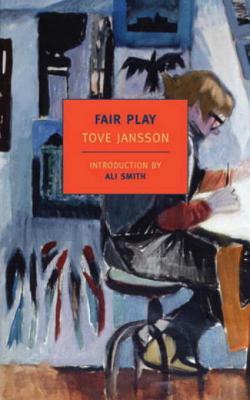
‘Fair Play’ by Tove Jansson – Humans, Not Hippos

‘Fair Play’ by Tove Jansson    (1982) – 100 pages

15849587

Sometimes the simplest ideas are the best.  ‘Fair Play’ is about the friendship between two middle-aged women, Mari and Jonno.  Mari is a writer, and Jonno is an artist.  They each live separately on opposite ends of an apartment building on an island off the southern coast of Finland.  They argue and annoy each other frequently, yet there is a quiet center between them that enhances both of their lives.  ‘Fair Play’ is ultimately a love story between these two women, told in short understated vignettes.

From the Wikipedia entry for Tove Jansson, ‘Fair Play’ seems quite autobiographical and perhaps based on her long-term friendship with Tuulikki Pietila.  Here are two female artists going about their creative work separately, each having some good productive days and other days not so worthwhile.

“They never asked, ‘Were you able to work today?’ Maybe they had, twenty or thirty years earlier, but they’d gradually learned not to. There are empty spaces that must be respected – those often long periods when a person can’t see the pictures or find the words and needs to be left alone.”

In a chapter called “Videomania” the two ladies watch films on Jonno’s video player together, Truffaut, Bergman, Visconti, Renoir, Wilder, Fassbinder, etc.  Afterwards they discuss these movies. Mari says:

“We don’t always have time to think, we just live!  Of course a filmmaker can depict what you call quirkiness, but it is still just canned.  We’re in the moment.  Maybe I haven’t thought this through…Jonno, these films are fantastic, they’re perfect.  But when we get involved in them as totally as we do, isn’t that dangerous?”

As a novel, ‘Fair Play’ does not reach the dramatic level of ‘The True Deceiver’.  The vignettes are episodic with no real coherence beyond the close relationship of these two women.  It does not have the vivid tension of ‘The True Deceiver’ which has a true villain and thus more conflict and drama.

I did have one problem with ‘Fair Play’ that may be particular to me. Previously I read one of the many Moomin children’s books written by Jansson, and in several ways it seems to me the relationship between Mari and Jonno resembles that of the hippos Moominpappa and Moominmamma. They communicate on this same quiet visceral level which is sometimes beyond words. They have their differences, but all is set right between them by the end.

I guess what I’m saying is that the Moomin shtick seems to carry over to ‘Fair Play’, and while I was reading this novel I kept being reminded of the Moomins.

Each of the chapters in ‘Fair Play’ is well-written and engaging in itself, but the whole does not go much beyond the sum of its parts.


Grade: B


‘Conspirata’ by Robert Harris – The Republic is Threatened

‘Conspirata’ by Robert Harris   (2010) – 334 pages


9780743266116_p0_v3_s260x420At the beginning of ‘Conspirata’, Cicero has been elected as consul, the highest office in the Roman republic.  He shares the office with Gaius Antonius Hybrida who plays a minor role.

Being the most powerful man in the Roman republic, Cicero has powerful enemies.  Soon he finds out that Catilina, a Roman Senator, is attempting to overthrow the Roman republic and is leading a conspiracy to murder Cicero.  Five traitors are captured and sentenced to death.  Although Julius Caesar is involved in the conspiracy behind the scenes, he survives.

“They may not all plot together but they all see an opportunity in chaos.  Some are willing to kill to bring chaos about, and others just desire to stand back and watch chaos take hold.  They are like boys with fire, and Caesar is the worst of the lot.  It’s a kind of madness – there’s madness in the state.”   

After breaking up this conspiracy to destroy the republic, Cicero is hailed as “the savior of Rome” and “the father of his country”.

The trouble is that all this praise went to Cicero’s head.   When his consulship ended, he took up writing heroic poems about himself.  He bought an expensive mansion from the wealthy Crassus that he can’t afford, but arranges to get some of the money by defending one of the traitors.  The rest he borrows from moneylenders.  Pride goes before a fall, as Cicero’s faithful assistant Tiro points out:

“But I fear there is in all men who achieve their life’s ambition only a narrow line between dignity and vanity, confidence and delusion.  Instead of staying in his seat and disavowing such praise, Cicero rose and made a long speech agreeing with Crassus’s every word, while beside him Pompey gently cooked in a stew of jealousy and resentment.” 

Yes, the two most powerful military leaders in Rome, Pompey and Julius Caesar, are also receiving an acclaim which threatens the republic.  Whereas Cicero is willing to control his drive in order to save the republic, the ambitions of Pompey and Julius Caesar have no limits.  In order to achieve their goals, they make Cicero’s enemy Clodius, “a man of great ambition and boundless stupidity, two qualities which in politics often go together”, a tribune.

Robert Harris has written this trilogy of Cicero as an object lesson on the threats to a republic’s checks and balances which keep any one person, whether it is king or emperor or dictator, from getting too much power.  Cicero fought for the rule of law and statute against some powerful enemies.  Danger comes from all sides.  The rich aristocrats can use their money to buy a government which unfairly gives them even more power.  On the other side, unscrupulous politicians can enflame the mob by using racism and patriotism.

SPQRIt is a huge accomplishment for a nation to keep a rational set of legal checks and balances protecting the rights of the less rich or powerful or fortunate and not succumb to dictatorship.


Grade: A- 

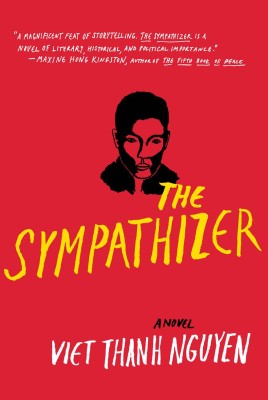
‘The Sympathizer’ by Viet Thanh Nguyen – The Victors’ View of the Vietnam War

‘The Sympathizer’ by Viet Thanh Nguyen    (2015) – 371 pages


the-sympathizer-new-268x400

‘The Sympathizer’ is like a fine Graham Greene novel which is told from the perspective of the local Eurasian in Vietnam rather than that of the white colonialist.  Make no mistake; what the United States was fighting for in Vietnam was the last gasp of colonialism which officially ended with the fall of Saigon.  Remember the United States took over from the French who were trying to hold on to their colony.

Not only is our narrator in ‘The Sympathizer’ a French-Vietnamese, he is a double agent.  As well as being a Captain in the South Vietnamese army, he is an undercover operator for the Viet Cong forces.  His true loyalty is to the Communist side. Thus he has a most skeptical attitude about the General he ostensibly works for.

“Whatever people say about the General today, I can only testify that he was a sincere man who believed in everything he said, even if it was a lie, which makes him not so different from most.”   

Graham Greene would have approved of that line.  This novel has that Greene quality of being able to deal with things as they actually are.  Your own side is probably at least as wicked as the other side, and thus you can see the treachery on your side. Thus you can point out your friends’ deceptions and self-justifications as well as that of your enemies’.

“As the Congressman arose, I calmed the tremor in my gut. I was in close quarters with some representative members of the most dangerous creature in the history of the world, the white man in a suit.”

‘The Sympathizer’ will give you perspectives on the war that are vastly different from those of any other Vietnam War novel.

Early in the novel, there are vivid scenes of the fall of Saigon when the Vietnamese who worked for the Americans are desperately and hopelessly rushing for the helicopters to get out.

“The truth, in this case, was that at least a million people were working or had worked for the Americans in one capacity or another, from shining their shoes to running the army designed by the Americans in their own image to performing fellatio on them for the price, in Peoria or Poughkeepsie, of a hamburger.” 

Later the story turns devilishly humorous as our Captain becomes “a technical consultant in charge of authenticity” for an ‘Apocalypse Now’-style Hollywood movie about the Vietnam War.  This is devastating parody with an arrogant director and an insufferable egomaniac as its star.  From the silly movies which Hollywood made, you would have a difficult time realizing that the United States did indeed lose the Vietnam War.   The films “marked something new in the world, for this was the first war where the losers would write the history instead of the victors.”

‘The Sympathizer’ is as close as most of us will ever get to reading the victors’ perspective on the Vietnam War.  It is an audacious performance.


Grade: A-


A New Strategy for Reading and Writing about Current Poetry

‘Application for Release from the Dream’ poems by Tony Hoagland   (2015) – 81 pages

51-Ykjg7onL._SY344_BO1,204,203,200_

Who could not like a poet who named a previous collection ‘What Narcissism Means to Me’ ?

My old strategy for reading and reviewing poetry collections was to find a positive review of a single collection and then read that collection.  Too many times I discovered that I absolutely did not want to write about the selected collection due to my own lack of interest.  The collection wasn’t necessarily bad; it just did not captivate me.  Each person’s response to a set of poems is terribly individual.  Just because one writer’s poems do not interest me does not mean that someone else will not devour them hungrily.

I only want to review collections to which I have a positive reaction.  Therefore I don’t even mention the ones that I discarded due to my own lack of enthusiasm.

So I came up with a new strategy.

This time I started with four books of poems by different authors.  All four of these books showed up on ‘Best of Year’ lists for 2015.  Despite their being on the year-end lists, I figured that I would probably be enthused by at most only two of them enough to write about them.

I had hoped to find two books of poems that I really liked so that I could compare and contrast.  However it turns out that of the four, only one book made the grade by totally spurring my interest and enthusiasm.  Fortunately I consider that one book a mighty fine one indeed. I don’t want to overdo the praise, but ‘Application for Release from the Dream’ by Tony Hoagland is a humorous penetrating down-to-earth book of poetry.

Here are a few lines from his poem called “Misunderstanding” that I particularly like.

“All those years I kept trying and failing and trying
to find my one special talent in this life –

Why did it take me so long to figure out
that my special talent was trying?”

Clever, honest, and insightful.  What more can one ask from a poet?  That same poem has the following lines.

 “When I compared humanity to a flower growing in the shadow of a munitions factory,
it may be that I was being unfair to flowers.”

In his poem “A History of High Heels” he considers the wearing of high heels by women and their effect on him.

       “Because today is one of those days when I am starting to suspect

That sex was just a wild goose chase

In which I honk-honk-honked away

Three quarters of my sweet unconscious life.”

Nearly every poem in this collection has lines I would like to quote, but I won’t.  It is quite unusual for me to be captivated by nearly every poem in a collection like I am here, even when I’m reading masters like Philip Larkin, Robert Frost, and Emily Dickinson.   Throughout this collection, Hoagland’s outlook is quirky and original in a way that I can appreciate.

Of the countless lines I would like to quote, I will end with these from “Wasp”.

“a human being should have a warning label on the side
that says, Beware: Disorganized Narrative Inside;
prone to frequent sideways bursting

of one feeling through another”


Grade: A


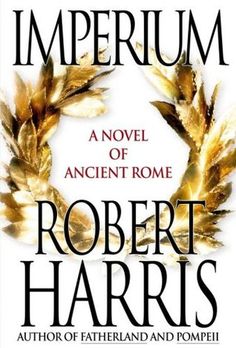
‘Imperium’ by Robert Harris – The Lawyer Cicero in Ancient Rome

‘Imperium’ by Robert Harris  (2006) – 305 pages

ba8770b162d98906b1e3cbc83e1f7b39

The Cicero trilogy by Robert Harris is the second major fiction I have read about ancient Rome.  The first was ‘I, Claudius’ by Robert Graves.  ‘I Claudius’ was wild, wacky, and preposterous, much like those early Roman emperors who were presented so unforgettably by Graves.  The Cicero trilogy, on the other hand, is solid, workmanlike, invigorating, and intelligent, befitting Cicero, the lawyer and orator and defender of the Roman republic.

The entire Cicero trilogy is told by Cicero’s slave Tiro.  We do not know if Tiro was actually white or black or some color in between, since a slave in ancient Rome could be of any nationality.  Tiro was very much a remarkable man himself.  He invented a shorthand system which allowed him to exactly transcribe Cicero’s speeches word for word while they were spoken, and thus the speeches were saved for posterity.  After Cicero was killed, Tiro worked to save as many of the words of Cicero as possible up until his own death at age 99. Tiro also wrote a book on the life of Cicero which unfortunately was lost.

The first novel of the trilogy, ‘Imperium’, covers the significant events of Cicero’s early career as a lawyer.  The first half of the book deals with the prosecution and trial of Verres, the magistrate of Sicily, who robbed temples and private houses of their works of art.  Verres had many friends in the aristocracy which allowed him to steal from other rich Sicilians with impunity.  When finally Verres was arrested and taken to court, it was Cicero who was assigned to prosecute the case against him.

Cicero is the leader of a small group of honest people fighting massive corruption among the rich aristocratic ruling classes of Rome.  His is a thankless task, and he will need all his eloquence and intelligence to defeat his powerful rotten foes.  This is the classic battle of the underdog against a relentless ruthless enemy.  I read this bracing story with always a smile as they battle the forces of evil and corruption much like Robin Hood and his Merry Men, except instead of physical prowess they use rhetoric and reason in the battle.

“If you must do something unpopular, you might as well do it wholeheartedly, for in politics there is no credit to be won by timidity.”

Cicero fought the patrician aristocracy in this trial but later he will join forces with some of the patricians in battles against the plebian masses.  Of his many gifts, a talent for friendship was not the least.

Robert Harris also has put some humor into the proceedings which makes ‘Imperium’ easy to enjoy.  He has a lot of  fun with Cicero’s wife Terentia who apparently ruled their household.

“Terentia regarded her husband – arguably the greatest orator and the cleverest Senator in Rome at that time – with the kind of look a matron might reserve for a child who has made a puddle on the drawing room floor.”

In the second half of ‘Imperium’ we meet two of the major figures of the time, Pompey and Julius Caesar.  Both are popular military heroes who have hugely increased the size of the Roman republic as well as its treasury and thus are worshipped by the masses.  Later Cicero will have to defend the republic from power grabs by these two war superstars.


Grade: A-     


Cicero of Rome, A Hero for Today

The Cicero Trilogy by Robert Harris


f7ae6ef6d6e3c9b3066352a0a5f12fdf

I have decided that my first real project for 2016 will be to read and discuss the Cicero Trilogy of novels by Robert Harris ( ’Imperium’, ‘Conspirata’, and ‘Dictator’).  I will devote an article to each of these invigorating historical novels, but first I want to discuss Cicero, the Roman leader and humanist.  No person in human history has been as profound a force for good as Cicero, and today we need his reasoned guidance more than ever.

Perhaps the toughest of all battles in law and politics involve fighting corruption within the ruling aristocracy.  This is as true today as it was in ancient Rome and throughout history. Cicero fought hard and died in defense of the Roman republic against tyrants, only to be followed by a series of wild and wacky and vicious Roman emperor / dictators.  He devoted his life to reason, humanism, and education.

Early Christian scholars studied Cicero’s writings in Latin, and he has been praised for creating the language of the civilized world.  The Italian Petrarch’s rediscovery of Cicero’s letters in the 14th century is often credited with starting the European Renaissance.  Cicero’s writings were also the guiding light of the Age of Enlightenment in the 18th century which had the goals of liberty, progress, reason, tolerance, and fraternity.  The founding fathers of the United States incorporated the principles of Cicero into the US Constitution to provide the necessary checks and balances in government to maintain the country as a republic.   Two cities in the United States named after Cicero in New York and Illinois are an indication of his influence. Thomas Jefferson called Cicero as a writer the first master of the world.

Marcus Tullius Cicero expressed principles that became the bedrock of liberty in the modern world.  He believed in natural law, that certain rights or values are inherent by virtue of human nature and human reason. He believed the purpose of positive laws is to provide for “the safety of citizens, the preservation of states, and the tranquility and happiness of human life.”  Perhaps we can best understand Cicero through a few of his quotes:

“Not for ourselves alone are we born.”

“What is morally wrong can never be advantageous, even when it enables you to make some gain that you believe to be to your advantage. The mere act of believing that some wrongful course of action constitutes an advantage is pernicious.”

“It is not by muscle, speed, or physical dexterity that great things are achieved, but by reflection, force of character, and judgment.”

“We must not say every mistake is a foolish one.”

“The wise are instructed by reason, average minds by experience, the stupid by necessity and the brute by instinct.”

Even today our republic must contend with the same enemies that Cicero fought against over two thousand years ago. Rich citizens buy politicians wholesale, and these bought politicians are little more than automatons who always do their financiers’ bidding at the expense of everyone else.  Overly ambitious politicians take wild and reckless and vicious positions to fire up the masses to vote for them.   Theirs is a naked grab for power, dressed up as patriotic necessity.  Those qualities which Cicero admired including sound reasoning, moderation, and tolerance mixed with respect for others seem to be in short supply today.   Above all, Cicero was saying ‘Be Reasonable’, yet today we appear to be living in an age of unreason.

So in the following few weeks I will be exploring this Cicero trilogy of novels by Robert Harris.  There may be other articles interspersed between these Cicero ones, but Cicero will remain on my mind.  Today we need Cicero more than ever.

cicero-on-right-action

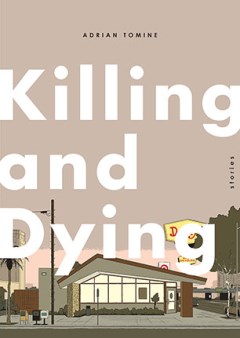
‘Killing and Dying’ by Adrian Tomine – Comic Stories for Adults

‘Killing and Dying’ by Adrian Tomine   (2015) – 121 pages

9780571325146

Looking at the lists for the best graphic novels of 2015, ‘Killing and Dying’ was far and away the one most frequently mentioned and thus presumably most gift-worthy.  But how do you give a Christmas gift to someone that is called ‘Killing and Dying’?  Am I the only one who thinks this is not exactly the festive Christmas spirit?  It would have been so easy to call the book something else.  The actual story ‘Killing and Dying’ is not at all what its title suggests.

So instead I gave this graphic novel to myself.   Rachel Cooke in the Guardian called Adrian Tomine the Alice Munro of comics, high praise indeed.  One similarity to Munro is that ‘Killing and Dying’ is actually divided into six graphic short stories rather than being a graphic novel.  The qualities that distinguish Adrian Tomine from other graphic writers are the off-beat originality of each of these stories as well as the emotional depth he achieves within each story.   This is one graphic novel I would not recommend for children under the age of sixteen, not because of any comic violence but instead because of its adult sensibilities.

Of the six stories in ‘Killing and Dying’, two of them are definitely my favorites.  The first story, ‘A Brief History of the Art Form Known as Hortisculpture’, is a humorous yet poignant take on a guy fulfilling his artistic inclination despite the skepticism of his wife and nearly everyone else.  The title story, ‘Killing and Dying’, is about a teenage girl who attempts to become a stand-up comedian much to the chagrin of especially her father.  There does seem to be a common thread between these two stories of individuals pursuing their dreams despite their dismissal by their family and perhaps the general public.

tumblr_ntlgnfuDzx1qav5oho1_250However the other four stories totally defy expectations.  I suppose it was a case of me becoming so enamored of those two above stories that I was a bit disappointed when the other stories were so completely different.  Perhaps I’m underestimating the impact of a story like ‘Amber Sweet’ about a young woman who finds herself mistaken for an internet porn star.

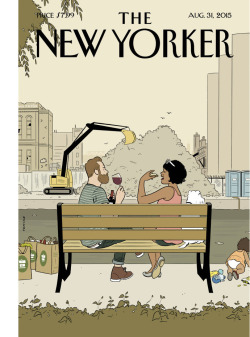
As far as the visuals go, one only needs to know that Adrian Tomine has done several covers for the New Yorker.  Enough said.

The comics in ‘Killing and Dying’ have a literary subtlety that is not usually associated with comics.    These are comics for adults.


Grade:   B+


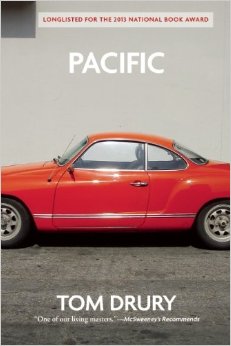
‘Pacific’ by Tom Drury – The Guardian Reviewers vs. Me

‘Pacific’ by Tom Drury   (2013) – 194 pages


41RFpu344CL._SY344_BO1,204,203,200_No, I did not rediscover Tom Drury. Jon McGregor and Mark Lawson, in two excellent articles in the Guardian, did that.  I am just the self-designated reader from the United States who decided to follow their advice and read Tom Drury.

First I will quote from the Jon McGregor article:

“These people are, in very particular ways, downright odd. As all of us are. In the stories of our own lives things happen moment by moment, and we keep getting stranger, and this is the truth Drury is leading us to here.

 But if you live in the real world, where life stalls and lurches forward with little real pattern and where the textures of our relationships accumulate moment by moment, then this is a novel you will recognize as being crammed with narrative.”

And now from the Mark Lawson article:

“In a similar way, Drury plaits together multiple plot lines that have a unifying quality of fretful oddness. 

 As the connections between these weirdnesses become clearer, the serious business is Drury’s prose. The style is slyly wry, so that a reference to “a locally famous taxidermist who had his own radio show” has gone past before you start to wonder just how the stuffing of animals would work on the wireless. This is also a writer who can go from laughter to darkness in an instant, as when, after what has seemed to be a tender sex scene, a woman reflects: “This was the best, the most bearable loneliness.”

Later Lawson compares Drury’s minimalist writing style to that of Raymond Carver’s.  Upon reading these two Guardian articles, I absolutely had to read Tom Drury.  Now after reading ‘Pacific’, I must say that my reactions to Drury’s writing style were not nearly so positive as these two Guardian writers.

The story in ‘Pacific’ alternates between two venues, the rural town of Stone City in Grouse County, Iowa and a place near Hollywood in Los Angeles.  As ‘Pacific’ begins, actress Joan Gower has returned to her original home in Stone City to take back to Hollywood her son Micah whom she had left with her ex-husband Tiny Darling seven years earlier.  Joan stars in the TV crime show ‘Forensic Mystic’, and she has been offered a lead role in a movie about Davy Crockett called ‘The Powder Horn’.

So the story goes back and forth between Stone City, Iowa and Hollywood.  There is a murder plot in Iowa and in Hollywood Micah makes some new friends as Joan’s second marriage falls apart.

The two Guardian writers are correct that Tom Drury has a unique style of minimalism, but I’m not sure that is such a good thing.  Characters in ‘Pacific’ are not introduced.  They just show up and start doing stuff.  Peripheral characters keep showing up, and Drury gives no indication as to their importance or unimportance to the plot.   Frequently there are a few lines about a specific character, but then he or she is just dropped and never re-appears in the novel.   Instead of well-developed characters, we get people who might as well be ants going aimlessly about their colonies.   I’m sure that Tom Drury is making a valid point about the haphazardness of human life, but I still found all this random behavior by characters rather tiresome in a novel.  The reader stays on the shallow end in regard to these characters and never goes any deeper no matter how many times we encounter them.

Another difficulty I had with ‘Pacific’ is the flat uniformity of the sentences.  Every sentence seemed to be short and declarative with the standard “subject, verb, object” form.   I could have used much more variety in the sentence structures.  This  sameness made me wonder what I liked so much about the minimalist style at one time

Basically it all comes down to the Pleasure Principle.  I can understand why these Guardian writers appreciate the quirkiness of the writing of Tom Drury.  However I found myself on each chapter after reading only a few pages, wishing the chapter would end so I could quit reading.  In other words, I was not getting enough pleasure from my reading to sustain my attention.

Perhaps I should have read Drury’s ‘The End of Vandalism’ instead, as by all accounts that is his best novel.


Grade: B