Archive for September, 2015

‘Fates and Furies’ by Lauren Groff – “A Pathological Truth-Teller”

‘Fates and Furies’ by Lauren Groff    (2015)  –  390 pages
Fates-and-Furies-Cover-Image

Even the title of Lauren Groff’s tremendous new novel, ‘Fates and Furies’, indicates that it is mythic, not realistic.  That’s OK since realism in fiction has pretty much run its course over the last few decades although there is a glut of new realistic novels coming out every month.  We all know that the real is a boring dead end; just watch reality television.

In Greek mythology, both the Fates and the Furies were women.  The Fates are a group of women, usually three, who weave the tapestry which determines the lives of men.  The Furies on the other hand are the infernal goddesses, the angry ones, who punish wrongdoers on Earth as well as the damned in Hell.

The novel ‘Fates and Furies’ is the story of a married couple, Lotto and Mathilde.  The first half of the novel, ‘Fates’, is mainly Lotto’s story.   Mathilde, the love of Lotto’s life, is there more as a helpmate than anything else.  We learn very little about her history in the ‘Fates’ section of the novel.

“Paradox of marriage: You can never know someone entirely; you do know someone entirely.”   

However a woman does also have a history.  The ‘Furies’ section of the novel is mainly Mathilde’s story, and what a story it is.

‘Fates and Furies’ is a performance.  As well as one of the main characters [Lotto] being an actor / playwright, the novel is filled with artifice ranging from the Greek myths and tragedies to Shakespeare.  When today so much of literature is realistic and naturalistic to the point of plainness, Lauren Groff strives for something bigger and brighter, more mythic than that, and succeeds.  Also a manic energy, a liveliness, and an inventiveness infuse her writing.  ‘Fate and Furies’ was a delight for me.

The first name Groff mentions in the acknowledgements to ‘Fates and Furies’ is Anne Carson, a writer I much admire who translated the trilogy of ancient Greek tragedies in the Oresteia by Aeschylus and who often incorporates mythology into her poems and other work.

While I was reading ‘Fates and Furies’ I kept thinking about another author, the great Canadian novelist Robertson Davies whose Deptford Trilogy [‘Fifth Business’, ‘The Manticore’, ‘World of Wonders’] is not to be missed by anyone who appreciates fine literature.  Robertson Davies was another writer who put a lot of Greek myth, Shakespeare, and theatre in his novels.

After completing ‘Fates and Furies’, I decided to google ‘Lauren Groff   Robertson Davies’ to see if there was any connection between the two of them.  I came up with only one connection between the two authors.  In an article in the New Yorker from 2011, Lauren Groff discusses what she was going to read that summer:

“Half of my collection is pretty random, books that I’ve picked up at the local library sale (an extensive collection of Barbara Pym and Robertson Davies, despite the fact I’ve never read a word by either writer.)”    

After noticing the similarities between ‘Fates and Furies’ and Robertson Davies’ fiction, I strongly expect that Groff has read Davies since 2011.

‘Fates and Furies’ is a novel that goes into my “Don’t Miss” category.


Grade:    A   


‘Three Sisters’ by Anton Chekhov – “How strangely life changes and deceives one!”

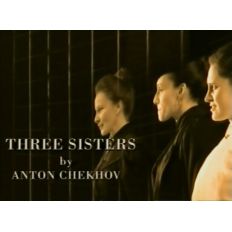
‘Three Sisters’, a play by Anton Chekhov   (1901)  –  64 pages

250px-Three_Sisters_cover_1901

There are two sides to Anton Chekhov for me.  First there are the short stories which are simple, direct, and easy to understand and love.  But then there are the plays which are a much more complex situation.  There are four major Chekhov plays:  ‘The Seagull’, ‘Uncle Vanya’, ‘Three Sisters’, and ‘The Cherry Orchard’.

I have attended a fair number of performances of Chekhov.  They always teem with Russian village life, contain a variety of colorful characters, and are loaded with poignant stories, but they often leave me wondering, “What’s the point?”  However I know Chekhov is a major playwright so I keep coming back to the plays.

‘Three Sisters’ is, as its name indicates, the story of three sisters, Olga, Masha, and Irina.  They are living in a Russian village, but they long to get back to their old home of Moscow which they had to leave after their father died.  As the play starts, Olga is 28, a school teacher, and she realizes she probably will never marry.  Masha is 24 and married, but her husband bores her.  Irina is 20 and pursued by the persistent Baron who is not very good looking and whom Irina does not take seriously as a suitor.   There is also a brother, Andrei, who is prone to gamble away large amounts of money and who winds up marrying the harridan Natasha.  This woman makes the sisters’ lives a living hell, and she is probably the villain of the play.

Life in this Russian village is dull, and the Russian army unit stationed in the village is the only thing that brings excitement and color, and when the army leaves in the fourth act, the villagers lament that the town will become insufferably dull.  Masha, the married sister, has fallen in love with one of the soldiers.

There are four acts to the play.  The acts are separated in time by months or a couple of years, all occurring in the 1890s.  This is a time in Russia when the people realize that Russian life is changing momentously but they still don’t fully realize what the changes will bring.

“Perhaps our age will be called a great one and remembered with respect. Now we have no torture chamber, no executions, no invasions, but at the same time how much unhappiness there is!”

‘Three Sisters’ was written in 1901 and this was the time when Stanislavski was a powerful force in Russian theatre.  Stanislavski took a special interest in Chekhov’s plays and directed all of them.  The Stanislavski method of using an acting ensemble and his concepts of naturalistic acting and psychological realism are evident throughout the play, even though Stanislavski and Chekhov were often at odds.

o_three-sisters-chekhov-kristin-scott-thomas-kate-burton-9d37Despite some comedy, there is a sadness that permeates ‘Three Sisters’ of loveless marriages, of empty days and nights, of being dissatisfied with one’s current life and wishing for something else.

Originally I was going to listen to the audio book of the play which has worked well for me on several plays before.  However I quickly found that there are just too many characters in ‘Three Sisters’ to separate them all by voice only.  Fortunately there was a good version of the play on YouTube starring Kristin Scott Thomas as Masha.

I would really like to find out about your own reactions to Chekhov’s plays.


Grade:   A-   

‘The Story of the Lost Child’ by Elena Ferrante – Back to Naples, Italy

‘The Story of the Lost Child’ by Elena Ferrante   (2015) – 473 pages     Translated by Ann Goldstein

 -

Now that Elena Ferrante’s Neapolitan novels are completed, I added up all the pages and came up with a total of 1693 pages.  Since the four novels combined are the life story of the two girls, Lenu and Lila, from a poor neighborhood in Naples, Italy, I suppose at some point they will all be combined into one novel, and it will make even ‘War and Peace’ seem puny.

To me, these four novels have been highly addictive.  I appreciate movie director John Waters’ comment, “Elena Ferrante: the best angry woman writer ever!”

The two girls grow up to be not only angry women but tough and smart and enterprising.  In the earlier novels we got a total picture of the men and women in the families in their Naples neighborhood as the girls grow up.  It was not always a pretty picture, but it appeared to be emotionally true and real.  Now the girls are full adults themselves and make mistakes like most of us adults do.

At the beginning of ‘The Story of the Lost Child’, Elena has become a successful writer, and her novels are even translated into other languages.  She has a husband and two daughters, but she leaves her husband and children to take up with one of the boys, now an adult would-be writer himself, from her old neighborhood, Nino.  Once long ago during their teenage years, the two girls had gone on vacation with Nino’s family, and one night Lila had gone off with Nino leaving Elena behind.  This had made Elena so hurt, jealous, and angry that Elena had wound up sleeping with Nino’s father.  Now twenty years later, Nino, though still living with his wife, becomes Elena’s lover.  Nino even gets his wife pregnant during this time, and Elena puts up with the arrangement.  She even gets writing assignments for him with her publisher.

“Ma, today it’s not like it used to be.  You can be a respectable person even if you leave your husband, even if you go with someone else.”    

There are soap opera qualities to these novels just as there are in real life.

Elena Ferrante has written a story each of us ought to be able to write but don’t, the real story of a child growing up in a neighborhood.  I cannot think of any other novels that have captured the inhabitants of a neighborhood as well as these Neapolitan novels.

I suppose there might still be some debate as to whether Ferrante’s Neapolitan novels are great literature or not.  All I can say is that I have read these novels with the same eager interest and pleasure as I have read ‘Middlemarch’ and ‘War and Peace’.


Grade:    A

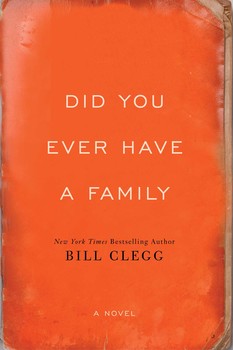
‘Did You Ever Have a Family’ by Bill Clegg – After the Tragedy

Did You Ever Have a Family’ by Bill Clegg    (2015) – 293 pages

did-you-ever-have-a-family-9781476798172_lg

Four people are killed in a house gas explosion including a couple who were to be married the following afternoon.  This is the defining event in ‘Did You Ever Have a Family’, and the novel deals with how those who survived cope in the aftermath to this tragedy.  ‘Did You Ever Have a Family’ is a grief novel.

The story is told by multiple narrators each somehow connected to those who died. The mood is subdued reverie.  There is no direct dialogue. Someone must have forgotten to tell the author that each of the various narrators must have a distinctive voice.  As it is each sounds pretty much the same, their narration filled with muted hazy remembrance. The characters sound so much alike that it is difficult for the reader to tell them apart.  Two of the main characters are Lydia and June, but I couldn’t tell one feature of their personality which would distinguish them.

The long sections of indistinguishable mournful reverie are only occasionally interrupted by a sparkling sentence like the following:

“She takes a long, late-day look at the town where she has lived her whole life, where there are no friends, no family, but where her feet are famous to the sidewalks.” 

I suppose my opinion of ‘Did You Ever Have a Family’ has been somewhat colored by my having previously read what I consider to be a much superior grief novel.  That would be ‘The Sweet Hereafter’ by Russell Banks which tells the story of a town dealing with a terrible school bus accident.  That novel also used the multiple narrator method, but its telling was so simple and direct and heartfelt I never was confused about who was talking at any given time.

‘Did You Ever Have a Family’ is a much more subtle novel but unfortunately more confusing and less affecting.  Perhaps a sign of the novel’s diffuseness is that its events are spread out to both coasts from Connecticut where the accident occurred to the state of Washington.  The novel attempts to include side plots about racial injustice involving both blacks and Native Americans, but these are half-hearted at best.

However after about two hundred pages of listlessness, something near miraculous occurs.  The story in ‘Did You Ever Have a Family’ actually starts to cohere, become involving.   Perhaps this is because we readers have finally gotten to know a couple of the narrators well enough to care about and follow their account of events.


Grade:   B 

Some Nearly Forgotten Novels Written in the First Decade of the 1900s which are Exceptionally Good

In England it was known as the Edwardian Era.  In France it was the La Belle Époque (“Beautiful Era”).  In the United States it was the Progressive Era.  It was a time of optimism and peace and prosperity before the terrible Great War spoiled everything.  Here are some wonderful novels written during that time.

Claudine_ecole_colette‘Claudine at School’ by Colette (1900) –This was the first novel by French writer Colette, and as with so much of her work it caused a huge scandal with 15 year-old Claudine taking on affairs with her female instructors.   It was not published in English until 1957.

10725_poster‘The Confusions of Young Torless’ by Robert Musil (1906) – Another scandalous novel, this is the first novel by German writer Robert Musil based on his own experiences at a military boarding school.  Boys left to themselves get into all kinds of troubles.

9780195108118‘Esau and Jacob’ by Joachim Maria Machado de Assis (1904) – This is one of many excellent novels by the great Brazilian writer, Machado de Assis.  I’ve read most of them, because I consider Machado de Assis with his sense of humor one of the all-time great novelists.  This one is the story of Brazil itself disguised as a story of twin brothers falling in love with the same woman, Flora.

9780679406679_p0_v1_s118x184‘The House of Mirth’ by Edith Wharton (1905) – This early novel about New York society beauty Lily Bart put Edith Wharton on the literary map and could well be her best.

“She had no tolerance for scenes which were not of her own making.”

9781590171158‘The Late Mattia Pascal’ by Luigi Pirandello (1904) – Here is a comic novel of black humor by Italian writer Luigi Pirandello in which a man goes on a successful gambling outing only to return home to discover that his wife and family have declared him dead.  Thus the man is free to assume another identity, which he does with unexpected consequences.

sister-carrie‘Sister Carrie’ by Theodore Dreiser’ (1900) – Here is the realistic and unsentimental fictional account of the rise of actress Caroline Meeber, Sister Carrie, by United States writer Theodore Dreiser.  As a novelist Dreiser was crude and powerful, and I consider him one of the greats.

“How true it is that words are but the vague shadows of the volumes we mean. Little audible links, they are, chaining together great inaudible feelings and purposes.”

1649385._UY200_‘A Room with a View’ by E. M. Forster (1908) – This English novel has been described as an Edwardian rom-com, a ‘Love Actually’ for its time.   Perhaps that is why it was made into a successful movie.

“When I think of what life is, and how seldom love is answered by love; it is one of the moments for which the world was made.”

34712190‘Buddenbrooks’ by Thomas Mann (1901) – Although I thought ‘The Magic Mountain’ and ‘Death in Venice’ were wonderful, I still consider ‘Buddenbrooks’ as Thomas Mann’s masterpiece.  It is the story of a successful German family’s decline over the generations.


‘Purge’ by Sofi Oksanen – Free Estonia!

‘Purge’ by Sofi Oksanen   (2010) – 390 pages    Translated by Lola Rogers

imagerepository

After reading ‘When the Doves Disappeared’ earlier this summer, I had no choice.  That novel was so dramatic and intense, I absolutely had to read Sofi Oksanen’s earlier novel ‘Purge’.  ‘Purge’ is perhaps an even stronger novel than ‘When the Doves Disappeared’, but it is a close call between the two books.

Here is the setup of the story in ‘Purge’.  In 1992, An old woman, Aliide Truu, living in the Estonian countryside finds a young woman, Zara, lying in her yard and brings her into her house.  Oksanen sets the situation up nicely as the two women develop a relationship so that Zara acts more like a daughter to Aliide than her own daughter.

Two ruthless men are pursuing Zara who was forced to work for them at sex trafficking and has now escaped.

The young woman Zara is hardly more than a girl.  Zara wanted to get money for college, but instead she was taken up by two violent young Russian male pimps, Pasha and Lavrenti, who drove her to Berlin, Germany and peddled her for sex.

The old woman Aliide had to face her own brutal interrogation in the 1940s after the Russians took over Estonia from the Germans.

Oksanen pursues her usual technique of presenting short scenes out of order.  The present time of the novel is 1992, but we are presented flashbacks for both Zara and Aliide.

Let’s talk a bit about this method of Sofi Oksanen, the method she has used effectively in both ‘Purge’ and ‘When the Doves Disappeared’.  ‘Purge’ started out as a play. And I believe that fact was crucial to Oksanen in arriving at her technique.

Instead of presenting her scenes in chronological order, she skips around from time to time, from place to place.  Thus one scene might be from 1992 in Estonia, and the next scene might be from 1991 in Vladivostok, and the next scene might be from 1945 in Estonia.  This allows each scene to be presented in real time rather than as a memory.  Real-times scenes in the here and now are much more vivid than memories.  I find this technique increases the impact of the story.  We are given the separate pieces of the puzzle as they are needed until they all fit together into a complete picture.  The method also allows Oksanen to tell complex stories using simple dramatic single scene building blocks.

Gradually the full stories of both women are revealed, and all the pieces of the mosaic fit together into a compelling story.

Oksanen deals with the totality of these two women’s situations, the bad as well as the good.  The author never veers away from any subject because it is just too awful or disgusting whether it be political torture or sex trafficking.  Evil as these subjects are, they are a part of the lives of these people and must be dealt with.  That is why ‘Purge’ gets to deeper truths than other novels do.  In the presence of overwhelming evil, one must make allowances for ordinary people in order for them to survive.


Grade:   A

‘Eileen’ by Ottessa Moshfegh – Dirty Realism at its Best

‘Eileen’ by Ottessa Moshfegh   (2015)  – 260 pages

9781594206627

I want to explain to you what Dirty Realism is, because ‘Eileen’ is the best novel of Dirty Realism I have read in a long, long time.  ‘Eileen’ is a must-read.  I came across the following definition of ‘Dirty Realism’ in an article about Tobias Wolff by Claire Allfree in Metro magazine:

“Depictions of ordinary people, using transparent prose that gets uncomfortably close to the fabric of the characters’ lives.”

Usually the term ‘Dirty Realism’ was applied to short stories, but ‘Eileen’ is a novel, a sustained performance.  It is so honest it is uncomfortable.

The 24-year-old woman Eileen in ‘Eileen’ doesn’t get out much.  She stays at her New England home taking care of her drunk abusive father who is an ex-cop and thus well-respected in the community.  Eileen’s cruel mother died a painful death a couple of years ago.  Occasionally Eileen goes to a movie by herself telling her father she is going out with friends, but her father won’t believe her.  She has no friends.  Eileen works at a boys’ detention center where teenage boys are imprisoned for committing some horrific crime like burning down the family home or murdering a parent or sibling.

“There was a reason I worked at the prison; after all, I wasn’t exactly a pleasant person.”    

Eileen’s thoughts reverberate with negativity toward herself. What makes ‘Eileen’ special is the provocative and disturbing voice of Eileen.  There is nothing girlish or perky about Eileen.  We’ve had enough of those.  Eileen’s voice is real.

“I was unattractive in temperament most of all, but many men don’t seem to care about things like that.”  

 Here is Eileen describing her body:

“So just for laughs, here I am again, my little virginal body at age twenty-four.  My shoulders were small and sloped and knobbly.  My chest was rigid, a taut drum of bones I thudded with my fist like an ape.  My breasts were lemon-size and hard and my nipples were sharp like thorns.  But I was really just all ribs, and so thin that my hips jutted out awkwardly and were often bruised from bumping in to things.  My guts were still cramped from the ice cream and eggs from the day before.  The sluggishness of my bowels was a constant preoccupation.”

The novel takes place in 1964 with Eileen many years later telling her story from back then.  Things change for Eileen when Rebecca Saint-John starts working as the first ever prison director of education.  Rebecca immediately befriends Eileen.

“I prefer being sort of flat-chested, don’t you?  Women with big bosoms are always so bashful.  That, or else they think that their figures are all that matters.  Pathetic.”  

Moshfegh-200x200As I said before, the novel ‘Eileen’ is Dirty Realism with a vengeance.   The writer Raymond Carver, a writer also well worth reading, is considered the King of Dirty Realism.  According to Stuart Evers in the Guardian, Carver wrote “pared-down tales of urban dismay, of losers and liars, of drunks who never know when to stop.”  Despite this being her first novel and despite there being other fine female dirty realists like Jayne Ann Phillips and Joy Williams, I am compelled to call Ottessa Moshfegh the new Queen of Dirty Realism.


Grade:   A