Archive for December, 2013

‘The Pursuit of Love’ by Nancy Mitford

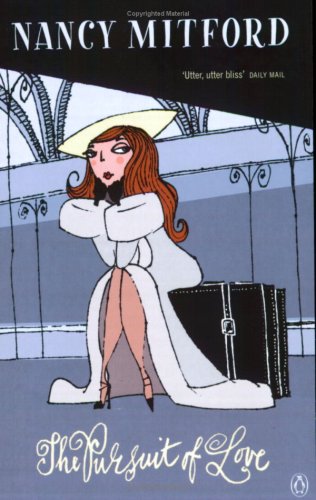
‘The Pursuit of Love’ by Nancy Mitford (1945) – 214 pages
835458

Many writers have turned their early years of family life as a child into a novel, but few have succeeded so brilliantly as Nancy Mitford in ‘The Pursuit of Love’.  She seemingly without effort turned the characters of her childhood – and I do mean ‘characters’ – into frivolous eccentric figures of comedy.

Uncle Matthew Radlett has mounted over the fireplace a photograph of the entrenching tool with which he ‘whacked to death eight Germans one-by-one as they crawled out of a dugout’.  The entrenching tool is covered with blood and hairs, ‘an object of fascination to us as children’.

Meanwhile young daughter Linda cries enormous tears over the death of any animal, even a white mouse.  The story in ‘The Pursuit of Love’ is told by Fanny who is almost like an extra daughter in the Radlett household.  Her mother ‘ran away so often, and with so many different people, that she became known to her family and friends as the Bolter’:

 ‘Though she (the Bolter) was silliness personified, there was something engaging about her frankness and high spirits and endless good nature.  The children adored her…’

 Fanny was left with Aunt Emily who made sure that Fanny was rarely alone by having her stay frequently with Aunt Sadie and Uncle Matthew and their 6 children.   As Linda tells Fanny,

“You are so lucky to have wicked parents.”

 Most of the novel is about daughter Linda’s romantic escapades as she turns out to be a bit of a Bolter herself.  First a Germanic businessman named Tony who bores her to distraction, then an out-and-out Communist named Christian, then a French resistance fighter named Fabrice.

The story of the Radlett family continues in a second novel, ‘Love in a Cold Climate’.

“The Pursuit of Love” is a lively merry story about an unconventional family that will leave you smiling uncontrollably.  Men who do not believe that women can do comedy should not read this novel; otherwise their illusions will be smashed.

Jessica, Nancy, Diana, Unity and Pamela Mitford in 1935

Jessica, Nancy, Diana, Unity and Pamela Mitford in 1935

I have been studying on the Internet the fascinating frequently outrageous lives of the Mitford sisters.  They have been famously described by The Times journalist Ben MacIntyre as “Diana the Fascist,  Jessica the Communist,  Unity the Hitler-lover,  Nancy the Novelist,  Deborah the Duchess and Pamela the unobtrusive poultry connoisseur” .  Their stories, especially those of Unity, leave me speechless and not with admiration.

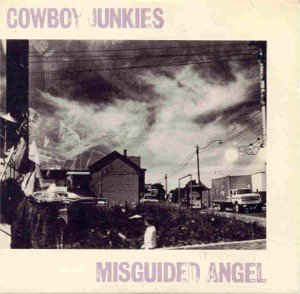
Misguided Angel

cowboy-junkies

Here are the lyrics of a song.  ‘Misguided Angel’ is about a young woman telling the other members of her family about her boyfriend.   Trouble ahead? These lyrics could be the opening of a great story or even a novel.

Here is a live performance of Misguided Angel by the Cowboy Junkies from Toronto Canada  with Margo Timmins singing her song.

            Misguided Angel

 Songwriters: Margo Timmins and Michael Edward Timmins 

I said ‘mama, he’s crazy and he scares me
But I want him by my side
Though he’s wild and he’s bad

And sometimes just plain mad
I need him to keep me satisfied’

I said ‘papa, don’t cry cause it’s alright
And I see you in some of his ways
Though he might not give me the life that you wanted
I’ll love him the rest of my days’

Misguided angel hangin’ over me
Heart like a gabriel, pure and white as ivory
Soul like a lucifer, black and cold like a piece of lead
Misguided angel, love you ’til I’m dead

I said ‘brother, you speak to me of passion
You said never to settle for nothing less
Well, it’s in the way he walks,
It’s in the way he talks
His smile, his anger and his kisses’

I said ‘sister, don’t you understand?
He’s all I ever wanted in a man
I’m tired of sittin’ around the t.v. every night
Hoping I’m finding a mr. right’

Misguided angel hangin’ over me
Heart like a gabriel, pure and white as ivory
Soul like a lucifer
Black and cold like a piece of lead
Misguided angel, love you ’til I’m dead

He says ‘baby, don’t listen to what they say
There comes a time when you have to break away’
He says ‘baby there are things we all cling to all our life
It’s time to let them go and become my wife’

Misguided angel hangin’ over me
Heart like a gabriel, pure and white as ivory
Soul like a lucifer
Black and cold like a piece of lead
Misguided angel, love you ’til I’m dead

R-5766760-1402071050-4407.jpeg

‘A Permanent Member of the Family’ by Russell Banks – Intense Realistic Stories

‘A Permanent Member of the Family’ stories by Russell Banks (2013) – 228 pages

9780061857652

As a fiction writer, Russell Banks deals with the world as it is, not with what it could or should be.  He can make us feel the agony of a town when dozens of its schoolchildren die in a horrific bus accident or the pain of the family when their dog dies.   He writes of severe misunderstandings between men and women, of divorce, of families breaking up.  Russell Banks is one of our best realists when it comes to these poignant matters. 

I went through a spell when Russell Banks was my favorite writer back in the early Nineties.  I first read, ‘The Sweet Hereafter’, his novel about a small town in the aftermath of the terrible school bus accident.  In that novel, Banks was able to capture the emotions of many of the town’s inhabitants.  ‘The Sweet Hereafter’ was made into an excellent movie by Atom Egoyan. After reading it, I quickly went on to read Banks’ ‘Continental Drift’ and ‘Affliction’ as well as his book of stories ‘Success Stories’, and my opinion of him as a writer went even higher.  But somehow I did not get back to reading Russell Banks until now when I read his latest collection of stories, ‘A Permanent Member of the Family’.

This collection has all of the qualities of his fiction I admired before.   Perhaps my favorite story in the collection is ‘Snowbirds’ about a woman helping another woman cope with the death of her husband.  The urn with the ashes of her husband sits in their Florida room, but the new widow is so cheerfully intoxicated with her new single life so that the woman her helping begins to question her own marriage. I liked this story because it wasn’t as depressing as some of the others, and it did not have a male protagonist as many of the other stories do.  A male protagonist in a Russell Banks story always comes across like Russell Banks himself rather than as a separate distinct character in the story.

Russell Banks is quite inventive in the setup of his stories, and every one of these stories was unique and satisfying to me. The stories have enough original situations and twists to keep me interested.  Each story is well-formed with a strong emotional payoff.     

However my attitude toward realism in fiction has changed since the early Nineties. I never did believe that capturing real life was the end-all and be-all goal of good fiction.  Today I am even less enamored of stark realistic portrayals in fiction or movies.   I want fiction that makes room for the playful and the ‘merely’ pleasant.   I prefer sentences that are frivolous and vivacious rather than plain and sparse. 

So where does that leave Russell Banks, our ultimate realist?  Don’t get me wrong, I still like his down-to-earth fiction.    However realism is just one little room in the mighty house of fiction.         

Requiem for the Age of Print – ‘Dublinesque’ by Enrique Vila-Matas

If all creative work is shared by everyone in our new world of streaming, who will make sure that the lone individual, perhaps not the slickest salesman on the block, will get credit and a fair monetary share for his or her creation whether it be a piece of music, art, or literature?  

dublinesque

‘Dublinesque’ is a novel for excessively literary people like me.  It is filled with quotes and stories about famous writers, and the nice thing is that the allusions are meaningful to the severe plight of the central character of ‘Dublinesque’ himself.  They are not just to feed the author’s ego. One soon realizes that Enrique Vila-Matas is an impassioned reader of other writers’ works

The first-person protagonist of ‘Dublinesque’, Samuel Riba, ran a small company that published literary novels for thirty years until it went under.  Now he spends nearly all his time in front of the computer.  He fears he has become a ‘hikikomori’ which is a Japanese word for those young people who suffer from autism in front of the computer and avoid outside pressures by withdrawing completely from society.  His wife is concerned for him.

 “Sensing that it won’t be long before her dear autistic husband goes and sits in front of the computer, she tells him that people who regularly use Google gradually lose the ability to read literary works with any kind of depth, which serves to demonstrate how digital knowledge can be linked to the recent stupidity in the world.” 

 The age of print is over; we are streaming into the new digital age.  In order to overcome his own isolation, this ex-publisher decides to hold his own funeral for the Print Age.  What better time and place to hold the funeral for the Print Age than in Dublin on Bloomsday, June 21, the day so famously depicted in James Joyce’s Ulysses?  The ex-publisher invites three of his writer friends, all of whom he previously published.

A little over two years ago, the ex-publisher, an alcoholic, had a catastrophic drinking episode almost causing his wife to leave him.  He hasn’t had a drink since.  Imagine the temptations for an ex-drinker in going to Dublin to celebrate Bloomsday.

That is the setup.  The story is told in an offhand friendly way.  A requiem for the Print Age might not be your idea of an exciting plot but it is for me.  Some of the writers who come up frequently in the story are Gustave Flaubert, Samuel Beckett, Paul Auster (even Siri Hustvedt gets a mention), Peter Handke, and Fernando Pessoa.   This book caused me to return to the poetry of Philip Larkin.  ‘Dublinesque’ is a lovely poem by Larkin about a funeral for a prostitute.  You can read it here.

The death of the age of print?  I have my own concerns about the streaming world which I suspect are shared by most people who appreciate creativity.  If every creative work is shared by everyone, who will make sure that the lone individual, perhaps not the slickest salesman or businessman on the block, will get credit or a fair monetary share for his or her creation whether it be a piece of music, art, or literature?   We have entered a new age, but that does not necessarily mean it is a good new age.  Do you have concerns?

For the appropriate kind of person, me, ‘Dublinesque’ is a wonderful book.

The Top Ten List of the Best Fiction I’ve Read in 2013

TopTen

Here are the books that made 2013 a great reading year for me.

BILLY_LYNN_BOOK_245593131. “Billy Lynn’s Long Half-Time Walk” by Ben Fountain (2012) – This over-the-top black comedy about ‘honoring our soldiers’ at a Dallas Cowboys football game is the ideal plot to capture the absurdities that exist between the comfortable upper-class supporters of the Iraq War and the dirt-poor multi-race soldiers who had little choice but to go to Iraq.

157908422. “Life After Life” by Kate Atkinson (2013) – An affectionate portrait of an English family with a twist.  If something goes wrong for this family, they get to do it over with hopefully better results the next time.


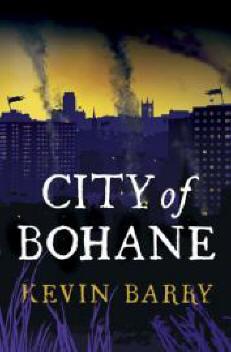
city-of-bohane3. “City of Bohane” by Kevin Barry (2012) – This is probably the novel with the most original plot and the most dazzling language.  The story is not limited by the constraints of realism.

storyofanewname4. “The Story of a New Name” by Elena Ferrante (2013) – Part 2 of the Naples trilogy.  The two girls who were the smartest students and best friends in grade school, Lila and Elena, are sixteen now and take two very different paths in growing up.

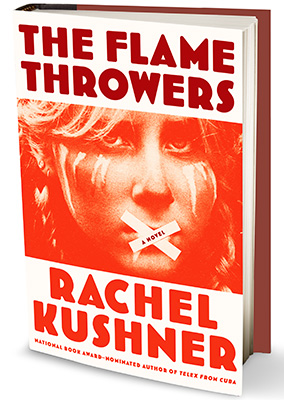
201304-omag-flamethrowers-284xfall5.“The Flamethrowers” by Rachel Kushner (2013) – Here is an edgy novel about the 1970s art world that begins with our young female protagonist trying to set the world land speed record for a motorcycle on the salt flats in Reno.

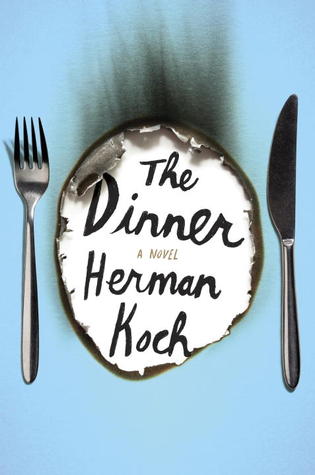
the-dinner6. “The Dinner” by Herman Koch (2012) – Here is a vivid story about a dinner in a restaurant with two brothers and their wives.  I gaurantee you it will provoke a strong reaction.

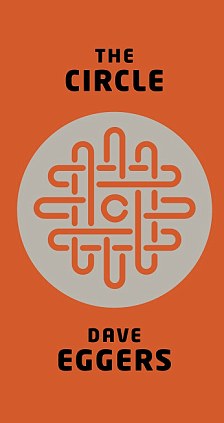
article-2442020-1878A30700000578-565_224x4237. “The Circle” by Dave Eggers (2013) – A dark story about an Internet company which believes that all that happens must be known.

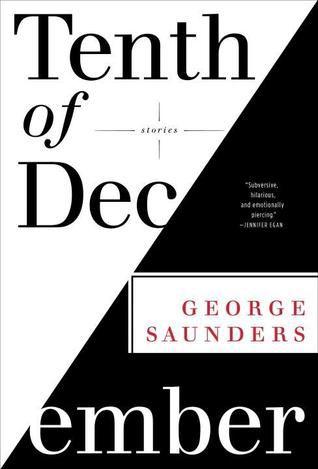
1saunders01068. “Tenth of December” by George Saunders (2012) – Absurd humorous stories with an emotional payoff.


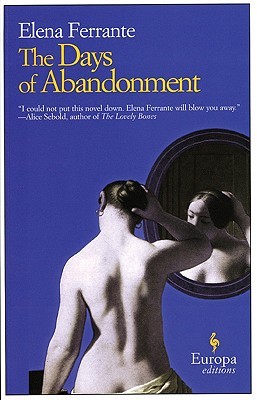
778109. “The Days of Abandonment” by Elena Ferrante (2002) – An unflinching blunt depiction of a woman dealing with abandonment.

16158600

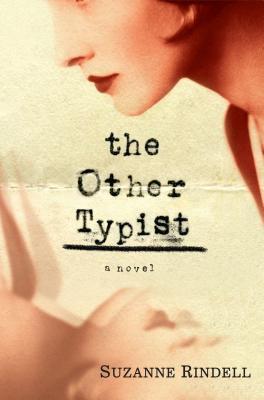
10. “The Other Typist” by Suzanne Rindell (2013) – An enchanting 1920s story about a typist in a police precinct station.

Here are some excellent novels I read in 2013 that are older.

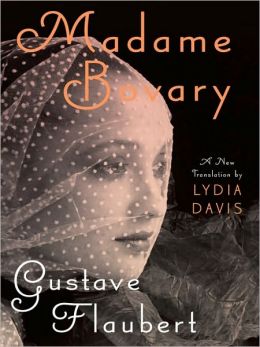
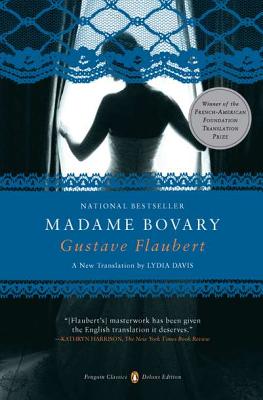
9781101195888_p0_v1_s260x420“Madame Bovary” by Gustave Flaubert (1866) – A wonderful version of this adultery classic translated by Lydia Davis.

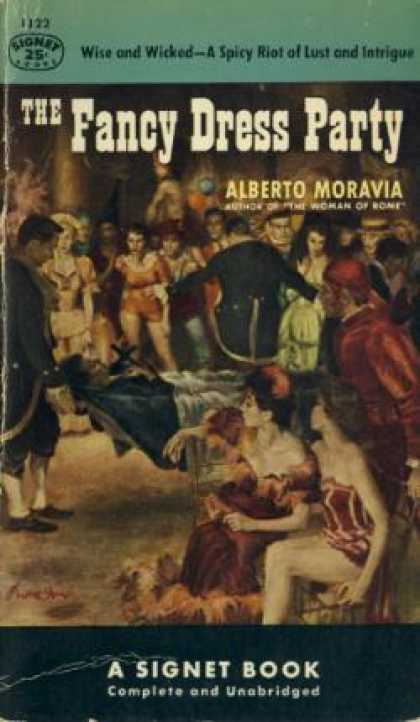
729-1“The Fancy Dress Party” by Alberto Moravia (1941) – A merry romp of a novel which makes fun of the fascists.

9780143106494“The Cocktail Party” by James M Cain (1977, 2013) – A sleazy nightclub murder mystery novel by the writer of ‘Double Indemnity’.

piatto_lucinella_72-199x300 “Lucinella”by Lore Segal (1977) – Her one night stand with the Greek God Zeus at a writing conference.

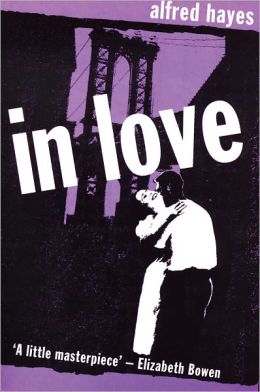
9780720612943_p0_v1_s260x420“In Love” by Alfred Hayes (1953) – The intense record of a break-up between a man and a woman told by the man.