Archive for September, 2013

Joyce Carol Oates – The Queen of Obsession


“I never change, I simply become more myself.”  – Joyce Carol Oates, ‘Solstice’

“In love there are two things – bodies and words.” – Joyce Carol Oates


200px-YouMustRememberThisToday I’m writing about Joyce Carol Oates.  No matter how infuriated I’ve gotten in the past over one or another of her novels or stories, I keep coming back to her.  I find her work to be annoying in the very best sense of the word.

I love Joyce Carol Oates or at least her writing.  I suppose that makes me some kind of masochist as Oates often is pretty mean in her depiction of the male characters in her fiction.  They are not all ax murderers or child molesters, but some of them are, and many of her male characters are creepy on some other level.

The fact that I love Oates’ writing does not keep me from hating her books occasionally.  “We Were the Mulvaneys” is about a perfect family until the daughter gets drunk at a party and is raped.  This terrible act is the beginning of the destruction of the Mulvaney family.  For hundreds of pages we see this perfect family unraveling as a result of this one horrible act.   I found all this sad and overwrought and obsessive, even though it probably was accurate.  Perhaps I didn’t like “We Were the Mulvaneys”, because I didn’t like what happened to this family.  Maybe this fiction was too powerful, too honest for me.
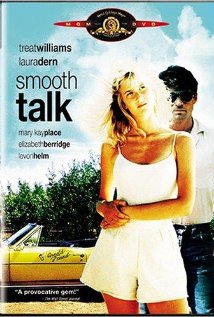
MV5BMTQwNDI2ODc2NV5BMl5BanBnXkFtZTcwMjM0MTcyMQ@@._V1_SY317_CR9,0,214,317_In 1966, Oates wrote a story called “Where Are You Going, Where Have You Been”.  It is the story of a young male drifter who drives around in his car trying to pick up girls living in remote farm houses.  It is supposedly based on the true story of a Tucson, Arizona serial killer.  Later it was made into an excellent movie, “Smooth Talk”. starring Treat Williams and Laura Dern.   This story is menacing in the extreme.  Joyce Carol Oates dedicated the story to Bob Dylan.  This is a strange story to dedicate to him. About 15 years ago, I tried to figure out why this story in particular was dedicated to Bob Dylan.  There was one obscure site on the Internet at that time which said the story was dedicated to him, because Oates disapproved of  Dylan’s several casual relationships with young women.    Today when I research that same question no mention of that previous reason can be found.  Today we find the real reason Oates dedicated the story to Bob Dylan is because she was mightily impressed and inspired by the Dylan song ‘It’s All Over Now, Baby Blue”.
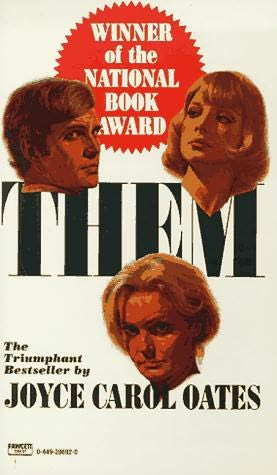
n23119My first experience with Oates was reading her early novel ‘them’.  I immediately saw that Oates was a tougher, meaner, more direct writer than other woman novelists at that time.  Over the years I’ve read many fine novels by this extremely prolific writer with whom hardly any of us readers can keep up.  Here are a few that I’ve especially liked: “Wonderland”, “Marya: A Life”, “You Must Remember This”, “I’ll Take You There”.  Joyce Carol Oates is also about the best short story writer around.  If you want a quick jolt, read one of stories.

oat0-034One thing that Oates is known for is bringing her personal obsessions into her fiction, and one of her obsessions is men’s mistreatment of women.  That gives her a lot of material to work with.  Whether  it is a man being psychologically dismissive of a woman’s personality or a man being psychotically violent toward women, you will find them in Joyce Carol Oates’ fiction.  Her obsessions bring an intensity to her writing that is missing from other authors.

I will be reviewing her new book “Evil Eye: Four Novellas of Love Gone Wrong” in the upcoming days.
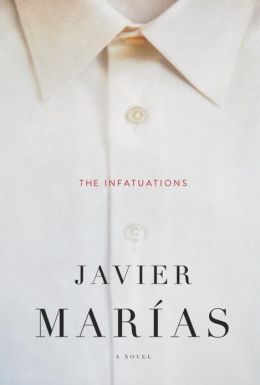
‘The Infatuations’ by Javier Marias

“The Infatuations” by Javier Marias  (2013) – 338 pages  Translated by Margaret Jull Costa

9780307960726_p0_v1_s260x420

We have all heard the rules for good fiction writing: well-defined characters, sharp dialogue, exciting plot. It is as if there is an imaginary fiction instructor inside our heads repeating these rules over and over. However Javier Marias ignores all these rules, but it does not matter at all.  Let me elaborate.

Well-defined Characters.  “The Infatuations” begins with our narrator going to a restaurant for breakfast each workday morning, and a married couple, ‘the Perfect Couple’, are also there each day.  Our narrator observes this couple carefully.  It is only on page 45 that the narrator is finally identified as a woman, ‘the Prudent Young Woman’.  Up until that point, I had assumed that the narrator was a man. The narrator is constantly expounding, explicating, or speculating in detail on some matter.   I mistakenly associated these ways of thinking with men.  But after all it is the twenty first century, and maybe women think a lot more like men than I ever thought they did.  Let’s just say that Marias gave no hints as to the sexual identity of the narrator.  On the other hand our imaginary good fiction writing instructor in order to achieve a well-defined character would have had our woman narrator adjusting her skirt on page one, even though women don’t wear skirts that much anymore.

Sharp Dialogue.  Our imaginary fiction instructor would say that there should be a lot of back-and-forth in dialogue between characters, and no one character should talk for too long.  Yet Marias totally ignores this rule in “The Infatuations.  In this novel conversations between characters tend to be a series of long monologues of up to two pages.  I hesitate to use the word ‘philosophy’ to describe these conversations, because that would make them sound a lot less interesting than they actually are.  These long conversations are entirely fascinating.

Exciting Plot.  Well, there is one murder in “The Infatuations” which takes place off-camera, so to speak.  Readers should not hold their breath waiting to find out what will happen next, because nothing much else does happen.  The rest of the novel is discussion and speculation about that murder.  Yet Marias’ writing sentence-by-sentence is so captivating that at least this reader did not feel the need for any more action.

Here are a few sentences from “The Infatuations” which are quite typical of the quality of discourse in the novel.   See if you like them as much as I did.

 “When someone is in love, or, more precisely, when a woman is in love and in the early stages of an affair, when it still has all the allure of the new and surprising, she is usually capable of taking an interest in anything the object of her love is interested in or speaks about.  She’s not just pretending as a way of pleasing him or winning him over or establishing a fragile stronghold, although there is an element of that, she really does pay attention and allow herself to be genuinely caught up in what he feels and transmits, be it enthusiasm, aversion, sympathy, fear, anxiety, or even obsession.”

 There has been some talk of Javier Marias as being a potential future Nobel prizewinner.  I’ve read several novels by Marias, and each one has been an enjoyable as well as a worthwhile experience..  He would certainly be a stronger laureate than some of the recent previous winners (Daniel Fo?).

Although Marias does not follow the rules.

‘A Tale for the Time Being’ by Ruth Ozeki

“A Tale for the Time Being” by Ruth Ozeki  (2013)  – 418 pages

A-Tale-for-the-Time-Being-by-Ruth-Ozeki-401x349

“A Tale for the Time Being” is made up of two main stories.  One story takes place in Japan and concerns 14-year old girl Nao Yasutani and her family.  The other story is about a writer named Ruth and her husband Oliver who live on an island on the Canadian coast near Vancouver.

The story of Nao and her family is captivating and held my interest throughout; the Canadian story not so much.  The Canadian story is little more than a framing device for the Japanese story. 

“The word ‘now’ always felt especially strange and unreal to me because it was me, at least the sound of it was.  Nao was now and had this whole other meaning.  In Japan, some words have kotodama, which are spirits which live inside a word and give it a special power.”

 You see Nao knows both Japanese and English.  She and her mother and father lived in Sunnyvale, California for several years.  Her father did quite well in the dot.com boom of the late 1990s until he lost his job.  Now Nao and her family have returned to Japan where Nao is persecuted mercilessly by her classmates for her American ways, and her father is contemplating suicide.

Things begin to change when Nao and her father go to see her great grandma, 104 year-old Jiko Yasutani, who  is now a  nun in a monastery.  Nao learns about her great-uncle Haruki who was one of the suicide Kamikaze pilots during World War II.   Through his diaries, we learn his full story.

Nao’s voice in the novel  is that of a typical 14 year-old girl, gratingly adolescent and all.  The great grandma Jiko is stereotypical in her ancient all knowing wisdom.  However these things don’t matter, because the Japanese story is so fascinating it sweeps other concerns aside.

If only the Canada story were so gripping.  I suppose Ruth Ozeki wanted to portray a typical Canadian couple in Ruth and Oliver, but the best way to describe this couple is ‘bland’.  As I mentioned before they frame the Japanese story, and provide a means of getting that complete story told.  However enough pages are devoted to Ruth and Oliver that their story should have added more value to the novel than it does.

There are several references to Marcel Proust and his “In Search of Lost Time” which I did not find particularly informing or interesting.

Mention is made of the Fukushima nuclear accident and the movement of radiation across the Pacific.

Overall “A Tale for the Time Being” is a strong novel that helped this reader better understand the Japanese way of facing life and better realize that this Japanese family has the same crises of conscience we all share.    My main impression is that Ruth Ozeki tried many audacious things in this novel, some which worked extremely well and some which did not.  I appreciate her fearless ingenuity and was tremendously moved by large parts of this novel.

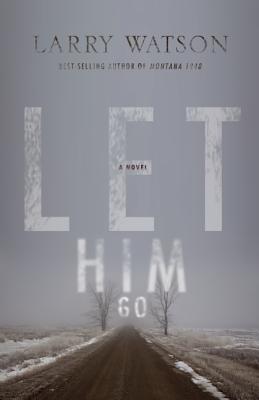
‘Let Him Go’ by Larry Watson

“Let Him Go” by Larry Watson (2013) – 269 pages

9781571311023

George and Margaret Blackledge are out to get their grandson back, and nothing will stop them.  The case here must be a fairly common situation today.  A young couple gets married, have a kid or kids, split (In this novel’s case the young husband dies).  The woman usually gets the kids, and the paternal grandparents are shut out from their grandchildren to a lesser or greater extent.  The woman takes up with another man on whom the paternal grandparents cast a particularly skeptical eye.   Then the woman and her new man take off for another town or state taking the kids with them, leaving the paternal grandparents in their dust.

Most grandparents might complain about this situation but will leave the thing alone.  Not George and Margaret.  These two grandparents are so sure of their own goodness and the new defacto step-father’s badness, they decide to attempt a ‘rescue’ of their grandson even if they have to break the law to do it.   George takes his gun with him.  They leave North Dakota and head to Montana to get their grandson back by any means possible.  At first one doubts their sense of moral superiority, but soon events unfold that reveal the essential shabbiness of their grandson’s new plight.

“Let Him Go” is an intense violent novel.  I have previously read Watson’s “American Boy” and “Montana 1948”.  Those were wistful coming-of-age nostalgic novels that take place in the northern states of Montana, North Dakota, and Minnesota.  Those novels are strong, because of their sense of complex moral ambiguity  This new novel “Let Him Go” takes place in the same locale, but has a new sharper edge to it.  It is dark and unrelenting in its violent view of the world.

I did not like George and Margaret, the main characters, because they are so sure of their own goodness.  They have no doubts in their own rightness in taking this grandson away from his new family.  Yet the novelist Watson sides totally with these aggressive grandparents. As it turns out, the family they confront, the Weboys, are about as mean as can be.  Watson seems to be painting this story as an epic battle of good versus evil.  This does not seem realistic to me.  Real life is usually more inconclusive.    Both sides in this custody dispute are quick to take out their weapons and do real damage to each other.  The results are about what one would expect.

I know some reviewers have praised this intensity in Watson’s new novel.   The writing is sharp in all of these chapters of 5 or 6 pages, and there is little chance a reader will lose interest.  My only criticism is that the story is a little too simple-minded to be entirely realistic.  Perhaps if Watson had given a little more background on how these grandparents knew their grandson was in a terrible situation, I could have accepted their aggression.  But I suppose more background would have slowed down the pace of the novel.

A Dozen of My Favorite Novellas Written by Women

6211222294_4e421aa9ab_mNovellas are short and sometimes sweet and sometimes not sweet at all.   A reader does not need to invest much time in a novella, yet the best of these short novels can affect one tremendously.  Here are some by female writers which are favorites of mine.  See also “A Dozen of My Favorite Novellas Written by Men”.

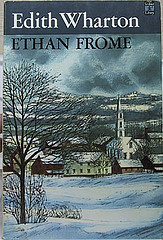
‘Ethan Frome’ by Edith Wharton (1911)   This winter novella is by one of the great United States writers. It also may have scared many off sledding for years.

“They seemed to come suddenly upon happiness as if they had surprised a butterfly in the winter woods” ― Edith Wharton, ‘Ethan Frome’

 ‘Miss Lulu Bett’ by Zona Gale (1920)   I read this book because Zona Gale was born in Portage, Wisconsin which isn’t too far from my boyhood home near Sparta, Wisconsin.  “Miss Lulu Bett” was a sensation in the 1920s, adapted into a play, and turned into a high quality silent movie in 1921.  Zona Gale was an early feminist, but “Miss Lulu Bett” is a light, playful and still enjoyable novella.

 9781558324824_p0_v1_s260x420‘Mrs. Caliban’ by Rachel Ingalls (1982)  In the 1980s, Rachel Ingalls was hailed as one of the best young writers. I’ve read most of her work. Now she has almost totally disappeared from the literary scene, certainly not due to a lack of talent but apparently on her own preference.  “Mrs. Caliban” is a bizarre story of an affair between a California housewife and a green aquatic creature named Larry.

 jeanbrodie‘The Prime of Miss Jean Brodie’ by Muriel Spark (1961)  No other novella covers as much ground as “The Prime of Miss Jean Brodie” as we follow six girls in the Brodie set from the age of 12 to the age of 18 as well as several teachers at the Marcia Blaine School in Edinburgh.  Is Miss Jean Brodie a good teacher or a bad teacher?  Interesting question.

 ‘The Visitor’ by Maeve Brennan (1940s, 2000)  “The Visitor” is a dark story of estrangement  about a young woman’s painful return from Paris to her home in Ireland.   This masterpiece was Maeve Brennan’s earliest work, written in the 1940s but not published until the year 2000.

 ‘The Bookshop’ by Penelope Fitzgerald (1978)   I could have picked any one of several strong Penelope Fitzgerald works that could have qualified as novellas.  A widowed woman opens a bookshop, and its success spurs the hostility of the other shopkeepers in the neighborhood.

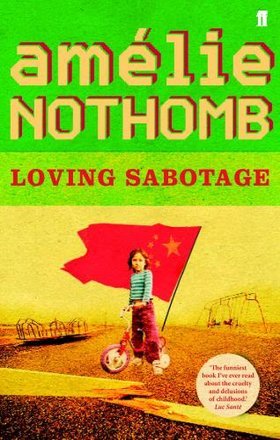
13100188 ‘Loving Sabotage’ by Amelie Nothomb (1993)  A light-hearted novella about childhood.  This is a good place to start (Complete Review gives it an A+) with Belgian writer Amelia Nothomb.

‘Cranford’ by Mrs. Gaskell (1853) – In “Cranford”, Mrs Gaskell writes of an English country village, and she gently but thoroughly satirizes its inhabitants.

“But I was right. I think that must be an hereditary quality, for my father says he is scarcely ever wrong.” ― Mrs. Gaskell, Cranford

‘The Shawl’ by Cynthia Ozick (1989)  A pitch perfect story of Rosa and Stella who are locked in a German concentration camp.  The story picks up 40 years later when Rosa and Stella are refugees in the United States.

“We often take for granted the very things that most deserve our gratitude.” – Cynthia Ozick

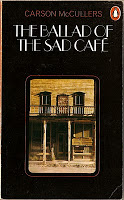
 The_Ballad_of_the_Sad_Cafe_by_Carson_McCullers‘The Ballad of the Sad Café’ by Carson McCullers (1951)  This is a southern United States story about the mysterious nature of love, the strange personal roadblocks that stand in love’s way.

“And the curt truth is that, in a deep secret way, the state of being loved is intolerable to many.” ― Carson McCullers, ‘The Ballad of the Sad Cafe’.

        .

.

Mitsou’ by Colette  (1919)  A love affair between Mitsou who is a petite music hall singer / dancer and a nameless lieutenant mostly told in letters and dialogue.  Having worked in music halls herself, Colette wrote about what she knew, and her novellas are delightful.

‘Black Water’ by Joyce Carol Oates (1992)  This is the Ted Kennedy Chappaquiddick novella.  Oates’ obsessions can infuriate, her plot lines can be artificial and clanky, but often her fiction can be interesting and moving in the extreme.  I keep coming back to her writing.

These are all by women.  Men’s novellas will follow in a few weeks.

‘Fools’ by Joan Silber

‘Fools’ by Joan Silber  (2013) – 255 pages

201307-omag-fools-284xfall

Joan Silber is a writer who can make the people in her stories come vividly alive in just a few pages.  I discovered Silber a few years ago when I read her book “Ideas of Heaven: A Ring of Stories” and since then I’ve been on the lookout for her fiction.

“Fools” is a story cycle, a group of lightly interconnected stories.  The first story concerns six friends living in Greenwich Village in the 1920s. The other stories relate to these six friends one way or another.

Joan Silber writes about people in the United States you seldom hear about.  These are people who feel a social responsibility for the people around them, people who believe their own personal happiness is related to the well-being of those who are less fortunate.  In this time of extreme personal greed, it is refreshing to read about folks who are actually concerned about the poor and the outsiders around them.

 “I do like life-stories. The deepest ironies are in those lurching shifts people make, bit by bit.”  Joan Silber, in an interview with The Millions.

 My favorite story here is “The Hanging Fruit”.  The story is told by a young guy whose parents run a hotel in Palm Beach in the early 1960s.  His romantic life becomes complicated, and one day he steals some money out of his parents’ safe at the hotel and runs off to Paris.  He wastes all his money on women and booze, and then his only means of getting any money is playing his clarinet in public places.   Later he sobers up and moves to New York and runs a halfway house for men coming out of prison.

 “His dating life had scared him about the risks of ending up with someone shrill or cloying or shallow or stupid.  I was at the very least none of those things.” 

 All the stories in “Fools” are rapid reads that cover a lot of ground quickly.   Each story is a wide panorama of life.  One might wish that each story had fewer characters, less activity, and a shorter time frame.  This would allow Joan Silber to go deeper into the individual characters and the separate issues raised by the plot.   As it is, the stories fly by in a whirlwind of people and activities leaving little lasting impression on the reader.