Archive for June, 2013

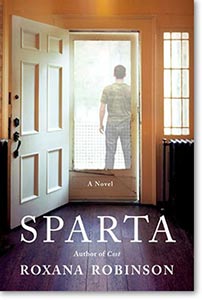
“Sparta” by Roxana Robinson – The Harrowing Consequences of the Iraq War

“Sparta” by Roxana Robinson  (2013) – 383 pages
sparta_robinson_300h

“Sparta” is a novel about the ongoing trauma a United States Marine experiences after returning from Iraq in 2006 after spending a few years there.  These were the rough years after George W. Bush’s ‘Mission Accomplished’ speech, perhaps the speech most famous for being wrong since Neville Chamberlain’s “Peace in our Time” speech on the verge of World War II.

Just two days before the ‘Mission Accomplished’ speech, a crowd of  200 Iraqis in Fallujah defied a United States curfew and gathered outside a secondary school to demand its re-opening.  United States soldiers on the roof of the school fired upon the crowd killing 17 civilians and wounding 70.  Another Iraqi protest two days later, the same day as Bush’s ‘Mission Accomplished’ speech, was fired on by United States troops resulting in two more Iraqi deaths.  On March 31, 2004, Iraqi insurgents in Fallujah ambushed a convoy containing four American private military contractors from Blackwater USA.  The four armed contractors were dragged from their cars, beaten, and set on fire.  Their charred corpses were dragged through the streets before being hung from a bridge spanning the Euphrates River.  In November 2004, US forces, in an operation to recapture Fallujah called Phantom Fury, resulted in the deaths of 1350 insurgent fighters and 95 American troops killed and 560 American troops wounded.  United States forces later admitted to using ‘white phosphorus’ as an anti-personnel weapon.

In “Sparta” our returning Marine, Conrad Farrell, was stationed in the Iraq city of Haditha which had its own massacre where 24 unarmed Iraqi men, women, and children were allegedly killed by a group of United States Marines on November 19, 2005.

In “Sparta”, we get scenes of the Iraq War in flashback as Conrad tries to resume his life in Maine like it was before his experiences in Iraq.  Although Conrad has suffered no physical injuries, he is far from the optimistic idealistic person he was before the war. He stays with his family for a time and tries to resume his relationship with his girlfriend Claire.  Conrad is constantly haunted by memories of what happened in Iraq.  Whenever any person walking or driving in the US streets makes a sudden or unexpected move, Conrad flashes back to scenes where his platoon was hit by improvised insurgent bombs.  He was the platoon leader.  He has severe difficulty sleeping at night.

Although Roxana Robinson is telling an important story, the novel is hurt by the unrelieved sad tension of Conrad.  Perhaps what “Sparta” needed is a short scene of the pre-war Conrad which we could contrast with the Conrad who has come home after the War.  Then we may not have needed so many unhappy scenes   It is difficult for the reader to contend with continuing despondency for over 300 pages.  Reading the novel becomes somewhat of a drag.  The story reads more like a case history rather than a vibrant novel.  The family is just too typical as each member shakes their head in their own way over what Conrad has become.

Roxana Robinson has been one of my favorite writers for the past few years.  However “Sparta” was somewhat a disappointment due to its relentless moroseness.

Still the story of those suffering the consequences of the Iraq War is important.  Perhaps the Iraq War can best be seen as a late continuation of the Vietnam War, another failed example of the overbearing arrogance of the United States.

“Sparta” opens with an excellent quote.

 The man who does not wear the armor of the lie cannot

Experience force without being touched by it to the very soul.

                             Simone Weil, The Iliad, or the Poem of Force    


“Ten White Geese” or “The Detour” by Gerbrand Bakker – A Gorse Novel


“Ten White Geese” or “The Detour” by Gerbrand Bakker  (2013) – 231 pages


 Gorse   noun \gors\  Definition : A spiny yellow-flowered European shrub (Ulex Europaeus) of the legume family; broadly, any of several related plants. 

I was born on a farm in Wisconsin with a lot of woods and marshland, but I had never heard of the word ‘gorse’ until I started reading European novels.  Now I know why.  Gorse is a European shrub.  By now I’ve seen the use of the word ‘gorse’ in so many of a certain type of European novel that I am ready to define what I will call a ‘Gorse Novel’.

Here are the characteristics of a Gorse Novel.

 1. A Gorse Novel takes place in an isolated rural area where the people are few and far between.   But these lonely souls make up for their sparseness with all of their Eccentricities.

 2. These folks in a Gorse Novel are necessarily very close to nature, and the novel will contain elaborate descriptions of the birds, the other wildlife, the plants, or the weather that will usually put all but the most dedicated readers to restful sleep.

 3. People in a Gorse Novel don’t say much, and when they do, it is only in a few short words which are supposed to be Greatly Significant.  So when a character says “Storm’s a coming”, it means much more than that a storm is approaching.

4. Nothing much happens in a Gorse Novel.  There is an eerie sense of quiet and calm, so finally when some tiny event happens like an itch or a cough, it seems as momentous as an earthquake.

“Ten Wild Geese” is a Gorse Novel; I would even say it is a GORSE NOVEL.  The word ‘gorse’ shows up several times, and the book definitely fulfills all the above requirements.  I’m probably not the right person to be reviewing “Ten White Geese” because I was not bowled over by this Dutch novel which won the Independent Foreign Fiction Prize.

The Gorse Novel has all the same traits as what is called the Minimalist Novel in the United States.  Sometimes it seems like over half the literary novels written in the United States during the past thirty years have been minimalist novels, so this whole concept that ‘Less is More’ is nothing new here.  Rather the very idea of minimalist fiction has now become quite trite and overused.

There are many references to Emily Dickinson in the novel.  Dickinson is probably the Godmother of minimalism, so this is highly appropriate.  In fact the central woman character in “Ten White Geese” is called Emilie, and she is writing her dissertation in order to unmask Emily Dickinson’s mediocrity as a poet.  That’s funny, studying someone else’s mediocrity for your Phd.

I can appreciate that for European readers the Gorse Novel is something new and different   By the way, “The Detour” is the European name for the novel, and “Ten White Geese” is the United States name.  I never did grasp the significance of four of the geese dying early in the story, but it must have been tremendously important.

.

“May We Be Forgiven” by A. M. Homes

“May We Be Forgiven” by A. M. Homes (2013) – 480 pages

201210-omag-books-homes-284xfall

What to make of  “May We Be Forgiven”? This is a roller coaster, not at all your traditional novel.  I’ve seen it compared to “The World According to Garp” by John Irving, the stories of John Cheever, the more twisted works of Philip Roth like “Portnoy’s Complaint” or “Sabbath’s Theater”, and the Simpsons.  However A. M. Homes lets the cat out of the bag as to influence on the bottom of page 339.

Coming out of one of the stores, I spot Don DeLillo.  Our eyes meet; he looks at me as if to ask, What are you staring at?

“I see you everywhere I go.”

“I live here,” he says.

“My apologies, I’m a big fan.”  He nods but says nothing.  “Hey, can I ask you a question?”  He doesn’t say yes, he doesn’t say no.  “Do you think Nixon was in on the JFK assassination?”  DeLillo looks at me with a grim snakelike grin.  “Interesting question,” he says and walks away.

 Yes, Don DeLillo lives in “May We Be Forgiven”, although the above few lines are his only appearance as a character in the novel.

The main character in “May We Be Forgiven” is Harry Silver. In the beginning Harry and his wife Claire have Thanksgiving at the home of his TV executive brother George.  During the dinner cleanup, George’s wife Jane shows her attraction for Harry by planting him with a kiss.  A few months later George has a car accident that kills two people and puts him in the hospital.  Harry moves into George’s house temporarily to help.  Harry and Jane wind up in bed together, but one night George sneaks out of the hospital, comes home to find the two in bed,  and smashes a lamp into Jane’s head killing her.

And that is just the first few pages…

The wild frenetic whirlwind pace of these first few pages continues throughout as George is put into a mental institution and Claire divorces Harry, and Harry moves into George’s house to take care of George and Jane’s kids Nate and Ashley.  One crazy event is piled on top of another sick episode on top of another ridiculous adventure.  I found myself thinking those famous words of Shakespeare, that the novel was “full of sound and fury, signifying nothing”. Most novels have a point to make, but in “May We Be Forgiven” all this stuff happens to little meaningful effect

 There is a world out there, so new, so random and disassociated.

 Some of the scenes in this novel are brilliant like George’s stay in a surreal paramilitary outdoor mental facility and Nate’s South African Bar Mitzvah.  You keep reading; this is a quick read despite its long length.  There is an interesting subplot involving some short stories that Richard Nixon supposedly wrote, just the kind of thing Don DeLillo might have put in one of his novels.

“May We Be Forgiven” is so wild and shaggy, so off the wall, I will not attempt to wrap it up in a nice neat little package.  If you read it, you will probably get angry at the author at times like I did, but you will probably keep reading.

A Distant Mirror – Part 2: 1351 – 1400

images“Full wise is he that can himself know.” – Geoffrey Chaucer, ‘The Canterbury Tales’

The 14th century produced some great literature even though the printing press was not yet invented.  ‘The Divine Comedy’ by Dante Alighieri and ‘The Canterbury Tales’ by Geoffrey Chaucer, both of which I’ve read, and ‘The Decameron’ by Giovanni Boccaccio and the poems of Francesco Petrarch, both of which I have not read, were all written during the 14th century.

Here are some of the significant events of the last half of the 14th century.

At the battle of Poitiers in 1356, once again the English beat the French mainly due again to the long bow.  This time the English capture and hold for high ransom the French king John II (John the Good).

Jacquerie In 1358, peasants in France called the Jacquerie were unhappy with their financial burden resulting from the Hundred Years’ War.  They roamed through the countryside killing nobles, raping the nobles’ wives and daughters, and burning down their estates.  Later in 1381, the English peasants also revolted against high taxes and having to work on church lands.

John Wyclif of England began giving stirring sermons in the 1360s against the supremacy of papal law and against payment of revenues to the papacy.  He is sometimes called the Morning Star of the Reformation.   Wycliff was also responsible for the first translation of the Bible into vernacular English.

Pope Gregory XI dies in 1377, and in the disagreement that followed, two Popes are elected.  Urban VI in Rome has the backing of the Holy Roman Empire, England, and most of Italy.  Clement VII in Avignon has the backing of France, Spain, and Scotland.  The papal schism will last until 1418.

The second and third waves of the Black Plague swept through Europe during the second half of the 14th century, killing a further large portion of the population.

At one point. both England and France had boy Kings.  Richard II in England succeeded to the throne in 1377 at the age of 10.  Charles VI was only 11 when he became the King of France in 1379.  In both cases the boys’ uncles actually ruled taking no responsibility beyond lining their own pockets.  Finally in 1388 Charles VI was able to dismiss his uncles, and he became known as ‘Charles the Bold’   However in 1392, Charles VI had his first spell of temporary insanity and killed four of his knights and almost killed his brother.  His sporadic bouts of insanity became more frequent and of a longer duration, and from then on he was known as ‘Charles the Mad’.

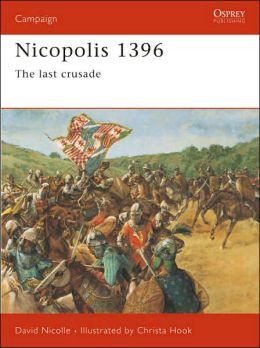
9781855329188_p0_v1_s260x420For most of the 14th century the countries and city states of Europe were too busy fighting each other to mount a crusade.  However the Ottoman Empire made major gains into Serbia and south eastern Europe winning the Battle of Kosovo in 1389. In 1394 Pope Boniface IX proclaimed a new crusade against the Turks.  This was the last major crusade, and it culminated in the Battle of Nicopolis.  This battle was a major victory for the Turks and a major defeat for the crusade army.   Sigismund would later state, “We lost the day by the pride and vanity of these French. If they believed my advice, we had enough men to fight our enemies.”

“A Distant Mirror – The Calamitous 14th Century” by Barbara Tuchman – Part I: 1301 – 1350

“A Distant Mirror – The Calamitous 14th Century” by Barbara Tuchman (1978) – 597 pages

   The Battle of Crecy - 1346

The Battle of Crecy – 1346

The cost of war was the poison running through the 14th Century.”

“Money was the crux. Raising money to pay the cost of war was to cause more damage to 14th century society than the physical destruction of war itself.” – Barbara Tuchman, A Distant Mirror

A few months ago, I was faced with the trivia question ‘Who were the opponents in the Hundred Years’ War?’  I could not answer the question correctly.  My ignorance of the 14th century was total.

Here was an entire century of which I knew nothing.  It was definitely time for me to read “A Distant Mirror – The Calamitous 14th Century”. A book I’d been promising myself ever since it was published in 1978.  For me, a history of a time or place of which I know nothing is almost as good as fiction.

I certainly will not attempt to review or critique Barbara Tuchman as a writer of history.  “A Distant Mirror” stands above criticism.  Instead I will discuss a few of the events related in the book.

VIII_17_08AAt the beginning of the 14th century, France was the dominant power in the world.  It certainly had the largest contingent of aristocratic knights to draw upon for battles.

In 1304, Pope Benedict X in Rome died, supposedly after eating poisonous figs.    French influence leads to the selection of the Bishop of Bordeaux who becomes Pope Clement V.  In 1309 Pope Clement V moves his court to Avignon, France, at the request of the French King to escape Roman hostility.

Starting in 1315 a cold wave hits Europe, the start of a climate change called the Little Ice Age that lasts hundreds of years, and with the shorter growing seasons the peasants become subject to famines. The lords and ladies of the aristocracy continue to do well thanks to the rents, taxes and other fees they collect from their subjects.

In 1338 the Hundred Years’ War, a dispute between France and England, begins.  This war actually lasts 115 years, although it was only fought sporadically.

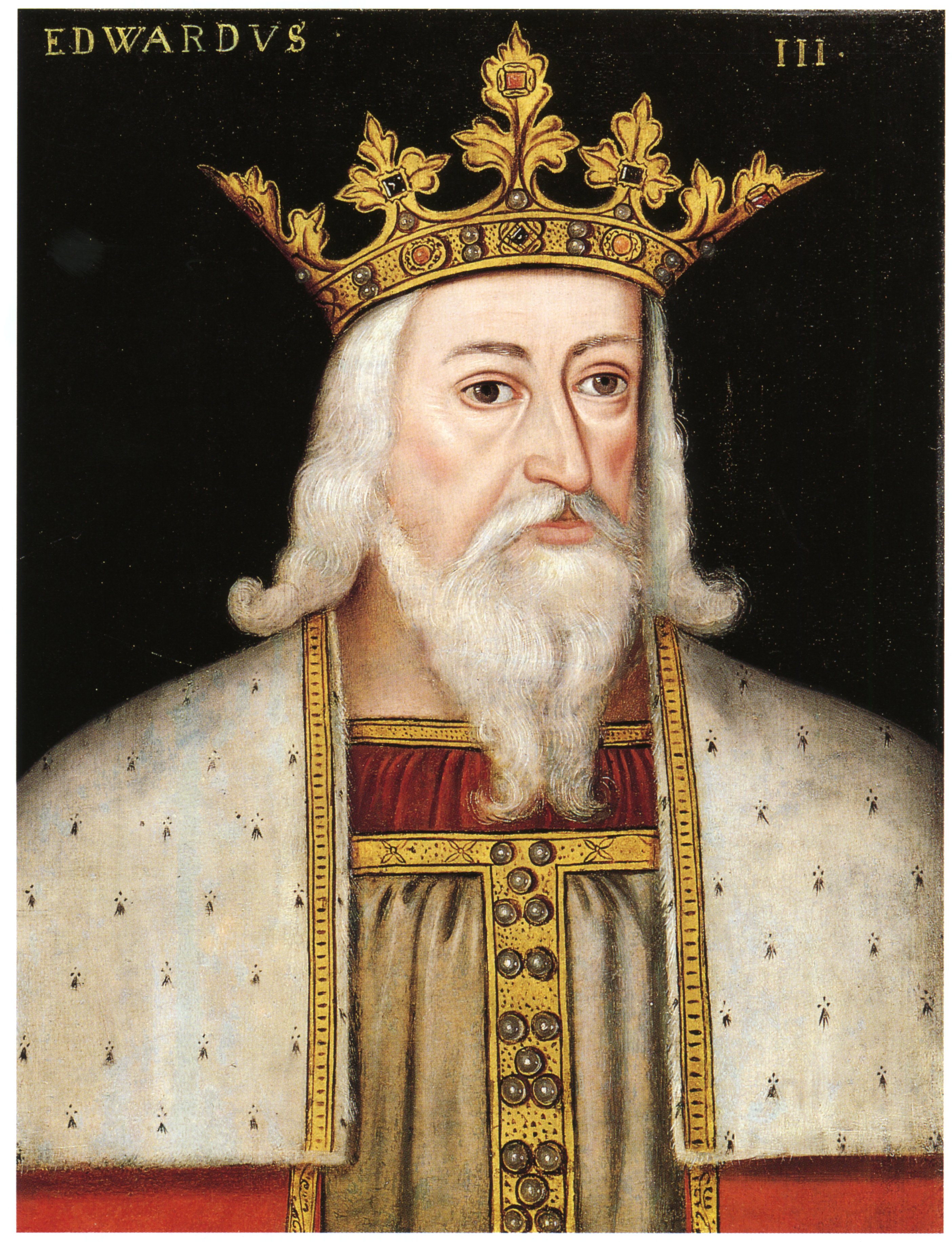
King_Edward_IIIA major battle of the war took place in 1346 at the town of Crecy in northern France.  It was a major victory for the English under King Edward III because of the English superiority with the long bow.  The aristocratic French knights considered themselves much too good to fight alongside commoners who were the best archers.

 “As long as combat was desirable as the source of honor and glory, the knight had no wish to share it with the commoner, even for the sake of success.”

 The first wave of the Bubonic plague hit Europe in 1348-49, killing a third of the population at that time.  So many workers died that wages actually rose.

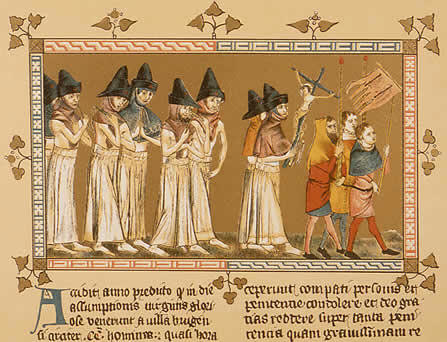
A Group of Flagellants

A Group of Flagellants

Along with the witchcraft and the anti-Semitism, a group called the Flagellants appeared after the first wave of the Plague.  They believe that the Plague is a judgment of God on sinful mankind.  As they walk through the countryside, men and women flog one another.  They preach that anyone doing this flogging for 33 days – one day for every year Christ lived – will be cleansed of all sin.

Thus ends the first half of the 14th century.  It only gets worse.

(to be continued)

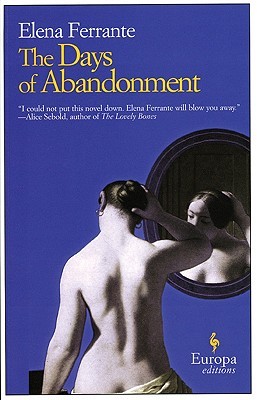
“The Days of Abandonment” by Elena Ferrante

“The Days of Abandonment” by Elena Ferrante (2002) – 188 pages

 “One day, right after lunch, my husband announced that he wanted to leave me.” – the first sentence of “The Days of Abandonment”

               .                 .

. .

It turns out he has found a new much younger woman who happens to be one of their ex-babysitters, thus he is leaving his wife and two children, ages eight and five-and-a-half.  Is ‘abandonment’ too strong a word, too over the top?

Olga, the woman here, is devastated.  Elena Ferrante as a writer is not afraid to deal with strong emotions.  This is not an uplifting novel about how things are not as bad as they seem.  Before the novel is over Olga descends into despair and almost loses it completely. Ferrante as a writer is not afraid to deal with hard unflattering feelings.

“The Days of Abandonment” is the novel that put Elena Ferrante on the map.  As you may be aware, “My Brilliant Friend” by Ferrante was my top read for last year, and now I went back to the well.  ‘Abandonment’ is another winner for me.

“Existence is this, I thought, a start of joy, a stab of pain, an intense pleasure, veins that pulse under the skin, there is no other truth to tell.”

One of Ferrante’s real strengths is that she can be matter-of-fact and honest about her characters’ strongest ugliest reactions.  Her abandoned female character has no stiff upper lip, no toning down of emotions.  Perhaps I’ve read too many fine-tuned even-tempered British novels and appreciate a writer who is willing to go blunt and operatic and let it all hang out.

One statistic I watch to measure a novel’s reception with the public is its waiting list at the Minneapolis Public Library system.  The waiting list even for novels which are originally tremendously popular dwindles down to nothing after a few years.  I checked the waiting list for “The Days of Abandonment” which now stands at 9, extremely good for a novel that is over ten years old.   Perhaps it gets a steady audience of women who find themselves in a similar situation.

Even though I’m a male I could identify strongly with Olga’s clueless-ness when dealing with practical mechanical devices.

“The Days of Abandonment” is not a pleasant read.  It is an unflinching depiction of a woman dealing with an extreme difficult predicament, with abandonment.  The novel does have its redemptive moments especially toward the end.

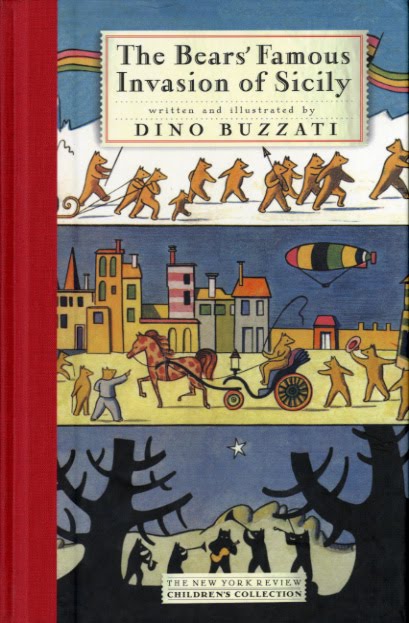
“The Bears’ Famous Invasion of Sicily” by Dino Buzzati

“The Bears’ Famous Invasion of Sicily” by Dino Buzzati (1947) – 143 pages

Bear1

“Sit still as mice on this occasion

And listen to the Bears’ Invasion

Of Sicily, a long, long while

Ago when beasts were good, men vile.”

Having read and enjoyed Dino Buzzati’s “Poem Strip” a while ago, this time I went to the New York Review Children’s Collection rather than their Classics Collection.  With the Buzzati drawings and a fun story, “The Bears Famous Invasion of Sicily” holds pleasures for adults as well as children.

One terrible winter, all the small plants in the mountains were frozen over with snow, and there was nothing left for the bears to eat.  King Leander decides to lead the bears down from the mountains to the plains where the humans live.

Buzzati is not above winking to the adults who are reading this book to children.  Consider the following.

 “King Leander.  He is the King of the Bears, the son of a King who in turn had a King as father.  He is therefore a bear of most ancient lineage.  He is tall, strong, valiant, virtuous, and intelligent too, though not as intelligent as all that.  We hope you will like him.”

 This story might not be right for real small children, since there is a fair amount of violence in the war between the bears and men; also later the bears and the men drink wine and gamble, all tastefully handled. Finally little children might not appreciate Buzzati’s sly humor as above.  I suppose the ideal audience would be children of the age of six or seven, maybe just before they are of an age for action movies.   On the other hand, if you are the type of parent who doesn’t want stories watered down for their kids, little kids might really love this story too.  The story makes clear that the bears aren’t perfect either, but King Leander is a good wise leader, a role model.

bear6Dino Buzzati also wrote novels for adults.  My next book of his I read will probably be the adult novel, “The Tartar Steppe” which was supposed to have been a major influence for J. M. Coetzee in writing “Waiting for the Barbarians”.  Dino Buzzati was one of those multi-talented people like Tove Jansson and Ruth Park who could draw and write children’s books as well as write adult novels.

Most of the story in “The Bears’ Famous Invasion of Sicily” is told in prose, but it occasionally breaks out in rhyme as the first lines above are an example.  Buzzati put everything he had into this book.

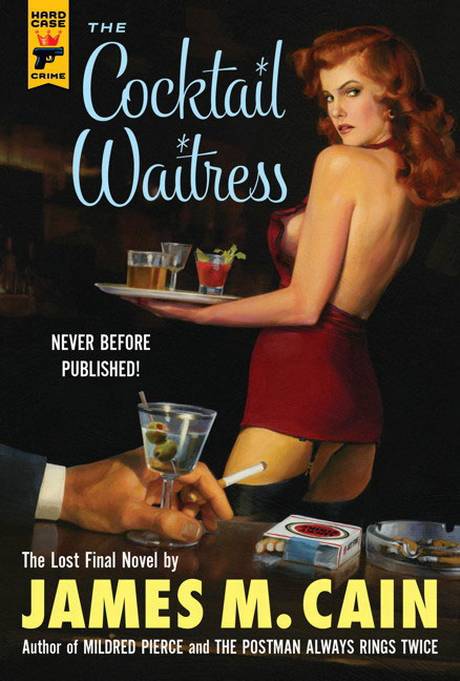
“The Cocktail Waitress” by James M. Cain

“The Cocktail Waitress” by James M. Cain (1977, 2013) – 254 pages

                     -

The attitudes in “The Cocktail Waitress” are so different from those of today that it almost seems like a story from a different century.  Well, it is from a different century, the depraved old twentieth century.  The time is the 1960s, and “The Cocktail Waitress” has that sleazy ambience of “Mad Men”, but even more sleazy.

The story begins with young Joan Medford burying her husband.  He abused her, and one night he came home drunk. She kicked him out of the house, him  wearing only his pajamas, and he crashed the car into a culvert.

Joan is a femme fatale, and she kind of knows it despite her innocent demeanor.  She has a kid, but she can’t keep him at her home, because she has to go out and earn a living all day.  Her ex-husband’s sister is all too willing to keep the child.

Joan takes a job as a cocktail waitress in a bar and restaurant, figuring the pay and tips would be good.  On the job she must wear a very short skirt, peasant blouse, and pantyhose.  Her fellow waitress Liz gives her some advice.

 “In the bar bare legs get kind of cold at one o’clock in the morning.  But if you’ll accept a suggestion from me, with what you’ve got to go inside the blouse, I’d leave the bra off.”

 “You sure about that?”

 “Well I do. It kind of helps with the tips.”

 Soon Liz becomes Joan’s best friend.  Liz makes extra money on the side off-hours from some of the male bar patrons.

Joan starts working at the bar serving drinks.  Two customers in particular pay her a lot of attention.  An old man, Mr. White, comes in and sits at the same table every afternoon, and Joan talks to him when she is not busy.  Soon Joan finds out that he is rich, and that his wife has died.  The other guy interested in Joan is young rake Tom Barclay   Tom would be “pawing me over whenever I came to the table, especially around the bottom which he patted a number of times.”  His bad behavior doesn’t stop Joan from becoming strangely attracted to him.

That is the setup.  If you want to know what develops, you can read it.

“The Cocktail Waitress” is the last novel that James M. Cain wrote.  The problem was not that he hadn’t finished it like many other writers’ last novels; the problem was that he had finished several versions with different endings when he died in 1977, so which to use?  Finally 36 years later, the novel gets published.  I believe “The Cocktail Waitress” is good enough to stand with Cain’s famous works “Double Indemnity”, “Mildred Pierce”, and “The Postman Always Rings Twice”.

Last night I watched “Mildred Pierce”, the old version with Joan Crawford.  Great movie.  “The Cocktail Waitress” is probably closest to “Mildred Pierce” of Cain’s works in that they are both about a woman who loses her husband and must fend for herself in the work world, whether by opening a chain of Mildred’s restaurants or by serving drinks in a bar.  Trouble ensues.

It stands to reason.  Women are people too and thus fully capable of planning and committing murder.