Archive for May, 2013

“A Constellation of Vital Phenomena” by Anthony Marra

“A Constellation of  Vital Phenomena” by Anthony Marra (2013) – 382 pages
Chechnya_and_Caucasus

A lot of writers make the following mistake.  When they depict characters in sad and desperate situations, these characters lose their personalities.  The people in the story become stilted and cheerless due to the pressure of events.  But even in the worst of circumstances, unless one is directly affected, his or her essential spirit will shine through.  “A Constellation of Vital Phenomena” is one of the more humorous novels I’ve read, yet there are few situations that are as wretched as that of Chechnya in the years portrayed in the novel, 1996-2004.  Humor, even black humor, is one of our basic coping mechanisms.
                    .

.

Who would have guessed that one of the finer novels released in the United States in recent years would be about the wars in Chechnya?  “A Constellation of Vital Phenomena” is a quite moving story; it will make the readers laugh through their tears.  The novel is about people living and dying in the brutal modern world.

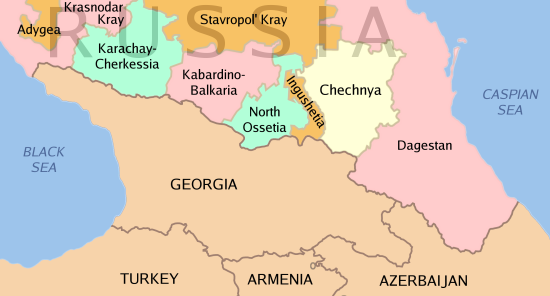
First here is a little background on Chechnya.  Chechnya is a fairly small landlocked country east of the Black Sea and west of the Caspian Sea.  Islam is the predominant religion in Chechnya.  Formerly there was a fairly significant Russian Orthodox population which has mainly left the country as a result of the wars.  When the Soviet Union disintegrated in the early 1990s, Chechens fought and won their independence from Russia in a war.  The country did quite well for a while, mainly due to the huge oil resources under their land.  However in October, 1999, Russia started the Second Chechen War to regain control of the country.

Much of the “A Constellation of Vital Phenomena” story takes place at a bombed-out hospital in the Chechen town of Volchansk.  The hospital used to have a staff of 500 but it now is down to a staff of three including Sonja who is the only doctor.  One whole side of the hospital is missing, bombed during the war.  Yet the hospital still gets quite a few patients due to all the land mines in the area.

The novel mentions Leo Tolstoy a few times.  Tolstoy wrote a novel, “Hadji Murad”, which takes place in Chechnya.  I would guess that Anthony Marra is going for the same emotional sweep in his writing as Tolstoy.

In a few scenes “Constellation” depicts the torture of Chechens by the Russians.  These scenes are so brutal you can well understand why civilized countries outlawed the use of torture to achieve their goals.

The novel certainly takes the pro-Chechen side in the war, although Wikipedia does show that both sides committed atrocities.  The novel does point out that some of the Muslims, especially those in the Wahhabi movement, wanted to turn the war against Russia into a holy war and really didn’t care about Chechen independence.

“A Constellation of Vital Phenomena” shifts the point of view between each of the seven main characters, and each of their stories is gripping emotionally. Each of the main characters must deal with their own situation, and the stories are fascinating.  I unsuccessfully tried to find out more about Anthony Marra’s background to figure out his profound interest in Chechnya.  I suspect that Leo Tolstoy would praise this novel.
“The Woman Upstairs” by Claire Messud

“The Woman Upstairs” by Claire Messud   (2013) – 253 pages

 “Who is he who always walks beside you?  No-fucking-body, thank you very much.  I walk alone.” 

woman-upstairs

Forty-two year old school teacher Nora Eldridge tells the story in “The Woman Upstairs”.  She teaches second grade at Appleton Elementary in Boston.  She lives in an apartment and has never been married.

 “We’re always upstairs…We’re the quiet woman at the end of the third floor hallway, whose trash is always tidy, who smiles brightly in the stairwell with a cheerful greeting, and who, from behind closed doors, never makes a sound.  In our lives of quiet desperation, the woman upstairs is who we are, with or without a goddamn tabby or a pesky lolloping Labrador, and not a soul registers we are furious.  We’re completely invisible.”

 A new school year starts, and one of the new students is a boy named Reza.  Nora meets Reza’s mother Sirena and his father Skandar.  Sirena is an artist, and soon Sirena and Nora together rent an artist studio in an old warehouse.  Nora sees this as a chance to pursue her art, something she hasn’t done since before college.  Meanwhile Sirena is a real artist who is quite famous in Paris and is preparing for her next Paris show.

I discovered Claire Messud early in her career with her first novel “When the World was Steady”.  That novel had a depth of insight into her characters’ inner lives that most writers do not approach.  Her next two books “The Last Life” and “The Hunters” also impressed me with their perceptiveness.  Her next novel “The Emperor’s Children” was her breakout novel.  That novel about New Yorkers before and after 9/11 made the best seller lists and was long listed for the Booker.

However to me it seemed that in “The Emperor’s Children” Messud went wide with a large number of characters so that it did not have the depth of her earlier novels.  In “The Woman Upstairs” Messud concentrates on only a few individuals and I actually prefer “The Woman Upstairs” over “The Emperor’s Children” for that reason.

Messud has found the drama in the life of this middle-aged schoolteacher Nora.  There is high drama in every human life, but sometimes it takes a writer of the intelligence and acuity of Claire Messud to discover and develop it.  It almost seems like Messud intentionally sets up these challenges to her writing ability by choosing characters whose lives are seemingly mundane. This time the challenge really paid off.

“The Woman Upstairs” will be considered a feminist novel, and that it surely is.  That doesn’t mean that men must bypass an exceptionally intelligent and interesting novel.

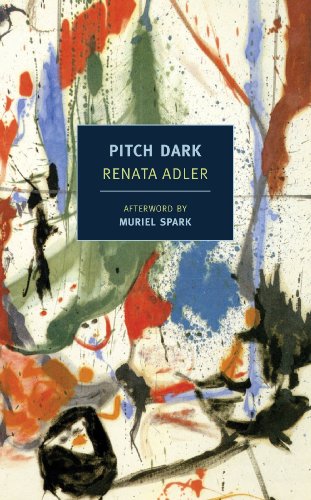
“Pitch Dark” by Renata Adler

“Pitch Dark” by Renata Adler  (1983) – 149 pages

1590176146_01_LZZZZZZZ

“We watched The Newlywed Game. The moderator had just asked the contestant, a young wife from Virginia, What is your husband’s least favorite rodent? “His least favorite rodent,” she replied, drawling serenely and without hesitation. “Oh, I think that would have to be the saxophone.”

If the above lines from “Pitch Dark” make perfect sense to you,  this novel may be for you.

When I saw that New York Review books (NYRB) was releasing both “Speedboat” and “Pitch Dark” by Renata Adler, I must admit I was surprised.  I read “Speedboat” back when it came out in 1976, and I was tremendously charmed by it like nearly every other reader was.  However “Pitch Dark” was a different story.  That novel had more than its share of negative or so-so reviews.   I decided not to read the novel then.  If the reviews had been at all good, I probably would have read it based on how much I liked “Speedboat”.

There was one significant positive review of “Pitch Dark” when it first came out in 1981.  That was the New York Times review written by Muriel Spark which is now the Afterword of the novel.  There are few people whose opinion on a novel I would trust more than Spark, but that rule did not hold true in this case.

Most of the recent reviews have reviewed both of the books together and have been extremely favorable toward both books  and have the tone of being valedictory toward Adler.

Having a strong positive view of the books NYRB publishes, I finally read “Pitch Dark” now.  The ‘plot’ of the novel or what there is of it is about Kate Ennis who is on the verge of a nervous breakdown because she is breaking up with her married lover Jake.  This seems to be the main theme of Chapter 1, but Jake is dropped and never mentioned in Chapter 2 when Kate takes a car trip through Ireland.  There she has a fender-bender with a big truck, and she is enormously paranoid that all the Irish are out to screw the insurance company.  She says some really awful mean things about the Irish which I won’t repeat here.   Kate, like Renata Adler, is extremely blunt.   Kate is deeply disturbed throughout her Irish trip.   Chapter 3 is sort of like Chapter 1, but even less coherent and penetrable.

The entire novel is introspective and is essentially an interior monologue.  I found  “Pitch Dark” to be extremely murky and disjointed.  It was not a pleasant or meaningful read for me on any level.   There were a few scenes that held my interest but nothing tying them together.   There are no memorable characters in the novel besides Kate Ennis herself.   After reading some of Adler’s own review criticism, I feel more comfortable with my own negative words on “Pitch Dark”.   After all, Adler said the following about the movie ‘Green Beret’ starring John Wayne – “so unspeakable, so stupid, so rotten and false in every detail.”  I probably would agree with her on ‘Green Beret’ but maybe not with those words.    Of the writings of Pauline Kael, Adler wrote that it was, “piece by piece, line by line, and without interruption, worthless. “

“Pitch Dark” was Renata Adler’s last novel.  Since 1981 she has written solely non-fiction.

By all means read the delightful “Speedboat”, but to quote Adler’s own words from another movie review, ‘I think you ought to skip’ “Pitch Dark”.

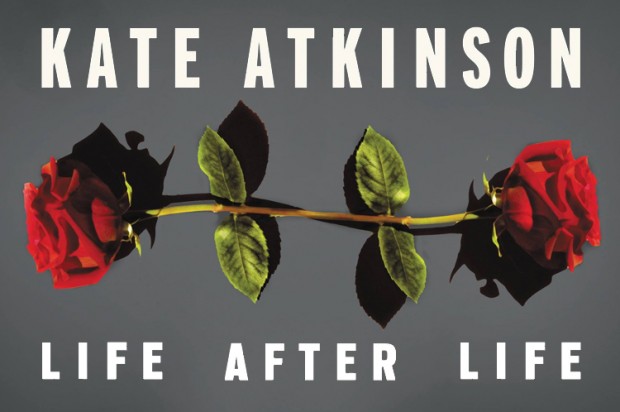
“Life After Life” by Kate Atkinson

“Life After Life” by Kate Atkinson (2013)  544 pages

life_after_life-620x412

Here is how “Life After Life” begins.

It is February 11, 1910, and a baby, a girl, is being born at home to the Todd family at Fox Corner near Beaconsfield in England.  The birth goes terribly wrong, because the umbilical cord is twisted around the baby’s neck, and the baby dies.

This would be a very short novel, except our story starts again.

It is February 11, 1910, and a baby, a girl, is being born to the Todd family at Fox Corner.  The umbilical cord is twisted around the baby’s neck.  This time old family doctor, Dr. Fellows, arrives in time to cut the cord, and the baby girl, Ursula, lives on to have more adventures.

So it goes.  “Life After Life” makes us think of all the perilous misadventures that might have occurred and severely affected us or even ended our lives.

A few years ago my family and I took our regular trip up to my parents’ place, and somehow the talk turned to my own birth.  At the dinner table my mother mentioned that I had been born several weeks premature.  She talked about this as though it explained quite a lot about me.  Up until then I had not known about this at all.  I’m still trying to come to terms with this basic fact.

“Life After Life” has the imaginative plot where if our hero Ursula Todd or one of her closest relatives or friends meets a bad end, we can rewind the story and start again.  But this is far from science fiction.  The method used in “Life After Life” may be quite innovative, but it is used for the most traditional of purposes, to create an affectionate portrait of an English family.  Even if you are not from England, this novel will make you feel nostalgic for English family life between the Wars.

The Todds are loving and loveable, strong and spunky, spunky enough to win World War II despite the heavy bombardment.  There is stoic father Hugh, prim mother Sylvie, practical sister Pamela, obnoxious big brother Maurice, adorable quiet brother Teddy, and bumptious baby brother Jimmy. Finally there is of course plucky Ursula Todd who as an adult somehow manages to be both on an English civil defense team rescuing townspeople from bombings and also visiting in Germany to meet Hitler and his girlfriend Eva Braun.  Only Aunt Izzy is a free spirit, and plenty of scorn is heaped on her except for one time when she comes through dramatically for Ursula.

Kate Atkinson is a strong and steady writer.  I discovered her on her first novel “Behind the Scenes at the Museum”, and since then have always been on the lookout for her novels.  She also writes detective novels about former detective Jackson Brodie.  I expect that “Life After Life” will be a strong contender for the Booker prize this year.

As a sidelight, there is an unexpected mention in “Life After Life” of ‘Casaubon’ that made it seem for me that all the endless hours I’ve spent reading novels were worthwhile.

“Life After Life” is of course a tour de force and a crowd pleaser, and if you haven’t already read a dozen other English novels about spunky English families, you will like “Life After Life” even more than I did.

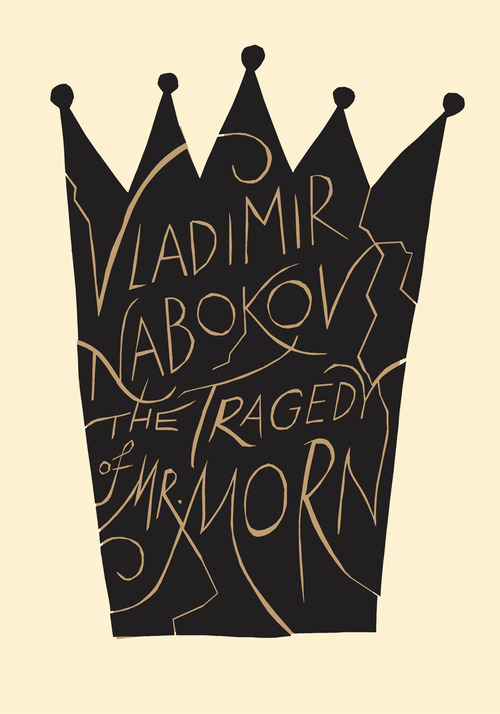
“The Tragedy of Mr. Morn”, A Play by Vladimir Nabokov

“The Tragedy of Mr. Morn”, A Play by Vladimir Nabokov (1924) – 144 pages   Translated by Anastasia Tolstoy and Thomas Karshan

tumblr_mlgp0q05gS1qbxxuao1_500

I have been a fan of Vladimir Nabokov for a long time and consider him one of the great novelists of the twentieth century.  My favorites of his work have always been the literary send-up “Pale Fire” and the college novel “Pnin”.  Both of these novels are uproariously funny, and the individual sentences within each novel are nearly perfect.   I’ve also read and enjoyed several of his other works, both those he wrote in Russian and those he wrote in English.  For me “Lolita” is a less entertaining work, because the obsessive situation in the novel is inherently not comedic.

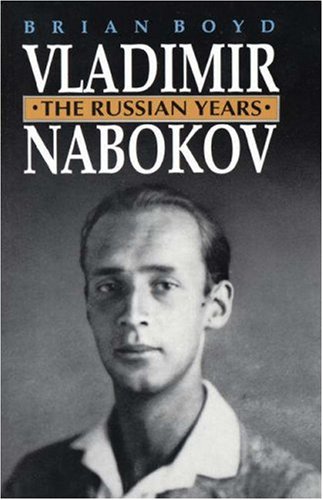
“The Tragedy of Mr. Morn” is a play that Nabokov wrote when he was just 24 years old in 1924.  Nabokov and his family were living in Germany after having escaped the Bolshevik revolution in Russia.  Nabokov’s father had been an official of the liberal progressive government of Alexander Kerensky which had originally ruled Russia after the Tsar abdicated in February, 1917, but was overthrown by the Communist Bolsheviks in October, 1917.   This is another example of a revolution eating its own people.  Later in 1922 Nabokov’s father was murdered in Germany by a Russian monarchist assassin.  After these events Nabokov had a deep distrust of revolutionaries which is quit evident in this play.

“The Tragedy of Mr. Morn” is a lively busy play with several colorful characters, both male and female.  Although I’ve considered Vladimir Nabokov a great Russian novelist, I never saw the connection between him and all the great Russian novelists of the 19th and early 20th centuries. His writing always seemed far removed from Tolstoy, Dostoyevsky, Chekhov, Bely, Turgenev, Gogol, etc. This play is the missing link.  The play is deeply Russian beginning with a large dance ball in a Russian villa, then an illicit love affair, proceeding to a duel.  What could be more Russian?  Later we even have a fortune teller reading of a card from the deck which could have sprung directly from Alexander Pushkin.

Even more than Pushkin, William Shakespeare was the guiding force behind this play.  Before writing the play, Nabokov spent a couple of years at Cambridge in England, and he must have immersed himself in Shakespeare. Nabokov got the very movement and spirit of the play from Shakespeare.  The play is written in iambic pentameter, the same rhythmic pattern as Shakespeare’s dramas.  Just as in Shakespeare, there is high drama and low comedy in the interaction of the many characters within the play    I would like to see this play staged in a theater here in the United States today.  It has the theatrical qualities to be a success today.

Young_Nabokov I’ve always had one theory about Vladimir Nabokov which frankly may not have any validity whatsoever.  Nabokov’s works written directly in English have always appealed to me more than the ones that have been translated from the Russian.  This might be explained by his maturing as a novelist, but I have a different theory.  Nabokov always assigned his son Dmitri Nabokov to translate each of his Russian books.  I’ve always suspected that Dmitri may not have been the best translator for these works.  “The Tragedy of Mr. Morn” was not translated by Dmitri.  It has an energy and liveliness that is missing from some of the other Russian works in translation.  I would really like to see a new translator start from scratch with one of Nabokov’s Russian novels.  The results could be very interesting.

“A Map of Tulsa” by Benjamin Lytal

“A Map of Tulsa” by Benjamin Lytal  (2013) – 256 pages

Cover_MapofTulsa_r

Once in a while a novel comes along which is highly lauded by the critics yet falls totally flat for me.  “A Map of Tulsa” by Benjamin Lytal was that kind of novel.

“And when it rose, the morning sun smelled like acorns and dirty jeans.” 

What?!? This must be the first time in recorded history anyone has ever smelled the sun.  Even the language of this novel struck me as pretentious and off-putting, but most of all clumsy.  However to be fair, if you do like the above sentence, you will probably like “A Map of Tulsa”.

The story here wants to be a quirky romance.  However neither of the two main characters, Jim nor Adrienne, is particularly interesting or appealing.  Adrienne is the far-out kooky gal leading our rather straight Jim astray.   As an aspiring poet, Jim wants a more artistic existence.  He is spending the summer in his hometown of Tulsa after returning from his Eastern college.  The year is about 2004; you could call the story ‘the passion of the Millennials’.

The city of Tulsa must also be considered a main character in this novel.    The author fills us in on some of the Big Oil history of Tulsa and waxes poetic about the city.  However most of the scenes in the city are of our couple on the top of  big skyscrapers looking down on the urban landscape or of our couple walking on the deserted streets around the empty office buildings at night.  There are no scenes of Tulsa that project any warmth or color.

“At their roots, the skyscrapers are dumb.”

 For once I agree with the author.

It has been a long time since I’ve encountered dialogue as wooden and stilted as that in “A Map of Tulsa”.  The awkward wording throughout the novel is perhaps the main reason the scenes and the characters come across as murky.

After reading all the enthusiastic reviews of “The Map of Tulsa”, I keep thinking there must be something that I missed.  However I can’t figure out what it is.

Six Reasons to Not Like “The Waste Land” by T. S. Eliot

“The poem is—in spite of its lack of structural unity—simply one triumph after another . . .” – Edmund Wilson on “The Waste  Land”

 “A pompous parade of erudition” – Louis Untermeyer on “The Waste Land”

Waste-Land-Eliot

A lot of ‘authorities’ on poetry consider “The Waste Land” perhaps the greatest modernist poem.  However it is very easy to dislike this poem.  I ought to know, because I’ve just listened to it six times.

1.  “April is the cruelest month”.  Just as the poem begins to make some semblance of sense, Eliot drives us off the trail of understanding by throwing in un-translated lines in a variety of foreign languages.

                          Frisch weht der Wind

                          Der Heimat zu

                          Mine Irisch kind,

                          Wo weilest du.                          (German)


                          Et O ces voix d’enfants, chantant,dans le coupole   (French)


                          Poi s’ascose nel foco che gli affina

                          Quando fiam uti chelidon – O swallow swallow

                          Le Prince d’Aquitaine a la tour abolie              (Italian)  


                          Shantih shantih shantih                  (Sanskrit)

2. As if the un-translated lines weren’t confusing enough, Eliot then tosses in some lines of pure nonsense gibberish to really throw us off.

                    Twit twit twit

                     Jug jug jug jug jug jug

                     So rudely forc’d

                     Tereu                                               (Nonsense)


                     Weialala leia

                     Wallala leialala                          (Nonsense)

3.  Even if after all the un-translated and nonsensical lines, you think you might still salvage some meaning from “The Waste Land”, forget about it. Now Eliot bombards us with obscure erudite allusions to mythical and real figures of the past.  Here are some of the figures he expects us to have a nodding acquaintance with: Philomel, Tiresias, Coriolanus, and, of course, the Fisher King.

4.  Supposedly Eliot was reading “Ulysses” by James Joyce while writing “The Waste Land”.  In fact it is from Joyce that Eliot picked up his indecipherable fragmented style.  James Joyce is also where Eliot picked up that ridiculous dialogue in the poem between a man and a woman who appear to be Irish or English bar patrons.  Thus among all the learned references, we have these two dummies talking who  wouldn’t know their Coriolanus from a hole in the ground.  At least these lines I could figure out.

 “He’ll want to know what you done with that money he gave you

To get yourself some teeth. He did, I was there.

You have them all out Lil, and get a nice set,

He said, I can’t bear to look at you.

And no more can’t I, I said, and think of poor Albert,

He been in the army four years, he wants a good time,

And if you don’t give it to him, there’s others will, I said.”    

5.  If you translated all the foreign phrases, made sense of all the nonsense lines, and fully understood all the literary allusions, you would still be stuck with the dismal theme of the poem, that the modern world and modern life is a waste land.   “The Waste Land” is T. S. Eliot’s response to the spiritual collapse of his era. In fact, the better you understood the poem, the bleaker your world view would be.

6.  In one of the more brilliant(?) analyses of the poem, Conrad Aiken, a friend of T. S. Eliot, considered the incoherence of “The Waste Land” a virtue because its subject was incoherence.  Of what other poems can this be said?

After listening to the poem six times, I finally did come to some sort of terms with “The Waste Land”  I decided to not even consider whatever Eliot was trying to get at.  Instead I would just listen to the sound of the fragments.  The poem does sound great; and it is in the sound of the words and phrases where T. S. Eliot excels.