“HHhH” by Laurent Binet (2010) – 327 pages Translated by Sam Taylor
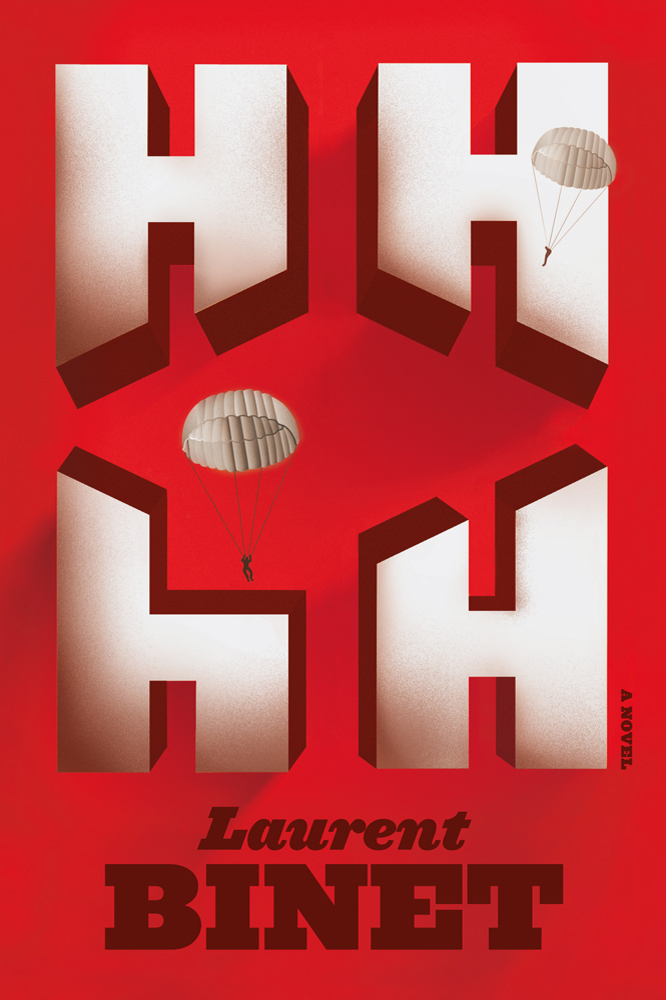
“HHhH” is the inspiring true story of two brave heroes, Jozef Gabčík and Jan Kubiš. It is also the story of Reinhardt Heydrich, Adolf Hitler’s golden boy, who was called the “Butcher of Prague” and was instrumental in Hitler’s evil plans for Kristallnacht and the Final Solution.
“HHhH” has already won the 2010 Prix de Goncourt and has now been wonderfully translated from French into English by Sam Taylor. I wish to thank Kim at Reading Matters for highlighting “HHhH” for the month of May, because “HHhH” is an outstanding historical fiction novel that demonstrates how it can be done in the future.
The tone of “HHhH” is informal, relaxed, and conversational. The narrator who is writing “HHhH” frequently mentions his conversations about the book with his girlfriend Natacha, and he mentions other novels and movies which deal with the same subject matter he is dealing with. Throughout “HHhH”, Laurent Binet questions the conventions of historical fiction. In most cases in actual history we don’t know what the people really said. So should the writer make up dialogue?
“There is nothing more artificial in a historical narrative than this kind of dialogue – reconstructed from more or less firsthand accounts with the idea of breathing life into the dead pages of history…..When an author tries to bring a conversation back to life this way, the result is often contrived and the effect the opposite of that desired: you see too clearly the strings controlling the puppets, you hear too distinctly the author’s voice in the mouths of these historical figures.”
Even if your knowledge of an incident is extensive, can you, the author, add tiny details to enhance the story?
” I know pretty much everything that can be known about this flight and I refuse to write a sentence like “Automatically they checked the release boxes and static lines of their parachute harnesses.” Even if without a doubt they did exactly that.”
 Some might think these authorial intrusions would distract from the story, but for me they added a certain veracity and charm to the telling. I needed no extra incentives to appreciate this history, because I would have loved this true story under any conditions. Still I appreciated the very modern approach which only accentuated how brave our two heroes were. Laurent Binet is an extremely talented writer, and “HHhH” is his first novel. I highly recommend “HHhH”
 Tony's Book World
Posted by Amritorupa Kanjilal on May 21, 2012 at 5:48 AM
I think I would enjoy the author intrusions too, they prevent a historical book from getting monotonous.
But why is it called HHhH?
LikeLike
Posted by anokatony on May 21, 2012 at 12:15 PM
Hi Amrito,
That is a fair question. “HHhH” are the abreviations for a German expression which means “Heydrich is Himmler’s brain”. I was debating if I should put that in the article or not.
LikeLike
Posted by Biblibio on May 29, 2012 at 1:55 PM
I have too difficult a time with the blurred fact-fiction line. Interesting as the premise behind the book may be, I’m not sure how the fictional/historical side would work for me. Even what you’re describing as the relaxed, conversational aspect seems… strange, somehow. I don’t know…
LikeLike
Posted by anokatony on May 30, 2012 at 1:37 AM
Hi Biblibio,
“HHhH” won the Prix Goncourt which is given to “the best and most imaginative prose work of the year”. Even though “HHhH” sticks closely to the history, it still is considered a work of fiction. I suppose it helped for me that I was unfamiliar with the story. These guys gave Hitler a real slap in the face in 1942. After that, no Nazi leader could feel safe traveling anywhere.
As for the relaxed tone, I think the author’s goal was to build up the heroic aspect of these guys, and he succeeds in that goal.
LikeLike