Archive for May, 2011

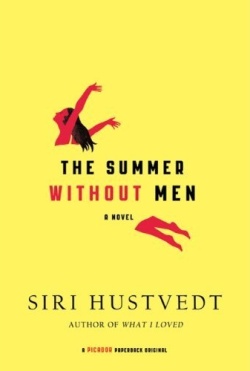
“The Summer Without Men” by Siri Hustvedt

“The Summer Without Men” by Siri Hustvedt (2011) – 182 pages

    “And who among us would deny Jane Austen her happy endings or insist that Cary Grant and Irene Dunne should not get back together at the end of ‘The Awful Truth’? There are tragedies and comedies, aren’t there? And they are more often the same than different, rather like men and women, if you ask me. A comedy depends on stopping the story at exactly the right moment.”
I remember reading with much excitement the first novel by Siri Hustvedt. The novel was called “The Blindfold”, It was edgy, intelligent, and not housewife-y at all. Here was an intense new United States writer to follow.

Over the years , I’ve continued to read her novels. The novels have been somewhat hit and miss with “The Blindfold” still being my favorite and “What I Loved” being a close second.

At the beginning of “The Summer Without Men”, Mia Fredrickson’s husband asks for “a Pause” in their marriage so he can pursue a relationship with a younger female colleague. Mia then has a nervous breakdown which is diagnosed as a Brief Psychotic Disorder. Mia is in her early fifties and has a grown daughter pursuing an acting career in another city. After the worst, Mia decides to return to her Minnesota hometown where she grew up and where her mother is still living in an old people’s home. This is a time of recuperation for Mia. While Mia is staying in town, she meets the group of old women, ‘The Five Swans”, who are the friends of her mother. Mia also teaches a poetry class to a group of 7 twelve and thirteen year old girls which Mia dubs “The Coven”.

One of the problems with “The Summer Without Men” for me was all these peripheral characters. Certain writers such as Muriel Spark in “The Prime of Miss Jean Brodie” or “The Girls of Slender Means” and Angela Huth in “The Land Girls” can quickly sketch endearing traits or quirks for a large cast of walk-on characters, making each one memorable. However Siri Hustvedt seems to lose interest in sketching these groups of peripheral characters after describing just one character. These side characters are under-developed and of scant interest to the reader. I think Siri Hustvedt is best when she sticks to a very small number of characters in which she is intensely interested. This worked very well for her in “What I Loved” where the entire focus was on four people, two couples.

One thing that Siri Hustvedt does well that not many United States writers are good at is putting a story in the context of interesting minds of other people such as Emily Dickinson or Ezra Pound or Sigmund Freud. The absence of this kind of framework from other United States writers makes you wonder if they are even familiar with other people’s work. In Hustvedt’s work these ideas are just part of the conversation with you the reader, not at all tacked on.

Although the novel is quite good in places, overall “The Summer Without Me4n” did not completely work for me. It did not have the intensity of some of her other novels, probably because there were just too many characters, too many characters that Hustvedt wasn’t all that interested in. Siri Hustvedt is much better at the intensely focused psychological novel rather than the wide panorama.
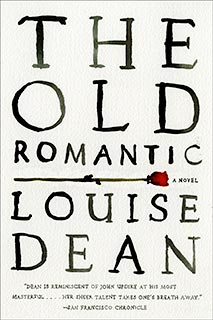

“The Old Romantic” by Louise Dean

“The Old Romantic” by Louise Dean (2011) –  338 pages

    “You never imagine your husband will get a thing for an embalmer and an outsize one at that – that’s one thing you don’t imagine.”

 As you can tell from the above quote, “The Old Romantic” is darkly comic in attitude.  It is the story of the Goodyew family which consists of grandpa Ken, his girlfriend June, his son Nick who has a girl friend named Astrid, his other son Dave, and Ken’s ex-wife Pearl.

 Reading  “The Old Romantic” is a wicked joy.  There may be one or two novels this year as good as “The Old Romantic”, but I can’t imagine one that will be better. Here is a chance for the Booker to honor Louise Dean while she is at her best.

 Every sentence of “The Old Romantic” expresses an attitude, and that attitude is sustained for the entire novel,   I am going to quote several lines from this novel, because I admire the way Louise Dean writes, and the more I quote, the more likely you will read and enjoy this novel.  At the beginning the Goodyew family individuals, especially grandpa Ken, are portrayed as outlandish and ridiculous. As the novel progresses, you begin to see the strong resemblance between the members of Ken’s family and the members of your own family.  Could it be that when you look at the individuals in your own family with open eyes, they are quite ridiculous too?  As it turns out, these Goodyews have their surprising winning sides too.          

    ’I can see now that I could be accused of being rather callow.’ He looked at her. “Do you know what I mean?’

    ‘Yes she said through gritted teeth. I know what fucking callow means. I wish you would stop using your words like you get a triple-letter score every time.’

 Did I mention that Louise Dean writes about the meanest and sharpest dialogue of anyone around?   Any writer would give their first born to have her ear for dialogue. 

 The following sentence in the novel struck me as brilliant, but I’m not sure how you will react to it.
 

    “She dispensed with the cleaning lady and thereby scuppered that woman’s plan for a breast enlargement.”

 For me, that sentence says a lot about our times.  Also Louise Dean should get the award for best use of the word ‘scuppered’ in a work of fiction along with the many other prizes she should receive for “The Old Romantic”.

 It’s always a pleasure to discover a major talent.  Louise Dean is one of those writers that someone will read many years from now, and will wonder why she didn’t get even more recognition while she was still writing.  She is tremendously talented, and the writing in “The Old Romantic” is so sparkling, I would guess she had as much fun writing this book as we have reading it.  “The Old Romantic” is a novel you read with a perpetual grin.

United States Fiction vs British Isles Fiction and “Swim Back to Me” by Ann Packer

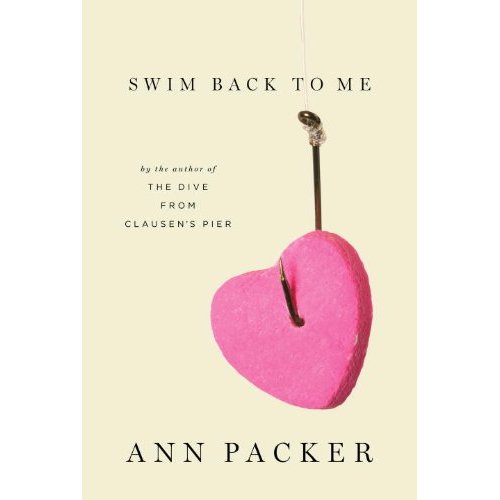
“Swim Back to Me” by Ann Packer – Stories  (2011)

 Fiction is much more valued in the British Isles than it is in the United States   I’m using the term ‘British Isles’ geographically, to mean all the countries in that group of islands including Ireland. 

 In the British Isles, fiction is thriving. Reading groups and a large number of reading blogs flourish.  Speculation as to which author and book is going to win each of the major literary prizes including the Booker, the Orange, and the IMPAC is a major sport.       The demand for high quality fiction in the British Isles has led to a substantial number of authors who work to develop their own delightful unique style, their own voice, in order to supply this demand.

 Contrast this with the situation of fiction in the United States.  In the United States there is not much interest in literary fiction among the general public at all.  The various book prizes come and go, and only a few of us pay any attention to them.  A lot of books of fiction are sold in the United States, but these are mainly “bestsellers” which make no pretense to literary style whatsoever.  Among most of the authors in the United States, the goal is to sell a lot of books, not to create a work of art with its own distinctive style.  The literary is distrusted in the Unites States, and the public only puts up with the most simple and direct fiction writing that doesn’t call attention to itself.

 All of which brings me to today’s book, “Swim Back to Me” by Ann Packer. “Swim Back to Me” is a collection of two novellas and four stories which take place in the academic community around the Stanford area of northern California.  Each of the novellas and stories is about a major problem within a family or between families. I won’t go into the individual story plot lines, but will say that all of the stories genuinely held my interest. 

Ann Packer writes each of these stories in simple and direct prose.  She carefully relates all the details so the reader fully understands what is at stake in each story, and her style does not interfere or distract the reader from feeling empathy for the characters in the story.  I remember reading some of John Updike’s novels about family situations, and I would be struck by the style and perfection of a particular sentence, but the admiration of that sentence would distract me from the empathy that I was supposed to be developing for the characters.  John Updike, although from the United States, had developed a distinctive literary style.  In these Updike novels, his literary art actually got in the way of the story.  Sometimes to be artless is the better policy, especially when you want your readers to identify with your characters. That is why Ann Packer’s simple and direct style works well for these stories.  .

I should mention that John Updike did write some stories, the Maple stories. that do have the immediacy of “Swim Back to Me”.  It was only in a couple of the novels that the ‘artful’ problem occurred.

Ann Packer’s stories are not completely artless.  One technique that Packer uses effectively is the abrupt ending.  I would be immersed in the story, and suddenly it would end.  The story quits in an unexpected place, no summarizing, no looking back on what has occurred.  Most of the stories occur in the immediate here and now, even if the events occurred 3o years ago as does “Walk for Mankind”.  What I mean is that the story does not have any nostalgic tinge or any sense of looking back to an older time.  Instead the story unfolds as if it were happening right now.  One of the positive qualities of “Swim Back to Me” is its immediacy.

As I said before, here in  the United States simple and direct is the preferred style of writing.  The people here for the most part like their fiction plain and clear without literary devices getting in the way.  Here it is difficult to tell one author’s style from another’s. 

The bottom line.  The stories in “Swim Back to Me” are fine examples of United States stories.  However I’ve read so many British Isles novels and stories which have a strong distinctive style and voice, and I’ve come to prefer these.  The writing voices of such writers as Louise Dean, M. J. Hyland, and A. L. Kennedy are so unique and individual, they transport you into their own singular world.  You feel at least as much empathy for the characters in these women’s novels and stories as you do in those simple and direct United States stories,  but the unique voice and style these women put into every sentence  makes their fiction  superior to the United States kind.

“Daniel Deronda” by George Eliot

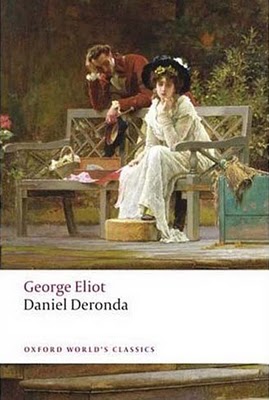
“Daniel Deronda” by George Eliot (1876) – 737 pages

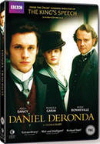
 “Daniel Deronda” has been at or near the top of my list of classical novels I’ve wanted to read ever since I read “Middlemarch” back in the late Nineties. “Middlemarch” was one of the finest novels I’ve ever read. So when I discovered that“Daniel Deronda” was available in audio book form, I went for it. I downloaded all 30 hours of Daniel Deronda on to my MP3 player and listened to it during my long commutes to and from work.

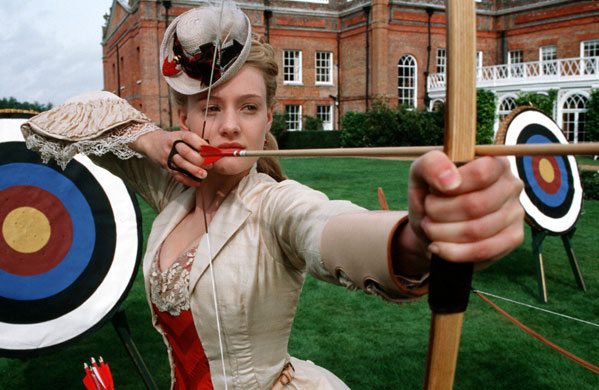
From the BBC Daniel Deronda Mini-Series

I must say that listening to the novel in the car was a very pleasant experience. The novel is filled with characters and events like the rest of George Eliot’s work. You get a good sense of middle nineteenth century provincial English life, both those fortunate enough to be titled as well as all of the commoners. Scenes and characters in “Daniel Deronda are sharply delineated; I had no problem following the story, and I stopped listening each car trip wondering what was going to happen next in the novel.

 Before discussing “Daniel Deronda” further, I want to relate my history of reading George Eliot novels. The first novel I read probably more than thirty years ago was “Silas Marner”. For some reason, I found this story of an old man and the little girl he rescued from the snow rather melodramatic and fulsome at the time. I avoided further George Eliot novels for a number of years. Then in the mid-Nineties I crept back. I read “The Mill on the Floss” and enjoyed it immensely; then I read “Adam Bede” and that novel also seemed excellent to me. Then I read “Middlemarch”. After “Middlemarch”, George Eliot became one of my two favorite writers, up there with Patrick White. The only George Eliot work I read between “Middlemarch” and “Daniel Deronda” was one of the stories in “Scenes of Clerical Life”, ‘Janet’s Repentance’ which did seem rather melodramatic to me.

“Daniel Deronda” has some similarities to “Middlemarch”. They both have an unhappy marriage as a main story line. No writer is better than George Eliot in describing an unhappy marriage from the woman’s point of view. If Jane Austen is the novelist of the courtships, George Eliot is the novel of the subsequent unhappy marriages. In “Middlemarch”, who can forget the cold Casaubon and his treatment of Dorothea Brooke? In “Daniel Deronda” the villain is the aristocratic cold fish Lord Grandcourt. Here is another unforgettable portrait of a bad husband.

Just as in “Middlemarch”, there are multiple story lines in “Daniel Deronda” to hold the reader’s interest.

I must say that “Daniel Deronda” does not quite soar to the high level of “Middlemarch” as a novel, at least in my estimation. There are a couple of reasons for this. The heroine of “Middlemarch “, Dorothea Brooke, has formidable intelligence, and she is almost a stand-in for George Eliot herself in her eloquence. The main heroine of “Daniel Deronda”, Gwendolen Harleth, in comparison is more the high-spirited airhead.

The second reason “Daniel Deronda” is not quite as good as “Middlemarch” has to do with its theme. The theme of “Daniel Deronda” is Semitism and British anti-Semitism. This is an admirable theme. However the main Jewish characters in the novel are just too good to be true. One can understand George Eliot’s reasons for depicting these characters in such a positive light, but some of the scenes in the novel become reminiscent of a “Movie of the Week” where a problem is highlighted, and the victims of the problem are depicted in an all too noble light. Except for these two or three characters, George Eliot had no problem seeing the bad side of her characters as well as their good side. The bad side only makes them more human.

 My evaluation would be that if you’ve read “Middlemarch” and really liked it, read “Daniel Deronda”. You will most likely enjoy “Daniel Deronda”.   However, by all means read “Middlemarch” first.  For me, my next George Eliot novel will probably be a re-read of Silas Marner to find out what I missed the first time.

Excellent Novels about Writers and the Writing Life

One would think that there would be many, many novels about writers and writing. The advice to writers is always to write about what you know, and what does a writer know better than writing? However there are not many of these novels. These self-referential novels are favorites of mine if they are well done, not over-cooked. The below list are novels about writers and writing that I have found outstanding.

If you have your own favorites of novels about writers, the writing life, or literature, I’d sure like to hear about them.

“Possession” by A. S. Byatt (1990) – “Possession” took over the world about twenty years ago, dragging A. S Byatt out of semi-obscurity. This novel is about two modern-day academics researching two Victorian poets. It is made up of poetry, journal entries, and letters, juxtaposing the Victorian with the modern. This material sounds unpromising but is entirely compelling and captivating. I don’t believe any novel since “Possession” has had its impact.

“Flaubert’s Parrot” – Julian Barnes (1984) – a retired doctor goes to France to track down Gustave Flaubert’s stuffed parrot. Along the way, we find out all things Flaubert. This is a strong homage to this French writer.

“Pale Fire” by Vladimir Nabokov (1962) – John Shade’s 999-line poem with Charles Kinbote’s commentary. This is Nabokov’s comedic masterpiece; those who think it is “Lolita” are only fooling themselves. “Pale Fire” is one of the most humorous novels ever.

“Loitering with Intent” by Muriel Spark (1981) – This is the story of a struggling novelist who in order to get source material for her fiction gets a job working with the “Autobiographical Association”, an organization dedicated to helping people write their memoirs. Are the sleazy words “Loitering with Intent” a good description of the act of writing?

“Gertrude and Claudius” by John Updike (2000) This novel is a prequel to Hamlet. It tells the story of Gertrude and Claudius frolicking in the forest behind old father Hamlet’s back. Of all John Updike’s novels, this is my favorite.

“Wonder Boys” by Michael Chabon (1995) – Novelist Grady Tripp is trying to write a follow-up to his award winning novel; so far he has 2611 pages. This playful novel is great fun to read with many wacky scenes as well as insights into a writer’s life.

“The Wicked Pavillion” by Dawn Powell (1946) – Many of the aspiring writers in New York City hang out at the Café Julien where they drink too much and fall in and out of love. This is a wickedly funny satire. There is even a character in “The Wicked Pavilion” who is a thinly disguised Ernest Hemingway. This is one of Dawn Powell’s best. At one party one of the partygoers says, “There are some people here who have been dead twenty years.”

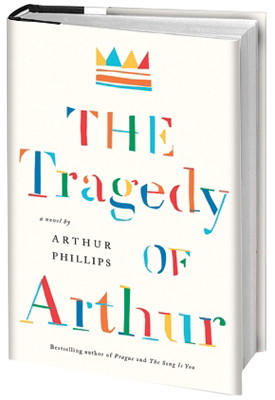
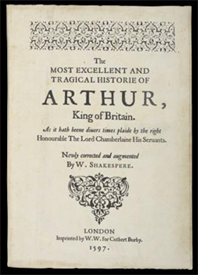
“The Tragedy of Arthur” by Arthur Phillips (2011) – Whose play is this anyway? A previously unknown play, “The Tragedy of Arthur” by William Shakespeare?, turns up in Minneapolis of all places. This is a shaggy dog story told in grand fashion.

“Nazi Literature in the Americas” by Roberto Bolano (1996) – a made-up compendium of Nazi writers in the Americas with short entries for each writer. These invented biographies are sometimes hilarious and sometimes mawkish and always interesting. This is unlike any other novel you’ve read.

“The Ghost Writer” by Phillip Roth (1979) – Promising young writer Nathan Zuckerman spends a night at the home of the famous novelist he idolizes. Insights into a writer’s life seen through Phillip Roth’s irreverent and wise-ass attitude.

Some Words (of Non-Fiction) from George Eliot

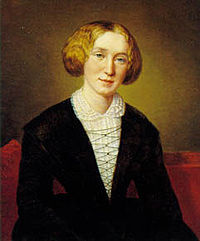
In 1856, Mary Anne Evans, better known by her pen name George Eliot, wrote an essay titled “Silly Novels by Lady Novelists”. No, she was not referring to Chick Lit. In the essay she elaborates different types of silly novels. I’ll let you read the essay for yourself, but will include the following quote.
“But it is precisely this absence of rigid requirement which constitutes the fatal seduction of novel-writing to incompetent women. Ladies are not wont to be very grossly deceived as to their power of playing on the piano; here certain positive difficulties of execution have to be conquered, and incompetence inevitably breaks down. Every art which has its absolute technique is, to a certain extent, guarded from the intrusions of mere left-handed imbecility. But in novel-writing there are no barriers for incapacity to stumble against, no external criteria to prevent a writer from mistaking foolish facility for mastery.”

 I’m sure she could just as easily have written an essay called “Silly Novels by Gentleman Novelists” at the time. Perhaps this calls for another quote from George Eliot.

    “I’m not denying the women are foolish: God almighty made ’em to match the men.”

George Eliot’s novels are still widely read because, among other things, of her formidable intelligence, courage, and insight into people. She brought a psychological realism to her novels that previously was not there. Virginia Woolf characterized “Middlemarch” as “one of the few English novels written for grown-up people”. Eliot was quite a subversive for her time, living with George Lewes quite happily for 24 years without the benefit of marriage. She dealt with uncomfortable subjects in her novels such as British anti-semitism. Aristocrats were at least as likely to be the villains in her novels as common people. She was not buried in Westminster Abbey because of her denial of the Christian faith and her ‘irregular’ relationship with Lewes.
I recently read the George Eliot quotes at ThinkExist.com, and found many of them that I liked a lot. The following are my favorites.

    “Life began with waking up and loving my mother’s face.”

    “I think I should have no other mortal wants, if I could always have plenty of music. It seems to infuse strength into my limbs and ideas into my brain. Life seems to go on without effort, when I am filled with music.”

    “Perhaps the most delightful friendships are those in which there is much agreement, much disputation, and yet more personal liking”

    “Cruelty, like every other vice, requires no motive outside of itself; it only requires opportunity”

    “Blessed is the influence of one true, loving human soul on another.”

    “Falsehood is easy, truth so difficult.”

    “Knowledge slowly builds up what Ignorance in an hour pulls down”

    “Any coward can fight a battle when he’s sure of winning, but give me the man who has pluck to fight when he’s sure of losing. That’s my way, sir; and there are many victories worse than a defeat.” Amen!

    “Delicious autumn! My very soul is wedded to it, and if I were a bird I would fly about the earth seeking the successive autumns.”

    “If we had a keen vision of all that is ordinary in human life, it would be like hearing the grass grow or the squirrel’s heart beat, and we should die of that roar which is the other side of silence.”

    “It is never too late to become what you might have been.”

OK, enough already.

“The Tragedy of Arthur” by Arthur Phillips and William Shakespeare

“The Tragedy of Arthur” by Arthur Phillips and William Shakespeare (1597, 2011) – 368 pages

“The remarkable thing about Shakespeare is that he is really very good – in spite of all the people who say he is very good.” – Robert Graves

“If it didn’t have his name on it, half his work would be booed off the stage”. – “Arthur Phillips”

This is the novel where Arthur Phillips one ups William Shakespeare.  For “The Tragedy of Arthur”, I’m going to forsake any pretence to objectivity.   I loved this novel.

The book consists of the entire play “The Tragedy of Arthur” by William Shakespeare and the play’s introduction by Arthur Phillips.  The introduction is 256 pages long.  It tells the wild and woolly story how this unknown Shakespeare play winds up in Minneapolis and in Arthur Phillips’ hands.  The character “Arthur Phillips” has very personal and family reasons to be down on all things Shakespeare – his Shakespeare-loving con-man father and his Shakespeare-loving twin sister Dana.   Parts of this story are real and parts are made up, and there is no good way to tell which is which.  The story is told with élan, high energy and humor throughout.

In the quotes above, I put the name “Arthur Phillips” in quotation marks, because this “Arthur Phillips” is the character in the novel and not the author.  I don’t know for sure what the actual novelist Arthur Phillips thinks of William Shakespeare, but do keep in mind that imitation is the sincerest form of flattery.

I’ve read three of Arthur Phillips’ previous novels, “Prague”, “Angelica”, and “The Song is You”.  He is one of the writers on my must-read list.  But even given that his previous novels have delighted me, “The Tragedy of Arthur” is still a revelation.  Of course I’ve had a thirty year interest in Shakespeare’s plays, and I’ve read, heard, and seen a lot of them, some of them many times.  Being familiar with Shakespeare helped me appreciate “The Tragedy of Arthur” even more, but I could also see how someone not familiar with Shakespeare’s work could like this novel as well.   It just takes a good sense of humor to appreciate the shaggy dog story about Arthur and his family.

And what of the play “The Tragedy of Arthur” itself?  The play is much more than a pastiche; For all intents and purposes it is a Shakespeare play. All the elements are there, the iambic pentameter, the trials and tribulations of a King and his court, the dramatic battles, the wicked villain, the playful romantic bantering, the nauseating English super-patriotism, plenty of footnotes,  Just like in Skakespeare, there are highly detailed elaborate footnote explanations for lines I completely understood anyhow.  Then for lines I didn’t understand  there usually were no footnotes at all..

Some of the lines in the “The Tragedy of Arthur” are simply superb.

NURSE :           You yielded comfort nine full moons ago.

                             There, there, sit quiet now, you jar the prince.

GUENHERA : What ancient sage first wond’ring marked that line

                                 Of moons ‘twixt lover’s smile and labor’s cries?

NURSE :           Twas known when Adam first leered eyes at Eve. 

The entire story of the play coheres in a very Shakespearean way. I’d really like to see “The Tragedy of Arthur” performed on stage. It was written by Shakespeare in 1597, very early in his playwriting career.   To me it resonates more as one of Shakespeare’s historical plays which were written early in his career rather than as one of his major tragedies.

The dueling footnotes between Roland Verre the Shakespeare ‘expert’ and “Arthur Phillips” alone  are worth the price of admission.

Arthur Phillips, how presumptuous of you and Thank You!

The Dark Stuff

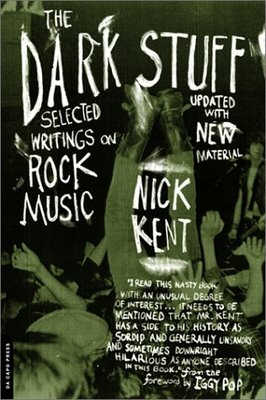
“The Dark Stuff” by Nick Kent (1994) – 343 pages

“I read this nasty book with an unusual degree of interest.”
Iggy Pop, foreword to “The Dark Stuff”

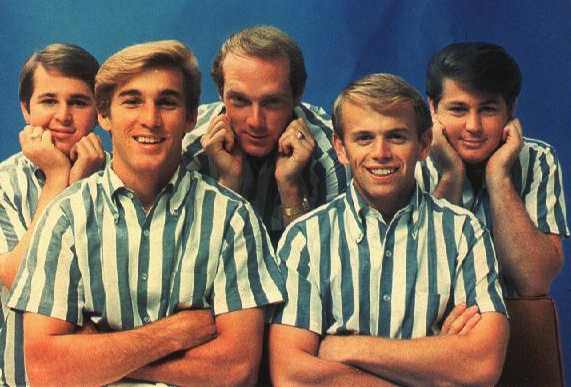
Published 17 years ago, “The Dark Stuff” contains exactly what the title indicates, the dark stuff about famous rock and roll stars and groups. Sections are devoted to the Rolling Stones, Guns’N’Roses, Roy Orbison, and Neil Young as well as several others, but it is that sunniest of United States groups, the Beach Boys, to which the most pages are devoted.

I imagine even today people still drive around in their cars during summer listening to ‘I Get Around’, “Help Me, Rhonda”, “Don’t Worry, Baby”, and “Good Vibrations” as well as many other Beach Boys songs. When the Beatles toured the United States to win over its teens, the Beach Boys went over to England and won over their teens. This set up a competition between the Beatles and the Beach Boys at least in Brian Wilson’s mind and spurred Wilson on to producing the most acclaimed of the Beach Boys’ albums, “Pet Sounds”. By this time Brian Wilson was no longer touring with the Beach Boys so he could spend full time in the studio. After “Pet Sounds”, Wilson decided to put together a full concept album called “Smile” to compete against the Beatles’ “Sergeant Pepper’s Lonely Hearts’ Club Band”. He spent more and more time isolated in his studio getting strung out and paranoid on LSD, hashish, and cocaine. The music he was writing now was not at all like the simple harmonies which he wrote that made the Beach Boys famous. Meanwhile Beach Boy Mike Love hated the new music because he couldn’t sing it, and the members of the group got into arguments and fights about the music.

Meanwhile Brian’s brother Dennis, the Beach Boys’ drummer, was also getting heavy into drugs. He divorced his wife and started hanging out with this little ex-convict guy, Charlie Manson, who had a crowd of hippie girls hanging with him and doing his bidding. Soon the Manson family was living in Dennis Wilson’s house. Finally Dennis Wilson’s managers kicked the Manson family out of the house, and they went out to the Spahn ranch. Manson was also obsessed with the Beatles and had his own eerie interpretations of their lyrics. Manson had some musical talent, and Dennis Wilson arranged an audition for him with record producer Terry Melcher who happened to be Doris Day’s son. Melcher refused to sign him.

Then Dennis arranged an audition for Manson with Neil Young who was forming his own group then. Charlie Manson came over to Young’s place for the audition. Young said, “The girls were around, too, Linda (Kasabian) and the other one (Patricia Krenwinkel) – they were always there.  They’d be right there on the couch with me.”

What did Neil Young think of Charlie Manson’s music?

    “Listen, he was great. He was unreal. He was really, really good. Scary; Put him in a band that was as free as he was… see, that was the problem right there… But he was never gonna get that band, because there was something about him that stopped anybody from being around him too long…I was always thinking, ‘What’s he gonna do next? I’d better get out this guy’s way before he explodes’.  So I did.”

Young actually went to the head of Warner Brothers and suggested they sign him.

In August, 1969, Charlie Manson went back to what he thought was Terry Melcher’s house. Melcher wasn’t living there, but the pregnant actress Sharon Tate who had become famous in the movie “The Valley of the Dolls” was living there with her entourage. Manson sent three members of his family – Tex Watson, Patricia Krenwinkel, and Susan Atkins into the house, while Manson waited in the car and Linda Kasabian guarded the entrance. The ritualistic knife and gun murders were part of Manson’s plan for Helter Skelter which was related only in Manson’s mind to the Beatles song. Two nights later the Manson family murdered the LaBianca couple.

If this kind of nasty dark stuff interests you, you should read this book.

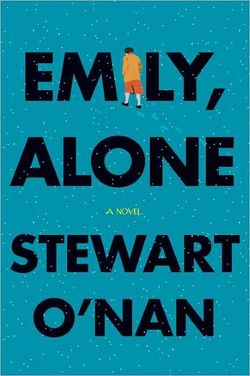
“Emily, Alone” by Stewart O’Nan – The Ordinary Made Extraordinary ?

“Emily, Alone” by Stewart O’Nan (2011) – 255 pages

 Stewart O’Nan has chosen a quite wonderful quote to open “Emily, Alone”.
 

    “Could it be, even for older people, that this was life – startling, unexpected, unknown.”

                         Virginia Woolf

 Each time Stewart O’Nan writes a novel he must set up a dare to himself.  How can I make this very ordinary story that I’m going to tell seem extraordinary? 

 For the reader of O’Nan, his novels require a certain patience.  A reader’s first reaction is that this story is quite quotidian and mundane.  The first time I read one of his novels which was “A Prayer for Dying”, I had not developed the needed patience, and I rushed through it.  I didn’t read O’Nan for a long time after that.  Then last December almost by accident I picked up his short novel “Last Night at the Lobster”, because I wanted something with a Christmas theme to write about.  The novel had a quite ordinary story, the closing down of a Red Lobster at Christmastime told from its manager’s point of view.  This time I totally got into the spirit of this novel as my review shows.  The closing of this Red Lobster was an extremely significant event in the lives of all the people that worked there.  The novel showed all that went into making this ordinary restaurant run smoothly and all the manager had to consider to keep it running smoothly.  I was very impressed with “Last Night at the Lobster”. 

 “Emily, Alone” is a novel about the daily life of a widowed woman in her eighties living in her long-time home in Pittsburgh.  The novel is dedicated to his mother with the following words.


    “For my mother, who took me to the bookmobile.”

 Emily’s life after her husband died has ground down to only a few significant events, taking care of her dog Rufus, trips downtown with her quirky friend Arlene, visits from her children and grandchildren, her garden.    Emily’s true best friend Louise also died a few years ago, and Emily now has become friends with Arlene even though they aren’t entirely suited for each other.  Arlene’s driving is a constant worry, and Arlene has her own health problems. 

 If you are looking for a hugely exciting novel with thrilling events of derring-do and glamorous beautiful people, don’t go to “Emily, Alone”.  For Emily, an amazing act of derring-do is getting her husband’s old car out of the garage so she can drive it downtown and not have to ride with the erratic Arlene. 

 So what are the pleasures of “Emily, Alone”?  In the novel, you completely enter the mind of Emily.  These unremarkable events become vivid as Emily plans them and follows through with her plans.  Even in reduced circumstances daily life is still involving.  We keep going along.  In Emily’s words, a trip downtown to the annual Garden Show is as exciting as a car chase in other novels.  In “Emily, Alone”, Stewart O’Nan has complete empathy for his characters, and that makes all the difference.